









Top 10 Women in Tech Groups and Resources in Germany in 2026
By Irene Holden
Last Updated: April 12th 2026
Too Long; Didn't Read
WomenTech Network and Nucamp are the top picks in 2026: WomenTech for broad visibility and networking with a global community of over 200,000 members and major events like the Future Leader Summit that connects more than 10,000 talents, and Nucamp for affordable, flexible AI and coding bootcamps accessible across Germany. Together they combine the visibility, mentorship and employer access you need with practical upskilling - Nucamp reports a 78% employment rate and a 4.5/5 Trustpilot rating - making them the most effective routes into AI and ML roles in Berlin, Munich and beyond.
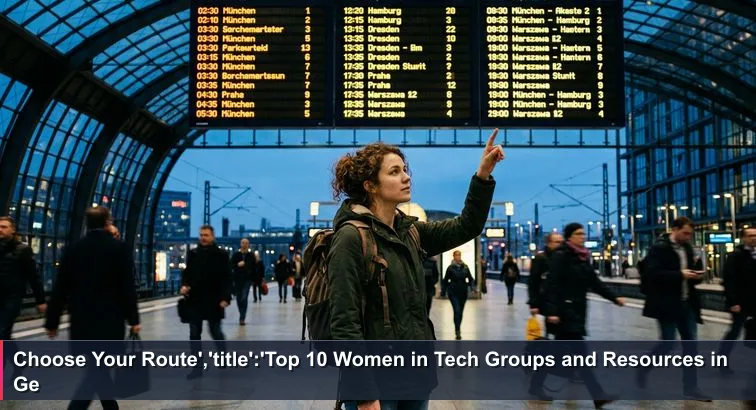
You’re under the glowing departures board in Berlin Hauptbahnhof, backpack straps cutting into your shoulders, eyes flicking between “Hamburg Hbf” and “München Hbf.” The announcements echo off the high glass ceiling, the smell of coffee cuts through the evening air, and the yellow letters blur as you realise each line is not just a train - it’s the next few years of your life.
Breaking into AI or data in Germany feels uncannily similar. Everyone tells you to “find your community,” but the women-in-tech landscape looks like that departures board at rush hour: national associations, global networks, scholarships, job fairs, bootcamps, research collectives. A ranked “Top 10” flattens all that nuance into ten neat lines, but it can still do something vital - show you which platforms even exist, and when the next “train” is leaving.
Why your route choice matters in Germany
In Germany, that choice is not abstract. Women remain underrepresented in engineering and leadership roles and face a persistent gender pay gap and career penalties around parental leave, as the country’s internet industry association eco details in its paper on women in tech. At the same time, AI and software roles are booming in hubs like Berlin, Munich and Hamburg, and around employers such as SAP, Siemens, Deutsche Telekom, Bosch, Zalando, Volkswagen and BMW. The European Parliament’s analysis of women in STEM stresses that structural barriers - from stereotypes to work-family policies - still hold many women back from these growth areas.
From departures board to timetable
This list is not a definitive map of “the best” women-in-tech communities in Germany. It’s a departures board: ten main lines leaving the station. Some routes are grassroots, others corporate-backed; some begin in university labs, others in retraining bootcamps; some head towards research roles in Fraunhofer or Max Planck institutes, others towards product teams in Berlin startups. Your task is to pick one train that fits where you’re standing now, knowing you can always change platforms later as your AI/ML journey - and your life in Germany - evolves.
Table of Contents
- Standing under the departures board
- WomenTech Network
- Nucamp
- Women in Tech Germany e.V.
- WomenHack Germany
- GTA Black Women in Tech - Germany chapter
- AnitaB.org Germany
- Women in Data Science - WiDS
- LiT - Ladies in Tech
- Women TechEU
- Digital Female Leader Award and Future Leader Summit
- How to choose your route
- Frequently Asked Questions
This comprehensive guide for Germany AI careers 2026 covers Berlin vs Munich, salaries, and bootcamp options.
WomenTech Network
One of the first “train lines” many women in Germany notice on the departures board is a global one: a community of over 200,000 members that somehow still manages to feel local in Berlin, Munich and Hamburg. WomenTech Network’s Women in Tech Germany chapters sit right at the intersection of international reach and city-level meetups, making them a natural starting platform if you’re testing the waters of AI or data careers.
How it shows up on the ground
Locally, WomenTech runs “Connect” events and meetups where you can walk into a room (or Zoom) full of women software engineers, data scientists, product managers and founders. On the global side, the WomenTech Global Conference has become a flagship, with 2025 participants describing it as an “outstanding experience” with “cutting-edge insights” and a “world-class lineup of speakers,” according to conference testimonials published by WomenTech Network Germany.
- Join the community via the Germany hub (free tier plus paid options).
- Attend Berlin, Munich or Hamburg “Connect” sessions, often hybrid-friendly.
- Apply to mentor or speak, especially if you work in AI/ML, data or cloud.
- Watch for the Future Leader Summit 2026 in Hamburg (10-11 April), where WomenTech is a key partner connecting 10,000+ talents and leaders.
What this route gives you
Once on board, you gain access to mentorship circles, leadership coaching and a curated job board featuring diversity-focused employers. In Germany, that includes companies like SAP, Gothaer or Cancom, which feature in Statista’s “Germany’s Best Employers for Women 2026” rankings. Technical sessions regularly cover AI, data engineering, DevOps and security, so you can keep sharpening hard skills while expanding your network.
Why it matters for AI/ML careers
Research on women in tech careers cited in a 2026 analysis of progress and challenges reports that around 85% of women prefer companies with strong female leadership. Plugging into WomenTech Network Germany means you’re not just meeting peers; you’re gaining line of sight to the leaders, teams and employers who match those values - crucial when Berlin, Munich and Hamburg are competing with London or Amsterdam for the same AI talent.
Nucamp
If your “starting station” is a non-tech job, a career break after Elternzeit, or a move to Germany on a Blue Card, you may need a route that teaches you to code and work with AI without demanding you quit your job first. That’s where Nucamp comes in: an international online bootcamp running in over 200 cities, including Berlin, Munich and Hamburg, built around affordability and part-time schedules.
What Nucamp offers
Unlike many European bootcamps that charge well over €10,000, Nucamp’s tech paths sit roughly between €1,955-€3,660, with flexible monthly payment plans. Courses are designed to be taken alongside work or childcare, with evening and weekend sessions and a strong emphasis on peer support and instructor feedback. Community-based workshops connect learners across Europe, giving you a cohort even if you’re studying from a smaller German city.
Core AI-related routes
For women targeting AI/ML careers or adjacent roles, three programs are especially relevant:
| Program | Duration | Approx. Tuition | Main Focus |
|---|---|---|---|
| Solo AI Tech Entrepreneur | 25 weeks | €3,660 | AI-powered products, LLMs, prompt engineering, AI agents, SaaS monetization |
| AI Essentials for Work | 15 weeks | €3,300 | Practical AI skills, productivity tooling, ChatGPT and workplace AI |
| Back End, SQL & DevOps with Python | 16 weeks | €1,955 | Python, SQL, DevOps, cloud foundations for ML engineering paths |
Outcomes and fit for the German market
Nucamp reports around a 78% employment rate, a ~75% graduation rate, and a Trustpilot rating of 4.5/5 stars from roughly 398 reviews, 80% of which are five-star. Learners consistently highlight the combination of “affordability, a structured learning path, and a supportive community,” and the ability to study on a flexible schedule.
In a landscape where, as eco’s paper on women in tech in Germany notes, access to continuous training is a major barrier for women, Nucamp’s pricing and scheduling lower two of the biggest hurdles. For aspiring AI engineers in Berlin, data analysts in Munich, or cybersecurity specialists in Hamburg, it offers a realistic on-ramp into Germany’s AI and software job market.
Women in Tech Germany e.V.
On the departures board of women-in-tech communities, this line runs firmly along German tracks. Women in Tech Germany e.V. is a DACH-focused association that puts day-to-day realities of working in German tech front and centre: IT security, digital workplaces, gaming, and the culture around Betriebsräte, Tarifverträge and parental leave rather than just generic “women in STEM” messaging.
What this community actually does
The association organises meetups in cities like Berlin, Munich, Stuttgart and Cologne, plus online sessions for members across Austria and Switzerland. Its leaders, including voices like Jasmin Haug, consciously spotlight women in specialised technical roles - think security engineers, enterprise architects or game developers - who are often invisible in mainstream narratives. Their hands-on outreach and coding content is visible on the active Women in Tech Germany Instagram channel, where workshops, panels and member stories are regularly shared.
How to get on board
- Join the association or follow its social channels to hear about upcoming events.
- Attend themed meetups in your nearest city, or join virtually if you’re elsewhere in Germany.
- Volunteer for outreach linked to initiatives like Girls’ Day (Mädchen-Zukunftstag), which invites schoolgirls from grade 5 upwards into tech workplaces.
Germany still reflects the broader European picture where only around one in five ICT specialists are women, according to EU-level STEM research. Women in Tech Germany e.V. doesn’t just highlight this gap; it gives you practical tools to navigate it: mentoring, role models from TU Berlin, TUM or RWTH Aachen, and frank conversations about salary negotiation, part-time models and works council dynamics.
For women aiming at AI/ML roles embedded inside large German enterprises - from security-heavy cloud projects at Deutsche Telekom to game analytics in Cologne’s studios - this community helps you understand not only the tech stack, but the corporate and regulatory environment you’re stepping into.
WomenHack Germany
When you’re ready to move from “learning mode” into actual hiring conversations, you need a route that plugs you straight into recruiters’ calendars. That’s essentially what WomenHack Germany offers: women-focused tech job fairs and speed-networking events in Berlin, Munich and Hamburg that condense weeks of cold applications into a single evening of live chats.
How WomenHack events work
WomenHack curates rooms full of hiring managers, engineers and founders from local startups and larger employers. Their Germany-wide guide describes a “vibrant ecosystem of support” built around short, focused conversations where you rotate between companies every few minutes, giving and getting rapid-fire impressions. You register for free as a candidate via the dedicated Women in Tech Germany career guide, upload your CV, tag interests like AI, data engineering or DevOps, and then get matched to upcoming events - for example, a Munich hiring evening on 22 April 2026.
How to prepare your “elevator pitch”
- Define 1-2 target roles (e.g. junior data scientist, ML engineer, analytics engineer).
- Bring concrete examples: portfolio links, GitHub repos, Kaggle projects or deployed demos.
- Practice a 60-second story that connects your background, new skills and what you want next.
- Have questions ready about tech stack, language expectations and remote-work policies.
For women in AI/ML, these evenings are especially valuable in Berlin’s startup scene (fintech, e-commerce, climate tech) and Munich’s deep-tech and automotive clusters. Instead of sending dozens of applications into applicant tracking systems, you can sense quickly which teams value diverse perspectives in data and AI.
WomenHack events sit alongside Germany’s broader ecosystem of tech meetups and hackathons listed on platforms like GermanTechJobs’ events calendar, but with one crucial difference: the room is built around you as a woman in tech, not as the exception.
GTA Black Women in Tech - Germany chapter
Some routes on the departures board are clearly labelled; others you only notice if you know to look for them. For many Black women in Germany’s tech scene, GTA Black Women in Tech is that crucial but often-missed line: a community where you don’t have to translate your experience of being both a woman and a person of colour in overwhelmingly white, male AI and engineering teams.
The Germany chapter is part of the wider GTA - The Black Women in Tech network, which connects members across major European hubs. The local community gathers in cities like Berlin, Frankfurt and Munich as well as online, and the official Germany chapter overview highlights its focus on storytelling, mentoring and community-building for women working in or entering tech roles.
- Join the chapter via the website to access virtual and in-person events.
- Attend meetups spanning topics from cybersecurity to product management and AI.
- Participate in role-model campaigns that showcase Black women across data, engineering and leadership paths.
On a practical level, this route offers what many mainstream networks struggle to provide: a space to discuss visa realities, salary negotiation when you’re the only Black woman in the team, how to respond to microaggressions, and how to evaluate an employer’s diversity efforts beyond glossy marketing. Informal conversations often surface insider knowledge about which companies genuinely invest in inclusive cultures and which simply tick boxes.
For Black women in AI/ML roles - whether you’re building models for a Berlin fintech, optimising logistics algorithms in Hamburg, or working on autonomous driving in southern Germany - the Germany chapter gives you both local anchoring and a pan-European support system. It makes switching “trains” between cities or even countries feel less like starting over and more like moving within a network that already knows what you bring to the table.
AnitaB.org Germany
Some trains on the departures board are clearly international, even if you board them in Berlin. AnitaB.org is one of those: the nonprofit behind the Grace Hopper Celebration, with a Germany community that lets you tap into a global network of women in computing while staying rooted in local realities.
How the Germany community operates
The Germany group runs monthly virtual meetups, often on the first Thursday, where members discuss local impact projects, mentoring and career development. Sessions range from lightning talks by software engineers and data scientists to panels on navigating promotion processes or returning to tech after a break. You join via the main membership portal and then select Germany as your community, with events listed on the dedicated AnitaB.org Germany events page.
Beyond the national layer, there is also the C3 Europe regional program, which connects German members with peers across the continent. Through the C3 Europe calendar, hosted on AnitaB.org’s European hub, you can join cross-border sessions on topics like AI ethics, open-source contribution, or transitioning from academia into industry.
For women in AI/ML, this matters because many career paths straddle research and product. If you are doing an ML PhD at TUM, TU Berlin or RWTH Aachen, working in a Fraunhofer or Max Planck institute, or aiming for roles in Big Tech labs while based in Germany, AnitaB.org gives you exposure beyond your immediate group. Calls for scholarships, internships and fellowships from global partners like Google or Microsoft frequently circulate here, creating bridges from German universities into international teams.
Think of AnitaB.org Germany as the ICE line that links your local station to a wider European and global network: you board in your living room in Berlin or Munich, but the contacts and opportunities extend far beyond Germany’s borders.
Women in Data Science - WiDS
Not every route on the board is about CV tips and confidence. Some are unapologetically technical. Women in Data Science (WiDS) is one of those lines: a global movement that started at Stanford and now runs local conferences, meetups and hackathons across Germany, all centred on data science, machine learning and analytics.
Instead of leading with “how to get into tech,” WiDS sessions dig into topics like model interpretability, MLOps, time-series forecasting, recommendation systems or NLP. The 2026 overview of top women-in-tech gatherings notes that WiDS is “not one event, but a global movement” spanning talks, workshops and hackathons, and highlights its role among the most impactful women-in-tech events worldwide in 2026.
How WiDS shows up in Germany
In practice, WiDS Germany takes shape through university- and industry-hosted events in cities like Berlin, Munich and Hamburg. Local organisers partner with institutions such as TU Berlin, TUM, RWTH Aachen or KIT, and with employers ranging from e-commerce players (Zalando, About You) to mobility and industrial giants (Deutsche Bahn, Volkswagen, Siemens, Bosch). Many events include:
- Keynotes and technical talks from data scientists and ML engineers
- Poster sessions or lightning talks for students and PhDs
- Hands-on workshops or mini-hackathons around open datasets
Why this route matters for AI/ML careers
If you already have some statistics, Python or notebook experience, WiDS is where you sharpen your edge and test yourself against real-world problems. It’s also where you meet practitioners who actually deploy models into production in German companies, not just talk about them in theory. Presenting your thesis work, a Kaggle project or a production case study at a WiDS event can be a powerful way to move from “junior applicant” to “peer” in the eyes of hiring managers.
For women aiming at roles like data scientist, ML engineer or analytics lead in Germany’s AI ecosystem, WiDS is less a networking train and more a high-speed technical one: board it when you’re ready to go deep on the math, code and systems that make AI work at scale.
LiT - Ladies in Tech
Some routes don’t lead to another coding workshop, but to the stage itself. #LiT - Ladies in Tech is one of those lines: an initiative of eco, Germany’s powerful Association of the Internet Industry, designed to put more women where decisions are made and narratives are shaped - on conference stages, advisory boards and in the media.
What #LiT focuses on
Rather than hosting endless beginner talks, #LiT concentrates on visibility and thought leadership. Its sessions at eco conferences highlight women speaking on AI governance, cybersecurity, cloud infrastructure and platform regulation. In its landmark paper on women in tech in Germany, eco captured the core idea in one line:
“If she can see it, she can be it.” - eco, Association of the Internet Industry
#LiT is built to turn that principle into practice, surfacing women experts who might otherwise stay hidden in middle management or research teams.
How to plug into this route
- Leverage your employer’s eco membership (common among ISPs, cloud providers and SaaS companies) to access #LiT sessions.
- Apply to speak on your AI, data or security work at eco events or #LiT-branded tracks.
- Join eco working groups on topics like data protection, digital policy or the EU AI Act to influence how regulation is written.
Why it matters for women in AI/ML
In Germany’s consensus-driven corporate culture, external recognition often accelerates internal promotion. Rankings like Germany’s Best Employers for Women 2026 show that companies now compete on diversity and inclusive leadership. By stepping onto the #LiT platform, you position yourself as the AI or data expert your organisation cites - not just the one quietly shipping models.
For senior engineers, data leads or researchers working on ML at players like Deutsche Telekom, SAP, or Berlin’s cloud startups, this route is about moving from “implementer” to visible authority in Germany’s digital debate.
Women TechEU
On the departures board, some lines don’t end at a job - they end at your own company. Women TechEU is that kind of route: an EU-funded programme offering equity-free grants and high-level coaching to women-led deep-tech startups, from AI platforms and robotics to quantum and biotech.
The scheme complements instruments like the EIC Accelerator but adds a specific gender lens. According to the official overview on Women TechEU’s programme page, eligible startups must be early-stage, deep-tech and women-led, and based in an EU Member State. Grants are designed to cover activities such as business model refinement, IP and regulatory strategy, and preparation for follow-on investment.
Recent calls have attracted strong interest: the second call moved into eligibility checks after an intense application phase, and a third call was opened to expand the cohort, as covered by European innovation consultancy Sploro’s analysis of Women TechEU Call 3. For founders in Berlin, Munich, Hamburg or Stuttgart, that means there are real, time-bound windows where this “train” is boarding.
To get onto it, you typically need:
- A clearly women-led founding team (e.g. CEO or CTO)
- A defensible deep-tech innovation (AI, advanced materials, robotics, etc.)
- A scalable business model with European impact
- Basic traction: prototypes, pilots or early customers
For women in AI/ML in Germany, Women TechEU can be the difference between bootstrapping for years and having the resources to validate your product with partners like Siemens, Bosch, Volkswagen or BMW. It also signals to German and European investors that your startup has passed a competitive EU-level filter, which can materially shift fundraising conversations in Berlin’s or Munich’s venture ecosystems.
Digital Female Leader Award and Future Leader Summit
Some trains on the board don’t just move your CV forward; they light up your name over the whole station. In Germany, the Digital Female Leader Award (DFLA) and the Future Leader Summit in Hamburg are two such routes, designed less around skills training and more around making women’s contributions to digital transformation visible at a national level.
Digital Female Leader Award: being seen at the top
DFLA recognises women driving digital change across sectors like AI, fintech, mobility and health. Categories span everything from “IT-Tech” and “Innovation” to “Sustainability” and “New Work,” giving space to engineers, product leaders, founders and intrapreneurs. A profile on the Global Woman Leader platform describes awardees as “visionary women leaders reshaping Germany’s digital frontier in AI, blockchain and beyond,” underlining how such spotlights frame women as shapers of technology, not just adopters.
Being nominated or shortlisted doesn’t just feel good; it shows up in promotion and board discussions. In Germany’s consensus-driven corporate culture, external recognition often carries real weight when committees decide who looks “ready” for C-level roles or professorships.
Future Leader Summit: Hamburg as a national hub
The Future Leader Summit in Hamburg (10-11 April 2026) complements DFLA by bringing together more than 10,000 talents and leaders for two days of talks, networking and recruiting. Partnered with Women in Tech Germany, it creates a concentrated space where students, early-career engineers, founders and corporate leaders from companies like SAP, Deutsche Telekom, Siemens or BMW actually meet.
For women in AI/ML, speaking on stage, mentoring in a side session, or simply being active in these spaces can transform how your work is perceived back home. Instead of being the quiet person “good with data,” you become the recognised expert whose perspective German industry and media already trust.
How to choose your route
Back under the departures board, you still have to pick a line and walk towards a platform. No ranking or “Top 10” will make that decision for you. What it can do is narrow the chaos into a handful of sensible first routes, depending on where you’re actually standing today.
Start from your current station
- Still studying or in research (Bachelor, Master, PhD, Fraunhofer / Max Planck): prioritise technically deep, research-connected routes like WiDS and AnitaB.org Germany. They plug your projects into wider academic and industry networks.
- Pivoting into AI/tech from another field: combine a structured learning path such as Nucamp’s part-time AI and Python bootcamps with broad communities like WomenTech Network or Women in Tech Germany e.V. to avoid learning in a vacuum.
- Actively job-hunting or changing companies: focus on WomenHack Germany and GTA Black Women in Tech (if relevant) to compress applications into conversations. Use local meetups to test which employers feel genuinely inclusive.
- Already senior or founding something: routes like #LiT, Women TechEU, the Digital Female Leader Award and the Future Leader Summit matter most, because visibility and funding become your main bottlenecks.
Design a small, realistic stack
You don’t need all ten routes at once. A practical rule of thumb is to choose:
- One skills route (bootcamp, WiDS study group, internal training)
- One community route (WomenTech, Women in Tech Germany e.V., GTA Black Women in Tech)
- One visibility route (speaking, awards, policy work through #LiT or similar)
Allow yourself to “change trains”
Your needs will shift: a Nucamp-style, lower-cost bootcamp might be perfect during a career change, but later you may swap it for research collaborations or founder programmes. Global networks such as those profiled by Women Who Code show that long careers in tech are rarely linear.
The important part is not picking the “perfect” route; it’s getting moving. Board one train that fits your life in Germany right now, stay long enough to gain skills, allies and confidence, and then don’t hesitate to step onto a different platform when your AI/ML journey calls for a new direction.
Frequently Asked Questions
Which women-in-tech group in Germany is best for advancing an AI/ML career?
For practical, career-ready AI training I recommend Nucamp - its AI and dev bootcamps cost roughly €1,955-€3,660 and report about a 78% employment rate, making it the fastest route to build portfolio projects employers in Berlin and Munich value. Pair that with visibility networks like WomenTech (200,000+ global members) for long-term leadership opportunities.
Which community should I join if I want to find a tech job quickly in Berlin or Munich?
Attend WomenHack job fairs for fast, direct conversations with hiring teams - they run large hiring events across Berlin, Munich and Hamburg and connect candidates with dozens of employers in one evening. Complement that with WomenTech Network for employer partnerships and the Future Leader Summit (10,000+ attendees) to meet decision-makers.
Which resource is best if I’m founding an AI or deep-tech startup and need non-dilutive funding?
Apply to Women TechEU: it’s an EU-funded programme that offers equity-free grants and coaching specifically for women-led deep-tech startups, and is designed to accelerate early-stage projects in areas like AI and robotics. Work with local hubs (e.g., Berlin Partner, UnternehmerTUM) to strengthen your application and increase visibility to follow-on investors.
Where can Black women in Germany find targeted mentorship and community support?
Join the GTA Black Women in Tech Germany chapter, which runs meetups and mentoring circles in Berlin, Frankfurt and Munich and focuses on belonging, visa questions, salary negotiation and career mobility. It’s a dedicated space where recruiters and employers actively seek to hire and retain Black women in tech.
How should I choose which women-in-tech group to join first?
Pick based on your immediate goal: skills (Nucamp or WiDS), hiring (WomenHack, WomenTech), funding (Women TechEU) or visibility (#LiT, Digital Female Leader Award). Start with one practical route - for example a bootcamp plus one networking group - then pivot as your career stage and location (Berlin vs Munich) evolve.
Top free tech training options at Stadtbibliothek and VHS in Germany (2026)
best pathways: apprenticeships, internships & entry-level tech roles in Germany 2026
Use our complete guide to funding coding bootcamps in Germany to compare Bildungsgutschein, Qualifizierungschancengesetz and private options.
Top 10 tech jobs that don't require a degree in Germany (2026)
Use the 2026 list of startups hiring junior developers in Germany to prioritise applications by funding, stack, and mentorship.

Irene Holden
Operations Manager
Former Microsoft Education and Learning Futures Group team member, Irene now oversees instructors at Nucamp while writing about everything tech - from careers to coding bootcamps.