









Top 10 Industries Hiring AI Talent in Germany Beyond Big Tech in 2026
By Irene Holden
Last Updated: April 12th 2026
Too Long; Didn't Read
Automotive & Mobility and Education/EdTech (with Nucamp’s bootcamps as a practical entry path) are the standout industries hiring AI talent in Germany beyond Big Tech in 2026, because automotive delivers safety-critical, high-investment projects with top-tier pay while EdTech gives career-changers a fast, affordable route into those roles. AI is poised to add more than €80 billion to Germany’s economy, typical AI salaries run from about €55,000 for juniors to well over €90,000 for seniors with experienced roles reaching €130,000 and above, and Nucamp’s programs - priced around €3,300 to €3,660 and reporting roughly a 78% employment rate - make transitioning into these growth areas practical and cost-effective.
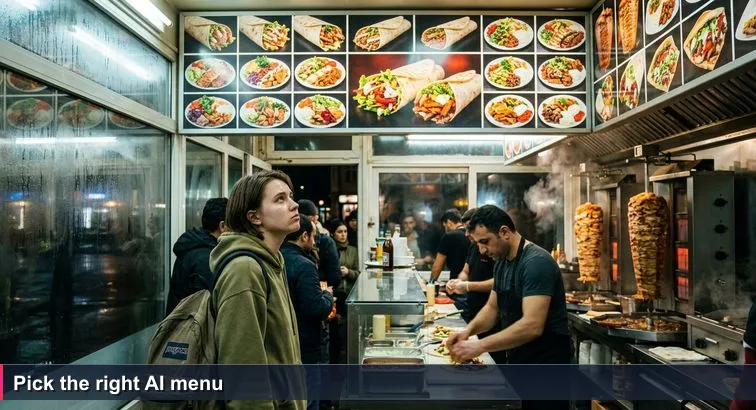
The first time you stand in a crowded Berlin Dönerbude at midnight, the menu lies to you. Ten glossy photos, ten numbers, ten “best” choices - until you bite in and realise the real story was hidden in the ingredients, not the ranking. From a distance, every wrap looks the same; up close, one is vegan, one is drowning in garlic sauce, one is a meat bomb you’ll regret on the U8 home.
That’s exactly how the AI job market feels for a lot of people in Germany right now. On LinkedIn, everything is “AI Engineer” or “Data Scientist.” In conversation, the options sound simple: Amazon, Microsoft, maybe SAP if you want something that feels local. But when you look past the big logos, you find a completely different spread: autonomous driving teams in Munich, medtech labs in Berlin, logistics optimisation in Hamburg, and AI units buried inside the Mittelstand and public agencies.
Analysts of the AI job market in Germany estimated that by 2026, AI would add over €80 billion to the economy - and much of that growth is coming from “non-tech” employers. Automotive, healthcare, finance, manufacturing, logistics, energy, and the public sector have moved from pilots to large-scale AI operations, pulled forward by the EU AI Act, GDPR, and Germany’s own “AI made in Germany” strategy.
As AI has spread across industries, salary bands have quietly standardised across major hubs:
- Junior (0-2 years): €55,000-€70,000
- Mid-level (3-5 years): €70,000-€90,000
- Senior (5+ years): €90,000-€130,000+
Munich often pays a further 15-25% premium thanks to its dense cluster of high-tech employers and higher living costs.
This article is your real “Top 10 Menüs” for AI careers in Germany. Not a ranking to obey, but a serving suggestion. For each industry, you’ll look past the number and into the ingredients: regulation, data, team culture, German-language expectations, and whether you want to sit in a Berlin startup loft, a Stuttgart engineering giant, or a Frankfurt tower.
Table of Contents
- Introduction: The AI Menu Beyond Big Tech
- Automotive & Mobility
- Education & EdTech
- Healthcare & MedTech
- Finance & Fintech
- Manufacturing & Robotics
- Logistics & Supply Chain
- Energy & Utilities
- Cybersecurity
- Public Sector & Infrastructure
- Retail & E-commerce
- How to Choose Your Industry and Your Sauce
- Frequently Asked Questions
This comprehensive guide for Germany AI careers 2026 covers Berlin vs Munich, salaries, and bootcamp options.
Automotive & Mobility
Step into any engineering office near Munich or Stuttgart and you’ll feel it immediately: the car is no longer just metal and mechanics, it’s an edge-computing platform on wheels. For AI specialists, that means working on safety-critical systems, huge sensor streams, and some of the highest-paying non-Big Tech roles in the country, with senior ADAS or perception engineers at BMW, Volkswagen, or Mercedes-Benz often landing in the €110k-€130k+ range.
What you actually work on
Most teams sit at the intersection of perception, control, and production. Typical focus areas include:
- Autonomous driving & ADAS: perception with camera/lidar/radar, sensor fusion, lane-keeping, pedestrian detection.
- Predictive maintenance: forecasting failures in engines, batteries, and factory robots to minimise downtime.
- Software-defined vehicles: over-the-air updates, in-car recommenders, energy optimisation, personalisation.
Job titles span autonomous driving engineer, computer vision specialist, predictive maintenance ML engineer, and simulation engineer. Guides on the scope of AI careers in Germany consistently put this cluster at the top for technical depth and compensation.
Why it’s distinctive in Germany
According to Deutsche Welle’s analysis of how Germany’s industrial titans embrace the AI age, automotive leaders are racing to catch up on digitalisation and autonomous systems. You work under strict norms like ISO 26262 and UNECE R155, plus EU type-approval processes. “Pretty good accuracy” is not enough when a braking decision is at stake, so traceability, explainability, and exhaustive testing are non-negotiable. Teams are deeply interdisciplinary: ML engineers share whiteboards with mechanical, robotics, and embedded-systems specialists.
Fit for career changers & trade-offs
This lane is ideal if you come from mechanical, electrical, or aerospace engineering, robotics, control systems, or traditional automotive roles in testing, calibration, or QA. Nearby suppliers and R&D centres across Bavaria and Baden-Württemberg make it particularly attractive if you already live in these regions.
- Pros: top salaries outside Big Tech, strong unions, clear career ladders, global impact.
- Cons: heavy process and documentation, slower release cycles, and a high bar for German language in plants and Tier-1 suppliers; Berlin tends to focus more on mobility startups than on embedded vehicle AI.
Education & EdTech
In education, AI shows up in two places at once. On one side, EdTech startups, universities, and corporate academies hire engineers to build adaptive learning systems, automated feedback, and analytics that track skills gaps. On the other, education is the pipeline that lets career changers in Germany move from “AI-curious” to genuinely employable. Analyses like UE Germany’s review of AI-proof careers stress that continuous, targeted upskilling is now a prerequisite, not a bonus.
From crowded lecture hall to focused bootcamp
This is where Nucamp fits the German landscape. Instead of a €10,000+ full-time bootcamp or a two-year master’s, it offers structured, part-time programs you can layer on top of a job in Berlin, Hamburg, or Düsseldorf. Tuition typically sits between €1,955 and €3,660, with monthly payments and remote-first delivery to learners in 200+ cities. The focus is simple: get you shipping code and AI-powered features quickly, without forcing you to pause your life.
| Program | Duration | Tuition (approx.) | Primary Focus |
|---|---|---|---|
| Solo AI Tech Entrepreneur | 25 weeks | €3,660 | Building and monetising AI products, LLMs, agents, SaaS |
| AI Essentials for Work | 15 weeks | €3,300 | Practical AI in day-to-day work, prompt engineering, AI tools |
| Back End, SQL & DevOps with Python | 16 weeks | €1,955 | Python, databases, DevOps foundations for ML and data roles |
Outcomes that matter in a credential-focused market
German employers still care deeply about structured learning paths and demonstrable skills. Nucamp reports an employment rate of around 78%, a graduation rate of roughly 75%, and a Trustpilot rating of 4.5/5 from about 398 reviews, with roughly 80% of those being five-star. For a Berlin-based career changer, that means you can point to a clear curriculum, a portfolio of concrete projects, and a recognised brand - while still having time to learn German, deepen your domain knowledge, and network into the AI roles described in the rest of this “menu.”
Healthcare & MedTech
Walk into a radiology lab in Berlin or a biotech corridor near Mainz and the “AI job” looks very different from a generic data role. You might be tuning a model that flags micro-tumours on MRI scans, or helping rank molecules for a new cancer drug. It is one of the most research-heavy corners of the German AI market, with the national AI healthcare segment projected to reach around $106 billion by 2030 as diagnostics, drug discovery, and digital therapeutics scale up.
What you actually work on
Healthcare and medtech AI work tends to cluster around three pillars.
- Diagnostics & imaging: CNNs and transformers on radiology, pathology, and dermatology images for earlier, more accurate detection.
- Drug discovery & bioinformatics: protein folding, target identification, and virtual screening in pharma pipelines.
- Digital health & DiGA apps: predictive models for chronic disease, triage chatbots, and personalised treatment plans.
Roles span AI-enabled bioinformatics analyst, medical imaging ML engineer, and data scientist in digital therapeutics. A recent HealthTech salary guide highlights Germany’s strong demand for such skills as hospitals and medtech firms modernise.
Why Germany is distinctive
Germany layers a dense research ecosystem - Max Planck, Fraunhofer, Charité, TU Munich - on top of industrial heavyweights like Bayer, Merck KGaA, BioNTech, and Siemens Healthineers. Public and private actors have channelled more than €4.3 billion into digital health and medtech initiatives up to 2026, creating a pipeline of AI-heavy projects from lab to clinic. Everything runs under strict regulation: EU MDR, Germany’s Medizinproduktegesetz, DiGA fast-track rules, and of course GDPR. That means rigorous validation, bias analysis, and documentation are built into daily work.
Fit for career changers & trade-offs
This path is ideal if you bring a background in biology, medicine, chemistry, or medical physics - or hands-on experience in hospitals or health insurance. The trade-offs are clear: long validation cycles, complex stakeholder landscapes, and domain knowledge that is non-negotiable. In return, senior AI specialists in pharma and leading medtech firms frequently earn in the €100k-€130k+ range and work on systems that directly influence patient outcomes, as emphasised in analyses from Steinbeis’ medtech career reports.
Finance & Fintech
For an AI engineer in Frankfurt’s Bankenviertel or a ML specialist in a Berlin fintech loft, the “AI job” usually means turning messy financial data into decisions regulators will actually sign off on. It is one of the most numerate, tightly controlled domains on this menu, and often one of the best paid: senior AI quants, model risk leads, or fraud heads in major banks can easily reach the €120k-€130k+ range.
What you actually work on
Most teams cluster around three problem types:
- Fraud & AML: real-time anomaly detection on transactions, graph analysis for money-laundering networks, sanctions-screening optimisation.
- Credit & risk: explainable scoring models, stress-testing, and portfolio risk analytics that meet BaFin expectations and the EU AI Act’s high-risk rules.
- Personalised products: recommender systems for banking and insurance, churn prediction, and chatbots for customer service.
According to analyses of AI in financial technology careers, AI-skilled profiles in finance can command around a 20% salary premium over comparable non-AI roles.
Why Germany’s finance scene is different
Here, regulation drives everything. You work under BaFin rules, PSD2, GDPR, and the EU AI Act, which collectively push banks toward transparent, bias-controlled, auditable models. That makes XAI, model monitoring, and documentation core skills, not afterthoughts. Germany mixes heavyweight incumbents (Deutsche Bank, Allianz, Commerzbank, KfW) with a lively fintech scene in Berlin, Frankfurt, and Munich; market studies of the Germany AI-in-fintech segment point to a rapid CAGR of about 24.5% through 2033 as these players rebuild risk and analytics stacks.
Fit for career changers & trade-offs
This lane is ideal if you come from banking, insurance, accounting, risk, compliance, audit, or quantitative finance. You can expect interviews to test both coding and your understanding of regulation and product trade-offs. Overviews of high-paying AI roles from institutions like Schiller International University consistently rank finance and fintech near the top for compensation and global mobility.
The main trade-offs: intense regulatory pressure, high responsibility, and relatively conservative change management in large banks. In exchange, you gain some of the clearest salary upside on this whole menu and skills that transfer almost anywhere money moves.
Manufacturing & Robotics
On a German shop floor, AI doesn’t live in a slide deck; it lives in vibrating motors, conveyor belts, and robots that either hit their targets or halt a line worth millions. Manufacturing and robotics work sits right at that intersection of data and steel, and in large players around Munich or Baden-Württemberg, senior industrial AI or robotics specialists often reach the upper midrange of German AI salaries, with total compensation frequently crossing the €100k mark.
What you actually work on
Industry 4.0 teams typically focus on three core themes:
- Predictive maintenance: using sensor data from CNC machines, presses, and robots to prevent failures and optimise service windows.
- Quality control: computer vision systems that spot defects on the line in real time, from micro-cracks to paint issues.
- Process optimisation & scheduling: optimisation and reinforcement learning to reduce waste, energy use, and cycle times across complex plants.
Job titles range from industrial AI engineer and data scientist for predictive maintenance to robotics perception engineer. Overviews of German AI careers, such as those compiled by ZEIQ’s AI jobs report, consistently list manufacturing as one of the most resilient, long-term demand drivers.
Why it’s unique in Germany
This is Germany’s home turf: machine builders, automotive suppliers, chemical giants, and equipment manufacturers form a dense ecosystem that has turned Industrie 4.0 into standard practice. The country’s Mittelstand relies on AI to cut downtime and boost throughput, while research institutes like Fraunhofer co-develop robotics and industrial AI solutions. The EIT Deep Tech Talent Initiative notes that industrial automation and robotics are among the EU’s primary engines for AI-skilled job growth, a trend that is especially visible in Germany’s export-heavy economy (AI job market insights).
Fit for career changers & trade-offs
This lane is a strong match if you come from mechanical, industrial, or electrical engineering; operations, maintenance, or production management; or physics/applied maths.
- Pros: huge demand outside the usual tech hubs, high job security, very tangible impact.
- Cons: many roles are on-site in regional factories with strong preference for German, and mid-level pay can trail finance or automotive despite the responsibility.
Logistics & Supply Chain
Somewhere between a port in Hamburg, an air hub in Leipzig, and a Fulfillment Center outside Berlin, your recommender system decides which pallet moves first. In logistics and supply chain, AI careers are defined less by shiny apps and more by late trucks, empty shelves, and fuel bills. It is one of the most operationally grounded paths on this menu, with senior roles at global players like DHL or DB Schenker often landing around the €100k-€120k mark.
What you actually work on
Most AI teams in logistics orbit three problems:
- Demand forecasting & “demand sensing”: predicting orders by product, region, and time using historical and real-time signals.
- Route optimisation: reinforcement learning and heuristic optimisation for last-mile and long-haul transport, balancing cost, time, and service levels.
- Warehouse automation: robotics perception, slotting optimisation, and workforce scheduling across massive facilities.
AI-driven forecasting and planning are now critical to modernising Germany’s industrial supply chains, a trend echoed in broader AI engineer salary guides for Germany that highlight strong demand in logistics-heavy regions like NRW and Lower Saxony.
Why Germany is a logistics playground
Germany sits at the heart of the EU’s freight network: deep-water ports, major airports, dense rail, and Autobahn corridors. Global 3PLs (DHL Group, DB Schenker, Kühne + Nagel, Lufthansa Cargo) and retail giants rely on AI to cut fuel use, manage volatile supply shocks, and integrate IoT data from trucks, containers, and warehouses. Analyses of the country’s tech talent gap, such as Jobbatical’s report on Germany’s tech talent shortage, note that data and automation skills are especially scarce in operations-heavy sectors, giving AI specialists real bargaining power.
Fit for career changers & trade-offs
This lane fits if you come from operations, logistics, procurement, industrial engineering, or applied maths - or if you already work inside a 3PL, retailer, or manufacturing supply chain and want to “add AI” rather than switch industries entirely.
- Pros: huge data volumes, clear business impact, many roles outside the most expensive hubs, and frequent opportunities to move into leadership as companies scale AI across networks.
- Cons: real pressure around SLAs and peak seasons, stubborn legacy systems, and fewer “headline-grabbing” projects than in autonomous driving or medtech.
Energy & Utilities
In Germany’s energy and utilities sector, the AI job is less about shiny apps and more about keeping the lights on while the grid shifts under your feet. As the Energiewende pushes the country away from nuclear and fossil fuels toward decentralised renewables, utilities have discovered that spreadsheets and static forecasts are no match for volatile wind and solar. That is where smart-grid data scientists and ML engineers step in, often earning in the mid to upper range of standard AI bands, with senior grid or trading specialists at major utilities frequently surpassing €110k.
Most AI teams here work on three tightly coupled problems:
- Smart grids: time-series forecasting for load, renewable generation, and grid stability, plus anomaly detection on sensor streams.
- Renewable optimisation: predicting solar and wind output, and deciding when to store, trade, or dispatch energy.
- Smart meters & demand response: clustering and forecasting household and industrial consumption to power dynamic tariffs and efficiency programmes.
Policy overviews such as PwC’s AI business predictions point to energy and utilities as a prime example of AI moving from experimentation to critical infrastructure, with reliability and resilience treated as first-class objectives alongside profit.
Germany’s landscape is distinctive: national champions like E.ON, RWE, EnBW, and Vattenfall operate under tight oversight from the Bundesnetzagentur and EU regulators, while a growing climate-tech scene in Berlin and Munich builds optimisation tools for storage, trading, and grid integration. The University of Europe for Applied Sciences highlights energy and sustainability tech as a core growth field up to 2030, reflecting massive investment in smart grids and renewables.
This lane fits especially well if you come from energy engineering, environmental science, utilities/grid operations, energy trading, physics, maths, or even meteorology. The trade-offs are clear: complex legacy infrastructure, location-bound roles near utility hubs rather than central coworking spaces, and a dense regulatory context. In exchange, you get some of the most direct climate impact on this whole menu and the chance to work on time-series problems at national scale.
Cybersecurity
Security teams in Frankfurt banks, automotive suppliers in Baden-Württemberg, and cloud providers in Berlin all share the same headache: attacks scale faster than humans can react. In cybersecurity, AI is less a buzzword and more a survival tool, powering always-on detection across logs, networks, and endpoints. That urgency shows up in salaries: roles in AI-driven threat detection and SOC automation tend to sit in the upper half of Germany’s general AI bands, with senior specialists in regulated sectors often earning well above €110k.
What you actually work on
Cyber-focused AI teams usually orbit three problem types:
- Threat detection: behavioural models and anomaly detection across network traffic, identities, and application logs.
- Malware & phishing analysis: NLP and statistical methods to flag malicious emails, domains, and binaries at scale.
- Security automation: AI-assisted incident triage, playbook recommendation, and vulnerability prioritisation for SOCs.
Roles range from security data scientist and ML engineer for SOC automation to AI threat research analyst. Strategy work from firms like BCG notes that AI-based threat detection is among the most under-staffed areas worldwide as organisations struggle to keep pace with attackers.
Why it’s distinctive in Germany
Germany is a high-value target: automotive IP, industrial know-how, and critical infrastructure make breaches both lucrative and politically sensitive. Teams operate under the EU’s NIS2 directive, Germany’s IT-Sicherheitsgesetz, GDPR, and the EU AI Act, which together demand auditable models and clear accountability for automated decisions. That pushes cybersecurity AI toward robust monitoring, explicit risk ownership, and close collaboration between ML engineers, SOC analysts, and compliance teams.
Fit for career changers & trade-offs
This lane fits if you come from traditional cybersecurity, SOC analysis, network engineering, system administration, or a maths/statistics background with a taste for adversarial thinking.
- Pros: high demand, strong pay, intellectually challenging problems, and many remote-friendly roles.
- Cons: stressful incident response cycles, on-call rotations, constant need to upskill as threats and tools evolve.
Public Sector & Infrastructure
Behind the headlines about autonomous cars and fintech unicorns, a quieter AI revolution is happening in German ministries, city halls, and public agencies. Here, models don’t optimise click-through rates; they decide how quickly a Bürgeramt processes your request or how fairly jobseekers are matched to training. It is work under intense political and media scrutiny, where transparency and accountability matter as much as accuracy.
What you actually work on
Public-sector AI teams usually sit inside digital units of ministries, municipalities, or agencies such as the Bundesagentur für Arbeit. Typical projects include:
- Classifying and routing citizen requests, forms, and case files to the right Sachbearbeiter.
- Analysing labour-market and social-security data to forecast demand for benefits or training.
- Designing smart-city pilots for traffic optimisation, environmental monitoring, and infrastructure planning.
Analyses of AI workforce trends, like Gloat’s overview of AI-enabled roles, highlight public services as a key area where AI augments, rather than replaces, professionals.
Why Germany’s public sector is different
Germany’s “AI made in Germany” strategy explicitly targets digital administration and public infrastructure. Systems are classified under the EU AI Act, bound by GDPR, and expected to withstand parliamentary questions and press coverage. That means rigorous documentation, bias reviews, and stakeholder consultations are built into every project. Work from organisations like Harvard Business Review stresses that such high-accountability environments are where human-AI collaboration patterns are being defined for the long term.
Fit for career changers & trade-offs
This path suits people from public administration, social sciences, law, NGOs, or consulting who are willing to earn slightly less than in finance or automotive in exchange for job security and clear societal impact. Expect strong preference for German, slower procurement and deployment cycles, and heavy emphasis on ethics and explainability - but also stable hours, Berlin/Bonn postings, and the chance to make bureaucracy feel a little less like, well, bureaucracy.
Retail & E-commerce
In Germany’s retail and e-commerce world, AI is the quiet engine behind what shows up on your screen, how much it costs, and whether it’s actually in stock when you click “Buy.” For ML engineers and data scientists, this means working on high-traffic systems where even a 0.5% uplift matters. Senior profiles at players like Zalando, Otto Group, the Schwarz Group (Lidl/Kaufland), or Adidas typically sit around €90k-€120k, putting retail in the solid middle of the AI salary menu.
What you actually work on
Teams in Berlin, Hamburg, and Munich usually focus on four families of problems:
- Recommender systems: personalised product ranking, bundles, and on-site search that adapt to each customer.
- Dynamic pricing & promotions: algorithms to optimise prices and discounts across channels, markets, and seasons.
- Demand forecasting & inventory: predicting sales by SKU and store to avoid stockouts and overstocks.
- Generative AI for marketing: automated copy, imagery, and campaign testing for performance marketing teams.
LinkedIn’s Economic Graph analysis of Germany reports roughly 5.8% annual growth for AI-driven retail and e-commerce, driven by “generative engine” shopping journeys and retail media networks. Complementary views from digital marketing analysts, like Digital Vidya’s scope report on Germany, point to sustained increases in online ad spend and performance-driven experimentation.
Why Germany’s retail scene is distinctive
Germany mixes enormous discounters and grocery chains (Aldi, Lidl, REWE), fashion-focused platforms (Zalando, About You), and a long tail of Mittelstand B2B retailers. All operate under GDPR, consumer-protection rules, and competition law, which makes first-party data strategies, consent management, and privacy-preserving analytics core skills. Day to day, work is highly experimentation-driven: A/B tests, uplift modelling, and fast iteration cycles that give you feedback on your models within days.
This lane fits especially well if you come from marketing, sales, CRM, category management, business analytics, or operations in retail/e-commerce. The main trade-offs: real pressure during peak seasons, thin margins that can limit “moonshot” projects, and a focus on incremental optimisation rather than deep research. In return, you get some of the clearest, quickest links between your models and real revenue - especially in Berlin and Hamburg, where retail tech and marketing analytics teams cluster.
How to Choose Your Industry and Your Sauce
Choosing your AI lane in Germany feels a lot like that late-night Dönerbude moment: ten “Top Menüs,” one hungry brain, and the fear of picking wrong. The ranking on the board simplifies the chaos, but it hides the real variables: how spicy, how heavy, how much you’ll still feel it tomorrow. Likewise, automotive, medtech, fintech, logistics, energy, cybersecurity, public sector, and retail all look like “AI jobs” from afar, yet the ingredients - regulation, culture, language, and city - couldn’t be more different.
Instead of asking “Which industry is best?”, start by annotating your own menu:
- Your domain base: circle sectors that match where you already speak the language - healthcare, finance, logistics, public administration, marketing.
- Your constraints: flag where you’re willing to trade a little salary for stability or mission (public sector, medtech, energy) or accept more pressure for higher pay (finance, automotive, cybersecurity).
- Your city: map hubs to your life: Berlin for startups and research, Munich and Stuttgart for automotive and manufacturing, Frankfurt for finance, Hamburg/NRW for logistics and retail.
- Your appetite for regulation: if you enjoy structure and audits, lean into high-risk, tightly regulated domains; if not, look at e-commerce, tooling, or internal platforms.
“AI will become a teammate, not just a tool.” - Nickle LaMoreaux, CHRO, IBM, and Karishma Patel Buford, CPO, Spring Health, in Forbes’ AI predictions for work
Once you know which “team” you want that AI teammate on, you still need the technical sauce: Python, data, cloud, and hands-on AI practice. You can get that via a master’s, self-study, or a focused bootcamp that fits around work - programs like Nucamp’s Solo AI Tech Entrepreneur bootcamp and its shorter AI or Python tracks are designed to be part-time, remote, and significantly cheaper than typical full-time offerings, while still building a tangible project portfolio.
So next time you stare at a “Top 10 AI industries” list, don’t just order “the most popular.” Use the numbers as a starting point, then pick the combination of domain, city, regulation level, and learning path that actually matches your taste. The menu is there to reduce panic - not to decide for you.
Frequently Asked Questions
Which non-Big-Tech industry in Germany is hiring the most AI talent in 2026?
Automotive and manufacturing lead the demand - Germany’s carmakers and Industrie 4.0 firms are hiring heavily for ADAS, perception and predictive-maintenance roles, with senior positions often in the €110k-€130k+ range; overall AI is expected to add over €80 billion to Germany’s economy by 2026.
How should I pick which industry from the Top 10 to target?
Choose where your prior domain maps (healthcare→medtech, logistics→supply chain), decide if you prioritise salary versus mission or stability, and weigh local hubs - Berlin for startups/research, Munich/Stuttgart for automotive; use salary bands (junior €55k-€70k, mid €70k-€90k, senior €90k-€130k+) to judge trade-offs.
Can I transition into these industries without a CS degree?
Yes - focused programs like Nucamp’s part-time AI bootcamps (15-25 weeks, ~€3,300-€3,660) report outcomes such as ~78% employment, but you must combine technical training with domain knowledge (e.g. BaFin rules for fintech or DiGA for medtech) and portfolio projects to be competitive.
Which German city is best for non-Big-Tech AI roles?
It depends on sector: Berlin is best for startups, research institutes and many English-friendly roles; Munich often pays ~15-25% more and is strong for automotive/manufacturing, while Frankfurt and Hamburg are hubs for finance and logistics respectively.
How long until I can land an AI job after reskilling, and what salary can I expect?
Time to hire varies - many active career-changers secure roles within 3-9 months; salary bands in 2026 across Germany are roughly junior €55k-€70k, mid €70k-€90k and senior €90k-€130k+, with regional premiums (e.g. Munich) common.

Irene Holden
Operations Manager
Former Microsoft Education and Learning Futures Group team member, Irene now oversees instructors at Nucamp while writing about everything tech - from careers to coding bootcamps.