









Top 10 Tech Startups Hiring Junior Developers in Germany in 2026
By Irene Holden
Last Updated: April 12th 2026
Too Long; Didn't Read
Taktile in Berlin and DeepL (Cologne/remote) are the top picks for junior developers in Germany in 2026 because Taktile combines structured mentorship and fintech stability while DeepL delivers AI-scale projects and broad, Germany-wide openings. With over 137,000 unfilled IT roles nationwide and junior salaries at funded startups commonly between €55,000 and €85,000, these companies offer the best mix of hiring momentum, mentorship, and runway for early-career developers.
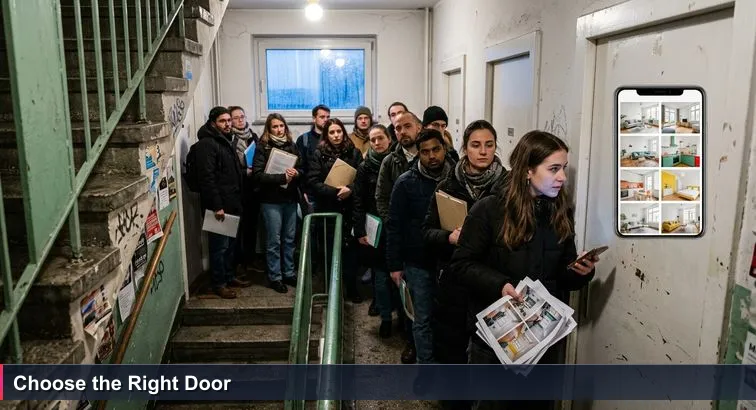
In a dim Neukölln stairwell, twenty people shuffle their Mietmappen against a peeling wall, the air thick with cigarette smoke and rain-soaked jackets. Someone at the front clutches a crumpled “Top 10 Apartments in Neukölln” printout, glancing between glossy photos on their phone and the very real, very imperfect door in front of them.
Breaking into Germany’s tech scene feels uncomfortably similar. On paper, the market looks wide open: according to an overview of IT job opportunities in Germany, there are an estimated 137,000+ unfilled IT roles, and yet juniors hear it’s “an employer’s market” with dozens or even hundreds of applicants per posting, especially in Berlin and Munich. Meanwhile, The Berlin Life counts 155 funded German startups that have already raised capital this year, most planning to scale engineering teams over the next 6-18 months.
Like flat listings, the headline numbers don’t tell you where it actually makes sense to queue. Some companies are optimised for senior hires or contractors only; others quietly invest in mentoring bootcamp grads and dual-study students. Beyond the buzzwords, you need to ask: Who really ships with juniors on the team? Who has runway past next winter? Who offers a proper German contract with Sozialversicherung instead of a fragile freelance setup?
This Top 10 is designed as a viewing schedule, not a verdict. Each “door” on the list earned its place by showing concrete signals that matter in Germany’s ecosystem:
- Recent funding or grants (EXIST, HTGF) and clear hiring momentum
- Explicit junior roles, working-student positions, or trainee programmes
- Stacks aligned with AI, fintech, climate tech, or SaaS, not legacy-only maintenance
- Clues about mentoring, Weiterbildung budgets, and sane Probezeit expectations
Think of the next sections as carefully chosen stairwells across Berlin, Munich, Hamburg, Cologne, Frankfurt, and Aachen. The rankings get you to the right floors; your job is to decide which corridor, contract, and team feel like a place you can actually live - and grow. To widen your own list beyond the obvious names, keep an eye on funded startups actively hiring in Germany and HTGF’s portfolio as the “hidden flats” of the tech scene.
Table of Contents
- From Berlin Stairwells to Startup Staircases
- Taktile
- DeepL
- 1KOMMA5°
- Humanoo
- Talon.One
- Helsing
- Quantum-Systems
- Black Semiconductor
- Sustainix AI
- Rapid Pioneers Group
- How to Use This List
- Frequently Asked Questions
This comprehensive guide for Germany AI careers 2026 covers Berlin vs Munich, salaries, and bootcamp options.
Taktile
Among Berlin’s many fintech stairwells, Taktile is one of the rare doors where juniors are explicitly invited in. The company builds a decision automation platform that lets banks, lenders, and insurers run real-time risk and pricing logic without hard-coding every rule, combining a low-code interface with serious data infrastructure.
Evidence that this isn’t a seniors-only shop is easy to spot. Recent postings for a back-end software engineer role in Berlin describe a culture of pairing less-experienced engineers with seniors from top-tier tech backgrounds. Taktile regularly advertises Software Engineer Intern and junior backend roles, often highlighting students from German institutions like HPI. On Glassdoor, employees rate the company around 4.9/5, an unusually strong signal for culture and leadership in a still-young startup.
From a skills perspective, Taktile is a compact, modern stack to bet on: TypeScript, Node.js, React, and Python on modern cloud tooling. Salary trackers focused on Berlin’s startup scene put junior developers in funded SaaS and fintech companies roughly in the €55,000-€85,000 range, depending on prior experience and role scope. Tracxn’s overview of German startups and funding also notes that Taktile is backed by major VCs like Sequoia and Index Ventures, which typically implies a multi-year runway.
To treat Taktile like a promising flat viewing rather than a dream listing, focus on what you can control:
- Build one or two small services in Node/TypeScript that mimic decision rules (credit checks, pricing tiers) and deploy them.
- Showcase data-heavy projects, not just simple CRUD apps; think risk dashboards or A/B testing tools.
- In interviews, ask how Probezeit is handled, how code reviews work, and how often juniors pair with seniors on real customer features.
For Berlin-based juniors aiming at fintech and AI-adjacent work, that combination of modern stack, strong investors, and explicit mentoring makes Taktile a particularly solid first door to knock on.
DeepL
Not every AI “unicorn” in Germany expects you to be a PhD researcher, and DeepL is the clearest proof. The Cologne-based company behind one of the world’s most accurate machine translation engines has grown into a $1.7B+ AI heavyweight, powering translations in 32+ languages across web, desktop and API products. It routinely appears on lists of Germany’s most dynamic startups, for example in LinkedIn’s overview of top startups in Germany.
For juniors, the crucial detail is that only a fraction of roles are pure NLP research. As DeepL expands language coverage and enterprise features, it needs people in full-stack product teams, infrastructure, internal tools, and customer-facing integrations. That creates entry points if you’re strong in Python, C++ or modern web stacks, but not yet writing transformer architectures from scratch.
The technical environment is a mix of heavy Python and C++ for performance-critical components, plus TypeScript-based web apps and SaaS interfaces. Market data on junior roles at scaled German product companies suggests compensation roughly in the €60,000-€85,000 range for AI/ML-adjacent and full-stack positions, depending on city and experience. Recruiters analysing the market on IT jobs in Germany and salary trends note that AI skills now sit at the top of the pay spectrum.
To turn DeepL from distant “dream listing” into a realistic viewing, focus on evidence that you can work with language data and production systems:
- Publish at least one NLP or LLM-related side project (e.g. a translation quality evaluator, term-glossary manager, or prompt-based translation helper).
- Document your work in English and, if possible, German; many DeepL customers operate under EU regulation, so showing you understand multilingual UX and basic GDPR constraints helps.
- Follow DeepL engineers and recruiters on LinkedIn and watch curated lists of AI-heavy employers; timing your application around visible team expansions can significantly improve your odds.
For AI-minded juniors who want both cutting-edge models and a broad product surface, DeepL offers one of the strongest combinations of brand, tech, and realistic entry routes in the German ecosystem.
1KOMMA5°
Climate tech is one of the few sectors in Germany where “mission” and “market” pull in the same direction, and 1KOMMA5° sits right at that intersection. The Hamburg-based unicorn helps households and SMEs install solar, heat pumps, and home batteries, while its Heartbeat platform orchestrates energy flows across thousands of IoT devices in real time.
Why it’s a strong first step for juniors
For an entry-level dev, this is a rare chance to work where hardware and cloud actually meet. Active postings for Working Student - Software Engineering and junior backend/frontend roles on sites like startup job listings in Germany show they’re not just hiring seniors. You’re likely to touch everything from installer tooling and customer dashboards to the orchestration layer that balances solar, storage, and grid power.
Stack, salary, and what you actually learn
On the tech side, expect a modern web stack: JavaScript/TypeScript, React, and Node.js, with IoT protocols and event-driven backends underneath. In Germany’s climate-tech scene, juniors at this stage can typically expect around €55,000-€80,000, often topped up with virtual shares (VSOP) rather than big-company bonuses.
Germany-specific upsides (and trade-offs)
1KOMMA5° rides powerful structural tailwinds: Germany’s Energiewende, EU climate regulation, and a broader DeepTech push highlighted in overviews of DeepTech startups in Germany. That usually translates into strong demand and multi-year visibility.
- Expect a classic 6-month Probezeit and a fast-paced, sometimes chaotic rollout culture.
- Weekly priorities can shift with grid constraints, installer capacity, or new funding programmes.
- The upside: you see your code move real kilowatts, not just pixels.
To stand out, build a small project that talks to real or simulated hardware - Raspberry Pi energy monitor, smart plug controller, or a mock solar dashboard - and be ready to explain how you’d design for reliability when devices go offline in a North Sea storm.
Humanoo
In Berlin’s crowded digital-health corridor, Humanoo is one of the few doors where “junior” isn’t an afterthought. The company runs a wellness platform that employers and insurers use to support physical activity, mental health, and prevention programmes - giving you real users, real outcomes, and clear business value to talk about in interviews.
Why it stands out for juniors
Recent Junior Fullstack Engineer postings explicitly state that senior developers are responsible for “mentoring and guiding junior developers,” signalling a team built around multiple experience levels, not a lone junior tacked onto an all-senior squad. That kind of wording is still rare in Berlin job ads, where many startups quietly prefer mid-level-only hires.
"Simply being 'good enough' is no longer sufficient; above-average skills are needed... achievement requires more than just the basics."
- Dorian Develops, Software Engineer & YouTuber, in a 2026 analysis of Germany’s tech job market
Stack, salary, and what you actually work with
On the tech side, Humanoo operates a classic product stack: full-stack React on the frontend, Node.js/Java on the backend, and mobile clients (React Native or native) for end users. In Berlin healthtech, juniors typically fall in the €55,000-€75,000 band, with data from platforms like junior software roles in Berlin confirming that range for funded startups.
How to make your application smell like senior quality
Because Humanoo deals in health data, you’ll touch GDPR, security, and consent from day one - excellent training, but a higher bar for sloppiness. Recruiters and interviewers increasingly ban AI tools in live coding sessions, as creators dissecting the market on German tech interview trends point out.
- Build a small wellness or habit-tracking app and design it as if it handled sensitive data: clear consent, minimal retention, export/delete features.
- In your CV, emphasise testing, error handling, and observability - skills that matter when bugs affect people’s health journeys, not just dashboards.
- At interviews, ask how code reviews, onboarding, and mentoring are structured during Probezeit; a good answer here is as important as any salary figure.
Talon.One
In Berlin’s SaaS stairwell, Talon.One is the door that opens onto discount logic, fraud prevention, and enterprise-scale integrations rather than yet another CRUD dashboard. The company provides a promotion and loyalty engine used by large e-commerce and retail brands to handle vouchers, referral programmes, and personalised offers across millions of customers.
What makes it interesting for juniors is how openly it talks about team structure. Job descriptions for mid and senior engineers emphasise a “proactive and constructive approach to mentor junior members,” which implies a layered engineering organisation instead of a flat team of lone experts. For someone fresh from a bootcamp or university, that expectation of mentoring is a strong signal you’ll get code reviews and pairing rather than being thrown at customer incidents alone.
Technically, Talon.One sits on a very CV-friendly stack: backend in Go (Golang), frontend in React, and PostgreSQL plus cloud infrastructure underneath. For Berlin-based SaaS companies with similar stacks, junior developers typically earn around €55,000-€75,000, which keeps the city competitive within Europe’s junior market, even if the rare €100k+ outliers tracked by sites like NextLevelJobs are more common in Switzerland or London than in Germany.
Runway-wise, Talon.One is a Series B company backed by investors such as HV Capital. That usually translates into roughly 18-24 months of financial visibility post-round, enough time for a junior engineer to grow from onboarding through a full product cycle. Promotions and loyalty tooling also tends to be non-cyclical: even in downturns, brands invest heavily in customer retention.
- Build a small “promotion engine clone” in Go: issue discount codes with rules like minimum basket size or expiry dates.
- Add a React admin UI and show off your data modelling and SQL skills.
- Use platforms listing German SaaS employers, such as Wellfound’s Germany startup directory, to discover similar companies, then tailor each application with concrete examples of complex business logic you’ve implemented.
Helsing
At the far end of Germany’s DeepTech corridor, Helsing is the stark, high-security door marked “sovereign defence AI.” The company builds software for situational awareness, sensor fusion, and decision support for European governments and armed forces. With a valuation around €3.4B, it has become one of Europe’s most prominent defence-tech startups and a symbol of the continent’s push for strategic autonomy in AI.
For juniors, the appeal is the sheer density of hard problems. Helsing works with multi-modal sensor data, real-time systems, and large-scale perception pipelines. That means exposure to fields that usually only show up in PhD programmes or at automotive OEMs: tracking, SLAM-like perception, and high-throughput data processing. It’s a hypergrowth environment where engineering teams expand rapidly as contracts and programmes scale.
Technically, you’ll be in a world dominated by C++, Python, and modern build/tooling ecosystems (CMake, CI for performance-critical code), plus cloud infrastructure for training and simulation. Defence-tech AI roles tend to sit at the upper end of junior pay in Germany, often above €70,000 base to compete with Big Tech and automotive, and Munich consistently ranks as one of the strongest hubs for highly paid junior developers in Europe in surveys like Euro Top Tech’s city comparisons.
There are, however, very specific trade-offs:
- Expect strict security rules, possible background checks, and limited remote work.
- Ethical comfort with defence applications is non-negotiable; you need your own clear stance.
- Process can be more formal than in typical Berlin SaaS startups, due to government procurement and safety requirements.
To get a realistic shot, build or contribute to open-source robotics, vision, or simulation projects that show you understand coordinate systems, latency constraints, and optimisation. Then look for similar DeepTech employers via platforms like the HTGF startup job board, which frequently lists early-stage defence, robotics, and industrial AI startups, and use those applications to refine a portfolio tailored to high-stakes, real-time systems.
Quantum-Systems
Among Bavaria’s rolling fields and test ranges, Quantum-Systems feels like the hangar door at the end of the corridor: behind it sit fixed-wing drones with onboard AI, used in defence, mapping, and environmental monitoring. Having become a defence-tech “unicorn” around 2025 and reportedly producing 4,000+ drones annually, it offers something rare in Germany’s startup scene: real aircraft, not just virtual dashboards.
Why it’s a strong junior launchpad
For early-career engineers, the attraction is the mix of hardware + AI. Teams span embedded firmware, autonomy and perception, ground control software, and cloud-based mission planning. As a growth-stage company, Quantum-Systems is scaling engineering across autonomy, perception, test, and tools - precisely the areas where junior roles in automation, QA, and developer tooling tend to emerge when flight hours and fleets ramp up.
Stack, pay, and on-site reality
Technically, expect a blend of C/C++ for flight software, Python/C++ for perception and autonomy, and modern web stacks for control stations and cloud tooling. Compensation for AI and autonomy developers in Europe skews higher than generic web roles; market analyses comparing AI developer rates across regions show that EU-based specialists are increasingly paid to compete with US and UK offers. For juniors, that usually translates into salaries competitive with Bavarian automotive and aerospace OEMs, especially when on-site presence near test facilities is required.
- Most roles require regular on-site work in Bavaria for hardware access and flight testing.
- Collaboration with research partners (universities, Fraunhofer-style institutes) is common in UAV projects.
- Defence-related contracts bring stability but also stricter processes and export controls.
To get on their radar, build a simulated drone or robotics project using open-source stacks like PX4 or Gazebo, and document flight control, safety checks, and latency considerations in a short write-up. Then look at European DeepTech talent programmes such as 28DIGITAL’s startup opportunities gateway, which often feature autonomy, robotics, and hard-tech startups searching for juniors who are comfortable at the intersection of physics, code, and real-world constraints.
Black Semiconductor
Black Semiconductor sits in a different kind of corridor to Berlin SaaS: cleanrooms, test benches, and wafer-level experiments in Aachen. The company is building next-generation chip technology to dramatically improve data transfer within and between chips - infrastructure that underpins high-performance AI and hyperscale data centres.
Why it’s a rare junior opportunity
The most important signal for early-career developers is scale: Black Semiconductor plans to grow from around 30 to 120 employees by late 2026, which almost guarantees new entry-level roles in software tooling, test automation, and data engineering. The startup sits inside a broader German push for semiconductor sovereignty, backed by specialist investors you can explore via platforms such as Startbase’s overview of high-tech investors in Germany. That mix of national strategy and private capital gives the company more resilience than a typical app-only startup.
Stack and learning curve
Day to day, expect a tooling-heavy environment: Python for measurement frameworks and data analysis, C/C++ for low-level control, and a lot of numerical computing around simulations and signal processing. Analyses of Python developer markets, such as Meduzzen’s breakdown of Python developer cost and complexity, underline how skills at the hardware-AI boundary increasingly command a premium because relatively few engineers can operate there.
- Build hardware-adjacent side projects: FPGA experiments, chip or bus simulations, or signal-processing pipelines using NumPy/SciPy.
- Show you can read and implement ideas from academic papers - summarise one or two in your portfolio and link to working code.
- Highlight any experience with lab equipment, measurement automation, or time-series data, even from university labs.
For juniors who enjoy maths, low-level detail, and working close to the metal, Black Semiconductor offers a path into Germany’s most strategic DeepTech sector - one where your early projects can ripple out into how future AI hardware across Europe actually works.
Sustainix AI
Sustainix AI operates in one of the few areas where regulation practically guarantees demand: sustainability reporting. The startup applies AI to ESG and carbon data, helping companies automate tasks like CSRD-aligned reporting, carbon accounting, and analytics for decarbonising operations. Roles are typically remote within Germany, making it accessible whether you’re in Berlin, Leipzig, or a smaller university town.
What sets Sustainix apart for juniors isn’t just the domain, but the way it treats candidates. The company has been recognised as being in the top 1% of startups by response time, usually replying to junior applications within a single day. In a market where many early-stage companies still ghost applicants, this level of responsiveness signals a hiring process that respects your time. It also aligns with a broader shift towards more professionalised recruiting among German startups, highlighted in overviews of hiring and recruitment startups in Germany.
Under the hood, Sustainix is a classic data-heavy product: Python for data pipelines and models, data warehouses for storing ESG metrics, and React-based dashboards for sustainability teams. As an early-stage company, compensation often tilts toward equity via VSOP, with base salaries slightly below big-city averages to reflect higher risk. The trade-off is steeper learning curves and broader ownership than you’d see in a corporate sustainability department.
Because EU rules like CSRD and the taxonomy are driving mandatory ESG reporting, the long-term demand picture is strong, but early-stage risk is real. Juniors should treat this as a calculated bet and:
- Build a small dashboard or pipeline around public ESG data (e.g. emissions, diversity metrics) and link it in your email subject line.
- Ask directly about funding status, months of runway, and whether you’ll receive a full German employment contract with Sozialversicherung.
- Show that you understand both the numbers and the story: why sustainability data matters for investors, regulators, and employees.
Rapid Pioneers Group
Rapid Pioneers Group is the kind of door you almost miss at the end of the corridor: a mobility-focused startup in Berlin/Frankfurt, still partly in stealth, already working with early customers. Alongside a founder-level CTO role, they’ve advertised a Junior Software Engineer position in Frankfurt/Remote, a concrete signal they’re building a mixed-seniority engineering team rather than a founders-only prototype shop.
Why it’s appealing for juniors
At this stage, you’re only one or two steps away from product decisions, sales calls, and investor decks. That proximity means real ownership over features in transport and logistics, a sector that sits at the heart of Germany’s industrial identity alongside players like BMW, VW, and Deutsche Bahn. Overviews of the best tech companies to work for in Germany consistently highlight mobility and automotive as core tech employers, and early-stage SaaS in this space often feeds directly into that ecosystem.
Stack, pay, and risk profile
The exact tech stack isn’t fully public, but most young mobility SaaS teams lean on TypeScript, cloud APIs, and mapping/route-optimisation libraries. Compensation at pre-seed tends to be “market-level junior base plus meaningful VSOP,” trading some salary for equity and influence. The flip side: runway is shorter, product-market fit still in motion, and processes (including onboarding) may be lightweight to non-existent.
How to stand out in mobility/logistics
If you decide this is a queue worth joining, treat it as a calculated risk and make your domain interest impossible to ignore:
- Build a small routing or delivery optimiser using open mapping APIs and clearly explain your trade-offs in a README.
- Ask directly about current funding, months of runway, and whether you’ll be on a German employment contract with Sozialversicherung.
- Use international-friendly platforms like Relocate.me’s overview of companies hiring abroad to discover similar logistics and mobility startups across Germany and the EU, then cross-apply with a mobility-focused portfolio.
How to Use This List
Back in that Neukölln stairwell, the “Top 10” list got you to the right floor, but the smell of damp plaster told you more than the photos ever did. This list of startups works the same way: it narrows the city, the Kiez, the building - but you still have to step through the door and inspect what life there would actually feel like.
Turn rankings into a checklist, not a verdict
Instead of asking “Is this a top startup?”, ask “Is this junior-friendly for me?” For every company you consider, evaluate:
- Runway & funding: Have they raised recently? Do they mention grants, revenue, or profitability? In interviews, ask calmly: “How many months of runway do you have at current burn?”
- Real customers: Look for named case studies, not just pilots; ask what share of revenue is recurring.
- Team & hiring velocity: On LinkedIn, check if they’ve added multiple engineers or product people in the last 6-12 months, including juniors or working students.
- Contract & benefits: Favour German employment contracts with Sozialversicherung, clear Probezeit rules, and a budget for Weiterbildung over vague “freelance” arrangements.
Look beyond the obvious doors
LinkedIn and generic job portals only show part of the picture. Many of the most junior-friendly companies work closely with bootcamps and integration programmes. Articles on platforms like IamExpat’s coverage of tech bootcamps for migrants highlight how startups tap alternative talent pipelines rather than relying solely on traditional CS degrees.
Use those ecosystems to your advantage: join alumni groups, apply via talent gateways, and keep an eye on Germany-focused coding schools such as Le Wagon’s German campuses, which regularly publish partner startups and hiring events. Combined with meetups at TU Berlin, TUM or RWTH Aachen, this gives you a much richer “viewing schedule” than any one platform.
Choose your queue on purpose
The German tech market is paradoxical: plenty of open roles, plenty of applicants, and not enough true matches. You can’t stand in every queue, so decide deliberately which stairwells to commit to - Berlin AI, Munich defence tech, Hamburg climate, Aachen chips - and invest deeply in the skills and side projects that those corridors reward. Use this Top 10 as a shortlist of doors worth knocking on, then trust your own questions, instincts, and non-negotiables when the door finally opens.
Frequently Asked Questions
Which startup on this list is the best launchpad for junior developers in Germany?
Taktile stands out as the best overall launchpad - its job ads explicitly include internships and junior backend roles, mentorship is baked into teams, and Berlin salary ranges for juniors there sit around €55,000-€85,000. Pick it if you want fintech exposure plus structured learning rather than a purely research-heavy or hardware-only role.
How did you decide these startups actually hire junior developers?
I used four practical signals: recent junior-specific openings (working students, interns, junior devs), explicit mentoring in job descriptions, clear runway or funding (e.g., Series A/B or HTGF/EXIST backing), and modern stacks relevant to entry-level work. Those filters weed out places that list only senior or contractor roles and highlight companies actively growing junior headcount.
What salary and benefits can a junior expect at these German startups in 2026?
Typical junior ranges across the list are roughly €55,000-€85,000 depending on location and domain (AI/defence roles trend €65k-€85k, while early-stage sustainability startups may offer lower base but equity). Many also provide Weiterbildung budgets of about €500-€2,000/year, and you should confirm whether you’ll be on a German contract with Sozialversicherung.
What checks should I do to avoid risky early-stage offers?
Ask about runway in months, current Umsatz or recurring revenue percentage, and whether the role is a German employment contract (Sozialversicherung) versus contractor-only; also expect a Probezeit commonly around six months. Check LinkedIn hiring velocity and whether seniors are explicitly responsible for mentoring - these are strong practical risk signals.
How can I make my application stand out for junior roles at these startups?
Ship one or two targeted projects that match the stack (e.g., a Node/TypeScript decision-engine for fintech, a Go promotions engine for e-commerce, or a drone simulation for robotics) and publish code on GitHub with a short tech write-up. Network via Berlin meetups, bootcamp alumni (Nucamp, Le Wagon) and follow responsive startups like Sustainix - fast reply rates often correlate with better interview processes.
AI Meetups and Networking in Germany 2026: your guide to communities, conferences, and city hubs
Top German tech coworking spaces & incubators for AI founders - 2026 guide
Best AI engineering employers in Germany 2026: a top-10 timetable
Best free tech training resources in Germany (libraries, VHS, Fab Labs) - 2026 guide
See which programs made the list of the best AI bootcamps in Germany 2026 and how they connect to companies like SAP and Zalando.

Irene Holden
Operations Manager
Former Microsoft Education and Learning Futures Group team member, Irene now oversees instructors at Nucamp while writing about everything tech - from careers to coding bootcamps.