









AI Meetups, Communities, and Networking Events in Germany in 2026
By Irene Holden
Last Updated: April 12th 2026
Key Takeaways
Pick a home city and show up: in 2026 that means treating Berlin as the GenAI, agents and policy hub and Munich as the industrial AI and MLOps heart, then commit to a predictable rhythm of a technical meetup, an industry seminar and a Stammtisch each month. Big institutional bets like Deutsche Telekom and NVIDIA’s €1.2 billion Industrial AI Cloud in Munich and affordable, community-first training such as Nucamp’s bootcamps priced from €1,955 to €3,660 with a reported 78% employment rate mean steady local attendance turns into pilots, job leads and partnerships. This guide is for engineers, founders and career-changers in Germany who want a practical playbook to turn meetups into measurable career capital.
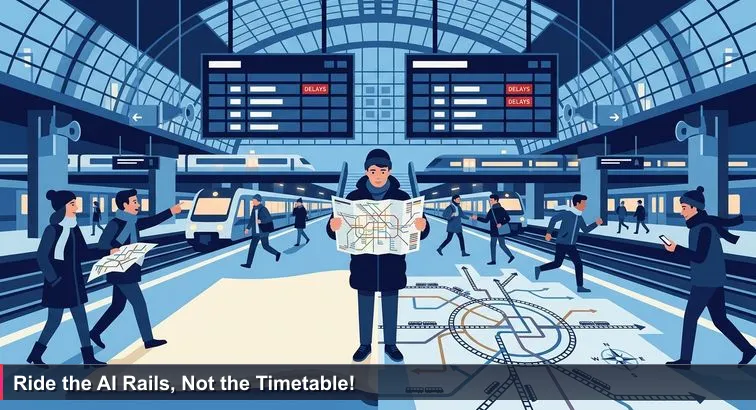
You’re standing in Berlin Hauptbahnhof on a freezing January night, gripping a printed train plan that - on paper - gets you home in three smooth connections. The ink is still crisp, every Umstieg neatly highlighted. For a moment, the plan feels like certainty.
Then the departure board flips. Your ICE: cancelled. The connecting RE: “fällt aus”. Even the backup RB you didn’t plan to take is suddenly “verspätet auf unbestimmte Zeit”. Around you, you hear that familiar murmur roll through the concourse as loudspeakers fire off rapid German updates you half understand.
Before the panic really lands, the guy next to you with the worn backpack just shakes his head, smiles and says, “Komm, there’s a regional that’s not on the app. If we change in Stendal we’ll still get through.” He’s not staring at the paper or the app anymore; he’s reading the room - the flow of people, the habits of commuters who’ve ridden these tracks a hundred times.
Germany’s AI landscape feels exactly like that station. You can bookmark every meetup in Berlin, flag MLcon and KI in your calendar, subscribe to every newsletter about the national AI strategy and its competence centres described in the federal Germany AI Strategy report - and still end up stuck on the platform. The map in your head doesn’t move you; the communities you move with do.
This guide treats Germany’s AI world like a rail network, not a brochure. Instead of chasing every shiny event, you’ll learn to pick your line, ride it regularly, and travel with the people who already know the hidden connections - until those routes feel as familiar as your daily S-Bahn.
In This Guide
- From Perfect Plans to Real Tracks
- Why AI Communities Matter in Germany
- Germany’s AI Scene as a Rail Network
- Types of AI Communities and Events
- Regular Meetups and Claude Code Communities
- Company Tech Talks and Industrial AI Initiatives
- University Seminars and Research Series
- Conferences, Summits and High-Impact Events
- Bootcamps and How Nucamp Fits In
- City-by-city Networking Playbooks
- A Practical Monthly Rhythm Template
- Networking as an Introvert or Newcomer
- Turning Events into Career Capital
- Advanced Community Strategies
- Build Your Personal AI Streckennetz
- Frequently Asked Questions
This comprehensive guide for Germany AI careers 2026 covers Berlin vs Munich, salaries, and bootcamp options.
Why AI Communities Matter in Germany
Across Germany, AI has moved from slide decks to factory floors. When Deutsche Telekom and NVIDIA committed around €1.2 billion to an Industrial AI Cloud in Munich, it signalled a clear shift: companies now expect autonomous robotics, digital twins, and optimisation models that touch real production lines, not just demo dashboards, as outlined in Telekom’s announcement of the Industrial AI Cloud in Tucherpark.
In this environment, “AI theater” is wearing thin. Mittelstand suppliers in Baden-Württemberg or NRW want pilots, benchmarks, and ROI they can explain to a Betriebsrat. Hadrien de Cournon from RAISE describes this new standard bluntly: events exist so decision-makers leave “with real partnerships, pilots, and signed deals”, not just inspiration.
At the same time, the door into the field has opened. Zamina Ahmad, CEO of shades&contrast, argues that today “the idea matters, not the diploma”, because modern tooling lets non-traditional founders build most of a product before hiring a full engineering team. That makes community ties and project collaborators far more valuable than another bullet point on your formal CV.
Germany’s own priorities amplify this. Analysts tracking “15 Ways AI is being used in Germany” highlight data sovereignty, privacy by design, and responsible scaling as defining features of the local ecosystem. Publicly funded AI competence centres and the federal strategy create infrastructure, but the real knowledge of how to implement these principles lives inside meetups, Slack groups, and research seminars.
With chronic skill shortages and strong demand across automotive, manufacturing, and healthcare, the official portal on opportunities for AI talent in Germany frames AI specialists as crucial to competitiveness. In practice, though, it’s your presence in communities - the people who’ve seen you ship, contribute, and collaborate - that becomes your real CV.
Germany’s AI Scene as a Rail Network
Look at a Deutsche Bahn map for a moment and you’ll see Germany’s AI ecosystem in miniature. Each hub has its own tempo, specialisation, and crowd of “regular commuters” who know exactly which connection to catch.
Berlin is the high-frequency node for GenAI, agents, and policy. Startups experiment with Claude-based tooling, NGOs debate AI regulation, and research flows from TU Berlin, HU and the BIFOLD centre for big data and ML, one of the national competence hubs listed on the German AI centers overview. If you care about LLM products, AI safety, or digital policy, this is the S-Bahn you’ll ride most often.
Further south, Munich runs on Industrial AI. Automotive OEMs, Siemens, and SAP cluster around applied ML in manufacturing, robotics, and digital twins. The region’s push into “Industrial AI made in Europe” and sovereign cloud stacks reflects a national ambition to compete with US and Chinese players, highlighted in analyses of how Germany bets on industrial AI to rival other tech powers.
To the west, the Rhine-Ruhr corridor (Cologne, Düsseldorf, Aachen) is a dense tangle of B2B software, logistics, and gaming. RWTH Aachen and TU Dortmund link directly into Mittelstand engineering projects, while Cologne’s Devcom and Gamescom communities explore AI in games and simulation. Down in Stuttgart/Tübingen, Cyber Valley anchors a quieter but intense deep-tech line, where robotics, computer vision, and foundational models meet automotive and robotics giants.
Hamburg, with its ports, airlines, and media houses, is the pragmatic branch line focused on data-rich logistics and content. Mastery of this whole network doesn’t mean visiting every station once; it means picking a “home line”, riding it regularly, and becoming one of the faces people expect to see in that carriage month after month.
Types of AI Communities and Events
Once you stop treating “AI networking” as a single activity, the station suddenly comes into focus: there isn’t one track, but several overlapping lines, each with its own rhythm, crowd, and payoff for your career.
- Grassroots meetups and niche groups (like Claude Code and MLOps communities)
- Corporate tech talks and industrial AI ecosystems
- University seminars and research colloquia
- Conferences, summits, and policy forums
- Bootcamps and cohort-based learning communities
Regular meetups are the S-Bahn of the ecosystem: frequent, local, and practical. On platforms like the AI/ML and MLOps groups in Germany, you’ll find everything from small-language German Stammtische to 100+ person LLM evenings. These are where you see unpolished demos, failed experiments, and the reality of deploying models in Berlin agencies, Munich OEMs, or Hamburg logistics firms.
Corporate and university events are more like IC trains: fewer stops, more structured content. Telekom, SAP, Siemens, and university competence centres use them to show how Industrial AI, data sovereignty, and responsible scaling work in practice. They’re ideal if you want to understand production constraints, security requirements, or how research is being translated into products.
Conferences and bootcamps are your occasional ICE: high-intensity sprints that can reset your trajectory. Events such as the Generative AI and MLOps-focused MLcon Berlin compress dozens of talks, workshops, and hallway conversations into a few days, while cohort-based programs give you a built-in peer group over weeks or months. The art is not attending everything, but matching formats to your current goal - deep technical growth, industry exposure, or building a local support network - and riding those lines consistently.
Regular Meetups and Claude Code Communities
The most reliable “trains” in Germany’s AI network aren’t the big conferences; they’re the regular meetups where people show what actually broke last week. Walk into a Thursday evening LLM meetup in Berlin or Munich and you’ll see laptops open, half-finished dashboards, and side conversations about obscure CUDA errors in a way no polished keynote ever captures.
Claude Code Anonymous has become the flagship of this scene. Chapters in Berlin, Munich, and Bielefeld run monthly or bi-monthly, drawing 150+ developers per session to dissect agent workflows built with tools like Claude Code and Cursor. The format is intentionally confessional: short talks, then honest Q&A about edge cases, prompt failures, and what really made it to production. A community recap of Munich’s first edition on Reddit’s r/ClaudeAI describes a packed room of practitioners trading war stories long after the official agenda ended.
Munich’s broader LLM ecosystem builds on this energy. The Munich AI ML LLMs Developers group regularly fills rooms with 100+ attendees from BMW, Siemens, and local startups, mixing live coding, architecture deep-dives, and hallway hiring conversations. Posts like Jason Bigman’s weekly overview of Claude Code meetups in Munich show how quickly these sessions have become anchor points for the city’s GenAI crowd.
In Berlin, KI-und-Nachhaltigkeit and adjacent groups focus on climate, energy, and circular economy use cases, reflecting a broader national push to use AI for sustainability and “responsible scaling”. For anyone targeting impact roles, these gatherings are where NGOs, civic-tech founders, and researchers quietly compare notes months before job ads appear.
- Bring a tiny demo or repo link you can show in 5 minutes
- Ask one concrete question about a problem you’re facing
- Follow up with 2-3 people on LinkedIn within 24 hours
Company Tech Talks and Industrial AI Initiatives
Inside Germany’s major corporates, AI isn’t a side project anymore; it’s wired into the infrastructure. When Deutsche Telekom partnered with NVIDIA to build a dedicated Industrial AI Cloud in Munich, it wasn’t just about GPUs. It created a physical hub for partner days, technical deep-dives, and ecosystem meetups where automotive, robotics, and manufacturing teams sit down with Telekom engineers to talk about latency, PLC integration, and on-prem data sovereignty, as outlined in the company’s announcement of the Industrial AI Cloud in Tucherpark.
Similar patterns are emerging around SAP and Siemens. Their “Industrial AI Made in Europe” collaboration leans heavily on sovereign stacks and secure data spaces for factories, with public webinars and integration sessions explaining how to connect MES, ERP, and ML services. SAP describes this as part of a broader push for “digital sovereignty” in its news on the Industrial AI Cloud partnership, making these events essential for anyone who wants to understand how enterprise buyers evaluate AI solutions.
Further downstream, Bosch, BMW, and other OEMs rely on these infrastructures for digital twins, large-scale simulation, and autonomous systems. Their tech talks and open lab days are less about generic AI hype and more about how to get a model through safety reviews, IT security, and works council sign-off. This is where you hear the questions that never appear in conference keynotes.
- Follow corporate R&D, innovation, and careers pages for “open lab days”, “developer meetups”, and “partner summits”.
- Arrive with one concrete industrial problem you care about (e.g., predictive maintenance, quality inspection) and ask speakers how they’d implement it on their stack.
- After the event, send a short summary of what you learned to one contact inside the company; become the person who turns talks into actionable pilot ideas.
University Seminars and Research Series
Behind the big conferences, a quieter rhythm runs through Germany’s AI ecosystem: weekly and monthly seminars where PhD students, professors, and industry researchers test unfinished ideas in front of a small, demanding room. These sessions are open to you, even if you don’t have a university badge.
Each of the federally funded AI competence centres anchors its own series. In Munich, the MCML Colloquium brings in international speakers on deep learning theory, causal inference, and robustness. In Berlin, BIFOLD’s talks span everything from scalable data management to new optimisation tricks for transformers. Down in Tübingen, Cyber Valley lectures mix computer vision, robotics, and neuroscience-style approaches to learning.
In the west, engineering-heavy universities link research directly to industrial problems. RWTH Aachen and TU Darmstadt host seminars on AI for manufacturing, mobility, and cyber-physical systems, often co-presented with automotive or machinery partners. TU Dortmund’s ML2R initiative, for example, advertises research roles and events focused on machine learning for real-world systems on its Computer Science VIII / ML2R pages, giving you a window into the kinds of problems German industry is funding today.
For your career, these rooms matter for three reasons. First, they accelerate your foundations: spending an hour each week on theory, evaluation metrics, or new architectures compounds faster than yet another generic tutorial. Second, the people asking sharp questions are often future hiring managers or PhD supervisors. Third, showing up repeatedly signals that you’re serious; after a semester, you’re no longer “the outsider from industry” but a regular face in the back row.
If you’re pivoting into AI or aiming at research-heavy roles in companies like Bosch, BMW, or SAP, committing to one seminar series for six to twelve months is one of the most effective, low-cost ways to plug into Germany’s deep-tech core.
Conferences, Summits and High-Impact Events
High-impact events are the ICE trains of Germany’s AI network: you don’t ride them every week, but when you do, they can change where you work, who you know, and how you think about deployment.
On the technical side, MLcon Berlin focuses tightly on Generative AI, MLOps, and NLP, drawing engineers and platform teams who compare stacks, benchmarks, and incident stories. The 2025 edition ran from 24-27 November; the current Berlin program continues that emphasis on production-grade GenAI, as outlined on the MLcon Berlin conference page. Its sister event, ML Conference Munich, leans into Industrial AI and strategy, making it a natural fit if you’re orbiting automotive, manufacturing, or logistics.
Alongside them, KI in Potsdam (the long-running German Conference on Artificial Intelligence) blends academic rigour with industry workshops, while smaller events like the Heidelberg AI Summit focus on pharma and personalised medicine. On the more curated end, Rise of AI in Berlin keeps attendance to the low hundreds, intentionally mixing founders, policymakers, and researchers in a room where you can actually talk, not just collect lanyards.
Then there are the mega-festivals. GITEX Europe in Berlin brings together around 1,400+ companies from 100 countries, turning Messe Berlin into a temporary map of global AI vendors and government delegations. These events can feel overwhelming, but they are unmatched if your goal is market scanning, vendor comparison, or finding international partners without leaving Germany.
Professional event strategists increasingly argue that the value of these gatherings lies less in inspirational keynotes and more in deployment benchmarking and vendor comparisons. Guides such as Vendelux’s overview of the best AI conferences and how to use them recommend arriving with a clear agenda: which three tools you want to evaluate, which roles you want to meet, and which concrete questions you’ll ask about time-to-production, failures, and ROI.
Bootcamps and How Nucamp Fits In
In a country where many coding schools still charge well over €10,000, affordable bootcamps are the regionale trains that make an AI career realistically reachable. Instead of betting everything on a single, expensive program, you can layer structured learning on top of meetups and university talks, building skills and network in parallel.
Nucamp sits squarely in this niche. Its online-first, community-based model runs live workshops in 200+ cities across Germany and Europe, with evening and weekend sessions designed for people who already have jobs or Familienpflichten. Programs range from about €1,955 to €3,660, with flexible monthly payments, a reported graduation rate around 75%, and approximately 78% of graduates finding employment. Reviews aggregate to roughly 4.5/5 stars, with about 80% five-star ratings.
| Program | Duration | Approx. Tuition | Primary Focus |
|---|---|---|---|
| Solo AI Tech Entrepreneur | 25 weeks | €3,660 | Building AI products, LLM integration, agents, SaaS monetisation |
| AI Essentials for Work | 15 weeks | €3,300 | Prompt engineering, AI-assisted productivity, workplace tools |
| Back End, SQL and DevOps with Python | 16 weeks | €1,955 | Python, databases, DevOps foundations for ML engineering |
| Other paths | 4-48+ weeks | €420-€5,190 | Web dev, full-stack, cybersecurity, complete software engineering |
What makes this more than “just online courses” is the built-in cohort. Weekly workshops put you in small groups solving problems together, mirroring the vibe of local AI meetups. In its own overview of AI communities, Nucamp explicitly frames bootcamps as networking engines, not only training programs.
For someone in Berlin, Munich, or the Rhine-Ruhr area, that means a realistic strategy: pair one of these bootcamps with two or three meetups per month. Let the curriculum give you momentum - GitHub projects, AI demos, cloud deployments - then use local communities and conferences to turn that momentum into internships, Werkstudentenstellen, or your first AI product customers.
City-by-city Networking Playbooks
Different German cities give you different “lines” into the AI ecosystem, and the goal is not to visit each one once, but to build a repeatable routine around your home base. A simple rule of thumb is to stack one technical meetup, one strategic or research event, and one social/founder evening into each month, then ride that pattern consistently.
Berlin: GenAI, Agents, and Policy
In Berlin, anchor your month around an LLM or Claude Code-style meetup, then add a high-signal talk series like BLISS or a university lecture, and round it off with a smaller policy or ethics event. When the calendar lines up, swap one slot for a curated conference such as Rise of AI in Berlin, which deliberately caps attendance so you can actually talk to founders, researchers, and policymakers rather than just collecting badges.
Munich: Industrial AI and Deep Engineering
In Munich, your backbone is Industrial AI. Make a local LLM or data meetup your first stop each month, then add one event tied to OEMs or the Telekom/SAP/Siemens ecosystem, and once a year block a full week for ML Conference Munich, which focuses on applied ML and strategy for automotive, manufacturing, and logistics as outlined on the ML Conference Munich program.
Rhine-Ruhr and Stuttgart/Tübingen
In the Rhine-Ruhr region, combine B2B or MLOps meetups in Cologne/Düsseldorf with RWTH Aachen or TU Dortmund seminars, plus at least one visit per year to a gaming-oriented event if you care about simulation or RL. Around Stuttgart/Tübingen, pair Cyber Valley talks with automotive or robotics meetups and occasional corporate lab days at Bosch or Mercedes-Benz.
Hamburg and Hybrid Routes
Hamburg rewards a mix of logistics and data meetups, plus sector events in maritime, aviation, or media. Because many Berlin and Munich conferences stream content, you can layer in remote attendance to stay connected to national debates while building a tight, local network - your own reliable “regional line” through Germany’s wider AI Streckennetz.
A Practical Monthly Rhythm Template
Most people treat networking like an occasional sprint; Germany’s AI ecosystem rewards a steady, almost boring rhythm. Think in months, not days: pre-block 3 evenings per month for communities, and protect them like you would a project deadline.
The template below mirrors the main hubs and gives you a starting point. You can swap cities, but keep the structure: one technical evening, one research/strategy slot, one social or founder-focused night.
| Week of Month | Berlin (GenAI) | Munich (Industrial AI) | Hamburg | Rhine-Ruhr | Stuttgart/Tübingen |
|---|---|---|---|---|---|
| Week 1 | Claude Code / LLM meetup | AI ML LLMs Devs meetup | Local AI/ML meetup | AI/MLOps meetup (Cologne/Düsseldorf) | Cyber Valley public lecture |
| Week 2 | BLISS or uni seminar | AI user group | Data/cloud meetup | RWTH / TU Dortmund seminar | Stuttgart AI meetup |
| Week 3 | KI & sustainability meetup | Industrial AI / corporate event | Sector-specific AI event | Corporate AI event | Corporate lab / industry meetup |
| Week 4 | Policy/ethics or conf stream | ML conf / MCML colloquium | Remote national seminar | Remote national seminar | Remote national seminar |
To use this, first choose a home column that matches your city or focus. Then, for the next three months, commit to attending at least 1 technical meetup, 1 research or strategy session, and 1 social/founder event every month. Add one bigger conference per year, such as KI in Potsdam, which bridges academic and industrial AI according to the KI conference series overview.
Finally, leave some slack for one-off “express trains”: if GITEX Europe or another major festival brings 1,400+ AI companies to Berlin, it can be worth replacing a regular meetup that month, as highlighted in roundups of top AI events and festivals in Europe. The key is that the overall rhythm remains stable, even when individual events change.
Networking as an Introvert or Newcomer
Walking into a 150-person AI meetup in Berlin or Munich can feel more intimidating than any coding challenge, especially if you’re new in town or naturally quiet. The good news is that German networking culture is structured enough that, once you know the rules, you can treat each event like a series of small, predictable steps rather than a chaotic social test.
A Cultural Cheat Sheet
In Germany, the basics matter more than flashy small talk. Being five minutes early signals respect; barging into ongoing conversations or talking through a Vortrag does the opposite. Self-promotion is expected, but in a factual, unexaggerated way: “Ich arbeite gerade an einem kleinen LLM-Projekt für Logistik” lands better than “I’m building the next unicorn.” After talks, many groups move to a Stammtisch in a nearby Kneipe, where it’s perfectly normal to ask “Ist hier noch frei?” and join a mixed table of students, data scientists, and founders.
A Three-Phase Plan for Introverts
Instead of forcing yourself to “network harder”, break each event into three phases you can rehearse:
- Before: Set a tiny goal (two real conversations, one question after the talk). Message the organiser or one attendee in advance so you have at least one familiar face.
- During: Arrive early, when groups are still forming. Use simple openers like “Wie bist du zu diesem Meetup gekommen?” and let others talk about their projects.
- After: Within 24-48 hours, send a short LinkedIn note referencing something specific you discussed, plus one useful link or idea.
Focus on Relationships, Not FOMO
European event guides like the RAISE Summit’s overview of must-attend AI events for founders emphasise that the real value of gatherings comes from a handful of meaningful follow-ups, not from maximising badge count. The same logic applies if you’re introverted or just starting out: pick a small number of communities, show up regularly, and let repetition do the heavy lifting. After three to six months, the same faces start to recognise you, conversations pick up where they left off, and “networking” feels less like performance and more like catching your usual train home.
Turning Events into Career Capital
Standing through another keynote or meetup talk won’t move your career on its own. What matters is what you turn those hours into afterwards: skills you can demonstrate, relationships that remember you, and signals that hiring managers or investors in Germany actually recognise.
For students and early-career professionals, events are raw material for projects. When you hear an engineer from a mobility startup describe their fleet-optimisation pipeline, turn that into a small, public clone in your GitHub. Analyses like DigitalDefynd’s overview of how AI is being used in Germany show that sectors like manufacturing, logistics, and healthcare are especially active; anchoring two or three portfolio projects in these domains makes your CV legible to German employers.
If you’re changing careers, treat every meetup as a way to connect your existing domain expertise to AI. A marketer at a Hamburg agency or a logistics planner in NRW doesn’t need to become a research scientist to be valuable. Bootcamps like neue fische’s School of Data & AI, which curates hiring events and career coaching for Umsteiger according to its list of top AI bootcamps in Germany, work best when you already arrive with clear ideas from industry meetups about which problems you want to solve.
Founders and solo builders can treat conferences and summits as deal pipelines rather than inspiration festivals. Every time you attend a focused event - whether that’s Industrial AI in Munich or GenAI in Berlin - aim to emerge with a handful of concrete follow-ups: pilots to propose, co-founders to trial, or customers to onboard.
- Log every useful contact with context and a next step.
- Translate at least one talk per event into a tiny experiment or feature.
- Share short public write-ups of what you learned; become known for turning ideas into action.
Advanced Community Strategies
Once you’re comfortable catching the “regular trains” of your local AI scene, the next step is to become part of the infrastructure yourself. That doesn’t mean founding a giant conference; it means slowly shifting from visitor to contributor, so people associate your name with reliability, insight, and concrete help.
A simple way to structure this is as a 6-12 month progression:
- Months 1-2: pure attendee. You show up, ask a question or two, and follow up with people afterwards.
- Months 3-4: volunteer. Offer to help with check-in, timekeeping, photos, or writing short recaps.
- Months 5-6: give a 5-10 minute lightning talk on a small project or failure you’ve learned from.
- Months 7-12: co-organise a meetup stream or recurring segment (e.g., “deployment post-mortem of the month”).
As you move up this ladder, you can also use events as structured market research. For example, when evaluating tools for monitoring, vector search, or document processing, talk to three vendors in person and ask the same two questions: “What’s the median time to first production deployment for new customers?” and “What went wrong in your last failed rollout, and how did you fix it?” Comparing answers across conversations turns you into the colleague who brings back hard data, not just swag.
Large German insurers like ERGO, in their own surveys of what AI will realistically improve in daily life and work, stress the need for solutions that create measurable value rather than buzzwords, a theme reflected in their analysis of AI’s impact on digitalisation and technology. The more you can echo this mindset in your debriefs and LinkedIn posts, the more attractive you become to serious employers and partners.
Over time, this combination - visible contribution plus clear, evidence-based takeaways - turns you into a trusted node. People will start seeking you out at meetups and conferences, not because you shout the loudest, but because you’re consistently the one who helps the whole “train” run on time.
Build Your Personal AI Streckennetz
By now, the map in your head should feel different. Instead of a chaotic collage of Eventbrite links and conference logos, you can see Germany’s AI ecosystem as a Streckennetz: Berlin’s GenAI S-Bahn, Munich’s Industrial AI ICE, quieter regional lines through Stuttgart/Tübingen, Rhine-Ruhr, and Hamburg. The question is no longer “What’s happening out there?” but “Which lines am I going to ride, repeatedly, until they carry my career forward?”
A practical starting point is simple. First, choose one home line: the city or theme where you want to be a familiar face (Berlin agents, Munich industrial ML, Hamburg logistics, Stuttgart deep tech, or a hybrid of two). Second, reserve three evenings each month for your network: one technical meetup, one research or strategy session, and one social or founder-focused event. Third, add one or two intensive “express trains” per year - a focused conference or summit where you go in with an agenda and come out with concrete follow-ups.
Underneath that calendar, you need a backbone of skills. That might be a university program, self-study, or a structured bootcamp. Nucamp, for example, combines online lectures with local workshops in more than 200 cities, and its multi-month paths - from Solo AI Tech Entrepreneur to AI Essentials for Work and Python-based backend tracks - are designed so that every week you add a project, not just a concept. In its own guides to AI meetups and conferences, Nucamp frames this mix of curriculum plus community as the fastest route into real ecosystems.
Picture yourself back at Berlin Hauptbahnhof on that winter night. The printed timetable is still in your hand, but now you recognise the crowd; you know which regional will quietly leave from Gleis 7 and who to follow when the board flips red. That’s what a personal AI Streckennetz gives you in Germany: not a perfect plan, but enough trusted routes, regular faces, and practiced moves that, whatever gets cancelled, you still get where you’re trying to go.
Frequently Asked Questions
Which German city should I focus on first for AI meetups and networking in 2026?
Pick a city by domain: Berlin for GenAI, policy and startups (strong ties to BIFOLD and TU Berlin), Munich for industrial AI, MLOps and the Telekom-NVIDIA €1.2 billion Industrial AI Cloud, Stuttgart/Tübingen for deep-tech and Cyber Valley, and Rhine-Ruhr or Hamburg for B2B, logistics and media. Choose one “home line” and attend it regularly rather than chasing every event across Germany.
How often should I attend events to actually build a meaningful AI network?
Block about three evenings per month - one technical meetup, one strategic/seminar, and one social/career event - and stick with that rhythm for at least 3-6 months to see compounding results. Consistency matters more than volume: becoming a familiar face opens doors to projects and hidden roles.
I’m an introvert - what simple tactics will help me get value from large AI meetups?
Before the event set tiny goals (for example, have 2 meaningful conversations and ask 1 question), arrive early to meet people when groups are small, and follow up within 24-48 hours with a short message and one useful link. Messaging the organiser ahead or volunteering can also create low-pressure introductions.
Can a bootcamp like Nucamp actually help me break into Germany’s AI scene?
Yes - Nucamp pairs structured learning with local cohorts and weekly workshops across 200+ cities, making it a practical networking engine; programs range roughly €1,955-€3,660 and include career services. Nucamp reports about a 78% employment rate and strong learner satisfaction, so it’s a cost-effective way to build skills and meet peers who show up at meetups and conferences.
How do I convert meetup contacts into pilots, jobs, or vendor conversations with companies like SAP, Siemens or Deutsche Telekom?
Target high-signal events (partner days, corporate lab days, Rise of AI or industry tracks at ML conferences), ask concrete deployment questions, and follow up with a one-page PoC proposal; large initiatives like Telekom-NVIDIA’s €1.2 billion Industrial AI Cloud and SAP/Siemens partner summits regularly source pilots from those networks. At conferences, compare 3 vendors and ask for median time-to-production and recent failures - that market intelligence wins meetings and pilot leads.
See which firms made the cut in our best-paying tech employers in Germany list and how equity versus base breaks down.
For German-language cohorts and AZAV-certified options, see our breakdown of the Top 10 AI Bootcamps in Germany (2026).
Cost of Living vs Tech Salaries in Germany 2026 - Berlin, Munich, Leipzig comparisons
Best German AI startups to watch - defence, healthcare, and more
best German industries for AI jobs beyond Amazon and Microsoft

Irene Holden
Operations Manager
Former Microsoft Education and Learning Futures Group team member, Irene now oversees instructors at Nucamp while writing about everything tech - from careers to coding bootcamps.