









Top 10 Tech Coworking Spaces and Incubators in Micronesia in 2026
By Irene Holden
Last Updated: April 14th 2026
Too Long; Didn't Read
For 2026, the top tech coworking spaces in Micronesia are the Tonoas Smart Island Digital Hub in Chuuk and the College of Micronesia-FSM Center for Entrepreneurship in Pohnpei. Tonoas stands out with its free community access and integration into UN-backed digital transformation for vital e-services, while COM-FSM Center offers students free workspace, up to $200 in seed capital, and connections to regional entrepreneurship networks, making them ideal for leveraging Micronesia's unique advantages like Compact funding and close-knit island communities.
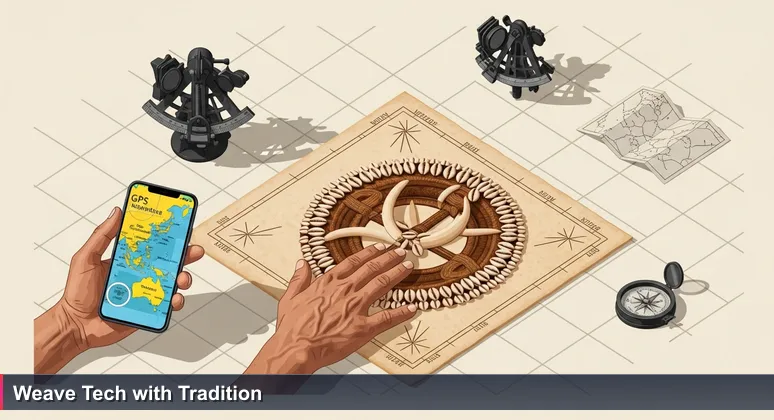
The best navigators in our waters never rely on a single map. They read the stars, feel the swell, and now, they also watch the blinking cursor on a screen. The quest for a tech workspace in Micronesia is a modern form of this wayfinding - it’s less about a desk and Wi-Fi and more about finding a community that connects you to the unique currents of island-based innovation.
As of today, the ecosystem is defined by donor-funded digital hubs, university incubators, and virtual fellowships that serve as the critical infrastructure for a growing wave of AI developers, data analysts, and remote software engineers. This landscape, documented in initiatives like the FSM Strategic Development Plan, is built on blending global technology with irreplaceable local knowledge across Pohnpei, Chuuk, Yap, and Kosrae.
This guide helps you navigate that choice. The true value of a space here isn't measured in megabits per second alone, but by its weave into the community fabric - its access to Compact-funded projects, mentorship from both elders and UN experts, and its resilience when the power flickers. From the UN-launched Smart Island digital hubs to Starlink-enabled home offices on 150+ sites, the right hub is the one that helps you chart a course to meaningful work within our islands' unique context.
Table of Contents
- Charting Your Tech Course in Micronesia
- Tonoas Smart Island Digital Hub
- College of Micronesia-FSM Center for Entrepreneurship
- Blue Prosperity Entrepreneur Fellowship
- Yap Tech Hub
- Start-up Micronesia Regional Pre-Accelerator
- Blue Startups
- Starlink-Enabled Home Office and Community Centers
- FSMTech and Network Innovations Connectivity Hubs
- The Guardrail and Guam Coworking Hubs
- Virtual Global Networks
- Navigating Your Choice
- Frequently Asked Questions
This guide to AI careers in the Federated States of Micronesia covers everything from skills to funding.
Tonoas Smart Island Digital Hub
Positioned as the flagship of the national digital transformation, the Tonoas Smart Island Digital Hub represents a fundamentally different model of tech infrastructure. Launched through a UN Joint SDG Fund initiative, it is a community asset built for mission-driven work, not commercial profit. Its core value lies in providing dedicated, high-speed internet and direct links to vital e-services in health and education for Chuuk State.
The hub operates on free community access and is designed for resilience and capacity building. As detailed by UNOPS, it embodies the "Smart Island" model, focusing on digital inclusion. This makes it ideal for remote workers in telemedicine or ed-tech, government IT staff, and founders whose projects align with social impact and national development goals funded by international donors.
Success here requires active participation, not just renting a desk. Engaging with its training programs and leveraging its stable connection to serve the community opens doors to significant donor-funded project opportunities. It is a space where your work directly contributes to the digital backbone of the islands, offering a unique blend of technical resources and deep community integration that for-profit spaces cannot match.
College of Micronesia-FSM Center for Entrepreneurship
For students and recent graduates across the islands, the Center for Entrepreneurship at the National Campus in Palikir serves as the primary launchpad. This academic incubator offers free workspace and web development assistance, creating a collaborative environment to "hash out" ideas with peers. Its real power lies in creating a pathway from campus projects to registered businesses.
The center connects aspiring founders to vital networks, including mentoring from the Pacific Asian Center for Entrepreneurship (PACE) at the University of Hawaii. It provides crucial, realistic-scale seed capital, with competitions often awarding $100 to $200 to student groups - a fitting starting point for the local market. This practical support is evident in its work to launch websites for budding Micronesian entrepreneurs.
This space is best for early-stage founders in agribusiness or local service tech. The key is to leverage its partnerships, such as with the Micronesia Development Bank, to transform a class project into a viable venture. It embodies the first critical step in weaving academic learning into the fabric of the islands' growing business community.
Blue Prosperity Entrepreneur Fellowship
For founders focused on the sustainable ocean or blue economy, the Blue Prosperity Entrepreneur Fellowship represents a premier virtual incubator with tangible support. This competitive program provides selected fellows with up to $8,000 USD in non-dilutive grant funding, virtual training workshops, and dedicated 1:1 mentorship.
Operated in partnership with the global Sustainable Ocean Alliance (SOA) and backed by local entities like the Micronesia Conservation Trust, the fellowship creates a powerful, network-driven "space" without walls. It is specifically designed for early-stage ventures in sustainability tech, conservation, and ocean-based services, connecting island-based innovators to a worldwide community of experts.
The practical advice is to treat this as your virtual coworking hub. The combination of capital and expert guidance is invaluable for building a prototype for an ocean data platform or a community-based tourism app while living on-island. This fellowship not only funds your idea but also strategically positions it within the pipeline of regional and Compact-funded environmental projects, offering a unique launchpad for impact-driven tech in Micronesia.
Yap Tech Hub
In Yap State, technology development follows a deeply communal path. The Yap Tech Hub operates not as a commercial rental space but as a community-driven software cooperative, focusing on creating resilient, culturally specific tools. This model embodies the fusion of indigenous knowledge with modern solutions, developing applications that respect both tradition and technological pragmatism.
The hub's projects, such as the "Stone Money Wallet" for digital finance and a mobile app for documenting traditional navigation using GPS, are designed for offline-first functionality. This approach is essential in a context of intermittent connectivity and ensures deep local relevance. As part of the broader digital transformation sweeping the islands, it represents a grassroots, culturally integrated model of innovation.
Engagement here is fundamentally about partnership. It's ideal for developers and founders who want to build with, not just for, the community. Success means collaborating with village leaders to create technology that works within the existing social fabric, making it a unique space for those dedicated to solutions that are both technically sound and culturally grounded.
Start-up Micronesia Regional Pre-Accelerator
Sometimes the most valuable space is not a physical room but a concentrated burst of connection. The Start-up Micronesia Regional Pre-Accelerator, an annual intensive program, functions precisely as this kind of catalytic event. For aspiring founders across the FSM testing a business idea, it offers a low-commitment, high-network environment to sprint from concept to actionable plan.
This hybrid 3-day program, such as the session held June 18-21, 2025, is designed as a turbocharged networking forum. It features keynote speakers, breakout sessions, and a competition stage, directly connecting participants to the extensive Pacific Islands Small Business Development Center Network. The vibe is intensive and competitive, often sponsored to keep costs low for attendees.
The practical tip is to treat this as your primary objective: validation and contact-building. It's an efficient way to pressure-test your idea against peers from across the Pacific and build a regional contact list. This can open unexpected doors, leading to collaborations or opportunities in regional hubs like Guam, effectively expanding your professional archipelago from a single, focused event.
Blue Startups
For Micronesian founders with validated ideas and global ambitions, Blue Startups in Honolulu serves as the most strategic regional gateway. While not located within the FSM, its geographic and cultural proximity makes it uniquely accessible compared to mainland U.S. accelerators. This program is designed for ventures ready to scale and seek significant investment, operating on an equity-based model in exchange for high-intensity mentorship and investor access.
Experts in the regional ecosystem note that Blue Startups has been "instrumental in advancing the start-up and entrepreneurial culture in the Pacific region". Its success stories demonstrate its impact; for instance, alumnus Instant Teams raised a $1.5 million seed round shortly after completing the program. This track record provides a credible pathway for Micronesian entrepreneurs aiming to bridge their island-based solutions to broader markets.
The practical consideration is timing. This accelerator is a top target after you have validated your concept locally, perhaps through one of the earlier community hubs or fellowships. Be prepared for a temporary relocation to Honolulu for the program's duration. The investment - both financial and in equity - is substantial, but the return is direct entry into a network of global investors and a proven framework for scaling, making it the logical next step for serious, growth-focused tech startups from our islands.
Starlink-Enabled Home Office and Community Centers
The most significant shift in Micronesia's remote work landscape isn't a new building, but a constellation of satellites overhead. The deployment of Starlink across 150+ sites in the FSM has effectively created a decentralized, nationwide network of potential workspaces. Suddenly, a family home on Kosrae or a community meeting hall in rural Pohnpei can be equipped with reliable, high-speed internet, transforming them into viable offices.
For digital nomads, freelancers, and part-time remote workers, this represents ultimate flexibility. The model is independent and subscription-based, with costs around $120 per month plus initial hardware. For professionals earning an international salary, this investment is often more practical and cost-effective than any commercial rental on-island. This infrastructure backbone, supported by local partners working on solar-integrated connectivity solutions, tackles the dual challenges of high power costs and reliability.
The key to making this a true "hub" experience lies in intentional community engagement. While the home office provides the connectivity, you should pair it with periodic attendance at local business events, university talks, or meetings at donor-funded hubs like the Tonoas Digital Hub. This hybrid approach combines the independence of a Starlink connection with the irreplaceable value of in-person networks, allowing you to build roots within the community while working on a global stage.
FSMTech and Network Innovations Connectivity Hubs
Beneath the surface of apps and websites lies the critical physical infrastructure that makes digital life possible. In Micronesia, local tech partners like FSMTech, in collaboration with firms like Network Innovations, are the engineers of this foundational layer. These partnerships are not public coworking spaces but are instead focused on creating enterprise-grade reliability and innovative solutions to the region's core challenges of connectivity and power.
Their work is intensely practical and solution-oriented, actively developing solar-integrated systems to combat the high costs and frequent outages that can cripple digital work. By building pockets of premium, resilient infrastructure, they enable everything from remote clinics to government data centers to function consistently. This backend work is what allows the front-end innovation happening in hubs and home offices to thrive.
For tech professionals and founders, understanding this layer is crucial. Following the developments of these infrastructure partners can lead you to the most reliable physical locations for your operations or reveal potential collaboration opportunities. If your venture operates in connectivity, Internet of Things (IoT), or renewable energy tech, these organizations represent essential partners for piloting and deploying solutions that are built to last in the island environment.
The Guardrail and Guam Coworking Hubs
When a project demands in-person access to a mature, professional ecosystem, Guam stands as the nearest regional hub. Spaces like The Guardrail offer what is currently scarce in the FSM: commercial-grade coworking with high-speed internet (100 Mbps to 1 Gbps), professional meeting rooms, and a concentrated pool of service professionals and digital nomads. This environment is geared toward client meetings, investor pitches, and immersive professional networking.
The access comes at a commercial cost, with memberships typically ranging from $200 to $400 USD per month. For a tech professional based primarily in the FSM, a full monthly membership is often hard to justify. However, the strategic value emerges in flexible access. Purchasing a day pass for $30 to $50 during quarterly business trips can be invaluable for hosting critical meetings, accessing fast upload speeds for large files, or simply sparking new ideas through a different professional atmosphere.
This represents a clear trade-off in the regional landscape. As noted in ecosystem comparisons, you pay more in Guam for faster infrastructure and a denser market. In contrast, FSM hubs offer deep community ties and unique project access often at little to no cost. Therefore, the practical tip is to view Guam's spaces as a supplemental tool - a place for specific, high-stakes professional activities that amplify the work you are building within the close-knit networks of your home islands.
Virtual Global Networks
When geographic isolation is the primary constraint, the most powerful workspace exists entirely online. Virtual global networks like Impact Hub and the Founder Institute dissolve the barriers of distance, providing a structured, community-oriented "desk" among peers from around the world. For a tech founder or freelancer in Micronesia, these platforms offer access to global mentor networks, structured startup curricula, and peer accountability that are otherwise out of reach.
Programs like the Founder Institute's South Asia & Oceania accelerator provide a rigorous framework to reach investment milestones, while a network like Impact Hub connects innovators focused on social impact and sustainable development across five continents. These memberships, with varied fees, create a professional ecosystem where you can find collaborators, advisors, and clients far beyond the Pacific.
The practical wisdom for using these virtual spaces lies in complementary grounding. While they provide essential education and global perspective, the key is to actively apply that learning to solve real, contextual problems in Micronesia. This balance turns a virtual network into a force multiplier, helping you build a venture that is both globally informed and locally essential, ensuring you remain connected to the currents of innovation both worldwide and here at home.
Navigating Your Choice
Choosing your tech base in Micronesia requires navigating a unique set of trade-offs, where cost is measured in both dollars and community integration. The right decision hinges entirely on your professional scenario and goals. For those building a full-time venture, the unparalleled value lies in the free, subsidized donor and academic hubs like Tonoas or the COM-FSM Center, where deep engagement unlocks mentorship and potential Compact-funded project opportunities.
For part-time remote workers or digital nomads, the Starlink-powered home office is typically the most sensible and cost-effective foundation, at roughly $120 per month. This should be paired with intentional local networking. Those in the early-stage experimentation phase should begin with minimal-risk options like university centers or virtual fellowships to validate their ideas before any major infrastructure investment.
Your journey often starts with building the right skills. Affordable and flexible education programs, like the AI and coding bootcamps from Nucamp with tuition from $2,124, are designed for island-based learners and provide the foundational expertise in Python, AI, and web development needed to thrive in these spaces. Whether aiming for remote roles or local digital transformation projects, this training is the first critical step.
The final comparison lies in regional context. The table below clarifies the core trade-off between our island ecosystem and larger commercial hubs:
| Feature | FSM (Pohnpei, Chuuk, Yap, Kosrae) | Guam, Manila, or Suva |
|---|---|---|
| Space Type & Cost | Donor/Academic Hubs (Often Free/Subsidized) | Commercial Coworking (~$300-$600+/month) |
| Primary Value | Community Integration & Unique Project Access | Infrastructure Speed & Market Density |
| Tech Focus | Social Impact, Blue Economy, Local Solutions | Scalable SaaS, Fintech, Professional Services |
Ultimately, the best space is not the one with the fastest nominal internet, but the one that best connects you to the people, purpose, and programs that will help your work thrive in the unique context of our islands. Chart your course accordingly.
Frequently Asked Questions
How did you rank the top 10 tech coworking spaces and incubators in Micronesia?
We based the ranking on relevance, support, and ability to help navigate the local tech landscape, focusing on community integration and access to resources like Compact funding. For instance, spaces like the Tonoas Smart Island Digital Hub in Chuuk score high for mission-driven impact and donor-backed infrastructure.
Which coworking space in Micronesia is best for students or early-stage founders?
The College of Micronesia-FSM Center for Entrepreneurship in Palikir is ideal, offering free access and seed capital up to $200 for student ventures. It connects you to local business networks, making it perfect for agribusiness or service tech ideas starting from campus.
Are there affordable or free options for tech workers in Micronesia?
Yes, many hubs are free or low-cost, like the Tonoas Smart Island Digital Hub and COM-FSM Center, which leverage donor funding. For remote workers, Starlink at ~$120/month provides a cost-effective home office setup across islands.
How does Micronesia's tech ecosystem support remote work or digital nomads?
With Starlink deployed at 150+ FSM sites, remote workers gain reliable internet, while virtual programs like the Blue Prosperity Entrepreneur Fellowship offer up to $8,000 in grants. This ecosystem blends global connectivity with local community events for networking.
What unique advantages do tech spaces in Micronesia offer over other regions?
Spaces in Micronesia provide deep cultural integration, access to Compact-funded projects, and community-driven innovation, like the Yap Tech Hub's offline-first apps. While scale is smaller, the close-knit island networks foster solutions tailored to local needs.
Check out the top firms recruiting machine learning experts in FSM for opportunities in 2026.
For Micronesia AI salary trends in 2026, refer to this detailed analysis.
Check out the top artificial intelligence startups in Micronesia to keep an eye on.
This article details the cybersecurity job market in Micronesia for 2026 and how to break into it.
For Micronesian students, 2026 scholarships and grants for tech education are thoroughly explored.

Irene Holden
Operations Manager
Former Microsoft Education and Learning Futures Group team member, Irene now oversees instructors at Nucamp while writing about everything tech - from careers to coding bootcamps.