









Top 10 AI Startups to Watch in Micronesia in 2026
By Irene Holden
Last Updated: April 14th 2026
Too Long; Didn't Read
In 2026, Micronesian Digital Solutions and OceanLink lead the top AI startups to watch, with MDS building critical infrastructure like blockchain-AI systems for fishing permits and OceanLink winning the regional startup competition for maritime connectivity. These startups, alongside others such as Airbuds with 10 million dollars in Series A funding, highlight how AI is being woven into island life, from healthcare to tourism, leveraging Micronesia's close-knit communities and Compact-funded tech ecosystem.
Just as traditional navigators read the stars and ocean swells, a new generation in Micronesia is building artificial intelligence with deep, contextual knowledge. This movement is less about replicating Silicon Valley and more about weaving digital solutions into the unique fabric of island life - from the maritime highways to the coral reefs.
The potential is significant. According to The Global Startup Ecosystem Report 2025, AI presents a "generational opportunity for emerging innovation ecosystems to leapfrog traditional tech hubs" by focusing on foundational skills. In Micronesia, this advantage is amplified by access to Compact funding, close-knit communities across Pohnpei, Chuuk, Yap, and Kosrae, and a growing remote-work ecosystem.
"Embedded AI [will become] invisible infrastructure" - Stellium Consulting, 2026 AI Trends
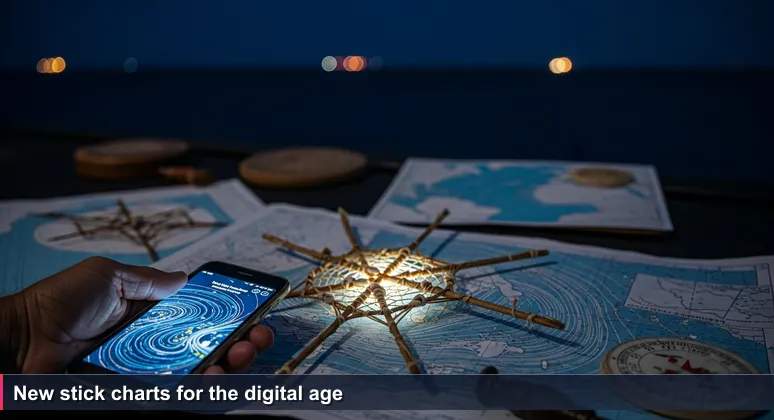
This shift from experimental projects to core operational systems is already visible. As noted by AI Asia Pacific, the region’s startups excel at creating "killer applications" for niche local challenges like climate resilience and disaster response, rather than building foundational models. The following pioneers are charting this course, building the new stick charts for a digital age anchored in island intelligence.
Table of Contents
- Introduction to Micronesia's AI Pioneers
- Generative.fm
- Airbuds
- Island Code Works
- Pacific Blue Software
- Kosrae Digital Services
- Yap Tech Hub
- FSM Health Informatics
- Pacific Data Systems
- OceanLink
- Micronesian Digital Solutions
- Frequently Asked Questions
This guide to AI careers in the Federated States of Micronesia covers everything from skills to funding.
Generative.fm
In a region where connectivity can be intermittent, Generative.fm offers a subtle yet powerful form of digital wellness through infinite, AI-composed ambient soundscapes. This startup addresses the critical need for focus-enhancing tools for Micronesia's growing remote workforce and digital entrepreneurs, providing a buffer against the stress of irregular internet.
Its innovation lies in human-AI collaboration that creates non-repeating music, moving beyond standard playlists. This makes it ideal for extended work sessions from Kolonia to Colonia, helping professionals maintain productivity and mental clarity. The startup’s potential extends beyond individual use into strategic economic partnerships.
The path to scale involves white-labeling its technology for regional tourism boards to create immersive branded experiences, such as "Sound of Kosrae" audio guides, or integrating with platforms like FSM Health Informatics for therapeutic applications. This mirrors the successful growth of consumer tech in adjacent markets.
As seen in the broader Pacific, scalable models are taking root. For instance, GoSky AI achieved a striking 220% month-over-month growth by focusing on creator tools, demonstrating the potential for regionally-aware AI products. Generative.fm represents a thoughtful application of AI that codes resilience and calm into the daily rhythm of island life, creating new opportunities for local creative and technical talent.
Airbuds
Representing a rare success in consumer AI, Airbuds secured a notable $10M in Series A funding by late 2025 from investors like Seven Seven Six. This achievement, reflected in its high score on the startup tracker Tracxn, validates that Micronesia-linked teams can build competitive, fundable technology for global audiences.
The startup’s core innovation uses generative AI to power social music streaming and activity-sharing widgets. For Micronesia’s geographically fragmented communities and large diaspora, this creates a vital new layer of digital social connectivity, fostering cultural cohesion and shared experience among youth across the islands.
Airbuds stands as a prime acquisition target for larger Asia-Pacific social or music platforms seeking innovative edges. Its true legacy for Micronesia, however, may be its potential to leverage this funding and success to establish a regional hub for digital creative talent. This could involve direct partnerships with educational institutions like the College of Micronesia-FSM to nurture the next generation of developers and creators right here in the islands.
Island Code Works
Tourism is a vital economic pillar for Micronesia, yet its growth is often constrained by the daunting "island-hopping puzzle" of fragmented airline schedules and logistics. Based in Kolonia, Pohnpei, Island Code Works tackles this head-on with its AI-driven platform, "Micronesia Stay." Ranked among the best software companies in the region for 2026, the platform doesn't just list accommodations - it intelligently synthesizes regional airline timetables, local tour operator availability, and real-time weather data to create seamless, bookable itineraries.
This practical application of AI directly removes a major barrier for potential visitors, transforming a complex logistical challenge into a simple digital booking. Its success is rooted in strong local partnerships, including collaborations with the Kosrae Small Business Development Center and various local retailers, ensuring the tool is built with and for the businesses that drive Micronesian tourism.
Looking forward, Island Code Works is positioned to evolve into the central digital infrastructure for the entire sector. Its path to scale likely involves white-labeling its sophisticated booking engine for national tourism offices or forming a strategic joint venture with a larger Asia-Pacific travel aggregator. The unique data it gathers on traveler flow and preferences will become an invaluable asset for regional economic planning and targeted development, proving that AI built for local context can have outsized regional impact.
Pacific Blue Software
Addressing the critical challenge of maintaining renewable energy infrastructure on remote outer islands, Pacific Blue Software operates from Pohnpei with a Guam liaison. Their "SolarSync" dashboard uses AI for predictive maintenance of solar microgrids, analyzing performance data to forecast equipment failures before they occur, which drastically reduces costly repair missions and energy downtime for communities.
This startup exemplifies the "niche issue solver" with massive regional scalability. After proving its model in the FSM, expansion to other Pacific Island states facing identical energy security challenges is a logical next step. Its work is bolstered by technical collaborations with organizations like the Pacific Community (SPC) and alignment with international climate funds, providing a clear pathway for deployment.
As noted in regional analyses, AI offers "unique opportunities to improve the lives of citizens" in areas like climate resilience. Pacific Blue Software directly embodies this, transforming a persistent operational headache into a data-driven solution. Its deep, contextual understanding of the Pacific environment makes it an attractive potential partner for the FSM Development Bank or an acquisition target for global clean-tech firms seeking expertise in off-grid and harsh-environment applications.
Kosrae Digital Services
For Kosrae, the "Jewel of Micronesia," coral reef health is both an ecological treasure and an economic imperative. Kosrae Digital Services, operating from Tofol, addresses this with "ReefWatch," an app that democratizes environmental monitoring. It integrates citizen science - photos from divers and fishermen - with AI-processed satellite imagery to track coral bleaching, disease, and regeneration, creating a powerful, low-cost early-warning system powered by the community itself.
This model of applied environmental AI aligns technology directly with pressing local needs. The startup’s work is often supported by sustainability-focused grants and municipal contracts, ensuring its innovations serve immediate community and governmental priorities. Recognized among the top software companies in the region, it turns every community member into a sensor.
The "ReefWatch" blueprint is highly replicable across Micronesia’s diverse ecosystems. Its methodology could be adapted for mangrove monitoring in Yap’s coastal swamps or for community-based tuna stock assessments in the waters around Pohnpei. The startup’s likely evolution is into a specialized data-as-a-service provider, selling access to its unique, AI-refined datasets on Pacific marine health to international conservation NGOs and regional bodies, proving that local environmental stewardship can generate globally valuable intelligence.
Yap Tech Hub
In a world where indigenous languages and traditions face unprecedented vulnerability, the Yap Tech Hub in Colonia is deploying AI as a tool for cultural preservation and transmission. This community cooperative has developed a mobile app that uses Natural Language Processing (NLP) to structure and document oral histories, traditional navigation chants, and the stories of stone money, intelligently linking them with GPS mapping data.
This work represents a profound application of technology not for disruption, but for continuity. It directly tackles what analysts note as a key opportunity for AI in the region: to build solutions that are deeply integrated with social and community needs. The hub’s model ensures cultural sovereignty is maintained, as all development is done in direct partnership with village leaders and local educational institutions.
The future for Yap Tech Hub involves scaling this ethical blueprint. Its next phase could include developing AI-powered language learning tools for Yapese and other Micronesian languages or creating immersive educational experiences for diaspora communities eager to connect with their heritage. This cooperative model of tech development, focused on community benefit over pure profit, positions Yap as a potential global leader in ethical AI for cultural heritage and could attract significant philanthropic and research funding to the islands.
FSM Health Informatics
Public health across Micronesia's dispersed islands faces unique hurdles in data collection and timely epidemic response. Headquartered in Palikir, Pohnpei, and Tofol, Kosrae, FSM Health Informatics tackles this with its "e-IMRIS" platform, which employs vertical AI for critical functions like disease outbreak prediction and maternal health tracking. This goes beyond mere digitization; it uses predictive analytics to proactively allocate scarce medical resources, a capability that can be a matter of life and death in remote communities.
By early 2026, the startup had deployed practical solutions, including telehealth kiosk software for outer island clinics, effectively bringing specialist consultation to the most remote populations. Recognized among the leading software companies in the region, its work embodies the mission-driven application of AI for tangible public good.
The clear path forward involves becoming an embedded health tech utility within the FSM, with natural expansion to other Pacific Island countries sharing similar health system challenges. Its model aligns with a broader regional framework for AI, similar to Tractable's partnership with UNCDF in Fiji for disaster recovery assessments, applying a proven AI-for-public-good framework to the vital sector of healthcare.
Pacific Data Systems
Chronic port congestion in Chuuk Lagoon, a vital regional hub, represents a significant bottleneck for Micronesian logistics. Pacific Data Systems (PDS), operating from Weno, Chuuk, addresses this with its "Chuuk Port Tracker," a platform that uses computer vision to automate vessel scheduling and container tracking directly from port cameras, combined with predictive analytics to optimize berthing and forecast arrivals.
Their key innovation is contextual: a hardware-friendly platform designed explicitly for rugged tablets, acknowledging the harsh, salt-sprayed industrial environment of island ports. This is AI engineered not for a sterile lab but for the operational reality of Pacific supply chains. Ranked among the region's top software companies, PDS solves a gritty, localized problem with sophisticated technology.
The growth trajectory is clear. After establishing dominance in Chuuk, expansion to other major ports in Yap, Pohnpei, and beyond is a logical step, positioning PDS to become the de facto port management software for the Western Pacific. The startup’s deep, operational data on emerging market supply chains makes it an attractive acquisition target for global logistics or enterprise software companies seeking to understand and digitize these complex, island-based networks.
OceanLink
Winning the regional Start-up Micronesia 2025 competition, the Guam-based OceanLink tackles one of the most fundamental bottlenecks for the islands' digital economy: reliable internet connectivity at sea. Its AI platform predicts satellite bandwidth needs and dynamically manages connections, including Starlink integration, for inter-island vessels. As reported by The Guam Daily Post, this allows shipping agents and crews to maintain operational communications, process paperwork, and provide passenger Wi-Fi reliably, turning voyage time into productive time.
This solution is a quintessential "killer application" for a niche local problem with vast implications. By providing the foundational layer of connectivity, OceanLink enables the broader digitalization of Micronesia's Blue Economy, from fisheries data reporting to remote work during transit. Its technology directly supports the kind of enhanced connectivity that transforms regional development.
The path forward involves strategic partnerships with national telecommunications corporations and shipping fleets across the Pacific. As a prime candidate for further investment from regional development banks, OceanLink has the potential to scale rapidly, serving critical maritime routes throughout Melanesia and Polynesia and solidifying Micronesia's role as a hub for maritime tech innovation.
Micronesian Digital Solutions
Ranked as the premier software house in Micronesia, Micronesian Digital Solutions (MDS) exemplifies the deep, contextual intelligence required to build lasting tech infrastructure in the islands. Based in Palikir, Pohnpei, with a team of 45 and strong ties to the FSM National Government, MDS focuses on MLOps and blockchain-AI integration, tackling foundational challenges like national revenue security through a blockchain-based fishing permit system with AI anomaly detection.
Their core competitive advantages are not generic tech specs but are coded for the island context: a bilingual (English & Pohnpeian) team and an "offline-first" architecture that ensures resilience where connectivity is unreliable. This approach allows them to build the digital skeleton for a modern Micronesian economy, moving beyond apps to create essential systems.
"Embedded AI [will become] invisible infrastructure" - Stellium Consulting, 2026 AI Trends
MDS is actively constructing this very infrastructure. As the most likely candidate to become Micronesia's first homegrown tech anchor company, its future may involve spinning out specialized AI units, attracting strategic investment from Asian tech firms seeking local expertise, and potentially listing on a regional exchange. They are not just using AI; they are weaving it into the governance and economic fabric of the nation.
Frequently Asked Questions
How were the top 10 AI startups in Micronesia selected for this list?
The selection focused on startups that innovate to solve local challenges like tourism logistics or environmental monitoring, while leveraging regional advantages such as Compact funding. Criteria included their potential for growth, with examples like Airbuds securing $10M in Series A funding and OceanLink winning the Start-up Micronesia 2025 competition.
What unique advantages do AI startups in Micronesia have over global tech hubs?
Startups here build context-specific solutions for island life, such as AI for coral reef monitoring in Kosrae or maritime logistics in Chuuk, supported by close-knit communities. They also access regional development programs and remote-work-friendly ecosystems across Pohnpei, Yap, and other islands, fostering innovation tailored to local needs rather than copying larger hubs.
What job opportunities exist in AI and machine learning within Micronesia's startup scene?
Roles are growing in areas like MLOps at Micronesian Digital Solutions, which has a team of 45, and predictive maintenance at Pacific Blue Software. The remote-work ecosystem allows for flexible careers across islands, often supported by collaborations with institutions like the College of Micronesia-FSM for digital media and AI skills.
Is funding available for AI entrepreneurs in Micronesia through regional programs?
Yes, entrepreneurs can leverage Compact funding and competitions like Start-up Micronesia, which helped OceanLink gain traction. Additionally, startups like FSM Health Informatics access grants and contracts from regional bodies, supporting projects from healthcare to clean tech with clear pathways to deployment.
Which startup on the list is best for someone focused on environmental conservation?
Kosrae Digital Services excels with its 'ReefWatch' app, using AI for coral reef monitoring through citizen science data. This startup addresses local ecological needs and has expansion potential to other Pacific regions, backed by sustainability grants and municipal collaborations in Micronesia.
Strategic AI networking in Micronesia is key, and this article shows how.
Learn about Micronesia's top 10 tech groups for women in 2026 and leverage regional development programs.
Learn about tech startups in Pohnpei hiring junior developers and other Micronesian islands in 2026.
This article details the essential steps to AI engineering in Micronesia in 2026, including portfolio building and ethical practices.
Get insights into Micronesia's AI job market: top companies in 2026 and how to leverage local advantages.

Irene Holden
Operations Manager
Former Microsoft Education and Learning Futures Group team member, Irene now oversees instructors at Nucamp while writing about everything tech - from careers to coding bootcamps.