









AI Meetups, Communities, and Networking Events in Micronesia in 2026
By Irene Holden
Last Updated: April 14th 2026
Key Takeaways
In Micronesia, AI networking in 2026 centers on strategic, high-impact events like COM-FSM workshops and Startup Micronesia, leveraging our close-knit island communities for meaningful connections. Local tech roles offer salaries starting at $25,000, but remote work provides competitive opportunities, especially when applying AI to regional challenges like climate resilience. By engaging with Compact-funded programs and using digital tools between events, you can build a career across Pohnpei, Chuuk, Yap, and Kosrae without leaving the region.
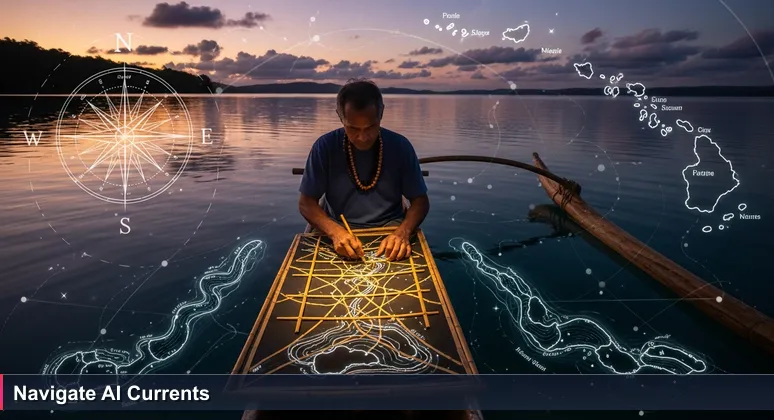
The most skilled navigators in our history - those who mastered the vast Pacific in pava - didn't just sail to an island; they charted the invisible currents that connected them all. In the same way, building a career in artificial intelligence across our dispersed islands in 2026 requires mastering a different kind of chart. This journey begins with understanding that success here is not found in crowded ports but in navigating the powerful, reliable swells of opportunity that link our communities.
As analysis from the AI Asia Pacific Institute confirms, our region faces "unique hurdles due to its relative isolation and limited resources," but AI simultaneously offers "unique opportunities to overcome these challenges" in areas from climate resilience to economic development. Your first step is to stop looking for a scene that mirrors Manila or Brisbane and start learning to read the distinct, high-impact ecosystem that exists here.
This is a pivotal moment. Experts argue that Pacific island nations "must reboot regional AI leadership" to ensure local populations shape their own technological future. Your path as a modern navigator is to leverage our unique advantages - the close-knit fabric of island communities, Compact-funded infrastructure, and a growing remote-work ecosystem - to chart a course others will follow.
In This Guide
- Embark on Your Micronesia AI Journey
- Decode the AI Ecosystem Like a Stick Chart
- University AI Workshops and Policy Hubs
- Government AI Summits and International Initiatives
- Entrepreneurship and Regional Tech Events
- Sail the 2026 Networking Seasonal Currents
- From AI Connections to Career Advancement
- Charting AI's Future Beyond 2026 in Micronesia
- Frequently Asked Questions
This guide to AI careers in the Federated States of Micronesia covers everything from skills to funding.
Decode the AI Ecosystem Like a Stick Chart
For newcomers, the search for a "local AI scene" can feel isolating, leading to the mistaken belief that to succeed, you must leave. The pivotal insight is this: Micronesia’s AI ecosystem is the stick chart. The major, occasional summits and workshops are not random, scattered dots. They are the deliberately placed pepa on the chart, marking the sustained currents of knowledge, funding, and policy that drive real opportunity.
Your network is the intentional path you sail between these waypoints. For example, the landmark AI Policy for Learning and Research established by COM-FSM in August 2025 is not just news - it's a major policy current that now guides training, grants, and project development across the states. Similarly, the "whole-of-nation" 2025 Cybersecurity Symposium in Chuuk created a shared current for secure digital infrastructure that all future AI applications must navigate.
This reframe turns perceived scarcity into a strategic advantage. Instead of diluting your energy in frequent, low-impact gatherings, you learn to ride the powerful, high-bandwidth swells between institutional waypoints. As noted in analysis, Pacific nations "must reboot regional AI leadership" to shape their own future - a task perfectly suited to those who can expertly read and navigate this unique chart.
University AI Workshops and Policy Hubs
Academic institutions are the primary engines of technical AI literacy and policy development across our islands, serving as critical waypoints where foundational knowledge currents begin. The College of Micronesia-FSM (COM-FSM) has established itself as the nucleus for this work, making history in 2025 by establishing the region's first AI Policy for Learning and Research. This policy is not merely a document; it's a sustained swell that now guides curriculum development, research ethics, and grant-funded projects, creating a reliable channel for skill-building.
COM-FSM's flagship event, the "AI Workshop for Beginners," exemplifies this applied current. Held at the MITC Center in collaboration with programs like the U.S. Speaker Program, the 2025 workshop provided high-bandwidth, practical training in AI for Food Security, Professional Productivity, and Academic Research. For 2026, these workshops are evolving to include more advanced tracks, directly feeding the pipeline of local talent needed for national digital transformation.
Meanwhile, the University of Guam acts as a vital regional bridge. Its M.S. in Data Science program produces graduates who present on health data and machine learning at national conferences, bringing advanced analytics back to island contexts. UOG also hosts major conferences like the International Conference on Business, Economics & Information Technology (ICBEIT), which consistently feature AI applications for climate resilience and sustainable development relevant to all of Micronesia.
For introverts or those new to networking, university workshops are ideal. The focus is on structured, project-based learning, where your value is demonstrated through your work in the session. This makes post-event conversations with professors and visiting experts organic, based on shared experience rather than forced pitches, allowing you to build depth within these foundational knowledge currents.
Government AI Summits and International Initiatives
Government and international summits are where the strategic currents of policy and funding converge, shaping the very infrastructure upon which AI applications will be built. These events are prime waypoints for connecting with decision-makers and understanding where national and regional priorities - and resources - are flowing.
The FSM National Cybersecurity Symposium, following its landmark "whole-of-nation" 2025 gathering in Chuuk, is essential. AI and secure data infrastructure are inseparable; this symposium brings together the FSM Department of Justice, telecom providers like FSM Telecommunications Corporation, and international partners, directly revealing contracting opportunities and national digital security priorities.
Simultaneously, organizations like the International Telecommunication Union (ITU) run specialized capacity-building programs. The Her CyberTracks Initiative 2026, for example, focuses on cybersecurity and AI risk management with a dedicated track for women in tech. Such initiatives often include travel scholarships and connect you to a global network of practitioners working on "AI for Good" in island contexts, funded by entities like the UNDP and Asian Development Bank.
When navigating these high-level summits, cultural protocol is key. A respectful approach, often facilitated by an introduction from a professor or community colleague, is far more effective than a direct elevator pitch. The strategy is to listen first to deeply understand the national and regional challenges, positioning yourself as a potential solver aligned with their currents.
Entrepreneurship and Regional Tech Events
These are the currents that connect technical skill directly to economic opportunity and regional collaboration, transforming AI knowledge into viable projects and careers. While technical workshops build capability, entrepreneurship events provide the crucial channel to market, funding, and cross-island partnerships.
The highest-value business networking event in the region is arguably Startup Micronesia, the annual pre-accelerator hosted by the Pacific Islands Small Business Development Center network. It connects local developers and entrepreneurs with regional judges, mentors, and past winners. Pitches frequently involve AI-driven solutions for tourism, agriculture, or logistics - direct applications for our island economies that demonstrate immediate, contextual value to potential investors and partners.
On the more technical infrastructure side, the Pacific Network Operators Group (PacNOG) serves as a vital, if less frequent, waypoint. AI requires data and robust connectivity. This semi-regular gathering focuses on large-scale networking, telecommunications, and AI-driven network management. Attending or following its outputs connects you to the engineers building the region's digital backbone, a foundational understanding for anyone deploying AI solutions at scale.
The unique advantage here is the ability to form cross-island teams remotely. A developer in Pohnpei, a business mind in Chuuk, and a community liaison in Yap can collaborate on a proposal for Startup Micronesia, leveraging the very connectivity these events promote to build solutions for the region.
Sail the 2026 Networking Seasonal Currents
While specific dates are set annually, the rhythm of major AI events across Micronesia follows a predictable, navigable pattern that allows for strategic planning. By understanding this seasonal cadence, you can align your upskilling and networking efforts with the most relevant currents of activity.
The year begins with Planning Season (January-March). This is the time to follow major regional conferences like the University of Guam Conference on Island Sustainability, which sets the thematic agenda for the year. Use these months for targeted online learning and defining your annual goals.
The Entrepreneurship Current (April-June) peaks with the Startup Micronesia pre-accelerator. This is the prime window to form cross-island teams and develop proposals that solve local problems with AI, preparing to pitch to regional judges and mentors.
Mid-year brings the Academic & Foundation Building season (July-September). This is when COM-FSM's major workshops and UOG's ICBEIT conference typically occur. It's the best time for beginners to acquire certified, foundational knowledge and for all professionals to deepen their technical skills through structured, high-bandwidth learning.
The calendar culminates in the Policy & Security Summit Season (October-December), anchored by events like the FSM Cybersecurity Symposium. These high-level gatherings set the strategic agenda and funding priorities for the coming year, making them essential for understanding where government and international Compact funding will flow next.
From AI Connections to Career Advancement
Transforming connections into a sustainable career requires strategies tailored to our island ecosystem, where depth of relationship and demonstrated local value outweigh sheer volume of contacts. The first rule is to master the Digital Lagoon between waypoints. With in-person events being occasional, online platforms become your continuous community center. Follow official pages like the U.S. Embassy Kolonia and COM-FSM for announcements, and engage with broader regional networks like the PATA Micronesia Chapter to maintain visibility between major summits.
Your projects must speak directly to local context to demonstrate immediate value. Instead of generic applications, prototype an AI tool for analyzing coastal erosion from community-shared photos, or a multilingual chatbot for FSM Telecommunications Corporation. Solving for our problems makes your skills indispensable.
Understanding the career currents is crucial. Salaries for tech roles in FSM government or NGOs might start around $25,000 - $35,000 USD, but specialized roles funded by external grants can be higher. The significant opportunity lies in remote work for companies in Guam, Honolulu, or internationally, where you can command competitive salaries while living in our islands. Your niche expertise in building scalable solutions for distributed island environments becomes a unique advantage.
Ultimately, build your reputation as a bridge, not just a passenger. When you attend an event in Pohnpei, actively share notes and introduce contacts to colleagues in your home island. This modern navigator role - strengthening the entire network - is what transforms isolated connections into a robust, inter-island career path.
Charting AI's Future Beyond 2026 in Micronesia
The conversation around AI in our region is accelerating from experimentation to strategic implementation. As noted in the World Economic Forum 2026 conversations, talent and compute are now recognized as strategic assets essential for regional competitiveness. The future belongs to those who can leverage these assets within our unique island context, moving from adapting external innovations to originating solutions for our own challenges.
Building this sovereign capacity requires accessible, relevant education. Bootcamps like Nucamp, with programs from $2,124 and flexible schedules, are creating a pipeline of local talent equipped for both public sector digitalization and the growing remote-work economy. This aligns perfectly with the call from analysts who argue Pacific nations must reboot regional AI leadership to shape their own technological future.
The path forward is clear. By combining foundational skills with deep knowledge of our island ecosystems, you position yourself not just for a job, but to chart Micronesia's course in the digital age. Your advantage is dual: understanding scalable solutions for distributed environments and being rooted in the communities you serve. This is how we ensure the currents of AI innovation flow through our own stick charts, strengthening the connections between Pohnpei, Chuuk, Yap, and Kosrae for generations to come.
Frequently Asked Questions
What AI meetups and networking events can I expect in Micronesia in 2026?
In 2026, expect high-impact events like COM-FSM's AI Workshop for Beginners, the FSM Cybersecurity Symposium in Chuuk, and Startup Micronesia. These are not daily meetups but strategic waypoints connecting Pohnpei, Chuuk, Yap, and Kosrae through academia, government, and entrepreneurship.
How can I stay updated on AI events in Micronesia if I'm not in a major hub?
Follow digital hubs like the U.S. Embassy Kolonia and COM-FSM Facebook pages for announcements. Also, subscribe to Pacific Islands SBDC newsletters and track regional forums such as the University of Guam's Conference on Island Sustainability for remote-friendly updates.
Why should I attend AI events in Micronesia instead of looking for opportunities abroad?
Micronesia's events offer unique access to Compact-funded programs and close-knit communities that foster deep connections. For example, local tech roles pay $25,000 - $35,000 USD, but networking here can lead to remote work with competitive salaries in Guam or beyond, leveraging island-specific expertise.
What's the best approach to networking at AI events in Micronesia's island communities?
Prioritize depth over breadth by engaging in project-based workshops at events like COM-FSM's sessions. Use community introductions from professors or colleagues, as personal ties in places like Kolonia or Weno can naturally lead to cross-island collaborations and opportunities.
Can AI events in Micronesia help me transition to remote work or higher-paying roles?
Yes, events like Startup Micronesia connect you with regional mentors who value AI solutions for island challenges. This niche experience in scalable tech for distributed environments makes you attractive for remote roles, with salaries potentially exceeding local averages through grants from bodies like ADB or UNDP.
Explore the leading tech employers with top salaries in Micronesia and how to navigate offers.
Learn about the hidden costs of living in Pohnpei and other FSM islands for tech workers.
Explore the leading employers for AI talent in Micronesia in 2026 in this comprehensive guide.
This guide highlights the best tech startups in Micronesia for junior talent in 2026, focusing on impact and training.
Understand the key AI innovations driving Micronesia's development through these startups.

Irene Holden
Operations Manager
Former Microsoft Education and Learning Futures Group team member, Irene now oversees instructors at Nucamp while writing about everything tech - from careers to coding bootcamps.