









The Complete Guide to Starting an AI Career in Micronesia in 2026
By Irene Holden
Last Updated: April 14th 2026
Key Takeaways
Starting an AI career in Micronesia in 2026 means focusing on applying AI to local challenges like e-governance and climate resilience, supported by Compact funding and digital projects. With training from COM-FSM or Nucamp bootcamps, you can land roles earning from $20,000 in entry positions to over $70,000 as a specialist, while leveraging remote work opportunities and your Micronesian community insights.
For our 2026 economy, AI is not about building models from scratch, but about becoming expert navigators who apply global technology to our island realities. This unique career path is being charted by national initiatives like the Digital FSM Project, which is focused on creating tangible outcomes in governance, climate resilience, and healthcare.
This digital transformation is powered by significant investment. The modernization of our infrastructure - from high-speed internet across Pohnpei, Chuuk, Yap, and Kosrae to smart government services - is fueled by Compact of Free Association funding and grants from partners like the World Bank and UN. As the International Monetary Fund notes, this presents "immense opportunities for Pacific Island countries to harness technology, augment jobs, and improve productivity."
Consequently, the most sought-after professional is the integrator, not the isolated innovator. Employers need people who can bridge global tools and local needs, whether that's for the FSM Department of Health, the Micronesia Conservation Trust, or the FSM Telecommunications Corporation. It’s about AI-infused roles, where skills in machine learning become a core part of jobs in health informatics, environmental science, or public administration.
Your foundational advantage is being rooted here. The College of Micronesia-FSM established the nation's first AI policy in 2025, embedding ethical, locally-aware thinking into education from the start. This means your training is already aligned with the principles of safe and governed AI that our public sector and regional organizations demand.
In This Guide
- The Micronesia AI Opportunity: A 2026 Overview
- Essential AI Skills for the Micronesia Market
- Education Paths: From COM-FSM to Global Bootcamps
- Where AI Jobs Are: Key Sectors in Micronesia
- Your AI Career Timeline: From Trainee to Specialist
- Micronesia vs. Pacific Hubs: Strategic Positioning
- First Steps to Launch Your AI Career Today
- Frequently Asked Questions
For those pursuing web development and software careers, Micronesia's coding bootcamp scene offers affordable, part-time options designed to fit around full-time work and local responsibilities.
Essential AI Skills for the Micronesia Market
In the 2026 market, success hinges on a dual-focus toolkit: non-negotiable technical competencies and the soft skills to ground them in our communities. This practical blend is what employers, from the Bank of the FSM to regional NGOs, are actively seeking.
Core Technical Competencies
Your primary navigation tools are programming and data fluency. Python is the universal language of AI, with basic competency achievable in 3-6 months of dedicated study. Equally crucial is SQL for querying the databases used by every major organization. Beyond these, familiarity with frameworks like TensorFlow or PyTorch and a solid grasp of core machine learning concepts are essential.
The high-demand differentiator for our region is expertise in AI Governance and AI Safety. As sensitive public and financial systems integrate AI, the ability to ensure ethical, transparent, and secure deployment is paramount. This skill set makes you invaluable for FSM's public sector and development projects funded by partners like the Asian Development Bank.
Essential Soft Skills: Your Micronesian Compass
Technical skills tell you how; soft skills guide you on why and for whom. Critical thinking is paramount for evaluating AI outputs against our community's reality. You must also master bridging the knowledge gap, explaining technical trade-offs to traditional leaders or government directors.
Your greatest strategic advantage is the ability to integrate Micronesian epistemology - our ways of knowing the environment and managing resources - into data models and solutions. This aligns with the pioneering work at COM-FSM to mainstream local knowledge in digital development, creating technology that is both powerful and culturally resilient.
Education Paths: From COM-FSM to Global Bootcamps
Your journey to an AI career in Micronesia can follow multiple, hybrid routes. The right path depends on your timeline, budget, and career goals. The table below compares the primary education and training options available, from our home institutions to accelerated global programs.
| Pathway | Key Details & Focus | Investment (USD) | Ideal For |
|---|---|---|---|
| COM-FSM | 2-year Associate degrees (CIS, Telecommunications). Provides foundational IT and the advantage of COM-FSM's 2025 AI policy for ethical, local context. Explore programs via the COM-FSM academics page. | $3,000 - $4,000 per year | Students seeking a culturally-grounded start and a transfer pathway to the University of Guam. |
| Nucamp Bootcamps | Focused, practical skills injection. The Back End, SQL and DevOps with Python bootcamp (16 weeks, $2,124) builds core programming and data engineering skills essential for AI work. | $2,124 - $3,980 per program | Career-changers and professionals needing flexible, accelerated training aligned with remote and regional job markets. |
| Regional/Online Degrees | Bachelor's at University of Guam or online U.S. Master's in Data Science/AI. Essential for senior leadership or specialist consultancy roles. | $12,000 - $40,000+ | Aspiring leaders in government or international agencies requiring advanced credentials. |
| Industry Certifications | Credentials like CompTIA Data+ or the specialized CompTIA AI+ validate specific skills for the global market. | $250 - $500 per exam | Professionals aiming to bolster a resume for contract or remote work with tangible skill badges. |
Bootcamps like Nucamp are particularly effective for island-based learners due to their affordability, flexible payment plans, and community-based learning with live workshops across Micronesian states. Their career services are geared toward the regional and remote opportunities most relevant to us, such as roles with FSM digital projects or agencies like the Asian Development Bank.
Where AI Jobs Are: Key Sectors in Micronesia
In 2026, AI expertise in Micronesia is applied across five key sectors, each offering distinct roles and pathways. Your opportunity lies in integrating these skills into the fabric of our islands' most critical work.
Government & Public Sector
As the largest employer, the national and state governments are primary drivers of AI for e-governance and climate resilience. Roles like AI Policy Officer or Health Informatics Analyst are emerging within entities like the FSM Department of Health. Salaries range from $20,000 to $45,000 USD, with senior consultancy roles funded by international grants reaching $50,000 - $70,000 USD. This push is part of the broader national effort, as reported, to "modernize the country's digital framework."
Telecommunications & Digital Infrastructure
With projects like the Tonoas Smart Island Digital Hub, the FSM Telecommunications Corporation (FSMTC) and other providers need specialists in network analytics and telemedicine platform management. This sector offers salaries between $25,000 and $40,000 USD.
Finance, Banking & Development
Financial stability is a top priority. The Bank of the FSM and development partners use AI for risk modeling and fraud detection. Roles such as Financial Risk Analyst (AI/ML) are critical, with salaries typically ranging from $22,000 to $50,000 USD.
NGOs, Conservation & Regional Organizations
Entities like the Micronesia Conservation Trust and the Secretariat of the Pacific Community use AI for environmental monitoring and disaster response. These roles are often project-based consultancies, with contracts ranging from $30,000 to $60,000 USD.
The Remote & Global Freelance Arena
This is a rapidly growing avenue. You can work as an AI Training Specialist or Solutions Engineer for global clients from your home island. Through platforms like Prolific or direct contracts, skilled freelance AI developers in Micronesia can realistically earn $40,000 to $80,000 USD annually - a transformative income that leverages our improved digital connectivity to participate in the global market.
Your AI Career Timeline: From Trainee to Specialist
Building a meaningful AI career in Micronesia is a voyage, not a sprint. For the dedicated individual, here is a realistic 3-5 year progression map with achievable milestones, actions, and financial expectations.
Year 0-1.5: The Foundation Phase
Your primary goal is acquiring core technical skills and initial credentials. Enroll in a foundational program at COM-FSM or a focused bootcamp like Nucamp's Back End or AI Essentials program. Concurrently, build a portfolio with 2-3 practical projects, such as analyzing local fishery catch records or creating a simple chatbot for community FAQs. The outcome is landing an entry-level position like IT Support or Government Trainee, with a starting salary of $15,000 - $25,000 USD.
Year 1.5-3: The Integration Phase
This stage is about gaining practical experience and beginning to specialize. In your entry-level role, proactively volunteer for data-related tasks. Pursue a certification like CompTIA Data+ and start contributing to more complex projects, such as developing a health data dashboard for your department. Consider part-time remote freelance work on global platforms to diversify your experience. This leads to advancement into roles like Data Analyst or NGO Project Assistant, with salaries ranging from $25,000 to $35,000 USD.
Year 3-5: The Specialist Phase
Your focus shifts to becoming a subject-matter expert and leading projects. Deepen your expertise in a chosen niche like AI governance, healthcare AI, or environmental modeling. For entrepreneurship or senior technical roles, consider an advanced program like the Solo AI Tech Entrepreneur bootcamp. Actively build your professional network across FSM government and regional NGOs. This phase culminates in roles such as Health Informatics Manager, AI Policy Specialist, or a successful freelance AI developer, with earning potential of $40,000 - $70,000+ USD.
This timeline underscores that progression is tied to consistent, practical application of skills within our local context. Each phase builds upon the last, transforming you from a trainee into a navigator who can steer complex AI projects for Micronesia's future.
Micronesia vs. Pacific Hubs: Strategic Positioning
To navigate successfully, you must understand not only your home waters but also the surrounding seas. Comparing Micronesia with other Pacific tech hubs reveals your unique strategic position and where your local knowledge becomes an invaluable asset.
| Hub | Talent Pipeline Focus | Primary Opportunity Type | Comparison for Micronesians |
|---|---|---|---|
| Micronesia (FSM) | COM-FSM, Local Government Training | E-governance, Telemedicine, Remote Work | Your home advantage. Deep understanding of local context is priceless. Compact funding creates unique public-sector projects, though starting salaries are lower than major hubs. |
| Guam | University of Guam | US Federal Contracts, Military IT, Tourism Tech | Offers higher salaries (often 1.5-2x FSM rates) and is a logical next step via the COM-FSM transfer pathway, but is more focused on traditional corporate IT. |
| Suva (Fiji) | USP (University of the South Pacific) | Regional NGO HQs, Pacific-wide Fintech & Development | The heart of regional multilateral work. Ideal for careers with bodies like the UNDP or SPC, requiring relocation but offering broad Pacific networking. |
| Manila | Massive BPO/IT Universities | Large-scale AI Model Training & Outsourcing | The global factory for AI data work, with high volume but intense competition and less connection to Micronesian-specific problem-solving. |
| Honolulu | UH Research Universities | Marine Tech, AI for Renewables, US-DoD Projects | Focus on high-end research and niche climate tech. A potential destination for those who excel in advanced graduate studies abroad. |
Your strategic edge lies in leveraging your intrinsic Micronesian perspective. A professional who can build an AI model for predicting coastal erosion and effectively communicate its implications to a community leader in Chuuk possesses a contextual understanding that a generic data scientist from Manila cannot replicate. This ability to integrate technical solutions with deep local knowledge is what makes you uniquely valuable within the FSM's digital transformation journey.
First Steps to Launch Your AI Career Today
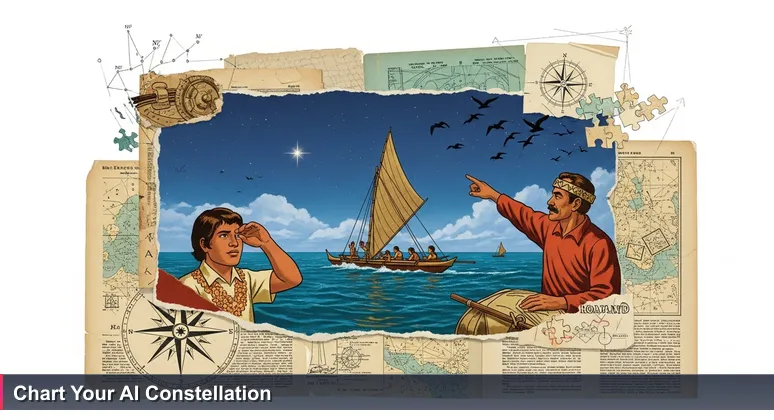
The voyage of a thousand miles begins with a single step. Hoist your sail today by taking these concrete, immediate actions tailored for our island context. True momentum comes from starting, not waiting for perfect conditions.
- Assess Your Starting Point. Be honest about your current computer literacy. Are you a student, a working professional in a state government office, or a complete beginner? This clarity determines your first educational move.
- Explore COM-FSM. Visit the COM-FSM academic programs page or contact admissions. Inquire specifically about the Computer Information Systems program and any scholarship opportunities for ICT majors funded through regional development partnerships.
- Investigate Bootcamp Options. For a practical, fast-paced start, review the detailed curricula of bootcamps like Nucamp. Their AI Essentials for Work program is a perfect launchpad for professionals in government or NGOs who need to leverage AI tools immediately.
- Start Learning Python for Free. Use platforms like Codecademy or freeCodeCamp to begin learning Python basics. Dedicate one hour every evening. This is the universal language you will need, and you can start building this core skill at no cost.
- Join the Local Community. Follow the FSM Department of Finance & Administration and FSM Telecommunications Corporation on social media for updates on digital projects. Network with anyone you know working in IT for the government or a local NGO. The close-knit professional wehi across Pohnpei, Chuuk, Yap, and Kosrae is one of your greatest resources.
Stop looking for a single, distant guiding star. Begin navigating by the full constellation of opportunity that is 2026 Micronesia. By taking these steps, you start charting a course toward a career that is both globally relevant and powerfully, uniquely your own.
Frequently Asked Questions
Is there really a growing demand for AI professionals in Micronesia?
Yes, driven by initiatives like the FSM Smart Island Project and Digital FSM Project, supported by Compact funding. Employers in sectors like government and NGOs are actively seeking AI-integrated roles, with salaries ranging from $20,000 to $70,000 USD in 2026.
What skills should I prioritize learning for an AI career in Micronesia?
Focus on core technical skills like Python and SQL, along with AI frameworks such as TensorFlow. Additionally, skills in AI governance and safety are high-demand differentiators, especially for ethical deployment in public sector projects funded by Compact grants.
How can I afford AI education or training in Micronesia?
Local options like COM-FSM offer associate degrees for $3,000-$4,000 USD annually, and bootcamps like Nucamp's AI Essentials cost $3,582 USD. These are designed to be affordable and leverage Micronesia's remote-work ecosystem for flexible learning.
What types of AI jobs are available in Micronesia and what can I earn?
Roles include AI Policy Officers in government paying $20,000-$45,000 USD, and remote freelance AI developers earning $40,000-$80,000 USD annually. Opportunities span sectors like telecommunications, conservation, and finance, with salaries tied to Compact-funded projects.
How does starting an AI career in Micronesia compare to other Pacific regions?
Micronesia offers unique advantages in e-governance and remote work, with close-knit communities enhancing collaboration. While salaries might be lower than in Guam, you gain access to specialized roles through Compact funding and can leverage local knowledge for tailored AI solutions.
For a look at the 2026 cybersecurity job landscape in Micronesia, refer to this detailed report.
Learn about FSM companies seeking AI engineers and the regional context that shapes these roles.
Discover the top 10 tech apprenticeships in Micronesia for 2026 to launch your career.
Explore the Top 10 AI Tech Bootcamps in Micronesia in 2026 for detailed insights.
Find out about tech career opportunities and highest salaries in Micronesia for 2026 in this detailed report.

Irene Holden
Operations Manager
Former Microsoft Education and Learning Futures Group team member, Irene now oversees instructors at Nucamp while writing about everything tech - from careers to coding bootcamps.