









Is Micronesia a Good Country for a Tech Career in 2026?
By Irene Holden
Last Updated: April 14th 2026
Quick Explanation
Yes, Micronesia can be an excellent place for a tech career in 2026, but it's best suited for nation-builders, remote pioneers, or hybrid developers who leverage its unique advantages. The Compact of Free Association allows access to U.S. remote jobs with average salaries around $46,249, while local roles offer up to $33,600 in a market boosted by donor-funded projects and improved connectivity like the East Micronesia Cable. Just be prepared to navigate challenges such as the 59.5% offline population and tailor your skills to this close-knit island ecosystem.
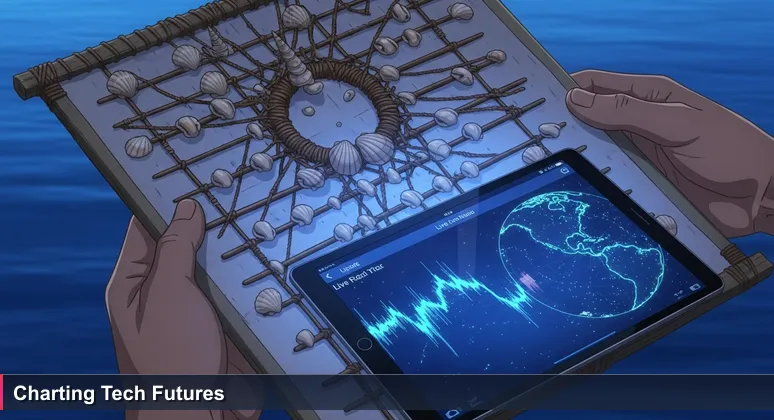
The most skilled navigators in our history never looked at just one chart. In 2026, building a tech career in the Federated States of Micronesia demands that same dual vision. We are in a pivotal year where the foundations laid by multi-million dollar projects are becoming tangible, yet the landscape remains uniquely challenging and opportunity-rich for those who know how to read it.
At its core, the FSM is in the midst of what the United Nations calls a "new era of Digital Transformation", shifting from a government-reliant tech sector to a more connected, donor-supported digital economy. As Her Excellency Jenny Grant highlighted, these initiatives are "not just about technology" but about "unlocking new opportunities" across society. This transformation is powered by landmark projects like the World Bank-funded Digital FSM Project, which is building the foundational e-government services and legal frameworks for our digital future.
For a tech professional, 2026 in Micronesia is not about competing with regional giants like Singapore. It's about embracing a different proposition: a stable, safe home base where your skills can be applied directly to nation-building or leveraged to command a global income without leaving your community. The tools - from submarine cables to coding bootcamps - are finally here. The question is no longer if you can build a tech career here, but what kind of modern navigator you want to be.
What We Cover
- Navigating Micronesia's Tech Landscape in 2026
- The Infrastructure Leap: Fiber and Connectivity
- Job Market Reality: Public Sector and Donor Projects
- Why Micronesia Matters for Tech Careers
- How to Build a Tech Career in Micronesia
- The Nation-Builder: Local Market Focus
- The Remote Pioneer: Global Market, Local Life
- The Hybrid Developer: Serving Local and Regional Clients
- Is Micronesia the Right Fit for You?
- Practical Takeaways for 2026
- Charting Your Course in Micronesia's Tech Future
- Common Questions
This guide to AI careers in the Federated States of Micronesia covers everything from skills to funding.
The Infrastructure Leap: Fiber and Connectivity
The most critical change for tech in 2026 is connectivity. The completion of the East Micronesia Cable (EMC) in late 2025/early 2026 has brought "fiber-like speeds" to our shores, connecting Kosrae, Kiribati, and Nauru to the HANTRU-1 cable in Pohnpei. This subsea link represents a fundamental leap, turning what was once a major barrier into a powerful current of data.
This fiber backbone is complemented by the rapid, widespread expansion of satellite technology. Partnerships with local firms have deployed Starlink to over 150 sites across the states, providing crucial redundancy and reaching communities where laying cable is impossible. Projects like the new Tonoas Smart Island Digital Hub in Chuuk, supported by initiatives like the Australian Infrastructure Financing Facility for the Pacific, aim to bridge the persistent urban-outer island digital divide.
However, a significant gap remains. Data from DataReportal notes that as of late 2025, roughly 59.5% of the population remains "offline." This statistic underscores both the profound challenge and the massive, untapped development opportunity. For a tech professional, it means the infrastructure for high-speed work now exists in hubs, but the market for building basic digital access and literacy across our islands is vast and urgent.
Job Market Reality: Public Sector and Donor Projects
The tech employment scene in Micronesia remains niche and project-driven. Major employers are still the public sector - the FSM National Government in Palikir, the four state governments, and entities like the FSM Development Bank. Education and utilities, such as the College of Micronesia-FSM and state public utility companies, also provide steady technical roles focused on maintaining essential services.
The real growth engine, however, is large-scale, donor-funded digitalization. The World Bank-funded Digital FSM Project is actively building foundational e-government services and legal frameworks, creating periodic high-demand roles for IT specialists, project managers, and cybersecurity experts. Simultaneously, international partners like the Asian Development Bank and UN agencies run project-based hiring for technical consultants, making the job market responsive to specific international development cycles.
Salaries reflect this hybrid market. Local tech roles typically range from $8,124 to $33,600 annually. For context, data from U.S. labor markets shows a professional in a "Micronesia" role in the broader remote sector can earn an average of around $46,249 per year - a figure fully accessible to FSM citizens under the Compact of Free Association. This salary potential must be balanced against a cost of living for a solo professional estimated at about $1,970 per month including rent, with imported goods and housing being significant factors.
Why Micronesia Matters for Tech Careers
Choosing Micronesia for a tech career in 2026 isn't about chasing the scale of a regional giant; it's about embracing a distinct set of advantages tailored for a new kind of professional. This is about building a meaningful career with direct impact from a stable, safe home base unlike any other.
Your greatest career asset is the Compact of Free Association (COFA). It grants the right to live, work, and study in the United States indefinitely, creating powerful "option value." You can pursue high-paying remote or on-site roles in tech hubs, while always having the choice to return and contribute locally. This access is complemented by a frontier market opportunity; with over half the population still offline, there is profound need for digital literacy trainers, local app developers, and IT support specialists right here in our communities.
The ecosystem is actively nurtured by major donor-funded initiatives like the Digital FSM Project. These are not just infrastructure projects - they are talent incubators that require and often fund training for local counterparts, creating pathways into specialized fields like data governance and digital project management.
Finally, the lifestyle is unparalleled. For those prioritizing close-knit community, family ties, and direct access to world-class natural environments, Micronesia offers a foundation of safety and connection that major urban tech hubs cannot match. Your work can fund a global standard of living while your life is rooted in the rhythms of our islands.
How to Build a Tech Career in Micronesia
A viable tech career in Micronesia in 2026 typically follows one of three navigational models, each with its own strategy and rewards. These paths aren't mutually exclusive but represent clear courses you can chart based on your skills and aspirations, allowing you to weave a career that connects global opportunity with local impact.
The Nation-Builder: Local Market Focus
This path is for those committed to working directly within the FSM's public sector and donor-funded projects. Target roles include IT Officer for a state government, Systems Analyst for the College of Micronesia-FSM, or Technical Specialist on a Digital FSM Project. Breaking in often starts with a foundational government position, augmented by specialized certifications funded through donor initiatives or the FSM's Career & Technical Education Hub.
The Remote Pioneer: Global Market, Local Life
This is the most financially lucrative model, leveraging COFA rights and improved connectivity for roles like Remote Software Engineer or AI Prompt Engineer for U.S. or Australian companies. Success requires globally competitive skills in full-stack development, data science, and AI. This is where targeted, affordable upskilling becomes critical. Programs like the Back End, SQL and DevOps with Python Bootcamp provide the exact portable skill set needed to compete for remote roles paying U.S.-level wages from Pohnpei or Kosrae.
The Hybrid Developer: Serving Local & Regional Clients
This path blends the first two, often as a consultant or founder of a small digital agency. Work includes building websites for tourism operators, creating data tools for fisheries cooperatives, or developing educational apps in local languages. It requires both technical skill in web/mobile development and business acumen, often starting by solving a visible local problem and seeking micro-grants from regional development programs.
The Nation-Builder: Local Market Focus
The Nation-Builder path is for those who want their career to be directly woven into the fabric of our islands' development. This means committing to work within the FSM's public sector, educational institutions, and the large-scale donor projects that are shaping our digital infrastructure. Your office could be in a state government building in Kolonia, the College of Micronesia-FSM campus, or on a project implementing the World Bank's Digital FSM initiatives.
The skills in highest demand are those that maintain and modernize core systems. This includes cloud management for government data, cybersecurity for public networks, database administration, and support for specialized platforms like Geographic Information Systems (GIS) for land management or telehealth systems for outer islands. Salaries for these specialized local roles typically range from $8,124 to $33,600 annually, reflecting the structured public sector scales and project funding.
Breaking in requires a blend of foundational entry and strategic upskilling. Start with a position in a government IT department or as a counterpart on a donor project. Simultaneously, pursue certifications - often funded by the projects themselves - through the FSM's Career & Technical Education Hub or the College of Micronesia-FSM. In our close-knit professional circles, a reputation for reliability and growing expertise is a powerful currency, turning a job into a lasting, visible legacy of nation-building.
The Remote Pioneer: Global Market, Local Life
The Remote Pioneer model unlocks the most significant financial advantage for Micronesian tech professionals: leveraging your COFA rights to earn a global salary while rooted in your home community. This path is about accessing the U.S. remote job market, where roles tagged for "Micronesia" can command an average of $46,249 annually, compared to the local salary range of $8,124 to $33,600. The new fiber connectivity and Starlink redundancy make this more viable than ever before.
Target roles are those in high demand worldwide: Remote Software Engineer, Data Analyst, AI Prompt Engineer, or IT Security Consultant for companies based in the U.S., Australia, or New Zealand. Success requires globally portable, competitive skills in full-stack web development (JavaScript, Python), data science, AI integration, and DevOps. You're not just learning to code; you're learning to collaborate asynchronously across a 16-hour time difference and manage the occasional connectivity quirk.
Breaking into this competitive arena demands targeted, affordable upskilling. This is where programs like the Back End, SQL and DevOps with Python Bootcamp (16 weeks, $2,124) and the Solo AI Tech Entrepreneur Bootcamp become critical bridges. They provide the exact skill set - cloud deployment, AI product development - needed to compete for remote roles, with flexible learning tailored to our island schedules. For the Remote Pioneer, a quality bootcamp isn't an expense; it's the investment that connects your home in Pohnpei, Chuuk, Yap, or Kosrae directly to the global digital economy.
The Hybrid Developer: Serving Local and Regional Clients
The Hybrid Developer carves out a middle passage, weaving together the immediacy of local needs with the scope of regional opportunities. This path is often taken by consultants or founders of small digital agencies who solve tangible problems for island businesses while contracting for international development projects. Your workday might involve building a website for a Pohnpei eco-lodge in the morning and configuring a data dashboard for a regional fisheries assessment in the afternoon.
The target work is beautifully varied: creating custom booking systems for tourism operators, developing mobile data collection tools for agriculture co-ops in Yap, serving as a local IT subcontractor on an Asian Development Bank-funded project, or building educational apps in Chuukese or Kosraean. The skills demanded are equally diverse, requiring fluency in web and mobile development, digital marketing, project management, and, crucially, client consulting across cultural contexts.
Breaking in requires an entrepreneurial mindset. It begins by identifying and solving a visible local problem with a tech solution, using that success as a portfolio piece. Networking through programs that connect technical training with business development is essential. The path also involves seeking micro-grants from regional development programs that support island entrepreneurship, turning a skill set into a sustainable practice that serves both your community and your career.
Is Micronesia the Right Fit for You?
Determining if Micronesia is the right place for your tech career in 2026 requires honest self-assessment. It's not a one-size-fits-all market but an exceptional fit for specific professional profiles who value its unique blend of access, impact, and lifestyle.
Micronesia is BEST FOR:
- Early/Mid-Career Nation-Builders: Professionals who want their work to have direct, tangible impact on their home communities and are willing to grow alongside a developing market within the public sector or donor projects.
- Remote-Work Veterans: Experienced tech professionals, often from the diaspora, who want to return home to Pohnpei, Chuuk, Yap, or Kosrae while maintaining a high-income U.S. or global-based job. They have the seniority to work asynchronously and manage connectivity nuances.
- Hybrid Entrepreneurs: Self-starters who see the unmet digital needs across the islands as a business opportunity and are adept at navigating both local culture and international digital tools and funding streams.
Micronesia is NOT IDEAL FOR:
- Career Starters Seeking Thriving Tech Hubs: If you need the energy of daily meetups, abundant junior-level job postings, and immediate mentorship in a large tech company, you will find more opportunity in established regional hubs like Guam, Honolulu, or Manila.
- Those Uncomfortable with Professional Isolation: The ecosystem is small. If you thrive on constant peer collaboration and rapid in-person feedback, a larger regional hub will be a better fit. As the Asian Development Bank notes, Pacific economies also remain vulnerable to global shocks, adding another layer of complexity.
- Professionals Requiring Ultra-Low Latency: If your niche (e.g., high-frequency trading, real-time collaborative gaming) depends on imperceptible lag, our infrastructure, despite the fiber leap, may still pose challenges, especially from outer islands.
Practical Takeaways for 2026
For the tech jobseeker in 2026, your strategy must be dual-track. Invest in globally competitive skills - through targeted programs like bootcamps - that give you the remote option, while actively networking within local government and donor projects. Your COFA rights are both a safety net and a launchpad; use them strategically to gain experience or command a salary closer to the U.S. average of $46,249, then apply that knowledge back home.
For local and international employers, retaining talent requires acknowledging the pull of the "COFA drain." Competitive localization of salaries for specialized roles is essential, as is designing flexible, asynchronous remote work structures to tap into the skilled diaspora. Forming pipeline partnerships with training providers is key to building a sustainable local talent pool ready for projects like the Digital FSM Project.
For policymakers, the priority must be converting infrastructure spending into lasting local capacity. This means ensuring every major digital initiative includes a compulsory, funded knowledge-transfer component for FSM counterparts. Programs should also incentivize remote workers in the diaspora to contribute part-time to local digital public goods, weaving their high-value skills back into the community fabric for lasting impact.
Charting Your Course in Micronesia's Tech Future
In 2026, Micronesia is not the easiest place to build a tech career, but it is one of the most meaningful. It asks you to be a modern navigator, charting a course using the stars of global opportunity while staying firmly rooted in the currents of our island communities. The landscape is defined by a powerful duality: the completion of fiber cables bringing the world closer, and the enduring need to connect our own people, with 59.5% still offline.
This moment is about embracing what our home is becoming - not a replica of a massive tech hub, but a stable, safe base camp for a new kind of professional. It is a place where your work can directly build a digital land records system in Yap or a fisheries platform for Chuuk, or where your skills can fund a global income from your family's lagoon in Pohnpei. As highlighted in the UN's assessment of this "new era of Digital Transformation," these initiatives are fundamentally about unlocking human potential.
The tools for this journey - from the subsea cables carrying fiber-like speeds to the targeted coding bootcamps building portable skills - are finally here. The foundational frameworks, like the Digital FSM Project, are being laid. The question for you, the builder, is no longer if you can forge a tech career here, but what kind of legacy you want to create: as a Nation-Builder, a Remote Pioneer, or a Hybrid Developer weaving it all together. The chart is in your hands.
Common Questions
Is Micronesia actually a viable place for a tech career in 2026?
Yes, but it depends on your approach. With infrastructure like the East Micronesia Cable improving connectivity and donor-funded projects creating jobs, it's possible, especially if you leverage the Compact of Free Association for remote opportunities.
What kind of tech jobs are available in Micronesia right now?
Most roles are in the public sector and large-scale digitalization projects, such as the World Bank's Digital FSM Project, which hires IT specialists and cybersecurity experts. These are project-driven but offer meaningful impact in places like Palikir or Chuuk.
How can the Compact of Free Association boost my tech career?
It allows FSM citizens to work in the U.S. without a visa, so you can access higher-paying remote roles - averaging around $46,249 per year - while living in Micronesia. This gives you flexibility to contribute locally or earn globally.
What are the salary ranges for tech professionals in Micronesia?
Local tech jobs typically pay $8,124 to $33,600 annually, but with remote work under the Compact, you can earn closer to U.S. averages. Keep in mind the cost of living is about $1,970 per month, including rent.
Are there coding bootcamps or training programs in Micronesia to help me start?
Yes, programs like Nucamp Coding Bootcamp offer affordable courses in Pohnpei, Chuuk, Yap, and Kosrae, focusing on skills like Python and AI. With a ~78% employment rate for graduates, they're tailored for remote work and local impact.
If you're searching for where to find AI engineer roles in Micronesia, this article provides key insights.
Discover the top tech jobs in Micronesia that don't require a degree for 2026, focusing on skills and certifications.
For details on remote-work friendly tech hubs in Micronesia, refer to this comprehensive article.
Explore junior developer jobs in Micronesia's tech startups and learn how to navigate the 2026 market.
Get insights into the top-ranked women in tech initiatives in Micronesia for career advancement.

Irene Holden
Operations Manager
Former Microsoft Education and Learning Futures Group team member, Irene now oversees instructors at Nucamp while writing about everything tech - from careers to coding bootcamps.