









Who's Hiring Cybersecurity Professionals in Japan in 2026?
By Irene Holden
Last Updated: April 6th 2026
Key Takeaways
In 2026, tech and telecom giants, cloud providers, megabanks, defense and aerospace firms, utilities, hospitals, consultancies and government agencies are all hiring cybersecurity professionals because Japan faces a shortage of over 110,000 specialists and is rolling out an Active Cyber Defense framework that makes security spending strategic. Expect roles at companies like NTT, Rakuten, SoftBank, Fujitsu, AWS, Google Japan, MUFG, Mitsubishi Heavy Industries, TEPCO, JR Group, CrowdStrike and the Digital Agency - mostly in Tokyo with growing hubs in Osaka, Nagoya and Fukuoka - and typical pay starts around ¥6 million to ¥8 million for junior roles and rises into the ¥14 million to ¥21 million range for senior positions.
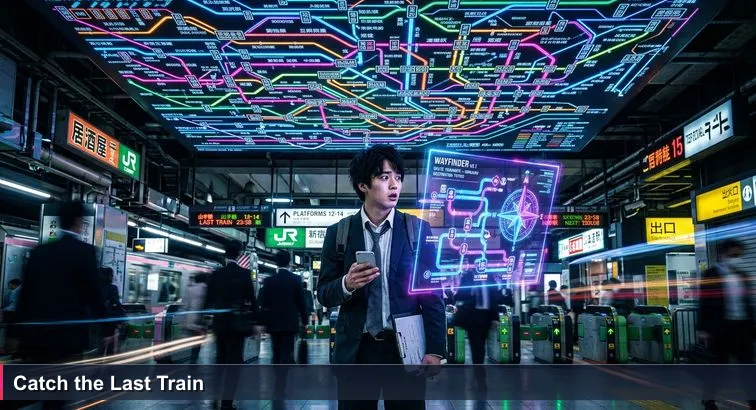
It’s 23:47 in Shinjuku Station. Fluorescent lights buzz, the melody for departing trains echoes off the tile, and “Last Train” warnings pulse above the gates. Salarymen jog toward the Chūō Line, tourists drag suitcases toward the Yamanote - everyone seems to know exactly which platform to sprint to, while you stand pinned under a maze of colored lines and tiny station names, resume folder slick in your hand.
That’s what Japan’s 2026 cybersecurity job market feels like for many people in Tokyo, Osaka, Nagoya, Fukuoka, and beyond. You’ve seen the headlines: Japan is short more than 110,000 cybersecurity professionals, and the government wants to double the talent pool in just a few years, as highlighted in Nihon Cyber Defence’s analysis of the talent gap. Security budgets have shifted from “nice to have” to strategic, directly tied to national resilience.
On top of that, the new Active Cyber Defense framework - explained in detail by Nippon.com’s coverage of Japan’s shift to “active” cyber defense - is coming into force in late 2026. Zero-trust mandates, mandatory reporting, and AI-driven threats are all changing the timetable. You understand that cybersecurity jobs exist. You may even know your dream destination - Rakuten in Futako-Tamagawa, an Osaka utility, a defense prime in Nagoya - but not which “line” actually gets you there.
What’s missing isn’t motivation; it’s a readable map. You need to see which sectors are hiring aggressively, which regions and employers fit your language level and background, and how specific skills, certifications, and AI literacy function as tickets and transfers rather than random buzzwords.
This guide treats Japan’s 2026 cybersecurity market like the JR network: multiple lines, distinct platforms, and smart transfers. By the end, the same late-night station looks different - you’re no longer staring up at the routes. You’re walking with purpose toward the platform that matches the career you actually want before the shutters come down.
In This Guide
- Introduction: The Last Train and the Cybersecurity Map
- Japan's 2026 Cybersecurity Landscape
- Reading the Hiring Map: Main Lines and Sectors
- Tech, Telecom and Cloud
- Defense, Aerospace and SDF Pipelines
- Finance, Fintech and Digital Commerce
- Critical Infrastructure, Transport and Healthcare
- Global Platforms, Consulting and SaaS
- Public Sector, Regulators and Policy
- Skills, Certifications and Language
- Bootcamps and Short Courses as Transfer Stations
- Finding and Landing Roles in Japan
- Choosing Your Line and Next Steps
- Frequently Asked Questions
Read our Complete Guide to Starting an AI Career in Japan to plan your 2026 job search.
Japan's 2026 Cybersecurity Landscape
From “more attacks” to a structural bottleneck
Across Japan, cybersecurity is no longer framed as “too many attacks” but as a structural bottleneck slowing digital transformation, national security, and even local government services. Multiple government and industry studies now put the skills shortfall well into the six figures, and analysts warn this gap is large enough to delay cloud migration and smart infrastructure projects nationwide.
At the same time, security spending has been recategorized from cost center to national priority. According to IT Business Today’s 2026 investment overview, cybersecurity is explicitly grouped with energy and supply-chain resilience as a strategic investment area, not a discretionary IT line item.
Active defense, zero trust, and regulatory pressure
The legal environment has shifted just as dramatically. Japan’s move to an active cyber defense posture, with operations starting in late 2026, gives the state authority to neutralize serious threats rather than only absorb them. In parallel, regulators are mandating zero-trust architectures across 14 critical sectors including finance, utilities, transport, healthcare, and government, as detailed in market analyses like the Japan Cybersecurity Market report.
For employers, that means building 24/7 monitoring, incident reporting, and vendor oversight into their core operations. For job seekers, it means a surge in demand not just for defenders, but for people who understand compliance, cloud-era architecture, and how to implement zero trust in messy, real-world environments.
AI-native security teams as the new normal
Layered on top of this is the rise of AI-native security teams. Commentators tracking the 2026 job market note that AI is compressing manual work - log triage, initial forensics, routine scripting - while increasing the premium on people who can orchestrate these tools effectively. Instead of replacing human talent, AI is amplifying the gap between those who can use it and those who cannot. In practice, that means security roles in Tokyo, Osaka, Nagoya, and Fukuoka increasingly list AI literacy alongside cloud and networking as a baseline requirement rather than a bonus skill.
Reading the Hiring Map: Main Lines and Sectors
Seeing cybersecurity as a rail network
Instead of treating “cybersecurity in Japan” as a single destination, it’s more accurate to imagine the market as a dense JR/metro map. Each line serves different kinds of passengers: some prioritize high salaries and cutting-edge cloud work in central Tokyo, others favour stability in regional infrastructure or mission-driven roles in defense and government. With a nationwide talent deficit already baked in, employers are competing hardest for people who can pick a line and move decisively along it.
Analysts tracking the IT market note that security demand is embedded across cloud migration, AI adoption, and modernization projects, not isolated in a single niche. For example, TEKsystems’ Japan IT market trends highlight cybersecurity as a persistent theme in cloud, data, and infrastructure initiatives from Tokyo to Fukuoka.
The main lines on the 2026 hiring map
Most roles cluster into a few recognizable “lines”:
- Tech, Telecom & Cloud - NTT Group, Rakuten, SoftBank, AWS, Google Cloud, Microsoft Japan, Fujitsu, NEC, Sony.
- Defense, Aerospace & Space - MHI, KHI, JAXA, and their contractors.
- Finance, Fintech & Digital Commerce - megabanks, securities firms, and payment platforms.
- Critical Infrastructure, Transport & Healthcare - utilities, JR Group, airlines, hospitals, universities.
- Global Platforms & Consulting - security vendors, Big 4, and specialist boutiques.
- Public Sector & SDF Pipelines - Digital Agency, NISC, ministries, and Self-Defense Forces.
Choosing lines, then planning transfers
Each line comes with its own norms: salary bands, Japanese-language expectations, typical work-life balance, and favoured certifications. A practical strategy is to pick a primary line, then plan “transfers” via skills, certs, and training. Structured programs like the ones profiled in Nucamp’s guide to Japan’s cybersecurity job market can serve as deliberate transfer stations instead of random detours.
Tech, Telecom and Cloud
Japan’s digital backbone and its biggest recruiters
On the Tech, Telecom and Cloud line, you’re riding the core of Japan’s digital infrastructure. Companies like NTT Group, Rakuten, SoftBank, KDDI, Fujitsu, NEC, Sony, and the Japan arms of AWS, Google Cloud, and Microsoft Azure operate the networks and platforms everyone else builds on. Analyses such as IMARC’s look at how Japan is strengthening cybersecurity consistently flag these firms as among the largest recruiters of specialized security talent because any disruption to them is a national-scale issue.
Typical roles in 2026
Job postings from Shinagawa to Shinjuku usually fall into a few patterns:
- Cloud Security Architect securing AWS Tokyo, Azure Japan East/West, and private clouds.
- DevSecOps Engineer embedding security into CI/CD, containers, and Kubernetes.
- SOC Analyst / Incident Responder operating SIEM/XDR, doing threat hunting and triage.
- AI Governance / AI Security Specialist managing LLM access, data leakage, and prompt-injection risks.
Most of these roles are concentrated in the Tokyo metropolitan area, with growing satellite teams in Osaka and Fukuoka as remote and hybrid work mature.
Salary bands and expectations
For major tech and telecom employers, junior cyber roles (roughly 0-3 years’ experience or strong bootcamp + certs) commonly start around ¥6M-¥8M per year, while senior or lead engineers and architects can reach roughly ¥14M-¥21M, based on benchmarks like Robert Half’s 2026 cybersecurity engineer salary guide. Hiring managers expect solid Linux and networking foundations, at least one cloud security certification, and practical familiarity with zero trust design.
Distinct technical challenges
What sets this line apart is scale and novelty: securing nationwide 5G and private 5G deployments for smart factories, defending massive SaaS platforms, and hardening environments where generative AI is woven into customer support and developer workflows. Professionals who can combine automation (Python, IaC), cloud-native security, and AI tool literacy are the ones moving fastest from entry-level SOC roles into high-impact architect and lead positions in Japan’s biggest tech hubs.
Defense, Aerospace and SDF Pipelines
Why this line matters in 2026
On the Defense, Aerospace and Space line, cybersecurity is directly tied to national survival. Japan’s shift to an active cyber defense posture means critical systems in missile defense, satellites, and command networks must withstand not only criminal groups but state-backed adversaries. Analyses of Japan’s national security strategy, such as those from the Center for Strategic and International Studies, highlight cyber capability as a core pillar alongside conventional forces.
Key employers and mission-focused roles
Major stations on this line include Mitsubishi Heavy Industries (MHI), Kawasaki Heavy Industries (KHI), JAXA, and defense contractors like BAE Systems, Raytheon, Boeing Japan, Quest Global, plus space-tech startups such as Astroscale. Typical roles focus on long-term, high-trust threats:
- APT Threat Researcher / Malware Analyst tracking state-sponsored campaigns.
- Incident Responder for mission networks that cannot afford downtime.
- Secure Systems Architect for satellite links, weapons systems, and C2 networks.
- Red / Purple Team Specialist simulating nation-state attackers against defense infrastructure.
Compensation generally runs from about ¥8M-¥15M depending on clearance level, specialization (forensics, ICS, crypto), and employer.
Clearance, skills, and specialist training
These environments demand clean background checks, strong Japanese, and deep technical skill rather than broad “IT security.” Certifications like GIAC (for forensics and reverse engineering), CISSP, and CISA carry particular weight. Many mid-career engineers level up through intensive training such as the Tokyo-based courses offered at SANS Active Cyber Defence Japan 2026, which focus on incident response and active defense techniques.
SDF and JJOC as a long-term pipeline
The Self-Defense Forces (SDF) are rapidly expanding internal cyber units and standing up the Japan Joint Operations Command (JJOC), creating a structured pathway for people who start in uniform and later transition into contractors or primes. An SDF tour in cyber - monitoring hostile activity, hardening military networks, coordinating with national agencies - can become a powerful launchpad into senior roles at MHI, KHI, JAXA, or high-trust vendors once you move into the private sector.
Finance, Fintech and Digital Commerce
On the Finance, Fintech and Digital Commerce line, the “cargo” is money, identities, and transaction data. Megabanks like MUFG, Mizuho, and SMBC, securities houses such as Nomura and Daiwa, and Tokyo-based arms of global banks are racing to secure open banking APIs, mobile apps, and AI-driven trading platforms. Market research on Japan’s cyber sector shows that the BFSI vertical is one of the most security-intensive segments, with persistent investment in fraud prevention and data protection, as highlighted in the Japan Cyber Security Market Size and Trends report.
Fintech players add even more complexity: Rakuten Card and Rakuten Bank, PayPay, LINE Pay, and merchant platforms handle millions of small, latency-sensitive transactions every day. As generative AI makes phishing and social engineering more convincing, these firms are upgrading monitoring and analytics to spot subtle account-takeover and mule patterns that legacy rules can’t catch.
Roles on this line typically cluster around:
- Identity & Access Management (IAM) Engineers managing entitlements for staff and customers.
- Fraud Detection Analysts / Data Security Specialists tuning models and rules against AI-enhanced scams.
- GRC and Cyber Risk Managers aligning controls with APPI and Financial Services Agency (FSA) guidance.
- Application Security Engineers embedding security into online and mobile banking channels.
Mid-level to management security roles in major financial institutions often sit around ¥9M-¥18M per year, reflecting both regulatory pressure and the business impact of breaches. Employers expect a blend of security and compliance literacy: understanding APPI, sector guidelines, and zero-trust principles alongside practical experience with IAM, SIEM, and secure API design.
For candidates comfortable with regulation and detail, this line offers some of Japan’s most stable and well-compensated cybersecurity careers, especially in central Tokyo and emerging fintech clusters in Osaka.
Critical Infrastructure, Transport and Healthcare
The overlooked line that keeps Japan running
Critical infrastructure, transport, and healthcare rarely make flashy headlines, yet they are the systems that quite literally keep Japan’s lights on and trains moving. Power companies like TEPCO and Kansai Electric, railway groups, major airlines, and university hospitals are all racing to secure environments that were never designed for an always-connected, AI-driven world. Industry briefings on Japan’s cyber outlook increasingly warn that vulnerabilities in these sectors represent not just business risk, but threats to public safety and national resilience.
OT, legacy systems, and a fast-growing niche
Unlike cloud-native startups, these organizations depend heavily on operational technology (OT) and industrial control systems. Many plants and signal systems still run on legacy hardware that predates the public internet. Analyses of the OT security segment, such as the review of Japan’s operational technology market on LinkedIn’s OT security market brief, note rapid growth as utilities and manufacturers scramble to harden SCADA and field equipment against targeted attacks and accidental exposure.
Roles that blend IT, OT, and compliance
Security teams in this line hire for a mix of hands-on and governance roles, including:
- OT/ICS Security Specialists who understand network segmentation, protocols, and safety constraints on industrial systems.
- Information Security Analysts managing SIEM, vulnerability scanning, and incident response for hospitals, rail operators, and logistics hubs.
- GRC Managers aligning controls and reporting with government cyber directives for critical services.
- Security Engineers for transport systems protecting ticketing platforms, IoT sensors, and operational networks.
Regional opportunities and realistic compensation
While headline-grabbing salaries cluster in finance and big tech, mid-career compensation in this line is still strong. Data from SalaryExpert’s information security analyst profiles for Japan show that these roles typically earn above the national average, with additional stability benefits in public or semi-public institutions. For many professionals willing to work with legacy systems and outside the busiest business districts, cities such as Sapporo, Sendai, Nagoya, and Hiroshima offer a compelling mix of impact, cost of living, and long-term career security.
Global Platforms, Consulting and SaaS
Where global tools meet Japanese clients
On the Global Platforms, Consulting and SaaS line, you’re operating in the high-speed transfer hubs of the cybersecurity map. Tokyo’s Marunouchi, Otemachi, and Roppongi districts host Japan teams for vendors like CrowdStrike, Cloudflare, Zscaler, Rapid7, Trellix, and a rotating cast of fast-growing SaaS players, alongside the Big 4 consultancies and specialist boutiques. A 2026 overview of leading providers in Japan, such as the Top 10 Cybersecurity Companies in Japan list, shows how many global brands now treat Japan as a core market rather than a satellite.
Key roles on this line
Most positions are client-facing and project-driven, including:
- Sales Engineers / Solutions Architects translating complex security products into workable designs for Japanese enterprises.
- Cybersecurity Consultants running assessments, roadmaps, and zero-trust transformations across multiple industries.
- Incident Response Consultants parachuting into major breaches with tight deadlines and high stakes.
- Cloud & Zero-Trust Architects guiding hybrid and multi-cloud security for large client portfolios.
Work style, language, and compensation
Compared to in-house roles, work here is faster-paced and more variable. You might spend one week with a megabank, the next with an Osaka manufacturer, and the third supporting a breach response at a startup. Hours can be long around go-lives or incidents, but compensation is typically above mid-market in recognition of billable pressure and travel.
Teams are often bilingual, with English used for global coordination and Japanese for clients. Many job ads on platforms like Japan Dev’s curated tech job board explicitly call for engineers who can present in Japanese and write clear reports, making this line ideal if you enjoy both technical depth and communication.
Public Sector, Regulators and Policy
Where policy meets practice
On the Public Sector, Regulators and Policy line, cybersecurity jobs sit where law, technology, and national strategy intersect. The Digital Agency, NISC, individual ministries, and prefectural and city governments are all under pressure to harden systems as part of Japan’s broader security agenda. Briefings like the Japan Cyber Briefing: The 2026 Outlook underline how cyber resilience has become a core theme in government modernization, not just an afterthought for IT departments.
Frameworks that define the work
Several Japanese frameworks shape day-to-day tasks on this line. The Act on the Protection of Personal Information (APPI) governs handling of personal data across public and private sectors. ISMAP sets security requirements for government cloud services. The Active Cyber Defense framework, rolling out from late 2026, demands more robust monitoring, reporting, and coordination. On top of this, zero-trust architectures are being mandated across 14 critical sectors, forcing even traditionally conservative agencies and public hospitals to rethink network and identity design.
Roles, skills, and language expectations
Typical roles include Compliance Analysts and GRC Specialists interpreting APPI and ISMAP, Government Cloud Security Engineers securing workloads under Japanese standards, and policy or strategy staff drafting national and sectoral guidelines. A recurring theme is the need to bridge legal language with technical controls. As one analysis on Japan’s push to double its cybersecurity workforce notes, regulators are looking not just for engineers, but for professionals who can design governance structures and oversee implementation at scale.
Most positions require strong to native-level Japanese, especially for drafting policies, responding to Diet questions, or coordinating with local governments. For those who build careers here, the experience often becomes a powerful springboard into senior risk, compliance, or CISO roles in finance, telecom, or critical infrastructure, where understanding of government expectations is a decisive advantage.
Skills, Certifications and Language
High-demand roles on the 2026 map
Across Tokyo, Osaka, Nagoya, and Fukuoka, the same job titles keep appearing: roles that sit at the intersection of cloud, governance, and hybrid infrastructure. With Japan ranked among the top global spenders on cybersecurity, according to DeepStrike’s survey of national cyber spending, employers are funnelling that budget into a few critical profiles rather than generic “IT security.”
- Cloud Security Architect - designing secure AWS/Azure/GCP environments.
- GRC Specialist - translating regulation into practical controls and reporting.
- Zero-Trust Engineer - implementing identity-centric networks and access.
- Bilingual Security Lead - aligning Japanese entities with global HQ policies.
Certifications that actually matter
To filter thousands of applicants, hiring managers lean heavily on a small set of certifications that signal baseline competence and commitment. In Japan, international standards sit alongside one uniquely domestic credential, giving you a clear menu to choose from depending on your target line.
- CISSP - broad architecture and management for mid/senior roles.
- GIAC (SANS) - deep technical tracks in forensics, incident response, malware.
- CISA - audit and governance, especially valued in finance and public sector.
- Cloud security certs (AWS/Azure/Google) - now table stakes for cloud-facing roles.
- Registered Information Security Specialist (情報処理安全確保支援士) - a strong signal to Japanese employers that you understand local standards.
AI as a force multiplier, not a replacement
Teams are increasingly judged on how well they wield AI, not whether they can avoid it. A Business Insider feature on AI agents in security reports that tasks which “typically take 20 to 30 minutes manually… can now be completed in minutes,” as one CSO observed, showing how AI compresses routine work while raising expectations for strategic human oversight (AI agents in cybersecurity workloads).
Language as a career accelerator
Finally, language remains a decisive differentiator. Deep technical roles in global vendors may accept English-first candidates, but governance-heavy positions in finance, public sector, and utilities typically require business-level or native Japanese for reading regulations, drafting policies, and briefing executives. Combining solid technical skills with JLPT N2-N1 communication often moves you from back-office engineer to trusted advisor or team lead far faster than technical depth alone.
Bootcamps and Short Courses as Transfer Stations
Bootcamps as deliberate transfer stations
For many people in Japan, the biggest challenge isn’t deciding whether to move into cybersecurity or AI - it’s finding a structured way to transfer from their current line (office work, SIer, help desk, even non-IT jobs) onto the cyber and cloud tracks without quitting work. That’s where bootcamps and short courses function like transfer stations on your career map: time-bounded, skills-focused, and explicitly designed to connect you to specific roles.
Nucamp: flexible routes into cyber and AI
Nucamp offers online, part-time programs that fit the reality of life in Tokyo, Osaka, Nagoya, and Fukuoka. Tuition ranges from about ¥297,000 to ¥557,000, with monthly payments, making it markedly more accessible than many full-time, in-person bootcamps. Outcomes data show an employment rate of roughly 78%, a graduation rate near 75%, and a Trustpilot score of 4.5/5 with about 80% five-star reviews - strong signals that the model works for serious career changers.
| Program | Duration | Approx. Tuition | Primary Focus |
|---|---|---|---|
| Cybersecurity Bootcamp | 15 weeks | ¥297,000 | SOC fundamentals, defenses, tools |
| Back End, SQL & DevOps with Python | 16 weeks | ¥297,000 | Python, SQL, DevOps, cloud basics |
| Solo AI Tech Entrepreneur | 25 weeks | ¥557,000 | AI products, LLMs, agents, SaaS |
| AI Essentials for Work | 15 weeks | ¥501,000 | Practical AI, prompt engineering |
Local meetups and career support
Because Nucamp runs meetups and study groups in over 200 locations worldwide, including major Japanese hubs, you’re not learning in isolation: you can meet peers in Tokyo, Osaka, Nagoya, or Fukuoka while studying online. Structured career services - 1:1 coaching, portfolio help, and mock interviews - are tuned to tech hiring norms that Nucamp documents in its guide to Japan’s cybersecurity job market, helping you translate new skills into actual offers.
When to choose short, intensive courses
If you already work in IT and just need a pivot - say from network engineer to cloud security - short, high-intensity courses (including SANS-style trainings held in Tokyo) can be smart “express transfers.” For everyone else, especially non-IT professionals and junior engineers, a multi-month bootcamp that combines fundamentals, AI literacy, and portfolio projects is usually the more reliable way to get onto the right cybersecurity line and stay there.
Finding and Landing Roles in Japan
Finding the right platforms, not just any job post
Once you’ve picked a line on the cybersecurity map, the next step is choosing the right “stations” instead of spraying applications everywhere. In Japan, that means combining international job boards, domestic platforms, and direct company sites. Global boards regularly list dozens of security roles across Tokyo, Osaka, and Nagoya; for example, curated searches on sites like Glassdoor’s cyber security jobs in Japan page show a steady flow of openings from megabanks, manufacturers, and foreign vendors. Pair those with Japanese-language platforms and direct career pages for NTT, Rakuten, SoftBank, JR Group, ministries, and regional utilities.
Networking in the right rooms
Japan’s hiring culture still leans heavily on trust and introductions. Cybersecurity meetups in Shinjuku, Shibuya, and Osaka’s Umeda district, along with conferences such as Japan IT Week or sector-specific cyber events, let you meet practitioners from the exact teams you want to join. A single conversation with a SOC lead from a telecom or a GRC manager at a megabank will often give you more actionable insight than ten generic job ads.
- Target at least one major conference or meetup each quarter.
- Prepare a short self-introduction in Japanese and English that highlights your line (e.g., cloud security, OT, GRC).
- Bring 1-2 concrete stories: a home lab, capture-the-flag write-up, or bootcamp project.
Using bootcamp career services intelligently
If you’re coming through a structured program like Nucamp, treat its career services as your express transfer. With an employment rate around 78% and graduation near 75%, the combination of 1:1 coaching, portfolio reviews, and mock interviews is designed to bridge precisely the gap between “I finished a course” and “I passed a Rakuten or Fujitsu interview.” Use mentors to adapt your resume into both English and Japanese formats, rehearse technical interviews grounded in your projects, and map your new skills to real postings in Tokyo, Osaka, or Fukuoka.
Japan-specific CV and interview habits
Finally, align with local expectations: prepare a concise English resume and a Japanese 履歴書, avoid job-hopping narratives that suggest短期離職, and be ready to explain why you’re committed to cybersecurity in Japan for the long term. Employers in Tokyo’s major hubs and regional cities alike are not just hiring skills; they are looking for people who can grow with their teams through the Active Cyber Defense era and beyond.
Choosing Your Line and Next Steps
Picture that Shinjuku scene again: 23:47, last-train clock blinking, crowds flowing around you. The only real difference between standing frozen under the map and walking straight to the right platform is clarity. In cybersecurity, that clarity means knowing which line you’re on, which stations matter, and what transfers you’ll make in the next 6-12 months.
This isn’t just a personal project; it aligns with national momentum. Japan is actively pushing to expand its cyber workforce across government, critical infrastructure, and private industry, as analyses of Japan’s drive to enhance cybersecurity talent make clear. The opportunity is there, but it rewards people who move deliberately rather than waiting for a “perfect” posting to appear.
A practical way to turn this guide into action is to give yourself one concrete, written plan:
- Choose your line: Tech/Cloud, Defense, Finance/GRC, Critical Infrastructure, Consulting, or Public Sector.
- Pick 5 target employers in your preferred region (Tokyo metro, Kansai, Chūbu, or Kyushu).
- Identify your biggest gap (cloud, networking, GRC, OT, Japanese, or AI literacy).
- Select one learning path that closes that gap: a cert, a home lab, or a structured program such as a 15-week cybersecurity bootcamp or a 16-week Python/DevOps course.
- Schedule one networking action this quarter: a meetup, conference, or informational chat with someone already on your chosen line.
For many readers, especially career changers in Tokyo, Osaka, Nagoya, or Fukuoka, that “one learning path” may be a part-time bootcamp that fits around work and family: for example, a cybersecurity program at about ¥297,000 to build SOC fundamentals, or a back-end and DevOps course at similar cost to open cloud and DevSecOps roles, or even a 25-week AI-focused bootcamp around ¥557,000 if you want to be the person who brings AI into security, not the one displaced by it.
Months from now, the job market will still look like a complex transit map. The difference is that you’ll recognise station names, know which transfers you’ve already made, and be able to explain - to yourself and to employers - exactly which cybersecurity train you’re boarding in Japan, and why.
Frequently Asked Questions
Which companies and sectors are actually hiring cybersecurity professionals in Japan in 2026?
Hiring is broad: tech/telecom/cloud firms (NTT Group, Rakuten, SoftBank, Fujitsu, Sony, AWS/Google/Microsoft Japan), finance (MUFG/Mizuho/SMBC, Rakuten Bank, PayPay), defense/aerospace (MHI, KHI, JAXA), critical infrastructure and healthcare (TEPCO, JR Group, major hospital systems), plus global vendors and consultancies (CrowdStrike, Cloudflare, Big 4) and public bodies (Digital Agency, NISC). Demand is acute - analysts estimate a national shortfall of over 110,000 cybersecurity professionals - so opportunities exist across these sectors.
Do I have to be in Tokyo to get a cybersecurity job, or are other regions hiring too?
Tokyo metro remains the largest hub - closest to major employers and research centres like RIKEN and the University of Tokyo - but Osaka/Kansai (manufacturing, healthcare), Nagoya (automotive/OT security for Toyota and suppliers) and Fukuoka (startups) all show growing hiring; hybrid and remote roles from Tokyo firms are also common, making regional options realistic if you prefer lower living costs.
What core skills, certifications, and Japanese language level do employers want in 2026?
Common technical pillars are cloud security (AWS/Azure/GCP), Linux, networking, incident response, and AI literacy; valued certifications include CISSP, GIAC (SANS), AWS Security Specialty and Japan’s Registered Information Security Specialist (情報処理安全確保支援士). For GRC/finance/public-sector roles business-level Japanese (often JLPT N2-N1) is usually required, while some global tech teams accept English-first hires but give promotion advantage to bilingual candidates.
What salary ranges can I expect for entry and senior cybersecurity roles in Japan?
Typical tech/telecom junior roles start around ¥6M-¥8M per year, with senior/lead positions at about ¥14M-¥21M; finance and GRC mid-to-senior roles commonly range ¥9M-¥18M, and defense/aerospace roles often fall between ¥8M-¥15M depending on clearance and specialization. Regional and public-sector roles can be slightly lower but remain competitive given the national talent shortage.
Can I break into cybersecurity quickly with a bootcamp like Nucamp, and is it a good fit for Tokyo-based careers?
Yes - practical bootcamps are accepted as “transfer stations” into SOC analyst and junior security engineer roles; Nucamp’s Cybersecurity Bootcamp is part-time and affordable (around ¥297,000) and pairs well with a DevOps/Python or AI course to target cloud/DevSecOps roles in Tokyo. For deeper specialisation you can follow up with SANS/GIAC training, but bootcamps plus hands-on labs and certs are a fast, cost-effective route given the 110,000-person gap.
Campus recruiters are using the best AI startups to watch in Japan 2026 list to target graduates skilled in ML and robotics.
Make an informed choice between Tokyo, Osaka, and Fukuoka with the Cost of Living vs Tech Salaries in Japan (2026) complete guide.
Long-tail hiring guide: Top 10 industries hiring AI talent in Japan beyond Big Tech in 2026 - tips for career changers
Top 10 Tech Jobs That Don't Require a Degree in Japan in 2026
Our guide lists the top 10 tech internships and apprenticeships in Japan tailored for career changers and bootcamp grads.

Irene Holden
Operations Manager
Former Microsoft Education and Learning Futures Group team member, Irene now oversees instructors at Nucamp while writing about everything tech - from careers to coding bootcamps.