









Cost of Living vs Tech Salaries in Japan in 2026: Can You Actually Afford It?
By Irene Holden
Last Updated: April 6th 2026
Key Takeaways
Yes - you can afford to live in Japan on a tech salary in 2026, but comfort depends on location and the fine print because taxes and social insurance take about 20-30 percent and landlords typically require four to six months’ rent upfront. For example, a ¥6M gross role nets roughly ¥390,000 per month and can cover a modest Tokyo 1K, ¥12M nets about ¥720,000 which supports a central 1LDK and solid savings, and choosing Osaka or Fukuoka on the same pay will noticeably boost your disposable income thanks to much lower rents.
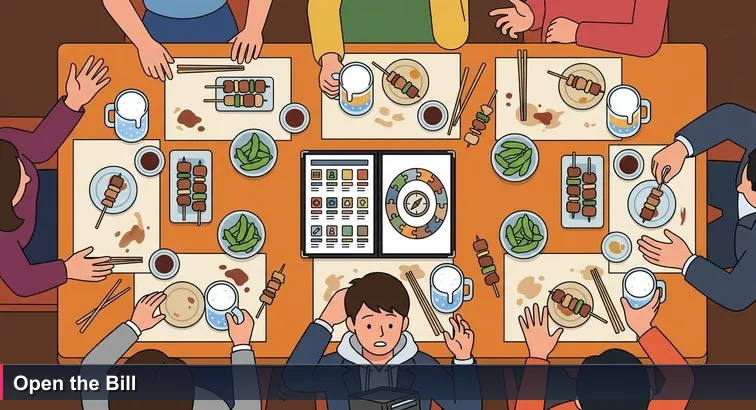
The first time you join a nomikai in Shinjuku, the math feels harmless. Someone yells, “Nomihodai, about ¥3,000,” and you instantly convert it in your head, maybe against your old Bay Area or London prices. Compared with what you were paying before, Japan feels like a bargain - and on paper, it often is. For example, one global comparison finds Japan’s overall cost of living is about 55% lower than in the US.
Then the black bill folder lands. Otōshi you didn’t realize were mandatory, tax you forgot about, extra orders you didn’t clock between beers. The total is nearly double what you expected. That same shock shows up with tech salaries: a “¥10M AI engineer offer in Tokyo” or “¥8M at a gaishikei in Shibuya” sounds life-changing - until you quietly open the real bill behind it.
- 4-6 months’ rent upfront just to move into an apartment
- 20-30% of gross pay gone to income tax and social insurance
- A delayed hit from year-two resident tax based on last year’s income
- Central Tokyo 1LDK rents easily clearing ¥220,000 a month
Knowing that “Tokyo is cheaper than San Francisco” or that average engineers earn more at global firms than at domestic SIers - trends highlighted in guides like Japan-dev’s cost-of-living breakdown - doesn’t automatically tell you whether you personally can thrive on a given offer. Headline numbers are the menu price; affordability is hidden in the fine print of timing, taxes, and where you choose to live.
This guide is about learning to read that fine print. By the end, you should be able to glance at an offer letter, factor in housing, taxes, upfront costs, and city choice, and answer with confidence: “On this salary, can I actually live comfortably in Japan - and if so, in Tokyo, Osaka, or Fukuoka?” The goal is to turn that izakaya-style surprise into calm, deliberate math.
In This Guide
- Reading the Izakaya Bill: What Tech Salaries Really Mean
- Tech salary landscape in Japan 2026
- Understanding take-home pay after taxes and insurance
- Monthly cost of living across essentials
- Choosing your hub: Tokyo, Osaka, or Fukuoka
- Surviving the upfront moving cost shock
- Taxes, social insurance, and the year-two surprise
- Housing playbook by budget and lifestyle
- Commuting, remote work, and maximizing location value
- Family costs, healthcare, and long-term planning
- How upskilling pays: AI, cloud, and affordable paths
- Can you actually afford living and working in Japan
- Frequently Asked Questions
Read our Complete Guide to Starting an AI Career in Japan to plan your 2026 job search.
Tech salary landscape in Japan 2026
Across Japan’s major tech hubs, salary data in 2026 paints a clear picture: if you bring in-demand AI, cloud, or leadership skills, you are no longer tied to traditional, seniority-based pay. Benchmarks compiled by sites like Daijob’s 2026 salary guide show that high-skill roles are finally breaking out of old norms, especially in the Tokyo metropolitan area.
For core roles, realistic ranges now look like this: a Cloud Architect typically earns around ¥8M-¥13M; an AI / Machine Learning Specialist commands roughly ¥10M-¥15M; and a mid-senior Engineering Manager falls in the ¥12M-¥16M band. At international firms in Tokyo and Osaka - including Google Japan, Microsoft Japan, Amazon Japan, and foreign banks - the median software engineer package usually sits around ¥8M-¥12M, while the domestic average software engineer salary remains closer to ¥5.69M, according to multi-source analyses like TokyoDev’s developer salary reports.
Beneath those numbers is a dual-track market. On one track, large domestic corporates and SIers - think NTT Data, Fujitsu, legacy manufacturing IT - still lean heavily on nenko (seniority-based) systems, where even mid-level engineers often sit around ¥5M-¥7M. On the other, top domestic tech players and research-driven organizations - Rakuten, Mercari, LINE, Preferred Networks, and joint AI projects around RIKEN and the University of Tokyo - pay far closer to skills and impact, with strong AI/ML and cloud profiles pushing into the ¥10M+ range.
Multinationals in Tokyo and Osaka add a third layer. Their comp is usually at the top of the Japan range - often ¥8M-¥15M+ for experienced engineers or applied scientists - while still under Silicon Valley levels. That said, once you factor in Japan’s lower housing and healthcare costs, several independent comparisons argue that a Tokyo engineer on “half the Bay Area salary” can still enjoy a similar or better standard of living.
For you, the practical meaning is straightforward: staying in a traditional domestic track often caps you below ¥7M for years, while moving into AI/ML, cloud, or technical leadership in Tokyo, Osaka, or Fukuoka can lift you into the ¥8M-¥15M tier where Tokyo 23-ward living, serious savings, and long-term stability all become realistic.
Understanding take-home pay after taxes and insurance
Before you decide whether ¥8M or ¥12M “sounds good,” you need to know what actually lands in your bank account each month. In Japan, income tax, resident tax, and social insurance typically remove around 20-30% of your gross pay, which can easily turn a headline package into something much more modest once rent and daily life in Tokyo, Osaka, or Fukuoka are paid.
Three systems interact on every payslip. First, a progressive national income tax that rises with your earnings. Second, municipal resident tax, which is calculated on your previous year’s income and often feels like a delayed bill. Third, mandatory social insurance (shakai hoken) covering health, pension, and unemployment; your employer pays roughly half, but your share still adds up. Summaries like PwC’s Japan tax overview and employer guides from payroll providers confirm that, together, these consistently carve out a significant slice of tech salaries.
| Salary Tier (Gross) | Approx. Net / Month | Typical Situation |
|---|---|---|
| Entry (¥6M) | ~¥390,000 | Single engineer |
| Mid (¥12M) | ~¥720,000 | Single income, partner |
| Senior (¥18M) | ~¥1,050,000 | Family with child |
These estimates synthesize official tax brackets with realistic social insurance contributions, using Tokyo residency and standard deductions as a baseline. Employer-focused explanations, such as Slasify’s breakdown of Japanese employer and employee contributions, show how health and pension alone account for a large portion of payroll costs, even before income and resident taxes are added.
In practice, that means an offer of ¥6M gives you under ¥400k a month to cover housing, food, transport, and savings; ¥12M puts you in the ¥700k+ range where a central 1LDK and strong savings become viable; and ¥18M supports a family in a good 2LDK with room left over. Once you see your salary in net terms, you can start to judge whether Tokyo’s 23 wards, a Kansai base in Osaka, or a lower-rent Fukuoka lifestyle makes the most sense.
Monthly cost of living across essentials
Once you understand your take-home pay, the next question is where it actually goes each month. Rent, food, and basic utilities dominate most tech workers’ budgets, especially in the Tokyo metropolitan area, but Osaka and Fukuoka tell very different stories. Housing platforms like e-housing Japan’s 2026 cost-of-living guide point out that recurring expenses are surprisingly stable nationwide; what really changes is rent.
Apartment types are usually labeled by layout: 1R / 1K (studio or one room with a tiny kitchen), 1DK (one room plus dining/kitchen), 1LDK (one bedroom plus living/dining/kitchen), and 2LDK+ (family-sized). In central Tokyo wards like Minato, Shibuya, Chiyoda, and Shinjuku, a studio (1R/1K) runs about ¥110,000-¥160,000, a 1LDK about ¥220,000-¥350,000, and a 2LDK often ¥300,000-¥450,000+, according to 2025 rent snapshots from major agencies. Move out to Setagaya, Suginami, Saitama, or Chiba and a 1LDK typically drops to ¥130,000-¥190,000, with 2LDK options around ¥180,000-¥250,000.
- Osaka (Kita/Umeda, Namba): 1LDK roughly ¥100,000-¥160,000, 2LDK about ¥160,000-¥210,000
- Fukuoka (Hakata, Tenjin): 1LDK around ¥80,000-¥110,000, 2LDK roughly ¥120,000-¥160,000
- The gap can be stark: a 1LDK in Minato-ku at ¥260,000 vs a similar unit in Tenjin at ¥100,000-¥110,000
Non-rent essentials are more predictable. A single person generally spends about ¥40,000-¥50,000 on food per month, while a family of three lands around ¥80,000-¥120,000. Typical single-person utilities look like: electricity ~¥7,000, gas ~¥3,500, water ~¥2,500, internet ~¥4,500, and mobile ¥3,000-¥6,000. All in, non-rent essentials for one person usually total ¥60,000-¥80,000, a pattern echoed in expat-oriented breakdowns such as Japan Living Guide’s monthly budget examples.
Transport further depends on where you work. A 20-minute one-way Tokyo train commute costs roughly ¥10,000 per month on a commuter pass, but most tech employers fully subsidize that teiki-ken. Car ownership, by contrast, is uncommon in central Tokyo: parking alone can exceed ¥30,000 monthly before shaken, fuel, and insurance. For AI/ML and software roles clustered around hubs like Shibuya, Roppongi, and Shinagawa/Tamachi, trains will almost certainly be your default.
Putting it together, a single engineer on an entry-tier ¥6M salary might pay about ¥120,000 for a modest 1K, ¥70,000 for food and utilities, and still have roughly ¥200,000 left each month. At the mid tier of ¥12M, a central 1LDK at ¥230,000 plus ¥110,000 for food and utilities still leaves around ¥380,000. Senior engineers around ¥18M supporting a family in a ¥350,000 2LDK and spending ¥150,000 on food and utilities can retain about ¥550,000 monthly. e-housing’s rule of thumb that singles can live “normally” on ¥160,000-¥180,000 and families on ¥250,000-¥350,000 (excluding heavy savings) lines up closely with these examples.
Choosing your hub: Tokyo, Osaka, or Fukuoka
Where you choose to live in Japan can change your lifestyle more than an extra million yen in salary. The same ¥8M-¥10M AI engineer offer plays very differently in central Tokyo, downtown Osaka, or Fukuoka’s Tenjin area once rent and daily costs are factored in. City-level guides consistently show large gaps in total monthly spend, even before you upgrade from a 1K to a comfortable 1LDK.
Broad expat surveys, like Megaport’s Japan cost-of-living analysis, estimate that a single person in Osaka spends roughly $1,400-$2,700 per month and in Fukuoka around $1,100-$2,200 (including rent). By contrast, Tokyo-focused breakdowns put a typical one-person budget closer to the mid-¥200,000s or above, especially if you insist on living inside the Yamanote Line, as highlighted in city guides such as Upgrad’s cost-of-living overview.
| Hub | Est. Monthly Cost (Single) | Effective Value on Same Salary | Best For |
|---|---|---|---|
| Tokyo | High (mid-¥200k and up) | Lower disposable income | Max career upside, top AI/ML teams |
| Osaka | Approx. ¥210k-¥405k | Noticeably more room in budget | Kansai manufacturers, IoT, backend/data roles |
| Fukuoka | Approx. ¥165k-¥330k | Often the highest lifestyle per yen | Startups, remote work, indie AI products |
Tokyo’s draw is the density of employers: Rakuten and SoftBank in the wider metro area, Sony and Fujitsu’s R&D, Toyota-affiliated labs, plus Google Japan, Microsoft Japan, Amazon Japan, and research powerhouses like the University of Tokyo, RIKEN, and Preferred Networks. If you want to work on large-scale LLMs, robotics, or fintech, this is where the odds are highest.
Osaka trades some of that concentration for cheaper central living and strong ties to manufacturing, medtech, and energy through companies like Panasonic, Sharp, and NTT West. Fukuoka leans into its startup identity, with initiatives such as local startup visas and satellite offices (for example, LINE Fukuoka) making it ideal if you’re joining an early-stage AI team or working remotely for a Tokyo or global employer. On the same salary, Osaka and Fukuoka can feel like a built-in raise, but Tokyo still offers the richest network of teams building Japan’s next generation of AI systems.
Surviving the upfront moving cost shock
The real sticker shock in Japan often hits before you’ve even slept a night in your new place. Even if your monthly budget looks fine, moving into a standard apartment typically means handing over the equivalent of 4-6 months’ rent upfront. On a ¥150,000/month 1LDK in Tokyo, that’s roughly ¥600,000-¥900,000 in cash, before you’ve bought a single appliance.
That total is made up of several line items: a shikikin (security deposit) of about 1-2 months, often non-refundable reikin (key money) of 0-1+ month, an agency fee around 1 month + tax, plus the first month’s rent. Many landlords also require a guarantor company, which usually adds another 0.5-1 month in one-time fees, as explained in relocation breakdowns such as those from Tokyo Relocation Guide’s housing cost analyses.
- Target “no key money” listings (礼金なし) and low-deposit units, including UR (Urban Renaissance Agency) properties.
- Use share houses or serviced apartments for your first 6-12 months to cut upfront cash from ~¥800k to closer to ¥100k-¥200k.
- Leverage guarantor companies if you lack a Japanese co-signer, and ask employers or recruiters if they have preferred partners.
- Negotiate timing, not rent: mid-month move-ins or off-season contracts sometimes reduce key money or miscellaneous fees.
Share-house operators in cities like Tokyo and Fukuoka frequently bundle furniture and utilities, which not only lowers your initial outlay but also lets you avoid the extra ¥150,000-¥250,000 many newcomers spend on basic appliances and furnishings. Services highlighted in guides such as X-House’s rent and move-in cost explanations for Fukuoka illustrate how much lighter the entry fee can be when you skip traditional leases initially.
The rule of thumb is simple: before committing to Tokyo, Osaka, or Fukuoka, aim to have at least 4-6 months of your target rent available in cash, plus a separate buffer for setup costs. Plan for the shock on paper now, and the actual move will feel far less painful when that first real bill folder arrives.
Taxes, social insurance, and the year-two surprise
Japan’s tax system is what turns a generous-sounding offer into a much smaller number in your account, and the catch is that it doesn’t hit all at once. On paper, tech workers face three main deductions that together remove about 20-30% of gross pay: national income tax, local resident tax, and mandatory social insurance. The top national bracket reaches around 45% for very high earners, but most engineers sit far below that, as summarized in expat-focused explainers like Wise’s guide to Japan’s income tax bands.
The structure looks like this:
- National income tax: progressive, roughly 5%-45% depending on income.
- Resident tax (住民税): about 10% of your previous year’s taxable income, charged by your municipality.
- Social insurance (社会保険): health, pension, unemployment, where your share is typically around 15% of gross salary, with your employer matching a similar amount.
The “year-two surprise” comes from timing, not a rate change. In your first year in Japan, you generally pay income tax and social insurance via payroll withholding, but no resident tax, because it’s based on last year’s Japan income (which is usually zero for newcomers). From your second year onward, you pay both the ongoing income tax and social insurance and the new resident tax bill for the previous year, either as a monthly payroll deduction or via invoices from the city office.
On a ¥6M salary, that resident tax alone is often around ¥40,000-¥50,000 per month once it starts. Many engineers feel like their net pay “dropped” in year two, but nothing changed except that the delayed municipal bill finally appeared. Articles in outlets such as The Japan Times’ coverage of the burden on working generations underline how these combined deductions weigh heavily on salaried workers.
The practical rule: if you’re new to Japan, set aside an extra 10% of your net pay in year one as a buffer. Treat resident tax like the otōshi at an izakaya - non-optional and guaranteed to arrive - and you won’t be blindsided when your “comfortable” take-home suddenly shrinks in year two.
Housing playbook by budget and lifestyle
Housing is where your Japan salary either stretches or snaps. A simple rule of thumb many relocation advisors use is to keep rent at or under roughly 30% of your take-home pay, then choose layout and neighborhood based on your career stage. For this playbook, think of three broad tiers: entry (~¥5M-¥7M), mid (~¥8M-¥12M), and senior (¥15M+), and remember that a 1K near Shibuya is a very different life from a 2LDK in Fukuoka on the same salary.
Entry tier (~¥5M-¥7M): first tech or AI role
On an offer around ¥6M (net about ¥390,000), plan for a modest 1K and prioritize career access. In Tokyo’s 23 wards, central options for singles cluster around ¥100,000-¥130,000 for a 1R/1K, while outlying areas can dip to ¥80,000-¥110,000. A realistic suburbs budget might be: rent ¥95,000, utilities and internet ¥20,000, food ¥45,000, leaving roughly ¥230,000 for everything else. Osaka and Fukuoka give you more space for the same rent bands, with agencies like Realestate-Tokyo’s floor-plan data showing how sharply Tokyo’s 1K prices rise on central train lines.
- Tokyo: Koenji, Nakano, Otsuka, Kita-Senju, or Kawaguchi/Kawasaki for cheaper commutes
- Osaka: Tennoji, Juso, Tamatsukuri for fast access to Umeda/Namba
- Fukuoka: Yakuin, Akasaka, areas just outside Tenjin
Mid tier (~¥8M-¥12M): space and savings
At ¥10M-¥12M total (net roughly ¥650,000-¥720,000), a central 1LDK becomes realistic. In Tokyo, aim for ¥200,000-¥260,000 in places like Naka-Meguro, Ebisu, or Toyosu, or ¥140,000-¥180,000 in Suginami, Setagaya, or Yokohama. A typical couple’s budget might look like: net ¥720,000, rent ¥190,000, utilities and phones ¥35,000, food ¥90,000, misc ¥50,000, leaving about ¥355,000 for savings and travel. In Osaka or Fukuoka, the same income can secure a central 2LDK while preserving similar savings, a pattern reflected in regional 2LDK trends tracked by housing analysts on platforms like note.com’s Osaka rent reports.
Senior tier (¥15M+): family comfort
For leads, managers, or specialized AI/ML engineers on ¥18M (net around ¥1,050,000), the target is a comfortable 2LDK+ and predictable family costs. In Tokyo, that usually means ¥300,000-¥380,000 for a 2LDK in neighborhoods like Kichijoji, Musashi-Kosugi, Toyosu, or family-friendly parts of Setagaya. A sample budget for two adults and one child: net ¥1,050,000, rent ¥340,000, food ¥110,000, utilities and internet ¥45,000, child-related expenses ¥40,000-¥80,000, other costs ¥80,000, leaving roughly ¥400,000 for saving and investing.
Match profile to neighborhood
Ambitious singles (entry to mid tier) do well in lively but slightly cheaper hubs like Koenji, Nakano, Tennoji, or Yakuin. Remote engineers looking to maximize savings often keep a Tokyo- or global-level salary while basing themselves in Fukuoka, Kyoto outskirts, Kobe, or Yokohama. Senior engineers and managers with children gravitate toward Kichijoji, Musashi-Kosugi, Oimachi, Senri-Chuo, or areas around Ohori Park, where parks, schools, and family services balance out longer commutes or slightly quieter city cores.
Commuting, remote work, and maximizing location value
In Japan’s tech hubs, how you commute can be as important as how much you earn. Most mid-size and large employers fully reimburse a commuter pass (teiki-ken), which quietly acts like a tax-free top-up to your income. If you had to pay it yourself, a typical pass for an everyday Tokyo commute would often land in the five-figure yen range each month; having that covered lets you consider cheaper, more distant neighborhoods without feeling the cost on your payslip.
The trick is to treat time and rent as tradeable. Many engineers choose a 30-45 minute ride from Saitama, Kanagawa, or Chiba in exchange for a noticeably larger or newer place at the same rent level they would have paid on the Yamanote Line. City guides such as Japan Guide’s overview of transportation and everyday costs underline that once your route is locked in, your monthly outlay is almost fixed, regardless of how often you ride.
- Push your home base outwards while keeping a direct line to Shibuya, Shinjuku, or Shinagawa.
- Anchor near a major hub station (Yokohama, Omiya, Chiba) and let the company-paid pass absorb the distance.
- Accept a slightly longer ride in exchange for a quieter neighborhood, more space, or a dedicated home office.
Since the shift toward hybrid work, many AI and software teams at firms like Rakuten, Mercari, LINE, and global players in Roppongi and Shinagawa now operate on “2-3 days in office” rhythms. That opens up Kansai or Kyushu as realistic bases for senior talent: some engineers live in Osaka or Fukuoka, come to Tokyo a few times a month, and still stay fully embedded in cutting-edge projects.
For fully remote roles - whether with a Tokyo startup or an overseas company - your “commute” is now your internet connection. That’s why digital-nomad resources such as Weave Living’s city-by-city breakdown increasingly spotlight Fukuoka, Sapporo, and regional cities: pairing a high-skill AI or cloud salary with a lower-rent hub can effectively feel like a substantial raise, without changing employers at all.
Family costs, healthcare, and long-term planning
Once kids arrive, your Japan budget stops being just rent, food, and fun money. Childcare fees, schooling decisions, and long-term commitments like pension and permanent residency start to matter as much as your base salary. Public hoikuen (daycare) is heavily subsidized and income-based, often far cheaper than private daycare in North America or Europe, while full international schools in Tokyo can easily cost around ¥2M-¥3M per year per child, which can reshape what “comfortable” means even on a senior engineer’s income.
Healthcare is more predictable. Under Japan’s universal insurance, most residents pay a 30% co-pay on covered services, and there are monthly caps on out-of-pocket expenses that scale with income. Government statements reported by outlets like Japan Daily’s coverage of proposed healthcare cap changes show a gradual tightening for higher earners, but the core protection remains: a serious illness won’t destroy your finances the way it might in countries without strong public healthcare.
For long-term life in Japan, pensions and visas sit in the background but quietly shape your options. Enrolling in employee social insurance means you’re paying into Kōsei Nenkin (Employees’ Pension), which can provide meaningful income in retirement if you stay a decade or more. Workforce analyses from firms like Osaka Language Solutions’ Japan trends report highlight how Japan’s aging population and evolving labor market are pushing policy toward retaining skilled foreign professionals through clearer long-term pathways.
- Childcare and schooling: plan whether you’ll rely on public hoikuen and Japanese schools or aim for international tracks.
- Healthcare: budget for routine 30% co-pays, but remember catastrophic costs are capped.
- Pension: staying enrolled in shakai hoken builds future benefits and signals long-term commitment.
- Residency: highly skilled professionals can often reach permanent residency in roughly 1-3 years, improving stability for the whole family.
Viewed together, these systems mean that even if Japan’s tech salaries trail the US on paper, a family-oriented engineer in Tokyo, Osaka, or Fukuoka often trades some headline pay for unusually strong safety nets. If you account for childcare choices, health costs, pension contributions, and residency from day one, your Japan move becomes a long, deliberate plan instead of a year-by-year gamble.
How upskilling pays: AI, cloud, and affordable paths
For many people already in Japan, the biggest lever on quality of life is not squeezing another ¥10,000 from your landlord, but moving yourself into a higher-paying band altogether. Generalist web roles and non-tech positions often hover in the mid-¥4M range, while specialized AI, cloud, and backend engineers at major employers in Tokyo, Osaka, and Fukuoka routinely earn far more, a gap confirmed by tech salary reports like Robert Half’s guide to IT compensation in Japan.
Viewed this way, upskilling is an investment problem. If a move from a ¥4.5M support or operations role to a ¥6M+ backend or cloud role adds roughly a six-figure yen amount to your monthly take-home, even a few hundred thousand yen in tuition can pay for itself within months. Pushing further into machine learning engineering or AI product work at companies like Rakuten, Sony, or a research-driven startup can then take you into salary ranges where Tokyo 23-ward living, aggressive saving, and family planning all become much easier.
The challenge in Japan has been cost: many in-person bootcamps around Tokyo still charge around ¥1,400,000 or more for a several-month course, which is difficult to justify if you are starting from a modest salary. Nucamp’s model is to keep tuition closer to what a working professional can realistically pay while staying employed. Core programs relevant to AI and cloud careers include:
- Back End, SQL and DevOps with Python: 16 weeks, about ¥297,000, covering Python, SQL, DevOps, and cloud deployment.
- AI Essentials for Work: 15 weeks, around ¥501,000, focused on practical AI tools, prompt engineering, and automation in your current job.
- Solo AI Tech Entrepreneur Bootcamp: 25 weeks, approximately ¥557,000, centered on building and monetizing AI-powered products with LLMs and agents.
Outcomes matter as much as price. Nucamp reports a graduation rate of about 75%, an employment rate near 78%, and a 4.5/5 rating on Trustpilot with roughly 80% five-star reviews, showing that budget-friendly does not have to mean low quality. Imagine a concrete path: you’re in Tokyo earning ¥4.5M (around ¥310,000 net), complete the Python backend program for roughly ¥297,000 while living frugally in a share house, move into a junior backend or DevOps role at around ¥6M, then, after experience plus perhaps an AI-focused program, step into a cloud or ML role in the ¥9M-¥10M range. Over two to three years, that shift can mean several hundred thousand extra yen in net income every month - enough to change your answer from “Tokyo is tight but possible” to “Tokyo, Osaka, or Fukuoka all feel genuinely comfortable.”
Can you actually afford living and working in Japan
By this point, you’ve seen both sides of the menu: the shiny headline salaries and the fine print of rent, taxes, and otōshi-style non-optional costs. The final question is brutally simple: on your current or target salary, can you actually afford to live and work in Japan the way you want to - especially in the Tokyo metropolitan area?
For singles aiming at AI/ML or software roles in Tokyo, rough bands look like this:
- Under ¥5M: 23 wards will feel tight unless you share, live far out, or base yourself in Osaka/Fukuoka.
- ¥6M-¥7M: “Comfortable but not extravagant” in Tokyo with a modest 1K/1DK and disciplined spending, plus the ability to save.
- ¥8M-¥10M: The sweet spot for singles - central 1LDK, regular dining out and travel, and solid savings.
Couples and families need more cushion:
- Couples, single income ¥8M-¥9M: Feasible in Tokyo suburbs with a 1LDK; Osaka/Fukuoka feel noticeably roomier.
- Couples, single income ¥10M-¥12M: Very good standard in or near central Tokyo, with potential to save ¥300k-¥400k per month.
- Families around ¥10M: Tokyo is possible but constrained; a compact 2DK/2LDK and public daycare become essential.
- Families on ¥12M-¥15M: Solid 2LDK, public schools, and reasonable savings.
- Families on ¥18M+: Comfortable 2LDK+ and some private education or international travel - still not “money is no object,” but genuinely good.
Location choice can be as powerful as a raise. On the same salary, Tokyo gives maximum exposure to Rakuten, SoftBank, Sony, Preferred Networks, RIKEN, and the Japan offices of Google, Microsoft, and Amazon - but with the highest rents. Osaka trades some of that density for 30-40% better cost balance for many engineers, while Fukuoka can almost double your effective lifestyle thanks to much cheaper housing. As one analysis of software pay versus living costs put it, a Tokyo engineer on about half a Bay Area salary can still enjoy a comparable or better standard of living once housing and healthcare are factored in, as argued in a widely cited Tokyo vs. Bay Area comparison.
The point isn’t to chase the highest possible number, but to read the bill correctly. If you can glance at an offer - say ¥7M in Osaka or ¥10M in Tokyo - mentally plug in taxes, rent for a realistic neighborhood, commuting pattern, and your upskilling plans, you’re no longer guessing. You’re doing the quiet arithmetic that lets you decide, like a seasoned regular at that Shinjuku izakaya, whether this particular night - and this particular job in Japan - is really worth what it costs.
Frequently Asked Questions
Can I actually live comfortably in Tokyo on a typical tech salary in 2026?
Yes - but it depends on the band: under ¥5M feels tight in central 23-ward Tokyo, ¥6M typically lets a single live comfortably in a modest 1K/1DK (net ≈¥390k/month), and ¥8M-¥10M is the sweet spot for central 1LDK living with strong savings. Expect central Tokyo 1LDK rents often over ¥220,000 and remember to factor in year-two resident tax and upfront moving costs.
How much of my gross salary is lost to tax and social insurance in Japan?
Plan on roughly 20-30% of gross pay disappearing to national income tax, resident tax, and social insurance (employee share ~15% of gross for shakai hoken). For example, a ¥12M gross salary typically yields about ¥720,000 net per month after these deductions.
How much cash do I need upfront to rent an apartment in Tokyo?
Prepare roughly 4-6 months’ rent in cash for shikikin, reikin, agent fees and first month’s rent - for a ¥150,000/month place that’s about ¥600,000-¥900,000, plus another ¥150k-¥250k for basic furniture if unfurnished. To avoid the shock, look for 礼金なし listings, UR flats, or short-term share houses.
Would I be better off living in Osaka or Fukuoka while working for a Tokyo firm?
Often yes - Osaka 1LDK central rents are usually ¥100k-¥160k and Fukuoka 1LDK ¥80k-¥110k, so on the same Tokyo-level salary your disposable income and living space can jump substantially. If your employer reimburses a teiki or supports hybrid/remote work, living in Kansai or Kyushu can increase effective lifestyle by 30-50% or more.
Is investing in AI/ML or a bootcamp worth it to increase my salary in Japan?
In many cases, yes - moving from a ¥6M generalist role into a ¥10M AI/ML or cloud role can increase take-home by roughly ¥250k-¥300k/month, so reasonable tuition often pays back fast. Affordable Japan-friendly options (e.g., Nucamp courses ~¥297k-¥557k) can produce strong ROI if they lead to roles like AI specialist (¥10M-¥15M) or cloud architect (¥8M-¥13M).
Before applying, read our analysis of the top AI bootcamps in Japan 2026 to understand selectivity and expected salaries in Tokyo.
Complete roadmap to Japan AI Meetups, Communities & Networking Events (2026)
Read about the top-ranked tech apprenticeships and entry-level jobs in Japan that prioritize AI skills and JLPT requirements.
Planning a move to Tokyo? Review the top-paying tech companies in Japan for 2026 to weigh salary versus lifestyle trade-offs.
Long-tail hiring guide: Top 10 industries hiring AI talent in Japan beyond Big Tech in 2026 - tips for career changers

Irene Holden
Operations Manager
Former Microsoft Education and Learning Futures Group team member, Irene now oversees instructors at Nucamp while writing about everything tech - from careers to coding bootcamps.