









AI Salaries in Japan in 2026: What to Expect by Role and Experience
By Irene Holden
Last Updated: April 6th 2026
Key Takeaways
AI salaries in Japan in 2026 depend on role, experience, and employer: mid-level AI engineers in Tokyo typically earn about ¥10M to ¥13M, seniors commonly exceed ¥15M, and top MNC or unicorn packages can push total compensation above ¥20M because employer tier and location matter as much as skills. A national IT shortfall of roughly 220,000, a foreign-capital premium of 20 to 40 percent, and an AI premium near 40 percent over general software roles mean you should compare base versus RSUs and bonuses when evaluating offers - and if you’re an AI practitioner or career-changer in Japan, targeted upskilling like Nucamp’s programs can help you move into the higher ¥8M to ¥12M bands and beyond.
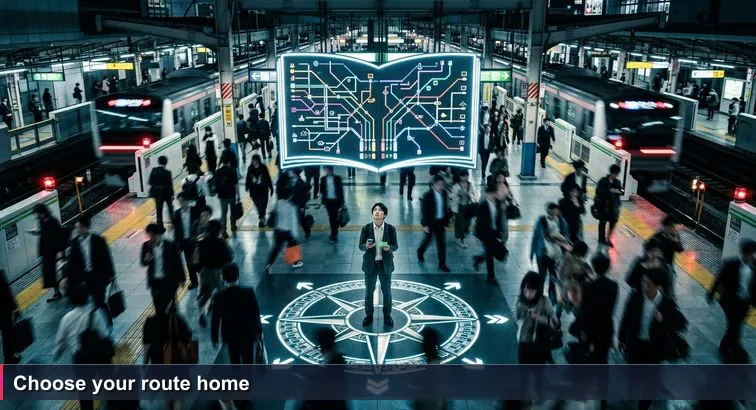
You’re under the glowing route map in Shinjuku Station, three “23:48 arrival” routes lit up on your phone. The times look identical, but you know the reality: a packed Yamanote last train, a quiet Chūō local, or a mad dash through two transfers. That’s exactly how AI offers in Japan look right now - same headline number, completely different lived experience.
From identical offers to very different careers
On paper, two Tokyo offers both marked “¥12M” feel interchangeable. In practice, a gaishikei AI team in Roppongi with RSUs behaves like an express line - fast, volatile, high upside - while a domestic manufacturer in Shinagawa with big summer/winter bonuses is more like a local: steadier, slower, harder to change once you’re on it.
According to an AI careers guide for Japan, foreign-capital companies typically pay 20-40% more than domestic firms for AI talent, and AI specialists themselves earn roughly a 40% premium over general software engineers. If you don’t understand these different “lines,” you can leave millions of yen on the table over a few years.
The three forces you can’t ignore
- A severe talent crunch: Japan is short around 220,000 IT professionals, pushing many employers into “above-market” bidding wars for credible AI skills.
- A Tokyo premium: AI salaries around the capital run about 38% higher than national averages, as shown in Daijob’s salary benchmarks, but higher taxes and rent quickly erode careless decisions.
- Global competition: Japan’s AI pay trails Singapore but is competitive with Seoul and Beijing on base pay, especially once you factor in quality of life and long-term career stability.
This guide matters because a salary table alone is just the route map. What you really need is the system behind it - employer tiers, role-specific bands, regional gaps, and how much actually lands in your Tokyo bank account after deductions - so you can choose your AI “line” in Japan with intention instead of guesswork.
In This Guide
- Why Japan's 2026 AI salary market matters
- AI and ML salary bands by role and experience
- Who actually pays what in Japan
- How location changes your AI pay in Japan
- How AI compensation is structured in Japan
- From gross to take-home pay in Japan
- Translating levels: L3-L7 versus Japanese grading
- Role-by-role guide to duties, employers, and pay
- How to negotiate AI offers in Japan without burning bridges
- Education, upskilling, and ROI for AI careers in Japan
- Offer evaluation worksheet and acceptance checklist
- Designing your AI career in Japan
- Frequently Asked Questions
Read our Complete Guide to Starting an AI Career in Japan to plan your 2026 job search.
AI and ML salary bands by role and experience
Step back from the Shinjuku “route map” and this is what the tracks actually look like for AI roles in Japan: Tokyo-weighted bands, compiled from sources such as SalaryExpert’s role reports and regional AI salary studies. These are annual gross ranges in yen.
Core AI role bands (Tokyo-weighted, 2026)
| AI-Specific Role | Junior (0-3 yrs) | Mid-Level (4-7 yrs) | Senior/Lead (8+ yrs) |
|---|---|---|---|
| Machine Learning Engineer | ¥7.5M - ¥9M | ¥10M - ¥13M | ¥14M - ¥25M+ |
| AI Researcher | ¥6.5M - ¥9M | ¥9.5M - ¥12M | ¥13M - ¥18M+ |
| Data Scientist (ML/AI) | ¥6.5M - ¥8M | ¥9M - ¥12M | ¥13M - ¥20M+ |
| MLOps Engineer | ¥6M - ¥8.5M | ¥9M - ¥14M | ¥15M - ¥33M |
| Applied Scientist | ¥8M - ¥10M | ¥11M - ¥16M | ¥18M - ¥28M+ |
| AI Architect | ¥9M - ¥11M | ¥12M - ¥15M | ¥16M - ¥22M |
Think of “Junior” as new grads or career changers with under three years of AI-specific work, “Mid-Level” as engineers who can independently own features or models, and “Senior/Lead” as those driving architecture or teams (L6+ equivalent). For context, Japan Dev’s nationwide guide shows many mid-level non-AI developers clustered around ¥6M-¥9M, so these bands represent a clear step up for AI-focused work.
Title benchmarks and experience curves
When job titles are fuzzy - common in listings from Rakuten, Sony, or regional firms - the following 2026 benchmarks are useful: an AI / ML Specialist typically lands on ¥10M-¥15M, a Senior AI Engineer on ¥12M-¥20M, AI Consultants on ¥5M-¥12M, Machine Learning Managers on ¥17M-¥27M, and Data Scientists on ¥6M-¥12M, according to regional analyses such as DigitalDefynd’s AI salary study for Asia.
Across roles, entry-level AI professionals with 1-3 years of experience earn roughly ¥5M-¥7M, with some Tokyo AI positions reaching about ¥9.6M. Mid-career engineers (3-6 years) fall in the ¥6M-¥12M band and often see 15-20% bumps when changing jobs. Senior profiles (8+ years) average around ¥11.2M nationally, but Tokyo seniors often cross ¥15.5M+, and principal-level roles at US multinationals can exceed ¥20M total compensation, as summarized in technology salary guides from providers like Robert Half Japan.
For you as a Tokyo-based engineer, a simple rule emerges: if you have 3-7 years of AI experience and are earning under ¥8M in a role that touches real production ML or MLOps, you’re probably on the “slow local line” and leaving money - and leverage - on the table.
Who actually pays what in Japan
In Japan’s AI market, the logo on your offer letter often matters as much as the job title. Two “¥12M” roles can sit on completely different tracks depending on whether they’re at a global cloud giant in central Tokyo, a domestic unicorn in Shibuya, or a 100-year-old manufacturer experimenting with AI in Shinagawa.
At the top end, Major Multinationals like Google Japan, Microsoft Japan, Amazon (AWS), Meta, and NVIDIA peg compensation to global bands with a Tokyo adjustment. Senior L5/L6-level AI roles often exceed ¥20M base, with total compensation frequently above ¥30M once RSUs and bonuses are included. Signing bonuses in the ¥1M-¥5M+ range are increasingly common for scarce AI and MLOps talent.
Domestic tech giants and unicorns such as Mercari, LINE, Rakuten, CyberAgent, and Preferred Networks sit just below that tier but still pay aggressively. Public data on Mercari shows MG4 “senior engineer” roles around ¥12.5M median total comp and MG6 principal-level roles approaching ¥30M, according to Mercari salary benchmarks on Levels.fyi. Preferred Networks, described as “Japan’s AI powerhouse” for its industrial AI work with Toyota and Fanuc, is widely regarded as one of the most competitive AI payers in the country, as profiled in a detailed case study on PFN’s rise.
The next tier, large domestic corporates like Sony, Toyota/Woven by Toyota, SoftBank, NTT, and Fujitsu, leans base-heavy with generous summer/winter bonuses. Sony’s L4 mid-senior engineers average about ¥10.7M, while Woven by Toyota’s senior ML roles can reach roughly ¥13M-¥24M in total compensation. RSUs are rare, but stability, housing allowances, and defined promotion ladders appeal to many engineers, especially those planning long-term life in Japan.
Finally, startups and scaleups in Shibuya, Marunouchi, Osaka, or Fukuoka typically offer ¥6M-¥12M base for experienced AI engineers, with top-tier AI startups sometimes pushing ¥15M+ for senior hires. Cash may trail MNCs, but stock options and rapid responsibility growth can deliver exceptional upside if the company scales.
- Tier 1 (MNCs): maximum cash + RSUs, faster-paced, global competition
- Tier 2 (unicorns/AI leaders): strong base + meaningful equity, high-impact projects
- Tier 3 (big corporates): solid base, big bonuses, slower growth but high stability
- Tier 4 (startups): wider cash range, higher risk, outsized learning and equity potential
How location changes your AI pay in Japan
Where you plug into Japan’s AI ecosystem changes your compensation almost as much as what you do. A senior ML engineer in Marunouchi, an applied scientist in Osaka, and an MLOps lead in Fukuoka might all see similar job titles, but their base pay, bonuses, and living costs follow very different regional patterns.
Regional multipliers inside Japan
Tokyo and its surrounding metro area (Yokohama, Kawasaki, Chiba) form the baseline for AI salaries: this is where most foreign-capital tech firms, major cloud providers, and leading AI startups cluster. Other cities benchmark themselves against that gravitational center, as seen in regional salary guides and curated listings on platforms like Japan Dev’s ML and data science job board.
| Region / City | Typical AI Salary vs Tokyo | Notes |
|---|---|---|
| Tokyo metro | 100% (baseline) | Highest density of MNCs, unicorns, and AI startups |
| Osaka / Kyoto / Kobe (Kansai) | ~80-90% of Tokyo | Strong in manufacturing, fintech, and research universities |
| Nagoya / Chubu | ~80-90% of Tokyo | Automotive AI and robotics (Toyota, Denso, etc.) |
| Fukuoka | ~70-80% of Tokyo | Government-backed startup hub, lower living costs |
| Other regions | ~60-75% of Tokyo | Fewer pure-AI roles; more general IT and analytics |
For many engineers, Osaka or Nagoya can be a smart “rapid service” compromise: slightly lower cash, but more space, shorter commutes, and access to world-class employers in automotive, robotics, and industrial AI. Fukuoka’s growing startup ecosystem offers even lower costs with a strong community vibe, especially attractive if you’re building products or joining seed-stage AI ventures.
Looking across Asia, compensation research from firms like Willis Towers Watson paints a clear picture: Singapore leads on pure cash and equity, Seoul and Chinese mega-cities mix strong base with performance bonuses or 13th-month pay, while Tokyo sits in a “moderate but balanced” band - solid salaries plus stability, safety, and long-term career depth for bilingual AI talent.
How AI compensation is structured in Japan
What looks like a simple “¥12M” headline in a job ad is usually a bundle of different components. Just as a train’s arrival time hides whether it’s a local or express, Japanese offers hide how much is fixed base, how much depends on bonuses, and whether equity is part of the story at all.
Most AI packages start with a base salary paid in 12 monthly installments. Domestic employers often quote the annual figure including fixed allowances (like commuting), while many gaishikei list pure base. On top of this, compensation forks depending on employer type:
- Domestic corporates: 2 bonuses per year (summer/winter), together worth roughly 3-6 months of base pay.
- MNCs and unicorns: annual performance bonuses typically around 10-30% of base for AI/ML roles, more tightly tied to individual and company results, as reflected in tech pay studies such as Robert Half Japan’s technology salary guide.
- Startups: smaller or irregular bonuses, with more weight on stock options.
Equity is the other major lever. US and European MNCs in Tokyo commonly grant RSUs on a four-year vesting schedule, while domestic unicorns and AI-focused startups issue stock options or ESOPs. In contrast, traditional conglomerates like major banks, telcos, or manufacturers rarely grant meaningful equity to engineers; most of your upside there is in promotions and seniority-based raises.
Equity becomes more important when you join a high-growth AI startup in Tokyo, Osaka, or Fukuoka, or a global cloud/AI hardware company whose stock already has global liquidity. It also matters more once your base passes roughly ¥12M-¥15M, when incremental cash changes your lifestyle less than a growing RSU grant might. Equity usually matters less if the company has no clear IPO path, if your annual grant is under about 5-10% of base at current valuation, or if you expect to leave before 1-2 full vesting cycles.
For AI engineers planning to build a long-term career in Japan, this is the practical takeaway: multinationals and credible domestic AI leaders like Mercari or Preferred Networks generally offer the strongest mix of steady base, meaningful bonuses, and real equity. Understanding that mix lets you compare a “¥12M” local train with a “¥12M” express and decide which ride matches your risk profile and goals.
From gross to take-home pay in Japan
That “¥12M” offer might feel like a clear upgrade - until your first Tokyo payslip arrives and you realise the arrival time on the map wasn’t the whole story. In Japan, three big forces quietly shave your gross down to about 70-80% in real, spendable yen.
The three big deductions on every AI salary
- National income tax (所得税): progressive brackets from roughly 5% up to 45%, with higher marginal rates kicking in once you pass around ¥9M-¥10M.
- Resident tax (住民税): a flat-ish ~10% combining prefectural and municipal tax, charged on last year’s income and deducted monthly the following year.
- Social insurance (社会保険): health, pension, unemployment, and long-term care, typically taking about 14-15% of your gross from the employee side.
When you run realistic numbers through tools like the Japan salary calculator from Salary-Calculator.ai, the pattern is consistent: a mid-career AI engineer on ¥8M gross usually sees around ¥470k-¥520k land in their account each month, or roughly 70-78% of gross. At ¥12M gross, typical net is about ¥700k-¥780k per month, again around that 70-78% band.
For higher earners, the percentage slips a little as top brackets bite. A worked example on Talent.com’s Japan tax calculator shows a ¥10M salary yielding take-home of roughly ¥7.6M - about 76.6% of gross. By the time you reach ¥20M, many AI professionals report annual net in the ¥1.12M-¥1.25M per month range, or around 68-75% of gross.
When you compare offers in Tokyo, Osaka, or Fukuoka, always translate “headline” gross into monthly net and then mentally subtract rent, commuting, and savings goals. Only then do you really know which route home your new AI job is putting you on.
Translating levels: L3-L7 versus Japanese grading
Two candidates in Tokyo both called “senior engineer” can secretly sit at very different levels. One might be an L5 at a global cloud provider, the other a mid-grade corporate engineer whose title sounds impressive but doesn’t match the same expectations or pay. Translating between US-style levels and Japanese grading is essential if you want to compare offers properly.
Most gaishikei teams in Japan use the same L3-L7 bands as their US headquarters. L3 usually corresponds to a new grad or very junior engineer, L4 to a solid mid-level IC, L5 to senior, L6 to staff or tech lead, and L7+ to principal or director-level IC. Sites like AI Paygrades track how these AI-focused levels translate into real compensation, but the important part for you is the scope: autonomy, ownership, and cross-team impact increase sharply as you move from L4 to L6.
Domestic firms, in contrast, lean on internal 等級 (grade) systems. Mercari’s MG1-MG6 ladder is a rare transparent example. Public salary disclosures and crowdsourced data on platforms such as OpenSalary’s Mercari engineer page suggest that MG1 roughly matches a junior engineer who still needs significant guidance, with total annual packages starting around the high ¥6Ms for many roles and rising steadily as engineers progress toward staff and principal bands.
As a rough mental model, many Tokyo engineers find that: L3 ≈ entry-level corporate grade, L4 ≈ Mercari MG2-3 or a “regular” engineer who can independently own features, L5 ≈ MG4 or a clearly recognised senior, L6 ≈ MG5 or section-level tech lead, and L7+ ≈ MG6 or principal-level architect with org-wide influence. Big corporates like major banks, telcos, and manufacturers also tie higher grades to people management and age, which can make pure-IC growth slower than in gaishikei.
- Always ask recruiters which internal level you’re being mapped to and what a “typical” engineer at that level looks like.
- Compare responsibilities (not just titles) to public L3-L7 expectations from global tech companies.
- Cross-check pay ranges against credible benchmarks so you’re not doing L5 work at an L3 salary.
Role-by-role guide to duties, employers, and pay
Once you zoom in from the salary “map,” each AI role in Japan turns into a different line with its own duties, tools, and ceiling. A “¥12M AI job in Tokyo” could mean building recommender systems at a video platform, tuning models inside an R&D lab, or wiring up Kubernetes clusters so other teams can ship models safely.
Engineering-heavy tracks: ML, MLOps, applied science
Machine Learning Engineers focus on training and deploying models into production. Typical ranges run from ¥7.5M-¥9M for junior, ¥10M-¥13M mid-level, and up to ¥14M-¥25M+ for seniors working at companies like Rakuten, LINE, or global cloud providers. MLOps Engineers span ML and DevOps, maintaining pipelines, feature stores, and monitoring; they often start around ¥6M-¥8.5M, with experienced profiles reaching ¥15M-¥33M. A high-profile MLOps opening at CTW, for example, advertised compensation in the mid-teens, reflecting acute demand for this skill set on platforms such as Japan Dev’s job board.
Applied Scientists sit between research and engineering, prototyping advanced models and shipping them into products. They typically see ¥8M-¥10M early-career, ¥11M-¥16M mid, and ¥18M-¥28M+ at senior levels in teams like Amazon Japan or Preferred Networks.
Research, data, and architecture roles
AI Researchers develop new algorithms and models, often in labs at RIKEN, NTT, or Sony. They earn about ¥6.5M-¥9M as juniors, ¥9.5M-¥12M mid-level, and ¥13M-¥18M+ in senior posts; one estimate from SalaryExpert pegs average AI research scientists in Tokyo around ¥14.3M. Data Scientists (ML/AI) use statistics and ML to drive business decisions, with bands from ¥6.5M-¥8M (junior) through ¥9M-¥12M (mid) to ¥13M-¥20M+ (senior), as reflected in regional studies shared by Bloomtech’s analysis of AI engineer pay in Japan.
Finally, AI Architects design end-to-end systems - data pipelines, model serving, security, and cost optimisation. They’re rarer, but compensation often lands around ¥9M-¥11M for junior, ¥12M-¥15M mid-level, and ¥16M-¥22M for senior architects at consulting firms and large enterprises modernising their data/AI stack.
How to negotiate AI offers in Japan without burning bridges
In Japan’s still-formal job market, negotiation can feel risky, but for AI talent it’s now a key part of the journey. Recruiters report that a large majority of employers are struggling to hire skilled technologists; for example, a recent hiring trends report from Robert Walters Japan highlights tech as one of the tightest labour segments. That shortage gives you more leverage than you might think - if you use it carefully.
Culturally, negotiation in Japan is about alignment, not confrontation. Rather than “I deserve more,” frame your ask as “I want to ensure compensation matches the responsibilities and market for this role.” Go into the discussion with specific numbers, external benchmarks, and a clear explanation of your impact. Phrases like 「この条件についてご相談させてください」 signal collaboration rather than conflict, which helps maintain relationships even if HR needs several rounds of internal approval.
Different employer types have different “flex zones.” Global MNCs usually have fixed level-based bands but can often move base salary within a range and adjust RSU or sign-on packages for strong candidates. Domestic tech giants and unicorns will sometimes flex on base and equity mix, especially for hard-to-fill AI and MLOps roles. Traditional corporates may have rigid base tables but more room in bonuses or housing and relocation allowances. Startups are typically the most negotiable on equity and title, and moderately flexible on cash for key hires.
When you sit down to negotiate, focus on one major and one minor lever. Typical choices include: raising base into a fair market band for your experience; adding a sign-on bonus to offset lost bonus at your current company; increasing RSUs or options when cash is tight; or securing relocation, visa support, or guaranteed remote flexibility. For example, “Given I will forgo my current winter bonus, is there room for a one-time sign-on to bridge that gap?” is specific, reasonable, and easy for hiring managers to champion internally.
Finally, anchor your asks in concrete data from Japan-focused sources - curated tech salary sites, specialist recruiters, and market overviews like Metaintro’s analysis of Japan’s tech job boom. Treat negotiation like tuning a model: gather high-quality data, adjust a small number of key parameters, and iterate politely. Done right, you protect relationships while securing an offer that actually matches your skills and the reality of Japan’s AI market.
Education, upskilling, and ROI for AI careers in Japan
Choosing how to upskill is like picking a new line at Shinjuku: grad school, internal transfers, and bootcamps can all get you into AI, but the speed, cost, and crowding feel very different once you’re on board. With AI roles in Japan paying noticeably more than many generalist software posts, the question isn’t just “learn AI or not,” it’s “what learning path has the best return on investment for my situation?”
Most Japan-based professionals weigh three main routes:
- Graduate school or research labs (UTokyo, RIKEN-linked programs): deep theory and publications, but 2-5 years of opportunity cost and often heavy Japanese-language demands.
- Corporate training or internal moves: low direct cost and stable, yet slow and highly dependent on whether your employer actually has strong AI projects.
- Bootcamps and structured online programs: faster and portfolio-focused, though quality and pricing vary widely, from around ¥300,000 to well over ¥1,400,000.
For many mid-career engineers in Tokyo, Osaka, or Fukuoka, a targeted bootcamp is the most practical “rapid service” into roles like 機械学習エンジニア or MLOpsエンジニア. Nucamp’s online programs are designed with that profile in mind: the 25-week Solo AI Tech Entrepreneur bootcamp (about ¥557,000) dives into LLM integration, AI agents, and SaaS monetization; the 15-week AI Essentials for Work (about ¥501,000) focuses on prompt engineering and AI-assisted productivity; and the 16-week Back End, SQL and DevOps with Python (about ¥297,000) builds the Python, SQL, and cloud skills that underpin many AI and MLOps roles.
Those tuition levels sit far below many full-time AI schools in Japan, which often charge more than ¥1.4M. Coupled with an employment rate of roughly 78%, a graduation rate near 75%, and a 4.5/5 Trustpilot score (with about 80% five-star reviews), the cost-to-outcome ratio is compelling if you can convert new skills into even a one- or two-band salary jump. As one benchmark, Japan Dev’s salary guide shows that moving from junior to solid mid-level engineering in Japan typically adds several million yen per year in pay, so a well-chosen bootcamp can realistically pay for itself within a single raise or job change.
The most effective strategy is deliberate: decide which AI-aligned role you want, map the skills that Tokyo and Kansai employers actually demand, pick a learning path that fits your time and budget, then build a portfolio and network through local meetups in places like Shibuya, Umeda, or Tenjin. That turns education from a vague “maybe someday” into a concrete transfer onto a faster line in Japan’s AI job market.
Offer evaluation worksheet and acceptance checklist
When two offers hit your inbox in the same week, it’s tempting to grab the higher base and hope the rest works out. In Japan’s AI market, that’s how you end up on the wrong “line” - great logo, painful overtime, or impressive title with weak long-term upside. A simple worksheet forces you to see the whole picture before you say yes.
Build a side-by-side comparison
Start by creating a one-page comparison for each offer. For every role, write down:
- Employer type: MNC, domestic tech, big corporate, or startup, plus location (Tokyo, Kansai, Fukuoka, remote).
- Role and level: title, internal grade (L5, MG3, etc.), and whether you’ll have reports or lead projects.
- Money details: annual base, target bonus, RSUs or stock options (4-year total and vesting schedule), sign-on bonus, and main allowances.
- Lifestyle factors: expected working hours and overtime policy, remote/hybrid rules, commute, and visa/relocation support.
- Career value: tech stack, team size and manager background, promotion cycle, learning budget, and brand strength for your next move.
Run a disciplined checklist
With the sheet filled in, go down a checklist before accepting:
- Role & level: Does the scope match the level, or are you being hired as “senior” but slotted into a mid-tier band?
- Compensation: After estimating net pay, can you comfortably cover rent, savings, and usual Tokyo or Osaka living costs? Benchmarks like Paylab’s IT salary overview for Japan help you see how far above the general tech market you really are.
- Work conditions: Are hours, on-call duties, and office expectations realistic for your life stage?
- Growth: Will you touch modern AI stacks, or mainly maintain legacy systems?
- Risk: How stable is the company, and what happens to you if funding dries up or a reorg hits?
Finally, sense-check your choice against independent market views like Yotru’s 2026 hiring trends for Japan. If an offer looks far below peers on your worksheet, that’s a signal to negotiate harder, walk away, or upskill before your next move. Treat this document like your personal route map - something you update at every major transfer in your AI career.
Designing your AI career in Japan
Standing under the Shinjuku route map, you already know the difference between drifting onto the first train and deliberately choosing the line that gets you home fastest. Designing your AI career in Japan works the same way: instead of “any AI job in Tokyo,” you decide where you want to end up, which roles and employers match that, and what transfers you’ll make along the way.
The first design choice is destination: do you see yourself as a 機械学習エンジニア, データサイエンティスト, MLOpsエンジニア, or AIアーキテクト? Each track clusters at different employers: global clouds and giants in central Tokyo, industrial AI leaders in Nagoya and Kansai, or fast-moving startups in Fukuoka. Reports on in-demand roles, like Morgan McKinley’s overview of key jobs in Japan, consistently highlight AI and data as core growth areas, but the mix of research, product, and operations work varies by city and sector.
The second choice is how you’ll level up. Graduate school and research labs give you depth and publications but take years. Internal transfers are low risk but slow. Bootcamps and structured online programs offer a faster “rapid service” into AI-aligned roles. For many working professionals, Nucamp’s programs are calibrated to that reality: a 16-week Back End, SQL and DevOps with Python (~¥297,000) to build Python, SQL, and cloud foundations; a 25-week Solo AI Tech Entrepreneur track (~¥557,000) for shipping AI-powered products; or a 15-week AI Essentials for Work (~¥501,000) to make your current job AI-augmented instead of AI-threatened.
Those investments sit well below the tuition at many in-person AI schools in Japan, yet they’re backed by outcomes like a ~78% employment rate, ~75% graduation rate, and a 4.5/5 rating from hundreds of reviews. If that helps you move from a generalist role into one of the AI bands higher up the pay ladder, the tuition can realistically be recovered in a single promotion or job change.
A practical design loop looks like this: benchmark your current salary and level; choose a target role and hub (Tokyo, Kansai, or Fukuoka); pick an education path that fits your time and budget; build a portfolio and network locally; then re-check your position against the market every year. Over a few cycles, that turns Japan’s complex, two-world AI market from an overwhelming map into a set of intentional, well-timed transfers on the lines that matter most to you.
Frequently Asked Questions
If I’m a mid-level ML engineer in Tokyo, what salary should I expect in 2026?
Mid-level ML engineers in Tokyo typically earn about ¥10M-¥13M in 2026, with Tokyo roles paying roughly 38% above the national average; job changes can add another 15-20% uplift. For comparable mid-level AI roles, being below ¥8M in Tokyo is often an indicator you’re under market.
How do offers from foreign-capital companies compare to domestic firms for AI roles?
Foreign-capital (gaishikei) firms usually pay 20-40% more than domestic firms and commonly include RSUs - senior MNC AI roles can have bases >¥20M and total comp often >¥30M with stock. Domestic corporates tend to be base-heavy with large biannual bonuses (3-6 months), while startups trade lower base for equity upside.
I got a ¥12M gross offer - what will my take-home pay look like in Tokyo?
Expect about 70-78% of gross as net after national income tax, ~10% resident tax, and ~14-15% employee social insurance, so ¥12M gross yields roughly ¥700k-¥780k per month net. Exact take-home depends on deductions, dependents, and whether bonuses are taxed differently.
Should I prioritise equity (RSUs/options) or a higher base when evaluating AI offers in Japan?
Prioritise equity if you’re joining a high-growth startup or a strong-stock MNC with clear vesting and liquidity, and favour base if the company lacks an IPO path or you need stable cash - RSUs become especially meaningful once your base is already ~¥12M-¥15M. Always ask about vesting schedules, refresh policy, and how much of total comp is stock vs cash.
Which skills or role shifts most reliably increase AI pay in Japan?
Moving into MLOps, cloud-native ML engineering, or applied science (productionizing models, distributed training, Kubernetes, feature stores) tends to drive the biggest increases - MLOps seniors can reach ¥15M-¥33M. Overall, AI specialists earn about a 40% premium over general software engineers, so practical ML deployment and infra skills offer high ROI.
Which sectors are hiring AI engineers in Japan? Our Top 10 industries hiring AI talent in Japan guide answers that
Best free tech stations: libraries & community centers across Tokyo, Osaka, Fukuoka (Top 10, 2026)
If you’re evaluating a Tokyo offer, consult the Tech Salaries and Cost of Living in Japan (2026) analysis.
Our Tokyo-centered review highlights the best incubators and coworking hubs in Japan (2026) for early-stage founders.
Follow the how to become an AI engineer in Japan checklist with Japan-specific projects and employers.

Irene Holden
Operations Manager
Former Microsoft Education and Learning Futures Group team member, Irene now oversees instructors at Nucamp while writing about everything tech - from careers to coding bootcamps.