









Top 10 Free Tech Training at Libraries and Community Centers in Japan in 2026
By Irene Holden
Last Updated: April 6th 2026
Too Long; Didn't Read
The top free tech training options in Japan in 2026 are your local major public library system - especially in Tokyo, Osaka, and Fukuoka - and the Digital Agency’s community seminars at 公民館, because libraries offer free PC access, library-linked e-learning like Gale Presents: Udemy and the National Diet Library’s 540,000-plus searchable items while the Digital Agency runs regular smartphone and digital literacy sessions nationwide. Both routes are ¥0 at the point of use, recur on a weekly or monthly basis, and connect you to civic-tech meetups and hybrid/mobile library services so you can build practical skills and test whether to invest in paid training later.
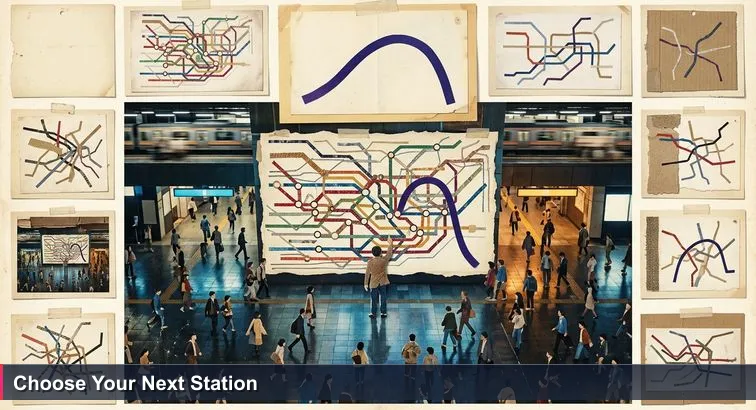
You’re pinned in the flow of commuters at Shinjuku Station, finger hovering between a direct line with three painful transfers and a slower, simpler route home. The route app says there’s a “best way,” but it can’t show crowded platforms, broken escalators, or the shortcuts you only learn by walking them.
Starting tech learning in Japan can feel exactly the same - especially if you’re eyeing AI or data roles at companies near Tokyo, Osaka, or Fukuoka, but can’t drop ¥300,000-¥800,000 on a coding school yet. You search “Top 10 free tech trainings” and hope for a single right answer, but the reality on the ground is messy, hyper-local, and full of small print.
Behind that mess is an emerging “local train network” for digital skills. Public libraries, legally free and increasingly positioned as “pillars of community life,” are being redesigned as digital hubs for lifelong learning, as highlighted by Meiji University’s analysis of Japanese public libraries’ growing social role. The World Economic Forum describes how libraries across Japan are being reimagined as communal hubs for digital inclusion, while 公民館, 生涯学習センター, university 公開講座, and NPOs quietly cover everything from smartphone basics to civic-tech projects.
This guide treats those places not as a podium, but as a route map. Every option you’ll see next is:
- ¥0 tuition (you might only pay transport or printing)
- Open to local residents with minimal paperwork
- Recurring, so you can build habits instead of chasing one-off events
On their own, these stops will not make you job-ready as an AI engineer at Rakuten or an ML researcher at RIKEN. What they will do is:
- Get you comfortable with devices, online accounts, and basic security
- Expose you to data, coding, and research tools in low-pressure spaces
- Help you decide whether to invest money later in a bootcamp, senmon gakkō, or university program
Your task isn’t to find “#1.” It’s to choose the next station that’s closest and least intimidating on your line - knowing you can always transfer later toward AI and machine learning work in Japan’s growing tech hubs.
Table of Contents
- Start Here: Your Free Route Map Into Tech Learning
- Major City Public Libraries
- Digital Agency Seminars
- Library-Linked E-Learning Platforms
- University Public Lectures
- National Diet Library Resources
- Civic-Tech Meetups
- Kids Code Club and Minna no Code
- Hybrid and Mobile Library Services
- NDL and Prefectural Research Training
- Library Youth Innovation Programs
- 30-Day Free Learning Plan
- How to Choose Your Next Transfer
- Frequently Asked Questions
Read our Complete Guide to Starting an AI Career in Japan to plan your 2026 job search.
Major City Public Libraries
Step off the Yamanote Line near Shibuya or Ueno and your most powerful free tech resource is usually a few minutes’ walk away: the local metropolitan library. In Tokyo, Osaka, and Fukuoka, these buildings are quietly turning into everyday digital hubs where you can practice tech skills without paying a yen in tuition.
Large systems like the Tokyo Metropolitan Library network and the Osaka Municipal Library typically offer:
- PC corners with internet access in timed slots (often 30-60 minutes per user)
- Basic PC and internet classes covering mouse/keyboard use, email, and cloud storage
- Internet safety and information literacy workshops
- Access to online databases and, in some cases, full e-learning portals
The Osaka Municipal Central Library guide shows a typical pattern: free PC use with time limits, structured beginner classes, and staff available to answer digital questions. Some systems are evolving into “hybrid libraries,” licensing shared digital collections and e-learning platforms; OverDrive’s case study on a unique hybrid library in Japan highlights 24/7 access to e-books and online learning as a key strategy.
Access is simple:
- Cost: ¥0 for PC use and classes (you may pay for printing)
- Requirements: Library card created with a residence card or driver’s license
- Booking: PC corners often first-come-first-served; classes usually require prior sign-up
For future AI/ML work, this is your on-ramp. Before touching TensorFlow, you need confidence with file management, web research, and online course platforms. Compared to private PC schools that can cost ¥10,000-¥20,000 per 2-3 hour session, metropolitan libraries let you experiment after work in Shinjuku or Tenjin at effectively zero tuition - a low-risk way to discover whether you actually enjoy time in front of a screen.
Digital Agency Seminars
In many neighborhoods, the most approachable “tech teacher” isn’t a professional engineer at all - it’s a volunteer sitting behind a folding table in your local 公民館 or 生涯学習センター. Backed by Japan’s Digital Agency (デジタル庁), these centers host one of the country’s largest grassroots digital upskilling efforts.
According to the Digital Agency’s overview of its community digital promotion seminars, typical programs include:
- Smartphone counseling corners for help with apps, LINE, cashless payments, and e-government services like マイナポータル
- Basic digital literacy workshops on browsers, search techniques, and how to avoid phishing scams
- Regional Smartphone Counselor Training that teaches motivated residents how to support others in their community
Frequency and format vary by municipality, but many Kominkan schedule these as weekly or monthly sessions. The Japan Intercultural Academy of Municipalities explains that such centers are core tools for local governments’ lifelong learning and digital participation, highlighting them as key venues in its overview of municipal training and community programs.
Access is intentionally low-friction:
- Cost: ¥0 (funded via national and municipal digital promotion budgets)
- Requirements: Usually open to any local resident; some prioritize seniors but allow all ages
- Booking: Walk-in or simple phone/web reservation with your nearest 公民館 / 生涯学習センター
For an eventual AI/ML career, these seminars quietly solve a big early barrier: fear of devices. You practice setting up secure logins, managing notifications, and using online forms - the same skills you’ll rely on later for GitHub, cloud dashboards, and online courses. For career changers or older learners, an hour of one-on-one smartphone counseling can be the difference between “I’m bad with tech” and “I can sign into a Zoom-based Python class after work.”
Library-Linked E-Learning Platforms
Once you have that thin plastic library card, it often doubles as a login to something much bigger: full online course catalogs that would normally cost thousands of yen a month. Many city and prefectural systems now subscribe to platforms like Gale Presents: Udemy, a curated version of Udemy that libraries license for public use.
According to the product overview for Gale Presents: Udemy, you get on-demand, self-paced access to thousands of courses, including:
- Programming fundamentals in Python, JavaScript, and web development
- Data analysis and visualization with spreadsheets, SQL, and BI tools
- Cloud basics across AWS, Azure, and Google Cloud
- Everyday productivity and office tools
In library systems that partner with Gale, patrons report that the structured playlists and real-world case studies make it easier to see how a skill connects to actual work, echoing broader findings about how libraries function as effective self-directed learning centers. The crucial point: you sign in with your library credentials, so the courses remain ¥0 at the point of use - your local government covers the license.
Access is straightforward: once your library card is activated for digital services, you log in through the library website, search for topics like “Python for beginners” or “data visualization,” and start learning immediately. Unlike crowded in-person classes, there’s no cap on seats and no commute once you’re set up.
For AI/ML, this is one of the closest free substitutes for a paid MOOC subscription, which can easily run ¥3,000-¥6,000 per month according to comparisons of “100% free vs paid” course platforms on sites like PlektonLabs. You can test-drive Python, basic statistics, or an “Intro to Machine Learning” course, build a tiny script or dashboard, and find out - at zero tuition - whether staring at code after a long day in Tokyo or Osaka actually energizes you.
University Public Lectures
Across Japan’s public universities, there’s a quiet obligation to “return knowledge” to society. That obligation takes shape as 公開講座 and library literacy seminars that anyone can join, giving you a front-row seat to how academics talk about digital literacy, data, and AI - without paying tuition or passing an entrance exam.
Typical offerings span everything from basic research skills to tech trends. For example, the University of Tokyo Library runs literacy events such as “First steps to search for books and papers”, teaching systematic ways to find and evaluate information. In the Kansai region, the University Consortium Kyoto coordinates member institutions’ community outreach and lists a wide range of public lectures (公開講座) offered to local citizens.
- Digital literacy & research: finding credible sources, using academic databases, understanding bias
- Cybersecurity & privacy: password management, phishing, personal data protection
- Intro to data science / AI: conceptual overviews, ethics, and case studies from Japanese industry and government
Access is intentionally open. Many lectures are free for general citizens, with a simple online registration form and first-come-first-served seating. Sessions may run as one-off evening talks or short series over several weeks, and more universities are experimenting with Zoom streams or recordings so people outside Tokyo, Osaka, or Kyoto can still observe.
For an AI/ML path, these events are a low-pressure way to test your appetite for more formal, theory-heavy environments like those at the University of Tokyo or Kyoto University. You practice following technical Japanese, hear how researchers frame issues like algorithmic bias or data governance, and quickly discover whether terms like “回帰” or “ベイズ推定” excite you or make your eyes glaze over - vital feedback before you commit to grad school, a data-focused senmon gakkō, or a research-heavy role.
National Diet Library Resources
For anyone curious about research, policy, or the history behind Japan’s tech industry, the National Diet Library (国立国会図書館, NDL) is the ultimate reference station. It’s where you practice the same literature-search habits you’ll later need at places like RIKEN, the University of Tokyo, or Preferred Networks - without paying database subscription fees yourself.
According to an NDL news update on its digitized collections, the library now offers over 540,000 items that are full-text searchable online, in addition to millions more digitized materials viewable on-site at the Tokyo Main Library and Kansai-kan in Kyoto. On designated PCs you can access premium academic databases, read digitized out-of-print technical books and magazines, and explore historical government documents on science, technology, and industrial policy, as outlined in the NDL’s overview of its digital collections expansion.
Getting in is simpler than most people expect:
- Cost: ¥0 for registration and on-site use
- Eligibility: You must be 18+ to enter the Tokyo Main Library or Kansai-kan
- Access: You can obtain a “One-Day User Card” at a kiosk, or register for a standard user card following the steps in the NDL’s user registration guide
For future AI/ML professionals, NDL is a training ground for research skills you can’t skip: systematically searching for “深層学習” or “機械学習 応用,” filtering results, skimming abstracts, and tracking references. You can also read Japanese government white papers on AI, data governance, and digital transformation to understand how policy frameworks are evolving around the technologies you want to build.
A realistic use case: you spend a free afternoon in Nagatachō, get a One-Day User Card, and dedicate three hours to finding and downloading papers on explainable AI in healthcare. You leave not only with PDFs for later study, but with a repeatable workflow for literature review - an asset whether you aim for an AI role at Sony, a data position in government, or a research assistantship in a university lab.
Civic-Tech Meetups
After a few weeks of solo tutorials at home or in a library PC corner, the next upgrade is simple: sit next to people who use code to solve real problems. That’s exactly what Japan’s civic-tech communities offer, with ¥0 entry and a welcoming attitude toward beginners.
Code for Japan (コード・フォー・ジャパン) and local brigades in cities like Tokyo, Osaka, and Fukuoka run regular meetups and “Social Hack Day” events where volunteers prototype tools for disaster response, open budgets, or local transport data. Events are usually free or donation-based, with sign-ups through platforms like Connpass, and participants range from designers and city officials to first-time coders who just finished their first Python intro.
- Work with real open data from municipalities (CSV, JSON, GIS)
- Pair with experienced engineers who review your code and suggest improvements
- Learn basic tools of professional dev work: Git/GitHub, issue tracking, pull requests
- See how even simple dashboards or scripts can influence local policy discussions
These grassroots spaces sit alongside Japan’s more formal tech ecosystem: major conferences like SRE NEXT and regional IT expos highlighted in Japan Dev’s guide to the best tech conferences in Japan draw engineers from Rakuten, Mercari, and other employers. Civic-tech meetups are where you can start far earlier in your journey, in Japanese, with problems grounded in your own city.
For an aspiring AI or data professional, a realistic path looks like this: finish a free Python or data-analysis course via your library, then join a Social Hack Day in Tokyo’s 23 wards or central Osaka. A mentor shows you how to clean an open government dataset in pandas and push your changes to GitHub. You go home not just with new commands memorized, but with a tangible public contribution you can point to when you later apply to bootcamps, internships, or junior data roles.
Kids Code Club and Minna no Code
For many families in Japan, the first “coding class” doesn’t happen in a startup office in Shibuya - it happens on a Saturday afternoon with colorful blocks on a screen and kids shouting, “It moved!” Youth-focused NPOs like Kids Code Club and みんなのコード turn that moment into a structured, recurring gateway into programming.
After programming became mandatory in Japanese elementary schools, demand for support outside the classroom surged. As reported by Strata-gee’s overview of how Japan made coding compulsory for all students, this policy shift pushed NPOs to fill gaps in teacher training and after-school learning. Kids Code Club’s own program outline shows how they respond with free or low-cost community sessions and online materials.
- Scratch-based visual programming that teaches loops, conditionals, and events
- Simple hardware projects such as LED blinking and sensor-based interactions
- Logic games and challenges that build algorithmic thinking without heavy math
- Workshops often hosted in public libraries or Kominkan, sometimes allowing parent participation
Access is intentionally gentle: tutorials are typically free online, while local events are either free or very low-cost and frequently accept walk-ins if space allows. Many sessions target late elementary to junior high students, but organizers often welcome parents, teachers, or absolute beginners who want to learn alongside the kids.
For future AI/ML work, this matters more than it looks. Scratch sprites and blinking LEDs are simplified versions of the same mental moves you’ll later use in Python - breaking problems into steps, handling input and output, debugging when things don’t behave as expected. If you’re an adult who feels intimidated by “real” code, volunteering or joining as a helper at a Kids Code Club event can be a low-pressure way to internalize core concepts before you ever open a Jupyter notebook.
Hybrid and Mobile Library Services
Not everyone can drop into Shinjuku, Umeda, or Hakata after work. If you’re in a rural part of Nagano, Hokkaido, or Kyushu - or working shifts in a factory in Aichi - hybrid and mobile library services may be your most realistic entry point into tech learning.
Hybrid models like “digital libraries” and regional projects (for example, Digi-Tosho-Shinshu in Nagano) blend physical branches with robust online access. Typically, once you have a local library card, you can:
- Borrow e-books on programming, data analysis, and digital literacy
- Use remote access to digital collections and databases
- Join occasional online seminars hosted by the prefectural library
For areas without easy branch access, mobile library vans and pop-up services fill the gap. Research on mobile services in public libraries highlights how bookmobiles equipped with Wi-Fi and devices extend digital inclusion to “remote and underserved communities,” turning a monthly stop into a recurring tech support and learning touchpoint.
The pattern is similar across many prefectures:
- Cost: ¥0 with a standard library registration
- Requirements: Proof of residence in the municipality or prefecture
- Usage: Download e-books at home; ask staff tech questions when the van or pop-up visits
If your goal is eventually to attend larger tech events in Tokyo or Osaka - like the free or low-cost meetups and conferences listed in guides to top free tech conferences in Japan - hybrid and mobile services let you quietly build foundational reading and basic skills first. You can finish an e-book on Python, practice spreadsheets for data work, and arrive at your first in-person event already fluent in the basics, even if the nearest skyscraper is hours away by train.
NDL and Prefectural Research Training
Some of the most structured free training in Japan’s information ecosystem is aimed not at software engineers, but at the people who support them: librarians and researchers. If you’re drawn to AI policy, data curation, or research support roles, the National Diet Library (NDL) and several prefectural libraries quietly offer exactly the kind of disciplined search and database skills you’ll need.
The NDL runs formal training programs for librarians and researchers that cover:
- Advanced information retrieval strategies in Japanese and English
- How to navigate specialized journal and newspaper databases
- Best practices for structuring complex research queries and managing results
To widen access, the NDL has expanded many of these into video-on-demand (VOD) style modules, so participants can learn without traveling to Tokyo or Kyoto. This mirrors a broader trend in the library world: commentators on future-facing library tech note that staff training is shifting toward “practice-first experiences” and on-demand formats that emphasize simulations and feedback loops, as discussed in analyses of library tech trends for 2026.
Access details vary by program:
- Cost: ¥0 for accepted participants
- Requirements: Some courses are limited to library staff; others are open to researchers or, occasionally, motivated general users
- Format: Live online sessions, VOD modules, and occasional in-person intensives
Even if you’re not a librarian, understanding how NDL structures its digital services - outlined in the Japan Foundation’s guide to National Diet Library digital access - can reshape how you search for AI and data-science literature. These trainings help you become the person on your future AI/ML team who can track down obscure datasets, evaluate competing studies, and assemble precise evidence on topics like smart-city sensor data or algorithmic fairness - skills that are rare, valued, and completely learnable at zero tuition.
Library Youth Innovation Programs
Walk into certain ward libraries in Tokyo now and you’ll find something that looks less like the silent stacks you remember, and more like a youth co-working space: teens clustered around tables, whiteboards covered in sticky notes, staff facilitating projects instead of just shushing noise. Pilots in places like Suginami Ward, where NPOs such as Katariba collaborate with library operators, are turning libraries into youth innovation hubs rather than simple study rooms.
These programs aren’t always labeled “tech,” but technology is woven into the activities. A typical youth-focused library initiative might include:
- Project-based workshops using tablets, cameras, or simple coding tools to explore local issues
- Group work zones that explicitly allow discussion, peer review, and presentation practice
- Teen-led study circles that pick topics like digital art, game design, or web creation
- Staff or volunteers who act as “navigators,” pointing participants to online courses, contests, or open days
Some libraries are even experimenting with AI as a bridge for shy or first-time users. In Tokyo’s Nakano Ward, an “AI librarian” nicknamed Shiori appears on a screen and helps visitors search for information in natural language; the Mainichi Shimbun’s feature on AI librarian technology developed in Japan describes how such tools are designed to make it easier for children and hesitant patrons to ask questions. Encounters like this normalize AI-powered interfaces long before a student writes their first line of machine learning code.
Access is simple: programs are typically hosted in ward or city libraries, cost ¥0, and are open to local youth with a standard library card. Some events are drop-in; others require a quick sign-up at the counter or via the library website. In Tokyo, Osaka, and Fukuoka, these spaces are often within a short bus or train ride of major tech employers, making it easy for guest speakers from industry to join sessions.
For a teenager who dreams of working in AI at Rakuten, Sony, or a Fukuoka startup, these programs are a low-pressure way to build a first portfolio: a group website about neighborhood accessibility, a short video report edited on a tablet, a simple interactive map. More importantly, they build habits - collaboration, presenting ideas, asking for feedback - that carry directly into university labs, hackathons, and eventually AI/ML teams.
30-Day Free Learning Plan
Think of the next month as a local train pass into tech: limited time, zero tuition, and plenty of chances to transfer lines if you don’t like the first route you pick. The outline below assumes you’re somewhere near a public library and a Kominkan in the Tokyo-Osaka-Fukuoka corridor, but you can adapt it to almost any city or town in Japan.
| Week | Focus | Key Actions | Outcome |
|---|---|---|---|
| 1 | Access & Confidence | Get a library card, try PCs/Wi-Fi, join a basic PC or smartphone class | Comfort in library / Kominkan spaces, devices feel less scary |
| 2 | Structured Study | Activate e-learning, start 1 programming and 1 data/Excel course | First 2-3 hours of real tech study completed |
| 3 | Community & Exposure | Attend a university 公開講座 and a civic-tech or youth coding event | See how others learn and use tech in the real world |
| 4 | Mini Project & Direction | Visit NDL or use digital collections, finish 1 course, build a tiny project | Concrete output + clearer choice of data / engineering / research path |
Week 1 is about tickets, not speed. Get a card at your nearest large public library (Tokyo examples show how free library registration unlocks study spaces and materials), ask staff about PC usage and digital services, and sign up for any beginner PC or smartphone session at your Kominkan. Your only goal is to feel comfortable walking into these buildings.
In Weeks 2 and 3, shift to 30-60 minutes of study, four times a week: follow a beginner Python or JavaScript course plus an Excel/data course through your library’s e-learning portal, then sit in on a university public lecture and one Code for Japan or youth coding meetup. Library systems worldwide are proving that free online tech classes can work for busy adults; Santa Clara County’s program of library-hosted technology courses is one international example of the model your local Japanese library is now mirroring.
By Week 4, you’re ready to practice “research mode” at the National Diet Library or via its digital collections, complete at least one short course, and build a tiny script, spreadsheet analysis, or simple web page. End the month by choosing your “express line” for the next 3-6 months: double down on data, engineering, or research, now that you’ve tested the tracks for free.
How to Choose Your Next Transfer
After 30 days of library cards, Kominkan classes, and your first tiny project, you’ve reached a major transfer station. You know what it feels like to study after work, how much Japanese and English you can handle, and whether code still feels exciting when the novelty wears off. Now the question isn’t “Can I start?” but “Which line should I take next, and how fast do I want to go?”
Most learners aiming at AI or data roles in Japan end up choosing between three broad “lines”:
- Stay on the free local line: keep stacking library e-learning, civic-tech meetups, and university lectures while you clarify your goals.
- Add a structured bootcamp: pay for a guided path that compresses your learning into months instead of years.
- Head toward academia: target grad school or research assistant roles, using NDL and 公開講座 to build your research profile.
If you liked coding and want a clearer bridge into industry within a year, an affordable bootcamp can be a smart next transfer. Nucamp’s Back End, SQL and DevOps with Python runs for 16 weeks at about ¥297,000, giving you Python, databases, and cloud skills that underpin many AI/ML jobs. Its AI-focused tracks - AI Essentials for Work (15 weeks, ~¥501,000) and the Solo AI Tech Entrepreneur Bootcamp (25 weeks, ~¥557,000) - sit well below the ¥1,400,000+ price tags common at many competing schools in Japan, while reporting around 78% employment and a 4.5/5 rating from hundreds of reviews.
To choose your transfer, look at constraints more than dreams: How many hours can you realistically study each week around a job in Tokyo or Osaka? Do you need Japanese-language instruction, or is English-first fine? How much financial risk feels acceptable? Some learners continue riding the ¥0 network while slowly building a portfolio; others combine that network with a focused program and local support, similar in spirit to community-driven connectivity initiatives that blend access, skills, and mentoring. Either way, the important thing is not which line you board, but that you’re moving intentionally toward the AI and tech roles you now know you want.
Frequently Asked Questions
Which free option should I start with if I want to move toward an AI or data role?
Start with your major city public library (Tokyo/Osaka/Fukuoka) because they combine free PC corners, recurring workshops, and library-linked e-learning (often ¥0), plus proximity to employers and meetups; many libraries offer 30-60 minute PC slots and access to curated platforms like Gale Presents: Udemy. Treat the library as your on-ramp: learn basic file management, try a beginner Python or data course, then transfer to meetups or university 公開講座.
Will companies like Rakuten, Sony, or Toyota care that I learned through libraries and 公民館?
Employers care about demonstrable skills and results more than where you studied; free programs won’t automatically replace formal credentials but can produce portfolio projects, GitHub contributions, and civic-tech experience that hiring teams value. For context: private bootcamps in Japan often cost ¥300,000-¥800,000, but a well-documented set of 2-3 projects plus GitHub can still get you interviews.
How can I prove the skills I learn at these free programs?
Prove skills by shipping small, public projects (1-3 repos) and keeping a short portfolio or README that explains your data sources and methods, and collect completion certificates where available (library-linked Udemy/Gale courses often provide certificates of completion). Also use Code for Japan or library hackdays to log real contributions - these real-world items are more persuasive than attendance alone.
I live outside Tokyo - are these services realistic in rural Japan?
Yes: hybrid digital libraries, prefectural digital collections, and mobile library vans (e.g., Digi-Tosho-Shinshu-style initiatives) bring e-books, e-learning, and occasional in-person training to rural areas, and many resources are accessible remotely. The National Diet Library’s digital collections (540,000+ searchable items) and prefectural e-libraries mean you can combine online study with periodic local support.
How long until I can apply for entry-level data or AI roles using only these free resources?
Timelines vary: expect roughly 6-12 months at 5-10 hours/week to reach an entry-level data-analyst readiness with 2-3 projects, while an AI-engineer path (including math and larger projects) typically takes 12-24 months. If you combine free resources with a short paid certificate or focused bootcamp, you can often shorten the timeline to 3-6 months.
See which firms made our list of Top 10 companies hiring AI engineers in Japan in 2026 and what they build with AI.
See which firms top the charts with our article on the best paying tech companies in Japan, including Google Japan and Stripe Japan.
Tokyo AI salaries 2026: learn expected pay by role and how Tokyo compares to Osaka and Fukuoka
Compare offers confidently with the 2026 Cost of Living vs Tech Salaries in Japan complete guide.
Top 10 Tech Startups Hiring Junior Developers in Japan in 2026

Irene Holden
Operations Manager
Former Microsoft Education and Learning Futures Group team member, Irene now oversees instructors at Nucamp while writing about everything tech - from careers to coding bootcamps.