









Top 10 Women in Tech Groups and Resources in Japan in 2026
By Irene Holden
Last Updated: April 6th 2026
Too Long; Didn't Read
Nucamp and Women in Tech Japan are the top picks in 2026: Nucamp for its affordable, part-time AI and coding bootcamps across Japan that fit working women and caregivers and report about a 78% employment rate, and Women in Tech Japan for linking members to corporate partners and policy initiatives like the Osaka Protocol. With women making only around 16% of STEM students and roughly 20% of the IT workforce in Japan, combining Nucamp’s skills-first training with Women in Tech Japan’s visibility and networks is the most practical route into AI and tech roles in Tokyo, Osaka, Fukuoka and other hubs.
From rankings to real lives
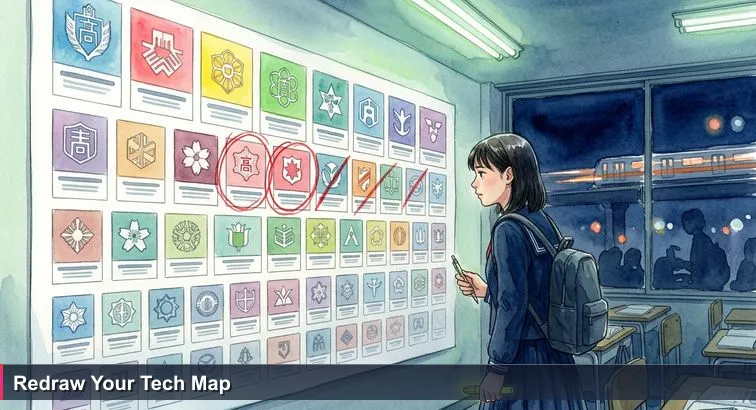
She’s standing in that late-night juku classroom, the air thick with whiteboard-marker smell, facing a wall-sized hensachi chart. Ten university names climb in rigid order, bold scores pressed against fluorescent paper. Her mechanical pencil hovers, neon highlighter uncapped, as if one more circle or cross-out could fix the fact that her whole future seems squeezed into a single vertical list while trains slide past in the dark outside.
When everything becomes a Top 10
In Japan, that list-making instinct doesn’t stop at exams. We rank “top” universities, “best” employers, even “strongest” engineering departments. So when women here start eyeing AI or data careers, the reflex is to Google another list: “Top 10 women in tech groups in Tokyo,” “Best AI bootcamps,” “Top companies for female engineers.” Yet your real constraints - family expectations, overtime culture, language, money - don’t fit neatly into a column.
Behind that pressure sit hard numbers. Women are only about 16% of STEM students and roughly 20% of Japan’s IT workforce, a gap that a recent Japan-Dev analysis of women in tech bluntly calls out as a structural problem for innovation.
The system trying to catch up
Universities have responded with joshi-waku quotas: by April 2025, more than 30 national and public institutions had introduced female admission slots, and Science Tokyo (Tokyo Tech) is targeting a female enrollment ratio above 20% in STEM. On the policy side, the Osaka Protocol set global gender-equality targets in digital society. These moves matter - but they also underline how far the default path was never designed with women, especially future AI engineers, in mind.
A different kind of map
This “Top 10” isn’t another hensachi chart judging who’s best. Think of it more like a Yamanote or Osaka Loop map: interconnected stations - bootcamps, NPOs, quotas, mentoring schemes - around hubs like Shibuya, Shinagawa, Umeda, and Tenjin. Your job isn’t to pick #1. It’s to grab the highlighter, circle the stops that fit your route into Japan’s AI and tech scene, and start redrawing the map - for yourself, and for the women coming after you.
Table of Contents
- Beyond the Hensachi Chart
- Nucamp
- Women in Tech Japan
- WomenTech Network Japan
- Women in Tech Tokyo Community
- Waffle
- Tokyo Tech and University STEM Quota Programs
- Keidanren Cross-Mentoring Initiative
- HackerX Women in Tech Events
- Forbes Japan “Women in Tech 30”
- Japan-Dev Career Guide for Women in Tech
- Redrawing the Map
- Frequently Asked Questions
Read our Complete Guide to Starting an AI Career in Japan to plan your 2026 job search.
Nucamp
For women in Japan weighing a leap into AI or software, the barrier is rarely motivation. It’s time, money, and a job market centered on Tokyo and Osaka where many bootcamps assume you can quit work for months. Nucamp’s model flips that script: international, online-first, and built so you can study from a Yokohama apartment or a Fukuoka café after office hours.
Key Nucamp programs at a glance
Where full-time immersive bootcamps in Tokyo often charge around ¥1,320,000 for a single course, as noted in a Tokyo bootcamp guide by Code Chrysalis, Nucamp’s major tracks sit between ¥297,000-¥557,000, with monthly payments.
| Program | Duration | Approx. Tuition | Primary Focus |
|---|---|---|---|
| Solo AI Tech Entrepreneur | 25 weeks | ¥557,000 | AI products, LLMs, AI agents, SaaS |
| AI Essentials for Work | 15 weeks | ¥501,000 | Workplace AI, prompt engineering |
| Back End, SQL & DevOps with Python | 16 weeks | ¥297,000 | Python, SQL, cloud/DevOps |
| Web Development Fundamentals | 4 weeks | ¥64,000 | HTML/CSS/JS basics |
| Front End Web & Mobile | 17 weeks | ¥297,000 | Front-end frameworks |
| Full Stack Web & Mobile | 22 weeks | ¥365,000 | End-to-end applications |
| Cybersecurity / Complete Path | 15 weeks / 11 months | ¥297,000 / ¥790,000 | Security skills / multi-stack |
Why it works for women in Japan’s tech scene
Nucamp is designed for people who can’t simply walk away from a full-time job or childcare. Courses are part-time, online, and supported by weekend workshops and meetups in more than 200 locations worldwide, including Tokyo, Osaka, Nagoya, and Fukuoka. That flexibility matters if you’re aiming at roles like データサイエンティスト or 機械学習エンジニア at companies such as Rakuten, SoftBank, Sony, or multinational offices like Google Japan and Microsoft Japan.
Outcomes and support
According to Course Report data summarized by Nucamp, graduates see an employment rate of about 78% and a graduation rate near 75%. Trustpilot reviews average 4.5/5 from roughly 398 reviewers, with about 80% five-star ratings. Career services include 1:1 coaching, portfolio and GitHub reviews, and mock interviews, helping learners move into junior software engineer, back-end developer, cloud/DevOps, or AI-assisted product roles within 6-12 months - without having to pause their lives in Tokyo, Osaka, or beyond.
Women in Tech Japan
What it is
Rather than a small meetup, Women in Tech Japan is the national chapter of the Paris-based Women in Tech® movement, active in more than 40 countries. In 2025 it helped bring the Women in Tech Global Summit to Osaka, where the landmark Osaka Protocol was signed as part of the Expo 2025 framework. According to the Women in Tech announcement of the Osaka Protocol, the agreement sets concrete global targets for gender equality in digital societies, with Japan positioned as a key regional hub.
How to get involved
You can join events and volunteer through the Women in Tech Japan chapter page, which lists local meetups, webinars, and calls for mentors across Japan. The team regularly collaborates with corporate partners such as SoftBank and Microsoft Japan on leadership programs and awards, giving participants direct access to senior managers and D&I leaders rather than just HR recruiters. For women based outside Tokyo, hybrid and online formats make it possible to join from Kansai, Chubu, or Kyushu without relocating.
- Attend conferences and summits with Japan-focused tracks
- Join mentoring circles for students, engineers, and managers
- Volunteer to support outreach in schools and universities
Why it matters for women in tech in Japan
Many communities stop at networking; Women in Tech Japan explicitly connects grassroots members to policy conversations. The Osaka Protocol is framed as a way to align education pipelines, corporate promotion systems, and national digital strategies, rather than treating them as separate problems. That makes this chapter especially relevant if you care about AI ethics, algorithmic bias, or quotas in STEM, not just your own next job title.
Typical outcomes
Women who engage deeply with the community often move into visible roles: speaking at summits, winning Women in Tech awards, or launching startups. Coverage of the Global Summit on sites like WIT-H’s event listing for the Osaka conference highlights how researchers from institutions such as RIKEN and corporate innovators from companies like Preferred Networks use these spaces to meet future collaborators. For mid-career engineers, product managers, or data specialists aiming at leadership or policy-adjacent roles, Women in Tech Japan functions as a bridge between day-to-day technical work and the bigger systems that shape Japan’s digital future.
WomenTech Network Japan
What it is
WomenTech Network Japan is the local presence of the global WomenTech Network, best known for its high-visibility Women in Tech Awards and large-scale online conferences. The community now counts more than 100,000 members worldwide, according to its 2025 awards announcement, creating a dense web of engineers, data scientists, founders, and D&I leaders that Japanese members can tap into without leaving the country.
How to get involved
The starting point is the dedicated Japan chapter page on the WomenTech Network site, where you can sign up, indicate your skills, and access mentor-matching, virtual meetups, and conference tickets. Many events are fully remote, with Japan-friendly time slots and occasional Japanese-language or bilingual sessions. That’s particularly helpful if you’re based outside the Tokyo-Osaka corridor or working at a regional office with few female engineers.
Why it matters for women in tech in Japan
While some groups focus on entry-level support, WomenTech Network Japan leans into career transitions and leadership. Its diversity and inclusion programs spotlight companies like Mercari, Rakuten, Sony, and Fujitsu that are setting measurable gender targets and running internal training for women in engineering and product roles. For women aiming to move from individual contributor to team lead or head of data/AI, this external ecosystem of mentors, role models, and hiring managers can offset the inertia of traditional promotion systems.
Typical outcomes
Active members frequently report three concrete gains: international mentors who understand the Japanese context, invitations to speak or moderate at global conferences, and nominations for Women in Tech Awards. For a mid-career AIエンジニア or data scientist in Tokyo, that combination of visibility and external validation can strengthen a case for promotion, support a pivot into an AI-focused role at a multinational, or provide the confidence and connections needed to launch a startup in hubs like Shibuya or Umeda.
Women in Tech Tokyo Community
What it is
In contrast to national, policy-facing organizations, the Women in Tech Tokyo community is a grassroots, city-level network. Its meetups bring together engineers, UX designers, product managers, students, and career changers from across the Tokyo metropolitan area, usually within walking distance of hubs like Shibuya, Roppongi, and Shinagawa where companies such as Google Japan, Microsoft Japan, and Rakuten cluster. The vibe is intentionally informal: small venues, name stickers, and conversations that move easily between Japanese and English.
How to get involved
The main entry point is the group’s Facebook presence, where upcoming dinners, study sessions, and casual “coffee & code” gatherings are posted. The Women in Tech Tokyo community page makes it clear there’s no membership fee or application; you simply RSVP. Events are typically scheduled after work or on weekends to accommodate long hours and family commitments, and many are explicitly marked as beginner-friendly for people still in bootcamps or non-technical roles.
- Casual networking nights near major Yamanote stations
- Study groups for certifications (AWS, security, AI-related exams)
- Lightning talk practice sessions and speaker dry-runs
Why it matters for women in tech in Japan
For women who are “the only female engineer” on a team, walking into a room where most people share similar experiences can be quietly radical. Members discuss topics that rarely surface at corporate events: pressure to stay late even when work is done, how to negotiate boundaries around nomikai, or balancing pregnancy with release deadlines. The Facebook community highlights how much emotional relief that can bring:
“I loved hearing things like ‘I found someone I really clicked with’ or ‘People are so nice and warm here’ - that’s exactly what this community is for.” - Community member, Women in Tech Tokyo
Typical outcomes
Connections often translate into concrete steps: referral chains into Tokyo startups, peer support for switching from web marketing to front-end development, or confidence to submit CFPs to larger events. Some members go on to speak at broader initiatives, such as city-wide challenges and charity walks spotlighting women in tech, like those featured in the Girls in Tech Tokyo Yamathon coverage. For early-career and international women, Women in Tech Tokyo is frequently the first “station” where Tokyo stops feeling like a solo commute and starts to look like a shared route into the AI and software ecosystem.
Waffle
What it is
Long before hensachi charts and university open days, Waffle steps in. This Japan-based NPO focuses on getting middle and high school girls into programming, AI, and startup thinking through hands-on camps and competitions. Rather than treating “girls in STEM” as a university issue, Waffle treats it as a junior-high problem: confidence, role models, and chances to actually build something that runs on a phone or in a browser.
How to get involved
Waffle runs coding camps, hackathons, and mentoring programs that are announced on Waffle’s official site. Students can join as participants; parents and teachers can invite Waffle into schools across Japan, including regions far from Tokyo’s big cram schools. University students and working professionals often join as mentors or teaching assistants, gaining leadership experience while supporting the next wave of talent.
- Middle/high school girls: join camps, hackathons, and online lessons
- Parents/teachers: partner to bring Waffle workshops into local schools
- University students/professionals: volunteer as mentors or TA-style supporters
Why it matters for women in tech in Japan
By the time entrance exams arrive, many girls have already internalized the idea that “math isn’t for me” or that engineering is a boys’ field. Waffle counters this with project-based learning in small, supportive groups, where building an app or simple AI tool is normal, not exceptional. That early exposure makes it far more plausible to choose information science at universities like UTokyo, Waseda, Keio, or Tokyo Tech, or to aim directly at future roles such as データサイエンティスト or AIエンジニア.
Typical outcomes
Alumni of Waffle’s programs are increasingly visible in Japanese STEM faculties, scholarship announcements, and tech internships. Some go on to win student startup prizes or research grants; others simply arrive at university already comfortable with Python, data, or UX design while peers are opening a terminal for the first time. For women further along in their careers, volunteering with Waffle offers a concrete way to influence the pipeline instead of just navigating around its gaps.
Tokyo Tech and University STEM Quota Programs
From exception to expectation
For decades, women who made it into Japan’s elite science and engineering faculties were treated as rare exceptions. That started to shift when national and public universities began introducing joshi-waku admission quotas. By April 2025, the number of institutions using some form of female admission quota had more than doubled in a single year, signalling that gender balance in STEM is no longer a side project but a core policy lever for Japan’s innovation strategy.
Key universities and what they offer
Several flagship institutions now combine quotas with scholarships and dedicated support offices, creating real pathways into AI, data science, and information engineering rather than isolated one-off seats.
| Institution | Key Measure | Example Support | Main Beneficiaries |
|---|---|---|---|
| Science Tokyo (Tokyo Tech) | Quota for 143 women in FY2025 | Targeted STEM recruitment and mentoring | Prospective engineers / CS students |
| University of Tokyo | Expanded support for women in science | “Event for Girls’ Future”, networking with researchers | High-school girls and undergrads |
| Kyoto University | Women Scholar Challenge Project | Up to ¥1,000,000 per student (FY2025) for research | Female researchers and graduate students |
| Waseda & Keio | Strengthened gender equality plans | Scholarships and diversity offices | Women across STEM and IT faculties |
| Other national universities | Female admission quotas | Reserved seats in engineering and science | Regional STEM applicants |
How to plug into these programs
If you’re a student, the practical move is to treat these policies as part of your entrance strategy, not just good news headlines. Science Tokyo outlines its admissions and women-focused initiatives on the Empowering Women in STEM admissions page, while Kyoto University details eligibility and funding rules in its Women Scholar Challenge guidelines. UTokyo’s School of Science hosts girls’ events and “get-togethers” that let you meet researchers working in AI, robotics, and data-intensive physics before you even apply.
Why it matters for AI and data careers
These quotas and scholarships don’t just open doors; they create cohorts of women in labs and seminars. That makes it easier to stay in rigorous programs like information science or mathematical engineering and to move into internships at places such as RIKEN, Sony, or Toyota group companies. For future 機械学習エンジニア or データサイエンティスト, it’s the difference between being the only woman in the room and building your skills inside a community that expects you to lead.
Keidanren Cross-Mentoring Initiative
By the time many women in Japan’s tech scene reach their 30s or early 40s, they’ve checked all the boxes - top university, solid performance reviews, maybe line-manager experience on an AI or data project - yet promotions stall at section-chief level. The decision-makers who shape executive tracks are usually several layers above, and almost always outside their immediate network.
What the cross-mentoring initiative is
Keidanren’s cross-mentoring initiative tackles that isolation directly. The program pairs high-potential female managers with senior executives from other major member companies - think Toyota, Sony, Rakuten, or SoftBank - so mentees can discuss strategy, politics, and career options without worrying about internal hierarchy. A feature in The Japan Times on cross-mentoring for female executives notes that the goal is to give women “wider career perspectives” beyond the narrow frame of their own firms.
How to get on the program
There’s no public sign-up form; participation is usually coordinated through your company’s HR or D&I office if your employer is a Keidanren member. Women in mid-to-senior posts - engineering managers, product leads, data or AI team heads - are nominated based on potential, not just current title. That nomination itself can be a signal internally that you’re being considered for bigger roles.
Why it matters for women in AI and tech
Cross-mentoring gives something most corporate training never touches: unfiltered access to how executives think about P&L, risk, acquisitions, and digital transformation. For women leading AI, data, or platform teams, this perspective is essential if you want to argue for model investments, cloud budgets, or new AI products in the language boards understand.
“The cross-mentoring scheme aims to help women gain wider career perspectives and prepare for executive roles that transcend their current corporate culture.” - The Japan Times, “Cross-mentoring initiatives aim to develop female executives”
Alumni often come away with concrete outcomes: a broader network across industries, clearer positioning for roles like CTO or Chief Data Officer, and sometimes direct invitations to sit on cross-company task forces driving AI and digital strategy in Japan’s largest firms.
HackerX Women in Tech Events
What it is
Instead of another panel discussion, HackerX Women in Tech events in Tokyo and Osaka are built around one thing: fast, focused hiring conversations. These invite-only evenings bring together women developers and carefully selected companies for a series of rapid, one-on-one “speed interviews” that emphasize skills and potential over pedigree. For engineers aiming at infrastructure, security, or SRE roles, it’s one of the few spaces in Japan where those specialties are the norm rather than the exception.
How it works
Candidates apply through the dedicated women-in-tech section of the HackerX events portal, listing tech stacks, experience levels, and preferred locations (Tokyo or Osaka). Companies - from fast-growing Shibuya startups to enterprise players in finance, telecom, and manufacturing - sign up separately as sponsors. On the day, you rotate through a series of short conversations with hiring managers and senior engineers, covering far more ground in one evening than weeks of cold applications.
Why it matters for women in tech in Japan
Japan’s tech hiring still leans heavily on referrals and internal transfers, which can lock women out of high-impact teams like platform engineering or production ML. HackerX short-circuits that by placing you directly in front of decision-makers who are actively hiring. The women-focused format also reduces the subtle bias that can creep into mixed-gender events, making it easier to ask frank questions about on-call rotations, overtime expectations, or remote-work policies.
How to make it count
To get the most from a HackerX night, treat it like a condensed interview loop. Have a concise self-introduction ready in both Japanese and English, keep your GitHub and portfolio updated with recent backend, cloud, or automation work, and prepare one or two questions that show you understand the realities of running systems at scale. Many attendees use these events to pivot from front-end, QA, or non-technical roles into back-end, DevOps, or security positions at employers in Tokyo and Osaka’s major tech hubs.
Forbes Japan “Women in Tech 30”
When you’re the only woman on an AI team or the first data scientist in a business unit, it can be hard to picture the next 10-20 years of your career. Forbes Japan’s annual “Women in Tech 30” list offers a rare, curated snapshot of what those long-term paths actually look like across Japan’s tech ecosystem.
The March 2026 issue highlights researchers, founders, and executives driving advances in AI, robotics, biotech, fintech, and digital policy. According to a news release from RIKEN’s Center for Advanced Intelligence Project, several of its AI researchers were selected, underscoring how closely the list is tied to Japan’s top public and private labs. You’ll also find leaders from companies in and around Tokyo’s major hubs - from platform teams at consumer-tech giants to deep-tech startups spun out of universities.
You don’t “join” this list, but you can treat it as a strategic research tool. Reading the profiles, patterns emerge: people who moved from doctoral studies at UTokyo or Kyoto University into national labs, engineers who jumped from established brands like Sony or Fujitsu to launch AI startups, or managers who shifted from consulting into CDO roles at large enterprises.
To turn that inspiration into action, pick two or three honorees whose backgrounds resonate with you, then:
- Follow their lab or company updates and read at least one paper, patent, or product announcement they’ve led
- Attend public talks, webinars, or conference sessions where they appear and ask specific questions
- Reference their work when you apply for internships, research assistant posts, or senior roles in related fields
Used this way, “Women in Tech 30” becomes more than recognition; it’s a living map of advanced career routes in Japan’s AI and tech landscape, from Marunouchi boardrooms to Roppongi research labs.
Japan-Dev Career Guide for Women in Tech
Japan-Dev sits in a very different place on your career map than a generic job board. It curates roles at tech-forward companies in Japan and pairs them with long-form blog guides that unpack what it’s actually like to work here as a woman in engineering, data, or product. The career guide for women in tech doesn’t just list “female-friendly” employers; it dissects hiring practices, meeting culture, and promotion norms so you can decide what “good” looks like for you.
The guide goes beyond surface-level diversity statements. It examines how companies handle overtime, whether managers respect remote work, and how performance is evaluated in environments where seniority and face time still carry weight. It also highlights employers that publish clear diversity targets, offer flexible arrangements, or build mixed-gender engineering teams instead of isolating women on “soft” projects. That context is crucial when the official statistics and slogans you see in government campaigns don’t match your everyday experience.
Used strategically, Japan-Dev becomes a filter, not just a feed:
- Limit your search to product-driven companies in Tokyo, Osaka, or Fukuoka where modern stacks (Python, Go, TypeScript, cloud, data platforms) are central to the business
- Screen roles by language expectations, balancing Japanese fluency with English-heavy environments at multinational offices
- Compare company write-ups for signals: realistic working hours, documented engineering practices, and evidence that women already hold technical or leadership roles
For AI and data careers, the guide nudges you away from legacy SIers and toward teams where machine learning powers recommendation systems, fraud detection, logistics, or computer vision. That’s where titles like データサイエンティスト, 機械学習エンジニア, or AIエンジニア have real impact - and where your skills are harder to sideline.
Viewed alongside broader efforts to bring more women into science and engineering - documented in initiatives highlighted by the World Economic Forum’s look at Japan’s STEM push - Japan-Dev’s women-focused career guide gives you something those national campaigns can’t: a practical, company-by-company roadmap through today’s job market.
Redrawing the Map
By now, the wall-sized hensachi poster in that juku classroom looks different. The rankings are still printed in bold, but you’ve seen enough of Japan’s tech ecosystem to know there isn’t just one “right” line to follow. Around every major station - Shibuya, Shinagawa, Umeda, Hakata - there’s a cluster of options: bootcamps, women’s networks, university initiatives, mentoring schemes, and AI teams inside global and Japanese firms.
Instead of asking “Which group is #1?”, a better question is “Which combination fits the life I’m living right now?” For a high-school student, that might mean aiming at a STEM faculty that actively supports women, reading about how more campuses are opening dedicated admissions and support in coverage like University World News’ look at changing entrance policies. For a career changer in Tokyo, it could be pairing a flexible bootcamp with a local meetup where you can actually practice explaining your projects out loud.
Think of your route as a custom loop rather than a straight line:
- Students: combine school support programs with youth-focused NPOs and campus research labs
- Early-career engineers: layer skills training on top of grassroots communities and targeted hiring events
- Mid-career leaders: add cross-company mentoring, policy-facing networks, and visibility through talks or publications
The point is not to join everything; it’s to choose a small set of “stations” that move you toward the roles you care about in AI, data, or software - whether that’s a research post in a lab, an engineering role in a Tokyo product team, or a leadership position steering digital strategy in a major company. Each time you circle a new stop with your metaphorical highlighter, you’re not just planning a commute; you’re quietly redrawing the map that younger women will inherit.
Outside the juku window, the last trains are still running. Somewhere on those lines are people heading home from late-night deployments, research shifts, and meetups. Your journey doesn’t have to match theirs in order to be valid. What matters is that you treat this “Top 10” not as a verdict on where you belong, but as a set of switches you can flip, in your own order, to build a career that fits the whole of your life.
Frequently Asked Questions
Which group is best if I’m a career changer into AI while working full-time in Tokyo?
Nucamp is often the best fit: its part-time, online-first tracks (with weekend workshops and meetups in Tokyo, Osaka and Fukuoka) include AI Essentials and a 25-week Solo AI Tech Entrepreneur course (≈¥501,000-¥557,000). Nucamp reports about a 78% employment rate and ~75% graduation rate, and monthly payments make it realistic for those balancing full-time work and caregiving.
How did you decide which groups made the top 10?
We prioritized Japan-specific impact: measurable outcomes (employment/graduation rates), geographic reach across hubs like Tokyo/Osaka/Fukuoka, partnerships with employers and research institutions (Rakuten, Sony, RIKEN), affordability and accessibility for women with caregiving duties, and roles in the pipeline such as student programs and university quota initiatives. We also counted advocacy and visibility - examples include the Osaka Protocol and the 30+ national/public universities that adopted female admission quotas by April 2025.
Which resources should high-school or university students use if they want to pursue AI research in Japan?
Start with Waffle for hands-on coding and mentoring in middle/high school, then target university quota and scholarship programs - Tokyo Tech aimed for 143 female admits in FY2025 and Kyoto offered up to ¥1,000,000 under its Women Scholar Challenge. Pair those with internships or research assistantships at AI centers like RIKEN AIP to build a direct path into ML research.
If I want quicker hiring traction for backend or SRE roles, where should I focus?
Combine skills-focused bootcamps (for example Nucamp’s Back End, SQL and DevOps with Python) with targeted recruiting nights like HackerX Women in Tech (Tokyo/Osaka), which compress months of cold applications into one evening of speed interviews. Employers at these events include Fujitsu, NTT-group firms and startups in Shibuya, and many attendees convert meetings into formal interviews within weeks.
What practical indicators show a women-in-tech group is worth joining?
Look for measurable outcomes (employment or graduation rates, scholarship amounts), clear employer or research partners (Rakuten, SoftBank, RIKEN), regular local activity in hubs such as Tokyo and Osaka, and concrete career services like 1:1 coaching or mentor matching. For example, Nucamp lists ~78% employment, ~75% graduation, and Trustpilot averages of 4.5/5 from ~398 reviewers, plus weekend workshops in major cities.
Explore our list of the best tech entry-level programs in Japan for 2026, from Microsoft Leap to Nucamp placements.
Find the best industries hiring AI talent in Japan by demand, integration depth, and accessibility
Tokyo AI salaries 2026: learn expected pay by role and how Tokyo compares to Osaka and Fukuoka
For a curated industry roundup, read Top 10 AI Startups to Watch in Japan in 2026 to see which companies are shaping Tokyo's AI scene.
Top 10 free tech training routes for aspiring AI/ML learners in Japan, 2026

Irene Holden
Operations Manager
Former Microsoft Education and Learning Futures Group team member, Irene now oversees instructors at Nucamp while writing about everything tech - from careers to coding bootcamps.