









Top 10 AI Startups to Watch in Bangladesh in 2026
By Irene Holden
Last Updated: April 9th 2026
Too Long; Didn't Read
Markopolo AI and Hishab are the top AI startups to watch in Bangladesh in 2026 because Markopolo pairs exportable martech with proven traction - over 500 brands and more than BDT 150 million raised - while Hishab’s voice-over-GSM platform and BDT 800 million Series A tackle deep rural financial inclusion. Both exemplify the rise of vertical, workflow-embedded AI in a local ecosystem that’s projected to chase around BDT 165 billion in startup funding over the coming years.
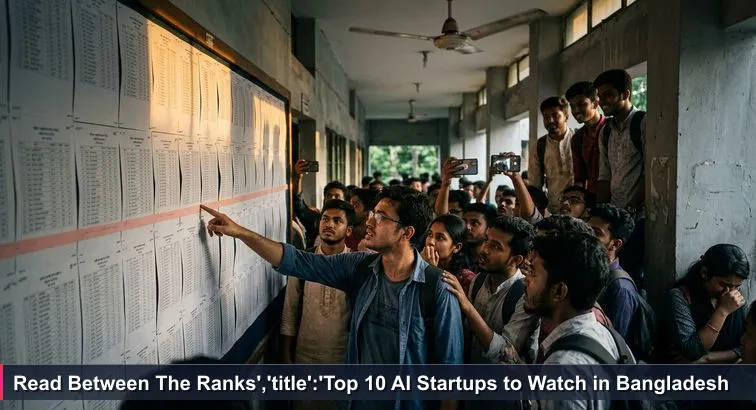
The corridor is packed, the air thick with sweat and whispers. A single white noticeboard carries neatly stapled sheets where years of coaching in Farmgate, hostel nights in Mohammadpur, and parents’ overtime in Narayanganj collapse into one thin line of text. Your name is either on the sheet or it isn’t. The system doesn’t see your struggle; it only sees a rank above or below an invisible cutoff.
A “Top 10 AI Startups in Bangladesh” list works in the same ruthless shorthand. On paper, the ecosystem is gearing up for an AI decade: local startups are expected to chase around BDT 165 billion (≈$1.5B) in funding in the coming years, with AI called out as a core growth driver in the Digital Bangladesh → Bangladesh 2.0 story, as reported by the Financial Express on startup funding momentum. But a ranked list can’t show the late rent, the failed pilots, or the quiet pivots behind each logo.
From rank lists to AI shortlists
Still, lists are not useless. As ecosystem builders like Rashed Moslem argue, the real winners are not those training giant foundation models for vanity, but those who embed AI into real workflows inside banks, farms, ports, and clinics. In his essay on why AI is the next frontier for Bangladesh’s digital ecosystems, he frames AI as the “logical next step” of our digital rails, not a sideshow. Read this Top 10 the same way: not as a shrine to hype, but as a shortcut to who is actually shipping.
How to read this result sheet
Each name on the following pages is a proxy for a bigger battle: Bangla data scarcity, Bay of Bengal safety, unbanked credit, rural diagnostics, pet health, SME marketing. Together, they sketch patterns - how Dhaka-Gazipur-Chattogram form an AI triangle, how BUET/BRACU/NSU/DU corridors are turning into founder pipelines, how sovereign capital and Hi-Tech Parks are nudging capital towards vertical AI.
The smartest students in that BUET corridor don’t just ask, “Am I in the Top 10?” They study the whole sheet: where the cutoff landed, which departments are overcrowded, which ones are wide open. Approach this AI list the same way - to decide what to build, where to work, or where to invest in Bangladesh’s next wave of AI companies, including the ones whose names aren’t pinned up yet.
Table of Contents
- Reading Bangladesh’s AI result sheet
- Markopolo AI
- Hishab
- Intelsense AI
- Dubotech Digital
- Dana Fintech
- AgriConnect
- Socian Ltd.
- NeoScreenix
- Pet Dunia
- AIM24
- Reading the whole sheet
- Frequently Asked Questions
Students and bootcamp graduates should consult the complete AI career guide for Bangladesh (2026) for salary bands and role mapping.
Markopolo AI
In a city where most SME founders still approve Facebook boosts from a cousin’s “marketing guy,” Markopolo AI steps into the gap between gut-feel ads and data-driven growth. For fast-growing brands in Dhaka and Chattogram, a few wasted lakhs on poorly targeted campaigns can mean the difference between hiring an ML engineer and shutting a floor in Banani.
From NSU corridors to global martech
Built by co-founders Tasfia Tasbin and Rubaiyat Farhan with deep North South University roots, Markopolo automates cross-channel campaigns on Facebook, Google, TikTok and beyond using generative AI plus predictive analytics. They’ve raised BDT 150M+ (>$1.5M) from regional investors including Stellaris Venture Partners and Singapore-based angels, and were highlighted among Bangladesh’s most promising startups in Seedtable’s 2026 list of top Bangladeshi startups.
The “Marko” engine: AI for low-data markets
The proprietary Marko engine is tuned for the messy reality of emerging markets: patchy tracking, misconfigured pixels, and fragmented customer journeys. Instead of demanding perfect data, Marko predicts creative and audience performance in low-data environments, then executes and iterates campaigns automatically. This is classic vertical AI - deeply embedded in marketers’ workflows rather than yet another generic “AI co-pilot.”
Pricing follows familiar SaaS patterns: tiered subscriptions for SMEs in places like Mirpur DOHS or Jamal Khan Road, plus custom enterprise deals for agencies and conglomerates. With 500+ global brands already using the platform and pilots with local heavyweights like Aura and ShopUp, Markopolo has proof that Dhaka-built martech can compete globally.
Dhaka to San Francisco - and back
The founders’ admission into HF0 in San Francisco - one of the world’s most selective founder residencies, as highlighted in the HF0 × Markopolo announcement - makes Markopolo one of the first Bangladeshi AI startups to seriously bridge the Dhaka ↔ Silicon Valley pipeline. That combination of exportable tech, foreign investor validation, and real revenue puts them at the top of this “result sheet,” with clear lines of sight to:
- Expansion across Southeast Asia and India for Shopify-style DTC brands
- Potential acquisition by global martech or adtech giants by 2028
Hishab
Walk into a corner shop in Old Dhaka or a tea stall outside a Gazipur garments factory and you’ll see the gap Hishab is attacking: cash notebooks, mental credit lines, and a battered feature phone that can’t run bKash’s latest UI. Millions of shopkeepers, garments workers, and farmers manage money and inventory without smartphones or literacy, so app-first fintech simply passes them by.
Hishab flips the script with voice-based AI that turns natural speech over a basic GSM call into structured digital records. Led by founder Zubair Ahmed and senior BUET-trained engineers, the company has raised around BDT 800M in Series A from Japanese and regional investors - among the largest AI-focused rounds for any Bangladeshi startup. Its patent-pending engine does voice-to-structured-data over standard phone lines, no internet required, making it viable from Mymensingh haats to remote chars.
This infrastructure is also the foundation for their work on Bengali Large Language Models, addressing a critical gap for the 170M+ Bangla speakers that global AI vendors largely ignore. Industry roundups such as the Omega Solution overview of top AI firms in Bangladesh consistently list Hishab as a leading player in the country’s AI stack.
Instead of selling directly to every shopkeeper, Hishab runs a B2B2C model. Banks, MFIs, and FMCG distributors pay per-minute or per-transaction fees, usually via white-labeled deployments. Early examples include:
- Partnerships with The City Bank for voice-enabled financial workflows
- Pilots with FMCG giants so field staff can log inventory hands-free
- Experiments in using voice flows for basic commerce and service hotlines
That’s why Hishab sits at #2 on this result sheet: it tackles Bangladesh’s deepest structural problem - digital exclusion - using infrastructure we already have. The big questions ahead are how fast it can expand into India, Pakistan, and ASEAN markets with similar GSM realities, and how deeply it will plug into national rails once the Bangladesh AI Policy 2026 starts translating into concrete government platforms and tenders.
Intelsense AI
Bangla doesn’t sound the same in Sylhet, Barishal, and Old Dhaka - and most global speech models don’t hear the difference. In cramped call centers from Motijheel to Uttara, agents juggle noisy lines, code-mixed Bangla-English, and fast regional accents. Government portals and banks want automation, but off-the-shelf speech APIs regularly mis-transcribe names, amounts, and addresses.
Intelsense AI steps into this gap with localized NLP and Automatic Speech Recognition (ASR) tuned specifically for Bangla phonetics and dialect variation. Founded by researchers from BUET and the University of Dhaka, the company has secured around BDT 40M in seed capital from Bangladesh Angels and ICT Division grants - exactly the kind of early money policymakers hoped would flow into language infrastructure when they set up ICT Tower and the IDEA Project as AI hubs.
Their technical edge is accuracy where it matters most: noisy telephony audio. Intelsense models are trained on call-center-grade data, so they can survive background traffic, fan noise, and low-bitrate GSM compression. They already power:
- 10+ banking call centers handling customer authentication and complaint logging
- Back-office process automation inside the ICT Tower environment
- APIs for developers who need Bangla speech-to-text without building models in-house
This is an API-first business: enterprises and startups pay per minute or per token, with aggressive discounts at scale for banks and telcos. Industry directories such as DesignRush’s 2026 rankings of Bangladeshi AI development firms now list Intelsense among the country’s notable AI solution providers, signalling growing recognition beyond research circles.
Zoomed out, whoever owns the Bangla language stack - speech, OCR, and NLP - will sit under almost every vertical-AI product in the country, from fintech chatbots to rural hotlines. Intelsense’s bet is that being the quiet infrastructure layer for Dhaka and Chattogram’s contact centers today is the surest path to becoming an indispensable part of South Asia’s AI plumbing tomorrow.
Dubotech Digital
Most AI in Dhaka still lives on screens and servers. Dubotech Digital took it underwater. In a country where cyclones, silt, and ship traffic make the Bay of Bengal both vital and dangerous, inspecting piers, pipelines, or sunken vessels usually means sending divers into near-zero visibility and strong currents. For ports in Chattogram and Mongla, every inspection window is a safety gamble and a logistics headache.
Born as the BRACU Duburi robotics team, Dubotech Digital builds Autonomous Underwater Vehicles (AUVs) and vision systems tuned for high-turbidity waters like ours. Led by alumni Mahfujul Haque and Soumik Hasan Shranto, they turned a student project into a deep-tech startup and secured around BDT 5M in pre-seed funding from Startup Bangladesh Ltd on Shark Tank Bangladesh. Coverage in outlets such as BRACU Express’s profile of Dubotech’s rise from student researchers to startup champions has made them a poster child for campus-to-company journeys.
Their edge lies in designing hardware and AI together for our murky rivers and coastal zones. Dubotech’s AUVs combine:
- Autonomous navigation algorithms that cope with low-visibility, silt-heavy water
- Computer vision models trained on Bay of Bengal conditions instead of clear-water datasets
- Modular payloads for inspection, mapping, or search-and-rescue missions
Go-to-market is project-based, not SaaS. Clients are ministries, port authorities, and industrial operators who pay for missions rather than monthly seats. That’s how Dubotech has landed work with the Ministry of ICT and maritime agencies, while winning “Bangladesh's Best Startup Award 2025” along the way.
On this AI result sheet, Dubotech is the name that sits on a different line entirely: not chasing app installs, but reshaping how a maritime nation sees beneath its own waters. If they execute, Chattogram Port could become both their toughest client and their biggest reference, and Dubotech’s AUV stack could quietly standardize underwater inspections across other deltaic and coastal countries.
Dana Fintech
For a pharmacy owner in Mirpur or a tailoring shop in Rangpur, the problem isn’t demand - it’s credit. Ledger books and bKash screenshots don’t fit neatly into traditional bank scorecards, so even profitable micro-businesses remain “thin-file.” In Bangladesh, that still means tens of millions of people and SMEs locked out of formal loans or stuck with exploitative informal lenders.
Scoring the invisible economy
Dana Fintech targets this gap with AI-driven alternative credit scoring built for the realities of our cash-heavy, informally documented economy. Founded by veteran fintech leader Gazi Yar Mohammed, with roots at the University of Dhaka, Dana has raised about BDT 100M from South Asia Tech Partners and Bangladesh Angels. Its models ingest:
- Digital payment behaviour from MFS, POS, and marketplaces
- Psychometric assessments tailored to local cultural norms
- Business metadata for informal workers and micro-SMEs
The result is real-time scoring that can plug directly into loan origination systems, giving MFIs and banks a clearer, faster view of risk where they previously had almost none.
Business model that fits local rails
Dana sells this intelligence via a per-score or per-API call pricing model with minimum monthly commitments - exactly how Bangladeshi banks like to contract technology vendors. They already integrate with major microfinance institutions and more than 5 commercial banks, inserting AI into credit workflows without forcing lenders to rip out existing cores.
Global startup intelligence platforms now map Dana among Bangladesh’s emerging AI services players, with databases such as Tracxn’s AI services landscape for Bangladesh highlighting its role in financial inclusion. On the capital side, investors tracking AI-focused funds active in Bangladesh increasingly view alternative data credit scoring as one of the most direct AI levers on GDP growth.
On this AI result sheet, Dana represents every borrower who has good repayment habits but no formal paperwork. The more accurately Dana’s models see them, the more Bangladesh’s financial system - and its AI talent - gets rewarded for looking beyond traditional forms and files.
AgriConnect
In a village outside Bogura, a farmer still checks the sky, squeezes soil, and calls an older cousin before deciding whether to spray or harvest. That intuition has worked for generations, but climate volatility in our deltaic topography is breaking the old rules. A week of unexpected rain can wipe out a season’s profit; a missed pest outbreak can undo a loan from a local NGO.
Turning gut-feel into data-driven decisions
AgriConnect is building an AI + IoT layer for this reality. With a team drawn from Bangladesh Agricultural University and BUET, they have joined the NVIDIA Inception Program and raised around BDT 50M from local agritech VCs. Their platform focuses on three core capabilities tuned for Bangladeshi fields:
- Predictive pest and disease models trained on local crops and pathogen patterns
- Hyper-local weather forecasting to guide planting, irrigation, and harvesting
- Supply-chain optimization from village collection points to Chattogram export terminals
Built for 2G phones and export dashboards
On the ground, AgriConnect reaches farmers through USSD/SMS and lightweight apps, while aggregators and exporters use web dashboards on subscription. Pricing combines a freemium farmer tier - often sponsored by NGOs or government programs - with SaaS contracts for large buyers and exporters who care about traceability and yield.
The numbers are no longer just pilot-scale: 20,000+ farmers are already onboarded, and active pilots with agricultural exporters in Chattogram link real-time field data to export-grade quality requirements. Startup databases such as F6S’s index of Bangladeshi AI companies now list AgriConnect among the country’s dedicated agritech AI players.
In the broader funding picture where Bangladeshi startups are preparing to chase roughly BDT 165 billion in capital, ecosystem analyses like LightCastle’s report on the startup ecosystem highlight agritech as a high-impact frontier. On this AI result sheet, AgriConnect is the name standing in for every farmer whose “gut feeling” is slowly being augmented - not replaced - by data.
Socian Ltd.
Scroll through any Bangla comment thread on a Grameenphone promo or a Daraz flash sale and you’ll see the challenge: slang, sarcasm, Sylheti jokes, and Chattogram memes mashed together in Bangla-English code-mix. Most off-the-shelf sentiment tools were trained on US Twitter, not our newsfeeds, so they routinely mark “valo nai” complaints as neutral and miss brewing PR fires entirely.
Founded by Tanvir Sourov and a core team from North South University, Socian Ltd. builds Bangla-first NLP and sentiment analysis for exactly this mess. They’ve raised roughly BDT 30M from Startup Bangladesh and private angels to focus on models that can decode real-life Bangladeshi language, not textbook Bangla. That includes:
- Dialect detection across Sylheti, Chittagonian, and other regional variants
- Entity and intent extraction tuned for telco, banking, and e-commerce use cases
- Support for code-mixed Bangla-English typical of Dhaka and Chattogram users
Unlike pure API shops, Socian often ships as a mix of platform and managed service. Telcos plug their data pipes in; Socian’s stack and analysts surface trends, crisis alerts, and CX insights. Large e-commerce players use the same engines to track campaign performance and customer pain points in real time, without hiring an army of Bangla-literate annotators.
Industry maps such as GoodFirms’ overview of AI companies in Bangladesh consistently list Socian among the country’s specialized NLP vendors, underlining how critical this layer is as more CX moves to chat, social, and voice. On this AI result sheet, Socian is the infrastructure name behind every “angry customer tweet” that a smart brand in Dhaka hopes to catch before it turns into a front-page story.
NeoScreenix
In most district hospitals and upazila clinics, breast cancer is still discovered late. Mammography machines are rare outside major Dhaka and Chattogram centres, and trained radiologists are even rarer. As local coverage of the Made-in-Bangladesh AI roadblocks has noted, healthtech founders here must work around constraints in hardware, data, and regulation that richer ecosystems take for granted.
NeoScreenix is a BUET CSE student-founded response to that gap. Led by Fahmida Sultana, Sadat Islam and teammates under BUET faculty guidance, the team builds AI-powered low-cost handheld devices for early breast cancer detection. They secured around BDT 6M from a Johns Hopkins global health innovation competition, beating teams from MIT and Harvard and putting a Dhaka-built prototype on the same stage as some of the world’s best-funded labs.
Designing AI for rural clinics, not just city hospitals
Unlike conventional imaging systems, NeoScreenix optimises every layer for low-resource settings:
- AI models trained to work with cheaper, noisier sensors instead of top-tier hospital hardware
- A handheld form factor that can be carried into rural Gazipur camps or cramped community clinics
- Cloud back-ends that let remote radiologists review suspicious cases flagged by the device
“AI at CureBay is not aspirational, it’s operational.”
- Priyadarshi Mohapatra, CEO, CureBay, speaking about real-world AI in healthcare in an interview with MyCityLinks
NeoScreenix is chasing that same “operational” standard from Dhaka: hardware sales paired with recurring software and service fees, likely underwritten in part by NGOs and donors. Early field trials in rural Gazipur and interest from local health NGOs and diagnostic chains suggest a path from student project to nationwide screening network. Whether they can navigate ethics, approvals, and data protection will depend heavily on how quickly frameworks like the Bangladesh AI Policy 2026 move from policy to enforceable law - a shift healthtech founders are watching closely.
Pet Dunia
In Dhanmondi or Nasirabad, pet ownership now looks very different from a decade ago: imported kibble, Instagram-famous cats, weekend vet runs through Dhaka traffic. But the underlying system is still fragmented. Health records live in WhatsApp chats, paper prescriptions, and Facebook groups. Vets, groomers, trainers, and sitters each operate from their own islands, making continuity of care almost impossible.
An operating system for pet care
Pet Dunia, founded by Shafiul and Ismaeel in Dhaka, is trying to stitch those islands together into an AI-powered operating system for pet care. Accepted into the NVIDIA Inception Program, the team is building a platform that quietly tracks a pet’s life and nudges owners before problems escalate. Instead of yet another social group, it aims to be infrastructure.
- Logging of key pet health events - vaccinations, illnesses, weight changes
- AI models that predict health milestones and upcoming care needs
- Smart matching to vetted clinics, groomers, and products at the right moment
Go-to-market is consumer-first: a freemium app that lowers friction for owners, with revenues from marketplace commissions when users book services or buy products. That aligns neatly with what global observers describe as “vertical AI businesses that work,” where AI is embedded in a full workflow rather than sold as a standalone model, a pattern highlighted in analyses like Sparkout’s review of AI companies to watch.
A niche that travels beyond Dhaka
Early signals are strong for such a young product: 31% month-on-month growth in waitlist signups and active community sales inside Dhaka’s pet circles. International startup trend trackers, including discussions of sectoral AI at platforms like South Summit’s overview of technologies shaping startups, see pet tech as a fast-growing niche. On this result sheet, Pet Dunia represents the lifestyle edge of Bangladesh’s AI wave - a product built for Gulshan living rooms, but conceptually ready for Jakarta, Bengaluru, or Manila.
AIM24
When a Gulshan boutique or a Chattogram logistics SME misses calls after Maghrib, it isn’t just bad manners; it’s revenue leaking out of a shaky P&L. Hiring a night shift in-house is expensive, and generic cloud chatbots still struggle with fast, emotional Bangla on a crackling phone line. That gap is exactly where AIM24 is positioning itself.
Bangla-native voice agents for SMEs
Led by Rafsanjani out of Dhaka’s ICT Tower ecosystem, AIM24 builds AI voice assistants that can handle inbound and outbound calls in Bangla with human-like delivery. The stack combines:
- Speech-to-text tuned for Bangla telephony audio
- Text-to-speech that sounds natural enough for sales and support
- Conversation flows mapped to SME use cases like order-taking, FAQs, and follow-ups
- Direct telephony integration so businesses keep their existing numbers
The product is already live on the Google Play Store, signalling a self-serve SaaS play: a base subscription so SMEs in places like Mohammadpur or Agrabad can get started quickly, plus add-on charges per call or per minute as volumes grow. Early pilots with Dhaka-based e-commerce shops focus on reducing missed calls and abandoned carts without hiring extra agents.
Riding (and testing) the policy wave
AIM24 also rides the broader state push to digitise services under the emerging Bangladesh AI Policy 2026. Analysts writing in Policy Magazine’s examination of Bangladesh’s AI moment argue that the real test is whether AI moves from pilots to critical infrastructure - exactly the shift AIM24 bets on as voice automation moves from novelty to necessity.
At ecosystem level, the rise of voice and conversational AI is visible in how local firms appear on global directories such as Clutch’s rankings of AI developers in Dhaka. On this result sheet, AIM24 represents the SME end of that trend: not flashy foundation models, but the quiet automation of every missed call in the city.
Reading the whole sheet
Step back from the BUET noticeboard for a moment. When the crush of students thins out, you can finally see the whole sheet: who cleared the cutoff, which departments are overcrowded, which lines are smudged or missing. This Top 10 list works the same way. Ten names can never capture everything happening across Gulshan offices, Gazipur labs, and Chattogram ports, but they do reveal the contours of Bangladesh’s AI moment.
Patterns hiding behind the ranks
Look down the list and a few themes jump out. First, almost every company is vertical AI: marketing execution, marine inspections, call centres, agri supply chains, alternative credit, pet care. They don’t sell “AI” as such; they sell outcomes - loans approved, pests predicted, calls answered. That mirrors global analyses showing that the AI startups winning now are “businesses that work,” not just model labs, as broken down in Ben AI’s discussion of unpopular but durable AI business models.
- Language and speech infrastructure for Bangla and regional dialects
- AI embedded in frontline workflows, from shop counters to ships
- Student-to-founder pipelines out of BUET, BRACU, NSU, DU
- Dhaka-Gazipur-Chattogram forming a de facto AI triangle
The triangle and the plumbing
Beneath the flashy logos is a slow build-out of “plumbing”: data centres, connectivity, grants, and Hi-Tech Parks. Analyses of Bangladesh’s AI/ML infrastructure, such as Atomic Technium’s roadmap for where the country’s AI stack is heading, argue that this base layer - not any single startup - will decide how far the ecosystem can go. Dhaka still dominates funding and talent, Gazipur hosts hardware and R&D, and Chattogram quietly tests export and maritime use cases.
How to use this result sheet
If you’re a builder, treat these ten as case studies in picking a workflow and owning it end-to-end. If you’re job-hunting, read between the lines: service firms like Brain Station 23, DataSoft, TigerIT, BJIT, and Samsung R&D Bangladesh may not appear in a “Top 10,” but they train much of the AI workforce that later jumps into startups. And if you’re an investor or policymaker, focus less on who is ranked where and more on the white space: which sectors, districts, and user groups still don’t have a “name on the sheet” yet. That’s where the next cohort will pin their results.
Frequently Asked Questions
Which of these 10 startups is most likely to scale beyond Bangladesh first?
Markopolo AI looks most export-ready: it has raised over BDT 150M (> $1.5M), serves 500+ brands, and was singled out by Seedtable for cross-border expansion, making it the likeliest to scale into Southeast Asia and India first.
How did you decide the rankings - what criteria mattered most?
Rankings weighed traction (users, pilots), funding (e.g., Hishab’s ~BDT 800M Series A or Intelsense’s BDT 40M grants), tech defensibility (proprietary models or hardware), and go-to-market fit in Bangladesh’s corridors (Dhaka/Chattogram) rather than pure hype.
If I'm an ML engineer in Dhaka, which startups here are actively hiring and what pay should I expect?
Startups like Markopolo, Hishab, Intelsense and larger implementation partners (e.g., Brain Station 23, DataSoft) are hiring; typical monthly ranges in Dhaka in 2026 run about BDT 40,000-120,000 for juniors, BDT 120,000-300,000 for mid-level ML engineers, and BDT 300,000+ for senior specialists with production ML/MLOps experience.
Which AI sectors in Bangladesh are already crowded and where is the biggest white space?
Crowded: Bangla NLP, call-center voice automation and martech (several players tackling sentiment, ASR, and marketing automation); white space: maritime robotics, deep-rural voice tech, and low-cost medical devices (examples: Dubotech, Hishab, NeoScreenix) - areas where capital and expertise are still thin despite a projected BDT 165 billion opportunity for startups.
As a founder in Dhaka, how should I use this 'Top 10' list when preparing to raise or partner?
Use it as a competitive map: demonstrate workflow integration (not just models), show local pilots or telco/NGO partners, and highlight fit with government programs (Hi-Tech Parks, Startup Bangladesh, Shark Tank) - investors here value clear revenue paths and measurable impact in Bangladesh and nearby markets.
Is Bangladesh a Good Country for a Tech Career in 2026: what you need to know
Top 10 tech careers in Bangladesh for non-degree candidates (2026)
Best companies to work for as an AI engineer in Bangladesh - Top 10 (2026)
Looking for the Top 10 Tech Apprenticeships and Internships in Bangladesh 2026? This guide ranks programs by skill depth and pay.
Before negotiating, review our guide to AI salaries in Bangladesh (2026) with scripts and sample offers.

Irene Holden
Operations Manager
Former Microsoft Education and Learning Futures Group team member, Irene now oversees instructors at Nucamp while writing about everything tech - from careers to coding bootcamps.