









Top 10 Tech Coworking Spaces and Incubators in Bangladesh in 2026
By Irene Holden
Last Updated: April 9th 2026
Too Long; Didn't Read
NSU Startups Next and Moar are the top picks for tech coworking and incubators in Bangladesh in 2026, because NSU combines a high-accountability, equity-free incubator with university labs and mentor networks ideal for AI/ML founders while Moar delivers a premium, client-ready coworking environment that helps scaling teams win enterprise contracts. That selection fits a maturing ecosystem - Bangladeshi startups raised about $124 million in 2025 and Bangladesh Bank raised the startup loan ceiling to BDT 8 crore at around 4 percent - and choosing a desk at roughly BDT 8,000 to 15,000 per month can spare founders the BDT 5 to 8 lakh upfront a traditional Dhaka office would demand.
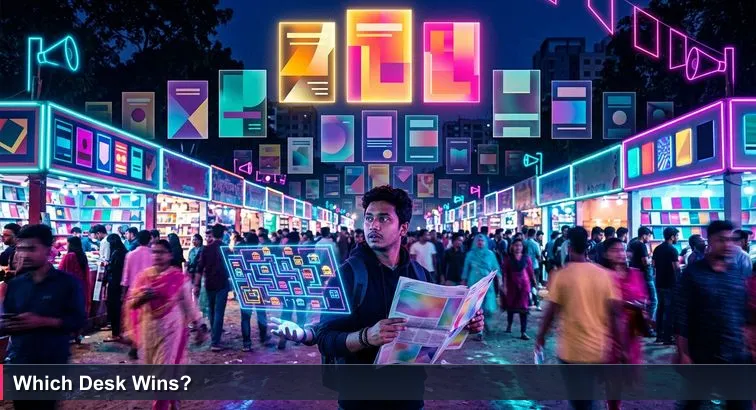
The first time you walk into Ekushey Boi Mela with a “Top 10 Must-Read Books” list folded in your pocket, it feels like a safety rope. Ten titles circled in ink - until you’re actually inside. Dust underfoot, smell of fuchka, loudspeakers announcing new launches, friends dragging you towards their favourite stalls. Suddenly that list is just one more crumpled paper in a fair of thousands.
Choosing a coworking space or incubator in Dhaka or Chattogram feels the same. You scroll glossy websites and “Top 10” lists, but the real experience is messier: traffic between Gulshan and Mirpur, Wi-Fi that dies in the middle of a client call, or an “AI-friendly” hub that actually has zero GPUs and no one who understands model deployment.
At the same time, the stakes are rising. According to LightCastle Partners’ 2025 investment review, Bangladeshi startups raised about $124 million, rebounding from a tough previous year. A traditional office setup in Dhaka - lease deposits, furniture, utilities, generator - can easily cross BDT 5-8 lakh upfront, which is why reports in the local press show coworking spaces helping small firms “save big” on setup costs. One wrong choice of hub can burn months of runway for a bootstrapped ML team.
The policy side is shifting too. Bangladesh Bank has revamped its startup refinancing so that ventures up to 12 years old can now access up to BDT 8 crore in loans at around 4% interest, as detailed in Future Startup’s deep dive on the new scheme. Combine that with Digital Bangladesh, Hi-Tech Parks, and export-focused IT/ITES incentives, and suddenly more founders and ML engineers can afford to move out of bedrooms - if they pick the right place.
This list is meant to be your Boi Mela map, not your script. Use it to decide whether you, as a solo freelancer, remote engineer, or AI/ML founder, need a quiet desk in Mirpur, a policy-adjacent base near Karwan Bazar, or a globally connected accelerator. Fold it into your pocket, then walk the dusty paths of this ecosystem and choose the stalls - and hubs - that fit your chapter, not someone else’s ranking.
Table of Contents
- Introduction: Why the right hub matters in 2026
- NSU Startups Next
- Founder Institute Bangladesh
- Moar
- Regus & Spaces
- KnowledgeVale & Daffodil Business Incubator
- HUBDhaka & Founders Hub
- CO+LAB Dhaka
- Grameenphone Accelerator & BetterStories
- BASIS Incubator & Hi-Tech Park Hubs
- MEASA Incubator & Accelerator Center
- How to choose the right hub for your stage
- Frequently Asked Questions
Students and bootcamp graduates should consult the complete AI career guide for Bangladesh (2026) for salary bands and role mapping.
NSU Startups Next
Walk through North South University’s Bashundhara campus on a weekday evening and you’ll often see small teams huddled over laptops in glass rooms, arguing about funnels and features. That’s NSU Startups Next: an incubator that feels like a cross between a campus club and a very real startup job.
What the program actually offers
NSU Startups Next is designed as an incubator and light-touch accelerator for early-stage, student and youth-led ventures. The program itself is typically equity-free and fee-light, backed by NSU and ecosystem partners, making it one of the most capital-efficient ways to get structured support without giving up ownership.
Cohort 4 applications are open until 15 April 2026, according to the official announcement on NSU Startups Next’s Facebook page. Their Startups Showcase 2025 featured 30+ ventures from multiple sectors, a scale highlighted by The Daily Star’s coverage of the event.
Why it matters for AI/ML builders
The incubator brands itself as a “high-accountability” environment: founders commit to weekly KPI check-ins and structured mentor feedback. For AI/ML students and recent grads, that discipline is gold. Instead of drifting between Kaggle notebooks and half-finished side projects, you’re pushed to convert models into products, with access to NSU’s labs, events, and alumni working at firms like Brain Station 23 or TigerIT.
Who should consider it - and how to use it
NSUSN is especially suited to:
- Solo students and recent graduates testing ideas without salary runway
- Technical co-founders from NSU, BRACU, IUT, UIU, BUET or similar universities who need structure
- AI/ML founders searching for product-market fit and a first fundraising narrative
If you’re still a student, treat NSUSN as a “free MBA plus office space”: build your MVP, validate with real users, and leave with enough traction to justify paying for a desk elsewhere only when revenue starts to cover your burn.
Founder Institute Bangladesh
In a city where many “startup programs” feel like extended pitch competitions, Founder Institute (FI) Bangladesh stands out as a structured, semester-style accelerator. You join a cohort, follow a proven Silicon Valley playbook, and are pushed through customer discovery, validation, and fundraising fundamentals rather than just building a flashy demo. Globally, FI operates in 90+ countries and its graduates have reportedly raised over $1.75B, according to the program’s own overview on Founder Institute’s Bangladesh accelerator page.
How the program works
Instead of charging monthly rent like a coworking space, FI typically combines a program fee with a small equity contribution into a shared upside pool. Founders commit to weekly assignments, mentor feedback sessions, and progress checkpoints. The culture is intentionally intense: if you cannot keep up with the deliverables, you’re expected to drop out rather than drift along. For Dhaka and Chattogram builders, that external pressure can be the difference between a side project and a real company.
Why it matters for AI/ML builders
For AI/ML engineers, FI’s biggest value is forcing you to prove that your “cool model” is actually a business. The curriculum pushes you to define a clear user, validate willingness to pay, and plan a go-to-market path in US, EU, or GCC markets. Ecosystem roundups like IncubatorList’s guide to top programs in Bangladesh consistently highlight FI for founders aiming at global SaaS, devtools, and data products rather than just local freelancing.
Who it’s best for - and a practical lens
FI Bangladesh is best suited to founders who already have income (job, freelancing, or savings) and can handle a demanding evening program:
- Early-stage tech teams with a defined idea and basic prototype
- Remote engineers planning to spin out a product while still coding for foreign clients
- Ambitious AI/ML founders targeting venture-scale growth, not agency work
A useful test before applying: can you explain your AI/ML idea as a product with a clear buyer, pricing, and distribution, not just a project? If not, FI’s early weeks will either refine that story - or reveal that you need to rethink the idea entirely.
Moar
Step into Moar in Banani and it feels less like “shared office” and more like a polished Gulshan startup HQ - minus the multi-year lease. Wide desks, strong lighting, quiet phone booths, and meeting rooms that don’t look embarrassing on a Zoom call with a Silicon Valley client are the norm here.
In expert roundups such as KnowledgeVale’s guide to the best coworking spaces in Bangladesh, Moar scores around 9.4/10 for design and overall experience. That design premium shows up in pricing: similar premium setups in central Dhaka typically charge around BDT 8,000-15,000/month per person for fixed desks, while enclosed team rooms usually start from about BDT 40,000/month, depending on size and amenities.
For AI/ML engineers and founders, the biggest value isn’t just nice chairs. It’s the context: you’re surrounded by funded startups, senior engineers on foreign payrolls, and product teams who understand concepts like MLOps, LTV/CAC, and SOC 2. Regular Friday networking events and pitch nights - highlighted in several Dhaka coworking rankings - turn Moar into a reliable place to meet angels, early employees, and recruiters from top software firms.
That ecosystem benefit matters because, as a trends piece from The Business Center BD notes, Dhaka’s shared workspaces are evolving from simple desk-rentals into full “business infrastructure as a service.” Moar leans into that: reception, visitor management, backups during loadshedding, and meeting rooms suitable for bKash or foreign client pitches are all handled, so your team can focus on code and customers.
Moar makes the most sense if your monthly income or company revenue already comfortably clears its fees - for example, AI freelancers billing in USD, or startups with at least one solid enterprise client. If you’re earlier than that, a practical move is to start with a flexible or part-time desk, then upgrade once you’ve closed a foreign contract or angel round and need a space that matches your ambition.
Regus & Spaces
For teams that want their office to feel more like GP House than a scrappy startup den, the global brands Regus and Spaces are the closest thing Dhaka and Chattogram have to “plug-and-play corporate HQs.” Regus now runs over 6 centres in Dhaka (including Gulshan and Faydabad) plus one in Chattogram’s Purba Firoz Shah Colony, while Spaces has a modern hub in Tejgaon aimed at creative and tech teams.
Here’s a snapshot of headline coworking pricing drawn from Regus and Spaces’ own Bangladesh pages:
| Brand & Location | Product | Typical price (BDT) | Best for |
|---|---|---|---|
| Regus Dhaka | Day pass (coworking) | 3,290 / person / day | Occasional use, client meetings |
| Regus Dhaka (incl. Faydabad) | Dedicated desk | From 790-1,040 / day | Regular individual use |
| Regus Chattogram | Day office | From 8,590 / day | Short-term project teams |
| Spaces Tejgaon | Coworking All-Access | From 572 / day | Frequent hot-desking across days |
| Spaces Tejgaon | Day pass | About 3,290 / day | Drop-in use, workshops |
According to the official Regus coworking overview for Bangladesh, these centres come with business lounges, high-speed internet with failover, multilingual reception staff, and standardized meeting rooms. That level of infrastructure matters when you’re pitching an AI analytics pilot to a bank CIO or demoing a computer-vision POC to a logistics client.
Spaces’ Tejgaon hub, showcased on its creative coworking page, positions itself as a more design-led environment but still offers international-grade amenities. For AI/ML engineers on foreign payrolls, or fintech and SaaS teams selling into corporates like Grameenphone, bKash, or large exporters in Chattogram, the brand signal and predictable service can justify the premium.
Practically, solo ML developers rarely need a full-time dedicated desk here. A smart pattern is to work day-to-day from a cheaper local coworking space or home, then book Regus/Spaces day passes or meeting rooms only for investor calls, enterprise workshops, and key hiring interviews where environment and reliability really influence perception.
KnowledgeVale & Daffodil Business Incubator
On the Dhanmondi-Sukrabad side of Dhaka, KnowledgeVale sits in the middle of a student-heavy neighbourhood where classrooms, cafes, and coaching centres blur together. What makes it different is that it doesn’t stop at teaching: it deliberately combines training rooms with proper desks so you can learn, build, and then start earning from the same building.
Local roundups describe KnowledgeVale as a modern coworking space with a 4.6/5 rating based on 18+ reviews, and pricing that typically falls between BDT 4,000-10,000/month depending on whether you choose a hot desk or fixed seat. The adjacent Daffodil Business Incubator in Ashulia, profiled on coworking platform Coworker, offers additional shared offices and incubation support within the wider Daffodil university ecosystem.
For AI/ML learners and junior developers from Dhanmondi, Mohammadpur, or Jigatola, that mix is powerful. You can attend a weekend Python or data analytics workshop, then stay back at your desk to finish a Kaggle competition or client dashboard. An overview of national incubation centres by Enterprise360 notes Daffodil’s incubator as a “great place for young entrepreneurs,” and KnowledgeVale effectively brings that spirit inside the city, closer to where many students already live.
In practice, the space tends to attract three profiles:
- Early-career AI/ML learners who are still studying but want a semi-professional environment for freelancing
- Solo consultants and trainers running short courses on data, BI, cloud, or web development
- Small agencies in web, mobile, or digital marketing that need both a classroom and an office
If your current income is under BDT 60,000/month, a lower-cost desk at KnowledgeVale or Daffodil’s incubator lets you enjoy stable internet, backup power, and a credible address, while freeing more of your budget for GPU cloud credits, datasets, or structured upskilling programs that actually move your AI/ML career forward.
HUBDhaka & Founders Hub
Mirpur DOHS doesn’t have the gloss of Gulshan, but step into HUBDhaka or Founders Hub on a weekday and it feels like a long-game founder enclave: whiteboards full of funnels, quiet calls with foreign clients, and people who have been building since the early 2010s rather than just tweeting about it.
Pricing that matches ramen-profitable reality
Founders Hub leans into transparent, budget-friendly tiers. According to the official details on the Founders Hub website, you’ll typically see:
- Starter (shared access): around BDT 3,000/month
- Founder (Unlimited): about BDT 8,000/month
- Fixed Desk: roughly BDT 10,000/month, including 2 free meeting room hours
- Team Room: from around BDT 30,000/month
For founders who are just crossing the “ramen-profitable” line, these numbers are low enough to get out of the bedroom, but high enough to force discipline about revenue and burn.
Community: old-guard founders and angel access
HUBDhaka, one of the city’s earliest coworking brands, is often cited in ecosystem roundups as a space with a deep investor and mentor network, built through years of demo days and pitch events. Mirpur DOHS has slowly become a cluster of serious SaaS, e-commerce, and service startups who prefer paying less for rent and more for engineers, cloud, and marketing.
Who this works for (especially in AI/ML)
This Mirpur orbit fits three kinds of people:
- Founders from Mirpur, Pallabi, and Kafrul who want to avoid Gulshan commutes and pricing
- Teams with steady but modest revenue that need a stable office without going corporate
- Developers and ML engineers transitioning from freelancing to product-building
A remote ML engineer earning from a foreign client can justify a BDT 10,000 fixed desk here: it gives a professional setting for calls while still leaving room in the budget for GPU cloud credits and courses. For a broader view of how such hubs underpin Dhaka’s coworking trend, you can skim CoworkBooking’s directory of Dhaka spaces and see how Mirpur’s value-for-money proposition consistently stands out.
CO+LAB Dhaka
Compared to the glass towers of Gulshan, Baridhara’s CO+LAB feels like a focused tech pit-stop: rows of laptops running VS Code, quiet stand-ups in the corridor, and whiteboards full of sprints rather than mission statements. It’s a coworking space that openly targets IT professionals, so you’re far more likely to overhear talk about APIs, CI/CD, and latency than generic “entrepreneurship motivation.”
Pricing and the trade-off
CO+LAB doesn’t publish fixed 2026 rates, but spaces with similar fit-out in Baridhara typically sit around BDT 6,000-12,000/month for hot or fixed desks and from roughly BDT 35,000/month for small team rooms. For a mid-level engineer earning BDT 80,000-150,000/month, that’s a manageable slice of income to buy reliable internet, backup power, and a professional place to host client calls.
A production-focused community
The real value here is the concentration of web, mobile, cloud, and DevOps teams. As many ecosystem overviews note, successful Bangladeshi tech companies increasingly win by offering end-to-end solutions rather than standalone code; lists like Nextzen’s ranking of top software companies show how export-oriented firms bundle AI, cloud, and product engineering together. CO+LAB’s environment mirrors that mix at a smaller scale.
For an AI/ML engineer, that means you can ship beyond the notebook. Need a React frontend for your recommender system, or Kubernetes help to deploy a computer-vision API? The people who can do that are often sitting a few desks away. Informal barter deals - “I’ll help you fine-tune this model if you help me with CI/CD” - are common in such spaces.
Who it suits
CO+LAB makes particular sense if you’re a mid-level software or ML engineer who:
- Is tired of working from home but doesn’t need Gulshan-grade prestige
- Collaborates regularly with app/web teams to productionize models
- Values being close to Dhaka’s core startup clusters while keeping rent reasonable
Pairing a CO+LAB desk with the broader startup scene mapped by platforms like StartupBlink’s overview of Bangladeshi startups can give you both a daily build environment and a clear view of where your AI skills might plug into fast-growing products.
Grameenphone Accelerator & BetterStories
Behind many of the more polished pitch decks in Dhaka you’ll often find the fingerprints of two closely linked institutions: Grameenphone Accelerator (GPA) and BetterStories. Together they represent a rare combination in Bangladesh’s ecosystem - a corporate-backed accelerator with telco scale, paired with one of the country’s first storytelling-driven incubators.
Ecosystem mappings frequently place GPA among the nation’s top incubation and acceleration programs, and BetterStories is widely credited as Bangladesh’s earliest dedicated incubator. Unlike classic coworking spaces, their programs are usually equity- or grant-based rather than monthly-rent-based, making them financially attractive if you’re selected. Instead of buying a desk, you gain access to mentors, structured curriculum, and Grameenphone’s platforms, network, and data partnerships - a serious edge if you’re building for millions of users rather than a handful of pilots.
This fits neatly into the broader trajectory of Bangladesh’s startup scene, where policy and corporate interest are increasingly aligned. Analyses like the Centre for Governance Studies’ overview of the “startup industry revolution” highlight how Digital Bangladesh, ICT Division support, and corporate venture activity are creating a more structured runway for high-potential ventures. GPA-BetterStories sits right at that intersection, especially relevant for solutions that can plug into telco, fintech, and mass-consumer rails.
For AI/ML founders, this combo is particularly powerful if you are working on:
- AI/ML products for communications, customer analytics, or network optimization with telco partners
- Fintech risk scoring, fraud detection, or personalization engines that can ride on mobile money ecosystems
- Infrastructure-first logistics, mobility, or health-tech platforms where data and distribution matter more than flashy UI
Even if you never join a cohort, it’s worth tracking their demo days and public events. Playbooks on how Bangladeshi startups scale - like Tipsoi’s breakdown of how local ventures thrive - consistently emphasise corporate partnerships and infrastructure-first thinking, both of which are baked into the GPA and BetterStories approach.
BASIS Incubator & Hi-Tech Park Hubs
In Karwan Bazar, the BASIS Incubator sits almost on top of Dhaka’s policy and business nerve centre, while a growing network of Hi-Tech Parks in Dhaka, Gazipur, Jashore and beyond stretches that influence across the country. Together they form a bridge between small software teams and the large-scale IT/ITES ambitions behind Digital Bangladesh.
The BASIS Incubator is widely described in ecosystem mappings as a subsidised hub for software and service companies: rents are lower than typical commercial spaces, and members tap into training, export development programs, and introductions to government IT projects. The national Hi-Tech Parks layer on additional incentives such as long corporate tax holidays, VAT exemptions on certain imports, and purpose-built infrastructure for tech firms, which analysts see as a key pillar of Bangladesh’s shift toward higher-value digital exports.
This policy-driven environment is emerging just as local startups regain momentum. Reporting from outlets like The Financial Express on recent funding rebounds notes that more capital is chasing scalable tech and IT/ITES businesses; sitting inside BASIS or a Hi-Tech Park can make it easier to be discovered by both investors and public-sector buyers.
For AI/ML founders, these hubs are particularly attractive if you are:
- Running an export-oriented dev shop or data-labeling outfit serving US, EU, or GCC clients
- Building an AI/ML consultancy (analytics, prediction, optimization) that bills in foreign currency
- Planning to leverage concessional financing or export incentives tied to the IT/ITES category
Many of the firms highlighted in rankings of leading Bangladeshi software exporters, such as Ontik Technology’s list of notable IT startups, have grown by positioning themselves as reliable outsourcing and product partners to foreign clients. If you frame your AI/ML company the same way - as an IT/ITES exporter rather than just “a startup” - BASIS and the Hi-Tech Parks become not just cheap offices, but strategic platforms for scaling into global markets.
MEASA Incubator & Accelerator Center
Where most Dhaka programs still think in terms of “local startup” versus “export client,” the MEASA Incubator & Accelerator Center starts from a different map entirely: Bangladesh as one node in a corridor running through Saudi Arabia, the UAE, the UK, and the USA. Launched as a joint venture in 2025, it was introduced on MEASA’s own launch announcement as a platform to connect founders and investors across the wider Middle East, Europe, Africa, and South Asia region.
Network-first, not desk-first
Unlike classic coworking spaces, MEASA is less about where you sit and more about who you can reach. Programs blend online cohorts with short in-person residencies and international demo days, giving Bangladeshi founders direct exposure to mentors and investors in Riyadh, Dubai, London, and North America. That matters for AI/ML teams because pricing, compliance, and data needs in GCC or UK markets often look very different from those in Dhaka; you need people who’ve actually sold into those environments before.
Why it’s compelling for AI/ML founders
The centre’s sector focus leans toward fintech, logistics, health-tech, and AI-enabled SaaS - precisely the areas where Bangladeshi engineers already have strong skills but often lack structured access to global buyers. Platforms like F6S’s listing of top Bangladeshi tech companies show how many local teams quietly serve foreign clients; MEASA’s promise is to turn that scattered project work into deliberate cross-border companies with recurring revenue.
Who should seriously consider MEASA
- AI/ML product startups with early traction that could fit GCC, UK, or diaspora use cases
- Remote-first teams already juggling multiple time zones and foreign customers
- Chattogram and Dhaka engineers who currently freelance for Gulf clients but want to formalise into a venture
If you already hear more Arabic or English than Bangla on your client calls, a MEASA cohort can be the moment you stop being “a Bangladeshi freelancer who does ML projects abroad” and start operating as a regionally backed AI company with a clear market thesis and investor-aligned roadmap.
How to choose the right hub for your stage
Once you’ve walked through a few of Dhaka’s hubs, your “Top 10” list starts to feel less like a verdict and more like a map. The right choice depends heavily on your income, team size, and how serious you are about building for export, not just for friends-and-family clients. Global analyses of innovation ecosystems, like the World Bank’s work on industrial policy and productive growth, underline the same point: infrastructure only works when it matches a firm’s stage.
Solo freelancer or remote engineer
If you’re selling your skills but still stabilising income, treat every taka of fixed cost with suspicion.
- Income < BDT 60,000/month: Work from home, campus labs, and free meetups. Use university Wi-Fi, public seminars, and communities rather than paying rent. Invest in upskilling and a reliable laptop before a desk.
- Income BDT 60,000-150,000/month: A BDT 3,000-8,000 desk in a budget-friendly coworking space can massively improve focus and client perception. Use premium, centrally located hubs only on key client or interview days via day passes.
Early-stage founder
When you’re still testing if anyone truly wants your product, you need accountability and mentors more than fancy interiors.
- Prioritise equity-free incubators and structured accelerators that emphasise KPIs, customer discovery, and pitch practice.
- Pick a basic, affordable desk; the real asset is the network of founders, angels, and domain experts around you.
Scaling startup
Once payroll reaches roughly BDT 3-5 lakh/month, reliability and brand image start to matter as much as raw savings. At this point, upgrading to a premium city-centre space or an industry-aligned hub can make hiring easier and help close enterprise deals. International studies such as the OECD’s report on financing SMEs and entrepreneurs echo that better infrastructure and signals of formality improve access to capital and larger contracts.
Whatever your stage, consider complements to paid space: university labs for compute, local meetups for community, and government or donor-backed programs under the ICT Division and Startup Bangladesh for grants and exposure. Like at Boi Mela, your list is just a starting map; walk the paths between Banani, Mirpur, Dhanmondi, and Agrabad, then pick the stall - the hub - that fits your current chapter, not someone else’s highlight reel.
Frequently Asked Questions
Which coworking space or incubator from the Top 10 is best for AI/ML engineers in Dhaka?
It depends on your stage: NSU Startups Next is great for students and equity-free early testing, Founder Institute suits pre-seed founders wanting global mentors, while Moar or Regus/Spaces fit revenue-positive or VC-backed teams. As a rule of thumb, consider premium spaces when your personal income exceeds ~BDT 150,000/month or your startup payroll is hitting BDT 3-5 lakh/month.
How did you rank the Top 10 - what selection criteria mattered most?
Rankings were based on overall value for tech builders in 2026, weighted primarily by network access (corporates like bKash, Grameenphone, BRAC IT), technical infrastructure (internet, backup power, GPU/cloud access), program quality (mentors, demo days), cost, and policy/hi-tech park benefits. Network and infrastructure carried the most weight because they directly affect AI/ML product development and go-to-market speed.
How much should I expect to pay monthly for a quality desk in Dhaka, and when should I upgrade?
Hot or fixed desks typically range from about BDT 3,000-15,000/month, team rooms often start around BDT 40,000+, and day passes (Regus/Spaces) are roughly BDT 3,290/day. Upgrade to premium when client perception or hiring quality requires it - commonly once your income is above BDT 60,000/month or your company’s payroll reaches the BDT 3-5 lakh/month mark.
Can incubators or coworking spaces provide access to GPUs or cloud credits for ML work?
Direct on-site GPU racks are rare, but many incubators, university labs (e.g., NSU), and accelerators (Founder Institute, Grameenphone Accelerator) arrange cloud credits, sponsored compute, or university GPU access. Also pursue BASIS/Hi-Tech Park programs and accelerator partnerships for larger cloud credit packages or subsidised infrastructure.
Does location matter - should I choose Dhaka or Chattogram?
Yes: Dhaka concentrates investors, corporate partners, and events (most of the $124M in 2025 startup funding flowed through Dhaka), making it better for fundraising and partnerships, while Chattogram is stronger for export-oriented IT, logistics clients and has useful hubs like Regus in Agrabad. Choose the city that aligns with your customers and hiring needs rather than prestige alone.
Understanding whether Bangladesh is a good country for a tech career in 2026
Top 10 tech jobs without a degree in Bangladesh: salaries, paths, and employers
Top 10 women in tech groups and resources - 2026 Bangladesh guide
Which companies are hiring cybersecurity professionals in Bangladesh?
Compare levels and pay with this AI salaries 2026 Bangladesh breakdown by role and experience for Dhaka and Chattogram.

Irene Holden
Operations Manager
Former Microsoft Education and Learning Futures Group team member, Irene now oversees instructors at Nucamp while writing about everything tech - from careers to coding bootcamps.