









Top 10 Tech Coworking Spaces and Incubators in Tunisia in 2026
By Irene Holden
Last Updated: April 25th 2026
Too Long; Didn't Read
Cogite Coworking Space ranks first for its unbeatable community density that turns a desk into career traction, especially for AI founders seeking investors or collaborators, at 200 to 250 TND per month. Close behind, GoMyCode ranks second as the developer factory where junior devs and students can upskill while working, with memberships from 150 to 200 TND. Both spaces are embedded in an ecosystem where the Startup Act provides AIR grants of TND 30k for proof-of-concept and coworking costs less than a dinner for two in Tunis.
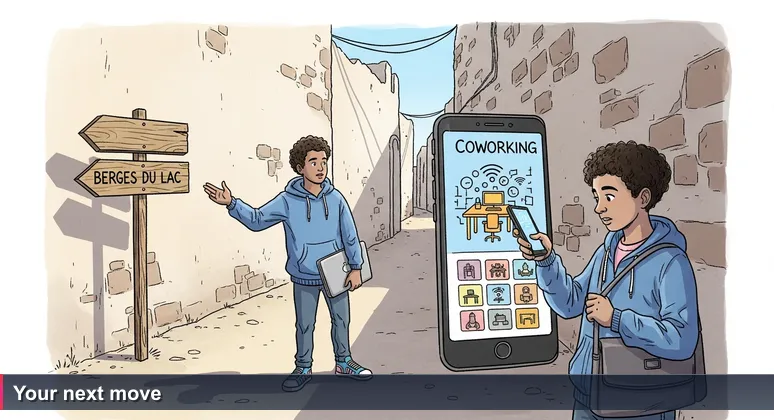
That moment - phone out, opinions divided, the calculus of light, noise, power outlets, and vibe competing in your head - is the daily ritual of every Tunisian freelancer and founder. Over 60% of Tunisia's population is under 35, and this youth-driven ecosystem has turned coworking spaces into launchpads. The Startup Act already provides AIR grants of TND 30k for proof-of-concept startups, and monthly coworking memberships range from 190-250 TND - less than a dinner out for two in Tunis.
But the right space depends on where you are: solo coder, early-stage founder burning through grants, or a team scaling toward demo day. Tunisia's operating costs remain roughly 40% below EU averages, a structural advantage the Tunisian Startup Act amplifies with social security coverage and founder stipends that no other North African ecosystem matches. This isn't just cheap rent - it's strategic leverage for teams targeting both European clients and African markets from a single base.
The problem with a ranked list is that it promises a single best answer. But the ecosystem isn't a leaderboard - it's a terrain. Cogite cultivates impact-driven community; Cobink feels like a creative home; El Ghazala offers heavy infrastructure for deep tech. According to ecosystem analysts at Mind the Bridge, Tunisia's technopark model and multilingual talent pool (Arabic/French/English) create a distinctive bridge between continents that no single space can claim. The real skill isn't choosing #1 - it's reading your own stage.
Table of Contents
- Where to Work? Navigating Tunisia's Coworking Spaces
- Cogite Coworking Space - The Heart of the Ecosystem
- GoMyCode - The Developer Factory
- Flat6Labs Tunis - The Seed-Stage Launchpad
- Westerwelle StartupHaus - The Global Passport
- El Ghazala Technopark - The National Infrastructure
- Open Startup - The Pan-African Pre-Accelerator
- Work Zone - The Business Quarter Workhorse
- Cobink Cooperative - The Creative Home
- Level 1 - The VR/AR Incubator
- CoZi Djerba - The Southern Digital Nomad Hub
- Regional Context: Tunisia vs Casablanca and Cairo
- Practical Tips for Getting the Most Out of Tunisian Coworking Spaces
- Frequently Asked Questions
Discover everything you need to know about AI jobs in Tunisia for 2026 in this detailed article.
Cogite Coworking Space - The Heart of the Ecosystem
Described by ecosystem experts as "the heart of the ecosystem," Cogite sits at the center of Les Berges du Lac, Tunis's premier business quarter. This isn't just a desk rental - it's where investors, mentors, and founders collide. The space offers fast Wi-Fi, a lush garden, a swimming pool, and soundproof phone booths, all designed for productivity-driven yet social work. User reviews on Coworker's Cogite page praise the "great space, amazing people, and efficient facilities" at a monthly rate of 200-250 TND.
For AI and machine learning professionals, Cogite's real value is community density. The space regularly hosts networking events and training sessions, making it the most likely place in Tunis to find collaborators for a Flat6Labs application or a Startup Act grant submission. Early-stage founders benefit from direct access to angel investors who frequent the premises - a shortcut that can save months of cold outreach.
Beyond amenities, Cogite operates as a central meeting point for international players entering the Tunisian market. Its location in the heart of the business quarter means you're surrounded by the banks, law firms, and government agencies that support the startup flywheel. For anyone serious about building a tech company in Tunisia, this is where the conversation starts - not because of the swimming pool, but because of the people at the tables around it.
GoMyCode - The Developer Factory
GoMyCode functions as both a coworking space and a tech bootcamp, creating an environment designed for those who write code all day and want to be surrounded by other builders. With monthly memberships from 150-200 TND, it's one of the most affordable entry points into Tunisia's developer ecosystem. The space features dedicated training rooms, a hackerspace environment, and event areas spread across multiple locations in Tunis and other cities. Their coworking page emphasizes the philosophy of "Work, Create & Belong," reflecting a dual focus on collaboration and continuous upskilling.
For AI job seekers, GoMyCode offers a distinct advantage over traditional coworking spaces: it hosts hiring events and meetups that directly connect companies with local talent. The embedded training programs mean you can upskill while working - ideal for a transitioning career into machine learning or data science. Junior developers and students benefit from peer learning loops that accelerate technical growth far faster than solitary study.
The space serves as a pipeline into Tunisia's broader tech ecosystem. Many founders who start at GoMyCode's open desks later graduate to accelerator programs at Flat6Labs or apply for Startup Act grants. For those asking "Shnuwa naamlou?" - meaning "What should we do?" in Tunisian Arabic - GoMyCode provides an answer rooted in action: build alongside others who are building, learn from those who just learned, and let the environment pull you forward.
Flat6Labs Tunis - The Seed-Stage Launchpad
Flat6Labs Tunis is not a walk-in coworking space - it's a structured accelerator program that has deployed capital into dozens of Tunisian startups since launching in partnership with BIAT Bank. Members gain access to $10k-$20k seed tickets, intensive mentorship, and investor demo days that connect founders with MENA-wide venture capital. The program is selective, requiring a founding team with a clear MVP, but the payoff is significant: alumni frequently land follow-on funding through Flat6Labs' investor network, creating a multiplier effect that bootstrapped teams rarely achieve alone.
For AI and machine learning startups targeting regional markets, this is the fastest track to institutional capital within 12 months. The program's structured curriculum covers product-market fit, fundraising strategy, and go-to-market planning - skills that early-stage technical founders often lack. As ecosystem analysts note, Flat6Labs serves as a "gateway for Tunisian startups to connect with MENA-wide investors and expertise," bridging the gap between local validation and regional scaling.
While the accelerator itself is free for accepted teams, the real investment is time and commitment. Founders should expect to dedicate three to six months to the program, attending workshops, refining pitches, and meeting investors. For those who make the cut, the network effect is undeniable: alumni stay connected, co-founders meet through cohort activities, and the BIAT Bank backing provides credibility when knocking on doors in Dubai, Cairo, or Casablanca. Mind the Bridge's analysis of Tunisia's startup ecosystem highlights how such accelerators are critical in transforming local innovation into regional exports.
Westerwelle StartupHaus - The Global Passport
Supported by the Westerwelle Foundation, this space offers structured international mentorship programs that connect members to a network spanning Berlin, Nairobi, and Tunis. Monthly dedicated desks run 220-270 TND, placing it at the premium end of Tunisian coworking, but the value lies in access rather than amenities. According to the Westerwelle StartupHaus Tunis page, the space serves as a "bridge between ecosystems" - a professional address for teams that need credibility with European partners while maintaining Tunisian cost structures.
For AI startups targeting clients in Frankfurt, Paris, or London, this is the most strategic base in Tunis. The 40% lower operating costs compared to European hubs, documented by Mind the Bridge's ecosystem analysis, mean a Tunisian team can deliver comparable quality at significantly lower burn. The prime location near diplomatic offices in central Tunis adds a layer of professional legitimacy that spaces in Berges du Lac or Centre Urbain Nord don't always project. Founders can host European clients in a setting that feels familiar while paying Tunisian rates.
The Westerwelle network is particularly valuable for teams that have already validated their product locally and need to scale internationally. Unlike community-driven spaces like Cogite or developer-focused hubs like GoMyCode, this is a space for founders who have moved beyond exploration and into execution across borders. Tunisia's proven ability to export advanced technology - highlighted by the InstaDeep exit that demonstrated Tunisian AI can compete globally - makes the Westerwelle model especially relevant for machine learning teams with international ambitions.
El Ghazala Technopark - The National Infrastructure
>Located in Ariana, El Ghazala Technopark is the state's answer to deep-tech incubation, offering infrastructure that no private coworking space can match. For startups building physical products in robotics, IoT, or smart agriculture, the on-site maker labs and research facilities provide equipment worth thousands of TND at a fraction of the cost. Monthly coworking runs just 100-150 TND, and incubated startups get access entirely free through the Elgazala Incubator's structured startup booster program, which selects 12 new startups annually for intensive support.
The technopark's unique value lies in what it offers beyond desks and Wi-Fi:
- Maker Skills lab for prototyping mechatronics and 4.0 industry technologies
- On-site research labs and academic partnerships with INSAT university
- Dedicated incubator program with mentorship from industry veterans
- Access to state-backed Startup Act grants and SOTUGAR loan guarantees
For AI teams transitioning from software-only solutions into hardware-integrated products, this is the most cost-effective base in Tunisia. The academic environment may lack the social buzz of Berges du Lac spaces, but it compensates with deep technical resources and institutional credibility. Teams working on agricultural AI with sensor networks, or industrial machine learning requiring on-site testing, will find facilities here that would cost five times more in any private coworking space across Tunis.
Open Startup - The Pan-African Pre-Accelerator
Open Startup (OST) redefines the accelerator model for Tunisian AI and fintech founders who aren't ready to relocate or commit full-time to a physical program. This remote-friendly pre-accelerator offers $20k investment tickets without requiring equity, a structure co-designed with Columbia Business School that prioritizes founder development over deal terms. The OST program page details a curriculum covering product-market fit, fundraising strategy, and global expansion planning - skills that early-stage technical founders in Tunisia often lack.
Unlike most accelerators, OST is cohort-based and online, making it accessible to founders based in Sfax, Sousse, or even Djerba who can't spend months in Tunis. The pan-African networking component is particularly valuable: Tunisian AI teams connect with peers in Nairobi, Lagos, and Accra, building relationships that pay off when targeting markets beyond North Africa. The program's broader mission of fostering innovation across Africa aligns perfectly with Tunisia's strategic position as a bridge between the continent and Europe.
For Tunisian founders whose ambition is pan-African rather than local, OST provides the most structured path to scale. The Columbia Business School connection adds credibility when pitching to international VCs later, and the zero-equity model means founders retain full ownership through the critical validation phase. In an ecosystem where InstaDeep's exit proved Tunisia can export world-class AI, OST is designed for teams that want to follow that trajectory without leaving the continent behind.
Work Zone - The Business Quarter Workhorse
Work Zone delivers what many freelancers and remote teams need most: consistency. Located in Centre Urbain Nord near Tunisie Telecom and INSAT, this space offers 24/7 access, professional meeting rooms, and a disciplined atmosphere designed for deep work. Monthly memberships run 180-220 TND, placing it mid-range among Tunisian coworking options while providing reliability that community-focused spaces sometimes lack. The Work Zone coworking page emphasizes its role as a space where creators can "exceed their own limits" through focused productivity.
The strategic location near major institutions provides practical advantages:
- Walking distance to Tunisie Telecom for reliable fiber backups
- Close proximity to INSAT university for recruiting interns or attending academic events
- In the heart of Centre Urbain Nord, Tunis's second business hub after Berges du Lac
- Nearby restaurants and cafés for client meetings outside the workspace
Users on Coworker's Work Zone page consistently praise its professional atmosphere, noting it provides a quality brand image for resident businesses. Unlike Cogite's social buzz or GoMyCode's educational focus, Work Zone offers calm and professionalism - perfect for remote employees of international companies who need silence for coding sprints, late-night debugging sessions, or video calls with European colleagues. For independent AI developers who have moved past the exploration phase and into execution, this is where the work gets done.
Cobink Cooperative - The Creative Home
Cobink Cooperative operates on a fundamentally different model from other Tunisian coworking spaces: it's a service cooperative for freelancers, meaning members share ownership and decision-making rather than just renting desks. Monthly memberships run 160-200 TND, making it one of the more affordable options while offering a bright, quiet atmosphere designed for collaboration rather than networking noise. The Cobink website describes an environment where "human connections are invaluable" - a stark contrast to the transactional feel of corporate coworking chains.
One member, Mohamed from Talentlab, credits the space with transforming his business trajectory: "Working at Cobink has changed our business altogether. The place oozes creativity and human connections are invaluable." User reviews consistently describe the atmosphere as "home and fun" while maintaining productivity - a rare balance in coworking spaces that tend to favor either social buzz or monastic silence. For independent AI consultants or small teams working on niche projects, the cooperative model fosters stronger bonds than anonymous open plans.
For bootstrapped founders who are past the grant-seeking phase and need a sustainable workspace, Cobink offers a compelling alternative to the premium-priced Berges du Lac spaces. The lower price point doesn't sacrifice quality - rather, it reflects the cooperative's lean structure where members share costs directly. This model also gives freelancers a voice in space decisions, from layout changes to event programming, creating an environment that evolves with the community rather than being imposed from above.
Level 1 - The VR/AR Incubator
Level 1 stands alone in Tunis as the only coworking space with a dedicated VR/AR Fablab integrated into its workspace. Monthly memberships run 170-210 TND, placing it competitively while offering equipment that would cost thousands of dinars to acquire independently. The space also operates as an open innovation incubator for young entrepreneurs, providing free coffee and snacks alongside soundproof phone booths for client calls. User reviews on Coworker's Level 1 page describe it as "a very nice and calm place that really boosts creativity," with everything needed to work productively.
The XR startup scene in Tunisia is growing rapidly, and Level 1 provides the infrastructure to support it. For founders building AI applications that interact with 3D environments - such as digital twins for manufacturing, immersive training for healthcare, or AR interfaces for retail - this space eliminates the barrier of expensive hardware acquisition. The Fablab includes VR headsets, motion capture equipment, and 3D modeling workstations that teams can use during their membership without additional fees.
Beyond the hardware, Level 1's incubator program connects immersive tech founders with mentors who understand both the technical and market challenges specific to XR. The space regularly hosts workshops on Unity development, 3D asset creation, and mixed reality prototyping - skills that generalist coworking spaces cannot support. For AI teams whose work intersects with computer vision, spatial computing, or simulation environments, this is the most strategically aligned workspace in the Tunis metropolitan area.
CoZi Djerba - The Southern Digital Nomad Hub
CoZi shatters the Tunis-centric mold of Tunisia's startup ecosystem by offering a coworking and coliving hub in Houmt Souk, Djerba. Monthly coworking memberships run just 140-180 TND, making it the most affordable option on this list, with coliving packages available at a premium for those who want accommodation included. The space emphasizes a philosophy of "Live, Work & Build" in Djerba, as described on the CoZi website, creating a rare alternative for entrepreneurs who don't want to relocate to the capital.
For AI freelancers who can work remotely, Djerba offers a compelling value proposition: significantly lower living costs than Tunis, reliable internet infrastructure, and a community of like-minded digital nomads. The coliving model means spontaneous collaboration happens naturally - over breakfast, by the pool, or during evening community events that the space organizes regularly. Beach proximity adds a lifestyle benefit that no Berges du Lac or Centre Urbain Nord space can match, making it ideal for those who structure their work around deep focus blocks rather than rigid office hours.
Industry observers have noted that CoZi serves as a "dynamic hub offering coliving and coworking, ideal for digital nomads and southern Tunisian entrepreneurs." This southern outpost is particularly valuable for founders building AI solutions for agriculture, tourism, or logistics in Tunisia's southern regions - use cases that require understanding of local contexts that Tunis-based teams might miss. As Tunisia's ecosystem matures, spaces like CoZi prove that world-class remote work infrastructure doesn't require a capital-city address.
Regional Context: Tunisia vs Casablanca and Cairo
| Dimension | Tunis | Casablanca | Cairo |
|---|---|---|---|
| Monthly coworking (open desk) | 190-250 TND | 350+ TND equivalent | 350+ TND equivalent |
| Startup Act support | Yes - AIR² grants up to TND 200k | Limited - no equivalent | Limited - no equivalent |
| Primary languages | Arabic/French/English | Arabic/French | Arabic/English |
| Key investor gateways | Flat6Labs, BIAT Bank, SOTUGAR | Moutamara, CDG Invest | Sawari Ventures, A15 |
Tunisian coworking spaces average 30-40% cheaper than comparable spaces in Casablanca and Cairo, where monthly memberships often exceed 350 TND equivalent. This cost advantage stems from two factors: the Tunisian Startup Act keeping operating costs low for coworking operators, and lower real estate prices across the Tunis metropolitan area. For AI teams bootstrapping on AIR grants of TND 30k, that price gap means months of additional runway.
While Cairo's ecosystem (The GrEEK Campus, The District) is larger by volume, Tunisian spaces offer higher member-to-amenity density. Cogite's swimming pool and garden, for instance, have no equivalent at comparable price points in Casablanca or Cairo. In terms of investor access, Casablanca has deeper pockets via funds like Moutamara, but Tunis offers simpler regulatory pathways - including AIR² grants of TND 200k for seed-stage companies and SOTUGAR loan guarantees that give Tunisian founders financial leverage neither competitor matches.
The language advantage is subtle but significant for AI teams targeting both Europe and Africa. Tunisian coworking spaces operate trilingually (Arabic, French, English), while Cairo spaces are primarily Arabic/English and Casablanca spaces are French/Arabic. This trilingual capacity reflects Tunisia's strategic position as a bridge between continents - a position the Mind the Bridge analysis identifies as a core competitive advantage for the country's startup ecosystem.
Practical Tips for Getting the Most Out of Tunisian Coworking Spaces
Getting maximum value from Tunisia's coworking ecosystem requires intentionality, not just a monthly payment. The Startup Act's AIR grants of TND 30k can cover coworking for over 10 months at most spaces, making the financial barrier minimal for founders who qualify. The real investment is time and strategic presence - knowing which space serves which phase of your journey.
- For early-stage startups (pre-revenue): Spend your first month at a community-heavy space like Cogite or GoMyCode. The goal is finding co-founders, beta testers, and first customers - not saving on rent. After validating your idea, transition to an accelerator like Flat6Labs or OST for structured support and funding.
- For independent AI developers: Choose Work Zone or Cobink if you need silence and reliability. Choose GoMyCode if you need collaboration and learning. Match the space to your current project phase - deep focus versus serendipitous learning.
- For remote employees of international companies: Treat coworking spaces as networking hubs, not just offices. Spend one day per week at a different space. Use events calendars to meet local founders and engineers - this is how you discover job openings and contract opportunities.
- For scaling teams (5+ people): Consider a dedicated desk block at Cogite or Westerwelle StartupHaus. The premium of 250-300 TND/person/month is worth the visibility with investors and partners who frequent these flagship spaces.
- For job seekers: Coworking spaces are the best source of hidden AI job opportunities in Tunisia. Many startups hire informally - from a conversation at the coffee machine. Attend at least two open events per month across different spaces, and always carry a digital business card with your LinkedIn and GitHub profile.
The ecosystem rewards those who move deliberately between spaces. As the Cogite community demonstrates, the most valuable connections often happen not at your desk but during the networking breaks, workshop sessions, and chance encounters that define Tunisia's coworking landscape. Choose your terrain, then work it strategically.
Frequently Asked Questions
Which coworking space in Tunisia is best for AI startups?
For AI startups, Cogite Coworking Space offers the strongest community density and networking with investors, while El Ghazala Technopark provides free incubation and maker labs for hardware-focused AI. Flat6Labs and Open Startup are top choices if you need seed funding, with tickets from $10k to $20k.
How much do coworking spaces in Tunisia cost compared to other countries?
Monthly coworking memberships in Tunisia range from 140 to 270 TND, which is 30-40% cheaper than comparable spaces in Casablanca or Cairo. This cost advantage is partly due to the Startup Act keeping operating costs low.
Are there any free coworking spaces or incubator programs in Tunisia?
Yes, Flat6Labs and Open Startup offer free, selective accelerator programs that include seed funding and mentorship. El Ghazala Technopark also provides free incubation with lab access for selected startups, while basic coworking there starts at just 100-150 TND/month.
What is the best option for remote workers in Tunisia?
For reliable 24/7 access and professionalism, Work Zone in Centre Urbain Nord is ideal. If you prefer a vibrant community with networking, Cogite or GoMyCode are better choices. For digital nomads in southern Tunisia, CoZi in Djerba offers affordable coliving plus coworking from 140 TND/month.
How can I get funding through an incubator like Flat6Labs?
Flat6Labs Tunis runs a selective accelerator for scalable startups with an MVP, providing $10k-$20k seed tickets and mentorship. Apply during open calls, backed by BIAT Bank, and if selected you join a program culminating in demo days with MENA investors.
Discover the best internships and entry-level jobs in Tunisia for 2026.
Explore the Tunisia tech salary and cost of living comparison for 2026.
Discover the path to becoming an AI engineer in Tunisia in 2026.
Discover the top 10 highest paying tech companies in Tunisia for 2026.
Discover which Tunisian AI startups are winning in funding and impact.

Irene Holden
Operations Manager
Former Microsoft Education and Learning Futures Group team member, Irene now oversees instructors at Nucamp while writing about everything tech - from careers to coding bootcamps.