









Top 10 AI Startups to Watch in Tunisia in 2026
By Irene Holden
Last Updated: April 25th 2026
Too Long; Didn't Read
Tunisia's AI ecosystem has exploded since InstaDeep's $682 million exit, with over 120 new startups and 1,450 companies now benefiting from the Startup Act. Addvocate.AI leads the pack with its AI-native sales platform backed by 216 Capital, while Wattnow's hardware-agnostic energy optimization is expanding into the GCC. These startups showcase Tunisia's unique blend of multilingual talent and strategic location between Europe and Africa.
html
The film editor’s dilemma

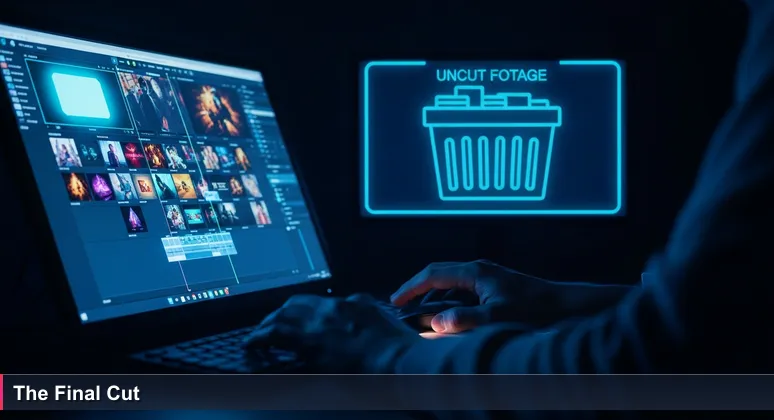
Picture a film editor in a dimly lit room, surrounded by reels of uncut footage. Hours of raw material — some brilliant, some flawed — must be whittled down to a single narrative. That is the reality behind every ranked list, including this one. Tunisia’s AI ecosystem has exploded since InstaDeep’s landmark $682 million exit to BioNTech in 2023, spawning over 120 new AI startups and cementing the country’s position as Africa’s deep-tech hub. The Startup Act has now labeled more than 1,450 companies across the country, from the El Gazala technopark in Tunis to emerging hubs in Sfax and Sousse.

Signal over noise

This list is not a declaration of winners. It is a curated snapshot of momentum — where capital is flowing, which problems founders are solving, and how Tunisia’s unique blend of multilingual talent, strategic location between Europe and Africa, and government incentives is producing startups ready to scale. Every startup here represents a scene in a larger story; the ones that didn’t make the cut may well define the next act. Tunisia now ranks among the top five African countries for deals involving female founders (27% of deals), a sign of genuine depth beyond the usual suspects.

Map, not verdict

For aspiring AI engineers and entrepreneurs reading this in Tunis, Sfax, or Sousse, the message is clear: the raw footage is there — talent, policy support, and a strategic window between two continents. Use this list as a map, not a verdict. Your job is to direct the next scene.
``
Table of Contents
- Tunisia's Deep-Tech Revolution
- OORB
- MedCity
- Kamioun
- CureBionics
- 216Bot
- Enova Robotics
- Optimalogistic
- ClusterLab
- Wattnow
- Addvocate.AI
- Beyond the Final Cut
- Frequently Asked Questions
Discover everything you need to know about AI jobs in Tunisia for 2026 in this detailed article.
OORB
html
The Replit for robotics

Building and testing robotics software remains painfully slow and fragmented. Most engineers waste hours configuring environments before writing a single line of code. OORB (Open Organic Robotics) tackles this with OORB Studio, a browser-based development environment for ROS2 (Robot Operating System 2). Think of it as Replit for robotics: instant setup, collaborative editing, and cloud-based simulation—all accessible from a laptop. The platform eliminates the need for expensive local infrastructure and enables teams to iterate at speed.

Deep-tech from Sousse

What sets OORB apart is its open-source ethos in a space dominated by heavy desktop IDEs and closed ecosystems. The founding team—Kayoum, Bassem, and Azer—hails from the Sousse technopark, which hosts world-class engineering schools like ENIS and offers proximity to manufacturing zones. This location provides a steady pipeline of robotics talent and potential beta testers from local automotive and logistics companies already eyeing European markets.

OORB raised $100k (~315k TND) from Maza Ventures in 2024 and is onboarding beta users across Tunisian universities. The team reports early interest from automotive and logistics firms in Europe. According to the company’s F6S profile, the roadmap includes AI-powered code generation and automatic debugging for ROS2 nodes. If OORB Studio gains traction with open-source communities, it could become the standard developer tool for a generation of robotics engineers across North Africa and the Middle East.
``
MedCity
html
Predictive scheduling for North African healthcare

Healthcare providers across Tunisia and North Africa grapple with no-show patients, inefficient appointment systems, and manual triage that inflates wait times. MedCity, based in the Sfax technopark, addresses these pain points with an AI-powered management platform. Its Predictive Scheduling engine analyzes patient history and seasonal patterns to forecast cancellations, enabling clinics to overbook intelligently. An AI triage assistant then directs patients to the right specialist based on symptom analysis, cutting administrative overhead by an estimated 30%.

A perfect testbed in Sfax

Sfax is Tunisia’s second-largest city and a major medical hub, hosting several university hospitals and a dense concentration of private clinics. This environment gives the founding team—Yassin Guirat and Ala Eddine—direct access to clinical workflows and regulatory nuances. The startup raised approximately 50k TND from local angel investors and is now deployed in six private clinics in Sfax and Tunis, with plans to expand to pharmacies and labs in 2026. According to the company’s F6S profile, the platform is purpose-built for the fragmented private healthcare market unique to the region.

From local clinics to regional scale

MedCity is well positioned to become the dominant healthtech platform in Tunisia’s private sector. With the government’s push for digital health under the Tunisie Numérique strategy, public-sector contracts are a natural next step. Wamda’s analysis of the Tunisian ecosystem notes that healthtech startups in Sfax benefit from a unique mix of medical expertise and engineering talent. Expansion into Libya and Algeria—where healthcare infrastructure mirrors Tunisia’s—could follow, making MedCity a regional player in AI-driven care management.
``
Kamioun
html
Digitizing the hanout

Tunisia’s retail backbone isn’t supermarket chains—it’s the hanout, the small corner shop that accounts for over 70% of consumer goods sales in the country. These shopkeepers order inventory by intuition, leading to chronic stockouts and wasted shelf space. Suppliers, meanwhile, operate blind to real-time demand. Kamioun bridges this gap with an AI-powered ordering and inventory platform that predicts demand based on historical sales, weather patterns, and local events, then recommends optimal orders for each shop.

Built for informal retail

Unlike B2B e-commerce platforms that target modern trade, Kamioun is purpose-built for the informal sector. Founder Fares Belhassen previously worked in FMCG distribution and understands the pain points of both the hanout owner and the wholesaler. The platform not only optimizes inventory but also provides suppliers with financial transparency, reducing the float in the supply chain. According to the company’s F6S profile, this dual-sided approach creates a flywheel: better data for suppliers, better stock availability for shopkeepers.

From Tunis to Casablanca

Bootstrapped initially, Kamioun has started pilot deployments in the Greater Tunis area and is exploring partnerships with major distributors like a local partner of Nestlé and Sodiaal. If it reaches critical mass in Tunis, the model has a clear path to replicate across North Africa, where similar hanout-style retail dominates from Casablanca to Cairo. Wamda’s analysis of Tunisia’s retail technology landscape notes that the platform could eventually layer fintech services—such as micro-loans for inventory—unlocking a high-margin revenue stream that rivals the core product in value.
``
CureBionics
html
Affordable bionics for the developing world

Prosthetic limbs remain out of reach for most people in developing markets, with traditional bionic devices costing tens of thousands of dollars and insurance coverage severely limited. CureBionics is changing that equation. The startup designs 3D-printed bionic prosthetic arms that use computer vision and AI to decode muscle signals from the wearer’s residual limb, enabling natural, intuitive movement at a fraction of imported prices. The result rivals top-tier prosthetics while targeting a price point that could reach millions who currently go without.

From Sousse engineering labs to FDA recognition

Founded by Mohamed Dhaouafi in Sousse, CureBionics leverages local 3D-printing infrastructure and AI software developed at the city’s engineering labs. The startup has already secured FDA Fast Track status—a rare achievement for a Tunisian hardware startup—and customizes each prosthetic using scan-to-print automation that adapts to a patient’s unique anatomy. According to the Startup Genome Tunisia ecosystem report, this combination of local R&D and regulatory momentum positions CureBionics as a standout in the region’s growing healthtech cluster.

Scaling to meet 30 million people in need

Supported by the World Bank-backed Flywheel program and various regional innovation grants, CureBionics is deploying devices in Tunisia and has begun clinical trials in Jordan and Kenya. The global addressable market is staggering: an estimated 30 million people in low- and middle-income countries require prosthetics but cannot afford them. A MIT Sloan research analysis notes that if CureBionics can scale production to hundreds of units per year while maintaining quality, it could attract impact investors or a strategic acquisition by a larger medtech player seeking access to emerging markets.
``
216Bot
html
From fragmented tools to a unified agentic brain

Businesses across the MENA region juggle a dizzying array of software tools—CRM, ERP, marketing automation—that rarely integrate well. The result is wasted hours swimming between interfaces and data silos that block visibility. 216Bot attacks this fragmentation with a generative AI platform it calls the Agentic Brain: it creates autonomous AI personas capable of handling entire business processes end-to-end. The core innovation is code-switching—the AI seamlessly mixes Arabic, French, and English, including Tunisian Darija, Egyptian Arabic, and Lebanese Arabic, alongside European languages.

Sovereign AI as a differentiator

Most enterprise AI assistants are either English-only or handle Arabic in a clumsy, formal dialect that misses cultural nuance. 216Bot’s agents understand how real people speak in the region, which matters enormously for customer service, compliance, and user trust. The company also emphasizes sovereign AI: data stays within the region, a critical requirement for government and banking clients facing tightening data residency regulations. The startup’s name itself honors Tunisia’s international dialing code (+216), a statement of national pride and local commitment.

Validated in banking, targeting telecom

Founded by Ahmed and Mohamed, the team has built a working prototype deployed in two Tunisian banks for customer service triage, and is currently closing a seed round from local VC firms (amount undisclosed). As regional regulations tighten around data residency, 216Bot’s sovereign approach becomes a strong differentiator. If the startup lands a major telecom operator as a client—such as Ooredoo or Orange Tunisia—it will validate the model for the entire MENA market. According to an analysis of Arabic NLP trends in Tunisia, the demand for multi-dialect AI is surging as enterprises realize that one-size-fits-all models trained on English data simply don’t work in this region.
``
Enova Robotics
html
Security patrols at large industrial sites, logistics hubs, and commercial compounds remain stubbornly labor-intensive and error-prone. Guards tire, miss details, and cost exponentially more over time. Enova Robotics replaces this human-in-the-loop model with autonomous security robots like its flagship PearlGuard, which uses computer vision, LiDAR, and thermal cameras to patrol autonomously, detect intrusions, and alert human operators in real time. The result: 24/7 vigilance at a fraction of recurring manpower costs.

Full-stack robotics from Tunis

What makes Enova stand out in the MENA region is its in-house full-stack capability - hardware design, embedded AI, and software integration all under one roof. Co-founder Anis Sahbani, a former researcher at Sorbonne University, brings deep expertise in perception and motion planning. The robots are assembled in Tunis, drawing on the engineering talent pool from ENIT (École Nationale d’Ingénieurs de Tunis). This vertical integration allows the company to iterate quickly and maintain tight quality control, unlike competitors who piece together off-the-shelf components.

From GCC contracts to agricultural expansion

Enova has already secured significant export contracts in the GCC, including deployments at logistics parks in Dubai and Riyadh. The startup is supported by Startup Tunisia and various regional VCs. As smart city initiatives accelerate across the Gulf and North Africa, demand for autonomous security is surging. Enova could expand into warehouse inventory scanning or agricultural monitoring. According to iCreativez’s ranking of top Tunisian AI companies, Enova is a pioneer in the regional robotics space. With a strong IP portfolio, acquisition by a global security or robotics integrator is a plausible exit within 3-5 years.
``
Optimalogistic
html
Cross-border trade between North Africa and Sub-Saharan Africa is a logistical nightmare. Long delays, poor visibility, and spiraling costs plague shipments moving through the Trans-Saharan corridor, where infrastructure is unreliable and customs paperwork complex. Most logistics platforms dodge this challenge, focusing on last-mile delivery within single countries. Optimalogistic takes the harder road: it uses AI to optimize multimodal transport across borders, connecting Tunisia to major African hubs like Abidjan, Lagos, and Dakar. The platform consolidates shipments, predicts customs clearance times, and reroutes around delays in real time.

A team built for the long haul

The founding team—Maher, Souhir, and Chaima—brings combined expertise in supply chain management and data science, exactly the blend needed for this complex domain. Unlike platforms that focus on single-country last-mile delivery, Optimalogistic solves the much harder problem of long-haul freight where every crossing introduces new variables. According to an analysis of the MENA startup ecosystem, this focus on cross-border trade aligns with the region’s push to establish North Africa as a logistics bridge between Europe and the rest of the continent.

Piloting the Silk Road of Africa

The startup raised $157k (~495k TND) from Kepple Africa Ventures and other investors. Its platform is already live on the Tunis-Abidjan corridor and is piloting routes to Dakar and Lagos. If the African Continental Free Trade Area (AfCFTA) gains real traction, demand for such cross-border optimization will skyrocket. Optimalogistic could also evolve into a data pipeline for trade finance, offering risk assessment tools to banks lending against in-transit goods. Techpoint Africa notes that post-InstaDeep, Tunisian startups are increasingly targeting pan-African supply chain problems—and Optimalogistic is well positioned to deliver the last mile across borders.
``
ClusterLab
``html
The Arabic LLM gap
Global models like GPT-4 and Claude perform poorly on Arabic dialects and lack cultural nuance, making them unreliable for customer-facing applications across the MENA region. ClusterLab is filling this void by developing Large Language Models (LLMs) specifically trained on Arabic variants—Maghrebi, Levantine, and Gulf. The models excel at sentiment analysis, text classification, and conversational AI in Arabic, addressing a pain point that enterprises in banking, telecom, and e-commerce feel acutely.
A vote of confidence from InstaDeep
Founded by Haithem Kchaou and Chehir Dhaouadi, ClusterLab emerged directly from the post-InstaDeep wave of AI talent that has reshaped Tunisia’s deep-tech landscape. The startup raised $600k (~1.9M TND) in a pre-seed round led by none other than InstaDeep’s CEO, Karim Beguir—a powerful endorsement that signals ecosystem-level belief in the bet. According to Wamda’s reporting on the round, the company’s focus on open-source models aligns with the global push for AI sovereignty and provides a credible alternative to closed, English-first offerings.
Targeting an underserved market
The Arabic NLP market is massive and remains underserved. Competitors like Egypt’s WideBot AI have already raised $3M pre-Series A, validating the space. ClusterLab has released a small-scale benchmark model and is working on a 7B-parameter Arabic LLM targeting enterprise deployments. As Techpoint Africa notes, the startup’s connection to InstaDeep’s network could unlock strategic partnerships with telecom operators across Tunisia and Morocco. If it delivers a truly competitive Arabic LLM, ClusterLab becomes an attractive acquisition target for global cloud providers eager to enter the MENA market.
``
Wattnow
``code
The energy waste crisis
Industrial and commercial buildings across the MENA region squander up to 30% of their energy consumption, largely due to outdated monitoring systems and reactive maintenance practices. As energy subsidies phase out across Tunisia and electricity costs climb, this waste is no longer just an environmental issue - it is a direct hit to the bottom line. Wattnow addresses this head-on, combining IoT sensors with machine learning to deliver real-time energy insights and predictive maintenance that cut waste and prevent costly equipment failures.
Hardware-agnostic and ready to scale
What sets Wattnow apart in a crowded market is its hardware-agnostic platform: it works with any existing meter or sensor, dramatically lowering the barrier to adoption for industrial clients with legacy equipment. Founder Issam Smaali brings a background in both engineering and environmental technology, ensuring the solution is practical for factory floors, not just boardroom presentations. The platform also provides anomaly alerts, optimization recommendations, and demand forecasting - turning raw data into actionable decisions.
Wattnow closed a multi-million dollar round in late 2024 led by Lateral Frontiers and 216 Capital. It is already deployed across multiple industrial sites in Tunisia, including factories in the El Ghazala zone, and is actively expanding into the GCC. According to the StartupBlink Tunisia ecosystem report, Wattnow is one of the most promising climate-tech startups in the region, capitalizing on rising energy costs and tightening ESG mandates. With the right utility partnerships, the company could introduce demand-response services that generate recurring revenue and accelerate the energy transition across North Africa.
``
Addvocate.AI
html
Reinventing B2B sales intelligence
B2B sales teams still waste hours on manual data entry, call preparation, and post-meeting follow-ups. Traditional CRM systems remain passive data repositories, offering no guidance in the moment. Addvocate.AI flips this model with an AI-native Sales Performance platform that consolidates data from emails, calendars, and CRM to deliver real-time behavioral nudges and personalized meeting insights. Before a call, the AI briefs the rep on the prospect’s history and suggests talking points; after the meeting, it automatically logs action items and updates the pipeline—turning a CRM into an active coach.

Built for the mid-market gap
Founded in 2024 by Ridha Mami and Sofyan Chekir—both veterans of international B2B software companies—Addvocate.AI is vertical-first, designed for complex, high-value sales cycles in SaaS, fintech, and professional services. Unlike global giants like Gong and Chorus that target enterprise budgets, Addvocate focuses on the underserved mid-market in Europe and MENA with pricing 40-60% lower than incumbents. This pricing wedge, combined with deep local expertise, creates a clear path into a market that larger players overlook. According to The SaaS News coverage of its funding, the company deliberately leverages Tunisia’s position as a talent bridge between European clients and local engineers.

Seed funding and regional expansion
In September 2025, Addvocate.AI secured a strategic Seed investment from 216 Capital, a Tunisian VC with deep ties to the regional tech ecosystem. The startup is currently onboarding pilot customers in France and the UAE, and plans to double its engineering team in Tunis by the end of 2026. If the platform demonstrates strong ROI for early adopters, it will attract follow-on funding for aggressive sales expansion. An exit to a larger CRM ecosystem (Salesforce, HubSpot, Zoho) within 5-7 years is a realistic scenario, making Addvocate one of the most capital-efficient bets in Tunisia’s post-InstaDeep wave.
``
Beyond the Final Cut
html
This list of ten startups represents less than 10% of the AI-driven companies now operating in Tunisia. For every ClusterLab, there are a dozen other teams building Arabic NLP models. For every CureBionics, there are healthtech startups tackling medical imaging or tele-diagnosis. The Startup Act has now labeled more than 1,450 companies across the country, from the El Gazala technopark in Tunis to emerging hubs in Sfax and Sousse. The ecosystem's depth, not its highlights, is the real story.

What the list reveals is a pattern: the Tunisian AI ecosystem is no longer a single-story tale of a crown jewel like InstaDeep. It is a dense, multi-faceted landscape where capital is flowing into vertical AI (sales, logistics, energy, health), where hardware startups are emerging from engineering schools, and where the government’s policy incentives are creating a regulatory sandbox for experimentation. As Startup Genome notes in its Tunisia ecosystem report, the country now ranks among the top five African nations for venture deals involving female founders, signaling a broadening of the talent base beyond the usual suspects.

For aspiring AI engineers and entrepreneurs reading this in Tunis, Sfax, or Sousse, the message is clear: the raw footage is there—talent, policy support, and a strategic window between Europe and Africa. Stop looking for a definitive ranking. Use this list as a map of momentum. Your job is to direct the next scene.
``
Frequently Asked Questions
How were the startups on this list selected and ranked?
Rankings are based on traction (funding, deployments), uniqueness of the solution, team strength, and alignment with Tunisia's strategic advantages - multilingual talent, government support via the Startup Act, and location between Europe and Africa. It's a curated snapshot of momentum, not a strict hierarchy, with each startup representing a key trend in the ecosystem.
Which of these Tunisian AI startups has the highest growth potential for investors?
Addvocate.AI stands out with its AI-native sales platform targeting the underserved mid-market in Europe and MENA, priced 40-60% below incumbents like Gong. ClusterLab also shows strong potential, backed by InstaDeep’s CEO and addressing the massive Arabic NLP market with a $600k pre-seed round.
What AI sectors are strongest in Tunisia based on this list?
The list reveals strength in vertical AI for enterprise sales (Addvocate.AI), Arabic NLP (ClusterLab), energy optimization (Wattnow), logistics (Optimalogistic), and healthcare (MedCity, CureBionics). Robotics and retail tech also emerge, showing a diversified landscape beyond the post-InstaDeep wave.
How can I get a job at one of these AI startups in Tunis or Sfax?
Focus on building skills in AI/ML, cloud engineering, or Arabic NLP, and attend events at technoparks like El Gazala in Tunis or the Sousse hub. Many startups (e.g., 216Bot, OORB) prioritize local talent from ENIT or ENIS; follow their LinkedIn pages for openings and contribute to open-source projects to stand out.
How does Tunisia's Startup Act help these AI companies grow?
The Startup Act provides tax breaks, fast-track incorporation, and access to public procurement for over 1,450 labeled companies (as of 2026). It creates a regulatory sandbox that enables startups like OORB and MedCity to experiment with AI in sectors like robotics and health without heavy bureaucratic overhead.
Discover the path to becoming an AI engineer in Tunisia in 2026.
This ranking of free tech training at libraries and community centers in Tunisia helps you choose the right program.
Your guide to AI conferences and hackathons in Tunisia - all in one place.
This comprehensive guide to Tunisia's 2026 tech salary landscape explains everything.
Don't get lost in the fog; this complete guide to AI salaries in Tunisia shows you the real path.

Irene Holden
Operations Manager
Former Microsoft Education and Learning Futures Group team member, Irene now oversees instructors at Nucamp while writing about everything tech - from careers to coding bootcamps.