









AI Meetups, Communities, and Networking Events in Tunisia in 2026
By Irene Holden
Last Updated: April 25th 2026
Key Takeaways
Tunisia's AI community in 2026 is thriving, with over 3,000 attendees at AI Days Tunisia and 500+ startups under the Startup Act, but the key is knowing where to look. This guide maps the top entry points - from the Tunisian AI Society's academic masterclasses to hands-on meetups in Sfax and Sousse - so you can quickly find your tribe and accelerate your career, with active networkers seeing 30-50% higher salaries.
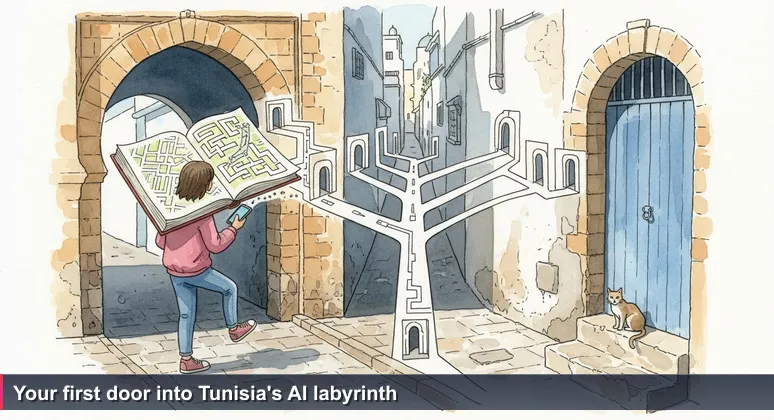
You stand at Bab el Bahr, one foot in the Ville Nouvelle, the other reaching toward the ancient medina. Late afternoon light splits the archway; to your right, broad French boulevards and tram lines. Ahead, a thousand narrow corridors twist into shadow. This is exactly what it feels like to enter Tunisia's AI community for the first time. An overwhelming abundance of possibility - and no map. Hundreds of events, dozens of groups, multiple languages. But here's what the medina teaches: the best carpets are never on the main street. The master craftsman works three alleys deep. And no sign points the way.
Tunisia's AI ecosystem in 2026 is rich, real, and ready for you. The AI Days Tunisia community alone draws thousands of participants annually, with dedicated developer tracks for OpenAI and Hugging Face alongside startup showcases and mentorship sessions. According to event organizers, the gathering functions as "a unique space for conference updates, networking, workshops, and startup showcases - with experts from around the world." Yet the average data science graduate from Université de Tunis El Manar or Sup'Com still feels invisible, unsure where to find the signal amid the noise.
The problem isn't supply - it's wayfinding. Tunisia has 500+ AI startups operating under the Startup Act, a government framework providing tax breaks, visa support, and funding access. The National AI Strategy 2026-2030 prioritizes digital infrastructure and skill development, backed by the Ministry of Communication Technologies. El Gazala Technopark alone hosts dozens of AI-focused labs and incubators, with growing satellites in Sfax and Sousse. But the real treasure isn't in official strategy documents. It's in the WhatsApp threads, the after-workshop coffees at Novation City, the midnight hackathon teams forming in Sup'Com hallways. You just need to know where the doors are.
This guide is your first trusted guide through the labyrinth. Your only job this year is to find one door. Once you do, the community will show you the rest.
In This Guide
- The Labyrinth Opens
- Why Tunisia? The Numbers Behind the Hype
- The Gateways - Core AI Communities
- The Academic Alleys - University Events
- The Major Conferences - Flagship Events in 2026
- The Regional Nodes - Sfax and Sousse
- The Hidden Doors - Online Communities
- The Introvert's Playbook - How to Network
- From Networking to Career - The Real ROI
- The Monthly Calendar - Your 2026 Roadmap
- Tunisia vs. Regional Hubs - Where You Stand
- The Government's Role - Why It Matters
- Common Pitfalls - What to Avoid
- Your First 30 Days - An Action Plan
- Conclusion: The Labyrinth Has a Heart
- Frequently Asked Questions
Discover everything you need to know about AI jobs in Tunisia for 2026 in this detailed article.
Why Tunisia? The Numbers Behind the Hype
Before you navigate the alleys, understand why this matters. Tunisia has quietly built one of Africa's most promising AI landscapes. The numbers speak clearly: 3,000+ participants attend the AI Forward Summit annually, the country's largest AI community festival. More than 500 AI startups now operate under the Startup Act, a government framework that provides tax breaks, visa support, and funding access. The National AI Strategy 2026-2030 prioritises digital infrastructure and skill development, backed by the Ministry of Communication Technologies. El Gazala Technopark alone hosts dozens of AI-focused labs and incubators, with growing satellites in Sfax and Sousse.
But the real weight comes from official recognition. Sofiane Hmissi, Tunisia's Minister of Communication Technologies, stated that the country is "well positioned to play a leading role in the Mediterranean, Arab, and African regions" in AI, citing strong human capital and a vibrant university ecosystem. This isn't mere political rhetoric - the Startup Act has catalysed a self-reinforcing cycle where registered startups sponsor community events, providing food, venues, and prizes. The community builds talent, talent builds startups, and startups fund the community.
These aren't abstract figures. The Mediterranean AI Forum (DiMed), scheduled for November at the Cité de la Culture, unites 600+ companies, startups, and investors across the Mediterranean. The IndabaX Tunisia hackathon - a local chapter of the pan-African Deep Learning Indaba - regularly produces teams that compete regionally. Meanwhile, programs like Experience AI by Amideast and Google DeepMind are training Tunisian educators to introduce AI foundations to students aged 11-14, ensuring the pipeline flows from secondary school to startup.
The Gateways - Core AI Communities
Every labyrinth has a few well-known gates. Here are the four essential entry points into Tunisia's AI scene in 2026.
1.1 AI Days Tunisia - The Festival That Connects Everything
This is Tunisia's largest AI community gathering, drawing 3,000+ participants annually. Organizers describe it as "a unique space for conference updates, networking, workshops, and startup showcases - with experts from around the world." The event features developer tracks for OpenAI and Hugging Face, plus startup showcases and mentorship. Join the AI Days Tunisia Facebook Group for updates and calls for ambassadors. Practical tip: volunteer as an ambassador - this gets you behind the scenes and connects you directly with speakers and organizers, bypassing the initial awkwardness of a crowd.
1.2 Tunisian AI Society (TAIS) - The Academic Backbone
TAIS brings together academics from Université de Tunis El Manar, Université de Carthage, and international labs. Their mission: "reduce the gap between local and international training" through spring/summer schools, masterclasses, and webinars. If you're a student or early-career researcher, this is your bridge to global standards. Visit the Tunisian AI Society website for their full calendar. The informal networking during coffee breaks often leads to thesis collaborations and PhD opportunities abroad.
1.3 AI Builders in Tunisia - For Practitioners Only
This group is for people who build, not just talk. Topics include advanced AI architectures, production deployment, and real-world project collaboration. Register via their Meetup.com page. Practical tip: come with a project you're stuck on - the format emphasizes collaborative problem-solving. If you're a mid-level data scientist at Vermeg or a backend developer at Ooredoo looking to move into ML, this is your tribe.
1.4 AI Community Days (AICD) Tunis
Scheduled for May 8, 2026 at the Marriott Hotel in Tunis, this event features Microsoft MVPs and deep dives into Generative AI and ethical AI. Attendees describe it as "a vibrant and passionate tech community" focused on peer-to-peer learning. Tickets are available on Eventbrite. Practical tip: bring business cards and practice your elevator pitch - many participants land consulting gigs and job offers directly at this event.
The Academic Alleys - University Events
The best gateways aren't always public. Tunisia's universities host high-quality events that outsiders often miss, and these offer a low-pressure entry point for students and early-career researchers.
GDG on Campus - Your Local Tech Dojo
Google Developer Groups at FST (Faculty of Sciences of Tunis) and Sup'Com run regular hands-on workshops. Recent events include "Creating Your First AI Chatbot: From Concept to Deployment" and the "AI Odyssey Hackathon." University events are more forgiving than large conferences - you can ask "stupid" questions without judgment. The students running these chapters are often future founders and team leads at local startups. Check the GDG on Campus FST event page for upcoming schedules.
IndabaX Tunisia - The Local Deep Learning Indaba
Organized by the IEEE Sup'Com Student Branch, this local chapter of the pan-African Deep Learning Indaba features a two-day program with keynotes and an intense hackathon. Winning or even participating puts you on a radar that extends from Dakar to Nairobi. Practical tip: form your hackathon team weeks in advance using the event's Facebook group. The best teams include a mix of coders, domain experts, and storytellers. Visit the IndabaX Tunisia official site for details on the next edition.
Tunisians in Neuroscience and AI (TuNA)
Launched in 2024, this niche community connects students and professionals in overlapping fields like neuro-symbolic AI, brain-computer interfaces, and cognitive modeling. Find their full event schedule at the TuNA community page. If you're interested in the intersection of brain science and machine learning, this is your dedicated alley - small but deeply connected to international labs.
The Major Conferences - Flagship Events in 2026
These are the big gatherings - the annual souqs where the entire ecosystem converges. Each offers a distinct flavour, from high-level strategy to deep technical research, and attending at least one per year is considered essential for serious practitioners.
| Event | Dates (2026) | Location | Key Feature |
|---|---|---|---|
| AI Forward Summit | November 30 - December 3 | Palais des Congrès, Tunis | 500+ participants from 30+ countries; partners include AICTO and Ministry of Communication Technologies |
| Mediterranean AI Forum (DiMed) | November (annual) | Cité de la Culture, Tunis | 600+ companies, startups, and investors across the Mediterranean |
| Tunisia Digital Summit | October (10th edition) | Tunis | Premier hub for B2B networking; described by students as "a solid opportunity" to break into AI |
| AITEC'26 | December | Monastir | International conference merging AI research with IoT and sustainable energy |
The AI Forward Summit leans strategic and policy-oriented - ideal for senior professionals, founders, and anyone interested in the "Intelligence Society" vision. In contrast, the Mediterranean AI Forum, co-organized by ANIMA Investment Network, focuses on Euro-Mediterranean cooperation and cross-border investment. Both include dedicated startup showcase tracks where you can pitch to investors from Europe and the Gulf.
Students consistently highlight the Tunisia Digital Summit for its practical networking sessions and easy access to recruiters. Meanwhile, AITEC'26 offers a more academic environment, with calls for papers and deep dives into embedded AI and energy-efficient models. For the full call for papers, visit the AITEC'26 conference page.
The Regional Nodes - Sfax and Sousse
Tunis gets most of the attention, but the real talent density spreads across the coast. Sfax and Sousse each offer distinct flavours of community, with more intimate gatherings and a sharper focus on building rather than networking.
Sfax: The Builders' City
Sfax has emerged as a formidable hub, driven by its engineering schools and a practical, get-things-done culture. The city's ecosystem is less about flashy conferences and more about real products - several B2B AI startups serving European clients were born in local co-working spaces. Key entry points include Build with AI - Sfax, a recurring hands-on workshop, and GDG Sfax, one of the most active GDG chapters in Tunisia. Check the Build with AI - Sfax event page on Rifio for the next edition. If you want to learn how to ship, Sfax is where to look.
Sousse: The Growing Corridor
Strategically positioned between Tunis and Sfax, Sousse's AI community is smaller but tighter - you'll know almost everyone after two events. Novation City hosts the AI Innovation Hub, which frequently runs site visits and technical events. A notable upcoming workshop is GCP Foundations: Building the Launchpad for AI, a Google Cloud-focused session that covers practical deployment skills. Register via the GCP Foundations - Sousse page on Rifio. The community here is growing rapidly, and early participants often become core organizers, giving you a rare opportunity to shape the node's direction from the ground up.
The Hidden Doors - Online Communities
Many of Tunisia's most valuable AI conversations happen in spaces that aren't listed on any conference website. Before you attend your first event, you can already be part of the community - these online channels are where the real daily exchange of ideas, job leads, and project collaborations takes place.
The AI Days Tunisia Facebook group serves as the primary hub for daily discussion, event announcements, and informal mentorship. Join it and introduce yourself with your area of interest. The unspoken rule: don't just lurk - comment on posts, share your projects, ask genuine questions. The community responds to initiative, not silence. The AI Innovation Summit also maintains an active online presence with regular knowledge-sharing threads between live events.
LinkedIn is a powerful second channel. Search for "Tunisian AI Society" or "AI Days Tunisia," follow active members, and engage thoughtfully with their posts. A well-crafted connection request that references a shared interest often leads to coffee meetings and project collaborations. The Experience AI program by Amideast and Google DeepMind is one example of a community-building initiative that maintains an active online forum for educators and learners.
TheDot Tunisia rounds out the trio - an innovation hub that runs free weekly webinars on AI breakthroughs, often featuring international speakers. Their online events are accessible from anywhere in the country, making them ideal for those outside Tunis. The rule of thumb: join all three, but actively engage in at least one. The person who only lurks stays invisible; the one who shares, comments, and asks becomes known.
The Introvert's Playbook - How to Network
You're not alone if the thought of walking into a room of strangers makes your stomach drop. Here's the honest truth: networking in Tunisia's AI scene is easier than you think, because the community genuinely wants you to succeed. The key is to replace the pressure of "selling yourself" with the simple act of curiosity.
Prepare three questions before any event. 1) "What are you working on right now?" - open-ended and non-threatening. 2) "What's the most interesting thing you've learned recently about AI?" - triggers genuine passion. 3) "Who else should I talk to here?" - immediately expands your circle. Practice them until they feel natural. These aren't scripts; they're lifelines that convert awkward silence into real conversation.
The ambassador shortcut is your secret weapon. Many events like AI Days Tunisia actively recruit volunteers to help with registration, logistics, and attendee guidance. Apply for this role. It gives you a clear purpose that overrides social anxiety, and you'll get direct access to speakers and organizers. For smaller, practitioner-focused groups, AI Builders in Tunisia on Meetup offers a low-pressure format where you can contribute by sharing a project you're stuck on.
Give yourself permission to use the five-minute rule: attend for just five minutes. Once you're inside, the hardest part is over. If overwhelmed, find the coffee table - you'll usually find another introvert there. The next morning, send a simple follow-up: "Hi [Name], I enjoyed discussing [topic] at [event]. Would you be open to connecting here or grabbing a coffee?" Most people say yes. That single message multiplies the value of the event by ten.
From Networking to Career - The Real ROI
Tunisia's AI community isn't just for learning - it's for career acceleration. Active participation translates directly into professional outcomes. A data scientist who attends 3+ events per year and contributes to open-source projects can expect salaries 30-50% higher than peers who rely solely on university credentials. The gap widens further for those who present at conferences or mentor newcomers.
Local employers actively recruit from community events:
- Orange Tunisie, Ooredoo, and Tunisie Telecom regularly send recruiters to hackathons and meetups to scout talent.
- Outsourcing giants like Vermeg, Capgemini, and Accenture partners maintain strong presence at AI Days and AICD.
- 500+ AI startups under the Startup Act use community events as their primary hiring channel.
The ecosystem produces globally recognised success stories. Tunisian filmmaker Zubir Jalazi won the $1 million AI Film Award in January 2026 for his film Lily, which used at least 70% generative AI in production. His journey was supported by communities that connected him to AI artists and engineers. Likewise, Mehdi Doghri's AI startup won the prestigious LVMH Innovation Award, a global achievement celebrated across Tunisian AI circles. Watch the Zubir Jalazi award announcement on POA English.
Attendees describe these communities as "a vibrant and passionate tech community" focused on peer-to-peer learning and mentorship. One participant noted the events offered "a perfect deep dive... from visionary keynotes to thought-provoking panels on AI ethics and social impact." That depth, accessed through genuine community engagement, translates directly into career velocity.
The Monthly Calendar - Your 2026 Roadmap
A calendar is only as useful as the discipline to follow it. Below is a curated roadmap of the year's most critical events, timed so you can plan travel from Sfax or Sousse, budget for registration fees, and prepare your elevator pitch in advance. Mark these dates, then build your preparation around them.
Some months demand your presence more than others. May brings AI Community Days (AICD) Tunis at the Marriott Hotel, featuring Microsoft MVPs and deep dives into Generative AI and ethical AI. November is peak season with both the AI Forward Summit at Palais des Congrès and the Mediterranean AI Forum (DiMed) at Cité de la Culture. December closes the year with AITEC'26 in Monastir, merging AI research with IoT and sustainable energy.
- January-March: GDG Sfax - Build with AI workshop (check Rifio.dev); Tunisian AI Society masterclass series (online, free); Fork it! Community full-day event in Tunis.
- April-May: AI Innovation Summit (AIIS) focusing on knowledge sharing; IHEC Carthage guest talks on "Chartered Accountant & AI"; AICD Tunis is the flagship.
- June-August: GCP Foundations - Building the Launchpad for AI in Sousse; Tunisian AI Society summer schools; IndabaX Tunisia hackathon and keynotes.
- September-October: AI Builders in Tunis meetups resume; Tunisia Digital Summit (10th edition) - major startup and B2B networking.
- November-December: Tech Days Tunisia by ANIMA and CONECT; Mediterranean AI Forum; AI Forward Summit; AITEC'26 in Monastir.
The goal is not to attend every event - that's unsustainable and counterproductive. Instead, commit to three anchor events spread across the year: one in spring (AICD or IndabaX), one in autumn (Tunisia Digital Summit or AI Forward Summit), and one regional node gathering (Sfax Build with AI or Sousse GCP workshop). This cadence keeps you connected without burnout, and each event builds on the relationships from the last. Yalla - your year starts now.
Tunisia vs. Regional Hubs - Where You Stand
It's worth knowing how Tunisia's scene compares to neighboring tech centers. Each has distinct strengths, but Tunisia offers a combination that makes it uniquely suited for early-to-mid career AI professionals who want rapid community access and government backing.
| Aspect | Tunis | Casablanca/Rabat | Cairo |
|---|---|---|---|
| Event density | Moderate-high, focused in Tunis | High, strong French-speaking international ties | Very high, but more chaotic |
| Community intimacy | High - you'll quickly know key players | Moderate - larger, more fragmented | Low - easy to get lost |
| Government support | Strong (Startup Act, Smart Tunisia) | Strong (Morocco Digital 2025) | Growing, but bureaucratic |
| Cost to attend | Low - most events free | Moderate | Low |
Tunisia's unique advantage is intimacy. A data scientist in Tunis can reasonably know 80% of the active AI community within a year. In Cairo, that's nearly impossible. This closeness accelerates trust, collaboration, and opportunity. As Sofiane Hmissi, Tunisia's Minister of Communication Technologies, stated, the country is "well positioned to play a leading role in the Mediterranean, Arab, and African regions" due to its strong human capital and university ecosystem. The Mediterranean AI Forum (DiMed) exemplifies this bridging role, uniting 600+ companies and investors across the region.
The other edge is multilingual talent. Tunisia's fluency in Arabic, French, and English makes it a natural bridge between Africa, Europe, and the Middle East. Community events often switch between all three languages fluidly. Attendees consistently describe the local community as "vibrant and passionate" - a direct reflection of the cultural fluency and openness that larger, more fragmented hubs struggle to replicate.
The Government's Role - Why It Matters
Tunisia's government doesn't just talk about AI - it creates the conditions for community to thrive. Three initiatives form the backbone: Smart Tunisia, which supports tech gatherings to strengthen digital sovereignty; ANPR (National Agency for the Promotion of Research), which funds academic collaborations and research events; and the Startup Act, which offers registered startups tax breaks, visa support, and funding access. Over 500 AI startups now operate under this framework, and many sponsor community events with food, venues, and prizes.
This creates a self-reinforcing cycle: community builds talent, talent builds startups, and startups fund the next generation of community events. The AI Forward Summit illustrates this partnership - co-organized with the Ministry of Communication Technologies and the Arab ICT Organization (AICTO), it draws over 500 participants from 30+ countries and includes dedicated startup showcase tracks. Sofiane Hmissi, Minister of Communication Technologies, has positioned Tunisia as a regional leader precisely because of this ecosystem alignment between policy, academia, and grassroots organising.
The Mediterranean AI Forum (DiMed), backed by the same ministerial vision, unites 600+ companies and investors across the Euro-Mediterranean region. This isn't abstract policy - it's concrete infrastructure for the community to grow. The National AI Strategy 2026-2030 explicitly prioritises "developing skills among youth and researchers," with community events serving as the primary mechanism for that skill development. When you attend a free meetup or a government-sponsored hackathon, you're not just networking - you're participating in a national strategy designed to put Tunisia at the centre of the regional AI map.
Common Pitfalls - What to Avoid
Even experienced networkers make mistakes. Here are the ones specific to Tunisia's AI scene, drawn from observing both newcomers and veterans navigate the ecosystem over the past year.
Sticking to One Language
At a typical AI event in Tunis, you'll hear French, Arabic (including derja), and English mixed in the same conversation. Don't force a single language. If you're more comfortable in French, use it. If you want to practise English with international speakers at AI Days Tunisia, do it. The community values effectiveness over purity. A local attendee reflected that the event offers "a unique space for conference updates, networking, workshops, and startup showcases - with experts from around the world." The multilingual fluidity is a strength, not a barrier.
Only Attending Free Events
While most community events are free by design to democratise AI, occasionally investing in a paid conference or workshop filters for serious participants. The AICD Tunis entry fee, for example, ensures attendees are committed, leading to deeper conversations and more meaningful follow-ups. The paying crowd is often more senior, more focused, and more likely to become long-term collaborators.
Neglecting Follow-Up
The value of an event multiplies by your follow-up. Send that LinkedIn connection request the next morning. Share the speaker's blog post. Propose a coffee meeting at El Gazala Technopark or a coworking space in Sfax. The person who disappears after the event loses 90% of the value. A simple message works: "Hi [Name], I enjoyed discussing [topic] at [event]. Would you be open to connecting here or grabbing a coffee?" Most people say yes.
Joining the Skeptics Too Early
You might encounter online criticism - some users in local forums have called current AI usage in local ads "lazy and cheap," worrying that students are taught to use AI rather than learning core craft. While the critique has merit, don't let it discourage you from engaging. The community itself has that conversation internally. Your voice is needed. Review the r/Tunisia discussion on AI usage to understand the debate, then join it constructively rather than letting it keep you on the sidelines.
Your First 30 Days - An Action Plan
You've read the map. Now walk the alley. This plan is designed for someone starting from zero - no contacts, no event history, just a willingness to show up.Week 1: Choose Your Door
Join one community: the AI Days Tunisia Facebook Group is the safest bet for general AI. Introduce yourself with a simple post: "Hi everyone, I'm [name], [role], based in [city]. I'm interested in [specific AI area]. Looking forward to learning with you." This single post signals initiative and invites connection. Spend 10 minutes daily scrolling and commenting thoughtfully on others' posts.
Week 2: Attend One Local Event
Check the monthly calendar for any upcoming workshop or meetup. If no major event is happening, look for a GDG chapter workshop at FST or Sup'Com - these are low-pressure and hands-on. At the event, use the Three-Question Method: "What are you working on?" "What's the most interesting thing you've learned recently about AI?" "Who else should I talk to here?" Talk to at least two people before you leave.
Week 3: Volunteer
Message the event organiser: "I'd love to help as an ambassador or volunteer for your next event." Many groups like AI Community Days (AICD) Tunis actively recruit volunteers. Even helping with registration or cleanup puts you in the orbit of key people. The ambassador badge is a shortcut to credibility - it gives you a reason to talk to everyone.
Week 4: Follow Up and Share
Connect with everyone you met on LinkedIn within 24 hours. Write a short post about what you learned, tagging people you met. This signals both competence and generosity. The goal is not to attend every event - it's to become a familiar face at one. After 30 days, you'll have a name, a network, and a clear next step. The medina won't explore itself.
Conclusion: The Labyrinth Has a Heart
The first time you step through Bab el Bahr, you feel the shift. Your senses overload. The paths split endlessly. But as you walk deeper, you begin to notice the landmarks - the carpet shop where the old man offers mint tea, the café where the tile maker takes her lunch, the workshop where the metal engraver has been shaping copper for forty years. Tunisia's AI community works the same way. The map never matches the terrain, but once you find your first node - your first trusted guide, your first welcoming group - the labyrinth becomes familiar. The silence becomes a conversation. The dead ends become shortcuts.
This guide has given you the map: AI Days Tunisia as the central souq, the Tunisian AI Society as the academic backbone, AI Builders in Tunis for practitioners, and the AI Days Tunisia Facebook group as the daily pulse. You know the regional nodes in Sfax and Sousse, the ambassador shortcut for introverts, and the 30-day action plan that converts curiosity into belonging. The infrastructure is ready. What's missing is your step through one door.
Zubir Jalazi, whose AI-generated film Lily won the $1 million AI Film Award in January 2026, didn't build his network by attending every event. He found one community that connected him to AI artists and engineers, and from that node, everything grew. Mehdi Doghri's LVMH Innovation Award followed the same pattern - a single trusted door that opened to global recognition. Your journey doesn't require a different strategy. It requires the same first step: show up, introduce yourself, ask a question, volunteer for something small.
Your only job this year is to step through one door. Once you do, the community will show you the rest. Yalla. The medina won't explore itself.
Frequently Asked Questions
How do I find AI events in Tunisia if I'm not based in Tunis?
Tunisia's AI scene extends beyond the capital. Check out GDG Sfax or Build with AI workshops in Sfax, and GCP Foundations workshops in Sousse at Novation City. The article's monthly calendar includes events in these cities, and communities like AI Days Tunisia have regional ambassadors.
What's the best way to network at AI meetups if I'm introverted?
Use the 'Three-Question Method' from the article: ask others what they're working on, what they've learned recently, and who else to talk to. Volunteer as an ambassador for events like AI Days Tunisia - it gives you a role and reduces anxiety. Also, try the 'Five-Minute Rule': commit to just five minutes, and you'll likely stay longer.
Are most AI community events in Tunisia free to attend?
Yes, the majority of community events like AI Days Tunisia, GDG workshops, and Tunisian AI Society masterclasses are free to encourage broad participation. However, paid events like AI Community Days (AICD) Tunis filter for serious attendees and often lead to deeper networking. The article notes that investing occasionally can pay off.
How can attending these events help me land a job or contract in AI?
Active participation can accelerate your career. The article shares that data scientists attending 3+ events per year see 30-50% higher salary growth. Local employers like Orange Tunisie, Vermeg, and startups under the Startup Act recruit directly at hackathons and meetups. Presenting at conferences opens even more doors.
I don't speak French or Arabic well. Will I still fit in at Tunisian AI events?
Absolutely. Tunisia's AI community is naturally multilingual - you'll hear French, Arabic (including derja), and English fluently mixed. The article emphasizes that effectiveness matters more than language purity. Many international speakers present in English, and attendees switch languages to include everyone. Just introduce yourself in whatever language you're comfortable with.
- Learn about the full range of government programs and grants for tech training in Tunisia.
For a comprehensive breakdown of the top 10 tech apprenticeships in Tunisia, check out the latest guide.
Check out this comprehensive roadmap for becoming an AI engineer in Tunisia.
This comprehensive list of companies hiring cybersecurity professionals in Tunisia reveals hidden opportunities.
Find out which tech companies in Tunisia offer the best total compensation including equity and bonuses.

Irene Holden
Operations Manager
Former Microsoft Education and Learning Futures Group team member, Irene now oversees instructors at Nucamp while writing about everything tech - from careers to coding bootcamps.