









Cost of Living vs Tech Salaries in Tunisia in 2026: Can You Actually Afford It?
By Irene Holden
Last Updated: April 25th 2026
Key Takeaways
Yes, but it depends on your career stage: entry-level tech workers on ~1,250 TND gross can survive but not save, while mid-level engineers earning around 50,000 TND/year enjoy genuine comfort with private apartments and 15% savings. Senior developers at 90,000 TND/year accumulate wealth at European savings rates while spending at North African prices, making a tech salary in Tunisia genuinely transformative - especially if you choose your neighborhood wisely.
Passengers, Stops, and the Geography of Earnings
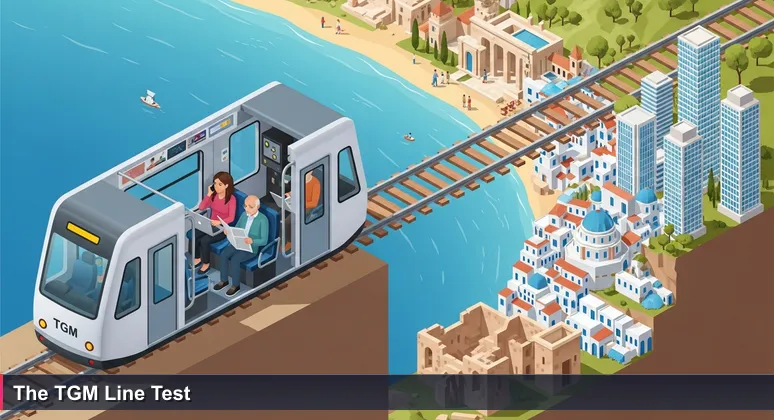
The 7:15 TGM from Tunis Marine to La Marsa tells you everything about money in Tunisia. Watch the passengers - where they board, where they get off, what they’re carrying - and you’ll see the entire tech salary story unfold in 25 minutes along the coast. You board in the crush of morning commuters, second-class carriage, 1.3 TND for the ride. Students, office workers, retirees. The train moves past La Goulette, past Le Kram - neighborhoods where rent runs 400-800 TND and families share apartments, anchoring the affordable end of the metropolitan spectrum.The Same Track, Different Galaxies
By Carthage Byrsa, the carriage has thinned. By Sidi Bou Said, you see laptops open. By La Marsa, the woman next to you is on a Slack call - in English. She gets off at a station surrounded by apartments that cost 1,500-3,500+ TND. Same train. Same tracks. Different economic galaxy. According to Expatistan's Tunisian cost-of-living analysis, the gap between these stops represents a 4x rent differential on a single train line - a distance of minutes that separates survival from wealth accumulation.Your Career, Your Station
The TGM doesn't care if you're earning 15,000 TND/year or 90,000 TND/year - the ticket costs the same. But the exit you choose defines your entire financial reality. Tech salaries in Tunisia are a train that runs on local tracks but carries global fuel. Your career mobility is real, but your living costs are fixed to the station you step off at. The secret isn't just earning more - it's knowing which neighborhood your salary was designed for, and choosing your stop before you buy the ticket.In This Guide
- The TGM Line Test: What Your Salary Really Buys
- Why Tech Salaries Are Higher in Tunisia
- The Numbers: What You'll Earn in 2026
- The Tax Reality: How Much Disappears
- Entry-Level Budget: Surviving on 15,000 TND/Year
- Mid-Level Budget: The Comfort Zone at 50,000 TND/Year
- Senior Budget: Wealth Accumulation at 90,000 TND/Year
- Where to Live: Choosing Your Station
- Tunisia vs. The World: Affordability Comparison
- The Freelance Advantage: Earning in Foreign Currency
- The Ecosystem That Boosts Your Salary
- Practical Tactics for Entry-Level Workers
- Practical Tactics for Mid-Level Workers
- Practical Tactics for Senior Workers
- The Honest Bottom Line: Can You Live Comfortably?
- Frequently Asked Questions
Discover everything you need to know about AI jobs in Tunisia for 2026 in this detailed article.
Why Tech Salaries Are Higher in Tunisia
The Global Benchmarking Effect
Tech roles sit apart from Tunisia's broader economy because they compete in a different market. When a French fintech or a German SaaS company hires a Tunisian developer, they benchmark salaries against Eastern European rates - not local accounting salaries. According to discussions in the r/jobs community, experts note that IT positions are significantly better paid precisely because international firms apply global compensation standards, effectively bypassing Tunisia's domestic wage structure. This creates an invisible ceiling lift for everyone in the sector.A Bifurcated Market
The result is a two-speed economy for labor. Fresh graduates in non-tech fields often earn around 1,500 TND/month, where 1,000 TND is immediately consumed by basic survival, as documented on Reddit's r/Tunisia salary discussions. Meanwhile, a software engineer in Tunis averages roughly 5,000 TND/month according to Glassdoor's 2026 salary data. Senior roles at top employers can reach 7,500 TND/month and beyond per Paylab's technology salary research. The gap widens dramatically with experience. This structural advantage places Tunisia third in Africa for highest salaries, trailing only South Africa and Morocco, according to African Manager's continental rankings - a position sustained by the relentless global demand for tech talent.The Numbers: What You'll Earn in 2026
From Entry Point to Leadership Ceiling
The numbers reveal a clear ladder. According to Glassdoor's 2026 salary data, a software engineer in Tunis averages 5,000 TND/month ($1,600 USD) in base compensation. Fresh graduates in non-tech fields, by contrast, start around 1,500 TND/month, a gap that underscores the tech premium. For senior roles at major employers, Paylab's technology salary research shows top-tier compensation climbing to 7,500 TND/month, with the most senior technical leadership positions ranging from 214,000 to 368,000 TND per year - figures that place Tunisia third in Africa for highest salaries behind only South Africa and Morocco.The Freelance Alternative
For those willing to operate outside traditional employment, the freelance economy offers a separate trajectory. Earning $2,000 USD/month (~6,200 TND at current rates) through foreign clients positions you immediately in senior-tier territory locally. As documented by Jobbers' analysis of Tunisia's freelance economy, zero-commission platforms have allowed developers like Salma to increase net income by 38%, effectively adding three months of salary annually. The $2,000/month threshold, as frequently noted in Reddit discussions, is widely considered "more than enough" to live very well in Tunisia - provided you choose the right neighborhood and manage your tax exposure.The Tax Reality: How Much Disappears
Before You See a Single Dinar
The advertised salary is not the salary you spend. Two deductions hit every tech paycheck before you touch the money. First, CNSS social security: employees contribute 9.68% of their gross salary, as documented by FMC Group's employment cost breakdown. Second, progressive income tax that scales steeply. According to PwC's Tunisia tax summary, the brackets begin at 0% for the first 5,000 TND of annual income and step up to 40% for income above 70,000 TND. There are no flat-rate shortcuts for tech workers.The Combined Bite
For higher earners, the two deductions together consume 30-35% of total gross compensation before the bank account registers a deposit. A mid-level developer earning 50,000 TND/year sees roughly 35-40% vanish in combined contributions. The practical effect is sobering: an advertised salary of 5,000 TND/month yields roughly 3,200-3,500 TND in hand. That's the number you actually build your life around - not the headline figure on your contract. As outlined by MyWorkPay's analysis of statutory changes, these deductions are mandatory and non-negotiable, making gross-to-net math an essential skill for any Tunisian tech professional budgeting across the TGM corridor.Entry-Level Budget: Surviving on 15,000 TND/Year
The Arithmetic of Entry-Level Reality
A gross salary of 15,000 TND/year translates to roughly 1,050 TND/month in hand after deductions. That number must cover everything: rent, food, transport, internet, health, and the occasional leisure. At this tier, 80% of your budget goes to essentials, leaving only 5% for savings. You are not building wealth here - you are surviving while you build skills. According to Numbeo's Tunisia cost-of-living data, a shared apartment in Ariana or Ben Arous costs 300-400 TND, utilities and internet run 100-150 TND, and groceries run 250-350 TND if you shop at local souks instead of supermarkets.Where 1,050 TND Goes Each Month
- Rent (shared): 300-400 TND - a room in a 2-3 bedroom apartment in Ariana, Ben Arous, or Ezzahra, within 15 minutes of El Ghazala Technopark
- Transportation: 50-80 TND - TGM/metro pass and occasional louage; no car budget exists at this level
- Groceries: 250-350 TND - local produce, bread, bulk staples; imported goods are out of reach
- Utilities + Internet: 100-150 TND - shared split for fiber connection and basic electricity/water
- Mobile plan: 25 TND - basic 4G data bundle from Ooredoo or Tunisie Telecom
- Health (contingency): 30-40 TND - rare visits, no private insurance
- Leisure + dining: 100-150 TND - limited cafés, street food, occasional cinema
- Savings: 50-70 TND - emergency fund only, no room for investment
The Only Escape Route
This tier is survival, not comfort. You can eat, pay bills, and get to work, but a single unexpected expense - a broken laptop, a family emergency - destabilizes everything. The only sustainable path is aggressive skill acceleration. Focus every spare hour on frameworks, certifications, and portfolio work that can push you into the mid-level bracket within 18-24 months. Live within walking distance of the TGM or metro to eliminate transport costs, cook from the souk, and leverage government programs like the Startup Act for mentorship. User testimonies on Reddit's r/Tunisia confirm that entry-level tech salaries barely sustain a single person - but they provide the runway to climb if you use every dinar and every hour strategically.Mid-Level Budget: The Comfort Zone at 50,000 TND/Year
The Sweet Spot Takes Shape
At 50,000 TND/year gross, your take-home settles at roughly 3,000 TND/month - enough to reshape your entire financial landscape. This is where the budget allocation shifts dramatically: 60% essentials, 25% discretionary, and 15% savings. You stop sharing bathrooms and start having options. According to Numbeo's Tunisia cost-of-living data, this income level unlocks private rentals in central neighborhoods that were out of reach just one salary tier ago.How 3,000 TND Actually Breaks Down
- Rent (1BR private): 900-1,200 TND in El Menzah, Ennasr, or a small unit in Les Berges du Lac - walking distance to El Ghazala Technopark and the best cafés
- Transportation: 150-200 TND - Bolt rides, occasional taxis, carpool arrangements; no car payment yet
- Groceries: 400-500 TND - mix of local and some imported goods like cheese, coffee, wine
- Utilities + Internet: 150-200 TND - premium fiber from Orange or Ooredoo
- Health insurance: 150-200 TND - private supplementary policy, many employers subsidize this
- Dining out: 300-400 TND - 2-3 mid-range restaurant meals per week
- Coworking space: 200-250 TND - hot desk at Flat6Labs or COWORKUNI for focused workdays
- Savings + investment: 450-500 TND - 15% of take-home for emergency fund, index funds, or property savings
The Real Win
This tier delivers genuine comfort. You have autonomy over housing, you eat what you want, and you save meaningfully every month. Reddit users on r/Tunisia's cost-of-living discussions consistently identify this bracket as the threshold where life stops feeling precarious. The critical trap: overspending on rent. Jumping to a 1,500 TND apartment in La Marsa compresses savings and discretionary budgets dangerously. Lock rent at 1,000-1,200 TND maximum, build a 6-month emergency fund, and use your coworking membership for networking as much as workspace. At this level, your career mobility accelerates through the people you meet, not just the code you write.Senior Budget: Wealth Accumulation at 90,000 TND/Year
The Point Where Money Works for You
At 90,000 TND/year gross, your take-home hits roughly 5,000 TND/month - a figure that fundamentally changes what's possible. The budget flips: 45% essentials, 25% discretionary, and 30% savings. You accumulate capital at European rates while spending at North African prices. According to Jarnias Cyril's real estate price comparison, premium apartments in La Marsa, Sidi Bou Said, or Les Berges du Lac 2 run 1,500-3,500+ TND - steep by local standards but trivial compared to Lisbon or Barcelona, where equivalent housing costs 3-5x more.How 5,000 TND Breaks Down at the Top
- Rent (2BR premium): 1,500-2,500 TND in La Marsa, Sidi Bou Said, or Lac 2 - walking distance to the beach and expat-friendly cafés
- Car ownership: 300-500 TND - fuel, insurance, maintenance; no car payment if purchased outright
- Groceries: 600-800 TND - high-quality local plus imported organic options
- Dining out: 500-700 TND - 4-5 upscale meals weekly, wine included
- Savings + investment: 1,500-2,000 TND - 30%+ of take-home for property, index funds, or business capital
The Transformative Math
A senior tech salary in Tunisia is genuinely life-changing. You save 1,500-2,000 TND/month while living in a premium coastal district with beach access, private schools for your children, and domestic help twice a week. The Numbeo property investment data confirms that real estate in these areas appreciates consistently, making your savings work harder. User Literally-Him-420 on Reddit's r/Tunisia captured the sentiment: "Earning $2,000 USD/month is more than enough to live very well in Tunisia." The key risk at this tier is lifestyle inflation - upgrading too fast erodes the savings engine. Buy property early, max out your savings rate, and negotiate for equity or profit-sharing rather than just base comp. You've earned the right to build generational wealth.Where to Live: Choosing Your Station
The single most important financial decision you will make as a tech worker in Tunisia is not which job to accept - it is which station to step off at. The same salary buys dramatically different lifestyles depending on where you sleep at night. According to Numbeo's cost-of-living data, the rent gap between Ariana and La Marsa can exceed 4x on the same TGM line, making geography the most powerful lever in your budget.| Location | Rent Range (1-2BR) | Key Characteristics |
|---|---|---|
| Premium corridor (La Marsa, Sidi Bou Said, Lac) | 1,500 - 3,500+ TND | Expat communities, beach access, high-end finishes, walkable |
| Central hubs (El Menzah, Ennasr) | 900 - 1,600 TND | Tech-office proximity, active street life, gyms, cafés |
| Affordable governorates (Ariana, Ben Arous, Ezzahra) | 400 - 800 TND | Near El Ghazala Technopark, TGM accessible, older housing stock |
| Regional alternatives (Sousse, Sfax, Bizerte) | 400 - 1,100 TND | Beach lifestyle (Sousse), industrial/academic (Sfax), slower pace (Bizerte) |
Tunisia vs. The World: Affordability Comparison
Global Benchmarks Against Local Spending
Tunisia's tech salaries exist in a specific global context - not to encourage moving, but to illuminate your relative purchasing power. The same senior salary of 90,000 TND/year buys dramatically different realities depending on which city you call home. According to Expatistan's cost-of-living analysis, Lisbon rents are typically 3-5x higher than premium Tunisian areas, meaning a Tunisian senior engineer enjoys higher local purchasing power than a Portuguese counterpart earning the same nominal salary.| City | Rent (1BR center) | Daily Living Costs | Purchasing Power for Tech Salary |
|---|---|---|---|
| Tunis | 400 - 3,500+ TND | Moderate; imported goods carry premiums | High - global salary meets local prices |
| Cairo | Lower than Tunis for equivalent | Lower food/transport but high inflation | Eroded by currency volatility and infrastructure gaps |
| Casablanca | 30-50% higher than Tunis | Noticeably more costly daily dining | Lower - same salary buys less |
| Lisbon | 3-5x higher than Tunis | 3x higher across all categories | Fractional - 90,000 TND cannot sustain Lisbon lifestyle |
The Arbitrage Zone
A mid-level engineer in Casablanca earning equivalent gross pay sees less purchasing power than a Tunisian counterpart because Morocco's larger tech sector drives up housing competition. Meanwhile, Cairo's lower subsistence costs are offset by high inflation volatility and a currency that has devalued dramatically, as documented by Numbeo's Tunisia cost-of-living data. Tunisia functions as an arbitrage zone: globally competitive salaries spent in a lower-cost environment. The lesson is clear - your salary's value is defined not just by the number on your contract, but by the city in which you spend it.The Freelance Advantage: Earning in Foreign Currency
The Currency Arbitrage That Changes Everything
For tech workers willing to operate outside traditional employment, the freelance economy offers a path to dramatically different financial outcomes. Earning $2,000 USD/month converts to roughly 6,200 TND at current exchange rates, immediately placing you in senior-tier territory. After optimizing your legal structure under the Startup Act or conventional regimes, your take-home lands between 5,000-5,500 TND - equivalent to a 90,000 TND/year salary without the corporate hierarchy. According to Jobbers analysis of Tunisia's freelance economy, developers like Salma increased their net income by 38% simply by switching to zero-commission platforms, effectively adding three months of salary annually.The $2,000 Threshold in Practice
Reddit user Literally-Him-420 on r/Tunisia's cost-of-living discussions claims that $2,000 USD/month is "more than enough" to live very well in Tunisia. The math backs this up. A freelancer earning $2,000/month and living in Ariana spends roughly 500 TND on rent and 1,000 TND on living costs, leaving 3,500+ TND saved monthly. That compounds to 42,000 TND annually - a 60% savings rate that would take years to achieve in traditional employment. The tradeoff is real: freelancing requires client acquisition skills, discipline during dry periods, and comfort with income volatility. But for those who crack the model, the financial upside outstrips local employment by a wide margin, particularly when you optimize platform choice and international banking to minimize currency conversion losses.The Ecosystem That Boosts Your Salary
More Than Just a Paycheck
Tunisia's tech ecosystem is designed to accelerate your salary growth, not just pay it. El Ghazala Technopark in Ariana concentrates dozens of IT companies, research centers, and incubators within walking distance of affordable housing, creating a competitive environment where your skills command higher premiums. The cluster effect means you are surrounded by peers who push you upward. According to regional rental data, Sfax Technopark and Sousse Technopark offer similar ecosystems with significantly lower living costs, making them compelling alternatives for remote and hybrid workers.Government Support and the Startup Act
Tunisia's Startup Act provides tax exemptions, social security relief, and simplified creation procedures for tech founders and early employees. For mid-level and senior workers, joining a Startup Act company means access to meaningful equity alongside your salary - a wealth-building lever unavailable in traditional employment. The ecosystem also includes notable local innovators like InstaDeep, founded in Tunis and later acquired by BioNTech, proving that Tunisian AI talent can build globally significant companies.Networking and Language as Salary Multipliers
Coworking hubs like Flat6Labs Tunis and COWORKUNI in Lac offer hot desks for 150-300 TND/month. These spaces function as informal job markets where offers circulate and contract opportunities emerge before they reach public listings. For senior workers, investing 200 TND/month in a coworking membership can pay for itself through a single referral. The multilingual advantage - Arabic, French, and increasingly English - opens three distinct salary corridors: French for European markets, English for North American and UK remote roles paying $3,000-5,000 USD/month, and Arabic for Middle Eastern opportunities. Tunisian tech workers who invest in English fluency, paired with affordable upskilling pathways through programs like Nucamp's AI bootcamps available in Tunis and beyond, can access these global rates while spending locally.Practical Tactics for Entry-Level Workers
Your first salary is not your final salary, but how you spend it determines how fast you climb. At ~1,050 TND/month take-home, every decision matters. The single highest-leverage move: live in Ariana or Ben Arous, where shared apartments run 300-400 TND and the TGM puts you 15 minutes from El Ghazala Technopark. This saves 500-800 TND/month versus central Tunis. Use public transport exclusively - the TGM ticket costs 1.3 TND, a monthly pass runs ~40 TND. Do not buy a car at this stage. Cook at home and shop at local souks, not supermarkets. According to CityCost's comparison of living costs, local produce and poultry are highly affordable, while imported goods carry heavy premiums your budget cannot absorb. Every 50 TND saved on groceries is 50 TND you can redirect toward skill acquisition - the only sustainable escape route from this tier. Your biggest asset is your future earning potential, not your current apartment. Spend every spare hour learning frameworks, earning certifications, or building portfolio projects. Affordable pathways like Nucamp's 25-week AI Tech Entrepreneur bootcamp start from approximately 6,797 TND with monthly payment plans, making structured upskilling accessible even on a tight budget. Leverage government programs and incubators at El Ghazala Technopark - many offer mentorship and networking that can fast-track your career progression. This tier is survival, not comfort. The honest reality: you can eat, pay bills, and get to work, but a single unexpected expense destabilizes everything. Accept that, and focus your energy on the 18-24 month sprint to mid-level. Your future salary will thank you.Practical Tactics for Mid-Level Workers
At ~3,000 TND/month take-home, you have reached the sweet spot where deliberate financial choices compound into real freedom. The most critical decision: lock your rent at 900-1,200 TND maximum. Resist the temptation to leap to a 1,500 TND apartment in La Marsa. That extra 300-500 TND/month represents 6,000 TND annually - enough to fully fund a 6-month emergency fund in just 12 months. According to Numbeo's Tunisia cost-of-living data, central neighborhoods like El Menzah and Ennasr offer excellent amenities at this price point, making them the strategic choice for mid-level workers.Three High-ROI Expenses
First, invest in premium fiber internet from Orange or Ooredoo at 80-120 TND/month. This single expense enables remote work, freelance side projects, and skill development - it is the highest-return line item in your budget. Second, join a coworking hub like Flat6Labs for 200-250 TND/month. Desk space matters less than the network; mid-level is when informal job offers circulate through these communities. Third, build your emergency fund to 18,000-24,000 TND before any significant lifestyle upgrade. That cushion gives you negotiating power with employers and the freedom to take calculated career risks.The Regional Opportunity
If your employer is remote-friendly, consider Sousse or Sfax. LongTermLettings lists beachside apartments starting at 500 TND in Sousse - roughly half the cost of comparable housing in central Tunis. The internet quality is comparable, the lifestyle is arguably better, and the annual savings of 6,000-9,600 TND compounds powerfully. This is not sacrifice; it is strategy. Your mid-level salary gives you options. Use them to build momentum toward the senior tier, where the real wealth accumulation begins.Practical Tactics for Senior Workers
Property, Equity, and Leverage
At ~5,000 TND/month take-home, you have entered the zone where money works for you rather than the reverse. The single highest-leverage move: buy property in La Marsa or Les Berges du Lac before prices escalate further. According to Jarnias Cyril's real estate price analysis, these premium coastal districts show consistent appreciation, and your salary gives you access to credit that accelerates wealth accumulation. A 2BR in Lac purchased now locks in an asset that will likely outpace inflation by a wide margin over the next decade.Equity and Team Building
At senior level, base salary is table stakes. Real wealth comes from equity in a growing company. If your employer is not offering stock options or profit-sharing, ask. If they say no, explore opportunities at Startup Act registered companies, where tax incentives and simplified equity structures make meaningful ownership stakes accessible. Simultaneously, sponsor junior talent from local bootcamps - hiring entry-level developers, mentoring them, and proving you can lead builds your case for that CTO track. Seniority in Tunisia's tech ecosystem is measured not just by your salary, but by the team you build around yourself.Savings and Income Diversification
Max out your savings rate at 30% of take-home, accumulating 1,500-2,000 TND/month. Over 5 years at 5% real return, that compounds to roughly 100,000-130,000 TND - enough for a significant down payment or business startup capital. Your senior salary gives you the base; your network and experience give you the upside. Diversify into consulting, side businesses, or angel investing in early-stage Tunisian startups. The combination of a premium tech salary, low local costs, and strategic asset accumulation makes this tier genuinely transformative. The key: avoid lifestyle inflation that erodes your savings engine before it reaches critical mass.The Honest Bottom Line: Can You Live Comfortably?
Can a tech worker actually afford to live comfortably in Tunisia in 2026? The answer is yes, but with critical caveats that depend entirely on which tier you occupy. Entry-level at 15,000 TND/year is survival, not comfort. You can eat, pay rent, and get to work, but one broken laptop or family emergency destabilizes everything. The only path forward is aggressive skill acceleration into the mid-level bracket within 18-24 months. Mid-level at 50,000 TND/year is the genuine sweet spot. With roughly 3,000 TND/month take-home, you afford a private apartment in Menzah, regular dining, a gym membership, and 15% savings. This is comfortable by any reasonable standard. Senior level at 90,000 TND/year is transformative. You accumulate capital at European rates while spending at North African prices, with purchasing power documented by Glassdoor's 2026 salary benchmarks that rivals Lisbon-based engineers earning three times their nominal salary. The freelance path offers the highest upside. Earning $2,000-4,000 USD/month in foreign currency while spending in TND creates a savings engine that can fundamentally alter your financial trajectory. The TGM train still runs every morning. The stations still represent different economic realities. But here is what has changed: the passengers getting off at La Marsa with laptops in their bags are no longer exclusively expats. They are Tunisians who chose a career that pays global rates and learned to spend where it matters. The question is not whether you can afford Tunisia on a tech salary. It is whether you are willing to ride the right train - and get off at the station that matches your ambition. As r/Tunisia's cost-of-living discussions consistently affirm, the answer is within reach for those who choose deliberately.Frequently Asked Questions
Can I actually live comfortably on a tech salary in Tunisia in 2026?
Yes, but it depends on your career stage. Entry-level (≈1,050 TND take-home) is survival mode, mid-level (≈3,000 TND) offers comfort with private housing and savings, and senior roles (≈5,000 TND) let you accumulate wealth at European rates while spending at local prices.
How much does a software engineer in Tunis actually take home after taxes?
A software engineer earning 5,000 TND gross monthly pays about 9.68% for CNSS and income tax that can reach 35-40% combined, leaving around 3,200-3,500 TND in hand - that’s the number you budget with.
Is it better to live in Tunis or a smaller city like Sousse to save money?
If your employer is remote-friendly, moving to Sousse or Sfax can cut rent by 30-40% - think 500-800 TND for a 1BR vs 900-1,200 TND in Tunis - while maintaining similar internet quality, freeing up thousands of dinars annually for savings.
How can I maximize my savings as a tech worker in Tunisia?
Lock in rent at 900-1,200 TND max, use public transport, and invest in a premium fiber connection (80-120 TND) to enable remote work. Mid-level workers can save 15% of take-home (≈450-500 TND/month); seniors should target 30% (≈1,500-2,000 TND/month) and negotiate equity.
Should I pursue freelancing in foreign currency instead of local employment?
Earning $2,000/month (≈6,200 TND) as a freelancer can yield 5,000-5,500 TND take-home after taxes - equivalent to senior local pay. Using zero-commission platforms and living in a second-tier city, you can save 60% of income, but it requires client-finding skills and income stability.
Check out the top non-tech sectors for AI jobs in Tunisia by 2026 for career opportunities beyond big tech.
For a deeper look at the best companies for junior developers in Tunisia, this article ranks them by culture and mentorship.
Check out the best tech careers in Tunisia for 2026 without a diploma.
If you want to learn about AI compensation in Tunisia, this complete analysis covers everything.
If you're seeking the best entry-level AI and software jobs in Tunisia, start with this ranking.

Irene Holden
Operations Manager
Former Microsoft Education and Learning Futures Group team member, Irene now oversees instructors at Nucamp while writing about everything tech - from careers to coding bootcamps.