









Is Salt Lake City, UT a Good City for a Tech Career in 2026?
By Irene Holden
Last Updated: March 23rd 2026
Quick Explanation
Yes, Salt Lake City is an excellent city for a tech career in 2026, as it ranks as North America's fourth tech market with over 50,000 new jobs projected. Tech professionals benefit from average salaries around $117,000 and a cost-efficient lifestyle where rent consumes only 17.4% of wages, making it ideal for AI roles and early-career growth.
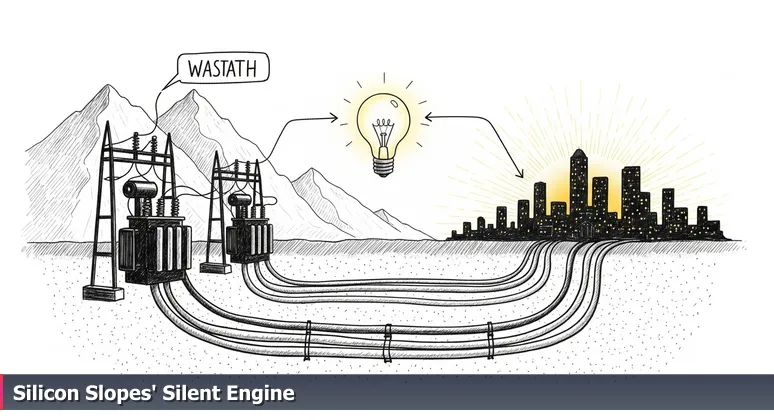
Most people driving into Salt Lake City see the mountains or the skyline. Few notice the humming substations - the unglamorous, high-capacity infrastructure that makes everything else possible. For years, the choice for tech talent seemed binary: chase the peak salaries of coastal hubs or settle for less in a "secondary" market. This is a false dilemma. The future of a resilient tech career is about being plugged into the grid powering the industry's next growth cycle.
Think of the Silicon Slopes not as a rival to Silicon Valley, but as its essential substation. While headlines focus on product launches elsewhere, the capacity for growth - the data centers, talent pipelines, and scalable infrastructure - is being built here. The state is projected to see a staggering nearly 700% growth in data centers by 2030, a clear signal of massive, long-term investment from cloud providers and enterprises. This isn't incidental growth; it's foundational infrastructure.
This strategic position is why Salt Lake City has been verified as an emerging AI job hotspot, with related job postings outpacing national averages. The metro is currently ranked as the fourth-ranked tech market in North America, with experts projecting the state will add over 50,000 new tech jobs by 2026. For the pragmatic builder, the opportunity is to connect to this high-performance backend from day one.
What We Cover
- The Unseen Power Grid of Tech Growth
- A High-Growth Mature Tech Hub
- The AI and Data Surge in Silicon Slopes
- Salary vs. Cost of Living: True Efficiency
- The Talent Pipeline Fueling Growth
- Community and Culture in Silicon Slopes
- Salt Lake City vs. Utah Valley: Tech Scene Differences
- Who Thrives in Salt Lake City's Tech Scene
- Regional Comparisons: SLC vs. Other Tech Hubs
- The 2026 Verdict: A Sustainable Tech Career
- Common Questions
Explore how to launch an AI career in Silicon Slopes by 2026 with local insights and salaries.
A High-Growth Mature Tech Hub
Salt Lake City has decisively transitioned from an emerging tech scene to a mature, high-value hub. It’s currently ranked as the fourth-ranked tech market in North America, with a specialized workforce exceeding 67,500 professionals. This maturity is built on a foundation of resilience; while national tech hiring faced headwinds, Utah's information sector jobs grew by 3.4% year-over-year in late 2024.
Experts project the state will add over 50,000 new tech jobs by 2026, driven by expansions from giants like Adobe, Microsoft, and Oracle. This growth is further fueled by a vibrant startup ecosystem where nearly 70% of all venture capital is directed toward tech companies, creating a dense network of opportunity beyond the corporate giants.
The region's tech industry is growing at 2.5 times the national average, a throughput few other markets can match. For a professional, this translates to tangible momentum. As noted in regional analysis, the "Silicon Slopes" corridor now directly employs over 100,000 residents in tech. Your career isn't just riding a wave; it's connected to a grid with serious, sustained amperage.
The AI and Data Surge in Silicon Slopes
If data is the new electricity, then Salt Lake City is building the power plants. The metro has been verified as an emerging AI job hotspot, with AI-related job postings in 2024 outpacing national averages. This is part of a broader pivot toward machine learning, automated enterprise solutions, and big data, positioning the region as a critical node for the industry's backend.
This surge creates a direct pipeline for specialized, high-value skills. For example, a Data Engineer in Salt Lake City commands an average salary of $129,000, with senior roles reaching much higher, according to local salary data. Companies aren't just opening sales offices; they're placing core engineering and AI/ML teams here to leverage the concentrated talent and scalable infrastructure.
The growth is tangible. It's visible in the corridors of Lehi, where Adobe's campus anchors the SaaS world, and in Salt Lake's urban core, where fintech and healthtech companies are building deep tech stacks. This concentration proves that the Silicon Slopes is now a primary site for developing the intelligent systems that will power the next decade of innovation.
Salary vs. Cost of Living: True Efficiency
The raw salary number is only one part of the circuit. The true measure is efficiency: how much power (income) is lost as heat (living expenses) before it can be used (saved or invested). Here, Salt Lake City’s grid is exceptionally efficient.
While average tech salaries in Utah are approximately $116,800 (about 47.6% above the state's average wage), they are roughly 16% lower than comparable roles in San Francisco, according to local market analysis. However, this comparison ignores critical load factors. In SLC, average apartment rents consume only about 17.4% of a tech worker's wage. In coastal hubs, that figure can easily double or triple, creating significant "transmission loss" that erodes real purchasing power.
Yes, housing costs in SLC are 20.2% above the national average, a pressure point created by the boom itself. But they remain dramatically lower than the Bay Area or Seattle. The result is a higher "real" salary - more disposable income, faster savings for a home, and greater financial flexibility, especially for early and mid-career professionals building their capital. This efficiency is why many find their quality of life and savings rate far exceed what's possible in more expensive, headline-grabbing markets.
The Talent Pipeline Fueling Growth
A reliable grid needs a steady, high-quality fuel source. Utah’s education system acts as this talent dynamo. The University of Utah and Brigham Young University produce over 8,800 tech graduates annually, creating a consistent surplus of entry-level talent that attracts and feeds growing companies. This robust pipeline, noted in ecosystem reports, creates a powerful virtuous cycle where companies relocate for the talent, which in turn draws more students into tech programs.
For a new learner or career-changer, this means exceptional access. Local institutions provide proven on-ramps; one junior developer shared on Glassdoor that attending Salt Lake Community College led to a six-figure tech position within weeks of graduation, demonstrating the market's immediate hunger for skilled workers.
"I graduated from Salt Lake Community College and had a six-figure offer from a Silicon Valley company in less than two weeks." - Junior Developer, Glassdoor Review
This isn't just about volume; it's about quality and innovation. The University of Utah is a top-tier research institution, particularly in computing and engineering, fostering advanced projects that frequently spin out into the local startup ecosystem, ensuring the talent pipeline is both deep and cutting-edge.
Community and Culture in Silicon Slopes
Tech is more than a job; it's a network. The Silicon Slopes ecosystem is renowned for its interconnectedness and collaborative spirit, functioning like a highly efficient circuit board of professional connections. This is actively facilitated by organizations like the Silicon Slopes non-profit and specialized technical groups such as SLC Python.
This community-focused approach creates exceptional networking density. For example, Product Hive, a local product management community, boasts over 10,000 members and regularly hosts events that connect professionals across companies and career stages. This collaborative environment reflects a shared belief in growing the entire grid rather than just individual nodes.
Employee reviews frequently highlight this culture alongside the strong work-life balance as a key advantage. The ability to be at a world-class ski resort within 45 minutes of leaving your desk provides a lifestyle perk that actively counteracts burnout, creating a sustainable career path where professional ambition and personal fulfillment are in sync, not at odds.
Salt Lake City vs. Utah Valley: Tech Scene Differences
It's important to understand the internal circuitry of the Wasatch Front tech scene, as it offers different voltages for different professional and lifestyle needs.
Salt Lake City Proper serves as the urban core, focusing on fintech, big data, corporate HQs, and a growing AI scene. It offers a more traditionally diverse, urban culture with nightlife, arts, and a broader demographic. This is the place for those who want a city vibe alongside their tech career, with a concentration of roles in companies building deep, complex tech stacks.
Utah Valley (Lehi/Provo/Orem) is the heart of the "Silicon Slopes" SaaS ecosystem. Home to Adobe's massive campus, Qualtrics, Domo, and Ancestry, it's more family-oriented, with a high concentration of startups emerging from BYU's entrepreneurial ecosystem. The culture here is often described as driven and community-focused, centered on scalable software products. While distinct, these two hubs are deeply interconnected, forming a powerful regional grid where talent and ideas flow freely along the I-15 corridor.
Who Thrives in Salt Lake City's Tech Scene
Determining if Salt Lake City is the right transformer for your career depends on what you're trying to power. The market's unique efficiency and growth profile make it an exceptional fit for specific professionals, while others may find better alignment elsewhere.
Salt Lake City is Best For
- Early and Mid-Career Professionals: The combination of strong entry-level salaries, lower living costs, and high growth potential allows for rapid career and financial acceleration.
- Specialists in High-Demand Fields: AI/ML engineers, data scientists, and DevOps experts. The market demand here outpaces supply, leading to premium compensation.
- Those Prioritizing Lifestyle Economics: Individuals who want an active lifestyle without the punishing financial trade-offs of coastal cities. The ROI on life outside work is exceptional.
- Bootcamp Graduates & Career Changers: The strong hiring demand and community support create multiple on-ramps. Programs like Nucamp's AI Essentials for Work are designed to help professionals pivot, with career services tailored to the local job market.
Salt Lake City May Not Be Ideal For
- Late-Career Executives Seeking Peak Compensation: While C-level roles pay very well, the absolute ceiling is still higher in global HQs in the Bay Area or NYC.
- Those Seeking Maximum Urban Diversity: While growing more diverse, SLC does not have the same long-established international culture as coastal megacities.
- Professionals Who Thrive on Extreme Job-Hopper Markets: The market is active, but not characterized by constant, frenetic job-hopping. Tenure and deep impact are often valued.
Regional Comparisons: SLC vs. Other Tech Hubs
To understand Salt Lake City's position in the national landscape, it helps to compare its grid stability and expansion potential against other major substations powering America's tech industry.
| Market | Tech Hub Maturity | Relative Salary | Cost of Living |
|---|---|---|---|
| Salt Lake City | High (Expanding) | Moderate-High | Moderate |
| Bay Area/Seattle | Peak (Mature) | Highest (~16% higher than SLC) | Highest |
| Denver | High | Comparable (+9% vs SLC) | High |
| Phoenix | Moderate | Comparable (-3% vs SLC) | Moderate |
The comparison reveals SLC's compelling efficiency. You trade about 16% in gross salary versus the Bay Area for a 50%+ reduction in housing costs and significant lifestyle gains, moving from a saturated grid to a high-capacity, expanding one. Versus a close competitor like Denver, SLC offers better efficiency, as Denver's comparable salaries come with a significantly higher cost of living. This positions Salt Lake City not just as an alternative, but as a strategically optimal backend for sustainable, high-growth tech careers.
The 2026 Verdict: A Sustainable Tech Career
Relocating for a tech career in 2026 is less about chasing the brightest light and more about finding the most reliable, efficient, and powerful grid. Salt Lake City has proven it is not a flash in the pan; it is fundamental infrastructure. With its explosive data center growth, verified AI hotspot status, unparalleled salary-to-cost efficiency, and a self-reinforcing talent dynamo, it offers a compelling blueprint for a sustainable, high-growth tech career.
The opportunity here transcends the job description. It's about building a life where career advancement and personal wealth accumulation aren't locked in a zero-sum game with quality of life. You can work on cutting-edge AI for a global brand, afford a home, and be on a ski slope within an hour - a reality that actively defies the trade-offs required in coastal hubs.
This balanced growth is reinforced across the entire Silicon Slopes corridor. As noted in regional analysis, the adjacent Provo-Orem metro also ranks among the top ten mid-sized markets for AI job opportunities, demonstrating the depth and integration of the region's tech ecosystem. For the pragmatic builder, the engineer, and the entrepreneur, SLC isn't just a good choice - it's a powerful one. The substation is humming, and it's ready for your load.
Common Questions
Is Salt Lake City really a good choice for a tech career in 2026?
Yes, Salt Lake City is a top-tier tech hub, ranked fourth in North America with over 67,500 tech workers and projected to add 50,000 new jobs by 2026. The region's tech industry is growing 2.5 times the national average, making it a high-growth, mature market ideal for career advancement.
How do salaries for tech jobs in Salt Lake City compare to places like San Francisco?
Tech salaries in Utah average around $116,800, which is about 16% lower than San Francisco, but the cost of living is significantly more affordable. With rents consuming only 17.4% of a tech worker's wage here, you often end up with higher real income and better savings potential compared to coastal cities.
What's the cost of living like for tech workers in Salt Lake City?
It's relatively affordable; average apartment rents take up just 17.4% of tech wages, though housing costs are 20.2% above the national average. This is still much lower than in the Bay Area or Seattle, allowing for greater disposable income and faster home savings.
What tech fields are booming in Salt Lake City, especially AI and machine learning?
AI roles are surging, with job postings outpacing national averages in 2024. For example, Data Engineers in Salt Lake City earn an average of $129,000, driven by expansions from companies like Adobe and Qualtrics across Utah's Silicon Slopes, making it an emerging AI hotspot.
How connected is the tech community in Salt Lake City, and is networking easy?
The community is highly collaborative, with groups like Silicon Slopes and Product Hive offering regular meetups and mentorship for over 10,000 members. This fosters strong networking and work-life balance, with easy access to outdoor activities, enhancing both career and personal life.
This post outlines the best places for tech innovation in Salt Lake City in 2026.
For a breakdown of the best tech entry points in Salt Lake City, UT in 2026, refer to this list.
If you aim to become an AI engineer in Salt Lake City, this roadmap is essential for your career.
In 2026, free tech training at Salt Lake community centers is more valuable than ever for career changers.
For career growth, refer to the Salt Lake City women in tech support networks in 2026.

Irene Holden
Operations Manager
Former Microsoft Education and Learning Futures Group team member, Irene now oversees instructors at Nucamp while writing about everything tech - from careers to coding bootcamps.