









Who's Hiring Cybersecurity Professionals in Salt Lake City, UT in 2026?
By Irene Holden
Last Updated: March 23rd 2026
Key Takeaways
In 2026, cybersecurity hiring in Salt Lake City is driven by three key sectors: Silicon Slopes tech giants like Adobe and Qualtrics, defense contractors centered on Hill Air Force Base, and critical infrastructure in healthcare and finance. Specialized roles in cloud security or cleared positions offer salaries up to $250,000, supported by Utah's lower cost of living and strong talent pipeline from local universities. To land these jobs, focus on sector-specific skills like cloud certifications for tech or GRC expertise for infrastructure.
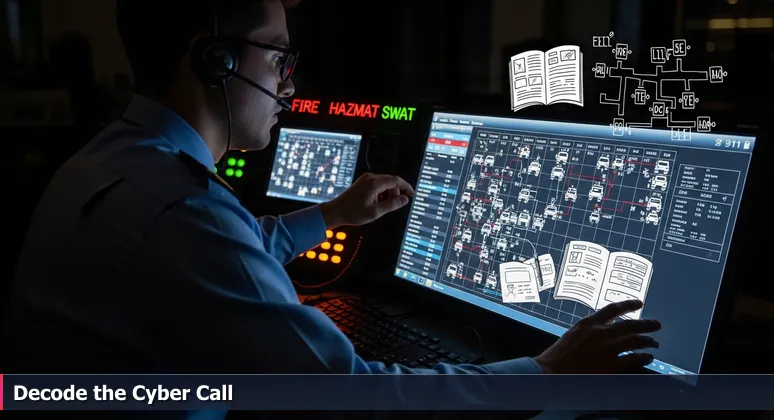
In a 911 dispatch center, the most critical skill isn't hearing the panic - it's diagnosing the silent need behind it. A seasoned dispatcher filters the frantic, vague calls to understand whether they're facing a fire, a chemical spill, or a hostage situation, then deploys the precise specialist required.
Landing a cybersecurity role in Salt Lake City demands the same precision. The generic job posting is the panicked call, a surface-level signal obscuring which of Utah's three distinct, powerful economies is truly calling for help. Your success depends on learning to listen for the silent, sector-specific "code" behind the listing. You're not applying for a generic security job; you're auditioning to be a specific type of first responder for the high-stakes tech battleground of the Silicon Slopes, the classified defense networks at Hill Air Force Base, or the essential services of local healthcare and finance.
This specialized mindset is non-negotiable. As AI automates routine tasks, the market is shifting toward experts who can guide AI agents and architect resilient systems. Industry analysts predict that major cybersecurity failures will, in fact, raise cybersecurity salaries by 20-30%, but this premium is reserved for specialists who can translate chaos into clear action. The reward for mastering this dispatcher's skill is a vital career in a resilient market, with local salaries ranging from $80,000 to over $250,000 depending on your chosen specialty.
In This Guide
- Master the Dispatcher Mindset for Cybersecurity
- Why Specialization Is Your Only Strategy in 2026
- Silicon Slopes: Defending Cloud-Native Applications
- Defense and Aerospace: Navigating the Cleared Pipeline
- Critical Infrastructure: Securing Essential Services
- Building Your Cybersecurity Career Path in Utah
- Tuning Your Job Search for Salt Lake City
- Answer the Call as a Specialist
- Frequently Asked Questions
Explore how to launch an AI career in Silicon Slopes by 2026 with local insights and salaries.
Why Specialization Is Your Only Strategy in 2026
The era of the generalist cybersecurity professional is ending. As AI agents take over routine log monitoring and basic threat detection, the human value shifts to overseeing these systems, architecting resilient defenses, and navigating complex regulations. Industry experts emphasize that winning in the 2026 job market is about moving from hands-on keyboard tasks to directing AI-driven security tools. The premium is on specialized knowledge, not broad, shallow skills.
Salt Lake City's Wasatch Front presents a uniquely advantageous landscape for this shift. It offers a significantly lower cost of living compared to coastal tech hubs, direct access to major engineering centers for companies like Adobe and Qualtrics, and a powerful talent pipeline from the University of Utah and other institutions. This combination creates a fertile ground for specialized careers to thrive.
Critically, the local market isn't a monolith. You are choosing between three parallel, high-stakes economies, each with its own language and mission:
- The high-growth, cloud-native SaaS battleground of the Silicon Slopes.
- The mission-critical, clearance-driven defense networks anchored at Hill Air Force Base.
- The essential, regulated services of healthcare, finance, and utilities.
This decentralization means a generic approach will get lost. Your strategy must be to master the specific "war" fought by the sector that calls to you, as Utah's cybersecurity ecosystem continues to rank among the nation's most robust. Specialization isn't just an option; it's the only path to a high-value, future-proof career in the region.
Silicon Slopes: Defending Cloud-Native Applications
Who's Hiring and What They Defend
Stretching from Lehi to Provo, the Silicon Slopes corridor is the engine of Utah's tech reputation. Here, cybersecurity is about defending hyper-scale, cloud-native applications and managing identity across global platforms. Companies like Adobe in Lehi hire Staff Cyber Threat Hunters and Senior Security Engineers to secure its Creative Cloud and Document Cloud platforms against cloud-scale threats. In Provo, Qualtrics seeks Information Security Engineers to protect vast reservoirs of sensitive customer data, with a heavy emphasis on Identity and Access Management (IAM).
The Essential Skills for Cloud Defense
Your resume must speak cloud. Proficiency in AWS, Azure, or GCP is non-negotiable. Certifications like the CCSP (Certified Cloud Security Professional) or vendor-specific security badges are highly valued. Focus your projects and experience on AppSec, DevSecOps integration, and Zero Trust identity frameworks. These are the tools for securing the massive content delivery networks and developer-centric products that define companies like Pluralsight.
Salaries here reflect the demand for this specialized expertise. Total compensation for specialized engineering roles ranges from $110,000 to over $250,000, often including significant stock components. As noted in industry analyses, the 2026 cybersecurity career landscape is dominated by cloud-native security, making this specialization the golden ticket for the Slopes.
Defense and Aerospace: Navigating the Cleared Pipeline
The World of Classified Systems
North of Salt Lake City, centered on Hill Air Force Base, operates a cybersecurity sector defined by classified systems, strict federal compliance, and the protection of national infrastructure. This isn't about agile development; it's about safeguarding air combat technology, logistics networks, and weapon systems from nation-state adversaries, adhering to stringent frameworks like NIST SP 800-53.
The Clearance: Your Golden Ticket
The defining requirement here is the security clearance. Many positions with the base or major contractors like Northrop Grumman require an active Secret or Top Secret clearance. If you don't have one, your entry point is often through military service (including the Utah National Guard's cyber units) or an entry-level role with a contractor willing to sponsor the lengthy process. This clearance is a credential that takes civilians years to obtain, making it a massive career accelerator in this sector.
Foundational certifications like CompTIA Security+ are mandatory for many Department of Defense roles, with the CISSP being the benchmark for senior positions. Professionals often focus on the Assessment & Authorization (A&A) process - documenting and certifying system security before deployment. Salaries are strong, ranging from $100,000 to $210,000, reflecting the specialized, cleared nature of the work at employers like Hill Air Force Base and defense contractors seeking Information Assurance Specialists.
Critical Infrastructure: Securing Essential Services
Securing Healthcare, Finance, and the Grid
This sector powers everyday life in Utah, offering stable, mission-driven cybersecurity careers in healthcare, finance, utilities, and education. The pace may differ from a startup, but the stakes - patient lives, financial stability, the electrical grid - could not be higher. Major local employers like Intermountain Health and Zions Bank are constantly hiring analysts and consultants to protect sensitive data and critical operations.
The Governance, Risk, and Compliance (GRC) Core
Here, Governance, Risk, and Compliance (GRC) is the lingua franca. The core challenges involve translating complex regulations like HIPAA, PCI-DSS, and GLBA into operational security. Professionals defend patient data, secure internet-connected medical devices, detect financial fraud, and protect industrial control systems (SCADA/OT) that manage the electrical grid from sabotage.
Certifications like the CISA (Certified Information Systems Auditor) and CISSP are highly valued, demonstrating deep knowledge of these regulatory frameworks. Success requires the ability to implement security policy within complex, often legacy-enabled environments.
| Industry | Typical Salary Range | Key Security Focus |
|---|---|---|
| Healthcare | $80,000 - $150,000 | HIPAA Compliance & Medical Device Security |
| Financial Services | $85,000 - $170,000 | Fraud Detection & Financial Regulation (PCI-DSS, GLBA) |
| Utilities (OT/SCADA) | $90,000 - $165,000+ | Industrial Control System & Grid Security |
Building Your Cybersecurity Career Path in Utah
Utah offers multiple accessible pathways into cybersecurity, each aligned with the state's unique economic sectors. For entry-level professionals and career changers, the traditional "help desk" route is being automated. The new entry point is through targeted, skills-based training that immediately provides hands-on, practical skills. Local options like the 15-week Nucamp Cybersecurity Bootcamp offer a focused, affordable pathway to gain the network defense, cloud security, and compliance skills that local employers in healthcare, fintech, and midsize tech companies seek.
Leveraging Military Service and Clearances
Utah is a premier location for transitioning military personnel. If you have a security clearance from service at Hill AFB or through the Utah National Guard, you possess a credential that takes civilians years to obtain. Pair that clearance with a skill-bridge program or a certification like Security+, and you become an immediate, high-value candidate for the entire defense contractor ecosystem along the Wasatch Front.
Pivoting from IT to Specialized Security
For experienced IT professionals already in the field, the pivot is about deep specialization. A network administrator should look toward Zero Trust network architecture. A systems administrator should master infrastructure as code (IaC) security. The goal is to evolve from maintaining systems to designing inherently secure, resilient systems. This shift is supported by state initiatives and a growing demand for specialized talent across Utah's diverse tech landscape.
Whether through a bootcamp, military transition, or upskilling, the path is about choosing your specialty and building the precise skills that match one of Utah's calling sectors.
Tuning Your Job Search for Salt Lake City
Diagnose the Sector from the Job Post
Your job search must mirror the dispatch center's precision. Stop applying to every "Cybersecurity Analyst" role. Instead, read the description for sector-specific clues. Heavy on AWS, CI/CD, and "cloud-native"? It's a Silicon Slopes role. Mentions NIST 800-53, RMF, or A&A? It's Defense. Centers on HIPAA, PCI, or "compliance frameworks"? It's Critical Infrastructure. This diagnostic skill filters out noise and targets your effort.
Tailor Your Signal: Resume and LinkedIn
Once you've diagnosed the sector, tailor your professional materials with its keywords. For tech, highlight cloud projects, automation scripts, and specific tools. For defense, detail experience with compliance documentation or classified systems environments. For healthcare or finance, emphasize privacy frameworks, risk assessments, and audit processes. Your resume should read like a direct response to the sector's unique battle.
Network with the Right Unit
In Salt Lake City, generic tech networking is inefficient. Attend meetups specific to your chosen field. The region has active groups for cloud security (Utah AWS/Azure meetups), ISSA chapters for GRC professionals, and defense industry associations. Your goal is to connect with the team you want to join. Engage with local professionals on platforms like LinkedIn, where hundreds of local cybersecurity roles are listed, but use it to research and connect with individuals in your target companies and sectors, not just to submit applications. This targeted approach turns the vast landscape of information security jobs in Salt Lake City into a navigable map of precise opportunities.
Answer the Call as a Specialist
The cybersecurity landscape of Salt Lake City is not a monolith - it's a coalition of specialized forces. The frantic, generic call for "cybersecurity" is just noise. Your opportunity lies in the clear, urgent signal beneath it, calling for a specific defender: a Cloud Security Engineer for the Slopes, an Information Assurance Specialist for the Base, or a GRC Analyst for the hospital. By 2026, this specialization will be paramount, with experts predicting major failures will raise salaries by 20-30% for those with the right expertise.
In Utah, you have the unique advantage of choosing your battlefield within a single, thriving region. You can pursue high-growth tech in the Silicon Slopes, mission-critical defense work near Hill Air Force Base, or stable, essential roles in healthcare and finance - all while enjoying a lower cost of living than coastal hubs. Each path offers strong compensation, from $80,000 to over $250,000, and the deep satisfaction of protecting what matters most to each sector.
The transformed job market of 2026 favors brains over hands, strategy over routine. It demands professionals who can architect systems, guide AI, and translate policy into practice. Put on your dispatcher's headset, learn the codes of the sector that calls to you, and prepare to be dispatched to a rewarding, vital career as the precise specialist Utah needs.
Frequently Asked Questions
Who are the top companies hiring cybersecurity professionals in Salt Lake City in 2026?
In 2026, major employers include tech giants like Adobe and Qualtrics in the Silicon Slopes, defense contractors near Hill Air Force Base, and critical infrastructure players such as Intermountain Health. Each sector offers specialized roles focusing on cloud security, classified systems, or regulatory compliance.
What's the salary range for cybersecurity jobs in Salt Lake City?
Salaries vary by sector: in tech, roles can pay $110,000 to over $250,000; in defense, $100,000 to $210,000; and in infrastructure, $80,000 to $170,000. With Salt Lake City's lower cost of living compared to coastal hubs, these offers provide strong value.
Is a security clearance necessary for cybersecurity roles in Utah?
Only for the defense sector, where employers like Hill Air Force Base require Secret or Top Secret clearances. For other sectors, such as tech or healthcare, clearances aren't needed, but having one can be a significant advantage for career transitions.
Which certifications should I pursue for a cybersecurity career in Salt Lake City?
Focus on sector-specific certs: CCSP for cloud roles in tech, CompTIA Security+ and CISSP for defense, and CISA or CISSP for infrastructure. Certifications demonstrate expertise in areas like cloud security, compliance, and risk management valued by local employers.
Why choose Salt Lake City over other tech hubs for cybersecurity?
Salt Lake City offers a lower cost of living than San Francisco or New York, proximity to major employers like Adobe, a strong talent pipeline from the University of Utah, and a growing AI ecosystem across Silicon Slopes. This makes it an attractive, affordable option with diverse career paths.
For a detailed tutorial on becoming an AI engineer in Salt Lake City by 2026, including salary ranges and local ecosystem tips, read this article.
For insights into AI professional development events in SLC, check this article.
This list covers the most in-demand tech careers in Salt Lake City that don't require a degree by 2026, with local salary data.
For a curated list of Salt Lake City's best AI bootcamps in 2026, refer to this guide.
This ranking of AI startups in Salt Lake City focuses on real-world impact.

Irene Holden
Operations Manager
Former Microsoft Education and Learning Futures Group team member, Irene now oversees instructors at Nucamp while writing about everything tech - from careers to coding bootcamps.