









How to Pay for Tech Training in Chicago, IL in 2026: Scholarships, Grants & Government Programs
By Irene Holden
Last Updated: February 25th 2026
Key Takeaways
To pay for tech training in Chicago in 2026, leverage a mix of government grants, state initiatives, and scholarships, starting with federal programs like WIOA that can cover up to $8,000 in tuition and the new Workforce Pell Grant offering over $4,000 for bootcamps from July 2026. Local support such as Chicago's Future Ready program and Cook County's $500 monthly income assistance further reduce financial barriers, making training accessible as the region invests in its growing tech hub.
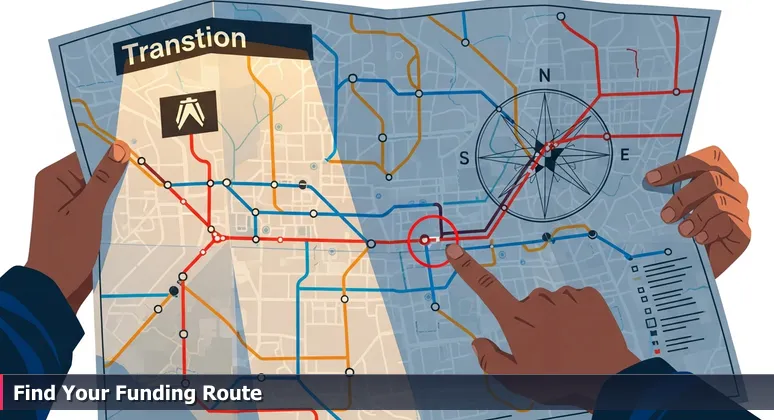
You’re standing under the echoing vault of a Chicago 'L' station, a colorful tangle of lines in your hands. The destination is clear - a high-paying career in tech - but the route? That’s the real question. In the Chicago-Naperville-Elgin metro area, now ranked as the nation’s 4th-hottest tech hub, the opportunity is immense, but the initial cost of training can feel daunting.
Consider this map your guide. The complex system of funding - from federal grants to local initiatives - isn't a barrier. It's Chicago's built-in infrastructure for career mobility, designed to connect you to giants like JPMorgan Chase, United Airlines at O’Hare, and the growing tech offices of Google and Microsoft.
This network, much like the city's famed transit, has express lines, local transfers, and special services. Learning to navigate it is your first step toward a future in our region's strong AI and research ecosystem, supported by universities and national labs like the University of Chicago, Northwestern, and Argonne. The infrastructure is in place because the city needs your talent.
Your journey begins by transforming overwhelm into actionable insight. This guide will show you how to read the map, plan your route, and board with confidence, turning a seemingly chaotic tangle of options into a direct path to your new career.
In This Guide
- Your Map to Tech Success in Chicago
- Why Chicago is the Place to Be in 2026
- Federal Grants: Your Express Route to Funding
- Illinois and Chicago: Local Support for Your Goals
- Scholarships and Employer Benefits
- Income Share Agreements and Student Loans
- Plan Your Path: Eligibility and Application Steps
- From Overwhelm to Opportunity
- Frequently Asked Questions
This article provides a comprehensive overview of AI salaries and roles in Chicago.
Why Chicago is the Place to Be in 2026
Chicago's economy is undergoing a profound, tech-driven transformation. Beyond the legendary trading floors and global headquarters, the city is building a future on AI, cybersecurity, and advanced digital services. This shift is creating unprecedented demand, with the metro area ranked as the nation's 4th-hottest tech hub.
Governor JB Pritzker has emphasized this strategic vision, stating initiatives aim to
"build a pipeline of tech talent to meet the growing demand... and diversify our state’s tech workforce"as announced in the Paid Tech Trainee Program. This commitment feeds a landscape where major employers like JPMorgan Chase, United Airlines, Walgreens, Boeing, McDonald's, and the sizable offices of Google and Microsoft are hungry for skilled professionals.
Our central location and transportation nexus, anchored by O’Hare International Airport, make Chicago a natural hub for commerce and innovation. Furthermore, the region's formidable AI and research ecosystem - supported by the University of Chicago, Northwestern, UIC, Argonne National Laboratory, and Fermilab - feeds a vibrant startup community and corporate R&D centers. Programs like the Spring 2026 I-Corps program at the Polsky Center exemplify this pipeline from research to market.
For you, this means training is an investment in a market actively building its future. The infrastructure, from corporate giants to world-class labs, is aligned to support and employ the next generation of tech talent right here.
Federal Grants: Your Express Route to Funding
Think of federal programs as the Red and Blue Lines of funding - high-capacity, direct routes that can cover most, if not all, of your tuition. These are grants, not loans, meaning free money for your education, updated for the fast-paced nature of tech training.
The table below outlines the key federal express routes available to Chicago career-changers:
| Program | Eligibility | Award Amount | Key Details & Action |
|---|---|---|---|
| Workforce Innovation and Opportunity Act (WIOA) | Unemployed, underemployed, or needing new skills. Eligibility determined at a Chicago Workforce Center. | Up to $8,000 | Covers tuition & books. Start at a local workforce center to develop an Individual Employment Plan. Success stories include students at providers like Computer Training Source earning CompTIA certifications. |
| Workforce Pell Grant (New) | Students in short-term programs (150-599 hours). May be available to those with existing degrees. | Up to $4,310/year | Begins July 1, 2026. Covers tuition, fees, books, supplies, and living expenses. When researching programs, ask if they are "Workforce Pell-eligible." |
| Trade Adjustment Assistance (TAA) | Workers who lost jobs due to foreign trade impacts. | Paid training & income support | A petition must be filed with the U.S. Department of Labor. Find details and apply through the Illinois Department of Commerce. More info at the Trade Readjustment Allowances page. |
| Post-9/11 GI Bill | Eligible veterans & service members. | Up to $28,937.09/year | Covers full tuition at public institutions. A STEM Extension can provide an additional nine months of benefits. Explore VET TEC 2.0 for high-tech training paths. |
Brian Durham, Executive Director of the Illinois Community College Board, notes that institutions are
"uniquely positioned to power our state’s future"by connecting education with industry. These federal programs are the backbone of that connection, providing the express service to your new career.
Illinois and Chicago: Local Support for Your Goals
The State of Illinois and City of Chicago are aggressively investing in their tech workforce, providing crucial local transfers and last-mile support to make training feasible. These initiatives are designed to connect directly with the region's economic engines.
The following table outlines the key local programs, their scope, and how you can access them:
| Program | Key Detail | Funding/Award | Your Action Step |
|---|---|---|---|
| IL Workforce Training Support | State grant to help employers & providers equip workers with high-tech skills. | ~$2 million allocated | Deadline for providers is March 19, 2026. Enroll with training providers who secure these state funds. Details at the IL DCEO grants page. |
| Manufacturing Training Academies | Governor Pritzker announced a $24 million expansion for community colleges. | Capital grants of $3-$6M | Don’t overlook "manufacturing" programs; many are high-tech mechatronics or industrial software roles. Provider application deadline is April 30, 2026. |
| City Colleges "Future Ready" | No-cost, short-term training in high-demand fields for eligible Chicago residents. | Full tuition coverage | Visit the Future Ready program page and complete the eligibility screener. Programs like Project Evolve at Olive-Harvey College offer additional stipends. |
| Cook County Promise | Guaranteed income pilot made permanent in the FY2026 budget. | $500/month, no restrictions | This isn't for training but enables it by covering living costs. Check eligibility on the Cook County Promise site. |
These local programs demonstrate a layered support system. As Brian Durham of the Illinois Community College Board stated, these institutions are "uniquely positioned" to connect education with industry. From state grants covering training costs to local income support covering rent, the infrastructure exists to remove barriers and fuel your career launch in the Chicago tech ecosystem.
Scholarships and Employer Benefits
Diversity & Identity-Based Scholarships
Chicago’s philanthropic and corporate community strongly supports creating a diverse tech workforce through targeted scholarships. The CME Group Foundation Scholars program is open to low-income, underrepresented minority students pursuing tech majors. Blessons for Women offers one-time $2,000 scholarships monthly in 2026 for disadvantaged women aged 25 and older in vocational programs, with deadlines on the 25th of each month. For high-achieving, first-generation students, Renaissance Scholars provides up to $5,000 per year, with key deadlines on February 1 and May 1, 2026.
Employer-Sponsored Education Benefits
Landing an entry-level role at a major Chicago employer can be your ticket to fully-funded upskilling. JPMorgan Chase offers 100% tuition coverage for select degree programs through its partnership with Guild Education. While focused on degrees, this model is indicative of generous tuition reimbursement programs (typically $5,000-$10,000 annually) at other corporate giants like United Airlines, Walgreens Boots Alliance, and Boeing. The strategy is clear: secure an entry-level IT or operations role, then immediately leverage the company's education benefits to train for a software engineering or data science position.
University & Bootcamp-Specific Funding
Local institutions also provide direct pathways. Loyola University Chicago offers undergraduate scholarships ranging from $14,000 to $34,000 annually. A unique 2026 partnership between Automattic and the University of Illinois Chicago provides students completing a WordPress-based AI training with $1,000 and job placement assistance. Furthermore, many reputable bootcamps, including Nucamp, offer their own scholarships for women, veterans, and underrepresented groups. Always inquire directly with your chosen training provider about available funding.
Income Share Agreements and Student Loans
When grants and scholarships don’t cover the full fare, alternative payment plans act as your flexible, pay-as-you-go options. These include Income Share Agreements (ISAs) and federal student loans, both of which have undergone significant updates to offer more consumer protection and flexibility.
Income Share Agreements (ISAs) in 2026
The ISA model requires little or nothing upfront. After graduation and once you’re employed above a minimum salary (e.g., $45,000 in Chicago), you repay a percentage of your income for a fixed period. New consumer protections under Illinois House Bill 2850 set strict caps on payment duration and total repayment (e.g., capped at 1.5x the tuition cost), ensuring safer terms. Always ask providers for their specific payment cap, salary threshold, and payment window.
Federal Student Loans & New Repayment Plans
Federal Direct Loans remain an option for accredited programs. The major change is the new Federal Repayment Assistance Plan (RAP), which becomes the primary income-driven plan starting July 1, 2026, phasing out older plans by 2028. This ensures your payments are always manageable based on your Chicago-area income and family size. If borrowing is necessary, federal loans with RAP are a safer, more predictable choice than private loans.
Both ISAs and the updated federal loan programs are designed to align the cost of your education with your future earning potential in Chicago's tech market, reducing upfront barriers while ensuring responsible, long-term planning.
Plan Your Path: Eligibility and Application Steps
Knowing the routes isn’t enough; you need a schedule and a plan. Follow this step-by-step guide to efficiently navigate and secure your funding for tech training in Chicago.
The Eligibility Decision Tree
- Are you a veteran? → Start with the Post-9/11 GI Bill and explore VET TEC 2.0 for high-tech training.
- Are you currently unemployed or underemployed? → Your first stop is a Chicago Workforce Center to apply for WIOA.
- Are you a Chicago resident with financial need? → Apply for the City Colleges Future Ready program and the Cook County Promise program.
- Do you have some college but no degree, or a degree in another field? → The Workforce Pell Grant (after July 2026) is designed for you.
- Do you belong to an underrepresented group in tech? → Research and apply for diversity scholarships like Blessons for Women or CME Group Scholars.
- Are you currently employed? → Investigate your company’s tuition reimbursement policy immediately.
- Do all other options still leave a gap? → Consider an ISA (under new IL protections) or a federal student loan with the new RAP plan.
Key 2026 Application Calendar Highlights
Mark these dates: The Blessons for Women scholarship has a rolling deadline on the 25th of each month. For state opportunities, note the March 19, 2026 deadline for the Workforce Training Support Program. The Manufacturing Training Academy capital grant deadline for institutions is April 30, 2026, which will affect program availability. Most importantly, July 1, 2026 is when Workforce Pell Grants become available for short-term programs.
Essential Documentation Checklist
Gather these items before applying for any major program to streamline your process:
- Government-issued photo ID (Driver’s License, State ID)
- Social Security Card
- Proof of Chicago/Cook County Residency (utility bill, lease agreement)
- Proof of Income (recent pay stubs, tax returns, or unemployment statement)
- Academic Transcripts (high school or college)
- DD-214 (for veterans)
- An updated resume
From Overwhelm to Opportunity
The map is no longer a tangle of confusing lines. Each program - from the federal express routes to the local transfers - is a clear path designed to connect you to the vibrant tech hubs of Chicago. From the trading floors of Chase Tower to the AI labs at Argonne and the innovation sprouting in the West Loop, the infrastructure is in place because the city needs your talent.
This journey transforms overwhelm into decisive action. As Yusuf Ahmad, a graduate of Per Scholas Chicago, testified, the right program does more than teach - it actively helps you "demonstrate those skills" to employers. Brian Durham, Executive Director of the Illinois Community College Board, confirms that local institutions are "uniquely positioned" to power this connection between education and the booming industry.
Your path begins not with a large bank account, but with information. Start at your nearest station - the Chicago Workforce Center website, the financial aid page of your chosen bootcamp, or the Future Ready portal. Pick your first route, make the necessary transfers, and move forward with the confidence of someone who has mastered the system. In Chicago’s 4th-hottest tech hub, your destination awaits.
Frequently Asked Questions
How can I afford tech training in Chicago in 2026 without taking on debt?
You can explore grants like WIOA offering up to $8,000 or the new Workforce Pell Grant from July 2026 providing up to $4,310 for short-term programs. State initiatives and local scholarships, such as those from City Colleges of Chicago, also offer no-cost options to reduce financial strain.
Are there government grants available if I'm already working but want to switch to tech?
Yes, the Workforce Pell Grant starting in 2026 is designed for career changers, even with a bachelor's degree. Additionally, Illinois state programs and employer benefits at Chicago companies like United Airlines can provide tuition reimbursement for upskilling while employed.
What's the quickest way to get funding for a bootcamp in the Chicago area?
Apply for rolling programs like WIOA through a Chicago Workforce Center or the City Colleges Future Ready program, which have fast eligibility screening. Many bootcamps, including Nucamp, offer scholarships with monthly deadlines, such as Blessons for Women with a $2,000 award.
Are there any Chicago-specific programs that help cover living costs during training?
Yes, the Cook County Promise program provides $500 monthly with no spending restrictions to assist with expenses like rent or transit. Local initiatives like City Colleges of Chicago's Future Ready also offer free training to make education more accessible for residents.
Can I use income share agreements safely for tech training in Illinois in 2026?
Under new Illinois regulations like House Bill 2850, ISAs have consumer protections with caps on payments and clear terms. This makes them a viable option, aligning with Chicago's growing tech job market where starting salaries often exceed $45,000.
Delve into the 2026 AI salary landscape in Chicago to make informed decisions.
This guide covers specialized AI startups solving Chicago's industry problems in 2026.
Learn about the top 10 industries hiring AI talent in Chicago beyond big tech in 2026.
Get the full scoop on cybersecurity employment opportunities in Chicago for 2026 in this guide.
Learn about skills-first tech jobs in Chicago for 2026.

Irene Holden
Operations Manager
Former Microsoft Education and Learning Futures Group team member, Irene now oversees instructors at Nucamp while writing about everything tech - from careers to coding bootcamps.