









Top 10 Tech Coworking Spaces and Incubators in Chicago, IL in 2026
By Irene Holden
Last Updated: February 25th 2026
Too Long; Didn't Read
For Chicago tech founders in 2026, 1871 in the West Loop and mHUB in Fulton Market lead the coworking scene, with 1871 excelling as a digital startup hub hosting hundreds of annual events and memberships from $500 a month, while mHUB offers 11 prototyping labs and up to $175,000 in funding for hardtech innovators. Amid over 328 spaces citywide, these picks highlight Chicago's diverse ecosystem tailored for networking, prototyping, and growth.
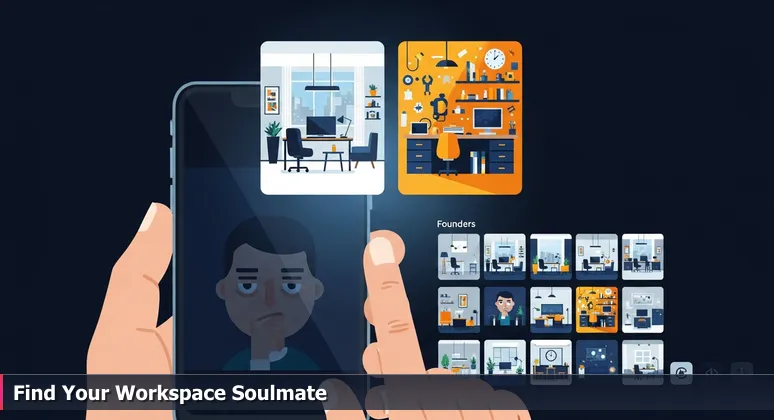
Every founder in Chicago knows the late-night swipe. Not for romance, but for something just as crucial to your startup's future: the right workspace. You're not just looking for a desk; you're looking for a soulmate - an ecosystem partner that matches your venture's stage, industry, and ambition.
With over 328 coworking spaces in the Chicago metro area, the city offers one of the densest and most diverse markets in the country, making the choice both exciting and daunting according to the national coworking report. The average space spans approximately 28,000 square feet, a substantial footprint that underscores the city's commitment to hybrid work infrastructure. In this landscape, the "perfect match" is less about amenities on a checklist and more about intangible chemistry: the community, the capital access, and the specific acceleration you need.
This guide ranks the top partners for your tech journey based on community impact and resource access. From West Loop digital powerhouses to South Side quantum labs, the right space acts as a force multiplier, connecting you to the talent and deal flow that fuels Chicago's massive, diverse economy. Your ideal workspace isn't the "best" one - it's the one that speaks your startup's language.
Table of Contents
- Introduction
- 1871
- mHUB
- Polsky Center for Entrepreneurship and Innovation
- TeamWorking by TechNexus
- The Garage at Northwestern University
- MATTER
- Industrious
- WeWork
- Workbox
- Second Shift
- Frequently Asked Questions
This article provides a comprehensive overview of AI salaries and roles in Chicago.
1871
If Chicago's tech scene had a capital, it would be 1871 in the West Loop. Consistently ranked among the world's top incubators, it's the premier hub for early to growth-stage digital startups, offering a staggering calendar designed for high-stakes networking. The space itself spans 50,000 sq. ft., but the real value is in its curated community and direct pipeline to corporate partners from across the city.
Memberships for early-stage teams run about $500/month or $5,000/year, a worthwhile investment for access to investor engagements and collaborative cohorts as outlined in their membership details. Its global reputation is bolstered by a 4.6-star rating from hundreds of reviews. For AI developers and SaaS founders, the relentless connectivity is the main draw, with events covering everything from FinTech to the future of food systems.
"Do you work in tech? Then this is the coworking space in Chicago for you." - Hispanic Executive
The 2026 vibe is high-energy and conference-ready, perfect for teams that thrive on serendipity. Your next funding round or key hire could easily come from a conversation in the common area at one of the hundreds of annual events. For tech professionals seeking to be at the absolute heart of Chicago's deal flow, there's no better room to be in.
mHUB
Located in the vibrant Fulton Market district, mHUB answers a critical question for physical innovators: where do you build a robot? It’s Chicago’s epicenter for product innovation and manufacturing, built for the capital-intensive path of hardtech. This isn't a space with just 3D printers; it's an 80,000 sq. ft. facility engineered for making.
The space's key differentiators are its industrial-grade resources and corporate backing:
- 11 Professional Prototyping Labs for electronics, fabrication, and micro-factory production.
- Accelerator programs offering up to $175,000 in funding for MedTech participants.
- Backing from industry giants like Constellation and Invenergy.
As noted by industry observers, "mHUB is where people come to build the physical technologies that will change the physical world." The vibe is hands-on, industrial-chic, and relentlessly solution-oriented.
For IoT developers, robotics engineers, and hardware founders, this is your non-negotiable home. The cost of membership is trivial compared to the capital expenditure of building your own lab, and the community is singularly focused on overcoming the tough challenges of bringing a tangible product to market. It's a recognized workplace for innovators where the next great physical device is being prototyped right now.
Polsky Center for Entrepreneurship and Innovation
For ventures born from cutting-edge academic research, the Polsky Center at the University of Chicago is the essential gateway. Its primary incubator, the Polsky Exchange in Hyde Park, offers 34,000 sq. ft. of space and serves as a cornerstone of Chicago's growing South Side innovation district, "The 78," which will house the Discovery Partners Institute.
This hub is purpose-built for commercializing complex technology, providing members with critical resources that are otherwise inaccessible:
- 34,000 sq. ft. of specialized workspace and a fabrication lab.
- Access to a $20 million Innovation Fund for promising ventures.
- The Duality accelerator, the first in the nation dedicated exclusively to quantum technologies.
Community membership is a notable steal at $150 per quarter, though demand is so high it's on a waitlist until Summer 2026. For PhD founders, quantum computing startups, and ventures spinning out of university research, this is the intellectual home base. The proximity to Argonne National Lab and the University of Chicago’s brain trust provides an unmatched ecosystem for deep tech and biotech commercialization. The 2026 vibe is academically rigorous and future-focused, designed for researchers ready to translate theory into market-ready solutions.
TeamWorking by TechNexus
Nestled in the historic Civic Opera Building, TeamWorking by TechNexus is the definitive space for tech professionals seeking structured collaboration. Engineered for "teams without the commitment of a formal office," it excels at facilitating connections between startups and the large corporate partners within its parent network. The environment is professional and polished, designed for serious business development.
Pricing reflects its premium, tech-centric positioning, with individual coworking memberships beginning at $275/month and private offices for small teams starting at $1,000/month. This investment buys more than a desk; it buys into a community pre-vetted for a tech focus, complete with high-quality huddle rooms and event spaces that encourage strategic partnerships.
"Do you work in tech? Then this is the coworking space in Chicago for you." - Hispanic Executive
This makes it ideal for remote employees of Silicon Valley firms, independent tech consultants, and startups actively seeking enterprise pilots with Chicago's corporate heavyweights like JPMorgan Chase or United Airlines. For those who need instant credibility and a direct line to potential B2B clients, TeamWorking offers a plug-and-play professional environment where your neighbor could be your next major partner.
The Garage at Northwestern University
For the next-generation founder still in school, The Garage at Northwestern University in Evanston is the ultimate risk-free sandbox. This non-profit hub is designed explicitly for full-time Northwestern students across all disciplines, providing resources, mentorship, and community at absolutely no cost. It's the perfect environment to test an idea with a safety net, before taking on the real world.
Its flagship "Jumpstart" pre-accelerator is a competitive 10-week summer program with a $10,000 prize pool for winning ventures. The community is further strengthened by regular "Family Dinners" featuring successful entrepreneurs. In early 2026, The Garage demonstrated its active commitment by leading a $100,000 investment into a student venture called Olympus.
The 2026 vibe is collegiate, collaborative, and wildly ambitious. It captures the energy of early experimentation, where a computer science student can partner with a business major to build something new over pizza. For any student with a side-hustle or startup dream, the value proposition is clear: the cost is free, but the network and hands-on experience are priceless. It's a critical feeder into Chicago's broader innovation pipeline, turning academic curiosity into viable ventures.
MATTER
In the heart of River North, MATTER operates as the communal living room for Chicago's massive healthcare and life sciences ecosystem. It's not just a coworking space; it's a mission-driven, collaborative community that connects health tech startups with hospital systems, pharmaceutical companies, and insurers. By fostering partnerships with major players, it accelerates the complex path to market for new medical devices, digital health apps, and diagnostic tools.
With a stellar 4.8-star rating from dozens of reviews, MATTER has cemented its reputation as a focused hub for impact. For health-focused tech innovators, membership here means your neighbors are your potential partners, pilots, and customers. It's a curated network where the intricate puzzle of healthcare innovation - navigating regulation, clinical validation, and reimbursement - starts to fit together through serendipitous connections and programmed introductions.
This environment is specifically engineered for health IT developers, MedTech founders, and digital health startups. The 2026 vibe is intensely collaborative and focused on patient outcomes. For anyone building in healthcare, the value is clear: navigating this industry requires deep, trusted partnerships, and MATTER is designed explicitly to forge them. It's where a startup building an AI diagnostic tool can literally share coffee with a hospital system's innovation lead.
Industrious
For the freelancer or remote worker who has outgrown coffee shops but doesn't need a full-scale incubator, Industrious offers a sophisticated middle ground. With locations in posh areas like Fulton Market, near Google's headquarters, and River North, it provides an "all-inclusive" premium experience laser-focused on productivity and well-being. This is the space for independent AI consultants and software developers who want a quiet, reliable, and impressively designed environment to focus.
Amenities are curated for a seamless workday, featuring artisanal coffee, daily breakfast, and beautifully designed wellness rooms. Dedicated desks in the River North location average $392/month, positioning it as a more upscale and service-oriented alternative to larger flexible workspace brands. This investment buys predictability and polish, key for client meetings and deep work sessions alike.
The 2026 vibe is boutique-hotel-meets-office: serene, premium, and hassle-free. It's worth it for senior professionals who can write off the expense and for whom a calm, impressive environment directly impacts the quality of their client work and personal sanity. In a market of 328 options, Industrious carves out a distinct niche for those who prioritize refined amenities and a distraction-free zone over high-volume networking, offering a premium, all-inclusive solution.
WeWork
WeWork remains the giant in the room, offering predictable, flexible, and widespread infrastructure across prime tech corridors like the West Loop and Fulton Market. For a growing tech team that needs to scale up or down quickly, its globally consistent model is often unbeatable. It provides a turnkey solution of professional amenities and workspaces without a long-term real estate commitment.
In high-activity areas like 167 North Green Street, coworking memberships start around $289-$339/month, with dedicated desks climbing to about $713/month. The vibe is corporate-casual and efficient, with a member base diverse enough to offer both opportunity and anonymity. For job seekers new to Chicago or distributed teams, it provides a solid, professional base of operations from day one.
The 2026 assessment is that WeWork is a utility, not an accelerator. It's best for startups that prioritize month-to-month flexibility and global access over a deeply curated local community. You'll get reliable Wi-Fi, coffee, and a desk, but forging meaningful tech partnerships will require more proactive effort than in niche incubators. In a city of specialized options, its value lies in its scalable, familiar infrastructure.
Workbox
While many spaces cater to ideation or early validation, Workbox distinguishes itself by targeting a specific, critical moment in a startup's life: the growth stage. With locations in neighborhoods like Lincoln Park, it's designed for companies that are beyond product-market fit and are now scaling operations, sales, and team culture. These are the ventures navigating the complex transition from startup to established business.
As their own analysis notes, "Growth-stage companies who are serious about expanding their business network... will get the most from Workbox." To serve this need, they offer unique "accelerator memberships" that include invaluable one-on-one time with Angel and VC investors. This is not a place for brainstorming on whiteboards; it's for refining your scale-up playbook.
The 2026 vibe is established, business-focused, and unapologetically growth-oriented. It's best for Series A-ish startups and companies with 10-50 employees facing similar hurdles around hiring, process optimization, and securing later-stage funding. For founders who need less ideation support and more operational and funding strategy, Workbox provides a community of peers who speak the language of scale, making it a powerful partner for the climb beyond startup liftoff.
Second Shift
For those who find the downtown glass towers impersonal, Second Shift in Logan Square offers a compelling and authentic alternative. Boasting a near-perfect 4.9-star rating, it captures the collaborative, creative spirit of its neighborhood, attracting freelancers, designers, and tech solopreneurs who value a friendly, supportive atmosphere over high-volume, transactional networking.
This isn't a space built for investor pitches; it's built for productive days among friendly faces. As noted in member reviews, the space is praised for creating a genuine community that has tangibly "increased professional efficiency." The environment is intimate, the coffee is good, and the connections feel organic rather than programmed, serving as a direct antidote to the isolation of remote work.
The 2026 vibe is hip, unpretentiously creative, and deeply rooted in the local community. It’s proof that in a metropolitan area of 328 options, the best fit might be the one that feels like your neighborhood's living room, just with better Wi-Fi. For solo founders, creatives in tech, and remote workers who prioritize community chemistry and a relaxed environment, Second Shift offers a workspace that feels less like an office and more like a home base for meaningful work.
Frequently Asked Questions
How did you choose the top tech coworking spaces in Chicago for 2026?
We selected them based on community impact, resource access, and their unique fit for tech ventures, considering Chicago's diverse market of over 328 coworking spaces. Factors like networking events, specialized labs, and ties to the city's strong AI ecosystem with universities like UChicago and employers like Google were key.
Which coworking space is best for AI startups looking to network in Chicago?
1871 in the West Loop is ideal, with hundreds of annual events focused on AI and direct connections to corporate partners. Its vibrant community and proximity to Chicago's tech hubs make it a prime spot for digital innovators seeking funding and collaboration.
What's the average cost for a tech incubator membership in Chicago?
Costs vary: 1871 charges about $500/month for early-stage teams, while Polsky Center offers access for $150 per quarter. Premium options like Industrious average $392/month, catering to different needs from startups to remote workers in Chicago's growing economy.
Are there coworking spaces in Chicago that support hardware or quantum computing startups?
Yes, mHUB provides labs and funding for hardware, and Polsky Center's Duality accelerator specializes in quantum tech. Both leverage Chicago's research strengths, with access to Argonne National Lab and a deep tech ecosystem for innovators.
For students in Chicago, which coworking space is most affordable and supportive?
The Garage at Northwestern University is free for students and offers programs like Jumpstart with a $10,000 prize pool. It's designed for student founders, providing a risk-free environment to experiment and connect with Chicago's tech community.
Learn about Chicago tech startups hiring entry-level developers in 2026 in this informative post.
Get the full scoop on cybersecurity employment opportunities in Chicago for 2026 in this guide.
For the most current insights, refer to the top 10 women in tech groups and resources in Chicago, IL in 2026 for a detailed breakdown.
Find out where AI professionals are needed in Chicago's traditional sectors like finance and healthcare.
Nucamp's article on top tech jobs in Chicago without a degree is a must-read.

Irene Holden
Operations Manager
Former Microsoft Education and Learning Futures Group team member, Irene now oversees instructors at Nucamp while writing about everything tech - from careers to coding bootcamps.