









AI Meetups, Communities, and Networking Events in Austria in 2026
By Irene Holden
Last Updated: April 9th 2026
Key Takeaways
Austria’s AI meetups, communities, and networking events in 2026 are a dense, navigable on-ramp from spectator to active contributor, with Vienna as the central hub where regular attendance and targeted follow-up turn conversations into projects and jobs. With AI Austria attracting over 11,000 followers, Vienna Deep Learning drawing 150 to 180 attendees, and EU data showing about one in five enterprises using AI by 2025, your fastest path is consistent in-person engagement plus concrete projects (for example through a program like Nucamp) to make those contacts hire-ready in Vienna, Linz, or Graz.
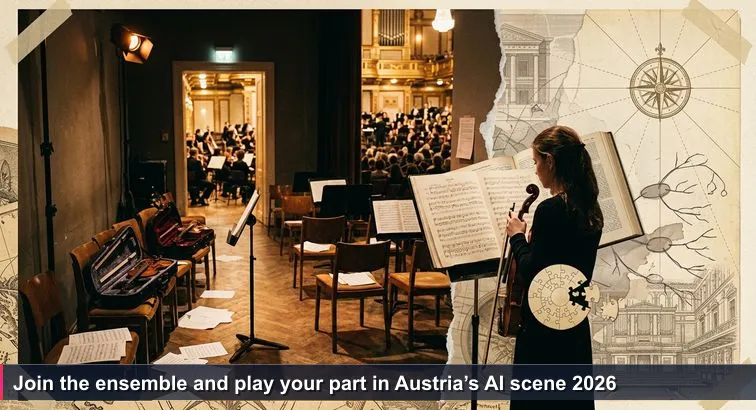
The noise before rehearsal in the Musikverein is all signal for the people on stage. Every stray trumpet note, every half-played scale is part of a shared language the tourists in the red seats will never quite hear. They know the symphony; the orchestra knows the tiny side-glances and breaths that hold it together.
Austria’s AI scene feels the same. Thousands scroll past slick LinkedIn posts from AI Austria and TU Wien, skim ICML keynotes from when it came through Vienna, and “attend” livestreams from ICLR. From the outside, it looks like understanding. But the real work happens in meetups at Accenture, late-evening talks at TU Wien, and side conversations at cafés where hiring managers, founders, and PhD students quietly decide what actually ships.
That inner circle is not as closed as it looks. AI Austria’s community has grown to 11,000+ followers across LinkedIn and newsletters, signalling a dense but navigable ecosystem where the same faces reappear from Vienna Deep Learning to AAIC. Across Europe, around 20% of enterprises were already using at least one AI technology by 2025, according to a landmark Eurostat report on AI use in European enterprises, and Austria is positioning itself as a serious player rather than a hype market.
“Austria is maturing into a resilient and highly efficient innovation hub for AI.” - Clemens Wasner, Co-Founder, AI Austria
This guide exists to help you cross the invisible line between audience and orchestra. It is not just a list of events; it is a practical score for using Austria’s meetups, conferences, and communities to build a real career in AI and machine learning - whether you’re commuting in on the U6 after work or dashing from a lab at TU Wien to an evening talk in the first district.
In This Guide
- From audience to orchestra: why this guide matters
- Why AI networking in Austria matters in 2026
- Austria’s AI hubs and Vienna’s strategic advantages
- Core Vienna meetups that move you from attendee to regular
- Regional meetups and how to use them strategically
- Major 2026 conferences and where to make high-impact connections
- Online and niche communities to amplify your presence
- Nucamp as a practical gateway into Austria’s AI scene
- How to network at Austrian AI events: a rehearsal score
- Common networking mistakes and how to avoid them
- Austria’s AI event rhythm: a month-by-month planning guide
- Designing your 12-month orchestra plan and next steps
- Frequently Asked Questions
Discover real projects and portfolio tips in the comprehensive guide to launching an AI career in Austria (2026).
Why AI networking in Austria matters in 2026
Behind the headlines about “AI revolutions,” something quieter but more decisive is happening in Austria: the people who show up in person are the ones shaping how and where AI is actually used. EU data shows enterprise adoption rising fast, with the share of companies using at least one AI technology climbing sharply between 2024 and 2025, as documented in Eurostat’s landmark study on AI in European enterprises. In that context, Austrian experts like Clemens Wasner talk less about hype and more about building a resilient, efficient innovation hub that can compete long term.
For your career, the first consequence is that hiring for AI has become highly local. Microsoft Austria, IBM Austria, AVL List, voestalpine, Erste Group, and Red Bull all lean on TU Wien, JKU Linz, TU Graz, ISTA and their surrounding meetups to find people who understand German-language data, EU regulation, and Austria’s industrial domains. Showing your face at a Vienna Deep Learning session or an AI Austria meetup matters in a way no GitHub profile quite replaces.
The second shift is that deals and jobs are increasingly made in person. Overviews of major European AI events highlight that conferences and summits remain essential for “comparing vendors in person” and forming partnerships that shape AI strategy years ahead, a pattern underlined in GloriumTech’s guide to top AI events in Europe 2026. The same dynamics apply when a hiring manager at a Vienna bank chats with you over coffee after a talk.
Finally, Austria’s AI scene is dense but navigable. Regulars at Vienna Deep Learning also turn up at AI Factory Austria, AAIC, and regional meetups in Linz or Graz. Commentators describing events like the RAISE Summit note how mid-sized European hubs build tight, cross-city communities, and Vienna fits that pattern as a key node in what one analysis calls Europe’s “can’t-miss” AI conference circuit. If you aim for at least one in-person AI event per month, faces and names start to repeat - and that’s when networking stops being abstract and begins to open doors.
Austria’s AI hubs and Vienna’s strategic advantages
Step back from Vienna for a moment and Austria’s AI ecosystem looks like a small, tight orchestra rather than a sprawling festival. The sections are clear: Vienna for research and policy, Linz for neural networks and industrial AI, Graz for autonomous systems and automotive, with Innsbruck and Salzburg adding more specialised, regional voices.
Vienna is the concertmaster. It concentrates TU Wien, the University of Vienna, ISTA nearby, and national initiatives like AI Factory Austria, recently opened as a central exchange hub between companies and researchers. Mapping projects such as AI Landscape Austria show how many of the country’s deep-tech startups, from MLOps tools to applied LLM platforms, cluster within the Vienna metropolitan area. Add Microsoft Austria, IBM Austria and Erste Group on the corporate side, and you get a city where research talks, policy panels, and product demos often share the same tram line.
To the west, Linz runs a strong machine-learning line via JKU’s Institute for Machine Learning and companies like voestalpine and Dynatrace. A relocation report on Austria’s digital sector notes that Vienna and Linz together host over 3,000 startups across AI, SaaS and industrial tech, giving ML engineers a rare mix of theory and factory-floor applications within a short train ride, as highlighted in Piktalent’s overview of IT and AI internships in Austria.
Further south, Graz leans into automotive, robotics and embedded systems through AVL List, FH Joanneum and the creative-technical mix of events like Generate 26. Compared with Munich’s heavy corporate labs or Zurich’s capital-rich, academic deep-tech model, Austria’s hubs are smaller but tightly woven together by ÖBB Railjet and recurring cross-city events.
For you, this means Vienna is your central station: even if you live in Linz, Graz, Innsbruck or Salzburg, one well-planned trip each quarter can plug you into the core conversations while your local hub gives you domain depth and smaller, more personal meetups.
Core Vienna meetups that move you from attendee to regular
On a typical Thursday in Vienna you can leave a late-afternoon lecture at TU Wien, ride two stops on the U1, and suddenly find yourself in a packed bank auditorium or tech office where Austria’s AI “orchestra” actually rehearses. These recurring meetups are where researchers, startup founders, and enterprise engineers see each other often enough that faces become names, and names become collaborators.
Vienna Deep Learning Meetup
The Vienna Deep Learning Meetup is the city’s most research-heavy gathering, regularly filling large spaces at hosts like Raiffeisen Bank International. Talks range from agentic RAG and federated learning to diffusion models and LLM fine-tuning, with a mix of PhD students from TU Wien and ISTA, ML engineers from banks and consultancies, and deep-tech founders.
To move from anonymous attendee to regular, treat each session like a small project:
- Read the abstract in advance and skim one related paper or blog post.
- Prepare a single, concrete question tied to your own work or study.
- Ask it either in Q&A or one-on-one with the speaker during the break.
Vienna Data & AI and AI & Coffee
If Vienna Deep Learning is the strings section, the rhythm of everyday practice happens at Accenture’s Vienna Data and AI Meetup and the more informal AI & Coffee group. The Data & AI meetup typically gathers 50-60 participants per session and leans into enterprise topics like GenAI in banking, customer analytics, or MLOps, as outlined on the group’s description on Meetup. AI & Coffee, with 110+ active members, offers smaller circles where you can demo a side project or simply discuss what you tried in a Jupyter notebook last weekend.
Vienna Data Science Group & AI Factory Austria
Finally, the Vienna Data Science Group often intersects with AI Factory Austria (AI:AT), whose events calendar lists panels on supercomputing, AI in manufacturing, and public-sector use cases. These sessions are ideal for understanding how your TensorFlow experiment or LangChain prototype might translate into an AVL, voestalpine, or ministry pilot.
Rotate through these Vienna meetups for three to six months and you’ll notice the same people reappearing - this is where you quietly graduate from “someone who showed up once” to “someone who is part of the scene.”
Regional meetups and how to use them strategically
Once you know the rhythm of Vienna’s meetups, the rest of Austria starts to matter in a different way. Linz, Graz, Innsbruck, and Salzburg each have their own “section” in the orchestra, with regional meetups that are smaller, more specialised, and often closer to the industries that actually hire: tourism in Tyrol, automotive in Styria, steel and software in Upper Austria.
AI Austria as the National Backbone
AI Austria acts like the conductor connecting these sections. Beyond its Vienna events, it backs regional formats such as the Applied AI Meetup Innsbruck, which brings together SMEs, researchers, and public-sector teams around very local questions: How do you apply computer vision to logistics in the Alps? What does a language model look like when most of your guests speak German and Italian? These rooms are where being “the AI person” from your town is suddenly an advantage, not a handicap.
Graz and Autonomous Systems
In Graz, engineering-heavy meetups orbit companies like AVL List and FH Joanneum. Here the conversations lean toward embedded AI, autonomous driving, and industrial IoT. For anyone building skills in control systems or robotics, a single evening in Graz can give you more targeted feedback than three generic talks in Vienna, because almost everyone in the room speaks the same technical dialect.
Linz and Industrial AI
Linz, anchored by JKU’s Institute for Machine Learning, uses public lectures and seminars as de facto meetups. The university’s AI lecture series invites speakers across disciplines and is open to practitioners, not just enrolled students. Combined with nearby players like voestalpine and Dynatrace, this makes Linz ideal if you care about manufacturing optimisation or large-scale data systems.
Use regional meetups strategically by travelling when at least one of these is true: you want to dive deep into a specific domain, you’re targeting a local employer, or you’re ready to give a first talk. A well-timed ÖBB trip to Graz, Linz, or Innsbruck once or twice a quarter turns you from “someone from Vienna on LinkedIn” into a name people recognise across Austria.
Major 2026 conferences and where to make high-impact connections
Meetups are your weekly rehearsals; Austria’s major AI conferences are the main stage where entire sections of the ecosystem play together. In Vienna and the Alps, a handful of flagship events now set the tempo for how banks, manufacturers, ministries, and startups plan their AI roadmaps - and they’re designed for serious networking, not passive note-taking.
Applied Artificial Intelligence Conference (AAIC)
AAIC in Vienna is Austria’s flagship AI business conference, organised by the Federal Economic Chamber and Advantage Austria. Recent editions focused heavily on manufacturing, green tech, and the EU AI Act, with a built-in B2B matchmaking platform that lets you pre-book 1:1 meetings with corporates and scale-ups, as described in Advantage Austria’s profile of the Applied Artificial Intelligence Conference.
- Identify 5-7 target companies before you register.
- Book short meetings through the matchmaking tool, even as a student or career changer.
- Attend at least one session in Austria’s strengths: industrial AI or sustainability.
AI Summit Kitzbühel, TEDAI Vienna, and AgentCon
The AI Summit Kitzbühel (17-18 June 2026) brings C-level leaders and architects together in the Alps for deep dives into scaling AI across complex organisations, positioning itself as a strategy-heavy counterpart to Vienna’s events, as outlined on the official AI Summit Kitzbühel site. TEDAI Vienna (28-30 October 2026) adds a global, cross-disciplinary lens, blending TED-style talks on innovation and sustainability with workshops and exhibits.
AgentCon Vienna, usually early in the year, narrows the focus to AI agents, automation, and Microsoft’s ecosystem, making it ideal if you build LLM-based workflows or copilots. For impact, pick one of these three as your personal “big bet” each year, prepare a concise portfolio or demo, and aim for a handful of targeted conversations rather than collecting lanyards.
Academic festivals and summer schools
TU Wien’s AI Festival and the European Summer School on AI (ESSAI) turn Vienna into an academic hotspot, drawing researchers from across Europe. Here, the highest-impact connections often come from simply asking good questions: talk to lecturers after sessions, request paper recommendations, and explore thesis or collaboration ideas. One solid conversation with a future supervisor or co-author can be as valuable as a dozen business cards from a trade fair.
Online and niche communities to amplify your presence
Not every important connection happens over coffee near Karlsplatz. Some of the most useful relationships in Austria’s AI scene start quietly online: a LinkedIn comment on an AI Austria post, a question in a niche Slack, or a short write-up of a meetup you attended in Graz or Linz.
At the national level, AI Austria’s digital channels act as a nerve centre. Their LinkedIn feed and the AI Austria Monthly newsletter track new startups, policy shifts, and event recaps from Vienna to Innsbruck. The newsletter, hosted on AI Austria’s Substack, is especially valuable if you live outside Vienna or can’t attend every meetup: it highlights who is building what, and where you might plug in.
Beneath that, niche communities give you a way to stand out. The Legal Informatics Meetup, with more than 300 members, sits at the intersection of law, compliance, and technology - ideal if you want to work on AI governance, EU AI Act implementation, or RegTech. The Vienna Data Science Group, often collaborating with AI Factory Austria, provides another layer for practitioners who care about data engineering and ML infrastructure rather than just model demos.
To connect Austria to the wider world, many developers join global groups like the Vienna chapter of the Global AI Community, which organises blended online/offline events such as AI Community Day Vienna and coordinates projects across cities via shared channels, as described on the Global AI Community Vienna page. These spaces are where you can collaborate on open-source, find remote teammates, or test ideas beyond the local bubble.
A practical approach is simple: pick one Austria-focused online hub and one global community, then contribute something small each month - an answer, a code snippet, or a short event summary. Over time, your name becomes familiar long before you shake hands in Vienna, Linz, or Graz.
Nucamp as a practical gateway into Austria’s AI scene
Walking into Vienna Deep Learning or an AI Austria meetup is much easier when you can say, “I’m building this right now” instead of “I’m just curious about AI.” That is where Nucamp comes in: a structured way to build real projects, without pausing your life in Vienna, Graz, Linz, or Salzburg or taking on a €10,000+ bootcamp bill.
Nucamp is an international online bootcamp with community-based learning, live workshops, and local meetups across 200+ European cities, including Austria’s major hubs. Its AI and backend programs are deliberately priced between €1,950 and €3,660, a fraction of many competitors, and come with flexible monthly payments so a career change into AI stays realistic alongside rent and a Wiener Linien pass.
| Program | Duration | Tuition | Main focus |
|---|---|---|---|
| Solo AI Tech Entrepreneur | 25 weeks | €3,660 | AI products, LLMs, prompt engineering, AI agents, SaaS |
| AI Essentials for Work | 15 weeks | €3,300 | Workplace AI, prompt design, ChatGPT, productivity workflows |
| Back End, SQL & DevOps with Python | 16 weeks | €1,950 | Python, SQL, DevOps, cloud deployment for AI/ML backends |
The outcomes matter in a small market like Austria: around 78% employment and ~75% graduation rates, plus a 4.5/5 Trustpilot rating with roughly 398 reviews, 80% of them five-star. Those numbers, highlighted in Nucamp’s own overview of Austria’s tech scene, sit alongside stories of learners who chose it because it was “the bootcamp I could actually afford,” as described in the company’s article on Austria’s thriving tech hub and startups.
Most importantly, these programs give you something concrete to bring into the room: a deployed Python API to discuss at AI & Coffee, an AI agent prototype to show at AgentCon, or a clear narrative of how you’ve used prompt engineering in your current job when you talk to a hiring manager at AAIC.
How to network at Austrian AI events: a rehearsal score
If Austria’s AI ecosystem is an orchestra, networking is your rehearsal score: you don’t just walk on stage and improvise. You prepare your part, listen for cues, and know exactly what to do in the quiet bars between the loud ones. The same applies whether you’re heading to a Vienna Deep Learning night near Karlsplatz or a regional AI Austria meetup after work in Graz.
Before an event, treat preparation as part of the ticket price:
- Read the agenda and look up one or two speakers or hosts (for example, scan recent news from Artificial Intelligence at TU Wien if the talk is on campus).
- Write a 20-second self-intro that mentions your city, your current project, and what you want to learn.
- Arrive a little early; in Vienna’s fairly punctual culture, being on time makes starting conversations easier.
During the event, your goal is not to “talk to everyone” but to have a few real exchanges. Austrian tech culture is informal but reserved: first names come quickly, hard selling is frowned upon. Use gentle, context-aware openers:
- “What did you think about that point on model deployment?”
- “Have you tried something similar in your team?”
- “I’m working on a smaller version of this at home; can I ask how you handled X?”
Afterwards is when weak ties become real ones. Within 24-48 hours, send short, personal LinkedIn requests to 3-5 people you spoke with, referencing your conversation and suggesting a simple next step (sharing a repo, swapping reading tips, or meeting at the next AAIC or TEDAI session). Posting a brief reflection on what you learned - tagging the organiser or venue and, where relevant, a wider group like the Vienna-focused AI meetups on Meetup - signals that you’re not just collecting events, you’re actively integrating into Austria’s AI community.
Common networking mistakes and how to avoid them
Plenty of smart people ride the U6 to a meetup, sit through the talks, and head straight home wondering why “networking” never works for them. Often it’s not shyness or lack of skill, but a few repeatable mistakes that keep them stuck in the audience instead of joining the ensemble.
The first is FOMO event-hopping: trying to attend everything from Vienna Deep Learning to Graz and Linz without any focus. You leave with a pile of badges and almost no relationships. Instead, choose a small set of recurring spaces (one technical, one applied, one regional) and commit to them for a season, much as AI Factory Austria does by curating a coherent mix of industry and research events on its national AI events calendar.
The second is showing up empty-handed. Turning up with no current project, no questions, and no sense of what you want makes it hard for others to help you. Even a modest Jupyter notebook, a Kaggle attempt, or an idea you’re exploring at work gives people a hook: “I’m trying to fine-tune a small model on German legal texts” is far more memorable than “I’m interested in AI.”
A third common trap is treating people like transactions - spraying CVs around AAIC, TEDAI, or local meetups and asking for jobs in the first two minutes. Austrian tech culture leans pragmatic and relationship-based; pushing too hard, too fast usually backfires. A better pattern is to ask for specific advice or reading suggestions, follow up once, and let trust build. The ITU’s work on AI governance stresses that sustainable ecosystems depend on “long-term, trust-based collaboration,” a principle that applies just as much to individuals as to institutions, as noted in its Annual AI Governance Report.
Finally, many people never follow up at all. If you consistently send one thoughtful message after each event, you’ll quietly separate yourself from the crowd in Vienna, Graz, or Linz - and that’s where real opportunities start.
Austria’s AI event rhythm: a month-by-month planning guide
Austria’s AI scene doesn’t run on random bursts of activity; it has a surprisingly regular annual rhythm. Once you see that pattern, you can plan your learning, job search, and conference budget the way an orchestra plans its season: heavy on rehearsals in winter, big concerts in early summer and autumn, calmer passages in between.
| Month | Typical AI activity | Planning tip |
|---|---|---|
| January | New-year meetups, AgentCon Vienna, strategy talks | Set yearly goals; pick your core Vienna meetups. |
| February | University talks, AI Austria briefings, quieter conferences | Favour smaller events for deeper conversations. |
| March | Meetup season in full swing across cities | Test your first lightning talk at a local group. |
| April | Talks on EU AI Act, ethics, public-sector pilots | Focus on governance if you target RegTech roles. |
| May | High meetup density, corporate innovation days | Book coffees with speakers and sponsors. |
| June | AI Summit Kitzbühel, pre-summer hackathons | Use one big event for C-level contacts. |
| July | ESSAI at TU Wien, summer schools, research seminars | Invest in theory and academic networking. |
| August | Fewer events, informal meetups, online activity | Ship a project and refresh your portfolio. |
| September | AAIC Vienna, meetups restart after summer | Plan B2B meetings via platforms like AAIC’s b2match portal. |
| October | TEDAI Vienna, TU events, regional conferences | Block time early for TEDAI’s AI-focused program. |
| November | AI festivals, Generate in Graz, year-end summits | Convert contacts into concrete opportunities. |
| December | Retrospective meetups, community wrap-ups | Review your year and sketch your 2027 plan. |
Using this rhythm, you can budget money and energy: one “anchor” conference each quarter, a steady baseline of local meetups, and deliberate quiet periods for learning and building. Over a year, that combination does more for your AI career in Austria than any single, frantic conference sprint.
Designing your 12-month orchestra plan and next steps
By now you’ve seen the whole score: Vienna’s anchor meetups, regional sections in Linz and Graz, flagship conferences from Kitzbühel to AAIC, and the quieter online channels that hold it together. The last step is to stop wandering from concert to concert and instead plan your own season - a deliberate 12-month cycle that combines learning, projects, and relationships.
- Months 1-3: Join the ensemble. Pick one technical meetup and one applied/business event you’ll attend regularly. Introduce yourself to organisers, ask beginner-level questions without apology, and start a small project you can talk about.
- Months 4-6: Play your first notes. Aim to give a short lightning talk or demo at a friendly venue - AI & Coffee, a university group, or an internal meetup at work. Use one major event, like a regional conference or AAIC, to test your story with employers.
- Months 7-9: Deepen and specialise. Join a summer school, advanced study group, or focused workshop track. Seek feedback from people in your target domain - banking, manufacturing, media - and refine your portfolio accordingly.
- Months 10-12: Convert and commit. Turn conversations into concrete next steps: internship applications, freelance pilots, or startup collaborations. Ask for referrals where it feels natural and set goals for the following year.
A structured program like Nucamp can act as your practice room between concerts. Whether you lean towards AI Essentials for Work, the Solo AI Tech Entrepreneur track, or Back End, SQL and DevOps with Python, the point is the same: you’re always building something you can bring into the room - a backend service to discuss at Vienna Data & AI, an LLM prototype to show a founder, a workflow you’ve automated in your day job.
As you map out your year, keep an eye on who else is in Austria’s orchestra: the startup and research clusters visualised on the national AI Landscape Austria make a handy “seating chart” for deciding which players you want to sit closer to. Then, like the young violinist at the Musikverein, you walk on stage, find your chair, and add a clear first note. The rest comes from showing up, again and again, until the ensemble starts to feel like home.
Frequently Asked Questions
How can I turn Austria’s AI meetups into real career opportunities (not just attend talks)?
Treat meetups as part of your skill stack: pick 1-2 anchor events, aim for at least one in-person AI event per month, show up with a small project to discuss, and follow up within 48 hours. Local employers (Microsoft Austria, AVL, voestalpine, banks) often recruit through these networks, so consistent visibility matters more than one-off attendance.
Which Vienna meetups should I prioritise if I’m a beginner versus an advanced practitioner?
Beginners should start with AI & Coffee (≈110 active members) and AI Community Day for hands-on workshops, and Vienna Data & AI (Accenture-sponsored, ~50-60 attendees) to learn enterprise priorities. Advanced practitioners should prioritise Vienna Deep Learning (often 150-180+ participants) and niche events like AgentCon for agentic engineering and demos.
I’m introverted - what practical networking tactics work at Austrian AI events?
Arrive early, prepare a 20-second intro and one well-informed question about a talk, and aim for three meaningful conversations instead of many shallow ones. Volunteer for small roles (registration, timekeeping) and always follow up on LinkedIn within 48 hours with a short, specific note to lock in the connection.
Are meetups useful for non-technical roles or career changers in Austria?
Yes - enterprise-focused meetups (Vienna Data & AI, AAIC) show what hiring managers actually need, and upskilling programs like Nucamp’s AI Essentials for Work (around €3,300) help non-technical professionals speak AI fluently. Career changers who combine one practical course with regular meetup attendance get concrete projects to discuss with recruiters and hiring teams.
Which major 2026 conferences in Austria should I plan for if I want the biggest impact?
Pick one per quarter as an anchor: AAIC (mid-September, strong B2B matchmaking), AI Summit Kitzbühel (June 17-18), TEDAI Vienna (Oct 28-30), plus AgentCon and TU Wien/ESSAI summer schools for academic depth. These events attract C-level, corporate innovation teams, and research leaders - a single well-timed conversation can open interviews or pilot projects.
Discover the best tech jobs without a degree in Austria (2026) and which roles offer the fastest salary growth.
Top 10 AI startups in Austria - where Vienna, Graz and Linz are leading
Top 10 Companies Hiring AI Engineers in Austria in 2026 - a Vienna-focused hiring roundup
If you want Austria-specific pay data, read the guide to the highest paying tech companies in Austria and what drives total compensation.

Irene Holden
Operations Manager
Former Microsoft Education and Learning Futures Group team member, Irene now oversees instructors at Nucamp while writing about everything tech - from careers to coding bootcamps.