









The Complete Guide to Starting an AI Career in Austria in 2026
By Irene Holden
Last Updated: April 9th 2026
Key Takeaways
Yes - Austria, and Vienna in particular, is a very practical place to start an AI career in 2026 because top research centres (TU Wien, AIT, JKU), major employers like Microsoft Austria, AVL and Red Bull, and a startup scene of more than 60 AI companies produce well over 200 AI-related job openings and steady R&D funding. With about 92% of Austrian IT roles now expecting AI skills and entry ML/data roles paying around €60,000 to €67,000 while senior positions top €100,000, focus on Python, SQL, LLM literacy, deployable projects and MLOps, and use affordable, flexible training like Nucamp’s bootcamps (from roughly €1,950 to €3,660) plus local internships and meetups to move from learning to hired.
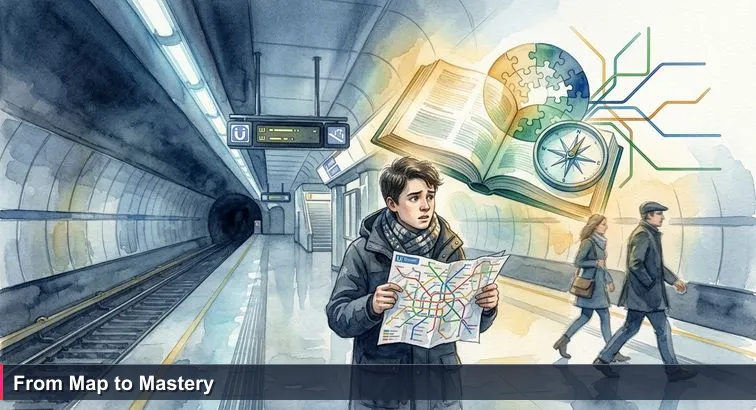
You’re standing in Karlsplatz at 23:47, fluorescent lights buzzing, watching the board flip to “2 MIN” for the last U4. On paper you know this should be simple: the U1, U2 and U4 intersect here, the colours are clear, the legend is tidy. But your fingers keep tracing the map while a couple of locals slips past you, already halfway down the right staircase without looking up.
That gap between you and them - the distance between knowing the lines and knowing the city - is the same gap many people in Austria feel when they first try to move into AI. You’ve watched talks from TU Wien, bookmarked programmes at JKU Linz, maybe even priced out bootcamps like Nucamp. You can list PyTorch, LLMs and “MLOps” on a notepad. Yet when it’s time to choose a role or send a CV to an AIT team in Seestadt, you’re frozen on the platform.
Meanwhile, the trains are getting faster. According to an analysis by Austrian certifier CIS, roughly 92 % of IT jobs in Austria now expect some level of AI literacy, from banking in Vienna to automotive suppliers in Styria. At the same time, LinkedIn data summarised by the World Economic Forum suggests AI has already created about 1.3 million new jobs globally - evidence that the system is adding new lines, not just closing old ones, even if it doesn’t always feel that way at midnight in Karlsplatz.
This guide is about crossing that gap. It’s about turning course catalogs, syllabi and online tutorials into something closer to “city sense”: knowing how to navigate Austrian employers, how EU rules will shape your day-to-day work, and how to move between Vienna, Graz, Linz and beyond without needing to stare at the legend every five seconds. We’ll talk about universities like TU Wien, applied research at institutions such as AIT, and practical routes like Nucamp’s online bootcamps - but always with one question in mind: how do you get off the platform and onto the train?
In This Guide
- Karlsplatz Moment: Starting an AI Career in Austria
- Why Start an AI Career in Austria in 2026
- Main AI Career Paths in Austria
- Machine Learning Engineer: Role, Employers and Salaries
- Data Scientist and AI Research Scientist Paths
- MLOps, AI Platforms and Emerging Specialisations
- Skills Austrian Employers Actually Hire For
- Education Pathways: University, Bootcamp or Self-Taught
- How Nucamp Bootcamps Fit the Austrian Market
- Building a Portfolio and Austria-Relevant Projects
- Tapping into Austria’s AI Ecosystem and Networking
- Salaries, Regional Comparisons and Negotiation
- Regulations, Ethics and Why They Matter to Your Career
- Roadmaps to Your First AI Role (Students, Mid-Career, International)
- From Map to Movement: Practical Next Steps and Conclusion
- Frequently Asked Questions
Proximity to established industrial and tech employers makes Austria an attractive location for bootcamp graduates seeking their first roles in engineering, fintech, and software development.
Why Start an AI Career in Austria in 2026
Across Austria, AI has quietly moved from niche research topic to everyday expectation. Job ads from Vienna to Vorarlberg now assume you can at least talk intelligently about machine learning, even if you are not training models yourself. Global analyses of LinkedIn data show that professionals with verified AI skills earn around 56 % higher salaries than those without, a signal that employers are actively rewarding people who can work alongside intelligent systems rather than ignore them.
Market reality: AI baked into everyday work
In practice, this doesn’t mean everyone is building cutting-edge models. It means that across Austrian industries, AI capability is becoming part of the baseline:
- Software engineers are expected to integrate AI APIs or recommendation services into products.
- Data analysts are pushed to use machine-learning-powered analytics instead of static dashboards.
- Product, marketing, HR and operations roles increasingly supervise AI tools, prompts and outputs.
Hiring data from platforms like Glassdoor consistently shows 200+ open AI-related roles in Austria at any time, from junior data scientist posts in Vienna’s banks to ML engineer positions in Graz’s automotive suppliers and Linz’s industrial firms.
Austria’s edge in Central Europe
What makes Austria particularly attractive is its density of serious research and industry within a small geography. TU Wien, TU Graz, JKU Linz and ISTA all run competitive AI and ML programmes, while applied centres like AIT connect that research to real projects in energy, mobility and health. At the same time, FFG and aws grants help fuel a growing ecosystem of more than 60 AI start-ups across Vienna, Graz and Linz, from supply-chain risk platforms to medical-imaging ventures.
Why starting now makes sense
Analysts at the World Economic Forum note that 83 % of business leaders now prioritise adaptability and continuous learning over pure coding skill for junior roles. Combined with Austria’s mix of high-quality public universities, strong social systems, and a cost of living still below Zurich or Munich despite competitive AI salaries, this creates a rare window: you can build a modern AI career in a relatively stable, humane environment - if you are willing to start moving now.
Main AI Career Paths in Austria
Think of Austria’s AI jobs as a network of U-Bahn lines crossing the country. You might start on one line in Vienna’s finance district and transfer later into industrial AI in Upper Austria or automotive research in Graz. The roles below are the main tracks employers talk about when they post “AI” positions, from Microsoft Austria and IBM to AVL, voestalpine and Red Bull.
Each path has its own rhythm: some are about pushing models into production at scale, others about statistics and business questions, others about long-term research. International analyses of AI and ML job trends in 2026 highlight the same pattern seen in Austria: classic software roles are rotating into more specialised profiles, especially in MLOps and applied machine learning.
| Career path | Typical Austrian employers | Core focus | Best suited to |
|---|---|---|---|
| Machine Learning Engineer | Microsoft Austria, IBM, AVL, voestalpine, A1 Telekom | Designing, training and deploying models inside products and services | People who enjoy software engineering and optimisation |
| Data Scientist | Banks and insurers in Vienna, logistics providers, media groups | Extracting business value from data, experiments and analytics | Those who like statistics, hypotheses and business impact |
| AI Research Scientist | TU Wien, TU Graz, JKU Linz, AIT, larger R&D labs | New algorithms, publications, long-term innovation projects | Mathematically inclined profiles aiming for deeper theory |
| MLOps / AI Platform Engineer | Cloud-heavy corporates, telcos, industrial groups | Infrastructure for training, deployment, monitoring and compliance | Engineers who enjoy systems, tooling and reliability |
| Emerging roles (ethics, security, prompt) | Banks, healthcare providers, consultancies, public sector | Risk, explainability, AI safety, LLM prompting and governance | People at the intersection of tech, law and communication |
Guides like AI career pathways from research to industry emphasise that you can switch lines over time: a data analyst in Vienna can grow into a full ML engineer, or a software developer in Linz can rotate into MLOps. The key is to pick an initial direction that matches your interests, then deliberately collect the skills and projects that belong on that line.
Machine Learning Engineer: Role, Employers and Salaries
In Austrian job ads, “Machine Learning Engineer” is often the headline when companies say they are hiring for AI. This is the role that turns models from Jupyter notebooks into something a customer actually touches, whether that is a fraud detector at a Viennese bank, a predictive maintenance system at an Upper Austrian factory, or a recommendation engine for Red Bull’s media channels.
What ML engineers actually do in Austria
Day to day, ML engineers here sit at the intersection of data science and software engineering. Their work typically includes:
- Designing and training models for problems like churn prediction, demand forecasting or image recognition.
- Packaging those models as services and integrating them into existing Java/.NET stacks or cloud-native apps.
- Optimising inference performance, monitoring drift, and scheduling retraining so systems remain reliable under EU-compliant logging and audit requirements.
In a place like AVL in Graz that might mean working on sensor data for autonomous driving; at A1 Telekom it could be real-time customer analytics; at voestalpine it is often about industrial process optimisation.
Where the jobs are
The densest clusters of ML engineer roles are in Vienna (finance, consulting, Big Tech satellites), Graz (automotive and mobility), and Linz/Upper Austria (industrial and manufacturing AI). Multinationals such as Microsoft Austria and IBM Austria recruit ML engineers for regional projects, while home-grown players like Red Bull and A1 build in-house AI teams to reduce dependency on external vendors. Specialist consultancies in Vienna and Graz increasingly advertise ML and AI engineering roles that rotate across multiple Austrian clients.
Salaries and progression
Based on national benchmarks, entry-level ML engineers with 1-3 years experience typically earn around €60,000-€67,000 in Austria. Mid-level professionals with 4-7 years experience often fall between €70,000-€85,000, while senior or lead ML engineers with 8+ years can reach €100,000-€110,000+, plus bonuses of roughly €4,000-€5,000 a year in larger enterprises.
Salary benchmarking from platforms like SalaryExpert puts the average ML engineer salary across Austria at about €97,000, with senior Vienna roles reaching around €107,000. Data from the ERI Economic Research Institute shows similar levels, confirming that this is one of the better-compensated technical tracks in the country.
To position yourself for these roles, you need more than model syntax: employers expect solid Python, strong SQL, experience deploying to at least one cloud platform, and a portfolio of end-to-end projects that look like their business problems. Whether you build that foundation through a university programme, on-the-job learning, or applied courses and bootcamps, the goal is the same: demonstrate you can get a real model safely into production, not just pass an exam.
Data Scientist and AI Research Scientist Paths
Not every AI career in Austria is about pushing models into production. Two of the most important tracks sit a little upstream of pure engineering: the applied Data Scientist, who translates data into business decisions, and the AI Research Scientist, who pushes the boundaries of algorithms at universities and institutes like TU Wien, TU Graz or AIT. On paper they both “do machine learning,” but the day-to-day reality, and even the kind of satisfaction you get from the work, is very different.
Data scientist: from raw data to decisions
Data scientists in Austria live where numbers meet strategy. In a Viennese bank, they might model credit risk; at a logistics provider in Linz, route optimisation; in a marketing team in Salzburg, campaign attribution. Typical work includes:
- Cleaning and joining data from warehouses and operational systems
- Designing experiments and A/B tests with statistically sound conclusions
- Training models when they clearly improve KPIs like churn, pricing or fraud
According to compensation analyses such as Payscale’s data for Austrian data scientists with ML skills, total annual packages typically range from around €55,000 up to roughly €90,000, with Vienna’s finance and telecom sectors tending toward the upper end.
AI research scientist: shaping the state of the art
AI research scientists, by contrast, focus less on immediate business metrics and more on new methods. At TU Wien’s AI groups or in JKU Linz’s dedicated Master in Artificial Intelligence pipeline, they work on topics like bilateral AI, reinforcement learning or explainability, often in collaboration with industry partners.
- Designing and analysing new algorithms and architectures
- Publishing peer-reviewed papers and presenting at conferences
- Supervising theses and applying for national and EU research grants
Salary benchmarks compiled from Austrian sources show early-career PhD or postdoc-equivalent roles around €60,000-€75,000, moving to roughly €90,000-€95,000 for industry research scientists, and into the €100,000+ range for senior leads in industrial labs. If you enjoy proofs, papers and long-term impact more than product roadmaps, this is the line of the network you should be aiming for.
MLOps, AI Platforms and Emerging Specialisations
On most AI teams in Austria, the people who quietly keep everything running are not the model builders but the ones who own the pipelines: MLOps and AI platform engineers. As banks in Vienna, manufacturers in Upper Austria and telcos in Graz move from prototypes to real-time systems, these roles have shifted from “nice to have” to core headcount.
What MLOps and AI platform engineers actually do
In Austrian companies, MLOps and platform engineers typically:
- Design training and inference pipelines on cloud platforms like AWS, Azure or GCP
- Set up CI/CD for models, including testing, versioning and rollbacks
- Monitor performance, data drift and failures, with logs that satisfy auditors and regulators
- Work closely with security and legal teams to ensure deployments align with EU rules
Analyses of global hiring patterns, such as Talent500’s 2026 AI & ML job trends report, highlight MLOps as one of the fastest-growing specialisations worldwide - a trend mirrored in Austrian postings that now explicitly list “MLOps Engineer” or “AI Platform Engineer.”
Emerging specialisations in Austria
Alongside platform roles, a second wave of AI-specific jobs is appearing in Austrian job boards and corporate org charts. An analysis by Austrian cybersecurity certifier CIS points to new titles like AI ethicist, explainability specialist and “Chief AI Security Architect,” driven by upcoming 2027 EU requirements for high-risk systems. LinkedIn hiring data, summarised by international labour reports, also shows rising demand for prompt engineers, AI product managers and AI trainers who can adapt large language models to domain-specific tasks.
How to position yourself for these tracks
If you enjoy infrastructure and systems, aim your learning at cloud deployment, Docker, Kubernetes basics, monitoring and observability, plus enough ML to understand what you are shipping. If you are more drawn to ethics or prompt design, pair a grounding in AI fundamentals with coursework on the EU AI Act, GDPR and risk, then build small projects that demonstrate safe, auditable use of generative models in realistic Austrian scenarios. In both cases, you are not just riding the AI “train” - you are helping lay and maintain the rails the rest of the network depends on.
Skills Austrian Employers Actually Hire For
Across Austria, many CVs still read like U-Bahn maps: long lists of stops (Python, TensorFlow, “AI”) with no indication you have ever ridden the line. Recruiters in Vienna, Graz and Linz increasingly scan past those buzzword blocks and go straight to the signals that you can solve a problem end to end, explain it to non-experts, and adapt as tools change.
Core technical foundation
For most AI-related roles, hiring managers expect you to be productive with a small but sharp toolkit. At junior level this usually means:
- Python with libraries like NumPy, pandas and scikit-learn for data work
- Solid SQL for querying warehouses and transactional systems
- Comfort with Git and basic testing so your code can be reviewed and deployed
On top of this, Austrian employers now treat familiarity with deep learning and large language models as a baseline. Trend analyses such as Refonte Learning’s 2026 AI skills report emphasise generative AI and LLM literacy as core competencies, even outside pure engineering roles.
Systems and operational know-how
Because many teams are moving from prototypes to production, you are also judged on whether you understand how models live in real systems. Even for non-MLOps roles, it helps to know:
- How to containerise a model (e.g. with Docker) and expose it via an API
- Basic cloud concepts on AWS, Azure or GCP, including authentication and monitoring
- Why logging, versioning and rollback matter under EU and Austrian compliance regimes
You do not need to be a full platform engineer on day one, but being able to speak this language makes you much easier to pair with DevOps and security teams.
Human, language and learning skills
Beyond code, Austrian employers repeatedly mention three things: communication, language, and the ability to keep learning. Workforce research from firms like Hays notes that organisations now prioritise adaptability and cross-functional collaboration as AI reshapes roles. In practice, that means:
- Clear explanations of models and metrics to managers, regulators and clients
- Strong English plus at least conversational German for most customer-facing or regulated work
- Evidence that you can pick up new tools quickly rather than clinging to a single stack
What to build in your first 6-12 months
If you are still early in your journey, aim to:
- Reach a comfortable level in Python and SQL within the first 3-6 months
- Complete 2-3 end-to-end projects that mirror real Austrian business problems
- Use LLMs as a “powerful intern” for your own work, not as a crutch
- Practice communication by writing short one-page summaries of your projects for non-technical readers
Those concrete signals carry far more weight with Austrian hiring managers than any list of tools on its own.
Education Pathways: University, Bootcamp or Self-Taught
Choosing how to learn AI in Austria feels a bit like deciding whether to criss-cross the whole network on an annual pass or sprint straight to your station. Public universities, focused bootcamps and disciplined self-study can all work - but they fit different lives and timelines.
| Pathway | Typical cost (Austria) | Time to first job-ready skills | Best suited for |
|---|---|---|---|
| Public university (TU Wien, TU Graz, JKU, Uni Wien) | EU/EEA students pay around €800-€900 per year in tuition, plus living costs; non-EU often pay more per semester | 3-5 years (BSc + often MSc in AI/ML) | 18-25-year-olds wanting deep theory, research options and a recognised academic degree |
| Bootcamps (e.g. Nucamp) | Targeted programmes from about €1,950-€3,660, far below many DACH bootcamps charging €10,000+ for similar duration | 4-25 weeks per programme (e.g. 16 weeks for backend & DevOps; 25 weeks to build AI products) | Career changers and working professionals who need flexible, structured, project-based learning with career support |
| Self-taught | Mostly time investment; optional spend on select courses and books | Highly variable; often 12-24 months to reach the level of a junior role with a strong portfolio | Highly disciplined learners ready to plan their own curriculum and compete with graduates from top Austrian programmes |
Austria’s public universities are a global bargain: guides like Mastersportal’s overview of AI degrees in Austria highlight programmes at TU Wien, TU Graz and JKU Linz that combine solid theory with growing industry links, especially in machine learning and autonomous systems.
Bootcamps fill a different niche. International options like Nucamp deliver job-focused skills in months, with AI programmes ranging from a 16-week backend, SQL and DevOps course at around €1,950 to a 25-week solo AI tech entrepreneur track at roughly €3,660. Reported outcomes - about 78 % employment, a 75 % graduation rate and a Trustpilot score of 4.5/5 from close to 400 reviews - make them attractive to mid-career Austrians who cannot pause work for a full degree.
Self-taught routes are possible, but in a market where you are competing with graduates from TU Wien and JKU plus bootcamp alumni, you will need a very deliberate plan and a visible portfolio of real, deployed projects to convince Austrian employers you can move beyond theory.
How Nucamp Bootcamps Fit the Austrian Market
In the Austrian market, Nucamp sits in a sweet spot between long academic routes and chaotic self-study. It is fully online, but designed with European learners in mind, which makes it realistic to combine with a full-time job in Vienna, Graz or Linz. Where many DACH bootcamps charge well over €10,000 for a few months of training, Nucamp’s AI-focused programmes run between roughly €1,950 and €3,660, a level that is actually compatible with early-career Austrian salaries and savings.
Program tracks that match Austrian needs
The catalogue maps surprisingly well to the roles Austrian employers advertise. The Solo AI Tech Entrepreneur bootcamp runs for 25 weeks at about €3,660 and focuses on building AI-powered products, integrating LLMs and agents, and learning SaaS monetisation - ideal if you want to ship tools for customers of Austrian SMEs or start your own side project. AI Essentials for Work compresses practical AI literacy and prompt engineering into 15 weeks for around €3,300, aimed at professionals in fields like marketing or operations who need to weave AI into existing roles. The 16-week Back End, SQL and DevOps with Python track (about €1,950) strengthens exactly the backend and cloud foundations ML and MLOps jobs in Austria demand.
Affordability, flexibility and outcomes
For many mid-career Austrians, the real constraint is not enthusiasm but time and cashflow. Nucamp’s monthly payment options and part-time schedule make it possible to reskill without leaving your job at a bank in Vienna or a manufacturer in Upper Austria. Reported outcomes are competitive: an employment rate of roughly 78 %, a graduation rate near 75 %, and a Trustpilot score of about 4.5/5 from close to 400 reviews, with around 80 % five-star ratings. That combination of price, structure and track record is what sets it apart in a crowded bootcamp landscape.
Bridging theory, self-study and the Austrian job market
For students at TU Wien or JKU, Nucamp can act as a bridge from theory-heavy courses to the kind of end-to-end projects Austrian employers expect to see on GitHub. For self-taught learners, it provides a tested curriculum and deadlines that keep you out of “tutorial hell.” Live workshops and community meetups - including groups in Vienna, Graz, Linz and Salzburg - add the human layer that many purely asynchronous courses lack. Combined with 1:1 career coaching, portfolio support and a job board tuned to European roles, Nucamp gives you a practical way to move from studying the AI “map” to actually navigating Austria’s job network.
Building a Portfolio and Austria-Relevant Projects
In Austria’s AI job market, your portfolio is the difference between staring at the U-Bahn map and actually knowing which carriage to board. Hiring managers at banks in Vienna, automotive suppliers around Graz, or industrial firms in Upper Austria often skim past education and go straight to your GitHub: they want evidence that you can take a messy problem, turn it into a working system, and explain what you did.
Strong portfolios here tend to have a few things in common. Each project is end-to-end rather than a single notebook: you collect or select data, clean it, build and evaluate models, then expose a result through an API, a small web interface, or at least a clear report. The projects are deployed somewhere, even if only on a free cloud tier. And they are clearly domain-specific to industries that matter in Austria: finance, manufacturing, logistics, energy, tourism, or healthcare.
- Replace generic Kaggle competitions with problems that could sit inside an Austrian company today.
- Include realistic constraints: imperfect data, latency limits, or basic compliance checks.
- Write a short “for managers” summary for each project describing the business value in plain language.
For example, you might build an ML model that forecasts tourist overnight stays in different Austrian regions using open data, a classifier that flags potentially risky transactions in a mock Viennese bank, or a vision system that detects defects on a simulated production line inspired by Upper Austrian manufacturing. For NLP, you could train or fine-tune a model on Austrian German text (news, forums, reviews) to do topic detection or intent classification relevant to local customer service.
How you present these projects matters as much as the code. Use a clean GitHub structure, clear READMEs, and short “model cards” explaining data sources, limitations and risks in language that would make sense to someone reading about AI on AI Factory Austria’s project news. Link a small personal site or portfolio to your CV, and make sure at least one project is something you would be comfortable demoing live to a hiring manager in Vienna or Linz in ten minutes.
Tapping into Austria’s AI Ecosystem and Networking
Maps and online courses will get you onto the AI “platform” in Austria, but it is people and institutions that show you where the real exits are. The strongest careers here tend to grow out of a mix of university labs, meetups, conferences and informal coffee chats from Vienna’s inner districts to Graz and Linz.
Meetups, universities and research hubs
Start with the obvious magnets: public events at TU Wien, TU Graz, JKU Linz and ISTA, plus talks hosted by AIT and AI Factory Austria. Many of these sessions are open even if you are not enrolled, and they bring together researchers, start-ups and corporate engineers working on everything from autonomous driving to medical AI. Co-working spaces in Vienna and Graz regularly host AI and data meetups, where short talks are followed by unstructured networking - often the easiest place to ask “how did you get your job?” without feeling awkward.
Start-ups, corporates and where to meet them
Austria’s AI start-up scene is compact enough that you can actually know it. Platforms like F6S’s list of Austrian AI companies show dozens of ventures across Vienna, Graz and Linz, from supply-chain risk analytics to biotech. Many of these firms present at local demo days, pitch events and industry meetups; larger employers such as Red Bull, AVL, voestalpine and A1 Telekom Austria send engineers to speak at conferences and university career fairs. Treat every talk as an excuse to introduce yourself afterwards and ask one or two specific questions about their tech stack or hiring process.
Fellowships, hackathons and cross-border links
Beyond Austria’s borders, international programmes can accelerate your skills and network. Opportunities like the Dalberg Data Insights AI Engineering Fellowship, highlighted by Opportunities for Youth, offer rotations through data engineering, data science and GenAI specialisations - experience that transfers well to Austrian employers. EU-funded hackathons and research projects frequently include Austrian partners, giving you a way to collaborate with teams in Berlin, Zurich, Prague or Bratislava while remaining based in Vienna or Graz.
To turn networking into a habit, give yourself a simple plan: in the next 30 days, attend one AI-related event; in 60 days, have at least three short conversations with people doing the job you want; in 90 days, contribute to a local meetup, whether by giving a lightning talk on a small project or helping organise. Over time, the faces at these events will become as familiar as the stations on your daily commute - and job leads will start to feel less like chance and more like the natural next stop.
Salaries, Regional Comparisons and Negotiation
Salary is not the only reason to choose an AI path in Austria, but it is one of the clearest signals that you are on a high-value line of the network. Benchmarks for advanced roles show that machine learning scientists in Austria earn on average in the low €90,000s per year, placing them among the best-compensated technical professionals in the country and well above the national median income for full-time workers.
Inside Austria, geography adds another layer. Vienna usually offers the highest nominal pay, especially in finance, consulting and Big Tech satellite offices. Graz and Linz may advertise slightly lower salaries for comparable AI roles, but their housing and general living costs are also lower, which can leave your real disposable income surprisingly close. In practice, engineers and data professionals often choose between the cultural density and international networks of Vienna and the more compact, industry-focused ecosystems around Graz (automotive) or Linz (industrial and manufacturing AI).
Looking beyond the borders, gross pay in Germany and especially Switzerland can be higher on paper, but that advantage shrinks once you account for rent and insurance. Analyses of international AI developer rates, such as those compiled by Interexy’s comparison of US, EU and Asian markets, show European AI specialists earning less per hour than US counterparts but significantly more than many Asian peers. Austria sits in the middle of this European band: attractive rates combined with relatively moderate living costs and robust social protections.
When it comes to negotiation, the biggest levers are not buzzwords but proof. Austrian employers respond well if you can point to:
- Deployed projects that clearly use AI to improve a metric or process
- Recognised credentials in AI or data from universities or structured programmes
- Experience in regulated domains, or familiarity with EU AI and data rules
- Concrete contributions to previous teams, expressed in numbers (time saved, revenue created, errors reduced)
Alongside base pay, do not ignore non-cash elements that matter in Austria: training budgets, conference travel, time for research or side projects, and flexible work arrangements. Think of the offer as the full journey, not just the ticket price - the goal is to choose a role where you can grow your skills, not only your payslip, as you move through the country’s AI ecosystem.
Regulations, Ethics and Why They Matter to Your Career
In Austria, AI is never just a technical topic; it is also a legal and ethical one. Because the country is tightly integrated into EU frameworks, every model you deploy is implicitly checked against European rules on data protection, discrimination and safety. The emerging EU-wide AI legislation categorises systems into minimal, limited, high and unacceptable risk, with strict obligations for high-risk use cases such as credit scoring, medical diagnostics or critical infrastructure - all sectors where Austrian employers are active.
The EU’s coordinated plan on AI, documented in detail by organisations like the OECD’s report on ensuring AI technologies work for people, pushes member states to combine innovation with strong safeguards. For your day-to-day work, that translates into requirements around documentation, transparency, human oversight and robustness tests. If you train a model for an Austrian bank or hospital, you will be expected to justify data sources, monitor for bias, and provide explanations a regulator could understand.
This legal landscape is creating its own career tracks. Companies in finance, healthcare, public services and mobility are starting to recruit AI governance specialists, model risk managers, and engineers who can build explainable systems rather than black boxes. Roles that blend technical depth with knowledge of GDPR, sector-specific rules and the EU AI framework are becoming some of the most defensible and future-proof positions in the field.
To prepare, treat ethics and regulation as core skills, not electives. Useful steps include:
- Taking at least one course on AI ethics, privacy or European tech law alongside your technical training
- Adding “model cards” or short risk statements to your portfolio projects, written for non-technical readers
- Practising with interpretable models and explanation techniques where appropriate, especially in sensitive domains
- Following Austrian and EU policy debates so you can anticipate how new rules will affect data, logging and model choice
Engineers who understand both tensors and treaties will be the ones Austrian employers trust with their most critical AI systems.
Roadmaps to Your First AI Role (Students, Mid-Career, International)
Reaching your first AI role in Austria is less about a single heroic leap and more about planning a sensible route from your current “station.” Whether you are a student in Innsbruck, a project manager in Vienna, or an engineer arriving from abroad, you can break the journey into concrete phases with realistic timelines.
For students and recent graduates in Austria, the goal is to blend academic work with applied skills:
- In your next semester, secure Python and SQL basics and take at least one ML or data course at your university.
- Over the following year, build two or three end-to-end projects tied to Austrian domains (finance, industry, mobility) and publish them on GitHub.
- Use semester breaks to apply for internships or working-student roles at places like TU labs, AIT, banks or industrial firms.
- By the time you finish a Bachelor or early Master, you should have both grades and a portfolio that signals “job-ready.”
For mid-career professionals in Austria switching from marketing, logistics, HR or similar fields, focus on layering AI onto your existing strengths:
- Start with a practical, part-time AI literacy programme (for example, Nucamp’s AI Essentials for Work) to learn prompt engineering and workflow automation.
- Within a few months, implement small AI pilots in your current job: reporting assistants, customer-email triage, or forecasting helpers.
- Document time saved or quality improvements and position yourself internally as the person who “makes AI useful” for your team.
- If you want to move deeper into technical work, follow up with a backend/DevOps-focused bootcamp and target hybrid roles like AI product owner or data-savvy business analyst.
For international professionals planning to move to Austria, you have an extra layer: relocation and recognition:
- Before arriving, build a public portfolio and gather reference letters; learn enough German for everyday life.
- Target employers comfortable with English-first teams and international hires (many highlighted in analyses of fast-growing AI jobs), then gradually expand into more German-heavy environments.
- Once here, combine structured study or a bootcamp with local meetups and university events to build an Austrian network quickly.
Across all three profiles, a reasonable expectation is that it can take several focused seasons of work to land that first AI-flavoured role: long enough that you must plan deliberately, short enough that you can see the end of the line from where you stand today.
From Map to Movement: Practical Next Steps and Conclusion
By now, the U-Bahn map in your hand should feel a little less abstract. You have seen how Austria’s AI “lines” run through universities, research institutes, start-ups and established companies; how different roles fit together; and how education, projects and regulation shape the stops along the way. The remaining question is no longer “Is there a network?” but “What is my next transfer?”
Turn that into something concrete for the next few weeks. First, pick one target direction: maybe ML engineer in Vienna’s tech scene, data scientist in banking, MLOps in industrial AI around Linz, or AI literacy to future-proof your current role. Then align your learning and projects with that choice instead of collecting random tutorials. You do not have to stay on that line forever, but starting with a clear destination makes it much easier to decide what to say “no” to.
Next, commit to a modest but real investment in structure. That might be a university module, a focused bootcamp, or a self-designed curriculum backed by deadlines. Industry reports, such as KPMG’s analysis of AI investment and deployment trends, show organisations shifting from isolated experiments to scaled AI systems; they need people who can follow through, not just experiment. Choose one programme or track and finish it, rather than juggling five half-started courses.
Finally, anchor all of this in the Austrian ecosystem. In the next month, decide on one small project that would make sense for a company here and ship a first version, even if imperfect. In the same timeframe, go to at least one meetup, talk or online event, and have a short conversation with someone already working in AI. Repeat that pattern a few times and you will notice that station names like TU Wien, AIT, Graz, Linz or Neubau’s start-up spaces begin to attach to real faces and stories, not just logos on slides.
A year from now you may find yourself back at Karlsplatz late at night, watching the board change to “2 MIN” for the last U4. Only this time, you will not be gripping the map. You will know exactly which stairs to take, which platform to trust, and which direction leads toward the work you actually want to do. That is the shift this guide is aiming for: from memorising the network to moving through it, confidently, as you build your AI career in Austria.
Frequently Asked Questions
Is Austria a good place to start an AI career in 2026?
Yes - Austria is a strong place to start, especially Vienna: around 92% of IT jobs now ask for AI skills and Glassdoor showed 200+ AI-related openings in early 2026. You get access to research centres (TU Wien, AIT, IST Austria), major employers (Microsoft Austria, AVL, voestalpine) and a regulatory environment shaped by the EU AI Act, which creates demand for compliance-aware talent.
Which Austrian city should I base myself in to find the most AI jobs?
Base yourself in Vienna for the highest density of AI roles across tech, finance and media, plus easy train links to Graz, Linz and Bratislava; senior AI roles in Vienna often command a premium (senior ML salaries commonly hit €100k+). If you prefer industry-focused work, Graz (AVL) and Linz (voestalpine, JKU links) are excellent regional alternatives with slightly lower living costs.
How long will it take to land a junior AI role if I start from zero coding experience?
If you start from zero, expect about 6-12 months to reach an AI-adjacent junior role (analyst or AI-powered specialist) and 12-24 months to reach a full ML engineer unless you already have strong quantitative or software skills. Candidates with a software background can often transition in 6-9 months with focused projects and deployment experience.
Do I need a university degree, or can a bootcamp like Nucamp get me hired in Austria?
Both routes work: Austrian public universities offer affordable MSc programmes (EU fees ≈€800-€900 per year), while practical bootcamps - Nucamp’s AI-related tracks cost €1,950-€3,660 - can fast-track hands-on skills and portfolios. Employers in Austria value demonstrable projects and deployments as much as credentials, and Nucamp graduates show employment outcomes around ~78% when combined with active portfolio building.
What specific technical skills will Austrian employers expect in 2026?
Expect solid Python and SQL, ML fundamentals (evaluation, feature engineering), LLM literacy as a baseline, plus MLOps basics (Docker, cloud deployments, monitoring). Language and communication matter too - strong English and willingness to learn German improve chances for client-facing or regulated roles.
Before you enrol, compare options in our how to pay for tech training in Austria article focused on scholarships and living-cost support.
This article outlines the best entry-level tech jobs in Austria without degrees, with Vienna-specific employer examples.
Resource: Top 10 Companies Hiring AI Engineers in Austria - Vienna-centric career map and company profiles
Top 10 Austrian startups hiring junior developers with AI & deeptech roles
Guide: Net vs gross pay for Austrian tech roles and real-life budgets (2026)

Irene Holden
Operations Manager
Former Microsoft Education and Learning Futures Group team member, Irene now oversees instructors at Nucamp while writing about everything tech - from careers to coding bootcamps.