









Cost of Living vs Tech Salaries in Austria in 2026: Can You Actually Afford It?
By Irene Holden
Last Updated: April 9th 2026
Key Takeaways
Yes - you can afford to live comfortably in Austria in 2026 if you’re a mid-level or senior tech or AI professional, but entry-level roles usually require flatshares, commuter towns, or fast upskilling to avoid being squeezed. A €60,000-€75,000 gross salary typically nets about €2,800-€3,950 per calendar month after Austria’s 14-pay system and taxes, while average Vienna one-bedroom rent is around €1,300 and a nationwide Klimaticket costs €1,400 per year, so aim to keep rent near a quarter to a third of your net and prioritise AI/ML specialisation or remote work to expand your options.
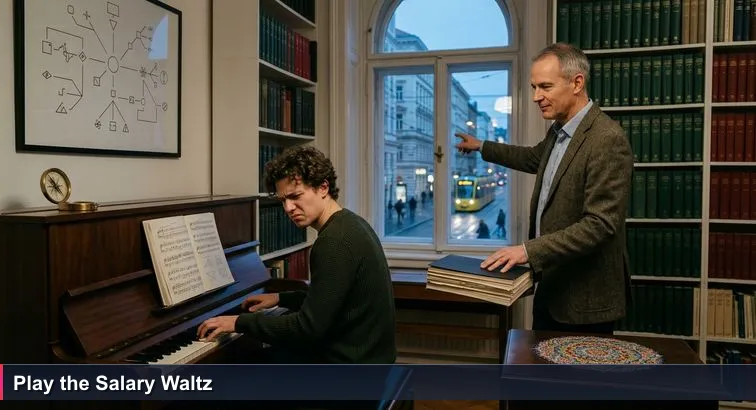
The first time you sit at a piano with a dense page of “An der schönen blauen Donau” in front of you, you can hit every note and still miss the waltz. That’s what my teacher in a creaky Altbau off the Ringstraße pointed out as she gently closed the score and gestured toward the tram sliding past below: “Listen to how the city actually moves.”
Most aspiring developers and data scientists in Austria approach salaries the way I approached that sheet music. An offer of €60k, €75k, even €110k looks flawless on the page, especially if you’ve been scrolling international salary threads or reading generic tech career advice. According to guides like Nucamp’s overview of getting a tech job in Austria, those numbers put you squarely in the upper-middle of the local market.
When the notes hit Vienna’s cost of living
The dissonance starts the first time that “perfect” offer collides with a very real €1,300 rent in Leopoldstadt, plus taxes, social insurance, a Klimaticket, and maybe childcare. Your contract still sings, but your bank account sounds oddly flat. Austria’s progressive tax system and mandatory social contributions compress the gap between entry, mid, and senior levels far more than many internationals expect, a pattern also noted in employer-facing briefings like the Guide to Hiring Employees in Austria.
If you’re aiming for AI or software roles in Vienna, Linz, Graz, or Salzburg, this gap between notation and music becomes existential: can you cover a decent flat, keep up with AI courses, enjoy cafés and concerts, and still save? Or does “good on paper” quietly lock you into a stressed, under-invested lifestyle?
From salary tables to lived rhythm
This guide treats your Austrian tech salary as the score, not the performance. We’ll keep the notes - those €60k-€110k ranges - but focus on how they actually sound once they pass through 14 annual payments, Vienna rents, public transport, and Austria’s generous but front-loaded social state. By the end, you should be able to look at any offer and hear, clearly, whether it will let you live comfortably - or just play along.
In This Guide
- Why Austria’s tech salaries don’t tell the whole story
- Austria’s tech salary landscape in 2026
- From gross to take-home: Austria’s pay structure
- What living in Vienna actually costs
- Housing and where you should live
- Transport choices: Klimaticket, Jahreskarte or car
- Healthcare, social insurance and why it matters
- Families and childcare: can a tech salary support kids?
- How Austria compares to Munich, Zurich and Berlin
- What comfortable living looks like by salary tier
- Practical money moves to stretch your tech salary
- Beating the PowerPoint cap: career moves for AI professionals
- Can you live comfortably in Austria? Verdict and next steps
- Frequently Asked Questions
Discover real projects and portfolio tips in the comprehensive guide to launching an AI career in Austria (2026).
Austria’s tech salary landscape in 2026
Look past the glossy hiring slides, and Austria’s tech pay reveals a clear three-tier structure. Aggregated datasets and projections from tools like SalaryExpert’s software developer benchmarks for Austria place most developers and data professionals into predictable bands tied to experience, with Vienna typically about 10% above the national average.
| Role | Est. Gross Annual Salary | Approx. Monthly Net (14×) | Typical Stage |
|---|---|---|---|
| Entry-level developer | €54,675-€60,259 | ~€2,300-€2,500 | 0-2 years |
| Mid-level developer | €65,000-€78,000 | ~€2,900-€3,400 | 3-6 years |
| Senior / Lead developer | €88,000-€110,000 | ~€3,600-€4,600+ | 7+ years |
Compared with the US or Switzerland, this is often described as a “low-salary, low-cost” environment: lower pay, but also lower housing, transport, and healthcare costs. ERI data for Austrian software engineers confirm that while absolute salaries trail top-paying countries, overall compensation lines up with regional peers when adjusted for prices.
The “PowerPoint cap” and Vienna premium
Talk to senior engineers in Vienna and a pattern emerges: many feel a ceiling around €60k-€80k gross unless they move into management, specialise (AI/ML, security, high-scale cloud, MLOps), or work remotely for foreign employers. OECD analysis of regional labour market imbalances in Austria backs up the geography: Vienna pays more than Graz, Linz, or Salzburg, but competition is sharper.
Where AI and data roles sit
For AI/ML engineers and data scientists, the picture is slightly brighter. Roles clustered around TU Wien, ISTA, AIT, and corporate labs at Microsoft Austria, IBM Austria, AVL, Red Bull, and voestalpine typically land in the upper mid to senior bands, with total packages reflecting scarce skills and project criticality.
From gross to take-home: Austria’s pay structure
On your contract, a gross of €75,000 looks like a fortissimo chord; on your Kontoauszug, it can feel more like a muted pizzicato. The gap is Austria’s mix of progressive income tax and substantial social insurance contributions, which you pay for up front so you don’t pay them in crisis.
What disappears before payday
- Social insurance (employee share), including:
- Health insurance: 3.87% of gross salary
- Plus pension, unemployment, accident and other pillars
- Income tax (Lohnsteuer), with higher brackets kicking in above roughly the €60k band
Your employer also contributes on top of your salary (for health alone, another 3.78% of gross), as outlined in Work in Austria’s overview of the social system. You never see that money, but it underwrites healthcare, pensions, and unemployment protection.
The 14-salary rhythm
Unlike many countries’ 12-pay systems, Austrian employees usually receive 14 payments: 12 normal months plus one holiday bonus (Urlaubsgeld) and one Christmas bonus (Weihnachtsgeld). Those 13th and 14th salaries are taxed at a lower rate, so while your regular monthly net looks modest, your effective annual net is higher than a quick division might suggest.
How gross turns into lived net
Run the numbers for a single person with no children and you get a surprisingly consistent pattern. Around €40,000 gross yields roughly €2,100 per payout on a 14× schedule, smoothing to about €2,450 per calendar month. At €60,000, you land near €2,400-€2,500 per payout, or about €2,800-€2,900 per month when averaged over 12 months. A gross of €75,000 translates to around €3,400 per payout (~€3,950 calendar net), while €110,000 lands near €4,600 per payout (~€5,350-€5,400 calendar net).
To see your own rhythm - factoring in marriage, children, or church tax - use the official BMF Brutto-Netto-Rechner. Once you hear what your “€75k” actually sounds like month by month, it becomes much easier to judge any offer against real Viennese life.
What living in Vienna actually costs
Once your salary has been sliced into net pay, Vienna itself sets the tempo. Daily life here is cheaper than Zurich or Munich but noticeably pricier than smaller Austrian cities, especially once rent enters the score. Estimates from student-focused guides like Study in Austria’s living cost overview put a single person’s monthly expenses (including rent) around the mid four-figure range, with Vienna near the top of the national spectrum.
| Category | Entry (€40k gross) | Mid (€75k gross) | Senior (€110k gross) |
|---|---|---|---|
| Est. Monthly Net | €2,100 | €3,400 | €4,600 |
| Rent (1-2 rooms) | €850 | €1,200 | €1,600 |
| Utilities & Internet | €250 | €350 | €450 |
| Food & Groceries | €350 | €450 | €600 |
| Transport | €40 | €40 | €200 (Car+Train) |
| Insurance/Fees | €50 | €100 | €150 |
| Savings/Investment | €300 | €700 | €1,000 |
| Discretionary | €260 | €560 | €600 |
Reading the budget like a score
For an entry-level dev, that €2,100 net leaves room for a modest flatshare or small apartment in an outer district, careful grocery shopping, and some savings. It’s livable, but not lavish. By the mid-level range, Vienna becomes genuinely comfortable: a decent 1-2-room flat in a central-ish district, regular eating out, and €700 or more left to invest monthly.
When the numbers start to sing
At the senior tier, especially if you avoid the most expensive districts, you can support a small family, run a car if necessary, and still save aggressively. Relocation platforms like Relocate.me’s Austria cost-of-living guide echo this pattern: Vienna is not cheap, but for tech workers who keep housing in check, salaries in the €60k-€110k range translate into solid, upper-middle-class lives.
Housing and where you should live
Housing is the cello section of your Vienna budget: deep, constant, and capable of drowning everything else out. National data compiled by market trackers like Investropa’s 2026 rent report for Austria put the average one-bedroom at around €880, but Vienna pushes closer to €1,310, roughly €20/m². Salzburg is even steeper at about €1,380, while Graz hovers near €880 and Linz around €12.65/m², making your postcode one of the biggest levers on quality of life.
Entry-level: staying under €850 in Vienna
With up to roughly €2,500 net, your priority is to cap rent at about €850. That usually means a WG or small flat in outer or mixed districts rather than a solo Altbau in Neubau.
- Budget-friendly districts: 10th (Favoriten), 11th (Simmering), 21st (Floridsdorf), 22nd (Donaustadt), and outer parts of the 15th/16th.
- Typical prices: WG rooms at roughly €450-€650 warm; small studios or 1-room flats further out around €650-€850.
Mid and senior: choosing district over square metres
Once you reach calendar net incomes around €3,300-€5,400, you can safely allocate €1,000-€1,600+ to rent. Mid-level professionals often land in the 2nd (Leopoldstadt), 3rd (Landstraße), or 7th (Neubau), where asking prices around €20/m² can climb to €25-€28/m². Senior engineers with families frequently trade postcard charm for space in districts like 8th, 9th, or 19th (Döbling), where budgets above €1,600 buy 2-3 rooms and green space.
Graz, Linz, Salzburg and the Lower Austria hack
Graz and Linz offer a different equation: lower rents (often €800-€1,000 for a decent 1-2-room flat) paired with growing AI and software scenes, so the same salary buys more room and savings. A powerful alternative is moving just outside the city: guides like Lyght Living’s cost-of-living analysis cite average housing plus running costs around €641 in many Lower Austria commuter towns, turning places like Baden, Mödling, or St. Pölten into serious options if you’re happy with a 30-45 minute train ride.
Housing tactics that change the math
Three moves repeatedly show up in real budgets: start in a WG for 6-12 months to cut costs and learn the city; aim for rent at 25-30% of your net rather than 40%+; and invest time in Vienna’s Genossenschaft and social housing system, where roughly half the rental stock is publicly or cooperatively owned. Add one more rule: avoid shiny micro-apartments sold as “investment properties” - their high €/m² rarely translates into a better everyday life.
Transport choices: Klimaticket, Jahreskarte or car
Moving through Vienna, your choice isn’t really “car or no car” - it’s which rhythm you want your budget to follow. Austria’s public transport network is dense enough that many senior engineers at Microsoft Austria or AIT commute daily without owning a vehicle, a reality underpinned by nationwide products like the Klimaticket, which will cost around €1,400 per year (about €117/month) according to coverage on Vienna’s Klimaticket price changes.
Klimaticket vs Vienna Jahreskarte
For city-based devs and data scientists, the workhorse is the Vienna annual pass (Jahreskarte): from 2026 it rises from the symbolic €365 to €467 per year, or roughly €39/month, for unlimited travel on Wiener Linien. The Klimaticket Österreich extends that idea across almost all trains, buses and trams nationwide for €1,400/year. If you mostly live and work inside the Gürtel, the cheaper Jahreskarte usually wins; if you’re splitting time between, say, Vienna, Linz, and Graz, the Klimaticket can pay for itself in a few ÖBB trips.
The real cost of owning a car
By contrast, a car in Austria adds a steady drone to your finances. Before you even turn the key, you’re often facing €200+ per month in fixed costs: insurance, registration, motor tax, parking (garages or resident permits), and basic maintenance. Fuel typically sits around €1.50-€2.00 per litre, and urban parking fines quickly punish mistakes. Cost-of-living breakdowns such as HousingAnywhere’s Austria guide consistently flag car ownership as one of the fastest ways to erode the savings advantage of living here.
Rules of thumb for tech workers
For most entry and mid-level professionals in Vienna, the optimal strategy is simple:
- On entry-level salaries, stay car-free and buy the Vienna Jahreskarte.
- On mid-level incomes, consider a Klimaticket if you regularly commute between cities or visit family across Austria.
- Reserve car ownership for cases where public transport truly fails you: rural living, client-heavy field roles, or complex family logistics.
Viewed this way, your transport decision isn’t about comfort vs inconvenience; it’s about whether you want to lock in another €200 every month, or redirect that money into savings, ETFs, or the next AI course.
Healthcare, social insurance and why it matters
When you look at your Austrian payslip, social insurance can feel like a heavy left hand on the keyboard: deductions for health, pension, unemployment, accidents, and more. But this is also why a “modest” Austrian net salary stretches further than it might in countries where you pay out of pocket for every GP visit or MRI.
As soon as you are employed, you are automatically enrolled in the statutory health system. According to Expatica’s guide to health insurance in Austria, standard coverage includes family doctors, most specialist care, hospital treatment in shared wards, and essential medications with small co-pays. You don’t shop for a basic policy; it’s built into your employment and administered through regional funds like the ÖGK.
For many tech workers, the only extra healthcare line in the monthly budget is optional top-up insurance. Banking platforms like N26 note that supplementary plans for private rooms, shorter waiting times, or access to specific doctors typically run about €45-€85 per month for adults, depending on age and benefits, as outlined in their overview of Austrian health insurance.
This changes the affordability equation. You may see a bigger slice of gross salary vanish into taxes and social contributions than in some neighbouring countries, but you are not also writing cheques for basic health coverage or worrying that a broken arm will wipe out your savings. That stability matters if you’re planning a long AI or data career here: it lets you budget more confidently for upskilling, side projects, or a sabbatical without needing a six-figure emergency fund.
In other words, part of your “compensation” is invisible but real: predictable access to care, risk pooled across the whole workforce, and less need to self-insure against medical catastrophe.
Families and childcare: can a tech salary support kids?
If you are thinking about children, Austria’s financial landscape suddenly shifts from solo budgeting to long-term risk management. The same net salary that felt generous in a Neubau WG has to stretch across rent, food, childcare, and a few unexpected fevers in February.
The good news is that childcare is where Austria quietly shines. Comparative analyses such as The Local’s look at childcare costs across the OECD place Austria on the lower end of out-of-pocket expenses thanks to heavy subsidies. In Vienna, many municipal Kindergärten are free or charge only nominal fees; parents primarily pay for food, activities, and extended hours. Outside Vienna, costs vary more by Bundesland and municipality, but they generally remain far below UK- or US-style private daycare bills.
Once you factor in rent, food, and transport, most estimates for a family of four in Austria land between €3,500-€5,200 per month including housing. On a single mid-level tech income of around €65k-€78k gross, that range is possible but tight in Vienna unless you secure below-market housing (social or Genossenschaft flats, outer districts, or Lower Austria commuter towns) and your partner also brings in at least part-time income.
At the senior end, a gross of roughly €90k-€110k transforms the equation, especially if you avoid high-end inner districts and unnecessary car ownership. With careful choices, that level of pay can cover a family apartment, subsidised childcare, and meaningful monthly savings. Overlooked supports like Familienbeihilfe and Kinderbetreuungsgeld effectively boost your purchasing power further, even though they never appear in your job offer.
For AI and software professionals planning a family, the practical move is to model your budget before you accept an offer: map net income against realistic rent and childcare in your specific Bundesland, then add in public benefits. Resources like UpGrad’s cost-of-living breakdown for Austria are a useful starting point, but your real leverage will come from optimising housing and aiming your career toward roles that reliably reach those mid-to-senior salary bands.
How Austria compares to Munich, Zurich and Berlin
When a recruiter from Munich, Zurich or Berlin slides into your inbox with a bigger number, it’s tempting to hear only volume, not context. But in Central Europe, the relationship between salary and lifestyle is anything but linear; housing markets, transport costs, and healthcare models all reshape what those euros can actually buy you.
Take Munich. Tech salaries are usually higher than in Vienna, but the Bavarian capital struggles with one of Germany’s worst housing shortages. Several cross-country comparisons estimate Vienna’s overall living costs as roughly 10-15% lower than Munich’s once rent is included, even though Vienna remains one of Austria’s priciest cities. Guides like Europa.jobs’ deep dive on life in Austria highlight how a dense supply of social and cooperative housing helps cap long-run rent inflation in Vienna in a way Munich can only envy.
Zurich sits on a different planet again. Gross pay for senior engineers can dwarf Austrian offers, especially in finance and big tech, but so do basic expenses: cost-of-living trackers consistently place Zurich’s total expenses - particularly housing, health insurance, and eating out - at roughly 50-70% higher than in Austria. That means your headline salary has to work much harder just to stand still.
Berlin used to be the obvious “cheap and cool” alternative, but a decade of rapid rent increases has narrowed the gap. Today, central Vienna and central Berlin are often comparable on rent, while Vienna tends to win on transport quality, safety, and public services. Overviews such as Rent ‘n Connect’s guide to the best European countries for digital nomads repeatedly flag Austria’s mix of strong infrastructure and moderate prices as a sweet spot.
So when you compare offers, don’t just stack gross salaries. Translate each into rent, transport, healthcare, and childcare in its city. Only then can you hear whether Munich, Zurich, Berlin - or staying in Vienna - plays the melody you actually want to live in.
What comfortable living looks like by salary tier
Translate the salary bands into daily life, and three distinct pictures emerge: scraping by but advancing, comfortably settled, and genuinely spacious. The exact feel depends on your city, rent, and whether you’re solo or supporting a family, but the broad outlines are surprisingly consistent across Austrian tech workers.
Entry-level: ~€40k-€55k gross
With an approximate calendar net around €2,400-€2,900 per month, Vienna is livable but constrained. You can usually afford a WG room or small flat in a cheaper district, cover basics, and still save roughly €200-€400 if you watch discretionary spending. Eating out regularly in the 7th or 1st will hurt; cooking at home and using a Vienna Jahreskarte keeps things sane. Guides like InterNations’ overview of life in Austria mirror this: young professionals can live decently, but big luxuries tend to wait for later.
Mid-level: ~€65k-€78k gross
At this stage, calendar net typically climbs to about €3,300-€3,950. In Vienna, that usually means a private 1-2-room flat in a central-ish or well-connected district, regular cultural outings, and the ability to save or invest roughly €500-€1,000 per month. In Graz or Linz, with lower rents, the same income buys more space and even stronger saving potential. For singles and couples without kids, this is where “comfortable city life” really starts.
Senior/lead: ~€88k-€110k gross
Once you reach calendar net incomes around €4,200-€5,400, the conversation shifts from survival to design. You can pick between a larger flat in an outer district or a premium 2-3-room place closer in, support a small family, run a car if you truly need one, and still save aggressively. Cost-of-living analyses such as GetGIS’s breakdown for Vienna show that, at this level, housing choices and car ownership become preferences rather than necessities driven by price.
Across all tiers, the pattern is clear: keep rent and transport from dominating your score, and even Austria’s “low-salary, low-cost” tech market can fund a lifestyle that feels composed, not improvised.
Practical money moves to stretch your tech salary
Once you know what your net actually is, the game shifts from “Is this salary good?” to “How do I design a life that fits it?” In Austria’s tech market, where many roles cluster in the €60k-€80k band, optimisation of housing, transport, and daily spending often matters more than squeezing another €2k of gross out of an offer.
Design your fixed costs first
Your biggest wins come from how you lock in the non-negotiables:
- Keep rent around 25-30% of net income, not 40%+. That often means a WG or outer district at first, even on mid-level salaries.
- Use the 14-pay rhythm intentionally: treat the 13th and 14th salaries as automatic savings or tuition for courses, not extra spending money.
- Aim to save 10-15% of net at entry level and 20%+ once you hit mid-tier roles.
Housing and location arbitrage
Statistik Austria’s breakdown of housing costs by region and tenure shows just how much your address dictates your budget. Use it:
- Start in a WG for 6-12 months; cutting rent by €300-€500 monthly can fund an emergency cushion or an AI course in under a year.
- Explore Lower Austria commuter towns where total housing plus running costs around the mid-€600s are realistic; dropping Vienna rent from €1,200 to €800 frees nearly €4,800 per year.
- Investigate Genossenschaft and social housing once you have residency history; waiting a bit can lock in long-term below-market rents.
Transport and everyday optimisation
On the mobility side, a Vienna Jahreskarte plus occasional long-distance tickets is usually cheaper than owning a car that eats €150-€250 per month before fuel. For food, swapping daily lunches out for cooking and Mensa meals, and using discounters for staples, often brings monthly groceries into the €300-€450 band cited in academic cost-of-living surveys like EDISS’s Austrian estimates.
The point isn’t austerity; it’s buying room. Every euro you don’t park in rent or idle car costs is a euro you can direct into ETFs, a buffer for switching jobs, or the next AI/ML course that nudges you from plateaued mid-level dev into genuinely scarce specialist.
Beating the PowerPoint cap: career moves for AI professionals
By the time you hit senior engineer in Austria, you may notice an invisible ceiling: salaries in pure coding roles flatten while managers who live in slide decks keep climbing. Locals call it the PowerPoint cap. The way past it, without abandoning code, is to move from being “a developer in Austria” to being one of the relatively few people who can actually ship AI systems that matter to companies like AVL, voestalpine, or Microsoft Austria.
Choose scarcity: AI, MLOps, and product impact
Employers aren’t short of generic developers; they’re short of people who can:
- Design and deploy ML pipelines end to end (data, models, monitoring).
- Integrate LLMs into real products with reliability and guardrails.
- Sit between business and research teams at places like TU Wien or AIT and turn prototypes into production.
This aligns with what labour analysts describe as a skills, not jobs, crisis, where adaptable specialists command the real bargaining power. Remote-first platforms echo the same pattern: according to Lemon.io’s rate benchmarks for Austria-based engineers, niche expertise is what unlocks significantly higher hourly rates for cross-border work.
Upskill without blowing your Austrian ROI
In a market where even solid mid-level roles don’t justify €10,000+ tuition, the economics of training matter. Nucamp leans into that constraint: its Back End, SQL and DevOps with Python bootcamp runs for 16 weeks at €1,950, giving you the Python, database, and cloud foundations that every ML role expects but few CVs demonstrate. From there, you can stack targeted AI programs: AI Essentials for Work (15 weeks, €3,300) if you want to be the “AI multiplier” inside your current team, or the Solo AI Tech Entrepreneur track (25 weeks, €3,660) if you’re serious about launching LLM-powered products yourself.
“I searched and searched for a bootcamp I could afford and Nucamp was the best option for me.” - Nucamp graduate, career changer
Those prices sit in a different universe from five-figure bootcamps, yet outcomes hold up: around 78% employment, roughly 75% graduation, and a 4.5/5 Trustpilot rating with about 80% five-star reviews. That means the pay bump from one good AI-heavy role can repay tuition in months, not years.
Turn new skills into leverage, not just knowledge
The final move is strategic: use projects from these programs to build a portfolio that speaks directly to Austrian and EU employers - industrial anomaly detection for an AVL-style use case, marketing analytics for a Red Bull-type brand, or logistics optimisation reminiscent of ÖBB or voestalpine. With that in hand, you can negotiate raises, pivot into AI specialist roles, or secure remote contracts that pay on a different scale, all while keeping Vienna’s quality-of-life advantages.
Can you live comfortably in Austria? Verdict and next steps
Stepping back from all the tables and tax brackets, the verdict is more nuanced than a simple yes or no. Austria’s tech salaries won’t make you rich by San Francisco or Zurich standards, but paired with Vienna’s public transport, social housing, healthcare, and subsidised childcare, they do support a genuinely comfortable, upper-middle-class life for most developers and AI professionals who design their costs intentionally.
For a single person or couple, even entry and mid-tier roles can fund a decent flat, regular café visits, and steady saving, as long as you keep rent within a sane slice of your net income and stay mostly car-free. For families, comfort tends to arrive at the senior bands or via dual incomes, but the combination of Kinderbeihilfe, subsidised Kindergärten, and public schools means you are not fighting the same brutal childcare and tuition bills that dominate budgets in many other countries. In other words: Austria’s system trades some headline salary for much lower long-term financial stress.
- If your current offer feels tight, first optimise housing and transport before assuming you need to emigrate.
- If you’re plateauing at a “PowerPoint cap”, invest in skills that are scarce in Austria’s AI and data ecosystem.
- If you’re unsure about staying, compare full lifestyle costs across cities, not just gross numbers.
Next steps are practical rather than heroic: build a detailed 12-month cashflow with 14 payslips; model different rent and commuting scenarios; then decide what you need to change - employer, city, or skill set. For many, that last lever is the most powerful. Affordable, structured programs like Nucamp’s bootcamps, which range from a 4-week Web Development Fundamentals course at €420 to an 11-month Complete Software Engineering Path at €5,200, give you realistic ways to move into better-paying backend, AI, or cybersecurity roles without taking on five-figure debt. As a recent guide to working in Vienna’s tech scene put it, the sweet spot here is “solid salaries paired with services that let you actually enjoy them.”
Return to that Altbau piano for a moment: the notes on the page haven’t changed, but once you feel the city’s rhythm, you play them differently. Understanding Austria’s salaries, costs, and safety nets works the same way. When you hear the full arrangement, staying in Vienna - or Linz, Graz, or Salzburg - stops being a consolation prize and becomes a conscious, well-funded choice.
Frequently Asked Questions
Can I actually live comfortably in Vienna on a typical tech salary in 2026?
Yes - but it depends on the salary tier: a mid-level tech salary (€65k-€78k gross) typically nets about €3,300-€3,950 per calendar month and lets a single person rent a decent 1-2 room flat (€1,000-€1,300) while saving €500-€1,000/month; entry-level roles require trade-offs (WG or outer districts) and senior roles (€90k-€110k) offer clear financial breathing room.
How much will a €75k gross offer actually put in my pocket after taxes and Austria’s 14 payments system?
A €75k gross salary in 2026 works out to roughly €3,400 monthly net if counted as a 14× payroll, or about €3,950 per calendar month when you smooth the 13th/14th payments; remember employee health insurance alone is ~3.87% of gross and higher tax brackets kick in above ~€60k.
What rent should I budget in Vienna at different career stages?
Aim to keep rent under ~€850/month at entry level (WG or outer districts), budget €1,000-€1,300/month at mid-level for central-ish 1-2 room flats, and expect €1,600+ for senior-level family flats; the Vienna one-bedroom average is about €1,310 in 2026.
Is commuting from Lower Austria a realistic way to reduce living costs?
Yes - many commuter towns 30-45 minutes from Vienna have housing + running costs closer to €640/month, so moving from a €1,200 Vienna rent to €800 in Lower Austria can save ~€400/month; pair that with a Klimaticket (€1,400/year) or Vienna Jahreskarte (€467/year) depending on how often you travel.
How can I realistically escape the ‘PowerPoint cap’ and earn more as an AI/ML professional in Austria?
Specialise in scarce skills (AI/ML, MLOps, cloud infra) or take remote contracts abroad; cost-effective upskilling matters in Austria - bootcamps like Nucamp cost €1,950-€3,660 and can pay back quickly if they move you from a €45k role into the €65k-€75k bracket.
Check our guide to the top 10 apprenticeships and entry-level jobs in Austria if you’re choosing between Lehre, internships or graduate programmes.
Employer comparisons and examples are in the AI pay in Austria 2026 by role and experience section.
For Austria-specific job hunting tips, check this comprehensive guide to cybersecurity employers in Austria (2026).
2026 ranking: top tech coworking spaces & incubators across Vienna, Graz, Linz
This tutorial: become an AI engineer in Austria (2026) gives project templates for manufacturing, finance, and automotive roles.

Irene Holden
Operations Manager
Former Microsoft Education and Learning Futures Group team member, Irene now oversees instructors at Nucamp while writing about everything tech - from careers to coding bootcamps.