









Top 10 Tech Coworking Spaces and Incubators in Austria in 2026
By Irene Holden
Last Updated: April 9th 2026
Too Long; Didn't Read
AI:AT and INiTS are the top picks in Austria for 2026 because AI:AT gives AI and ML teams a dedicated, research-rich coworking hub while INiTS supplies a selective, grant-backed incubator pipeline into Vienna’s funding and university networks. AI:AT hosts 94 workstations and offers free desks for approved AI teams, and INiTS has graduated more than 200 startups and connects founders to Vienna Business Agency and aws programs, making both ideal for anyone wanting direct access to TU Wien, ISTA, Microsoft Austria and other corporate partners.
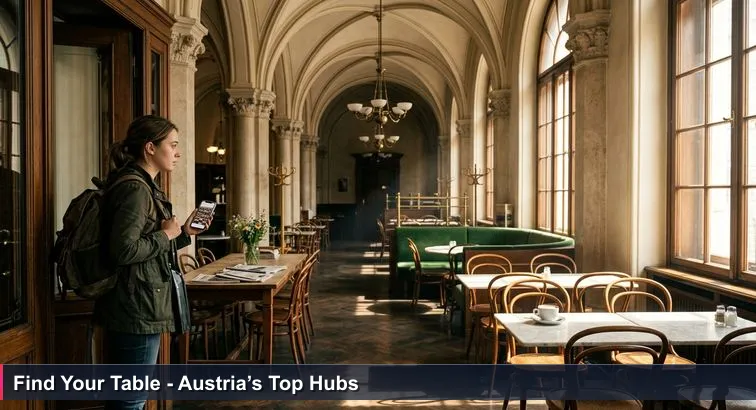
You’re standing just inside a grand Viennese Kaffeehaus, laptop on your shoulder, the smell of fresh Melange in the air. Your phone still shows a “Top 10 Cafés in Vienna” list - but now that you’re here, staring at a hundred very different tables, that ranking suddenly feels useless. Tiny marble rounds by the window, a dark green-velvet booth, a long communal table buzzing with gossip: each one is “the best” for a different person.
Austria’s tech coworking spaces and incubators feel exactly like that. Vienna, Graz, Linz and Salzburg are now packed with options: AI-only hubs, social-impact communities, university-linked incubators, glossy corporate towers. A list can get you into the right room - Impact Hub, AI Factory Austria, INiTS, Science Park Graz, tech2b, weXelerate - but it can’t tell you which specific desk will move your AI or machine learning career forward.
For founders, students and remote engineers, the real decision is about trade-offs:
- Cost vs. value (from €0 up to €600+ per month)
- Community vs. quiet (events, corporates, meetups vs. deep-work corners)
- Access to universities, labs and big employers
- Stage: solo freelancer, early-stage founder, or scaleup team
Compared with Berlin or Munich, Austria’s scene is smaller but denser: hubs are tightly intertwined with TU Wien, TU Graz, JKU Linz and public funding streams mapped by the Vienna Business Agency’s startup hub overview. Prices generally sit below Zurich’s premium coworking market, yet you’re a short train ride from Munich, Prague or Budapest and within reach of employers like Microsoft Austria, AVL or Red Bull.
Think of this Top 10 list - and even your education choices, from a university master’s to an online bootcamp like Nucamp - as a floor plan to Austria’s tech café. Your job isn’t to find “the winner”; it’s to find the table where your current project, budget and ambitions in AI or ML actually fit.
Table of Contents
- Choosing your table in Austria's tech café
- AI:AT - AI Factory Austria
- INiTS
- Science Park Graz
- weXelerate
- Impact Hub Vienna
- tech2b
- Talent Garden Vienna
- COWORKINGSALZBURG Club
- SPACELEND
- Schlosserei Coworking
- How to pick the right space for your AI career
- Frequently Asked Questions
Discover real projects and portfolio tips in the comprehensive guide to launching an AI career in Austria (2026).
AI:AT - AI Factory Austria
If you work in AI or ML and you’re anywhere near Vienna, this is probably the first table you should at least walk past. The AI Factory Austria coworking hub at SOLARIS is a purpose-built home for people who think in models and datasets rather than generic “startups.” It opened in 2024 and offers 94 workstations, labs and event space dedicated entirely to AI projects.
Run by AI:AT, the hub’s mission is to bring together academia, startups and the public sector to turn “AI ideas into reality” in one shared environment. In practice, that means TU Wien and University of Vienna students, ISTA and AIT researchers, and applied teams from ministries or cities working side by side. Early Google reviews give it around 5.0/5, with users highlighting the focus and quality of peers.
The mechanics are unusually generous for deep tech:
- Cost: Coworking desks are free for approved AI teams and researchers under AI:AT’s 2024-2026 program setup.
- Vibe: Deep-tech, researchy, strongly curated; more lab than café, with fewer lifestyle freelancers.
- Location: In Vienna’s eastern business corridor, with fast S-Bahn links to Microsoft Austria, IBM Austria and major banks.
This makes it ideal for AI/ML PhD students spinning out startups, public-sector AI pilots (smart city, energy, mobility), and remote AI engineers who want a research-rich community rather than generalist coworking. Compared with commercial hubs, the main “price” is selectivity: you need a clear AI focus to get in.
For job seekers, the most efficient entry point is events: AI:AT regularly lists talks and meetups via its official news announcements. Offer to present your thesis, Kaggle project or open-source contribution; in a small, curated ecosystem like this, one solid lightning talk can put you on the radar of founders and public-sector partners hiring for applied AI roles.
INiTS
Behind Vienna’s louder startup tables, INiTS feels like the quiet back room where serious deep-tech deals get made. Officially branded as “Vienna’s high-tech incubator”, it is jointly rooted in the University of Vienna and TU Wien and focuses on IT, life sciences and energy. By early 2026, more than 200 startups had graduated from its programs, including dedicated tracks such as Health Hub Vienna and SCALEup.
For AI and ML founders, INiTS is less about open hot desks and more about structured company-building. Expert rankings on platforms like Vestbee’s overview of Austrian accelerators consistently place it among Europe’s strongest academic incubators, describing it as an “ultimate player” for implementing new technologies in Austria.
What you actually get goes far beyond office space:
- Business model validation with mentors who understand IP, regulation and B2B sales in DACH.
- Funding pathways via close ties to aws grants and city or federal programs.
- Research access to TU Wien and University of Vienna labs, supervisors and talent.
The cost model is different from classic coworking. Instead of paying a monthly rent, incubation is typically financed through a mix of public support and a small equity stake. The vibe is selective and mentor-heavy, more like a graduate program than an open community hub, which suits deep-tech and AI spin-offs that need regulatory and scientific credibility.
If you’re at “prototype + first pilot” stage, consider applying to INiTS before signing an office lease in Vienna. Being accepted can give you both validation and subsidised infrastructure - crucial when your burn rate is still measured in ramen, not runway.
Science Park Graz
In Styria’s corner of the tech café, Science Park Graz is the table where hardware, space-tech and industrial AI sit closest to the espresso machine. Tucked beside TU Graz, the Science Park Graz high-tech incubator is part of the national AplusB network and hosts the ESA Business Incubation Centre (ESA BIC) Austria, giving AI teams a direct line into aerospace and advanced engineering projects.
With a Google rating of around 4.9/5 from 35+ reviews, founders and mentors routinely describe it as a “place-to-be” for high-tech startups and a critical catalyst for turning research into globally competitive businesses. Nearly two decades of experience mean the processes around IP, university cooperation and public funding are well tested rather than experimental.
For AI and ML builders, the real edge is proximity. Within the Graz ecosystem, you’re down the road from AVL, Andritz and Magna Steyr, making it a natural base for:
- Predictive maintenance and simulation for automotive and heavy machinery
- Robotics, mobility and logistics optimisation
- Satellite data, earth observation and other space-adjacent use cases
The incubation model combines subsidised office and lab space with mentoring, networking and primarily grant-backed support instead of commercial rent. It’s engineering-heavy and hardware-friendly, ideal for TU Graz spin-offs and ESA-linked projects that need benches, not just beanbags. Compared to many coworking spaces in Vienna, the vibe is less lifestyle-startup, more focused product and R&D work.
Even if you’re a freelancer or consultant rather than an incubated startup, it’s worth orbiting Science Park. Demo days and pitch events, which are regularly highlighted in overviews like SeedBlink’s guide to Austrian startup programs, attract product teams from AVL or Andritz who are scouting external talent. Bring a one-pager that translates your ML skills into concrete savings on downtime, scrap or energy use - that’s the language local industry speaks.
weXelerate
Perched in Vienna’s glassy Design Tower, weXelerate is what happens when a corporate HQ and a startup loft share the same 9,000-square-metre floor plan. Consistently described in overviews like the Top 13 accelerators in Vienna as one of Central Europe’s largest innovation hubs, it brings banks, insurers, industry players and startups together in one high-gloss environment.
On Google, the hub holds a rating of around 4.7/5 from 190+ reviews, with visitors emphasising the quality of events and the dense corporate network. Memberships reportedly start at roughly €590 per month, putting weXelerate at the premium end of Vienna’s coworking spectrum - closer in price to Zurich-style offices than to casual hot-desk spaces in Neubau.
What you get for that price is access. Regular programs and demo days draw teams from Raiffeisen Bank International, Erste Group and other large employers experimenting with fintech, regtech, data and applied AI. For SaaS and AI scaleups that sell into enterprise, it functions less as “a nice place to sit” and more as an outbound sales channel embedded in your rent.
- Ideal for: later-stage SaaS and AI teams, corporate innovation units, and foreign companies setting up a Vienna foothold.
- Less ideal for: solo freelancers who mainly need a cheap desk and silence.
- Vibe: pitch nights, partner days, and steady streams of suits and hoodies sharing the same espresso machine.
If you join, treat the membership fee as customer acquisition cost rather than office rent. Prepare concise, sector-specific use-cases - one each for banking, insurance and perhaps energy - and use public events (which also appear in broader coworking roundups like Austria’s coworking rankings) to test those narratives. The real ROI comes when a 5-minute pitch at weXelerate turns into a paid PoC with a DACH corporate.
Impact Hub Vienna
In Vienna’s startup café, Impact Hub is the long, communal table in Neubau where founders, NGOs and developers squeeze in together and actually talk. As one of the city’s oldest innovation communities, Impact Hub Vienna consistently earns around 4.6/5 on Google (300+ reviews) and is often described as “synonymous with community and innovation.” For many AI and data people, it’s the place where a side project in climate or health quietly turns into a real venture.
Pricing is deliberately accessible by Vienna standards. Typical 2026 memberships look like:
- Day pass: ~€20
- Flex 5 days/month: ~€75
- Unlimited hot desk (Resident): ~€195/month
- Dedicated desk: ~€275/month
- Private office: from ~€500/month
Under the surface, the infrastructure is more serious than the cosy vibe suggests: 1/1 Gbit fibre internet, multiple phone booths, ergonomic chairs and a dense calendar of meetups. According to Impact Hub’s own overview of coworking spaces in Vienna, the focus is firmly on impact, with many resident teams in climate, circular economy, inclusion, health and education.
For AI/ML practitioners, that translates into real-world problem statements rather than abstract datasets. You’ll meet NGOs needing analytics on poverty or refugees, corporates piloting sustainability dashboards, or early-stage founders experimenting with GPT-style tools for education and public services. It’s an especially strong fit if you care about govtech, climate tech or digital health, and want domain experts sitting within arm’s reach.
A practical approach is to start with a Flex or Resident membership for one or two months and treat events as your main funnel. When someone asks what you do, answer with a concrete challenge you’re exploring (“I’m prototyping ML ops for ESG reporting”); Vienna’s ecosystem is small enough that someone at the table often knows a product owner at Erste, RBI or a local impact startup who’s wrestling with exactly that problem.
tech2b
On Austria’s industrial side of the tech café, tech2b is the Linz table where prototypes meet factory floors. As Upper Austria’s main high-tech incubator, closely tied to Johannes Kepler University (JKU), tech2b has earned a Google rating of about 4.9/5 from nearly 30 reviews, reflecting how founders see it as a practical launchpad rather than a lifestyle brand.
The core offer is straightforward and founder-friendly. Early-stage tech companies receive free office space, targeted training and structured mentoring, plus access to investor and corporate networks in the region. Instead of paying traditional rent, most teams participate in publicly funded programs and, in some cases, accept a small equity component in exchange for intensive support.
Location is the other big asset. Linz is home to voestalpine, Borealis and a dense cluster of suppliers, making tech2b especially attractive if you’re working on:
- AI/ML for steel, chemicals, automotive or industrial IoT
- Process optimisation, quality control or predictive maintenance
- Data platforms serving production, logistics or energy management
The vibe reflects that context: more overalls and process diagrams than hoodies and pitch decks. It’s practical, industrial and focused on turning validated prototypes into products that can withstand a factory audit. That fits neatly with Upper Austria’s ambition, highlighted in talks like Venionaire’s “New Startup Hub in Austria,” to become a serious counterweight to Vienna in deep-tech and manufacturing innovation.
If you’re an early founder building predictive maintenance or optimisation tools, use tech2b’s network to spend time on the shop floor. Ask for a shadowing day at voestalpine or another plant and design your MVP around actual sensor data, downtime patterns and operator workflows, not just Kaggle datasets. In this ecosystem, credibility with engineers is often your most important KPI.
Talent Garden Vienna
On the digital side of Vienna’s tech café, Talent Garden is the polished table in Alsergrund where product managers, designers and engineers quietly ship things. Often mentioned in roundups like TechMeetups’ overview of the best coworking spaces in Vienna, the campus blends startup energy with a more curated, professional crowd than you’ll find in many generic shared offices.
Google reviewers give Talent Garden Vienna roughly a 4.6/5 rating (100+ reviews), praising the clean design, reliable infrastructure and international atmosphere. While prices vary by plan, hot-desk memberships generally start in the low hundreds of euros per month, with dedicated desks and private offices higher. That positions it between low-cost community hubs and premium corporate spaces like weXelerate.
The member mix matters if you work in AI or ML. You’re likely to sit next to:
- Product managers from SaaS scaleups validating new features
- UX/UI designers testing flows for fintech or health apps
- Content and growth teams running experiments across the DACH region
For an ML engineer or data scientist, that cross-functional density is gold: you can walk a few metres to sanity-check a recommendation model with a designer, or co-design an analytics dashboard with a marketer who actually owns the KPI. In broader ecosystem mappings like ensun’s list of Austrian coworking companies, Talent Garden repeatedly shows up as the default choice for digital entrepreneurship rather than hardcore research.
It’s particularly well-suited to remote employees of foreign companies who want a credible “Vienna office,” and to founders who sell to marketing, product and design teams. If your AI work lives inside SaaS, marketplaces or content platforms, this is where your closest collaborators naturally hang out.
COWORKINGSALZBURG Club
Far from Vienna’s Gürtel, COWORKINGSALZBURG Club is the kind of table where you stay long enough that everyone knows your name. With a 5.0/5 rating from more than 110 reviews, it’s repeatedly praised for a “unique community” and a professional yet relaxed environment that feels more like a long-term crew than a transient hot-desk crowd.
The model is deliberate: Club members commit to a minimum 4-month stay. That single condition filters out short-term passers-by and creates a stable network of freelancers, small teams and remote workers who see each other week after week. Infrastructure is firmly tech-ready, with gigabit Wi-Fi, proper meeting rooms and all the basics you’d expect from a modern workspace serving developers and consultants.
Salzburg itself is an underrated tech node. In the north of the city, Science City Itzling and the Techno-Z campus cluster research institutions and startups, while regional employers like Red Bull and Palfinger create demand for media, sports and industrial tech. COWORKINGSALZBURG sits in the middle of that ecosystem as the everyday base for people who’d rather look at mountains than ring roads.
For AI and ML professionals, the sweet spot is applied work for SMEs and regional brands: recommendation systems for e-commerce shops in the Alps, computer vision for tourism or logistics, analytics for sports and media. In rankings such as Tracxn’s overview of Austrian coworking companies, COWORKINGSALZBURG is highlighted exactly for this mix of strong infrastructure and community.
If you’re a freelancer or remote employee planning to stay in Salzburg for a while, treat the 4-month minimum not as a constraint but as a runway for relationship-building. Host a lunch-and-learn on GPT tooling or analytics for small businesses, and turn fellow members into your first recurring clients in the region.
SPACELEND
Among Graz’s many tables, SPACELEND is the flexible, good-value option where freelancers and small teams can slide in and out as their projects grow. As one of the city’s most visible independent coworking spaces, SPACELEND’s reviews on Wheree highlight a friendly, supportive team and an “inspiring atmosphere” that punches above its price point.
Users give it roughly a 4.8/5 rating from more than 80 reviews, often mentioning the combination of bright open areas and quieter corners for calls or deep work. Large seminar rooms and workshop spaces are a particular draw if you run trainings or want to host small meetups without paying Vienna-level event prices. Compared with the premium offices featured in broader overviews like RentOfficeToday’s analysis of Vienna office costs, SPACELEND sits firmly in the “good value” camp for a university city.
Location-wise, it places you within easy reach of TU Graz and the surrounding tech cluster without tying you into a formal incubator program. That makes it a natural base if you’re still pre-incubator, testing an idea on evenings and weekends, or freelancing for multiple clients while deciding whether to spin out a product. Many members are developers, designers and small agencies, giving AI/ML practitioners a ready-made pool of potential collaborators and early adopters.
- Ideal for: solo freelancers, small remote teams, and early-stage founders who aren’t yet ready for Science Park-style structure.
- Pricing: competitive monthly fees for hot desks and compact offices, plus hourly rates for meeting and seminar rooms.
- Vibe: relaxed, creative and professional without feeling corporate.
If you’re a student or junior engineer in Graz, consider co-organising a small AI/ML study group or workshop here. It’s a low-pressure way to meet peers, practise explaining your work, and catch the eye of local employers who increasingly drop by community events to scout emerging talent.
Schlosserei Coworking
Tucked into Dornbirn’s creative scene, Schlosserei Coworking - “Raum für Innovation” - feels less like a generic office and more like a carefully designed studio for knowledge work. Regulars describe it as a vibrant and modern environment with “fabulous working conditions,” where industrial heritage meets clean, contemporary interiors.
The basics are exactly what remote developers and data people need: high-speed internet, well-equipped meeting rooms, phone-friendly corners and enough natural light to get through long debugging sessions. Reviews gathered in broader analyses such as CoworkIntel’s overview of Austrian coworking spaces consistently highlight the professional setup and the friendliness of the small but engaged community.
Dornbirn’s geography is Schlosserei’s secret weapon. Sitting close to both the Swiss and German borders, it offers a rare mix:
- Access to DACH clients in Zurich, St. Gallen or southern Germany
- Austrian cost levels for everyday life and desk space
- Short travel times for on-site workshops or project kick-offs
That makes it particularly interesting if you’re a freelancer or small AI/ML team billing in francs or euros while preferring an Austrian home base. You can maintain Swiss or German rates, work day-to-day from Dornbirn, and present a polished business address instead of a home office.
Membership options are regionally competitive, with monthly plans for locals and day passes for cross-border commuters or visitors. For many, the real value isn’t the coffee or the furniture, but the calm, focused atmosphere: you get enough buzz to avoid isolation, without the event overload of Vienna or Munich. It’s a good fit if you want to build models, not just your LinkedIn feed.
How to pick the right space for your AI career
By the time you’ve browsed a few websites, every Austrian hub starts to look like the same stylish desk with good Wi-Fi. The real filter isn’t the furniture; it’s who you are right now in your AI journey and what problem you’re trying to solve this year, not in some abstract five-year plan.
Start with your situation
Instead of hunting for a single “best” space, get specific. Are you a solo data scientist selling services, a TU Wien graduate spinning out a model from your thesis, or a scaleup team closing pilots with banks? Each profile optimises for a different mix of cost, structure, visibility and access to employers like Microsoft Austria, AVL or Red Bull.
Quick comparison by profile
| Profile | Primary goal | Example spaces | Cost / commitment signal |
|---|---|---|---|
| Solo freelancer / consultant | Find recurring clients and avoid isolation | Impact Hub Vienna, COWORKINGSALZBURG, SPACELEND | Lower cost; month-to-month or 4-month club model |
| Early-stage founder (pre-seed) | Validate product and unlock public funding | AI:AT, INiTS, Science Park Graz, tech2b | Subsidised or free space; selective entry, program timelines |
| Scaleup team | Land enterprise pilots in DACH/CEE | weXelerate, private offices in major hubs | Premium memberships; events as customer acquisition |
| Company satellite office | Test Austrian/CEE market with minimal fixed costs | weXelerate, Talent Garden, Schlosserei | Medium-to-high; flexible office footprints |
| Remote employee | Build a local network and keep a routine | Impact Hub, Talent Garden, SPACELEND | Mid-range hot desks; easy to scale days up or down |
“Austria & Vienna’s emergence as the transformative leader of the future CEE & Central EU…” - Included VC, ecosystem analysis on Medium
Make it an experiment
Treat your choice like an A/B test. Use day passes or short memberships to compare one research-heavy space with one sales-oriented hub, and track hard outcomes: leads, collaborations, code shipped. Many of the fast-growing teams featured in lists such as EU-Startups’ Austrian startup roundups moved tables as they scaled - from university incubators into corporate-facing hubs.
Your AI career will likely follow the same path: early on, you may need mentors and free lab desks; later, you’ll want boardrooms and enterprise buyers. The point isn’t to find one perfect seat forever. It’s to know when it’s time to pick up your laptop, thank the waiter, and slide over to the next table that fits who you’ve become.
Frequently Asked Questions
Which coworking or incubator is best for AI and machine-learning teams in Austria?
For pure AI/ML work, Vienna’s AI:AT (AI Factory Austria) is the first stop - it runs a 94-workstation AI-focused coworking hub and offers free desks for approved teams. INiTS is the better choice for university spinouts needing structured mentoring, while Science Park Graz is strongest if your AI work ties into hardware or automotive partners like AVL.
How much should I budget for coworking or incubation in Austria, especially Vienna?
Expect a wide range: day passes from ~€20, community hot-desks like Impact Hub resident tiers around €195/month, and premium hubs such as weXelerate starting near €590/month; many incubators (INiTS, tech2b, Science Park) offer heavily subsidised or equity-backed space rather than classic rent. Regional hubs (Graz, Linz, Salzburg) are generally cheaper than Vienna and still give strong industry links.
I'm a solo data scientist - should I join a community coworking or apply to an incubator?
If you’re freelancing or switching into AI/ML, choose community spaces (Impact Hub, Talent Garden, SPACELEND) for networking and client leads; if you’re turning research into a startup you’ll likely need an incubator (INiTS, AI:AT, Science Park) for funding, mentoring and lab access. Coworking costs are predictable and good for short-term networking, while incubators demand selection and often equity or program commitments.
How should I decide between Vienna, Graz, Linz and Salzburg for a tech workspace?
Pick Vienna for central European corporate access and research ties (TU Wien, Microsoft Austria, IBM Austria), Graz for hardware, automotive and ESA-linked projects (Science Park, AVL), Linz for industrial AI and voestalpine collaborations (tech2b), and Salzburg if you prefer a tight-knit community and media/sports tech links like Red Bull. Consider that Vienna is denser and costlier, while regional hubs often give cheaper, more industry-focused opportunities.
Do coworking spaces and incubators in Austria help with funding, pilots or university collaborations?
Yes - many incubators and AI hubs are directly connected to funding bodies and universities: INiTS has graduated 200+ startups and links into Vienna Business Agency and aws programs, AI:AT explicitly bridges academia and public-sector pilots, and Science Park hosts ESA BIC for space tech collaborations. These connections often accelerate pilot deals and grant access that you’re unlikely to get from a generic desk alone.
See which sectors made the list in our piece on the top industries for AI jobs in Austria beyond the usual tech giants.
Top Austrian AI startups to watch - Vienna’s Top 10 for AI professionals
Complete breakdown: AI & developer salaries vs living costs across Vienna, Graz, Linz (2026)
For founders, the best Women in Tech groups and startup resources in Austria 2026 section distils funding and accelerator options.
Explore our AI meetups and community guide for Austria (2026) to learn how to turn events into job leads.

Irene Holden
Operations Manager
Former Microsoft Education and Learning Futures Group team member, Irene now oversees instructors at Nucamp while writing about everything tech - from careers to coding bootcamps.