









Top 10 Tech Jobs That Don't Require a Degree in Austria in 2026
By Irene Holden
Last Updated: April 9th 2026
Too Long; Didn't Read
Junior Software Developer and Junior DevOps/Cloud Operator top the list of tech jobs you can get in Austria in 2026 without a degree, because employers increasingly hire for demonstrable skills and Vienna alone lists more than 300 IT openings with over 500 ICT roles nationwide. Entry pay typically starts around €30,000 up to about €50,000 depending on the role (junior developers often near €38,000 and cloud roles near €40,000), and a focused six to twelve month plan - combining projects, a Nucamp bootcamp, and practical certs like Azure Fundamentals or CompTIA Security+ - will get you interviews across Vienna, Graz, Linz and Salzburg.
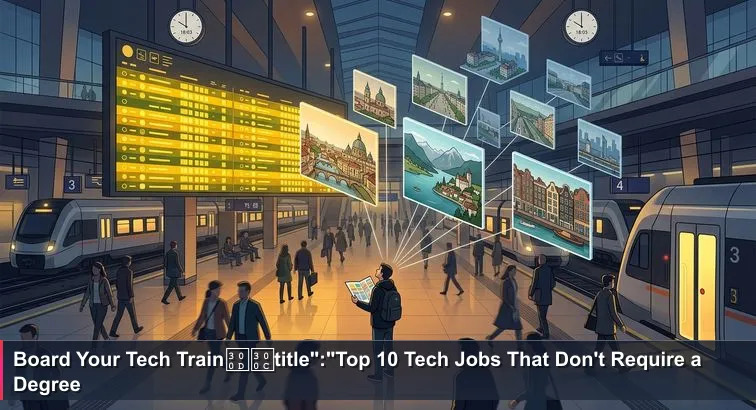
The hall hums with echoes and rolling suitcase wheels. Above you, the departure board at Wien Hauptbahnhof flickers: Graz in 9 minutes, Linz in 14, Salzburg running late, Budapest on another platform. A train door beeps as it’s about to close, but you’re standing still, backpack on, phone in hand, staring at yet another “Top 10 Tech Jobs Without a Degree” article.
Austria’s tech market looks just as overwhelming. Glassdoor regularly shows 300+ IT openings in Vienna alone and well over 500 ICT roles across Austria at any given moment, from junior devs to cloud and security specialists. At the same time, headlines shout Fachkräftemangel, while your inner voice replies: “But I don’t have a degree. Can I really get on any of these trains?”
From ranked lists to real platforms
Recruiters here are slowly answering “yes.” An overview of the top in-demand skills in Austria highlights software development, data skills, and cybersecurity rather than specific diplomas. Schulmeister Consulting, who specialise in IT recruiting in Austria, put it bluntly:
“Tech stack matters more than the job title.” - Schulmeister Consulting, IT Recruiting Austria
Yet culture still whispers that without Uni or FH you don’t really belong in tech. Listicles promise certainty with neat rankings, but in Vienna, Graz, or Linz your actual platform is defined by German level, portfolio, time, and finances - plus how you navigate Lehre, HTL, AMS programmes, bootcamps, or self-study.
How to read this departure board
This list isn’t a leaderboard; it’s a departure board. Each of the 10 roles is a different train: some faster in salary, some with easier language requirements, some with better connections into AI and ML work at places like TU Wien, AIT, IST Austria, Microsoft Austria, AVL, Red Bull or voestalpine.
Your job is to read it like a Viennese commuter: match where you’re standing now - skills, German level, AMS support options - to one realistic first train. The following sections will give you concrete roadmaps, certs, and Austrian hiring tips so you can stop scrolling “Top 10” lists and finally board something that’s actually departing in 2026.
Table of Contents
- Standing Under the Departure Board
- Junior Software Developer
- Junior DevOps and Cloud Operator
- Junior Cybersecurity Analyst
- Junior Web Developer
- Junior Data Analyst
- Junior System Administrator
- IT Support Specialist
- QA Tester
- Technical Support Engineer
- UX Tester
- How to Board the Train in 2026
- Frequently Asked Questions
Discover real projects and portfolio tips in the comprehensive guide to launching an AI career in Austria (2026).
Junior Software Developer
If tech jobs are trains, junior software developer is the Railjet that touches almost every station: cloud, AI, data, even research-adjacent roles at TU Wien, AIT or IST Austria once your skills deepen. For a Quereinsteiger in Vienna, Graz, Linz or Salzburg, it’s usually the highest-impact first ticket into the industry.
What this role looks like in Austria
Entry-level salaries sit around €38,000-€48,000 gross, with mid-level roles reaching roughly €52,000-€68,000 according to a recent analysis of junior full-stack salaries in Austria. Vienna and Salzburg tend to pay at the top of that range, while Graz and Linz offer slightly lower starting pay but plenty of roles linked to manufacturing and industrial IT.
Hotspots include Vienna, Salzburg, Graz and Linz. Typical employers for non-degree juniors are Porsche Informatik, Raiffeisen Bank International, Dynatrace and Siemens Österreich. Multinationals and many startups work comfortably in English, but SMEs often expect German B1-B2, especially if you’ll speak to customers or business stakeholders.
0-12 month learning roadmap
- Months 0-3 (≈150-200 hours): Learn Python or JavaScript, Git, and HTML/CSS. Use free paths like Microsoft Learn or Coursera’s Meta Front-End with German subtitles.
- Months 3-6 (≈200+ hours): Build 3-4 small apps (task manager, budget tracker, weather dashboard) and add a framework such as React, Node.js or Django.
- Months 4-7: Join a structured bootcamp to formalise skills. Nucamp’s Full Stack Web and Mobile Development bootcamp runs 22 weeks for €2,400, with evenings/weekends, a 4.5/5 Trustpilot rating from ~398 reviews and ~78% employment, and community meetups in Vienna, Graz, Linz and Salzburg.
What to show on your CV without a degree
- GitHub with 4-6 repos, each including a README, basic tests and a deployed demo (Vercel, Netlify).
- Bootcamp entry such as “2026 - Nucamp Full Stack Web & Mobile, 22 weeks, 20 hrs/week”.
- Any freelance work for local businesses (e.g. a landing page for a Vienna café, a booking form for a Graz Yoga studio).
- Languages with explicit levels: German (e.g. B1 ÖSD) and English (C1).
Certs, ATS and next steps
For corporates and public bodies, Azure Fundamentals (AZ-900) or AWS Cloud Practitioner are simple but credible signals. Mirror keywords from DEVjobs.at or karriere.at ads (TypeScript, REST API, Agile, Git) to pass ATS filters, and expect a short live-coding or take-home task.
After 2-3 years, adding Python, SQL and ML basics opens doors into AI/ML-adjacent roles at Microsoft Austria, IBM Austria or research-heavy teams collaborating with TU Wien and IST Austria.
Junior DevOps and Cloud Operator
For people who love infrastructure, automation and “making things run,” junior DevOps or cloud operator roles are one of the best-paid entry routes without a degree in Austria. Typical starting salaries land around €40,000-€50,000 gross, placing them above many other junior IT titles, especially in Vienna’s large corporates and in industrial hubs around Linz and Graz.
0-12 month roadmap into DevOps
The work sits at the intersection of Linux, networking and cloud. A practical learning plan could look like this:
- Months 0-2 (~120 hours): Linux command line, file permissions, basic networking (TCP/IP, ports, DNS) and Git.
- Months 2-4: Focus on one cloud provider (AWS or Azure). Follow free training paths from the vendor and map them against junior cloud roles in Vienna and Linz.
- Months 3-6: Learn Docker, simple CI/CD (e.g. GitHub Actions), and scripting with Bash or Python.
- Months 4-7: Formalise with a structured program. Nucamp’s Back End, SQL and DevOps with Python bootcamp runs 16 weeks for €1,950, covering Python, SQL, DevOps practices and cloud deployment - solid foundations for MLOps later.
What to show on your CV
Because employers care about what you’ve actually run in production-like environments, concrete mini-projects matter more than theory:
- A small web service containerised with Docker, deployed to AWS or Azure, and monitored with basic logs/alerts.
- A CI pipeline (GitHub Actions) that runs tests and auto-deploys to a staging environment.
- Any Lehre or HTL background in IT/networking, plus voluntary “shadow IT” work in previous jobs (e.g. maintaining office Wi-Fi).
Certs, hiring tips and progression
Entry-level certifications like AWS Cloud Practitioner, Azure Fundamentals (AZ-900) and Linux Essentials are explicitly listed in junior cloud postings at companies such as Microsoft Austria, AWS, T-Systems and cloud teams at AVL List or voestalpine. A recent overview of technology careers also flags cloud and DevOps as among the fastest-growing, best-paid early-career paths in Europe.
For ATS, mirror terms like “Infrastructure as Code,” “CI/CD,” “Docker,” “AWS/Azure,” and “Linux,” even at beginner level. Interviews often centre on scenarios (“A service is down - what do you check first?”), so practise explaining your debugging steps calmly. With 2-4 years of experience, total compensation can exceed €60,000 gross, and you can pivot into cloud security or MLOps roles supporting AI workloads in Vienna’s research and industrial ecosystem.
Junior Cybersecurity Analyst
Cybersecurity is where Austria’s digital transformation meets its risk appetite. As banks, ministries and industrial players harden their cloud and AI infrastructure, there simply aren’t enough specialists to fill all the roles. Entry-level cybersecurity analysts typically start around €38,000-€46,000 gross, with most jobs clustered in Vienna’s finance and public sector, the automotive security scene in Graz, and growing teams in Linz.
Common employers for Quereinsteiger include Kapsch TrafficCom, IBM Austria, SBA Research, A1 Telekom and Magenta. These organisations run large networks and SOCs where junior analysts monitor alerts, triage incidents and support more senior engineers.
0-12 month roadmap into cybersecurity
Your foundations are networking, operating systems and basic threat knowledge rather than “hacking tricks.” A focused first year might look like this:
- Months 0-3: TCP/IP, OSI model, subnets, plus Linux basics. Free Cisco NetAcad courses or German-language CCNA prep help here.
- Months 2-5: Core security concepts: malware types, firewalls, VPNs, SIEM, vulnerability scanning.
- Months 4-7: Join a structured program. Nucamp’s Cybersecurity Bootcamp runs 15 weeks at €1,950, covering networking, security fundamentals, SIEM and hands-on labs in a 10-15 hours/week format suitable alongside work or AMS retraining.
Parallel to this, use platforms like TryHackMe or Hack The Box to build confidence with practical labs and CTF-style challenges.
What to show on your CV
Because many applicants lack degrees, Austrian employers look for concrete evidence you can work methodically and respect process:
- A home lab with a pfSense firewall, documented rules and a short incident playbook.
- Reports from vulnerability scans (e.g. OpenVAS) against a test network, including prioritised remediation steps.
- Participation in CTFs or online labs, plus any Security+ or ISO 27001 coursework.
- Clear language levels; German is often mandatory, especially for SOC roles in Vienna.
Certs, hiring tips and progression
High-impact entry certs include CompTIA Security+ and (ISC)² Certified in Cybersecurity (CC); later, CEH or CySA+ support progression. Finance and telecom employers in Vienna frequently reference Security+ and CCNA in job ads, while an analysis of how AI is changing the IT job market in Austria notes rising demand for security skills around AI systems specifically.
For ATS, weave in “SIEM monitoring,” “incident response,” “vulnerability assessment” and “SOC.” Interviews are often scenario-based (“Workstation hit by ransomware - what next?”), so practise walking through calm, step-by-step responses. After 3-5 years, senior analyst or specialist roles can comfortably exceed €60,000 gross, and connect directly with AI-driven security analytics at institutions like SBA Research and security-focused teams around TU Wien.
Junior Web Developer
For people who like seeing their work on-screen within hours, junior web development is a satisfying first step into Austria’s tech scene. Entry salaries usually fall between €34,000-€44,000 gross, with most roles clustered in Vienna, Salzburg, Linz and Graz. Digital agencies and product companies such as Adverity, Bitpanda, Artworx (Linz) and Pixelart (Salzburg) hire juniors to build and maintain marketing sites, dashboards and web apps. An overview of web developer roles by TerraTern on web developer jobs in Austria confirms steady demand for frontend skills across these hubs.
Skills and 0-12 month roadmap
You don’t need deep math here, but you do need patience and an eye for detail. A focused first year could look like:
- Months 0-2 (~120-150 hours): Solid HTML, CSS, basic JavaScript. Rebuild static versions of orf.at or wien.gv.at front pages to practise layouts and typography.
- Months 2-4: Learn a framework (React or Vue), responsive design and basic accessibility. Start using browser dev tools daily.
- Months 4-7: Formalise skills with a structured program. Nucamp’s Front End Web and Mobile Development bootcamp runs 17 weeks at €1,950, covering modern JS frameworks and mobile-friendly design while you build portfolio-ready projects.
Portfolio and CV essentials
Front-end hiring in Austria is heavily portfolio-driven, especially in agencies and product startups. Aim to show:
- A portfolio site that is itself responsive and accessible.
- A multi-page marketing site (for a fictional Vienna café or Salzburg hotel) demonstrating layout, forms and basic animations.
- A single-page React or Vue app, for example an events browser for Vienna concerts using a public API.
- GitHub links and live demos (Netlify, Vercel), plus any Praktikum or freelance work for local SMEs.
Hiring signals and growth paths
Certifications are optional but can structure your learning: the freeCodeCamp Responsive Web Design certificate and the Meta Front-End Developer Professional Certificate (Coursera, with German subtitles) are both well-recognised. Job ads on LinkedIn and DEVjobs.at for “JavaScript Entwickler:in” in Vienna frequently list React or Vue, REST APIs and Git as must-haves, so mirror those keywords for ATS.
With 1-3 years’ experience, adding Node.js and a database can move you into better-paid full-stack roles, or you can specialise towards UX engineering and, later, AI-enhanced interfaces such as chatbots and personalised frontends at companies like Red Bull Media House.
Junior Data Analyst
Data roles are a strong entry point if you’re more “Excel than code” today but want to move closer to AI, analytics and BI work in Austria. Junior data analyst and data-heavy back-office roles typically start around €30,000-€40,000 gross, with pure data entry at the lower end. Demand is highest in Vienna’s banks, insurers and startups, Salzburg’s consumer brands (including Red Bull), and industrial players around Linz and Graz such as voestalpine and logistics-heavy Mittelstand firms.
0-12 month roadmap into data
Instead of jumping straight into machine learning, you build a foundation in spreadsheets, SQL and visualisation tools:
- Months 0-2: Advanced Excel or Google Sheets: pivot tables, VLOOKUP/XLOOKUP, conditional formatting and basic dashboards.
- Months 2-4: SQL basics plus an analytics tool such as Power BI or Tableau; aim to query and visualise a small dataset end-to-end.
- Months 4-7: Pick a track:
- Business-focused: a structured course like Google Data Analytics (with German subtitles) and dashboards for small businesses.
- Tech-focused: Nucamp’s Back End, SQL and DevOps with Python bootcamp (16 weeks, €1,950) to gain SQL, Python and deployment skills that later feed into data engineering or ML.
Portfolio and CV signals
Austrian employers rarely expect deep statistics from juniors, but they do expect you to turn messy numbers into something managers can use. Aim to show:
- A Power BI or Tableau dashboard based on open Austrian data (e.g. tourism, demographics), with clear KPIs and filters.
- A short SQL “analysis notebook” answering questions like “Which regions show the strongest year-on-year growth?”
- Any role that touched invoices, logistics or reporting reframed with verbs like “analysed,” “automated,” “consolidated.”
Certs, hiring reality and next steps
Two certificates stand out at junior level: Microsoft PL-300 (Power BI Data Analyst) and the Google Data Analytics Professional Certificate, both focused on practical tools rather than theory. A recent data steward posting at GeoSphere Austria shows the pattern: SQL, BI tools and careful documentation count more than formal degrees.
For ATS filters, include “Power BI,” “Tableau,” “SQL,” “ETL” and “dashboarding.” Interviews often involve an Excel or BI task; narrate your choices and business assumptions, not just the charts. After 2-3 years, you can move into better-paid BI or data analyst roles (often €45,000+ gross), and from there into ML Ops or AI product analytics at firms like Dynatrace or Adverity.
Junior System Administrator
In many Austrian companies, junior system administrators are the quiet backbone: creating user accounts, keeping servers alive and Wi-Fi stable, and rescuing colleagues’ files. Entry salaries typically range from €35,000-€45,000 gross, with strong demand in Vienna, Upper Austria (Linz, Steyr) and Styria (Graz). Employers include Raiffeisen Informatik, Bechtle Austria, A1 Telekom and Magenta, and job boards regularly list hundreds of infrastructure and IT engineer roles across the country, as seen in recent IT engineer postings for Austria.
Skills and 0-12 month roadmap
The work is hands-on and broad: user support plus servers, networks and backups. A focused start:
- Months 0-3: Learn Windows Server and basic Linux, user/group management, file permissions and remote desktop.
- Months 2-4: Add networking basics (TCP/IP, VLANs, DHCP, DNS) and core security habits: patching, antivirus, backups.
- Months 4-7: Build a small home lab with virtual machines and practise common admin tasks; prepare for entry-level certs.
HTL IT graduates and those with a completed Lehre often move directly into junior roles. Career-changers can tap AMS Zukunftsscheck or other AMS funding to cover short administration courses.
What to highlight on your CV
- Home lab: an Active Directory domain with users, groups and GPOs; documented backup and restore procedures (ideally in German).
- Any unofficial in-house IT work in past roles: setting up printers, managing shared drives, onboarding new employees.
- Evidence of reliability: Bereitschaftsdienst, weekend shifts, or supporting non-technical colleagues.
Certifications, ATS keywords and progression
Valuable entry certs include CompTIA A+, Network+ and Microsoft’s Windows Server Hybrid Administrator Associate. Many Austrian job ads still reference MCSA/MCSE-era skills even if the names changed, so emphasise Windows Server, domain services and basic virtualisation.
- ATS keywords: “Active Directory,” “Windows Server,” “VMware/Hyper-V,” “backup,” “patch management.”
- Expect a practical test (e.g. “create a new AD user with these policies”) and talk through your steps.
After a few years, sysadmins are well positioned to move into cloud administration, DevOps or cybersecurity, especially in Vienna’s banks and public-sector bodies that run hybrid on-prem/cloud environments.
IT Support Specialist
Among all the entry routes into tech in Austria, internal and external IT support specialist roles are often the quickest to access. If your German is solid and you enjoy helping people, this can be your first real “ticket” into the industry. Typical salaries range from €32,000-€42,000 gross, fairly consistent across Vienna, Innsbruck and Salzburg, with many openings in shared-service centres and larger organisations.
What the job looks like day to day
You’ll handle password resets, software installs, VPN problems and “my Wi-Fi doesn’t work” calls. Employers include ÖBB Digital, A1 Telekom Austria, Erste Digital and Magenta, plus countless SMEs with small in-house IT teams. As international overviews of entry-level IT jobs point out, these support roles build broad, transferable skills in troubleshooting, communication and basic networking.
0-9 month learning roadmap
- Months 0-2: PC hardware basics, Windows/macOS usage, Office 365 administration, printers and simple networks.
- Months 2-4: Ticketing systems (Jira, ServiceNow), remote support tools (TeamViewer, AnyDesk), basic TCP/IP and Wi-Fi setup.
- Months 3-6: Prepare for CompTIA A+; AMS often co-funds such certifications for career changers.
Customer-facing experience from retail, hospitality or call centres is a real asset here - especially if you can show how you handled stress and angry customers calmly.
CV, certifications and progression
On your CV, list concrete tools (“Jira, ServiceNow, Office 365, Active Directory (user management), TeamViewer”) and short home projects like setting up a family network with separate guest Wi-Fi and a simple troubleshooting guide. For internal helpdesk positions, employers almost always expect German B2-C1; some international centres in Vienna hire with English first, but those roles are rarer.
CompTIA A+ is widely recognised; ITIL Foundation adds bonus points where process is important (banks, public sector). For ATS filters, include “first-level support,” “ticket resolution,” “SLA,” and “remote troubleshooting.” Interviews often use role-plays: prioritising tickets or calming a frustrated user. After 1-3 years, many specialists step into system administration, network support or junior DevOps roles within the same organisation.
QA Tester
Quality assurance is a precise, detail-focused way into software teams that doesn’t insist on a degree. Entry-level QA testers in Austria typically earn around €35,000-€45,000 gross, with roles concentrated in Vienna, Linz and Graz. Employers like Tricentis, Bitpanda, Global Blue and VusionGroup rely on juniors to catch regressions, verify new features and keep customer-facing apps stable.
What the work involves
As a junior, your days revolve around understanding requirements, designing test cases, executing them across different browsers/devices and writing clear bug reports. You’ll work closely with developers and product managers, learning how features move from idea to production. Over time, you’ll start adding basic automation (e.g. Cypress or Playwright) alongside manual exploratory testing.
0-9 month learning roadmap
- Months 0-2: Learn the software development lifecycle (SDLC), test types (unit, integration, regression), basic SQL and how web apps work.
- Months 2-4: Practise writing test cases and bug reports using tools like Jira; test simple demo sites or your own projects.
- Months 3-6: Start with manual testing on a small app, then add basic automation scripts (for example, Cypress tests for login and forms).
- Months 4-7: Prepare for the ISTQB Certified Tester - Foundation Level exam, which is the de facto entry credential in Austria.
CV, certifications and proof of skill
Without a degree, you win interviews by showing how you think. Include a small test portfolio: test plans and reports for a sample web app, screenshots or exports from Jira, and a link to a simple automation project. The ISTQB Foundation certificate is a strong differentiator; the ISTQB programme explicitly highlights that many software testing jobs are open to candidates without college degrees, provided they can demonstrate skills and certification, as outlined in this overview of software testing careers for non-graduates.
Hiring signals and progression
- ATS keywords: “test case design,” “regression testing,” “Jira,” “test automation,” “Cypress/Playwright.”
- Expect interview questions like “How would you test this login form?” Focus on coverage and edge cases.
From a junior QA role, you can grow into QA automation engineer positions with salaries closer to developer roles, or pivot into product management or UX, especially in digital-heavy companies in Vienna and Linz.
Technical Support Engineer
Technical support engineers sit between product teams and customers, translating error messages into real fixes. In Austria, these roles typically pay around €36,000-€48,000 gross at entry level, with strong clusters in Linz (industrial/automation), Graz (automotive), Salzburg (smart home/IoT) and Vienna (SaaS and enterprise software). Salary benchmarks for similar roles from the ERI Economic Research Institute confirm that technical support engineering sits above classic helpdesk work, especially once you specialise in a particular product line.
Skills and 0-9 month roadmap
Compared with generic IT support, you go deeper on one stack, one device family, or one SaaS platform:
- Months 0-2: Build general IT support skills: OS installation and troubleshooting, basic networking, simple scripting (e.g. Bash or Python) and reading log files.
- Months 2-4: Choose a product domain to specialise in, such as IoT smart home (Loxone), automotive tooling (AVL List GmbH), or a SaaS platform common in Vienna’s startup scene.
- Months 3-6: Practise reading API documentation, sending test requests via Postman and writing small scripts that integrate two tools.
What to highlight on your CV
Because hiring managers care about how quickly you can reproduce and solve customer problems, concrete product labs matter:
- Hands-on setups, for example a Loxone demo installation at home with real automation rules and documented troubleshooting steps.
- A mini integration project where you’ve connected “Product X” with “Service Y” using a public API, including notes on authentication, error handling and logs.
- Explicit list of supported environments: Windows, macOS, Linux, Android, iOS, plus any field hardware you know.
- Languages: most employers expect German and English; additional CEE languages are a strong bonus in export-oriented firms.
Certifications, ATS keywords and career paths
Vendor certifications stand out: a Loxone Config certification, network-focused credentials like Cisco CCNA, or vendor admin certs for major SaaS platforms signal commitment. In your CV and online profiles, include ATS-friendly phrases such as “technical support engineer,” “2nd-level support,” “API troubleshooting,” and “customer-facing.”
Interviews often feature scenario questions (“Customer reports intermittent disconnects; what do you ask/check?”). Show structured troubleshooting and empathy: clarify context, reproduce the issue, check logs and configuration, then communicate next steps. From here you can move into sales engineering, solution consulting or product management - including specialised roles implementing AI-powered products as Austrian companies adopt more AI-enabled SaaS and IoT platforms.
UX Tester
UX and digital product testing focus on how software feels to real people rather than how clever the code is. Entry-level roles in Austria usually pay around €32,000-€40,000 gross, with most openings in Vienna’s insurance, fintech and healthtech scene and consumer-focused companies in Innsbruck and Salzburg. Employers include units like viesure innovation center (Wiener Städtische’s innovation hub), Swarovski and a wide range of digital agencies.
Core skills and 0-9 month roadmap
You’re part tester, part researcher, part translator of user frustration. A realistic first-year path:
- Months 0-2: Learn basic UX principles, usability heuristics (e.g. Nielsen’s), and research methods like think-aloud tests and simple surveys.
- Months 2-4: Get comfortable with tools: screen recording (Lookback, Zoom), survey tools, and simple prototyping in Figma.
- Months 3-6: Run informal usability tests with friends on existing Austrian apps (e-banking, the ÖBB app), write up findings and concrete recommendations.
Portfolio and CV proof
Because there’s rarely a formal “UX testing” degree, your portfolio is the main hiring signal. Aim to show:
- 2-3 clear usability test reports (goals, participants, tasks, issues, prioritised recommendations).
- A simple portfolio site summarising each study in plain language, with before/after mock-ups where possible.
- Any background in psychology, marketing, customer service or hospitality reframed as user insight and interviewing experience.
Certifications, hiring signals and growth paths
Short courses from the Interaction Design Foundation or the Google UX Design certificate (Coursera, German subtitles) help structure your approach but are less important than strong reports. According to UX researcher salary data for Austria, UX careers often start in this pay range but rise significantly with experience and specialisation.
For ATS filters and job boards, use keywords like “usability testing,” “UX research,” “user interviews,” “Figma,” and “A/B testing.” Interviews typically include a design critique (“What would you improve on this screen?”) and a walkthrough of your reports. From here, common next steps are UX research, UX design or product management, and later AI-driven UX work (personalised interfaces, conversational agents) in Vienna’s growing AI and product startup ecosystem.
How to Board the Train in 2026
Back under the departure board at Wien Hauptbahnhof, the announcements blur together. The dangerous move now isn’t choosing the “wrong” train - it’s standing in the hall for another year, scrolling career advice on your phone while doors keep closing around you.
Decide your platform
Instead of asking “What’s the best tech job?”, ask “Where am I actually standing?” Be honest about three things: your strengths (people, code, detail), your German level, and your financial runway. A Schulmeister-style skills-first mindset and resources like Nucamp’s guide to getting a job in tech in Austria can help you map those to concrete roles on this list.
Commit to a short, intense journey
Your first goal isn’t a dream job; it’s a 6-12 month learning sprint that gets you hired. For most readers that means combining free resources, one structured programme, and deliberate practice:
- Pick one target role from this list and follow its roadmap, not five at once.
- Use AMS options like Fachkräftestipendium or Zukunftsscheck to reduce risk as a Quereinsteiger.
- Choose an affordable bootcamp if you need structure: Nucamp programmes range from €420 (4 weeks) to €3,660 (25 weeks), including AI-focused tracks and an 11-month Complete Software Engineering Path.
- Ship 3-6 real projects and publish them: GitHub, portfolio sites, dashboards or case studies.
Treat every ride as a connection
Your first role is a train with Umstiegsmöglichkeiten, not a life sentence. A helpdesk job in Vienna can connect to system admin, then cloud; a data-entry role in Linz can connect to BI, then ML; a junior dev role in Graz can lead to AI work with partners of TU Wien, AIT or Microsoft Austria.
The departure board will always be full of options. What matters in 2026 is choosing one realistic train that leaves from your platform, at your budget, with your German level - and having the courage to step through the door when it beeps.
Frequently Asked Questions
Can I secure a good tech job in Austria in 2026 without a university degree?
Yes - Austria is shifting to skills-first hiring: there are 300+ IT openings in Vienna and 500+ ICT roles nationwide at any time (Glassdoor), and entry roles like junior software developer (€38-48k) or DevOps (€40-50k) are commonly filled by non-degree entrants via Lehre, HTL, AMS retraining or bootcamps like Nucamp.
Which of the top 10 jobs is easiest to enter as a career-changer?
IT Support / Helpdesk is typically the fastest route - employers hire for customer-facing experience and basic certs (CompTIA A+), with entry salaries around €32-42k and realistic 0-9 month skilling timelines; frontend web or QA tester roles are also highly accessible with portfolios or an ISTQB foundation.
How did you rank these jobs and what should I prioritise when choosing one?
Jobs were ranked by demand and salary potential, ease of entry for Quereinsteiger, and how well they connect to future AI/ML or cloud careers - weigh those same factors along with your German level, preferred location (Vienna vs. Graz/Linz/Salzburg), and whether you want a quick entry or a path into AI research.
Do Austrian employers value certifications or a portfolio more if I don't have a degree?
It depends: for developers and UX roles a strong portfolio usually matters most, while infra, cloud and security roles favour entry certs (AWS/Azure Fundamentals, CompTIA A+/Network+/Security+, ISTQB), and combining a Nucamp-style bootcamp portfolio with targeted certs is a practical sweet spot for Vienna employers.
How much time and money should I budget to become job-ready in Austria (realistic for Vienna)?
Plan for 6-12 months of focused study and projects; bootcamps like Nucamp cost roughly €1,950-€2,400 for role-specific tracks (some programs range up to ~€3,660), AMS funding is often available, and typical entry salaries (€30k-€50k depending on role) can help you recoup costs once employed.
Complete breakdown: AI & developer salaries vs living costs across Vienna, Graz, Linz (2026)
See the Vienna-focused ranking of highest paying tech companies in Austria and advice on negotiating offers here.
Hiring managers and candidates should consult the comprehensive AI salary guide for Austria (2026) before negotiating.
Explore our guide to the Top 10 industries hiring AI talent in Austria and where to apply beyond big tech.

Irene Holden
Operations Manager
Former Microsoft Education and Learning Futures Group team member, Irene now oversees instructors at Nucamp while writing about everything tech - from careers to coding bootcamps.