









Top 10 Free Tech Training at Libraries and Community Centers in Austria in 2026
By Irene Holden
Last Updated: April 9th 2026
Too Long; Didn't Read
Digital Überall and Vienna’s City Library (the Virtual Library Vienna) are the top free tech training options in Austria in 2026 because Digital Überall delivers low-barrier, nationwide workshops that close practical digital gaps while Vienna’s library network gives you reliable study infrastructure and guided digital resources. Digital Überall runs more than 4,500 free workshops across Austria, and Büchereien Wien offers free on-site PCs and an advanced e-learning portal a short U-Bahn ride from TU Wien, AIT, IST Austria and major tech employers, making them the best places to test and build skills before moving on to university courses or community meetups.
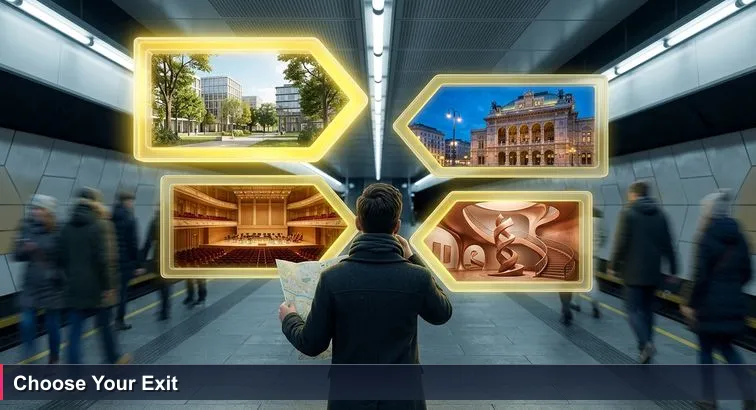
Step off the U1 at Karlsplatz at rush hour and the city hits you all at once: metal screech from a departing train, the damp warmth of winter coats, and that sudden wall of yellow exit signs. TU Wien to the left, Oper and Kärntner Straße straight ahead, Musikverein and Secession off to the side. In the middle of the flow, you hesitate with your map while everyone else seems to glide toward “their” exit.
Austria’s free tech trainings feel eerily similar. Between Digital Überall workshops, Büchereien Wien, Stadtbibliothek Graz, Wissensturm Linz, Volkshochschulen, Code Week events and community labs, you’re standing in one underground hub with arrows to very different futures in data, AI, and software. The barrier isn’t money or entry tests; it’s knowing which staircase matches the life you actually want.
That’s where most “Top 10” lists can mislead. Is “best” the closest workshop to your tram line, the most prestigious university logo, or the path that quietly prepares you to work with data teams at Microsoft Austria or AI groups at TU Wien, AIT and IST Austria? A ranking only becomes useful once you’ve decided whether you’re heading toward hands-on data roles, academic research, community impact through initiatives like TechSoup’s digital skills training in Austria, or a full career reboot at a coding school such as 42 Vienna.
This guide treats the “Top 10” more like the Karlsplatz station map than a pedestal. Each exit leads somewhere real: some fix basic digital gaps, others give you university-style research habits, and a few drop you straight into Austria’s data and AI community.
Once you know that your personal destination is, say, TU Wien’s informatics building rather than the Staatsoper, the yellow arrows stop shouting and simply point. Read the next sections with that mindset, and use them to plot your own route from underground confusion to a clear, above-ground tech path.
Table of Contents
- Standing at Karlsplatz: choosing your exit into tech
- Digital Überall
- Vienna City Library (Virtual Library Vienna)
- Austrian National Library
- TU Wien Library
- Wissensturm Linz
- Stadtbibliothek Graz
- University Library Graz
- University of Vienna Library
- Data Community Austria
- EU Code Week & Digital Mile Linz
- Your first 30 days: a free learning plan
- Frequently Asked Questions
Discover real projects and portfolio tips in the comprehensive guide to launching an AI career in Austria (2026).
Digital Überall
Across Austria’s Gemeinden and Bezirke, “Digital Überall” quietly acts as the national backbone of low-threshold digital education. By 2026 it offers more than 4,500 free workshops, from village community halls to big-city Volkshochschulen. The European Commission’s Digital Skills and Jobs Platform highlights the programme’s “inclusivity, accessibility, and long-term impact,” noting its success in “bridging the digital divide.”
Most sessions focus on very practical skills that often block adults from going further in tech. Typical offerings, as summarised on the official Digital Everywhere project page, include:
- Digital basics for seniors and late adopters (email, cloud storage, online banking)
- E-government services such as FinanzOnline and digital Amtswege
- Online safety, privacy, and recognising scams
- First contact with AI tools and everyday automation
Workshops are deliberately designed to be low-barrier: no entrance tests, no need to be a student, and in many smaller municipalities, no registration at all. You typically sign up via a one-page form or a quick email; in some cases you simply walk into your Gemeindezentrum at the advertised time. That makes it ideal if you’re returning to learning after years in another profession or supporting parents and relatives who feel “behind”.
For aspiring data and AI professionals in Vienna, Linz, or Graz, Digital Überall is less about fancy algorithms and more about removing friction. If basic tasks on Android, Windows, or browser-based tools still cost you energy, it will be harder to focus later on Python, SQL, or ML concepts. Getting those fundamentals solid now means that when you eventually dive into university courses, industry trainings, or meetups with practitioners from employers like Microsoft Austria or AVL List, your attention is free for deeper technical thinking.
Vienna City Library (Virtual Library Vienna)
For many Viennese, the most practical “tech campus” isn’t TU Wien or IST Austria, it’s the nearest branch of Büchereien Wien. The city library system, which holds a 4.2/5 rating from 40 reviews in the research summary, combines familiar shelves with a quietly powerful digital backbone that makes it ideal as a no-cost study base.
The heart of that backbone is the “Virtuelle Bücherei Wien.” Profiled as a “smart library for everyday digital life” on Best Practice Austria’s Virtual Library Vienna case study, it pulls together:
- E-books, audiobooks and e-magazines you can access from home
- Selected e-learning platforms and language courses
- Tablets and PCs in-branch for everyday digital tasks
- On-site staff support when you get stuck with logins, devices, or apps
Crucially for low-budget learners, many branches let you use on-site computers without registration; you only need a library card if you want to borrow media. Membership fees are modest compared to coworking spaces, and the digital infrastructure described in the Virtual Library Vienna overview is now standard across the network, so a branch in Favoriten offers similar tools to one in Floridsdorf.
For an aspiring data or AI professional, this gives you something invaluable: a quiet, affordable “office” a short U-Bahn ride from TU Wien, AIT project partners, and the Vienna headquarters of Microsoft and IBM. You can follow a Python or data-analytics MOOC you discovered via resources like Class Central’s Austria course listings, run code on a library PC or your own laptop, and then step straight into nearby meetups or university talks. In practice, the Virtual Library turns Vienna’s neighbourhood branches into staging points for much more ambitious tech journeys.
Austrian National Library
Behind the baroque façade at Heldenplatz, the Austrian National Library (Österreichische Nationalbibliothek, ÖNB) doubles as one of Vienna’s most modern digital classrooms. Its central site holds a TripAdvisor rating of 4.6/5 from more than 4,700 reviews, with visitors consistently praising both atmosphere and guidance when tackling complex material.
The library’s Center for Information and Media Competence helps you navigate the full range of digital holdings: searchable catalogues, licensed research databases, a comprehensive web archive, and large-scale digitisation projects such as Austrian Books Online. Much of this material is freely available from home, giving you access to historical texts and data sources without any paywall.
“The interactive guides were incredibly informative and helpful in understanding and analyzing complex subjects.” - Traveller review, Tripadvisor
- Experiment with structured searches across centuries of publications
- Study how large text corpora and web archives are organised for analysis
- Practice source evaluation and citation on real academic material
- Explore potential datasets for later NLP or digital-humanities projects
According to the official reading room guide, a dedicated research zone with 24 PCs in the basement is available for walk-in use. Access to the building and these workstations is free; you only need a day ticket or reader card if you want deep access to licensed databases.
For future data and AI professionals, training here builds serious “research muscles.” You learn to handle messy, real-world information instead of toy examples, in the same city where TU Wien, AIT, IST Austria partners, and companies like AVL List or Red Bull depend on robust data literacy for their AI and analytics work. The ÖNB effectively lets you rehearse those skills long before you touch a production dataset.
TU Wien Library
Follow the yellow Karlsplatz sign towards TU Wien and you eventually reach one of Austria’s most underrated tech learning hubs: the TU Wien Bibliothek. Officially described as “Austria’s largest library for science and engineering” on its profile page, it holds a research-summary rating of 4.1/5 from 204 reviews and is explicitly set up to support digital, data-heavy work.
What you can tap into
The library’s Digital Scholarship programme and course catalogue go far beyond “how to use the catalogue.” They regularly offer workshops on:
- Open Science and research data management
- Data visualisation with tools such as DAVIS
- Citizen Science and reproducible workflows
- Publishing strategies for theses, code and datasets
According to the TU Wien library’s own description, “external users can use electronic resources on-site”, and many workshops listed under advisory services and courses accept non-TU participants if seats remain. Registration is often as simple as emailing the contact person named in the course description.
Why it matters for AI and data careers
If you imagine yourself one day training models with a TU Wien research group, collaborating with AIT or IST Austria, or working on analytics projects for partners like Microsoft Austria, this is a realistic preview of your future workflow. You learn how engineers actually document datasets, share code, and visualise results, not just how MOOCs say it should work.
Even if you’re coming from a different field, a few evenings at TU Wien Bibliothek can shift you from “self-taught coder” to someone who understands how serious research environments handle information - an important step if you want to be taken seriously in Vienna’s AI and data ecosystem.
Wissensturm Linz
Right next to Linz Hauptbahnhof, the Wissensturm rises over the tracks as a vertical learning hub: Stadtbibliothek, Volkshochschule, seminar rooms and community spaces stacked into one tower. With a rating of 4.5/5 from 244 reviews in the research summary, it has quietly become one of Upper Austria’s most important public gateways into digital skills.
On the tech side, Wissensturm hosts classic digital-literacy courses (internet basics, online services, everyday device help) and more playful formats tied to the city’s innovation strategy. A standout is the “hello world” toolkit for educators and multipliers, developed together with the city’s innovation platform and described on the Innovationshauptplatz Linz project page. In 2026, “hello world” runs on dates like 26-27 February and 21-22 May and focuses on approachable entry points into tech:
- Playful introductions to coding concepts
- Low-threshold robotics and physical computing
- Creative technology projects suitable for schools and youth centres
Many of these activities are free, especially those linked to municipal innovation or inclusion programmes. Others charge modest Volkshochschule fees. Either way, registration is usually a simple online form rather than a formal application, and some open days still work on a walk-in basis - ideal if you live or work near the station and want to “test” tech learning after work without a big commitment.
For would-be data and AI professionals, Wissensturm is less about advanced machine learning and more about building confidence with tools and concepts so you can later move into degree programmes, bootcamps, or company trainings. In a city that hosts industrial heavyweights like voestalpine and a growing digital industry around automation and analytics, using Wissensturm as your first training ground lets you arrive at those opportunities with your digital basics, curiosity, and creativity already switched on.
Stadtbibliothek Graz
In Graz, the Stadtbibliothek’s Mediathek branch punches far above its weight as a digital skills hub. With a rating of 4.8/5 from 54 reviews in the research summary, it combines the calm of a city library with targeted support for people who feel lost in the digital world but don’t see themselves in a university lab yet.
The flagship offer is “Digital ganz einfach” (“Digital made easy”). A typical session, such as the one listed for 14 January 2026 from 11:00-13:00, gives you short, 30-minute one-to-one slots where staff help you untangle smartphones, e-readers (Tolino), WhatsApp, or the library’s own digital portal. According to the official “Digital ganz einfach” event description, participation is free, and you simply reserve a slot via email to the organiser.
Downstairs, the Mediathek’s Basement Labs open a different door into tech. As outlined on the Stadtbibliothek Graz workshops overview, these labs introduce you to audio studio basics and creative media production. In practical terms, that can mean:
- Recording and editing your first podcast episode
- Experimenting with microphones, mixers, and audio software
- Learning simple workflows you can later automate or enhance with AI tools
Access is deliberately low-threshold: many events are explicitly marked as free, and the worst bureaucracy you’ll face is a short email or form. For aspiring AI or data professionals, this matters because it gives you concrete, portfolio-friendly outcomes - a cleaned-up audio track, a short podcast, a media project - before you ever touch neural networks. When AI starts doing transcription, audio enhancement or content analysis for you later, you’ll already understand what “good” raw material looks like and how creative workflows feel from the inside.
University Library Graz
Where the Stadtbibliothek Graz focuses on broad public access, the University Library Graz (UB Graz) positions itself as a precision tool for learning how to work with information like a researcher. As one of Austria’s four designated “training libraries,” it treats digital skills as a core academic competency, not a side project.
Structured training, not random tips
The dedicated training and continuing-education programme at UB Graz covers the full research workflow. According to the official overview of training and continuing education at UB Graz, the team offers:
- Information literacy and advanced search strategies in scientific databases
- Reference management with digital tools such as citation managers
- Modules in Library and Information Studies for lifelong learners
- Tailored sessions for different disciplines, including data-intensive fields
The emphasis is on sound and practical training that keeps pace with constant technological change. Many introductory sessions are open to the wider university community and, at times, to external participants. Registration is usually a simple web form; the training itself is free, which makes it an unusually accessible way to get “mini-seminars” in research technique without enrolling in a full degree.
If you aim to work with data or AI in Graz’s ecosystem - whether in academic contexts at Uni Graz or TU Graz, or in industry roles at companies like AVL or local startups - these skills are a force multiplier. Workshops on search strategies and source evaluation help you filter exploding AI literature; reference management training keeps your notes, papers and code-related readings organised. Combined with broader digital-literacy concepts promoted by initiatives such as Essential Digital Skills frameworks, UB Graz can turn you from a casual Googler into someone who handles information the way a data professional does.
University of Vienna Library
A few minutes’ walk from Schottentor or the Ringstraße trams, the University of Vienna Library feels like the city’s living room for serious study. For tech learners who aren’t enrolled at Uni Wien, it’s one of the most generous “free campuses” you can use.
Open doors for non-students
According to the official description of services for guests at UB Wien, anyone can:
- Use freely accessible computers on-site for research without a library card
- Request temporary WiFi vouchers for up to 14 days at the main library information desk with a valid photo ID
- Work in the same reading rooms as students, surrounded by an academic atmosphere
In the research summary, the library holds a rating of 4.7/5 from 127 reviews, reflecting how much Viennese residents value it as a quiet, reliable place to concentrate. For career changers or early professionals, that atmosphere matters: studying next to people preparing exams or theses can make your self-paced Python or SQL course feel more like a real commitment.
A central base for online learning
With stable WiFi and long opening hours, UB Wien is ideal if you’re following structured online programmes such as data analytics or IT support tracks, including options like the Google Career Certificates on Coursera. Instead of trying to focus at the kitchen table, you get a neutral workplace where your only job is to learn.
Because you are physically close to research groups that collaborate with IST Austria and international partners, it also becomes easier to imagine yourself in that ecosystem. You might leave the reading room in the evening, walk past nearby institutes, and feel that your after-work coding sessions are a first step toward Vienna’s wider AI and data community rather than just a private hobby.
Data Community Austria
Once you’ve written your first SQL query in a MOOC, you eventually need to see how data behaves in the wild. That’s where Data Community Austria comes in: a volunteer-run network that turns conference rooms in Vienna and other cities into free classrooms for serious data professionals and career changers.
According to the community’s own overview on Data Community Austria’s site, they organise recurring evening meetups and larger Data Community Days focused on Microsoft’s data platform. Typical sessions cover:
- SQL Server performance, design and troubleshooting
- Modern Azure Data architectures and pipelines
- Dashboarding and modelling with Power BI
“Participants in community-led sessions often report that these events are the best career development training they have received, citing the engaging, interactive, and actionable nature of the sessions.” - Event feedback summarised by Data Community Austria
Events are typically free but require online registration, and many are streamed, so you can join from Graz, Linz or elsewhere if you can’t reach Vienna. In-person meetings are often hosted at partner locations such as Microsoft Austria or local training centres, giving you direct exposure to how enterprises in and around Vienna actually run their data stacks.
For someone eyeing data engineering, BI or analytics roles at banks, insurers, Microsoft partners, or analytics-heavy firms like Red Bull, AVL List or voestalpine, this is where you move beyond toy datasets. You see patterns of real architectures, hear practitioners’ war stories, and can ask “Would this skill get me hired?” before investing in paid programmes at providers like General Assembly. Used strategically, a few Data Community Days can compress months of trial-and-error into a handful of dense, practical evenings.
EU Code Week & Digital Mile Linz
Some exits from the “tech station” are meant for play. EU Code Week and Digital Mile Linz are two of the easiest ways to test whether you, your kids, or your younger siblings actually enjoy coding, tinkering and basic AI concepts before you ever open a textbook.
EU Code Week is a grassroots celebration of coding and digital creativity that returns every October. According to the official overview on EU Code Week’s digital literacy page, hundreds of free events across Europe introduce programming, computational thinking and creative technology, often hosted in schools, libraries and community centres. In Austria, that typically means Saturday workshops where volunteers run:
- Unplugged coding games and logic puzzles
- Beginner-friendly app or game-building sessions
- Robotics and electronics demos using simple kits
In Linz, the DIGITAL MILE initiative plays a similar role all year round. As the community page for Digital Mile Linz’s open programmes explains, it offers hands-on stations, creative workshops and playful introductions to AI and digitalisation specifically for children and young people. You might see kids training a simple image-recognition model, experimenting with sensors, or using AI tools as part of an art project.
Both formats are designed for school-age learners, parents and absolute beginners who learn best by doing. Events are usually free with light-touch registration or even walk-in access, and one participant quoted in the research appreciated that a session went “deeper than hearing ‘GenAI will change your business’” and instead focused on the “how and why” behind the tools.
If you’re still asking “Is tech even for me?”, a weekend at Code Week or an afternoon on the Digital Mile can answer faster than any YouTube playlist - by letting you build something tangible and notice whether you get lost in the task in the best possible way.
Your first 30 days: a free learning plan
This 30-day plan assumes you can reach at least one larger library - in Vienna, Graz, Linz, or a regional centre. Swap in your closest Stadtbibliothek or university library as needed, and treat it like your temporary campus.
Week 1 - Claim your study base
Goal: feel comfortable in public learning spaces and remove basic digital anxiety.
- Visit your local Stadtbibliothek (e.g. Büchereien Wien, Stadtbibliothek Graz, Wissensturm Linz). Find the public PCs and ask one “embarrassing” question about cloud storage, passwords or e-media.
- If you’re in Vienna, go to the University of Vienna main library and request a 14-day WiFi voucher as described on its guest services page.
- Attend one Digital Überall basic workshop and note three things that felt easier than expected and three that still feel hard.
Week 2 - Test-drive coding or data
Goal: 5-6 focused study hours using only library infrastructure.
- Pick a free online course (e.g. “Python for beginners” or “Intro to Data Analysis”) from a trusted catalogue like Class Central’s Austria listings.
- Do three 60-90 minute sessions this week, only at a library, phone on silent, taking notes on paper.
- Add one gentle digital-literacy workshop (e.g. “Digital ganz einfach” in Graz or an equivalent in your city).
Week 3 - Meet real data and community
Goal: see how professionals talk about and use data.
- Spend an afternoon at the Austrian National Library’s research PCs exploring catalogues, statistics and digitised collections.
- Join a Data Community Austria meetup or stream; just listen for how practitioners describe SQL, Azure or BI tools.
Week 4 - Prove persistence and choose your next step
Goal: two deep-work sessions plus one advanced workshop.
- Schedule two 2-hour blocks at a university library (TU Wien, UB Graz, UB Wien). Finish a course module and build a tiny project: a simple analysis on data.gv.at or a basic console app.
- Attend an open workshop on research data, Open Science or information literacy.
- Write a one-page reflection: what you enjoyed most, how many hours per week you can sustain, and whether you prefer MOOCs, evening classes, or intensive options like 42 Vienna (outlined in the coding-school overview on DEVjobs.at).
By the end of these 30 days, you’ll have 10-20 hours of genuine practice, a clear favourite study space, and enough self-knowledge to decide whether to stay with free offers, move into VHS or Google-style certificates, or commit to a demanding path like 42 Vienna or a degree programme.
Frequently Asked Questions
Which free tech training should I start with in Austria if I only have a few evenings to try it out?
Start local and low-friction: join a Digital Überall workshop (the national programme runs over 4,500 free sessions by 2026) or use your nearest Stadtbibliothek (e.g., Büchereien Wien) as a study base for 2-3 evenings. These options remove digital barriers quickly and let you test whether you enjoy coding or data before committing to paid courses.
Do I need to be a student or pay a fee to use university and national library tech services?
No - many services are free to guests: UB Wien offers guest PCs and temporary Wi-Fi vouchers for up to 14 days, TU Wien lets external users access e-resources on-site, and most Stadtbibliothek PCs are walk-in. Some specialised database access or long-term borrowing may require a card or day ticket, but basic training and workspace are usually free.
Can these free library and community resources get me a job in AI or data science?
Alone they won’t make you a job-ready ML engineer, but they are an essential first step - the 30-day plan in the article aims for 10-20 hours of real practice so you can decide whether to invest further. If you’re serious, follow up with structured options mentioned in the article (VHS courses, Google Career Certificates, or intensive paths like 42 Vienna) to build the portfolio employers in Vienna typically expect.
How should I choose between offers in Vienna, Graz and Linz if I want the most career-relevant training?
Pick based on proximity and the kind of practice you need: Vienna’s Büchereien, TU Wien and UB Wien are best for sustained study and networking near employers like Microsoft Austria or IBM Austria; Graz’s Stadtbibliothek and UB Graz excel for media and research skills; Linz’s Wissensturm connects well to industry players like voestalpine and offers educator toolkits. Use the local strength that matches your next step (research, coding practice, or community teaching).
How did you rank the top 10 free tech trainings - what criteria mattered most?
Rankings were based on three practical criteria: ease of access (walk-ins, no formal application), the actual learning value (hands-on workshops and measurable offerings - e.g., Digital Überall’s 4,500+ sessions), and how useful each resource is for testing an AI/data/software career. The list favours places that get you productive quickly rather than one-off marketing events.
Read the Top 10 tech roles that don’t require a degree in Austria to compare salaries and German language expectations.
See which sectors made the list in our piece on the top industries for AI jobs in Austria beyond the usual tech giants.
Find a practical guide to scholarships and grants for coding bootcamps in Austria that explains AMS approvals and stacking funding sources.
Guide: Net vs gross pay for Austrian tech roles and real-life budgets (2026)
Discover the best tech internships in Austria 2026 and which cities like Vienna, Graz and Linz lead the way.

Irene Holden
Operations Manager
Former Microsoft Education and Learning Futures Group team member, Irene now oversees instructors at Nucamp while writing about everything tech - from careers to coding bootcamps.