









Top 10 Tech Startups Hiring Junior Developers in Australia in 2026
By Irene Holden
Last Updated: April 7th 2026
Too Long; Didn't Read
Heidi Health and Lorikeet are the top two startups hiring junior developers in Australia in 2026 because they combine deliberate junior programmes and early production ownership with strong VC backing and real-world AI product work. Heidi (Series B, Sydney and Brisbane) offers buddy systems and junior packages around AUD 80k to 100k plus equity, while Lorikeet’s Series A backing supports hands-on agentic AI roles paying about AUD 90k to 110k, and both sit in the Sydney-Melbourne tech corridor that feeds talent to Canva, Atlassian and major corporate buyers.
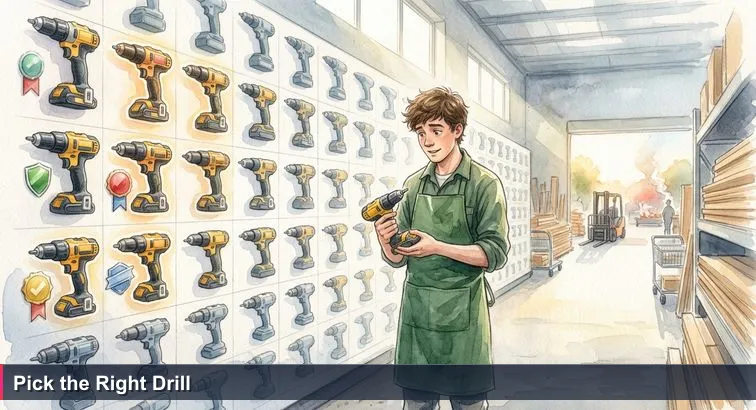
You’re in the Bunnings aisle, green apron on, staring down a wall of cordless drills that all claim to be “Top Rated” and “Best Value”. The specs blur together. What you’re really testing is the weight in your hand and a quiet question in the back of your mind: will this help me build something real, quickly, without dying on the second job?
Scrolling “Top 10 startups in Australia” lists from a sharehouse in Sydney or a library in Brisbane feels exactly the same. In a hirer’s market, glossy rankings promise certainty, but they rarely tell you what you actually need to know: where you’ll ship code, who will review it, and how much you’ll learn. A Medium teardown of 100+ junior postings found that roles increasingly expect you to contribute to production code in your first week and to wield AI as a multiplier, not a shortcut for weak fundamentals, echoing what’s described in recent analyses of junior dev job ads.
At the same time, AI is reshaping the work itself. A report from Boston Consulting Group on AI and jobs argues that AI will change far more roles than it replaces, which is exactly what you see on the ground in Australia: early-stage startups in fintech, healthtech, AI and climate want juniors who can pair solid engineering foundations with tools like Copilot and ChatGPT to move faster, not hide behind them.
This list isn’t a podium; it’s a tool wall. Each company here is a different drill built for a different kind of job: regulated health platforms in the Sydney-Brisbane corridor, capital-heavy fintech in Melbourne, agentic AI in Surry Hills, space and defence at Adelaide’s Lot Fourteen, and startup studios in Brisbane. They sit inside ecosystems powered by outfits like Blackbird, Airtree and Startmate, whose portfolios quietly soak up bootcamp grads and juniors who can already ship.
Your job isn’t to find “number one”. It’s to pick up a few of these options, feel their weight - stack, stage, mentorship, AI culture, proximity to Atlassian or Canva - and choose the one that lets you build something meaningful in the next 12-24 months. The box matters far less than the site you step onto, and in Australia right now, there are more active building sites than the doomers admit.
Table of Contents
- You’re Not Buying a Drill, You’re Choosing a Site
- Heidi Health
- Lyra
- Canva
- Lorikeet
- Okendo
- Airwallex
- Eucalyptus
- Subble
- Inovor Technologies
- WorkingMouse
- How to Find and Choose the Right Startup
- Frequently Asked Questions
A comprehensive guide to starting an AI career in Australia in 2026, including Nucamp bootcamp pathways and city-specific advice
Heidi Health
Some “drills” are built for rough, regulated worksites. Heidi Health is one of them. Sitting across Sydney and Brisbane, this Series B healthtech startup (around 50-80 employees) is building a clinician-first AI platform that automates the ugliest admin in medicine so doctors can spend more time with patients. It’s backed by heavyweight investors like Blackbird and regularly appears in lists of high-growth Australian health startups, including Appinventiv’s round-up of healthtech ideas gaining serious traction.
Why it’s powerful for juniors
Heidi is unusually explicit about wanting early-career devs. Job ads call out junior-friendly Fullstack Engineer roles, with a defined track for “high-potential” developers and a buddy system pairing juniors with founding engineers. That combination of access and expectation means your first year looks more like a mid-level stint at a bank than a classic grad rotation.
- Ship features into production early in a tightly regulated domain.
- See direct impact in clinics rather than abstract dashboards.
- Learn how AI systems behave with noisy, real-world clinical data.
Stack, AI and day-to-day work
Under the hood, Heidi runs a modern web stack: React and TypeScript on the front, Node.js on the back, wrapped around specialised LLM infrastructure. On any given day you might be wiring new clinician workflows, integrating with practice management systems, tuning prompts for model behaviour, or instrumenting analytics so product and medical teams can see what’s working. For anyone eyeing AI product or ML engineering, it’s a live firehose of applied learning rather than a sandbox.
Hiring signals, salary and questions to ask
Heidi shows up frequently on Australian startup software feeds and VC portfolio boards like Airtree’s company job board, which is a good sign of sustained hiring rather than one-off roles. Junior packages in Sydney healthtech typically land around AUD 80k-100k + super + equity, depending on how close you already are to “production ready”. When you talk to them, ask how many months of runway they have post-Series B (you want 18+ months) and how quickly previous juniors have stepped into mid-level scope.
Lyra
If your idea of a good first “drill” is something you can take straight onto a live site with real money flowing through it, Lyra is worth picking up. This Sydney-Melbourne fintech targets payments and treasury automation for modern enterprises, sitting in the same corridor that produced Airwallex and Afterpay. At roughly 30-50 employees and Series A stage, it’s small enough that every engineer still leaves fingerprints on the product.
Why customer-facing engineers thrive here
Lyra is one of the few Australian fintechs openly advertising Graduate Forward Deployed Engineer roles. These positions are built for juniors who are happy to sit with finance teams, debug webhooks and APIs, and then translate that context into code. On the ground, that looks like:
- Owning integrations end-to-end with Go and PostgreSQL backends
- Working directly with CFOs and finance ops people, not just PMs
- Building reliability and observability into payment flows from day one
Tech stack, learning curve and AI
The stack is what you’d expect from a modern infra-heavy fintech: Go services, PostgreSQL, AWS, and React on the front. You’ll spend more time on back-end and integration work than on pixel-perfect UI, which is ideal if you enjoy systems thinking and data pipelines. In a market where junior roles increasingly demand production readiness and comfort with AI-assisted workflows, Lyra’s mix of ownership and guardrails mirrors what analyses of early-stage roles on LinkedIn’s early-stage startup boards describe as “product-minded” engineering.
Hiring channels, salary and due diligence
Roles at Lyra tend to surface on niche startup feeds and early-stage startup job lists, rather than generic grad programs. For juniors, compensation typically sits around AUD 80k-95k + super with equity that actually moves the needle at Series A. When you get to interview, treat it like assessing a client: ask what share of revenue comes from long-term contracts, how many active customers they have and what churn looks like, and who runs engineering (ex-Atlassian or ex-Airwallex founders are a serious green flag).
Canva
Not every “drill” on the wall is a scrappy no-name. Canva is the industrial-grade tool that’s already on half the sites in the country. Headquartered in Sydney with a growing Melbourne footprint, this design-and-collaboration decacorn has thousands of employees and sits firmly in the “Tier 1” bucket on community-built lists like the Updated Australian Company Tier List on r/cscareerquestionsOCE.
Why it’s still a great first job
For juniors, Canva offers one of the highest-leverage launchpads in the Sydney-Melbourne corridor. You get structured grad and intern programs, strong mentorship, and the chance to work with engineers who’ve already done tours at Atlassian, Google Sydney, and AWS. The trade-off versus a tiny startup is focus: you’ll own a slice of a much larger system rather than the whole product, but you’ll learn engineering excellence, experiments at massive scale, and how cross-functional teams really ship.
Stack, teams and AI exposure
Underneath the friendly UI is a serious stack: Java/Kotlin microservices, TypeScript/React on the front end, and big-data and ML infrastructure powering everything from recommendations to generative design features. Teams range from editor and collaboration squads to growth, content safety and applied AI. If your long-term goal is ML or AI product work, this is one of the few local places where you can see production ML systems running at global scale, right alongside peers at Atlassian and SafetyCulture.
Compensation, signalling and where it takes you
Canva is a staple on Australian grad job aggregators like Prosple’s entry-level tech job listings, and it consistently pays at the top end of the junior market. Grad software engineers typically see AUD 100k+ total compensation (salary + super + bonuses), which outstrips many smaller startups. More importantly, a stint here signals to future employers - VC-backed startups, Atlassian, even international Big Tech - that you can navigate complex systems, code review cultures, and AI-assisted workflows from day one.
Think of Canva as the high-end drill you use to learn perfect technique: once you’ve mastered it, you can walk onto almost any site in the Australian tech ecosystem and be trusted with serious work.
Lorikeet
Further along the tool wall you find the stuff that feels almost sci-fi. That’s Lorikeet: a Sydney-born agentic AI startup building multi-agent systems that handle real customer service flows, not just toy demos. It recently closed a USD $54m Series A at a valuation north of $200m, and was flagged among the companies to watch in SmartCompany’s piece on five Aussie startups to watch, with customers already including Airwallex and Eucalyptus.
Why it’s a frontier AI playground for juniors
Lorikeet is what you join if you want to live in the future rather than just read about it. Instead of building CRUD apps around someone else’s model, you’re helping design and debug agentic AI that juggles messy tickets, billing issues and irate users. For juniors, the upside is outsized context: with a still-lean team, you’re close to founders and seeing every trade-off between speed, safety and customer experience.
What you actually build and debug
The stack leans on TypeScript/React for operator tools, Python and orchestration frameworks around LLMs, and cloud infra on AWS or GCP. Typical work includes:
- Designing and tuning multi-agent workflows for real support queues
- Integrating with CRMs, ticketing and billing systems
- Building review, analytics and safety tooling for AI conversations
This sits right at the junction of backend engineering, light ML-ops, and product thinking about where humans stay in the loop.
Hiring signals, compensation and questions to ask
On the capital side, Lorikeet is backed by top local VCs like Airtree and Blackbird, both highlighted in Shizune’s list of leading Australian software investors. For a Series A AI company with this war chest, early engineers - even juniors - can expect around AUD 90k-110k + super plus meaningful equity. When you’re interviewing, dig into how much of that Series A is earmarked for R&D versus sales, how often juniors ship changes that touch live customers, and what guardrails they’ve built for AI safety and escalation when agents go off-script.
Okendo
Not every good first “drill” is brand new off the shelf; some have already proved they can handle heavy site work. Okendo is in that camp. Based in Sydney, this Series B SaaS startup (with 100+ employees) powers reviews and user-generated content for Shopify brands around the world. It’s backed by Blackbird and Index Ventures, and shows up prominently on the Square Peg portfolio job board, which tends to feature companies with real revenue and global ambitions.
Why juniors and bootcamp grads do well here
Okendo has a genuine track record of hiring early-career devs, including bootcamp graduates, into backend and full-stack roles. Because the founders are engineers, the culture leans hard into documentation, clear ownership and code reviews that actually teach you something. Compared with raw Seed-stage startups, you trade a little “everything on fire” chaos for more stable product, better processes and a runway that lets you focus on learning rather than survival.
Stack, product surface area and learning
The core stack - Node.js, JavaScript/TypeScript, React, MongoDB - is exactly what many bootcamps and CS courses now teach, which shortens your ramp. Day to day, juniors work on:
- Review widgets and on-site components for merchants
- Analytics dashboards and reporting pipelines
- Integrations with Shopify and adjacent e-commerce platforms
- Performance and reliability tuning at scale
It’s ideal if you want to become a product-oriented engineer who can toggle between front end polish and API design while learning core SaaS metrics like MRR and churn.
Hiring signals, pay and questions to bring
Okendo appears regularly on startup-focused feeds and on sites aggregating junior software roles at high-growth startups, a good sign they’re not just hiring a one-off grad. Junior engineers here can usually expect around AUD 85k-100k + super + equity in 2026, with scope to grow quickly if you’re comfortable shipping full-stack features. When you speak with them, ask how juniors are onboarded, what percentage of the team comes from non-traditional backgrounds, and how long it’s taken past juniors to reach mid-level responsibilities.
Airwallex
Some tools feel like a halfway point between a scrappy cordless and a full-blown site generator. Airwallex sits in that sweet spot. With its HQ in Melbourne, a sizeable Sydney office and outposts across Asia, Europe and the US, this fintech unicorn builds global payments and multi-currency infrastructure used by businesses from startups to corporates. In local circles it’s commonly grouped as Tier 2 on community tier lists, alongside WiseTech and SafetyCulture, signalling serious engineering standards without Big Four bureaucracy.
Why it works as a launchpad for juniors
For an early-career dev, Airwallex is big enough to offer structured learning and small enough that individual teams still move fast. You’ll find multiple senior engineers to learn from, internal mobility across products, and exposure to how money actually moves across borders. Compared to a tiny Seed-stage fintech, you sacrifice a bit of chaos and title inflation, but gain reliable processes, production-readiness training and a brand that travels well if you later apply to Atlassian, Google Sydney or overseas roles.
Stack, product areas and daily work
Under the bonnet, teams lean heavily on Java/Kotlin and Go services, React front ends, Kubernetes and mainstream cloud. As a junior, you’re likely to land in one of several product areas:
- Cards and payment rails (authorisation, settlement, chargebacks)
- Treasury and FX (multi-currency accounts, liquidity, pricing)
- Risk, fraud and compliance tooling
- Merchant dashboards and internal operations tools
It’s classic high-throughput, low-latency systems work where observability, testing and incident response are non-negotiable skills.
Hiring signals, comp and what to clarify
Airwallex regularly appears on lists of top Australian tech startups on Wellfound and features in coverage of companies ramping up entry-level hiring, such as Business Insider’s look at firms increasing junior engineer intake. Entry-level roles typically pay AUD 100k+ total compensation with bonuses on top, comfortably above most early-stage startups. When you interview, pin down which product area you’d join, how many seniors sit on that team, what the on-call expectations look like (payments often means 24/7), and how performance and promotion are handled for juniors operating in such a regulated domain.
Eucalyptus
Some jobs on site are pure structure and systems, others are about working where people actually live. Eucalyptus is in that second camp. This Sydney-based, multi-brand healthtech scale-up runs digital clinics across telehealth, chronic care and weight management, with hundreds of employees shipping into real patient journeys every week. It often shows up on “startups to watch” lists and is name-checked as a customer of AI players like Lorikeet, which gives you a front-row seat to how AI is actually wired into modern care.
Why juniors learn fast here
Eucalyptus regularly advertises “Software Engineer II” and adjacent roles that are junior-friendly but expect you to behave like a product engineer, not a ticket-taker. You’re not just building another form; you’re touching:
- Telehealth booking flows and patient portals
- Internal tools for clinicians, nurses and care teams
- Automations that coordinate messaging, scripts and follow-ups
Because each brand (like weight-loss or men’s health) runs almost like its own startup, you see how engineering decisions ripple into acquisition funnels, conversion rates and clinical outcomes at the same time.
Stack, AI and cross-functional exposure
Under the hood, teams tend to use TypeScript/React, Node.js and cloud services, with data pipelines feeding both clinical analytics and growth experiments. You’ll work closely with product, marketing and medical staff, which mirrors the “product-minded engineer” profile described in pieces like Talenza’s guide to alternative tech pathways. It’s a strong fit if you want to sit at the intersection of UX, data and applied AI rather than deep research.
Hiring signals, pay and what to clarify
Eucalyptus appears frequently in Australian startup coverage and on curated startup job lists, a sign that VCs and recruiters see it as a serious employer rather than a flash in the pan. Early-career engineers here typically land around AUD 85k-105k + super + equity. When you interview, ask how engineering teams are split across brands, what guardrails exist around experimentation in clinical flows, and how often juniors get to work directly with new AI-powered tooling rather than just watching from the sidelines.
Subble
Then there’s the compact tool you throw in the ute because you know it’ll actually get used every day. That’s Subble: a Melbourne Seed/pre-Series A SaaS startup (around 10-20 employees) that helps companies find and kill wasted spend across their software subscriptions and licences. It’s a graduate of the Startmate accelerator, which tends to back lean, execution-heavy teams rather than pitch-deck fantasies.
For juniors, Subble is as close as you’ll get to a real apprenticeship. Every engineer touches core product and infrastructure, and you’ll talk directly to ops and finance teams about their SaaS bills before shipping features that impact revenue. Startmate companies are known for “intern-to-hire” and early-career pipelines - their own guide on landing your first startup job explicitly calls out hungry juniors as a key talent pool - so you’re not an afterthought, you’re part of the plan.
The stack is pleasantly straightforward: Python and Django on the back, Vue.js on the front. Day to day, you might be:
- Building dashboards that surface unused seats and shadow IT
- Writing connectors to major SaaS platforms and finance tools
- Improving reporting, notifications and export workflows
It’s a strong fit if you enjoy data modelling, back-office tooling and the satisfaction of deleting costs instead of adding them.
Comp at this stage is typically AUD 70k-90k + super + meaningful equity, sometimes slightly under market cash for higher upside. Early-stage roles like this often appear through curated platforms for startup jobs rather than Seek; guides such as Nexus IT Group’s overview of early-stage job platforms show just how common that pattern is. When you’re assessing Subble or similar Seed companies, press on basics: current runway (you want 12-18 months minimum), number of paying customers vs pilots, and what the plan is if the next raise takes longer than expected.
Inovor Technologies
Some jobs on site aren’t about dashboards at all; they’re about getting hardware into harsh environments and trusting it not to fail. Inovor Technologies is that kind of gig. Based in Adelaide’s Lot Fourteen innovation precinct, this space and defence startup (around 60 employees, Series A/B) designs and builds satellite missions and electronic warfare systems as part of Australia’s push for sovereign space capability. It’s closely linked with research outfits like SmartSat CRC and regularly shows up in round-ups of hot early-stage Australian deep-tech companies.
Why it suits embedded-minded juniors
If you’re an EE/CS hybrid who loves oscilloscopes as much as VS Code, Inovor offers something you won’t find in the Sydney-Melbourne SaaS corridor: a structured Junior Engineer program focused on embedded software, mission control tools and simulation. They commonly hire straight from South Australian unis and TAFEs into roles where you’ll:
- Work on flight software that will eventually be launched into orbit
- Help build and maintain ground segment tools for operating satellites
- Contribute to simulation and testing systems used to validate missions
Stack, rhythm and what you actually build
The core stack is classic space engineering rather than web dev: embedded C/C++ for on-board software, Python for tooling, plus specialised aerospace simulation environments. Release cycles are longer, code review is stricter, and the stakes are higher - but you get the rare satisfaction of watching your work leave the atmosphere instead of just hitting “deploy” to a cluster.
Signals, salary and how to assess the risk
Space and defence companies like Inovor tend to raise from deep-tech investors and government-aligned funds; platforms like Shizune’s overview of Australian startup investors show just how heavily capital is now flowing into local R&D-heavy ventures. For junior embedded engineers, packages usually sit around AUD 75k-95k + super, with added benefits like clearance, specialist training and exposure to defence-grade processes. When you interview, dig into the split between R&D and contracted work, what mentoring looks like on complex embedded projects, and whether there’s a path to rotate across flight software, ground systems and data over your first few years.
WorkingMouse
Some companies on this list are drills; WorkingMouse is more like a small workshop. Based in Brisbane, it’s a software consultancy and startup studio that builds products for both founders and corporates, then maintains them over the long haul. It’s frequently mentioned alongside other top local dev shops in roundups of the best MVP development companies in Australia, which is a good signal: they stay in business by consistently delivering working software.
Why it feels like a paid bootcamp extension
For juniors, consultancies like WorkingMouse can function as a structured apprenticeship. You’re not betting everything on a single product; instead, you cycle through real-world projects with seniors who are on the hook for quality and delivery. That means regular code reviews, scoped tasks, and exposure to how deadlines, budgets and non-technical stakeholders actually shape the work.
Stacks, projects and what you’ll touch
Because WorkingMouse builds for many clients, you’ll encounter a mix of modern web and mobile stacks rather than a single monolith. In practice, that often looks like:
- React and modern front-end tooling for greenfield web apps
- Node.js or similar back ends on mainstream cloud platforms
- Mobile frameworks and API integrations for startup MVPs and internal tools
This variety is ideal if you’re still figuring out whether you lean towards product engineering, integrations, or more platform-heavy work.
Hiring signals, salary and questions to ask
WorkingMouse shows up regularly in lists of Australian dev firms that are “good with startups”, which usually correlates with repeat business and a steady flow of projects. Junior packages tend to start around AUD 70k-85k + super, with clear progression paths as you take on more client responsibility. When you interview, clarify how they handle crunch around deadlines, whether juniors are shielded from the worst client fire drills, and how often you rotate between projects versus getting parked on long-term maintenance. For a first role, you want that rotation: it’s how you build a broad toolkit before specialising.
How to Find and Choose the Right Startup
By now, you’ve walked past enough “Top 10” stickers to know the label isn’t the job. Finding your first startup role in Australia is really two problems: where the good roles are hiding, and how to tell if a given company will actually teach you to ship production code instead of just handing you tickets.
Where the real junior-friendly roles hide
In a hirer’s market, the most interesting early-stage startups rarely rely on Seek. Analyses of how founders hire in Australia, like Ontik’s guide to hiring software developers locally, show a strong tilt towards networks, referrals and niche platforms. For you, that means looking beyond generic boards and into the ecosystems where Heidi, Lyra, Subble, Inovor and friends actually live:
- VC job boards (Airtree, Blackbird, Square Peg, Flying Fox portfolios)
- Founder communities and accelerators like Startmate and Lot Fourteen
- Bootcamp and uni alumni channels, especially across the Sydney-Melbourne corridor
- Global startup platforms such as Wellfound for remote-friendly roles
Run a 60-second due-diligence check
Once something looks promising, treat it like a site visit. A quick scan can tell you if it’s safe enough to bet your first job on. Guides to the Australian developer market, such as Codewave’s overview of hiring developers in Australia, highlight how often juniors underestimate the basics:
- Product and customers: who’s paying them today, and why?
- Capital and runway: have they actually raised, and from whom?
- Team shape: are there seniors in your stack, or would you be the only dev?
- Mentorship and review: how do juniors get feedback on production work?
- AI culture: are tools like Copilot used to accelerate learning, or as a crutch?
Match the drill to the site you want
Finally, line the company up against the work you want to be doing in two years. Health and AI in clinics? Think Heidi or Eucalyptus. Fintech and infrastructure? Lyra or Airwallex. Embedded and space? Inovor. Broad exposure across stacks and industries? WorkingMouse, Subble, Okendo or even Canva. Like that apprentice in Bunnings, your goal isn’t to pick the fanciest box; it’s to choose the tool that fits your hands and the site you’re hungry to build on now.
Frequently Asked Questions
Which startup on this list should I apply to first as a junior developer in Australia in 2026?
It depends on what you want: if you want structure and a polished grad programme, target scale-ups like Canva or Airwallex (grad packages often sit around AUD 100k+). If you want rapid responsibility and equity upside, apply to early-stage names like Subble, Lorikeet or Heidi, where juniors commonly see AUD 70k-110k plus equity and faster ownership.
How did you pick and rank these ten startups?
I ranked companies by signals that matter for juniors: active hiring or pipelines for entry roles, presence in strong Aussie ecosystems (Sydney-Melbourne corridor, Brisbane, Adelaide’s Lot Fourteen), modern stacks and heavy AI use, and investor quality (Airtree, Blackbird, Square Peg). Practical checks - visible job listings, funding stage and inferred runway (aim for 12-18+ months), and evidence of mentorship - were weighted highest.
Which companies are best if I want to learn applied AI or ML on the job?
Heidi Health, Lorikeet and Canva are the top picks: Heidi and Lorikeet put juniors on clinician-grade and agentic AI flows respectively, while Canva gives production-scale ML experience; junior packages in these AI-forward roles typically range from about AUD 80k up to 110k+ depending on company stage and location.
What compensation should junior developers expect at these Australian startups in 2026?
Salaries vary by stage: seed pre-Series A roles commonly pay AUD 70k-90k, Series A/B about AUD 80k-105k, and large scale-ups like Canva or Airwallex often start around AUD 100k+ total comp, all typically with superannuation and some equity (standard vesting is usually four years with a one-year cliff).
How can I quickly judge whether a startup is safe enough to take as my first job?
Ask for runway (healthy = 18+ months, acceptable = 12+ months), check for paying customers and steady revenue growth, verify investor quality (Airtree, Blackbird and the like), and ensure there are multiple mid/senior engineers for mentorship rather than you being the sole dev. These five checks will tell you far more than marketing copy when weighing risk versus learning opportunity.
Find the top 10 companies hiring AI engineers in Australia and learn how to choose between research depth and product impact.
Industry hires should review the best AI startups to watch in Australia for vertical AI career moves.
If you’re a career changer, read our analysis of the Top 10 Entry-Level Tech Jobs in Australia (2026) to target apprenticeships with the best mentorship.
free tech training at libraries and community centres across Australia
For hiring trends, salary bands and actionable steps, consult this comprehensive guide to who’s hiring cybersecurity professionals in Australia in 2026.

Irene Holden
Operations Manager
Former Microsoft Education and Learning Futures Group team member, Irene now oversees instructors at Nucamp while writing about everything tech - from careers to coding bootcamps.