









Who's Hiring Cybersecurity Professionals in Australia in 2026?
By Irene Holden
Last Updated: April 7th 2026
Key Takeaways
Government and Defence, the big four banks, cloud hyperscalers and tech firms in the Sydney-Melbourne corridor, telcos and MSPs, consultancies, critical infrastructure operators, healthcare, universities and large corporates are the organisations actively hiring cybersecurity professionals in Australia in 2026 because they need specialists in cloud security, AI-enabled SOCs, identity and OT protection. That demand is driven by an estimated national shortfall of roughly 30,000 cyber workers, about 70% of APS agencies reporting critical skill gaps, and major government investment such as the $9.9 billion REDSPICE program alongside SOCI and Essential Eight regulation, so roles are plentiful but highly selective.
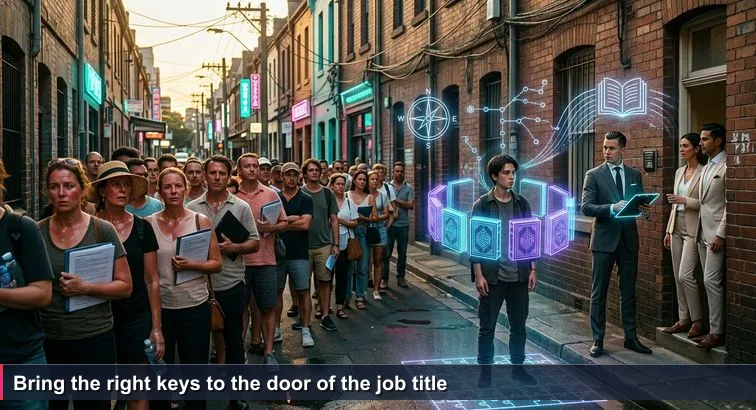
You’re sweating through a Sydney afternoon, shuffling along a Newtown terrace street in a rental queue that wraps around the block. Sunhats, printed payslips, neatly stapled references; everyone’s done “the right things”. Yet the agent at the door barely glances at most people before waving one sharply dressed couple straight inside. The message is brutal and clear: the problem isn’t volume, it’s fit.
Australia’s cybersecurity market in 2026 feels uncomfortably similar. News stories talk about a huge skills crisis and jaw-dropping packages, and they’re not wrong. According to the CyberCX cyber skills report, we’re staring down a cyber workforce shortfall of around 30,000 people by the mid-2020s. On paper, that sounds like anyone with “security” on their CV should be waved through the door.
The lived experience is different. Juniors in Sydney, Melbourne, Brisbane and Perth are still racking up rejections. At the same time, roughly 70% of Australian Public Service agencies report critical cyber skill shortages, as highlighted in Paxus’ analysis of government-led cyber role growth. Roles exist, teams are under pressure, yet candidates keep getting told they’re “not quite the right fit”.
The disconnect comes from treating cyber like one big market, instead of a street full of very different properties. Government in Canberra, defence in Adelaide, big tech and fintech along the Sydney-Melbourne corridor, miners in Perth and Queensland, hospitals and universities in every capital - they’re all the agent at a different doorway, each with their own checklist. Understanding why the queue feels so tight starts with understanding what those landlords are really screening for.
In This Guide
- Why Australia’s 2026 cyber market feels like a rental queue
- The 2026 cybersecurity hiring landscape
- Where cyber jobs cluster across Australia
- Big tech, cloud, telcos and consultancies
- Defence, intelligence and aerospace
- Public sector, states and local government
- Critical infrastructure, energy and OT security
- Banking and finance hubs in Sydney and Melbourne
- Healthcare, universities and research
- Retail, e-commerce and industrial corporates
- AI, automation and the dual-track security professional
- What hiring managers actually screen for
- Entry routes and a 90-day action plan
- Frequently Asked Questions
A comprehensive guide to starting an AI career in Australia in 2026, including Nucamp bootcamp pathways and city-specific advice
The 2026 cybersecurity hiring landscape
Across Australia, cyber hiring has settled into a strange mix of urgency and caution. Teams are under pressure, but boards and CFOs now interrogate every new headcount. A recent LinkedIn analysis of local technology hiring describes 2026 bluntly: the rebound in demand is real, but organisations are far more selective, especially as AI reshapes what a “security role” looks like.
“The 2026 rebound is less explosive but appears more sustainable... the very nature of the roles is undergoing a fundamental transformation, driven by AI.” - LinkedIn Insights, March 2026
That transformation shows up as a skills crisis, not a seat-filling crisis. Reports on the ANZ security job market note that many organisations already have security teams, yet lack people who can handle modern threats such as ransomware, identity compromise and OT/SCADA breaches. Industry coverage of this skills gap stresses that capability in cloud, automation and incident response now matters more than simply having “worked in IT” before, a shift echoed in broader job-market reviews like Learning People’s ANZ cyber trends.
Government and regulation are amplifying this demand. The ASD’s $9.9 billion REDSPICE program is expanding national cyber capability over a decade, while reforms such as the Security of Critical Infrastructure Act and the ACSC’s Essential Eight maturity model are forcing utilities, telcos and corporates to uplift controls. As Fujifilm notes in its local technology trends, Australian organisations now need architectures “designed for a zero-trust, highly connected world”, with cyber receiving ongoing leadership attention, not one-off projects, a point underscored in Fujifilm’s 2026 technology trends for Australian organisations.
Alongside permanent hiring, contracting remains entrenched. Around 31% of ICT roles are filled on a contract basis, with premium day rates for cloud and cyber specialists in Sydney, Melbourne and Canberra. Placement data from Latitude IT and SEEK shows how that translates into pay packets:
| Level | Typical Salary Range (AUD) | Typical Contract Day Rate (AUD) |
|---|---|---|
| Junior / Graduate | $65,000-$85,000 | $350-$500 |
| Mid-Level | $90,000-$120,000 | $550-$750 |
| Senior | $120,000-$155,000 | $750-$1,000 |
| Lead / Principal | $150,000-$190,000+ | $950-$1,200 |
Where cyber jobs cluster across Australia
Instead of one big, flat job market, cyber in Australia clusters like distinct suburbs on a map. Canberra hums with APS and Defence projects, the Sydney-Melbourne corridor is dense with cloud and product teams, Adelaide leans into defence aerospace, while Brisbane, Perth and regional hubs mix mining, energy, health and local government.
These clusters sit inside a much bigger national tech story. Australia is projected to need over 1 million additional tech professionals by 2030, with cybersecurity singled out as one of the strongest growth domains in workforce forecasts such as Australia’s IT Workforce Outlook 2026-2035. A companion analysis drawing on ACS data estimates demand for roughly 1.3 million skilled tech workers by the end of the decade, underlining how central security, cloud and data roles have become to the economy, a point reinforced in national tech workforce projections.
Within that, certain cities and corridors offer very different mixes of employers, problems and cultures:
| Region / “Suburb” | Typical Employers | Primary Cyber Focus |
|---|---|---|
| Canberra | APS agencies, ASD/ACSC, Defence, big four consultancies | Government systems, classified networks, policy-heavy security |
| Sydney-Melbourne corridor | Atlassian, Canva, AWS, Microsoft, Google, big four banks, telcos | Cloud security, SaaS/product security, identity, AI-enabled SOCs |
| Adelaide | BAE Systems, Raytheon, shipbuilding and aerospace primes | Defence engineering, secure platforms, OT in military contexts |
| Brisbane, Perth & regions | State gov, health, mining (e.g. BHP), energy and transport | OT/SCADA security, critical infrastructure, healthcare and council IT |
For your own career, the key move is to consciously pick a primary “suburb” rather than drifting wherever a recruiter calls. That choice shapes everything that follows: the certs that matter, whether clearances are essential, how much cloud you need, and even your day-to-day vocabulary. Once you know which part of the map you’re aiming for, you can stop standing in queues for apartments you’d never actually want to live in.
Big tech, cloud, telcos and consultancies
Walk down the Sydney-Melbourne tech corridor and you’re basically walking past a who’s who of cyber employers: AWS and Microsoft in their tower blocks, Atlassian and Canva a few streets over, Telstra and Optus wiring up half the country, and the big consultancies camped in every CBD. These aren’t just logos on skyline shots; they’re some of the most consistent security hirers in the country.
Cloud giants and hyperscalers
Cloud providers and cloud-heavy enterprises are constantly recruiting for people who can secure sprawling, multi-region infrastructure. A Cloud Security Operations Senior Analyst role with Bank of America in Sydney, for example, calls for 7+ years in cyber operations, including 5+ years specifically in cloud SOC work across AWS, Azure and GCP, plus hands-on experience with SOAR and Azure-native tools, as outlined in the official job description.
- Designing secure landing zones, IAM and network patterns in public cloud
- Integrating SIEM/SOAR, including AI-driven analytics, into enterprise monitoring
- Helping customers interpret cloud risk and remediation options in plain language
Telcos and managed security providers
Telstra (including Telstra Purple) and Optus run some of Australia’s largest SOCs, alongside MSPs like Kinetic IT and Macquarie Telecom. Senior cyber security analysts at these organisations can earn up to around $179,000 plus benefits according to aggregated salary data on Glassdoor’s Australian benchmarks.
- 24/7 monitoring across dozens of customer environments
- High-volume incident triage and incident response coordination
- Clear progression from L1 analyst through to architect or consultant roles
Global consultancies and product companies
Consulting firms like Accenture, Deloitte, PwC and IBM Security staff large advisory and engineering teams out of Sydney, Melbourne, Brisbane and Canberra, delivering everything from zero-trust blueprints to penetration tests for banks and critical infrastructure. Local specialists such as Borderless CS and Kinetic IT feature prominently in lists of top Australian cyber companies, reflecting strong demand for outsourced security capability, as profiled in Borderless CS’s market overview. Sitting alongside them are product-led firms like Atlassian and Canva, which hire security engineers, education leads and “security champions” to embed secure practices into fast-moving SaaS platforms.
For candidates, the pattern is clear: these employers prioritise deep cloud skills, identity expertise, SOC automation and client-ready communication. If you can prove one of those pillars with concrete examples, you’re far more likely to be the person waved straight through the door.
Defence, intelligence and aerospace
On the national cyber “street”, Defence, intelligence and aerospace are the heavily guarded compounds at the end of the cul-de-sac: incredibly stable once you’re inside, but with security at the gate turned right up. While other sectors ride hiring waves, these organisations quietly keep expanding classified networks, sovereign capability and secure engineering programs year after year.
Who actually hires in this cluster
At the core are the Australian Signals Directorate and the Australian Cyber Security Centre, recruiting cyber and intelligence specialists to protect national systems, as outlined on the ACSC work-with-us portal. Alongside them sit the Department of Defence, service branches running their own cyber units, and defence primes like BAE Systems Australia, Raytheon Australia, Thales and Northrop Grumman with major footprints in Canberra, Adelaide, Newcastle and Perth. Many of the largest, most complex security engineering roles in the country live here.
Clearance as a hard filter
The catch is that almost everything of substance in this world requires you to be an Australian citizen and able to hold a security clearance - typically Baseline, NV1 or NV2. You can’t buy or self-study your way into a clearance; it has to be sponsored by an approved employer, and background checks are extensive. That makes clearances a brutal but effective first-pass filter on applicants. Veterans, reservists and people with prior government service are highly prized because they already understand classified environments, chain of command and operational discipline.
Roles, salaries and realistic pathways
Inside Defence and aerospace, job titles range from Cyber Security Adviser and SOC Analyst through to Penetration Tester, Vulnerability Analyst, Security Architect and Cyber Program Manager. Public-sector data collected by Clicks IT Recruitment shows mid-senior cyber specialists in government averaging around $119,000, with experienced architects, engineers and managers earning significantly more as they move into leadership and niche technical roles. Education providers such as Swinburne Open Education highlight dedicated Defence and government pathways - combining formal cyber qualifications with on-the-job learning - as one of the most reliable routes into these careers, particularly for those transitioning from other IT or military roles, a theme explored in their guide on cyber security careers in Australia.
For candidates, the practical implication is clear: if you can see yourself in Canberra or Adelaide, have (or can credibly gain) a clearance, and are willing to live inside strict security process, Defence and intelligence offer some of the most secure and strategically important cyber jobs in the country - particularly for those who enjoy long-term programs and deeply engineered systems over constant product pivots.
Public sector, states and local government
In the national queue for cyber roles, government is the landlord with the most properties on the street. Federal departments in Canberra, state agencies in every capital and a growing number of councils are all scrambling to staff security teams, pushed by uplift programs, Royal Commission recommendations and a steady stream of headline breaches. Industry commentators argue Australia may ultimately need up to 85,000 additional cyber professionals to meet this demand, a gap explored in detail in the video analysis “Why Australia Needs More Cyber Security Professionals”.
At the Commonwealth level, Services Australia, Home Affairs, Defence, Treasury and others are mid-flight on large digital transformations, while state units like Service NSW and Digital Victoria rebuild licensing, transport and justice platforms. Job ads across these agencies almost always circle back to the same themes:
- Implementing and uplifting against the ACSC’s Essential Eight maturity model
- Designing identity and access management for citizens and staff
- Aligning with privacy law, Protective Security Policy Framework and SOCI obligations
Below that tier, local government has quietly become one of the more approachable entry points. Larger councils now run their own security uplift programs, hiring analysts and information security officers to secure rates systems, libraries, local health services and critical community infrastructure. Teams are smaller and budgets tighter than in Canberra, but juniors often get broader hands-on exposure than they would in a big-bank SOC.
Pay is competitive rather than sky-high, but stability and conditions are strong. National recruitment snapshots for cyber security and risk roles show permanent packages in the $120,000-$150,000 band for experienced specialists, with contractors in Canberra and state capitals often earning $800-$1,000 per day on major programs, according to market guides such as Robert Walters’ cyber security and risk jobs overview. For many practitioners, that mix of pay, predictable hours and meaningful public impact is enough to choose government as their primary “suburb” on the cyber map.
Critical infrastructure, energy and OT security
If the banks and SaaS players are securing data, this cluster is securing electricity, water, fuel and trains. Critical infrastructure operators have been pushed hard by the Security of Critical Infrastructure (SOCI) reforms to take cyber seriously, and by 2026 they’re hiring accordingly. Energy market bodies, transmission operators, rail networks and water corporations now treat ransomware and OT outages as board-level risks, not “IT problems”.
The cast of employers is broad: AEMO, transmission operators like Ausgrid and Transgrid, state-owned water utilities, transport departments, and mining giants such as BHP and their service providers. Regulatory tightening and investor pressure mean these organisations are building in-house capability for threat hunting, incident response and resilience planning focused on physical operations, not just laptops. Market analysis of the All Ordinaries notes that listed industrial and infrastructure stocks are ramping cyber investment as part of their broader “digital momentum”, with utilities and miners emerging as major buyers of security services, a trend explored in Kalkine Media’s review of cybersecurity momentum across the All Ordinaries.
The work itself looks very different from a classic IT SOC. Practitioners in OT environments are asked to:
- Map and segment industrial control system (ICS) and SCADA networks across sites
- Harden and monitor PLCs, RTUs and HMIs that were never designed with security in mind
- Balance uptime and safety against patching, logging and access controls
The SANS 2026 report on industrial and OT security flags a global skills crisis in exactly these areas, warning that ageing systems and limited specialist talent leave critical infrastructure at “measurable breach risk”, as summarised by Industrial Cyber’s coverage of the SANS 2026 report. For Australians with engineering, electrical or control-systems experience - or the willingness to learn them - this is one of the sharpest niche opportunities on the street, especially in Brisbane, Perth and regional hubs where OT dominates.
Banking and finance hubs in Sydney and Melbourne
In the Sydney and Melbourne CBDs, cybersecurity hiring in banking and finance feels less like a quiet inspection and more like a constant stream of private viewings. The big four banks, Macquarie and major insurers run some of the largest security teams in the country, blending traditional risk and compliance with high-frequency fraud detection, open banking APIs and AI-heavy analytics.
According to FY26 hiring analyses focused on financial services, banks are prioritising roles that directly protect revenue: fraud and payments security, identity and access management at massive scale, and threat detection teams capable of interpreting AI-driven alerts across billions of transactions. Launch Recruitment’s overview of current cyber security hiring trends highlights that financial institutions are among the most aggressive adopters of machine learning for cyber defence, particularly in transaction monitoring and anomaly detection.
Day to day, security teams here deal with a different kind of pressure to other sectors. Common problems include:
- Stopping card and account takeover fraud in near real time
- Securing open banking APIs and complex third-party integrations
- Managing access for tens of thousands of staff and millions of customers
- Translating APRA and ASIC expectations into concrete technical controls
The pay reflects the stakes. Mid-level cyber professionals in finance often earn in the $110,000-$140,000 range, with senior engineers, architects and specialist fraud or threat-hunting roles pushing from around $150,000 towards and beyond $200,000, based on aggregated security skill data for Australia published by PayScale’s cyber security salary benchmarks. Add bonuses and employee share plans and the total package can climb higher again.
For candidates who enjoy fast-moving technical problems, tight regulatory scrutiny and clear links between their work and the organisation’s bottom line, the banking towers of Sydney and Melbourne remain some of the most lucrative and strategically important “apartments” on Australia’s cyber street.
Healthcare, universities and research
Not every worthwhile cyber job is inside a glass tower in the CBD. Some of the most quietly important roles sit in hospitals, state health departments and universities, where breaches can shut down operating theatres or expose years of research overnight. For many Australians, this part of the market feels less like an intimidating city high-rise and more like a solid, slightly under-renovated block of units where the queue at the door is shorter than it should be.
Healthcare providers under pressure
Large systems such as Royal Melbourne Hospital, Queensland Health, NSW Health and national pathology networks are now treating cybersecurity as core clinical infrastructure. Global ransomware waves and headline breaches have made it painfully clear that EMR outages and compromised imaging systems can put patient safety at risk. Training providers point out that healthcare is one of the sectors driving cyber’s status as “one of Australia’s fastest growing careers”, noting the surge in demand for security roles alongside digitised medical records and telehealth, as explored in TrainSmart Australia’s overview of cyber careers.
- Information security officers overseeing EMR and My Health Record integrations
- Analysts monitoring hospital networks and medical devices for compromise
- Advisers helping clinical teams handle sensitive data and privacy obligations
Universities and research institutions
Universities like UNSW, UQ, the University of Melbourne, RMIT and ANU run in-house SOCs, identity platforms for tens of thousands of users, and high-value research clusters in fields from quantum to biotech. They recruit cyber security analysts, IAM specialists and awareness leads to keep intellectual property and student data safe. Career guides emphasise that demand for analysts spans not just finance and government but also education and research, with strong long-term prospects highlighted in Monash Online’s cybersecurity analyst career guide.
For practitioners, the appeal is a mix of meaningful impact, intellectually rich environments and often better work-life balance than 24/7 commercial SOCs. Competition for roles can be less ferocious than at big tech brands, and IT staff already inside a hospital or university frequently use internal upskilling to step sideways into security. If you care about data, science and public good as much as you care about tools and tactics, this “suburb” of the cyber market is well worth joining the queue for.
Retail, e-commerce and industrial corporates
Step outside the obvious tech and government hubs and you’ll find another long line forming: cybersecurity roles inside supermarkets, airlines, freight networks, manufacturers and mining houses. Woolworths and Coles run national e-commerce platforms and loyalty schemes, airlines sit on vast frequent-flyer datasets, and logistics providers orchestrate just-in-time deliveries that fall over if their systems do. A single outage or breach can stop trucks, empty shelves or lock people out of flight check-in.
These companies used to outsource most of their security. Now they are building sizeable in-house teams to keep up with regulatory pressure, board expectations and the complexity of their own digital estates. Analysis of the local market notes that “non-tech” enterprises across retail, resources and manufacturing are rapidly expanding internal cyber capability to meet obligations under frameworks like SOCI and the Essential Eight, a shift outlined in e2 Cyber’s state of the Australian cyber job market.
- Retail and e-commerce: web and API security for checkout and mobile apps, fraud and abuse detection, protection of customer data lakes and loyalty platforms.
- Logistics and aviation: securing booking engines, freight-tracking systems and integration layers that tie together airlines, ports and warehouses.
- Industrial corporates and miners: guarding proprietary geodata and engineering IP, managing insider risk, and working alongside OT teams to protect production systems.
For many of these firms, cyber has shifted from a cost line in IT to a core enabler of business continuity. Industry commentary stresses that Australia “needs cyber security embedded in every sector, not just a specialist few”, pointing out that resilience in areas like retail supply chains and heavy industry is now a national priority, as argued in Techpartner’s perspective on what Australia needs from cyber security. For practitioners willing to learn how supermarkets move freight or how miners run ports, this “suburb” offers complex, grounded work with a direct line to the real economy.
AI, automation and the dual-track security professional
In Australian SOCs and security teams, AI has shifted from buzzword to baseline. Banks in Martin Place, cloud teams in the Sydney-Melbourne corridor and government hubs in Canberra are all wiring machine learning into their detection stacks, then asking a harder question: who’s actually going to tune, govern and explain this automation when it starts making decisions at scale?
Recruiters now talk about roles that centre on “intelligent automation” - people who design playbooks where bots do the grunt work and humans handle judgement calls. A LinkedIn deep dive into current cybersecurity hiring notes that organisations are explicitly recruiting for specialists who can manage ML-driven anomaly detection and automation to cut dwell time and sharpen response, with AI skills increasingly appearing alongside traditional SOC tooling in job descriptions, as highlighted in LinkedIn’s analysis of cybersecurity job market trends.
- Integrating ML-based analytics into SIEM/SOAR platforms and tuning thresholds
- Designing automated triage playbooks while keeping humans in the loop for high-risk calls
- Validating AI outputs against real incidents and feeding corrections back into models
- Working with data teams so security telemetry is usable for both defence and analytics
At the same time, employers are hungry for what Australian commentators call the “dual-track” security professional: someone who can both configure tools and brief an exec on risk without losing them in acronyms. A national commentary on the cyber skills gap argues that Australia needs training that deliberately blends hands-on technical depth with “client-ready” communication, rather than treating them as separate careers, a case made strongly in LinkedIn’s discussion of dual-track cyber talent.
Forward-looking workforce forecasts back this up: emerging-role analyses for 2026-2030 flag hybrid paths like security data scientist, AI security specialist and cyber risk analyst as some of the most important new jobs on the horizon, particularly across Australia’s major tech hubs, as outlined in the Australian Business Forum’s report on top emerging tech roles in Australia. For practitioners, the implication is practical: learn enough data and ML to speak your SOC’s language, and enough storytelling to walk your CISO - or a board - through what your AI just decided to block.
What hiring managers actually screen for
By the time your CV lands in front of a hiring manager, they’re not scanning for “passion for cyber”; they’re checking hard filters. Much like a real estate agent with a clipboard, most Australian employers now have a clear, sector-specific checklist: the right cloud stack, familiarity with local frameworks, proof you’ve actually handled incidents, and, in some cases, the right passport.
On the technical side, common screening criteria show up again and again in Australian job ads and salary guides such as Latitude IT’s cyber analyst market snapshot. Managers lean towards candidates who can demonstrate:
- Hands-on experience with AWS, Azure or GCP, including IAM, networking and logging
- Solid grounding in networking, operating systems and common vulnerabilities
- Comfort with SOC tools (SIEM/SOAR), endpoint protection and basic scripting/automation
- Working knowledge of frameworks like the Essential Eight, NIST CSF or ISO 27001
Certifications are not everything, but for many Australian employers they’re an efficient proxy. Entry-focused programs like CompTIA Security+ are widely recommended as a baseline, while at the senior end, CISSP is treated as a de facto standard. Analysis from Cybrary notes that CISSP holders frequently command a $15,000-$25,000 salary premium over non-certified peers, underscoring why it appears so often in higher-paying role descriptions, as explored in Cybrary’s review of CISSP as the “gold standard”. For specialist tracks, OSCP remains a strong signal for penetration testing, and cloud security badges from AWS, Azure and GCP are increasingly non-negotiable for cloud-heavy roles.
Government, Defence and some critical-infrastructure employers add another gate entirely: Australian citizenship and eligibility for Baseline, NV1 or NV2 clearances. In the private sector, the equivalent filters are less formal but just as real: managers look for candidates who can talk through specific incidents they’ve handled, controls they’ve implemented and measurable improvements they’ve delivered. Tailoring your CV and interviews to clearly tick those boxes is what gets you waved through while others are still inching forward in the queue.
Entry routes and a 90-day action plan
Standing in that Newtown queue every Saturday is optional; so is lobbing the same generic CV at every cyber role on SEEK. The people who are getting waved inside are treating their job hunt like a deliberate campaign: choosing a “suburb” on the cyber map, picking the right training, then showing up with evidence that they’re already solving the kinds of problems that landlord cares about.
Entry routes into those suburbs are more varied than they first appear. There are TAFE cyber diplomas, university micro-credentials and specialist bootcamps in every capital, plus international online programs like Nucamp that Australians increasingly use to break into AI and security. Nucamp’s bootcamps run from about 15 to 25 weeks, with tuition roughly $3,190-$5,970 AUD - often well below the $10,000+ price tags of some competitors - and report around 75% graduation and 78% employment outcomes, supported by a 4.5/5 Trustpilot rating and roughly 80% five-star reviews. National career guides also emphasise government-aligned courses (TAFE NSW, TAFE Queensland, uni pathways) and structured transitions from IT into cyber as key ways to plug the skills gap, themes explored in a national explainer on Australia’s cyber workforce needs.
To turn that into momentum, give yourself a focused 90-day sprint:
- Pick your suburb: choose one primary sector and city (e.g. Sydney banking, Canberra APS, Perth mining) so you know which checklists you’re optimising for.
- Reverse-engineer 10 ads: capture the top 10 recurring skills/tools; commit to closing the top three gaps with labs, mini-projects or coursework.
- Close one credential gap: finish a targeted course (TAFE subject, Nucamp cyber or AI bootcamp, or an entry cert like Security+) that clearly maps to those ads.
- Ship two artefacts: write up a realistic incident or lab you handled, and a one-page “business summary” of a technical topic that shows dual-track communication.
- Align your channels: prioritise the job boards, grad programs, recruiters and meetups that match your chosen suburb and start having focused conversations there.
Do that, and you stop drifting from inspection to inspection. Instead, you walk up to a specific building, in a suburb you actually want to live in, holding the exact keys that landlord has already decided to say yes to.
Frequently Asked Questions
Who is hiring cybersecurity professionals in Australia in 2026?
Hiring is concentrated in government and Defence, big banks and financial services, cloud and hyperscalers, telcos/MSPs, critical infrastructure (energy, utilities, mining) and the Sydney-Melbourne SaaS corridor; healthcare, universities and retail are also recruiting. Despite an estimated national shortfall of roughly 30,000 cyber roles, employers are increasingly selective about specific skills rather than just headcount.
Which Australian cities and regions have the most cyber job opportunities?
Canberra is the hub for government, Defence and intelligence roles; the Sydney-Melbourne corridor dominates cloud, SaaS and banking (home to Atlassian, Canva, Google, AWS and Microsoft); Adelaide focuses on defence and aerospace, while Brisbane and Perth have strong energy, resources and OT demand. Regional centres like Newcastle, the Hunter and the Pilbara host critical infrastructure and OT security roles.
What skills and certifications will actually get me hired in 2026?
Organisations prioritise cloud security (AWS/Azure/GCP), identity and access management, SIEM/SOAR automation, and practical incident response experience; common credentials that move the needle are AZ-500/AWS security specialisations, OSCP for offensive roles and CISSP for senior positions. Employers also value familiarity with frameworks like the Essential Eight and SOCI compliance.
How do I qualify for government or Defence cyber roles?
You generally need Australian citizenship and to be eligible for employer-sponsored security clearances (Baseline, NV1, NV2), with Defence and intelligence hiring supported by long-term programs such as the $9.9 billion REDSPICE investment. Clearances are a hard filter, so target APS graduate streams, accredited defence primes or roles that explicitly mention clearance sponsorship.
Are there realistic entry routes for juniors, or is the market only for experienced candidates?
There are realistic entry routes via graduate programs, TAFE/bootcamps and internal IT-to-cyber transitions; junior salaries typically range from $65,000-$85,000 and employers value hands-on labs and concrete artefacts. Be aware that around 31% of ICT hiring remains contracting, so early-career practitioners often gain breadth quickly through SOCs and MSPs before moving into permanent roles.
Learn how AI Meetups and Communities in Australia (2026) can boost your career - guide
Ranking the top tech coworking spaces & incubators across Australia in 2026
Our comprehensive 2026 guide explains how Medicare levies, rent and transport affect tech salaries in Australia.
Find regional alternatives and TAFE pathways in the Top 10 Tech Apprenticeships & Entry-Level Jobs in Australia guide for 2026.
An explained guide: tech career opportunities in Australia (2026)

Irene Holden
Operations Manager
Former Microsoft Education and Learning Futures Group team member, Irene now oversees instructors at Nucamp while writing about everything tech - from careers to coding bootcamps.