









Top 10 Women in Tech Groups and Resources in Australia in 2026
By Irene Holden
Last Updated: April 7th 2026
Too Long; Didn't Read
Nucamp Bootcamps and She Codes Australia are the top picks in 2026: Nucamp stands out for affordable, part-time AI and backend reskilling nationwide with programs from about AUD 3,190 and a reported 78 percent employment rate, while She Codes offers project-based, return-to-work cohorts and strong hiring showcases across Brisbane, Sydney and Melbourne. These resources matter because women make up only about 31 percent of Australia’s tech workforce and roughly 15 percent of the most technical STEM roles, and reskilling around 600,000 Australian women into tech-adjacent roles could unlock about $6.5 billion for business.
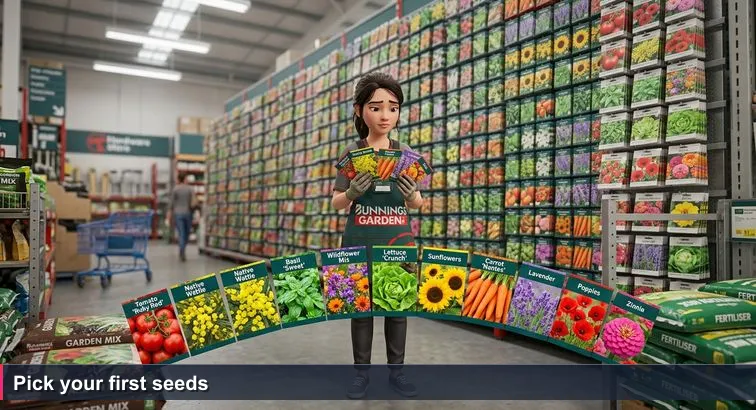
You’re standing in the seed aisle at Bunnings with exactly ten packets in your hand and a hundred still on the wall. Tomatoes, natives, herbs, wildflowers - each promising a different future garden, each needing different soil and seasons. You came in hunting for “the best ones”, but under the fluorescent lights it dawns on you: the real question isn’t which packet ranks first, it’s which mix will actually grow in your backyard.
Australia’s tech ecosystem feels similar. Women make up only about 31% of the tech workforce, and when you isolate the most technical STEM roles, representation drops to roughly 15%. The gender pay gap in tech hovers around 19%, with women in STEM earning on average $29,121 less in full-time total remuneration than men, according to the federal government’s STEM Equity Monitor. After 40, women leave highly technical roles at nearly twice the rate of men.
In that context, picking the “wrong” support network isn’t just an inconvenience - it can be the quiet turning point where someone drops out of AI or data altogether. The closure of global mainstays like Women Who Code’s official operations in 2024, announced in their own words as “the end of an era” on the Women Who Code closing statement, underlines how fragile support can be if it isn’t rooted locally.
At the same time, analysts estimate that reskilling around 600,000 Australian women into tech-adjacent roles could unlock about $6.5 billion in value for business. That’s where women-in-tech communities behave less like a leaderboard and more like a network of garden beds: Sydney-Melbourne meetups near Atlassian and Canva, Brisbane’s She Codes scene, Canberra’s CSIRO-backed programmes, and regional or online groups that reach beyond the capitals. Each “packet” is tuned to a different climate, from high-school pipeline programs to senior AI leadership circles.
“The most powerful thing a woman in tech can do… is choose the story she will live and lead.” - Dr Lidia Lae, commentator on gender equity in tech, IT Brief Australia
This list, then, isn’t a verdict on who’s “best”. It’s a garden plan for your AI career: a way to match the season you’re in to the communities that will actually take root in your soil.
Table of Contents
- Why women-in-tech communities matter in 2026
- Nucamp Bootcamps
- She Codes Australia
- Code Like a Girl
- Women in Technology Queensland
- Women in Digital
- Women Leading Tech
- Women in AI Australia
- Girls’ Programming Network
- AnitaB.org Australia Community
- Tech Council of Australia and EvenBetter.ai
- Choosing your seed packets in 2026
- Frequently Asked Questions
A comprehensive guide to starting an AI career in Australia in 2026, including Nucamp bootcamp pathways and city-specific advice
Nucamp Bootcamps
For women in Australia pivoting into AI and software, cost and flexibility are usually the first deal-breakers. Nucamp sits in a different part of the “bootcamp garden”: an international, online provider used by learners across Sydney, Melbourne, Brisbane and regional towns, built around part-time schedules and significantly lower tuition than most local competitors.
Key programs & pricing
| Program | Duration | Approx. Tuition (AUD) | Primary Focus |
|---|---|---|---|
| Solo AI Tech Entrepreneur | 25 weeks | $5,970 | LLMs, AI agents, prompt engineering, SaaS monetisation |
| AI Essentials for Work | 15 weeks | $5,370 | Workplace AI, productivity tools, prompt engineering |
| Back End, SQL & DevOps with Python | 16 weeks | $3,190 | Python, SQL, DevOps, cloud deployment |
| Other paths (Web, Full Stack, Cyber, Software Eng.) | 4-48 weeks | $690-$8,470 | From web fundamentals to an 11-month software engineering track |
With most Australian bootcamps charging around $10,000+ for full-time, in-person study, Nucamp’s range from roughly $3,190-$5,970 for core AI and backend options is unusually accessible. Guides like WomenHack’s Women in Tech Australia overview highlight how price remains a major barrier for women, especially those retraining while working or caring.
Learning model & outcomes
All Nucamp programs are designed around part-time online study, combining recorded material with weekly live workshops. Monthly payment plans make it easier to budget, and you learn in cohorts that often spin up city-based study groups around Sydney CBD, Melbourne’s inner north or Brisbane’s Fortitude Valley coworking spaces.
- Community-based learning with small-group support
- Career services including 1:1 coaching, portfolio reviews, mock interviews and a curated job board
- Pathways from fundamentals into more advanced AI, backend or cybersecurity tracks
According to Course Report, Nucamp reports an employment rate of about 78%, a 75% graduation rate, and a 4.5/5 Trustpilot score from roughly 398 reviews, with around 80% being five-star. For women targeting AI roles at employers like Atlassian, Canva, CBA or the growing AI startup scene along the Sydney-Melbourne corridor, that combination of affordability, structure and outcomes makes Nucamp a pragmatic launchpad rather than a high-stakes gamble.
She Codes Australia
In the forest of Australian coding initiatives, She Codes Australia is one of the most practical “seed packets” for women who want to move from curiosity to shipping real projects, without quitting their day jobs or stepping away from caring responsibilities.
Structured, portfolio-first learning
The flagship She Codes Plus program runs for around six months part-time, deliberately designed so participants can study outside standard work hours. The curriculum spans HTML/CSS, Python and React, giving you end-to-end experience from front end to basic back end and APIs. According to the official She Codes Plus overview, the focus is squarely on building a portfolio that hiring managers can understand at a glance.
National footprint with local flavour
What began in Perth now has a strong presence in Brisbane, Perth, Sydney and Melbourne. In Brisbane, Plus cohorts culminate in showcase nights where graduates demo apps to employers from the city’s mining-tech, fintech and gov-tech ecosystems. One-day workshops in Sydney and Melbourne extend that reach into the SaaS-heavy east coast corridor, often hosted in the offices of major tech employers or coworking spaces.
Access and support for career switchers
She Codes targets women who didn’t follow a traditional computer science path: return-to-work mums, ex-teachers, marketers, admin staff and tradespeople pivoting into tech. Many places are scholarship- or employer-funded, which matters in a market where private bootcamps can cost tens of thousands of dollars. The community layer is as important as the content: peer accountability, technical mentors, and alumni who come back as tutors.
Why it works for future AI and data roles
Even if your endgame is machine learning or data science, you still need solid Python, git, APIs and cloud basics. She Codes Plus gives you that “full-stack literacy”, making later moves into analytics, MLOps or AI-enabled product teams far less intimidating. Graduates commonly step into junior developer or analyst roles in Brisbane and Perth, or continue into specialised AI and data upskilling once they’ve proved they can ship code in a real stack.
Code Like a Girl
Among Australia’s women-in-tech “seed packets”, Code Like a Girl is the one quietly designed for women who didn’t take the straight-to-CS-degree path: teachers, marketers, nurses, accountants and mums returning after a break who now want a serious shot at software, data or product work.
Short courses built for late-career switchers
Code Like a Girl runs instructor-led courses in front end, Python and data fundamentals, deliberately scoped so you can fit them around a standard work week. The emphasis is on practical projects rather than theory, with exercises that mirror the tools and workflows used in product and analytics teams. Their own Code Like a Girl program descriptions highlight an explicit focus on women who are changing careers or re-entering the workforce, not just fresh grads.
Internships that de-risk the first tech role
Where CLG really stands out is its internship pathways. Instead of asking you to cold-apply into junior dev jobs, they co-design placements with companies that commit to mentoring, structured learning plans and inclusive hiring. For women who have strong skills but a sparse GitHub history, that first few months inside an engineering or data team can be the difference between “I’m not cut out for this” and a sustainable tech career.
- Short, targeted courses that build an immediate portfolio
- Internships aligned with partner companies’ real tech stacks
- Career support focused on pay negotiation, flexible work and confidence
Positioning for AI-adjacent careers
Not everyone wants to become an ML researcher. Many emerging AI roles in Australia sit at the intersection of software, data and domain knowledge: analytics engineering, ML product management, AI-enabled marketing or customer insights. CLG’s blend of coding plus industry context equips women for exactly those hybrid roles, especially in large organisations like banks and telcos that are ramping up digital and data teams, as seen in initiatives such as the Girls in Tech outreach led by CommBank.
Women in Technology Queensland
Based in Queensland but reaching well beyond it, Women in Technology (WiT) is the network many women in STEM, digital and data roles join when they’re ready to be seen outside their immediate team. It is especially valuable if you sit anywhere near AI, analytics or engineering and want cross-disciplinary connections rather than one more siloed meetup.
Cross-industry networks with real influence
WiT brings together members from industry, government and academia, with events that range from technical deep-dives to policy roundtables. Its annual awards gala has become a focal point for collaboration stories: recent coverage by CSIRO’s profile of WiT Awards finalists emphasised the “stronger together” theme, spotlighting joint projects between public-sector tech teams and researchers.
Through mentoring programmes and leadership series, WiT helps women move from being the only data scientist on a project to being part of a visible, statewide cohort. That matters in a market where industry surveys suggest only around 29% of tech professionals in Australia are women, and representation is even thinner in senior technical roles.
How to plug in from anywhere in Australia
You don’t need to be Brisbane-based to benefit. Joining via the WiT membership portal gives access to online events, recordings and mentoring, while in-person meetups cluster around Brisbane’s CBD and major Queensland campuses. Members describe the value as threefold: broad exposure across mining-tech, med-tech and SaaS, role models who’ve navigated non-linear paths, and advocacy on issues like flexible work and regional access.
Why it matters for AI and data careers
AI is now embedded in resources, agriculture, finance, health and government. WiT’s cross-sector lens is ideal if you’re an AI or data specialist who doesn’t want to be confined to pure software, but instead wants doors open at organisations like BHP, Rio Tinto, Commonwealth Bank, Macquarie or Telstra. For employers, WiT memberships and event tickets can double as a leadership-development track for emerging women leaders in AI and analytics teams, signalling that their work is part of a much bigger ecosystem.
Women in Digital
Visibility is often the missing ingredient between doing great work in AI and actually being recognised for it. That’s the gap Women in Digital steps into: a national community and awards platform built to spotlight women across product, data, AI, engineering and digital marketing, from junior contributors to founders.
Recognition that moves careers
The flagship Women in Digital Awards and the annual Women to Watch in AI & Machine Learning 2026 list showcase emerging and established talent working on everything from recommendation engines to marketing analytics. According to the awards’ own profiles on Women in Digital’s AI & ML list, many honourees credit the visibility with triggering promotion conversations, inbound job offers and invitations to speak at conferences and internal town halls.
Community across roles and cities
Unlike niche meetups, Women in Digital intentionally brings together engineers, designers, data scientists and digital leaders from Sydney, Melbourne, Brisbane and beyond. Events are a mix of in-person gatherings and online panels that fit around busy project cycles. Participants often describe the magic as the way the community turns “small, meaningful moments… into action” - a comment echoed in member reflections highlighted by Women in Digital.
- Story-driven case studies that demystify non-linear careers
- Networking that cuts across employers and job titles
- Judged awards that hold real weight with hiring managers and boards
Why it matters for AI and ML careers
Senior AI and data roles in Australia are still heavily male-dominated, particularly in high-profile teams at Atlassian, Canva, and major banks and telcos. Women in Digital helps rebalance that by surfacing women who are already leading AI initiatives in less visible corners of the ecosystem, including martech, adtech and customer analytics. In a region increasingly recognised by networks like WomenTech’s list of women-in-tech-friendly hubs, being publicly named as a leader in AI is a powerful lever for negotiation, sponsorship and long-term influence.
Women Leading Tech
By the time you’re mid-career in AI, data or engineering, the challenge often isn’t getting “a seat at the table” - it’s being recognised as someone who helps decide what gets built next. Women Leading Tech (WLT), run with B&T and GovTech Review, is one of the few Australian platforms explicitly designed to spotlight women already operating at that level.
Award categories that mirror today’s tech
The 2026 Women Leading Tech Awards introduced new categories like AI Pioneer and Glass Ceiling, acknowledging both frontier technical work and the labour of breaking entrenched barriers. Coverage in B&T’s recap of the 2026 WLT winners described the event as “refreshed, reinvigorated and sharper than ever”, reflecting how quickly AI and data have moved to the centre of Australia’s tech story.
Winners included Maddie King (MagicBrief), named Woman of the Year for her leadership in a rapidly scaling adtech product, and Utkarsha Ghule (Quantium), recognised as AI Pioneer for developing an internal “AI Masters” programme that has already upskilled dozens of data scientists and lifted female representation in advanced AI roles.
A room full of decision-makers
The WLT gala in Sydney is where senior leaders from Atlassian, Canva, Commonwealth Bank, Telstra, Woolworths Group, major agencies and gov-tech units actually collide. For women leading AI initiatives - from recommendation engines to responsible data platforms - that visibility can translate into board appointments, cross-company collaborations and the political capital to push for ethical AI frameworks inside large organisations. The associated listing on GovTech Review’s Women Leading Tech event page underscores how important public-sector technology has become in this mix.
Why it matters for AI and ML leaders
If other communities help you grow your technical “roots”, Women Leading Tech is where the canopy becomes visible. Being shortlisted, winning, or even just working in teams that are recognised by WLT can shift how AI and data work is valued - reframing it from backroom optimisation to front-page innovation that shapes Australia’s economic and social trajectory.
Women in AI Australia
When you care as much about how AI is built as what it can do, you need a community tuned to ethics, governance and real-world impact. That’s the niche Women in AI (WAI) Australia fills: a country chapter of the global movement focused on responsible, human-centred AI, open to women and non-binary people across research, industry and government.
Responsible AI with an Australian lens
Australian practitioners like Nikki Meller use the WAI platform to champion inclusive innovation - from dataset diversity to community-led design. Globally, appetite is high: a recent survey found that nine in ten women would consider transitioning into AI-focused roles if given organisational support, as reported by the Economic Times coverage of women entering AI. WAI’s events and mentoring help turn that intent into sustainable careers, rather than a short-lived buzz around tools like ChatGPT.
What the Australian chapter actually offers
Across cities like Sydney, Melbourne, Brisbane and Canberra, WAI runs meetups, webinars and project showcases that deliberately mix technical deep-dives with ethics and policy conversations. Typical offerings include:
- Talks on bias, fairness and safety in ML systems deployed in finance, health and government
- Mentoring circles for early-career data scientists and ML engineers
- Opportunities to contribute to policy submissions and guidelines on AI governance
This cross-sector view aligns with recommendations from the Tech Council of Australia’s Next Wave: Women in Tech report, which argues that diverse teams are critical as AI moves into nationally significant sectors.
Why it matters for AI and ML careers
For practitioners in Canberra’s policy ecosystem, data teams in banks, or product squads at SaaS companies, WAI is a place to pressure-test your work against emerging standards in ethics and regulation. Joining the Australian chapter, attending virtual events, or volunteering as a mentor gives you more than a badge: it embeds your technical skills in a community that takes accountability seriously. For employers, giving AI and data staff time and budget to engage with WAI is a practical step towards embedding AI governance into everyday engineering, not just annual risk reports.
Girls’ Programming Network
Picture a Saturday in Brisbane, Sydney or Perth: a room full of high-school girls and uni students, laptops open, learning to make games, chatbots or quirky web apps in Python. That’s the vibe of the Girls’ Programming Network (GPN), a grassroots programme that has become one of Australia’s most effective “seedling beds” for future women in AI and software.
Run as free or low-cost weekend workshops, GPN sessions are designed and taught by volunteer software engineers, data scientists and researchers. Leaders like Renee Noble are widely credited with building a pipeline of female AI talent, giving students enough confidence with code that university computing and data degrees feel genuinely within reach rather than reserved for “born geniuses”.
The format is deliberately low-pressure: you spend a day working through themed projects (games, web apps, simple automation), pick up core concepts like loops, functions and problem decomposition, and see first-hand that debugging is something everyone struggles with, not a sign you “don’t belong”. For many attendees, it’s the first time they’ve written code in a room where women are the norm, not the exception, in a country where some estimates still put women at only about 28% of the overall tech workforce.
Over time, GPN becomes a bridge into university societies and industry events. At the University of Sydney, for example, women-focused engineering and STEM societies recently hosted a networking night with employers ranging from Commonwealth Bank and Macquarie to Canva, Atlassian and Jane Street, as highlighted in this Women in STEM event recap. Many of the young women at those events first touched code in programmes just like GPN.
Getting involved is straightforward: students can sign up for the next workshop in their city, while teachers and parents help spread the word. Developers and data professionals can volunteer as tutors, with some companies offering paid volunteer days to support outreach. For Australia’s AI future, those Saturdays might be the most important hours of the month.
AnitaB.org Australia Community
For women in software, data and AI who are starting to look beyond Australia’s borders, the AnitaB.org Australia Community is less a single meetup and more a bridge between local hubs and the global tech ecosystem. It connects engineers in Sydney and Melbourne, data scientists in Brisbane and Adelaide, and students across the country with peers working at Google, Microsoft, AWS and high-growth startups overseas.
Global network, local rhythm
The Australian community runs regular online meetups timed for AU/NZ evenings, making it realistic to join from a home office in Parramatta or a campus library in Hobart. Through the AnitaB.org communities portal, members access monthly events focused on technical talks, career strategy and leadership, plus informal networking sessions where you can compare notes with women facing similar challenges in Singapore, Seattle or Bangalore.
Pathways to global stages
AnitaB.org is best known for the Grace Hopper Celebration, the world’s largest gathering of women and non-binary people in computing. The Australia Community helps local members navigate scholarship applications, abstracts and travel logistics so attending becomes a realistic option rather than a pipe dream. For AI and ML practitioners, presenting work at Grace Hopper or similar forums can be a career inflection point, opening doors to research labs, international product teams and remote-first roles.
Support for mobile and migrant careers
Community discussions frequently cover topics like visa pathways, negotiating remote work from Australia for overseas employers, and navigating tech careers as a migrant or international student. That’s particularly relevant in AI, where many advanced roles operate on global hiring markets. Plugging into AnitaB.org gives you a benchmark for your skills, access to mentors who have already made the leap, and a way to bring global best practice in ethical AI, leadership and inclusion back into teams at Atlassian, Canva, CBA or your local startup.
Tech Council of Australia and EvenBetter.ai
Meetups and mentoring can change individual careers, but they can’t, on their own, fix a system where women are concentrated in lower-paid roles and overlooked for promotions. That’s where structural levers come in. From 2026, reforms to the Workplace Gender Equality Act (WGEA) require large Australian employers to meet specific gender-equality targets and report publicly on their progress, forcing boards and executives to treat equity as a core performance issue rather than a side project.
The Tech Council of Australia (TCA) has stepped into this space as a guide for tech and digital employers, translating WGEA requirements into sector-specific playbooks. Its briefings on gender targets and reporting standards help startups and ASX-listed giants alike understand what needs to be measured across hiring, promotion and retention in technical roles, including AI and data teams. For leaders who still think of gender diversity as “nice to have”, economic analysis highlighted by Women’s Agenda’s coverage of women in tech underlines that closing gaps is a productivity and innovation play.
Alongside policy, tools like EvenBetter.ai have emerged as Australia’s first wave of AI-powered pay-equity platforms. Designed to analyse pay, promotion and performance-review data, they surface patterns that manual audits miss: where women are clustered just below key pay bands, who gets high-visibility AI “centre of excellence” roles, and how bonuses map against performance ratings. That’s crucial in a sector where the tech gender pay gap sits at around 19%, and women in STEM have historically earned significantly less in total remuneration than men.
For employers and allies, the practical moves are clear:
- Use TCA guidance to build WGEA-aligned dashboards for your tech and AI workforce
- Adopt AI-driven tools like EvenBetter.ai to run regular, auditable pay and promotion checks
- Tie leadership KPIs to measurable improvements in equity, not just overall headcount
Industry leaders quoted in SMBtech’s International Women’s Day round-up describe this shift as moving from gatekeeping to a “give to gain” mindset: investing in women’s advancement not only corrects unfairness, it unlocks better AI systems and stronger teams across Australia’s tech corridor.
Choosing your seed packets in 2026
Back in that Bunnings aisle, you realise the point isn’t to discover a mythical “top 10” seed packets. It’s to choose a first planting that makes sense for your garden: the amount of sun you get, how bad the snails are, how often you can be home to water. Australia’s women-in-tech ecosystem in 2026 works the same way. The risk isn’t choosing the “wrong” group, it’s believing there’s only one right one and never starting.
Across the country, different communities serve different seasons of a career. There are reskilling pathways for career switchers, community and visibility hubs for those wanting promotion or profile, AI-focused networks for technical depth and ethics, and policy and pay-equity levers that change how entire organisations work. National gatherings such as the Women in Tech Australia Summit or the global-facing Women in Tech Global Summit show how rich that ecosystem has become, especially along the Sydney-Melbourne tech corridor and in Brisbane’s growing scene.
Designing your first “bed”
Rather than searching for a definitive ranking, treat this list as raw material and build a simple, deliberate mix:
- Pick one education seed that fits your life now (a bootcamp, short course or internship pathway).
- Pick one community seed that feels energising, not draining (local meetups, online networks, awards programmes).
- Pick one structural seed you’ll push at work (better pay data, clearer promotion criteria, or support for diversity initiatives).
From there, you keep reseeding. Maybe you start in Brisbane with a coding course, “transplant” to a Sydney AI team, then branch into policy through Canberra networks later. Narrative equity means you choose which garden you’re growing - whether that’s a compact balcony of technical depth or a sprawling backyard of leadership, advocacy and AI impact. The packets on the wall are possibilities, not prescriptions; the story that emerges belongs to you.
Frequently Asked Questions
Which of these groups is best for women pivoting into AI/ML in Australia?
For pragmatic, affordable reskilling Nucamp is a standout - its AI and backend bootcamps run from about AUD 3,190-5,970 and report roughly a 78% employment rate, making it ideal for women pivoting into AI/ML while working or juggling care duties. Pair that with a community (WiT, Women in AI or Women in Digital) and you’ve covered skills plus visibility.
I live outside Sydney or Melbourne - which groups actually reach regional Australia?
Choose online-first programs like Nucamp (rolling cohorts and remote study) and national chapters such as Women in AI or AnitaB.org, and encourage local initiatives like the Girls’ Programming Network which run regional workshops in Sydney, Brisbane and Perth. Many organisers also run virtual meetups and mentoring, which is crucial given the uneven pipeline across the Sydney-Melbourne corridor and the rest of the country.
How should I pick the right group based on my career stage?
Use a simple three-step filter: pick one education seed (e.g. Nucamp, She Codes, Code Like a Girl) based on cost and time, one community seed for networking and visibility (WiT, Women in Digital, WAI), and one structural seed your employer can back (TCA guidance or EvenBetter.ai). Factor in your goals - entry-level reskilling, portfolio projects, internships or senior leadership visibility - and remember Australia still has only about 31% female tech representation, so targeted choices matter.
Can employers use these organisations to meet WGEA targets and reduce pay gaps?
Yes - employer-led sponsorships, paid returnships and partnerships with groups like Code Like a Girl or Nucamp are practical levers, while the Tech Council of Australia resources and tools like EvenBetter.ai help operationalise WGEA 2026 reforms and tackle the ~19% tech gender pay gap. Funding places for regional staff or offering paid volunteer time for mentoring are high-impact, low-cost actions employers can take now.
Do these groups actually help people land AI or data roles?
Yes - for example Nucamp’s reported ~78% employment rate, She Codes’ employer showcase events and Code Like a Girl’s internships all translate into hiring pipelines, with graduates frequently connecting to employers like Atlassian, Canva and major banks. Visibility programs (Women in Digital, WLT awards) also accelerate promotions and board or speaking opportunities that change career trajectories.
Local jobseekers should consult the who’s hiring cybersecurity professionals in Australia (2026) guide to target the right city and sector.
Find the Top 10 non-degree tech jobs in Australia and how to break in via bootcamps and TAFE.
Product managers and non-engineers should read the portion on AI salaries 2026 in Australia by experience and AI-plus role premiums.
This learn to be an AI engineer in Australia 2026 guide emphasises RAG, MLOps and industry-aligned projects.
Discover the best Top 10 Companies Hiring AI Engineers in Australia in 2026 for AI roles and salary benchmarks across Australian cities.

Irene Holden
Operations Manager
Former Microsoft Education and Learning Futures Group team member, Irene now oversees instructors at Nucamp while writing about everything tech - from careers to coding bootcamps.