









Top 10 Tech Coworking Spaces and Incubators in Australia in 2026
By Irene Holden
Last Updated: April 7th 2026
Too Long; Didn't Read
Stone & Chalk and Cicada Innovations are the top picks for tech coworking and incubators in Australia in 2026: Stone & Chalk leads as a national scaleup engine with hubs in Sydney Tech Central, Melbourne and Lot Fourteen that plug you into Atlassian, Canva, major corporate buyers and curated investor programs, while Cicada is the go-to for deep-tech AI and robotics teams because of its lab-grade facilities and university links. Expect dedicated desks from about A$700 a month at premium hubs like Stone & Chalk, while Cicada’s program-based memberships are tailored to teams using grants and the federal R&D Tax Incentive, so pick Stone & Chalk for scaling SaaS and Cicada for serious R&D.
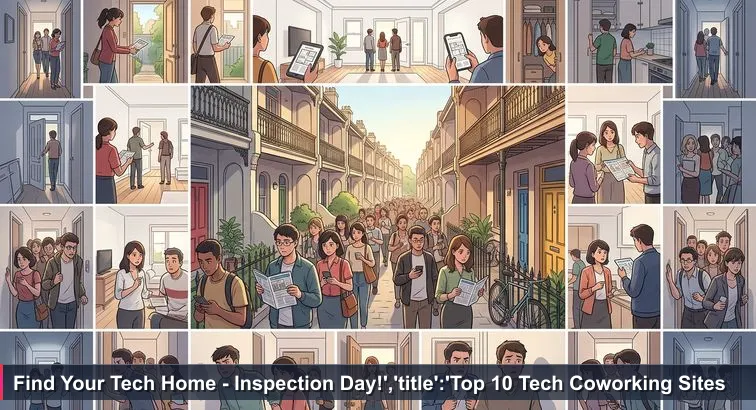
By the time you reach the front door, the inspection is already heaving. Someone’s measuring the second bedroom with an iPhone app; another’s whispering, “It’s small, but it’s Newtown.” You’ve got five minutes to decide if this blank white box is worth rearranging your whole life for. The listing said “Top 10 rentals this week.” Standing in the hallway, you realise rankings are just floorplans; the real decision is about neighbours, noise and thin walls.
Most AI and machine learning people now choose a coworking space or incubator the same way: skimming “Top 10 tech hubs” lists, scanning photos of exposed brick and kombucha taps, maybe checking a Google rating. But in places like Sydney’s Tech Central - now Australia’s largest tech hub, clustering Atlassian, Canva and 160,000+ students around Central - your “address” quietly shapes who overhears your pitch, which meetups you wander into, and whether you’re closer to a model-serving cluster at work or the train back to Penrith. A new strategy for Tech Central positions it as the engine room of the state’s innovation economy, not just another office park, as outlined in the NSW government’s vision for Tech Central.
Across Sydney-Melbourne, Brisbane, Adelaide and Perth, flex operators are pivoting from selling desks to selling what one sector analyst calls “maturity, clarity, and consistency” in a managed product. In a 2026 review of global coworking megatrends, Geoffroy Speybrouck argued that this year is when flex spaces must “rewrite the narrative” and prove they deserve a permanent slice of the office market, not just overflow space for hybrid experiments, as highlighted in Coworking Trends in 2026.
What you’re really choosing
For AI/ML workers, that “product” is less about Wi-Fi and more about:
- Neighbours: founders vs corporate teams vs researchers
- Wiring: mentors, investor access, R&D incentives and grants
- Neighbourhood: Tech Central vs Melbourne Innovation District vs Fortitude Valley vs Perth CBD
This Top 10 isn’t about crowning a winner. It’s a set of floorplans so you can walk each option - on screen first, then in person - and decide which mix of vibe, neighbours and hidden wiring actually fits the tech life you’re trying to build.
Table of Contents
- Choosing your tech home in 2026
- Stone & Chalk
- Startmate
- Fishburners
- Cicada Innovations
- River City Labs
- Spacecubed
- Tank Stream Labs
- Hub Australia
- The Commons
- The Cluster
- How to choose your tech home
- Frequently Asked Questions
A comprehensive guide to starting an AI career in Australia in 2026, including Nucamp bootcamp pathways and city-specific advice
Stone & Chalk
Think of Stone & Chalk as the strata committee for Australia’s serious tech scaleups. It’s a not-for-profit innovation hub with locations in Sydney’s Tech Central, Melbourne CBD and Adelaide’s Lot Fourteen, with a spine of fintech, cyber, climate and increasingly AI. The Tech Central workspace in Sydney drops you into Australia’s largest tech precinct, surrounded by Atlassian, Canva and more than 160,000 students from UTS, USyd and UNSW.
In Adelaide, Stone & Chalk effectively anchors Lot Fourteen alongside the Australian Space Agency, Amazon Web Services and defence primes, giving AI and data teams unusually direct proximity to space, defence and government buyers. Lot Fourteen is pitched as an “innovation neighbourhood defined by collaboration,” with a strong focus on space and AI, as profiled by Innovations of the World. Across its hubs, Stone & Chalk runs curated programs, structured investor introductions and its much-talked-about “10,000 coffees” style networking, where corridor chats routinely turn into pilots and term sheets.
Pricing, selection and sustainability
Pricing sits in the premium-but-focused bracket:
- Dedicated desks typically around A$700+/month (city and membership dependent)
- Private offices by enquiry, aimed at funded teams
- Selection by application and vetting, geared to high-growth startups and corporates
Its hubs lean into sustainability: Tech Central is part of a broader push for low-carbon, public-transport-first development, and Stone & Chalk promotes high NABERS ratings and efficient fit-outs across its portfolio.
Who it suits - and a concrete AI example
Stone & Chalk works best for:
- Seed to Series B SaaS, fintech, cyber and AI startups
- Scaleups wanting access to CBA, Telstra, major insurers and cloud providers
- Corporate innovation squads spinning out new products
Imagine you’re an ML engineer building fraud detection models. A Sydney membership puts you walking distance from Atlassian’s new “habitat” tower and Commonwealth Bank’s Tech Central teams. You use Stone & Chalk’s curated roundtables to sanity-check your models with real risk leaders, then tap its investor network when you’re ready to turn a working prototype into a properly funded seed-stage company.
Startmate
Startmate runs less like a chilled coworking space and more like a high-pressure training camp with desks attached. It’s frequently cited as one of Australia’s most influential startup accelerators, known for short, intense cohorts, mentors who personally invest in the companies they coach, and deep connections to local and global VCs. In recent rankings of Australian accelerators, Startmate consistently appears near the top of founder shortlists, especially for ambitious, product-led tech teams, as highlighted in Elegant Media’s overview of startup accelerators.
Unlike open coworking brands, Startmate’s physical hubs are primarily for current cohorts and recent alumni. Its Melbourne base in Docklands ties directly into the city’s broader innovation corridor and nearby precincts like the Melbourne Innovation District, with Sydney and Brisbane programs giving similar access to the east-coast tech corridor. Google Maps shows a modest 3.0/5 rating from just a couple of reviews, which tells you more about how selective and demanding the culture is than about the Wi-Fi or furniture.
How it works: equity, intensity, locations
Startmate operates on an accelerator model rather than traditional rent:
- You trade a small equity stake for capital, coaching and workspace during the program
- Coworking-style desks are mainly for teams in-program or in the immediate alumni phase
- Programming is increasingly remote-friendly, with primary hubs in Melbourne, Sydney and Brisbane
Who should consider Startmate
Startmate is best suited to:
- Technical founders ready to go all-in on a startup
- AI/ML engineers leaving corporate roles to build product companies
- First 5-10 hires at Startmate-backed startups who want to be embedded in a fast-moving ecosystem
Picture a Sydney data scientist with a working LLM-based prototype for mining safety analytics. A Startmate cohort can compress years of trial-and-error into a three-month sprint, surrounding you with mentors who have already navigated data infrastructure, sales into ASX-listed miners and early-stage fundraising. Even if you stay remote, the alumni network and regular events along the Sydney-Melbourne corridor become the real “office” you plug into.
Fishburners
If Stone & Chalk is the polished apartment block, Fishburners is the first share house: slightly scrappy, full of stories, and famous for the number of successful companies that once squeezed in. Based in Haymarket on the edge of Tech Central, it’s a non-profit hub aimed at high-impact, scalable startups with a strong education and mentoring layer built around weekly workshops and founder meetups.
A detailed profile in Startup Daily credits Fishburners’ shift to a more selective intake with helping it evolve from “cheap desks” to one of Sydney’s premium startup hubs. That shows up in the data: the Haymarket space holds a Google rating of around 4.6/5 from more than 280 reviews, and its extended Sydney Startups community now reaches well over 60,000 founders, operators and curious onlookers.
Pricing sits in the accessible range for people still testing ideas:
- Hot desks typically around A$400-$600/month
- Day passes roughly A$40-$50
- Online memberships for lower-cost access to events and a Slack-style community
Those numbers line up with broader national coworking benchmarks that place inner-city hot desks in the mid-hundreds per month for independent workers and very early teams.
Fishburners works best if you’re at the “I’ve got an idea and a notebook” stage rather than “I need a 20-person office.” That includes first-time founders pre-MVP, freelance ML engineers playing with product ideas on nights and weekends, and students from UTS, USyd or UNSW looking for a bridge into the Tech Central scene.
Picture a junior data analyst at a big four bank, quietly training models after hours. A Fishburners membership lets you work from Haymarket a couple of days a week, tap into legal and accounting clinics, and float your idea at pitch nights long before you resign. For AI/ML job-seekers, those same events are a low-friction way to meet founders who can’t yet afford full-time hires but desperately need contract help on their data pipelines.
Cicada Innovations
Where some hubs feel like polished offices, Cicada Innovations feels more like a converted warehouse lab with reinforced floors for robots. Tucked in Eveleigh next to the South Eveleigh tech precinct and a short hop from Tech Central, it specialises in deep-tech: AI plus hardware, robotics, medtech, climate tech and other science-heavy ventures that don’t fit neatly into “move fast and break things.”
Cicada has built a reputation over two decades for hands-on, R&D-focused support rather than generic coworking. It works closely with universities and research institutes, making it ideal if your roadmap includes patents, lab equipment and multi-year experiments. Google reviews sit around 4.6/5 from more than 117 ratings, reflecting founder feedback about serious facilities and an operator that understands how to translate research into companies, as noted in deep-tech incubator roundups from Flexilabs’ list of top Australian incubators.
Membership, facilities and R&D leverage
Pricing is tailored rather than published; many residents join via structured incubator or accelerator programs that bundle:
- Specialised lab and prototyping spaces, not just hot desks
- Access to sector-specific mentors, industry partners and investors
- Support in navigating grants and the federal R&D Tax Incentive
That last point matters: government reviews like Ambitious Australia - Strategic Examination of R&D highlight how critical it is for early deep-tech ventures to access non-dilutive capital effectively, and Cicada has built playbooks for doing exactly that.
Who should pick Cicada - and why
Cicada makes sense if you are:
- A PhD-heavy founding team spinning out university IP
- An AI startup working on robotics, computer vision, climate or medical applications
- A researcher needing compliant lab space plus commercialisation help
Imagine you’re a computer vision researcher turning a medical imaging algorithm into a regulated device. At Cicada you trade café-style coworking for access to wet labs, introductions to hospital partners, and guidance on structuring your R&D spend so you can claim incentives without tripping over compliance. For AI/ML people whose models interact with atoms as well as bits, that infrastructure is the difference between a clever paper and a viable company.
River City Labs
On Brisbane’s side of the map, River City Labs (RCL) is the share house where most ambitious founders at least crash for a while. Based near Anzac Square and tightly connected to Fortitude Valley’s government-backed hub, The Precinct, it’s a non-profit focused on early-stage tech companies rather than polished serviced offices. The vibe is founder-first: regular accelerator programs, pitch nights and community dinners anchored around a core of repeat builders.
RCL holds a Google rating of about 4.5/5 from more than 100 reviews (106 at last count), and regularly features in national incubator and accelerator roundups. Brisbane’s broader startup scene has been maturing quickly, with The Precinct highlighted as a flagship Queensland Government initiative in several ecosystem guides, including Airwallex’s overview of Australian startup communities. That positioning matters if your AI or data product sells into mining, energy or logistics, where many decision-makers are based in or pass through Brisbane.
Pricing is tuned for bootstrapped teams rather than corporates:
- Google rating: 4.5/5 (106 reviews)
- Hot desks near Brisbane CBD/Fortitude Valley: typically A$300-$500/month
- Dedicated desks and small offices priced to suit 2-10 person teams
Those figures sit below Sydney/Melbourne CBD averages reported in national coworking market analyses from firms like Mordor Intelligence, which makes RCL attractive if you’re chasing runway.
RCL is a strong fit for early-stage SaaS and platform startups, especially those targeting APAC or resources, founders moving north for lower living costs, and remote ML engineers in southeast Queensland who want a professional base rather than working from a spare bedroom.
Imagine you’re building predictive maintenance models for mining equipment. A small team at River City Labs keeps you close to Brisbane airport and resources majors, plugged into The Precinct’s investor and government networks, and paying hundreds less per desk than an equivalent Sydney space. For contract AI engineers, having “River City Labs, Brisbane” on your email footer is a quiet signal to interstate clients that you’re embedded in a serious ecosystem, not flying solo.
Spacecubed
On the west coast, Spacecubed is the outfit most likely to appear on the “shortlist” for anyone serious about building in Perth. Operating multiple spaces, including Riff in Northbridge and other CBD locations, it has effectively become the organising backbone of WA’s startup ecosystem. The community leans into what Perth does best: resources and mining tech, space and defence, and SaaS companies that sell into Asia-Pacific from a GMT+8 time zone.
Across its network, Spacecubed blends coworking with structured programs and perks. Members can tap accelerators like Plus Eight and benefit from partner deals such as Google Cloud and Stripe credits, which meaningfully reduce early infrastructure costs for AI-heavy products. It’s a regular fixture in lists of the country’s most influential coworking brands, with guides like Zeller’s overview of top coworking spaces in Australia highlighting its role in Western Australia’s innovation scene. Public reviews back that up: its flagship site scores around 4.8/5 on Google from roughly 145 ratings.
Pricing reflects Perth’s slightly gentler commercial rents compared with the east coast:
- Hot desks in the CBD/Northbridge typically around A$350-$550/month
- Day passes and virtual memberships for remote founders and FIFO-style workers
- Options that scale up to dedicated desks and small team offices as you grow
Spacecubed is particularly well-suited to founders building AI for mining, logistics, renewables or space, remote employees of east-coast or overseas companies who need a stable base, and tech professionals who want to stay close to WA’s resources giants while working on software. Its mix of sector-specific mentors, procurement-savvy advisors and connections into government grants mirrors the “managed product” trend that national coworking analyses, such as Zeller’s broader coworking market overview, note across Australia.
Imagine you’re an ML engineer building optimisation models for haul trucks. Working from Riff puts you alongside other resources-tech founders, gives you a credible CBD meeting point for BHP or Rio Tinto stakeholders, and offers a time zone that overlaps neatly with both Singapore and Europe. Compared with flying east for every meeting, that combination of proximity and community is a very efficient “tech home base.”
Tank Stream Labs
Tank Stream Labs (TSL) sits squarely in the “we’ve outgrown the scrappy phase” end of the spectrum. With established hubs in Sydney and an expanding interstate footprint, it caters to scaleups that need serious meeting rooms, 24/7 access and the option to spin up extra project space without committing to a long lease. The vibe is more execution-focused than incubator-style hand-holding: you’re surrounded by teams already selling into enterprise, not just tinkering with ideas.
Footprint and growth trajectory
TSL’s core strength is its alignment with the east-coast tech corridor. In Sydney, locations cluster around the CBD and fringe, putting you within easy reach of clients in finance, media and government as well as the broader Tech Central ecosystem. Industry newsletters like ThisWeekInCoworking’s 2026 sector update note TSL’s flagship Brisbane CBD space coming online in Q3, giving existing members a straightforward way to expand north without changing providers.
Pricing and membership model
Pricing reflects its “scaleup, not side-project” positioning:
- Hot desks in Sydney CBD typically around A$450-$700/month
- Private offices designed for roughly 4-50 person teams
- Most memberships include 24/7 access and bookable meeting rooms
Those rates sit in the premium but competitive band for central locations, in line with broader CBD comparisons outlined in national guides such as Coworking Resources’ survey of Australian spaces.
Who it suits - and a practical AI example
Tank Stream Labs is a strong fit for funded SaaS and AI teams of 5-30 staff, remote-first companies that need “on demand” rooms in Sydney and Brisbane, and contractors who regularly host executive workshops. Picture a 12-person ML consultancy: data scientists sit in TSL Sydney near bank and insurer clients, while a smaller pod in the new Brisbane hub services Queensland accounts. Quarterly strategy days happen in TSL’s event spaces, and you pay a predictable per-desk fee instead of juggling multiple short-term leases.
Hub Australia
Among Australia’s flex operators, Hub Australia is the one your non-startup friends are most likely to recognise. With premium coworking spaces across Sydney, Melbourne, Brisbane and Adelaide, it’s designed for scaleups, corporate project teams and independent professionals who want hotel-lobby polish more than warehouse grit. Spaces feature enterprise-grade security, quiet rooms, generous breakout areas and wellness facilities, and are marketed as productivity platforms rather than just desks, as outlined on the Hub Australia site.
"Coworking and collaboration is going to transform Australia’s economy by creating economies of scale for freelancers and small companies."
That’s how founder Brad Krauskopf frames Hub’s role in the broader economy in a widely shared interview on ABC’s coverage of shared offices. You feel that thesis in the details: secure VLAN/VPN options for teams handling sensitive data, concierge-style front-of-house staff for client visits, phone booths that actually block noise, and wellness offerings like yoga and end-of-trip facilities that make long model-debugging days more sustainable.
Pricing and positioning
Hub sits at the corporate-grade end of the market:
- Hot desks in CBD locations typically around A$500/month
- Private offices often from about A$1,200+/person/month, depending on fit-out and term
- Meeting rooms and event spaces bookable by the hour for client workshops
Those rates are consistent with premium CBD operators in national coworking market studies, which place top-tier Australian spaces in the higher price bands but note strong demand from larger tenants.
Best fit for AI/ML workers
Hub Australia is particularly well-suited to remote employees of Atlassian, Canva, AWS, Google or Microsoft, independent AI consultants billing corporate day rates, and tech leads inside big enterprises running cross-functional squads. For a Sydney-based machine learning specialist working remotely for a US unicorn, a Hub membership buys a professional ASIC-ready address, rock-solid video-conferencing infrastructure and a daily community of senior professionals from finance, law and engineering. Even at around A$500/month, a single on-site client day or training workshop can repay the cost.
The Commons
Where some spaces lean corporate, The Commons feels more like a beautifully renovated warehouse share house for creatives and product teams. Starting in Melbourne and now in Sydney too, it’s known for design-driven, sustainability-focused hubs that attract a mix of indie hackers, creative agencies and product squads. The Commons Gipps Street in Collingwood, for example, runs on 100% renewable energy and combines leafy lounges with quiet focus rooms, giving you somewhere that feels good to work in for long stretches of model training or code reviews.
Tech-wise, the drawcard is less about big corporate logos and more about tools for making and shipping. Spaces often include podcast and photography studios, maker areas, and well-equipped meeting rooms alongside standard hot desks. That mix sees The Commons regularly featured in “best coworking spaces” lists for Melbourne and Sydney, including guides such as Eastern Innovation’s complete guide to coworking in Melbourne, which highlight its appeal to creative and digital businesses.
Amenities and pricing
Members typically get access to:
- Podcast and video studios for content, demos and launch material
- Maker spaces and breakout areas for hardware tinkering or workshops
- Quiet rooms plus open lounges, balancing deep work and collaboration
Pricing sits in line with other inner-city creative hubs:
- Google rating around 4.8/5 (70+ reviews for Gipps Street)
- Hot desks roughly A$450-$650/month in Melbourne’s inner north
- Studios/offices priced by room size, aimed at micro-agencies and product teams
Why AI/ML creatives choose The Commons
The Commons suits indie hackers building consumer apps, ML engineers working closely with designers and marketers, and content-heavy tech businesses across education, media and creator tools. Imagine you’re developing a generative-AI tool for podcasters or video creators: you can record beta walkthroughs in the in-house studio, invite early adopters to live feedback sessions, and capture high-quality content for launch without leaving the building. For AI people whose work blurs into storytelling and brand, that “maker energy” can matter more than being in a tower full of banks.
The Cluster
Perched high above Melbourne’s CBD with sweeping views of the Yarra, The Cluster is more boutique penthouse than startup share house. It’s one of the city’s longest-running coworking spaces, with over a decade of history and a reputation for professional fit-outs, attentive staff and a curated community of established startups and SMEs rather than drop-in hot-deskers.
City of Melbourne’s open data on coworking spaces in the CBD consistently lists The Cluster among the core hubs favoured by tech and creative businesses, underscoring its status as part of the city’s “old guard” of flexible offices. Google reviews average about 4.7/5 from roughly 171 ratings, with many comments highlighting the views and reliability of services as key reasons teams stay long term.
Pricing and positioning
The Cluster sits firmly in the CBD-premium bracket:
- Google rating: 4.7/5 (171 reviews)
- Hot desks typically around A$500-$700/month
- Private offices and training rooms priced for teams that regularly host clients
Those numbers are consistent with broader analyses of Australia’s coworking market, where central premium spaces command higher per-desk rates but attract more established tenants, as noted in reports from firms such as Research and Markets.
Best for AI/ML consultancies and B2B teams
The Cluster is a natural fit for B2B SaaS and analytics companies selling into ASX-listed customers, data consultancies needing polished boardrooms for C-suite workshops, and tech teams inside traditional firms (legal, accounting, engineering) who want a separate, more agile base.
Imagine a Melbourne data consultancy: the core team works from The Cluster, minutes from major clients and transport, hosts training days in tech-equipped seminar rooms, and uses the CBD address as a trust signal when pitching to enterprise buyers like Telstra or BHP. For AI-focused teams charging premium day rates, that combination of presentation and proximity can translate directly into higher-value engagements.
How to choose your tech home
Back at the Saturday inspection, the brochure promised “Top 10 rentals this week,” but standing in the cramped hallway you’re really judging neighbours, noise and thin walls. Coworking lists work the same way. This Top 10 gives you the floorplans; the real choice is about the lived experience of building AI or data products in each space.
In a market where there are now well over 810 funded Australian startups competing for talent and attention, according to GrowthList’s dataset of funded startups, you can’t afford a random pick. You’re optimising for three things: neighbours (founders vs corporates vs researchers), wiring (mentors, investors, R&D incentives) and neighbourhood (Tech Central, Melbourne Innovation District, Lot Fourteen, Fortitude Valley, Perth CBD). As one analysis from The Executive Centre puts it, the winners are those who notice what “quietly stopped making sense” about old office models and redesign around a better truth.
Use the table below to turn that truth into a short, sharp shortlist.
| Profile | Best-value spaces | Why they fit |
|---|---|---|
| Early-stage founders | Fishburners, River City Labs, Spacecubed, The Commons | Lower desk costs, dense peer learning, frequent events, early investor and mentor access. |
| Deep-tech & AI researchers | Cicada Innovations, Stone & Chalk, uni programs (UNSW Founders, MAP, UQ Ventures) | Labs, IP support, pathways into grants and the R&D Tax Incentive, industry testbeds. |
| Scaleups & funded teams | Stone & Chalk, Tank Stream Labs, Hub Australia, Spacecubed | Enterprise-grade infrastructure, room to grow, proximity to banks, telcos and major tech buyers. |
| Contract devs & remote employees | Hub Australia, The Cluster, The Commons, day passes at Fishburners/RCL | Professional boardrooms, CBD addresses, network effects without committing to a startup-only culture. |
| Students & AI/ML career-changers | Community memberships at Fishburners, RCL, Spacecubed, uni incubators | Exposure to real problems, project work, internships and junior roles without full-time desk costs. |
From here, treat each option like that potential flat: visit, sit for a day, listen through the “walls”. Ask yourself who your neighbours really are, how good the wiring is for funding and R&D, and what the strata rules feel like in practice. Your “tech home” is the corridor where you’ll bump into future co-founders, customers and hiring managers - choose the address that matches the career you’re trying to grow into.
Frequently Asked Questions
Which space is best if I’m building an AI/ML startup in Australia?
For deep-tech R&D (robotics, medical imaging) Cicada Innovations in Eveleigh is best thanks to lab and prototyping facilities; for scaleups wanting corporate buyer and investor access Stone & Chalk (Sydney Tech Central, Melbourne, Lot Fourteen) is ideal. Stone & Chalk places you near Atlassian/Canva and >160,000 nearby university students, while Cicada helps with grants and the R&D Tax Incentive.
How did you choose and rank these Top 10 spaces - what did you prioritise?
We ranked spaces by three practical factors: neighbours (founders vs corporate teams), wiring (mentors, investor access and R&D support) and neighbourhood (proximity to customers and talent in the Sydney-Melbourne corridor and other hubs). We also folded in price/amenities and public signals like Google ratings and program selectivity to favour fit for AI/ML teams.
How much should I budget per person per month for coworking or an office in 2026?
Expect hot-desk prices around A$300-A$700/month depending on city, dedicated desks from ~A$700+/month and premium private offices often A$1,200+/person/month in CBD operators like Hub Australia. Day passes at community hubs (e.g., Fishburners) commonly sit at A$40-A$50.
I’m a remote ML contractor - which spaces give the best value and why?
Hub Australia, The Cluster and The Commons are good value for contractors because they offer professional meeting rooms, CBD addresses and reliable AV; Hub hot desks sit around A$500/month so a single billed client day can cover the cost. Use day passes at Fishburners or River City Labs for lower-cost access to founder networks without a full membership.
Are incubators like Startmate and Stone & Chalk open to anyone, or are they selective?
They’re selective: Startmate runs an equity-based accelerator with competitive intake and mentor investors, while Stone & Chalk vets applicants and targets high-growth startups and corporate squads. Community hubs like Fishburners and Spacecubed are more accessible but still use curated programs for flagship cohorts.
Introduction to whether Australia is a good country for a tech career in 2026
Students should bookmark the Top 10 Tech Internships and Entry-Level Jobs (Australia, 2026) for application deadlines and tips.
Top women in tech resources and groups across Australia (2026)
Bookmark this step-by-step guide: How to Become an AI Engineer in Australia in 2026 for month-by-month learning and project ideas.
Compare offers using the guide on AI salaries 2026 Australia by role and experience to understand base, super, bonus and equity.

Irene Holden
Operations Manager
Former Microsoft Education and Learning Futures Group team member, Irene now oversees instructors at Nucamp while writing about everything tech - from careers to coding bootcamps.