









Top 10 Tech Jobs That Don't Require a Degree in Switzerland in 2026
By Irene Holden
Last Updated: April 11th 2026
Too Long; Didn't Read
The top tech jobs in Switzerland in 2026 you can land without a degree are Junior Software Developer - the clearest, most AI-ready route into Zurich, Lausanne and Basel employers - and Entry-Level Cybersecurity Analyst, which is highly resilient in finance and pharma. With Switzerland facing a shortage of more than 50,000 ICT specialists by 2033, junior developers earn about 85,000 CHF median while entry-level cybersecurity roles sit around 110,000 CHF, and skills-first pathways like Nucamp bootcamps can get you job-ready in roughly nine to fifteen months with employment outcomes near 78%.
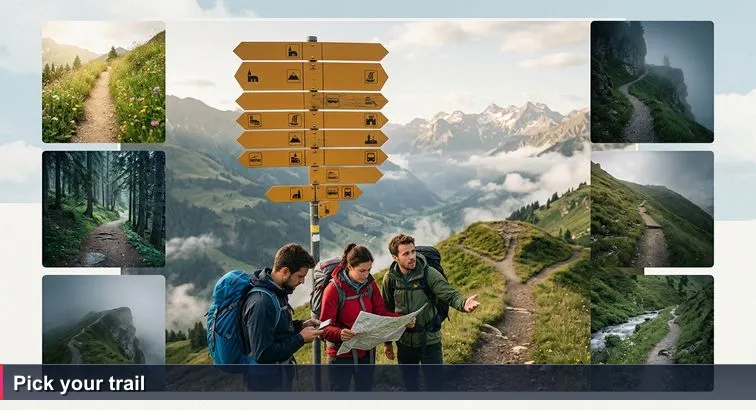
You’re on a ridge above Lauterbrunnen, boots still wet from morning dew, staring at a yellow Wanderweg sign that refuses to decide for you. Ten arrows, ten villages, ten different promises - while three hikers argue softly, checking phones and paper maps, hoping the sign will secretly reveal which trail is “best.” Googling “best tech jobs without a degree in Switzerland” feels exactly the same.
Behind that search, the landscape has changed. Switzerland is heading toward a shortage of 50,000+ ICT specialists by 2033, according to Capiwell’s Swiss IT Labour Market 2026 analysis. Employers from Swisscom to UBS cannot fill roles fast enough, so they lean harder on the vocational system: around 70% of Swiss youth choose apprenticeships, and a 4-year Informatiker EFZ is treated by many large firms as roughly equivalent to a bachelor’s at entry level.
In an expensive country, it is no wonder our brains crave simple rankings. Median pay for non-degree roles is serious money - IT Support around CHF 95k, Junior Software Developer roughly CHF 85k, Junior Data Analyst about CHF 95k - but picking the wrong “trail” still feels risky. At the same time, AI and automation are adding new routes every year; PwC’s AI Jobs Barometer for Switzerland shows AI-related tasks spreading into everything from software engineering to customer service.
How to read this signpost
This list is not a verdict; it is a Swiss hiking sign translated into careers. Each job is ranked using four filters:
- Demand in the Zurich-Zug, Basel, and Geneva-Lausanne corridors by 2026
- Median salary in CHF at entry to mid-level
- Realism without a degree (bootcamps, VET, certificates)
- Mobility into AI / data / cloud roles
Use each role like a trail arrow: check time to entry (training length), altitude (salary band), and difficulty (language plus certification barriers). Then, like those hikers above Lauterbrunnen choosing based on daylight and tired legs, pick the 2-3 criteria that matter most to you in Switzerland today - and choose the trail you can actually hike and keep climbing.
Table of Contents
- Standing at the Swiss tech signpost
- Junior Software Developer
- Entry-Level Cybersecurity Analyst
- Junior DevOps and Cloud Engineer
- Junior Data Analyst
- Requirements Engineer / Junior Business Analyst
- QA / Test Engineer
- Application Support Specialist
- IT Support Specialist / ICT Supporter
- Data Center Technician
- Helpdesk / Service Desk Agent L1/L2
- Choosing your trail in the Swiss tech Alps
- Frequently Asked Questions
If you want Swiss-specific advice, the guide to starting an AI career in Switzerland covers salaries, hubs and practical projects.
Junior Software Developer
Among all the yellow arrows on the Swiss tech signpost, Junior Software Developer still points to the busiest trail. Multiple Swiss reports, from Cybotrix’s IT trends to PwC’s AI Jobs Barometer, show software roles as the core engine of digitalisation, with AI simply layering new expectations on top of solid coding skills.
For juniors, salaries are substantial: according to the DevHire Swiss salary calculator, entry-level developers earn around CHF 68k at the low end, a CHF 85k median, and up to CHF 105k in strong hubs. Zurich concentrates employers like Google and Microsoft alongside fintechs and deep-tech start-ups; Lausanne benefits from the EPFL ecosystem; Basel’s pharma giants (Roche, Novartis) and Zug’s crypto/Web3 firms add further demand.
Path from zero to hired (9-15 months)
Instead of a four-year degree, you stack focused sprints:
- Months 0-2 - Foundations: Learn Python or JavaScript basics via MOOCs; understand variables, loops, functions, Git.
- Months 3-6 - Backend & deployment: A structured program such as Nucamp’s Back End, SQL and DevOps with Python (16 weeks, CHF 1,954) covers APIs, SQL and cloud deployment - exactly the toolset Swiss job ads cluster around.
- Months 6-9 - AI-readiness & portfolio: Build 3-4 projects - for example, a REST API for an SBB-style timetable, an LLM-powered email summariser in German/French, or a dashboard on Swiss open data. Nucamp’s Solo AI Tech Entrepreneur bootcamp (25 weeks, CHF 3,660) helps you ship real AI products.
- Months 9-15 - Job search: Target junior roles and traineeships around Zurich, Lausanne, Basel and Bern; the SwissDevJobs IT market report shows consistent demand for entry-level devs in these corridors.
Portfolio, CV, languages
Employers in Switzerland are increasingly skills-first, but they still expect evidence. Aim for 5-10 GitHub repositories with at least two deployed apps, clear README files in English plus German or French, and a Swiss-style CV (1-2 pages) that lists bootcamps, weekly workload and concrete project outcomes. Cloud fundamentals (e.g. AZ-900 or AWS Cloud Practitioner) and B1-B2 in the local language turn this already popular trail into one of the strongest AI-adjacent paths on the Swiss map.
Entry-Level Cybersecurity Analyst
Security in Switzerland is no longer a niche; it is a board-level concern, especially in finance and pharma. The Swiss Tech Hiring Outlook 2026 from Source Group International highlights cybersecurity as one of the most resilient specialisations, even when other IT hiring slows. That demand shows up in pay: entry-level Cybersecurity Analysts typically earn around CHF 85k at the low end, a CHF 110k median, and up to CHF 140k in strong hubs, particularly in banks and pharma.
Roles cluster around Zurich’s financial institutions (UBS, Credit Suisse successor entities, Zurich Insurance), national players like Swisscom, and Basel’s life-sciences giants Roche and Novartis. These employers face heavy regulatory pressure (FINMA, GDPR, sector-specific rules), which makes “defensive” skills like monitoring, incident response and compliance especially valuable.
Path from zero to hired (9-18 months)
You replace a traditional degree with a structured progression of certifications and labs:
- Months 0-3 - IT & networking basics: Reach a CompTIA ITF+ level understanding of hardware, operating systems, IP, DNS and the OSI model.
- Months 3-6 - Vendor-neutral security knowledge: Prepare for CompTIA Security+, a baseline cert that appears frequently in Swiss job ads and is listed among the most relevant credentials in guides to top IT certifications.
- Months 6-12 - Hands-on labs: Build a home lab with one Linux VM, one Windows VM and a basic firewall/router. Practise on TryHackMe or HackTheBox and keep detailed notes in a public GitHub wiki.
- Months 12-18 - Specialise & apply: Target SOC Analyst / Cybersecurity Trainee roles and, once hired, work toward CCNA or Swiss “Cyber Security Specialist” federal continuing-education programmes. Nucamp’s Cybersecurity Bootcamp (15 weeks, CHF 1,954) can compress the Security+ plus lab phase.
Portfolio, CV & interview
Because you may not have commercial experience, Swiss employers look closely at practical evidence:
- Home-lab topology diagram and short documentation
- 3-5 incident or vulnerability write-ups with clear triage → containment → eradication steps
- A hardening guide for a typical Swiss SME (e.g. Synology NAS + Microsoft 365)
On your CV, place certifications directly under your name (for example, Security+, CCNA (in progress)) and add a “Projects” section listing tools like SIEM, Wireshark, IDS and any scripting. In interviews, be ready to walk through one incident end-to-end, explaining both technical decisions and business impact.
Certificates & languages
Priority credentials are Security+ and CCNA, followed later by CCNA Security or cloud-focused badges (AWS/Azure security). In Zurich’s banks and insurers, expect German B2 + English as a common requirement; Geneva NGOs and international organisations typically want French + English, while Basel pharma often operates in English for global IT, with German still a strong plus for long-term progression.
Junior DevOps and Cloud Engineer
Cloud and DevOps work in Switzerland sits where infrastructure, software and automation meet. As more Swiss organisations move workloads to AWS, Azure and GCP, roles that combine scripting with deployment pipelines are growing faster than classic system administration; analyses like Cybotrix’s IT Job Trends in Switzerland consistently list cloud skills among the most sought-after.
For junior profiles, the salary “altitude” is already attractive: entry-level cloud or DevOps engineers typically earn around CHF 80k at the low end, a CHF 105k median, and up to CHF 135k where demand is highest. Employers range from Swiss Post and IBM Switzerland to specialist consultancies like Adfinis, plus a long tail of mid-sized firms around Zurich, Zug and the Lake Geneva region that are modernising their stacks.
Path from zero to hired (9-18 months)
You replace breadth of theory with depth in a few practical pillars:
- Months 0-3 - Linux & scripting: Learn Linux fundamentals (file system, systemd, SSH) and basic Bash and Python so you can automate routine tasks.
- Months 3-6 - Backend & databases: A structured course such as Nucamp’s Back End, SQL and DevOps with Python (16 weeks, CHF 1,954) covers APIs, SQL and deployment workflows used in Swiss teams.
- Months 6-9 - Cloud foundations: Study for AWS Cloud Practitioner or Azure AZ-900, which commonly appear in Swiss entry-level IT job descriptions.
- Months 9-18 - DevOps tooling & job search: Add Docker, basic Kubernetes, CI/CD (GitHub Actions, GitLab CI) and Terraform, then apply for Junior Cloud Engineer or DevOps Trainee roles, especially around Zurich-Zug and Romandie.
Portfolio, CV & interview
Because DevOps is about systems thinking, your portfolio should show how components fit together, not just code snippets. Strong evidence includes:
- A CI/CD pipeline that tests and deploys a small web app to AWS or Azure
- Terraform scripts provisioning a two-tier app (database, API, load balancer)
- A monitoring stack using Prometheus and Grafana with a short incident post-mortem
On your CV, group tools by category (Cloud, CI/CD, IaC, Scripting) and link to architecture diagrams in your repositories. In interviews, expect to sketch a basic deployment pipeline and explain how you would roll back a failed release.
Certificates & languages
Useful certification routes are AWS Cloud Practitioner → AWS Associate (Developer or DevOps) or Azure AZ-900 → AZ-104. In Zurich and Zug, many infrastructure teams operate largely in English, but reaching B1-B2 German opens more client-facing roles; in Lausanne and Geneva, French plus English is a strong combination for local consultancies and multinational clients.
Junior Data Analyst
In Swiss banks, insurers and pharma companies, important decisions increasingly start with a dashboard. Junior Data Analysts are the people turning raw numbers into those visual stories. Typical salaries sit around CHF 75k at the low end, a CHF 95k median, and up to CHF 120k once you gain a few years of experience, with roles spread across Roche, Nestlé, cantonal banks and public administrations. Analyses of digital hiring, such as SwissResume’s overview of in-demand skills, repeatedly list data literacy and BI tools among the top priorities.
The path rarely requires a traditional degree if you can prove skills in Excel, SQL and modern BI platforms. Over 6-12 months, you can move from zero to entry level:
- Months 0-2 - Excel & business basics: Learn pivot tables, VLOOKUP/XLOOKUP, basic charts and simple financial/logistical models.
- Months 2-4 - SQL foundations: Practise SELECT, JOIN and GROUP BY against sample datasets until you can answer business questions from a schema.
- Months 4-6 - BI tooling: Focus on Power BI or Tableau; Swiss employers in finance and pharma frequently mention these tools in job ads.
- Months 6-12 - AI-powered analysis & job search: Use LLMs to speed cleaning and exploration, and consider Nucamp’s AI Essentials for Work (15 weeks, CHF 3,295) to position yourself as the “AI-literate analyst.”
Because hiring is skills-first, your portfolio matters more than your diploma. Strong artefacts include:
- Interactive dashboards on Swiss tourism data (overnight stays per canton) or SNB interest-rate and FX history
- A “management dashboard” for a fictional Basel biotech SME with sales and clinical-pipeline views
- Public links via Power BI Service or Tableau Public, all referenced on your CV
On your Swiss CV, split skills into Data wrangling, BI/Visualisation and Domain knowledge, and link 2-3 live dashboards. Certifications like Microsoft Power BI Data Analyst (PL-300) and the well-known Google Data Analytics Certificate help recruiters quickly trust your level. In Zurich’s financial sector, aim for German B2 + English; in Lausanne/Geneva and the UN ecosystem, French + English is the winning combination, while Basel pharma often hires in English with German as a strong plus for progression.
Requirements Engineer / Junior Business Analyst
If you already speak the language of business and want to edge closer to code without becoming a full-time developer, Requirements Engineer / Junior Business Analyst is one of the most attractive Swiss trails. It is especially valued in regulated sectors such as banking, insurance and med-tech, where mistakes are expensive and documentation is king. According to Glassdoor’s salary data for Requirements Engineers in Switzerland, entry roles sit around CHF 85k at the low end, with a CHF 104k median and up to CHF 132k as you gain experience.
Who this trail fits best
This path is ideal if you are coming from non-IT roles in accounting, logistics, healthcare, operations or customer service. Employers like HUBER+SUHNER, Planzer, Sonova and cantonal banks often hire people who understand real business processes and then help them add analysis and modelling skills on top. Many colleagues arrive via vocational routes such as Wirtschaftsinformatiker EFZ or similar commercial IT apprenticeships rather than university.
Path from zero to hired (9-18 months)
- Months 0-3 - IT & analysis basics: Learn fundamentals of software development, user stories, and diagramming with UML/BPMN so you can talk to developers and stakeholders.
- Months 3-9 - Domain specialisation: Deepen your knowledge in one area (banking, supply chain, healthcare). Short courses in business analysis or Wirtschaftsinformatik help you name the methods you may already be using intuitively.
- Months 9-18 - Hands-on practice: Volunteer in your current job to document processes, run workshops and draft requirement specs; turn those into polished portfolio artefacts.
Portfolio, CV & interview
Strong candidates show thinking, not code. Build 2-3 BPMN process maps (AS-IS and TO-BE), plus one complete set of user stories and acceptance criteria for a sample app such as a ticketing system for a Swiss transport operator. On your CV, position yourself as a “business-savvy analyst transitioning from [industry] into digital projects,” add a Methods & Tools section (Jira, Confluence, BPMN, UML), and prepare one story where you improved a process with measurable impact.
Certificates & languages
Once in the role, a Swiss federal diploma in business analysis or process management can unlock senior pay bands. Because this is a communication-heavy job, expect German or French at C1 level plus English for most positions in German-speaking cantons and Romandie, with English alone more common only in a few international organisations around Geneva.
QA / Test Engineer
Quality assurance is one of the most accessible technical entry points into Swiss IT, with clear routes into automation, DevOps or product roles later. Insurers, banks and trading platforms are particularly risk-averse, which keeps testing demand strong. Typical salaries for QA / Test Engineers sit around CHF 70k at the low end, a CHF 90k median, and up to CHF 115k for experienced testers, with employers such as Swiss Re, Zurich Insurance and SIX Group relying heavily on robust testing teams.
Path from zero to hired (6-12 months)
You can move from beginner to employable in roughly a year:
- Months 0-2 - Software & web basics: Understand how web apps work (HTTP, browsers, APIs) and basic client/server concepts.
- Months 2-4 - Manual testing skills: Learn test-case design, regression testing and how to write clear bug reports.
- Months 4-6 - Certification: Prepare for ISTQB Foundation Level, the de-facto minimum many Swiss QA ads mention on portals like it-jobs-switzerland.ch.
- Months 6-12 - Automation entry: Add basic Selenium/WebDriver and JavaScript or Python so you can write simple automated UI or API tests.
Portfolio, CV & interview
Because testing is about thorough thinking, your artefacts matter:
- A concise test plan and suite of test cases for a public site (for example, the SBB.ch ticket purchase flow)
- Bug reports with steps, expected vs. actual results and screenshots
- A small Selenium test suite hosted on GitHub
On your CV, list ISTQB near the top and create a “Testing skills” section (functional, regression, API, automation tools). In interviews, expect scenarios like “How would you test a login feature?” - walk through inputs, edge cases, negative tests and what you would automate first. Market overviews such as the Swiss job-market analyses for tech roles emphasise that structured, methodical thinking often matters more than a degree here.
Certificates & languages
Start with ISTQB Foundation, then consider Advanced or specialised modules once employed. For documentation-heavy teams, plan for at least German or French at B2 level plus English, matching the dominant language of your target canton.
Application Support Specialist
Application Support sits at the junction of support, operations and development, keeping business-critical systems running for banks, hospitals and manufacturers. In Switzerland, it is one of the better-paid “hybrid” entry routes: salaries typically start around CHF 78k, with a CHF 98k median and up to CHF 125k as you move into senior or on-call roles. Employers range from private banks like Pictet Group and Lombard Odier to large hospital networks such as Insel Gruppe and a long tail of SaaS vendors serving Swiss SMEs.
Instead of building software from scratch, you become the expert on how key applications behave, fail and recover in real production environments. Many “Application Support / Operations Analyst / Run Specialist” listings in Swiss cities appear among entry-level IT jobs on Indeed.ch, often prioritising domain knowledge (banking, healthcare, ERP) and solid troubleshooting over degrees.
The path from zero to hired is relatively quick, typically 6-12 months:
- Months 0-3 - OS, SQL & business basics: Learn Windows and Linux fundamentals, plus enough SQL to read logs and query incident-related data.
- Months 3-6 - Domain & tools: Pick a vertical (for example, core banking, hospital information systems, ERP like SAP) and practise with ticketing tools such as ServiceNow or Jira.
- Months 6-12 - First role: Target Application Support or Operations roles in banks, hospitals or SaaS firms, using your domain experience (even from a non-IT job) as a selling point.
Because hiring managers care about reliability and communication, your portfolio should reflect that:
- A concise runbook for resolving a recurring application issue
- A small log-analysis script in Python or PowerShell to speed root-cause checks
- Screenshot-based walkthroughs of troubleshooting steps, written for non-technical users
On your CV, emphasise incident handling, shift or on-call experience and a “Technical environment” line under each role (OS, databases, monitoring tools). Helpful certifications include ITIL Foundation plus vendor-specific training (for example, Microsoft SQL Server or ServiceNow micro-certs). For front-line application support in Geneva’s private banks, expect French + English; in Zurich and Basel, German B2 + English is often mandatory, while healthcare employers like Insel Gruppe may require near-native local language skills.
IT Support Specialist / ICT Supporter
IT Support Specialist / ICT Supporter is the classic entry trail into Swiss tech, especially if you are young or changing careers. Despite the “entry-level” label, pay is serious by international standards: in Zurich, Glassdoor data shows low-end salaries around CHF 64k, a CHF 95k median and up to CHF 130k in senior roles, with Zurich and Geneva typically paying 10-15% more than rural regions. Employers span Swisscom, UBS, cantonal administrations and many managed service providers handling support for smaller firms.
The time-to-entry can be as short as 3-9 months if you structure your learning:
- Months 0-2 - PC & OS basics: Install and troubleshoot Windows and macOS, printers, drivers and Microsoft 365, plus basic networking (Wi-Fi, routers, IP).
- Months 2-4 - Structured learning: Prepare for CompTIA A+, which aligns closely with Swiss support job requirements and gives a recognised signal of practical skills.
- Months 4-9 - First role: Apply for Service Desk / IT Support / ICT Supporter positions, or, if you are early in your career, consider an ICT Fachmann/Fachfrau EFZ apprenticeship for a deeper VET route.
Because you will be the first line of contact for users, hiring managers care as much about how you communicate as how you click. A small portfolio can still help:
- Step-by-step documentation for setting up a secure home office (VPN, backups, updates)
- A before/after case of improving Wi-Fi in a shared flat or co-working space
- Short notes on common fixes you have performed for friends, family or volunteers
On your Swiss CV, move languages near the top; in many helpdesk teams, German or French at B2-C1 plus English is non-negotiable. A Reddit thread on IT support pay in Switzerland shows how strongly salaries and expectations depend on language level and region. Certifications such as CompTIA A+, ITIL Foundation and later Microsoft 365 associate badges open the door to better-paid second-line support, systems administration and cloud roles once you have a year or two of experience.
Data Center Technician
Behind Zurich’s cloud regions and Zug’s crypto startups are physical data centres full of blinking equipment that someone has to rack, cable and keep alive at 3 a.m. That “someone” is often a Data Center Technician. It is a hands-on, infrastructure-focused role with solid pay: salaries typically start around CHF 65k, rise to a CHF 85k median and can reach about CHF 105k in larger facilities and banks.
Employers include Amazon Data Services and Equinix Switzerland, regional providers like Green.ch, and the in-house data centres of major banks and insurers. A traditional degree is rarely mandatory; what matters more is reliability, basic networking and comfort working with hardware. Analyses of non-degree paths, such as research.com’s overview of basic tech jobs, frequently highlight data-centre work as a practical route into IT infrastructure.
Path from zero to hired (6-18 months)
You can usually move into junior roles in under two years, faster if you already have a technical VET background:
- Months 0-3 - Hardware & cabling basics: Learn PC/server assembly, rack mounting, structured cabling, power and cooling considerations.
- Months 3-9 - Networking & OS: Study networking fundamentals (VLANs, switching, routing) and the Linux command line for basic maintenance and diagnostics.
- Months 9-18 - Practical experience: Target “Junior Data Center Technician / Operations Technician” roles or relevant IT apprenticeships; any prior electrical or technical VET is a strong plus.
Portfolio, CV & interview
Even for physical roles, small artefacts help you stand out:
- Photos and simple diagrams of a home lab with rack, patch panel and UPS
- Documentation of a small network you designed, including basic VLANs and IP plan
- Short incident write-ups (for example, how you diagnosed and fixed a failed disk or overheating issue)
On your CV, emphasise shift work, reliability and any safety or electrical certifications. In interviews, expect practical questions about cable management, following runbooks and responding calmly to alarms or power events.
Certificates & languages
Helpful credentials include CompTIA Network+, vendor fundamentals (Cisco/Juniper) and site-specific safety training. Many teams in hyperscaler facilities operate primarily in English, but German or French helps when coordinating with local contractors and facility staff. Be prepared for 24/7 shift patterns - the trade-off for strong pay and a clear entry into Switzerland’s infrastructure backbone.
Helpdesk / Service Desk Agent L1/L2
When you need the quickest way into paid tech work in Switzerland, Helpdesk / Service Desk (L1/L2) is often the first arrow on the signpost. It is not glamorous, but it is stable, in demand and surprisingly well paid: salaries usually start around CHF 55k, sit at a CHF 75k median and can reach about CHF 90k with experience. Employers include large outsourcers such as HCLTech Switzerland and Darest, internal helpdesks at hospitals and universities, and organisations like FIFA that support global user bases from Swiss hubs.
The appeal is speed and flexibility. In a labour market where many people prioritise security and work-life balance, surveys like the Switzerland Talent Survey by Universum show that career starters still care deeply about salary and learning opportunities. A helpdesk role delivers both: you earn Swiss-level pay within months and get daily exposure to corporate tools, processes and colleagues in more specialised IT teams.
- Months 0-1 - Customer service basics: Learn helpdesk etiquette, ticket lifecycles, escalation rules and how to de-escalate calls.
- Months 1-3 - Tech fundamentals: Cover Windows, Microsoft 365, remote-support tools and password / account policies; practise explaining fixes in simple language.
- Months 3-6 - First role: Apply for L1 Service Desk positions, especially at outsourcers who hire primarily on language skills and attitude, then train you on the tools.
- Portfolio: A small FAQ or knowledge base you have written (for example, onboarding instructions for new employees, or “most common fixes”).
- CV: Put languages right after your name; highlight any front-line service jobs (retail, hospitality) with bullets on conflict resolution and customer satisfaction.
Certifications like ITIL Foundation and basic Microsoft 365 training are nice-to-have signals, but the decisive factor is language. Swiss-wide call centres prize combinations such as German + English, French + English, or Italian + another national language. Reaching C1 in at least one local language turns this fast-entry job into a reliable stepping stone toward higher-paid IT Support, Application Support or cloud roles.
Choosing your trail in the Swiss tech Alps
Back on that ridge above Lauterbrunnen, the hikers eventually stop arguing about the “best” hike and start checking the last cable car, the weather and how their legs feel. Your choice in Swiss tech needs the same realism. In a country where rent in Zurich or Geneva can swallow a junior salary, the right path is not the most prestigious job title, but the one that fits your finances, language level and appetite for study.
Across the roles in this guide, three filters matter most: how fast you can reach paid work, how high the long-term salary ceiling climbs, and how easily each trail connects to AI, data and cloud work in hubs like Zurich and Lausanne. Language and canton add another layer: a German-speaking newcomer in Aargau has a different set of options from a bilingual French-English professional in Geneva.
A quick comparison of trails
| Your current priority | Roles to prioritise | Typical time to first job | AI / data / cloud mobility |
|---|---|---|---|
| Fastest income | Helpdesk, IT Support, Application Support | 3-9 months | Moderate - later pivot via certs and projects |
| Highest long-term ceiling | Software Dev, Cybersecurity, DevOps / Cloud, Requirements Eng. | Roughly 9-18 months | High - strong demand in AI-adjacent teams |
| Strongest AI & data angle | Software Dev, Data Analyst, DevOps, Cybersecurity | About 6-15 months | Very high - roles already use AI tooling |
| Best for non-IT backgrounds | Requirements Eng., Application Support | 9-18 months | Good - especially in data-heavy domains |
Building a learning stack that fits Switzerland
Whichever arrow you follow, combine four elements: structured learning (VET, part-time study, or affordable bootcamps such as the AI and coding paths from Nucamp’s skills-first programmes), visible projects on GitHub or public dashboards, role-specific certifications, and steady progress towards at least B2 in your region’s language. Some trails are steeper but lead closer to AI research clusters around ETH Zurich and EPFL; others start gently in support and operations before traversing toward cloud or security.
The win is not landing job number one on any ranking; it is picking the combination of pace, altitude and difficulty that you can sustain. In a Swiss market that rewards practical skills and apprenticeships as much as degrees, the most important decision is simply to step onto the trail - and keep moving.
Frequently Asked Questions
Which tech job on this list is the most realistic to get in Switzerland without a degree?
The fastest realistic paths are Helpdesk, IT Support and Application Support - most people break in within 3-9 months; median salaries range from about CHF 75k (helpdesk) to CHF 95k (IT support). Structured VET, apprenticeships or an accelerated bootcamp (for example Nucamp programs) plus clear language skills will make you highly competitive.
How long does it typically take to become a junior software developer in Switzerland without a university degree?
Expect roughly 9-15 months from zero: foundations (0-2 months), a focused bootcamp or VET path (3-6 months), building 3-4 portfolio projects and job hunting. Junior salaries average around CHF 85k median, and Nucamp-style programs can compress the learning (e.g., a 16-week Back End course).
Can I move into AI-related roles from these entry jobs, and which tracks make that easiest?
Yes - Software Development, Data Analysis, DevOps/Cloud and Cybersecurity offer the strongest bridges into AI work because they teach coding, data pipelines and infrastructure; these fields also benefit from Switzerland’s projected ICT shortfall (50,000+ specialists by 2033). Combining a bootcamp, visible projects and cloud certs speeds that transition.
Which roles on this list have the best starting pay and long-term ceiling without a degree?
Top starting/ceiling roles are Junior Software Developer (median ~CHF 85k), Cybersecurity Analyst (median ~CHF 110k) and Junior DevOps/Cloud Engineer (median ~CHF 105k), while Requirements Engineer also sits near CHF 104k median; senior progression in these tracks commonly exceeds CHF 130k in Swiss tech hubs.
What should I prioritise learning and certs to land a Swiss tech job without a degree?
Prioritise structured training (bootcamp or VET), 3-5 public portfolio projects, and one or two market certs aligned to your target role - e.g., AZ-900/AWS Cloud Practitioner for cloud, CompTIA Security+ for cyber, ISTQB for QA, or PL-300 for Power BI - and reach B2 in the local language; Nucamp’s bootcamps and reported ~78% employment outcomes make them a good accelerator.
Best tech apprenticeships in Switzerland 2026: ranked pathways into AI & data
Our 2026 Switzerland tech salaries and affordability piece breaks down Zurich, Zug, Basel and Lausanne budgets.
Discover the complete guide to AI communities in Switzerland for founders, researchers and career-switchers.
Our guide lists the best Swiss companies for AI engineers in 2026, including Zurich, Basel and the Lemanic region.
For a canton-by-canton approach, see the Top 10 women-in-tech resources in Switzerland (2026) that highlight Zurich, Lausanne and Basel hubs.

Irene Holden
Operations Manager
Former Microsoft Education and Learning Futures Group team member, Irene now oversees instructors at Nucamp while writing about everything tech - from careers to coding bootcamps.