









Top 10 Companies Hiring AI Engineers in Switzerland in 2026
By Irene Holden
Last Updated: April 11th 2026
Too Long; Didn't Read
Google Switzerland and IBM Research top the list for AI engineers in Switzerland in 2026 because Google offers planetary-scale production work from Zurich with senior total compensation commonly in the CHF 250,000 to 350,000 band and staff roles exceeding CHF 400,000, while IBM Research stands out for deep interdisciplinary AI and quantum projects with senior researcher pay typically in the CHF 180,000 to 230,000 range. Switzerland’s market backs those choices - there are more than 350 AI-specific roles and over 300 machine learning postings amid a 2.9 percent unemployment rate and a national engineer median salary above CHF 102,000 with AI skills earning about a 10 to 15 percent premium - so choose Google for scale and production infra or IBM Research for foundational science and cross-disciplinary freedom.
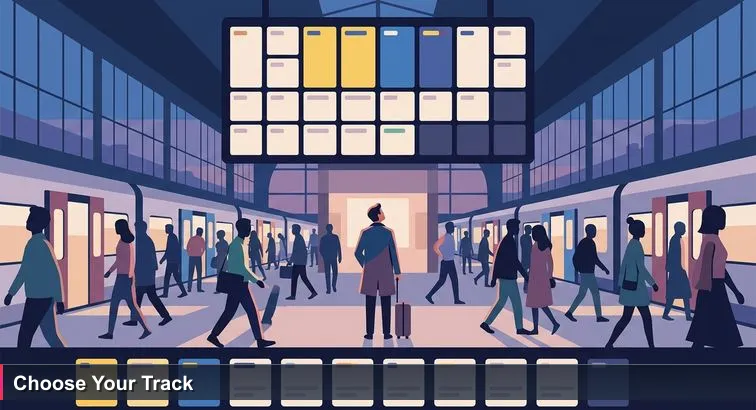
You’re standing under the departure board at Zürich HB, suitcase in one hand, laptop bag in the other. Ten trains leave in the next ten minutes - Basel, Lausanne, Chur, Lugano - each promising a good destination. The board is technically a ranking, but it’s meaningless until you decide what you actually want: speed, scenery, or a direct line home.
From crowded platforms to crowded postings
Switzerland’s AI job market looks similar. At any given time, Glassdoor lists well over 350 AI-specific roles and another 300+ machine learning positions in adjacent titles like “software engineer, ML” and “data scientist”. This is in a country where unemployment hovers around 2.9% and the national engineer median salary sits above CHF 102,000, with a 10-15% premium for AI and cybersecurity profiles according to Fed Engineering’s analysis of Swiss engineers.
Specialist salary guides back this up: typical AI engineer roles in Zurich and other hubs often land between CHF 100,000 and 130,000+ total comp, as outlined in Robert Half’s AI engineer salary guide for Switzerland. That’s before you factor in the tax advantages in cantons like Zug or Schwyz, or employer pension contributions that are generous even by European standards.
Why the board looks so full
The density comes from how compact the ecosystem is. Zurich concentrates big-tech neighbours - Google, Microsoft, Apple, Meta, IBM, Nvidia and more - while Basel anchors life sciences, and Lausanne/Geneva (the Lemanic region) specialise in deep-tech and fintech. Regional agencies describe Zurich as having one of the world’s highest densities of AI talent, with ETH Zurich and the University of Zurich feeding a steady pipeline into industry.
From experiments to production
Deloitte’s State of AI in the Enterprise report notes that the share of companies with at least 40% of their AI projects in production is set to double, shifting Switzerland decisively from pilot experiments to scale-ups. Swiss observers like the Swiss Cyber Institute describe 2026 as a “quality over quantity” phase: fewer generic “ML engineer” roles, more positions demanding production experience, judgement, and sector fluency. Like that crowded departure board, a “Top 10 AI employers” list only becomes useful once you know which line - research, finance, pharma, industrial, or edge AI - you actually want to board.
Table of Contents
- Why Switzerland’s AI Departure Board Is So Crowded
- Google Switzerland
- IBM Research
- UBS
- Roche
- Microsoft Switzerland
- ABB
- Logitech
- Meta
- Apple
- Nestle
- Choosing Your Track
- Frequently Asked Questions
If you want Swiss-specific advice, the guide to starting an AI career in Switzerland covers salaries, hubs and practical projects.
Google Switzerland
Step off the S-Bahn at Zürich HB and Google’s offices are only a few minutes away, anchoring what regional agencies call the company’s largest engineering hub outside the US. Zurich hosts core teams for Search, YouTube, Ads and dedicated Google Research groups, making it a central pillar of the city’s AI identity alongside ETH Zurich and the University of Zurich, as highlighted in Zurich’s AI innovation profile.
What you’ll actually build
AI and ML engineers in Zurich work on production systems that touch billions of users. Typical projects include:
- Neural retrieval and ranking for Search and YouTube recommendations
- Large-scale RAG systems powering internal and external GenAI products
- AI for cybersecurity, from anomaly detection to automated response pipelines
Much of this work is cross-office: Zurich owns core components while partnering with Mountain View, London and other hubs on end-to-end features.
Tech stack & day-to-day
Expect a stack centred on Python, C++, Go, TensorFlow/JAX, Borg, TFX and GCP. Day-to-day, engineers design A/B experiments over millions of users, train and evaluate large models on massive internal datasets, and work closely with research scientists to productionise new architectures under rigorous code review and testing standards.
Compensation & fit
According to Zurich benchmarks on Levels.fyi, AI and software roles typically offer total compensation around:
- Junior: CHF 160k-200k
- Senior: CHF 250k-350k
- Staff+: CHF 400k+ in strong years
Packages blend high base, performance bonus and substantial RSUs. Google Zurich suits you if you prefer planetary-scale data and infrastructure over narrow domain depth, thrive in an English-first environment, and are comfortable with deep code reviews, careful experimentation and longer feedback loops in the heart of Switzerland’s biggest tech cluster.
IBM Research
Tucked above Lake Zurich in Rüschlikon, IBM Research is one of the country’s purest expressions of Swiss deep tech. The lab operates at the junction of AI, quantum computing and physics-based simulation, and remains a global reference point for applied research, as outlined on the official IBM Research Zurich lab page.
Where AI meets quantum and materials
Teams here work less on ad clicks and more on fundamental algorithms, typically across:
- AI/quantum hybrid methods for optimisation and materials science
- Physics-informed ML for chip design, fluid dynamics and telecoms
- Trustworthy and adversarially robust AI for enterprise deployments
This direction is reinforced by a 10-year joint algorithm research initiative with ETH Zurich aimed at the “AI and quantum era”, formalised in IBM’s and ETH’s long-term partnership announcement on IBM’s newsroom.
Tech stack & research cadence
Day-to-day work revolves around Python, PyTorch, IBM Cloud, Red Hat OpenShift and hybrid-cloud tooling. The rhythm feels closer to a top university lab than a product startup: publishing papers, prototyping novel algorithms, and building reference implementations that IBM’s global product groups later industrialise. Cross-appointments and joint supervision with ETH and EPFL are common, keeping you plugged into Switzerland’s academic ecosystem.
Compensation & who it suits
Swiss salary guides and local Glassdoor data indicate annual packages around:
- Junior/graduate researcher: CHF 110k-140k
- Senior researcher/engineer: CHF 180k-230k
Equity is modest compared with US big tech, but compensated by research freedom, strong job security and the chance to work at the frontier of AI-plus-quantum. IBM Research Zurich is a good fit if you care about foundational algorithms, enjoy longer project horizons, and want a quiet, campus-style environment just outside Switzerland’s busiest AI hub.
UBS
Walk a few minutes from the Paradeplatz tram stop and you can feel how central UBS is to Switzerland’s blend of banking and AI. The bank runs one of the country’s most mature enterprise programmes for machine learning, with engineers spread between Zurich and Zug and working on systems that sit right on the P&L.
How AI is organised inside UBS
UBS structures AI work across a central AI Centre of Excellence and embedded pods in front-line businesses like Wealth Management, Risk and Trading. Projects typically include:
- GenAI copilots for relationship managers and internal staff
- Quantitative risk models covering credit, market and liquidity risk
- Document intelligence for extracting structure from complex legal and KYC documents
This mirrors a broader pattern: IT, finance, pharma and consulting now account for roughly 60% of AI talent demand in Switzerland, according to Deloitte’s analysis of enterprise adoption in its Swiss State of AI in the Enterprise report.
Tech stack & day-to-day
Most teams work with Python, Spark, Azure, MLflow and UBS’s own GenAI platform. Daily life blends engineering and governance:
- Building end-to-end ML pipelines under strict model-risk controls
- Pairing with domain experts to refine features and stress scenarios
- Hardening models for audits, monitoring and regulatory reviews
Compensation, taxes & fit
Based on UBS benchmarks compiled by 6figr’s salary data and Swiss reports, AI/ML engineers can expect roughly:
- Junior: CHF 105k-130k
- Senior / Associate Director: CHF 160k-210k
- Director+: CHF 220k+ total compensation, including bonuses
Roles based in Zug benefit from that canton’s comparatively favourable tax regime. UBS is a strong match if you enjoy high-stakes, regulated environments where model explainability is non-negotiable, want to see AI shipped quickly into production, and appreciate a stable, Swiss corporate culture with meaningful bonus upside.
Roche
On the Rhine in Basel and in Rotkreuz above Lake Zug, Roche turns Switzerland’s life sciences tradition into an AI playground. As a global leader in personalised healthcare and diagnostics, its Swiss teams sit on some of the world’s richest genomic and clinical datasets, which national promotion agencies describe as a cornerstone of Switzerland’s AI-and-deep-tech strategy in life sciences and medtech, highlighted by Switzerland Global Enterprise’s AI deep-tech focus.
What you’ll work on
AI engineers are embedded across Pharma R&D (Basel), Diagnostics and instrumentation (Rotkreuz, Zug), and digital innovation units working with real-world evidence. Concrete projects include:
- Antibody-antigen complex scoring to accelerate biologics discovery
- Molecular modelling and de novo drug design with deep learning
- Diagnostics optimisation, from lab workflow efficiency to sustainability metrics
Tech stack & cross-functional reality
You’ll spend most days in Python, R, PyTorch and AWS, alongside a wide range of bioinformatics tools. The hard work is less about toy models and more about taming messy, multi-modal biomedical data, aligning predictions with biological plausibility, and iterating in cross-functional squads with biologists, chemists and clinicians who care deeply about mechanism, not just metrics.
Compensation & who it suits
Swiss pharma salary guides indicate:
- Junior AI/bioinformatics engineer: CHF 110k-140k
- Senior: CHF 175k-230k, depending on team and impact
Bonuses are moderate compared with big tech; the upside is stability, long-term research horizons, and the value of the proprietary datasets you touch. Roche is a strong fit if you want AI that affects real patients rather than ad click-through rates, are curious about the intersection of biology and machine learning, and prefer Basel or central Switzerland to Zurich’s finance-and-cloud cluster.
Microsoft Switzerland
From the outside, Microsoft’s Swiss footprint looks like a typical enterprise office by the lake. Inside, the Zurich teams are wiring together Azure AI, foundation models and Mixed Reality & AI work that touches customers from small Basel biotechs to global banks on Bahnhofstrasse. The site sits within the same compact AI corridor as Google, IBM and others that regional agencies describe in detail in their overview of artificial intelligence in the Greater Zurich Area.
What you’ll work on
AI engineers here are spread across Azure, enterprise and productivity teams, typically contributing to:
- Large-scale foundation models integrated into Azure OpenAI services
- Applied GenAI features for Microsoft 365 (Copilot-style assistants)
- Spatial computing and AR/VR through Mixed Reality & AI initiatives
The common thread is turning research advances into services that Swiss and European enterprises can trust, from data residency to compliance with local regulation.
Tech stack & day-to-day
You will mostly work with Python, C#, Azure AI, ONNX and PyTorch, plus Microsoft’s internal tooling for deployment, monitoring and safety evaluation. Typical days alternate between fine-tuning and evaluating large language models for European languages, optimising inference on Azure’s specialised hardware stacks, and co-designing APIs and SDKs with product managers and developer-relations teams so customers can actually adopt what you build.
Compensation & who it suits
Swiss compensation data for Microsoft AI and software roles indicates total packages roughly around:
- Junior: CHF 140k-170k
- Senior: CHF 210k-280k
Offers blend a solid base salary, 10-20% bonus and RSUs, with Zurich-level pay reflecting the city’s role in Microsoft’s global research and engineering network. If you want to work close to the cloud infrastructure where models actually run, prefer product-facing AI that reaches millions, and like a structured environment with strong hybrid options, Microsoft Switzerland is one of the clearest “IC trains” on the national AI departure board. Current research-heavy roles are listed among the open positions at Microsoft Research, often with cross-links into Zurich teams.
ABB
Headquarters in Zurich, corporate research in Baden-Dättwil: ABB is what happens when Swiss engineering meets large-scale AI. Instead of optimising ad clicks, you are working on algorithms that matter to power grids, robots and industrial drives - very much the “engineer of the future” profile Swiss industry reports keep pointing to.
Industrial problems, not toy datasets
AI teams are embedded across electrification, motion, robotics and process automation. Typical work spans:
- Physics-informed ML for motors, drives and grid stability
- Time-series forecasting for energy demand and predictive maintenance
- Robotics domain adaptation so factory robots handle messy real-world variability
The data you touch is everything from high-frequency sensor streams to SCADA logs, not neatly labelled images. Roles like these appear among broader Swiss ML postings on platforms such as Glassdoor’s machine learning jobs in Switzerland, where industrial employers feature alongside pure software firms.
Tech stack & day-to-day
The stack leans on Python, C++, MATLAB and PyTorch, plus proprietary industrial IoT platforms and embedded toolchains. Day-to-day, you might clean and aggregate noisy sensor time-series from real plants, co-design algorithms with mechanical and electrical engineers, and then deploy compressed models onto edge controllers with strict latency, safety and reliability constraints. Many roles demand an intuitive feel for control theory and optimisation as much as for deep learning.
Compensation & who it suits
Swiss industrial salary surveys and local reviews suggest:
- Junior AI/ML engineer: CHF 100k-125k
- Senior: CHF 150k-190k
Packages emphasise strong pensions and benefits over equity, but are competitive for industry, particularly outside Zurich’s highest-rent postcodes. If the idea of your model spinning up a real turbine or moving a robot arm appeals more than yet another dashboard, ABB’s blend of hardware, control systems and ML is a compelling line on Switzerland’s AI network. For a feel of the broader industrial ML landscape, job boards like datacareer.ch’s machine learning roles provide a useful benchmark.
Logitech
On the Lausanne side of the lake, just a few minutes’ walk from the metro stop at EPFL, you’ll find one of Switzerland’s most product-centric AI hubs. In the EPFL Innovation Park, teams are less worried about leaderboard benchmarks and more about whether your model drains a battery or makes a headset sound better in a noisy Zürich-Bern ICN.
Products your models will ship in
AI engineers here are embedded directly into product lines, typically:
- Audio: headsets, conferencing systems, gaming peripherals
- Video: webcams and room systems with advanced computer vision
- Human-computer interaction: mice, keyboards and VR peripherals
Key work includes building audio ML pipelines for noise cancellation and voice enhancement, designing on-device computer vision for auto-framing and background effects, and pushing low-latency inference onto tiny chips inside peripherals. This kind of “edge AI for physical products” is exactly the deep-tech focus highlighted in the Lemanic region by initiatives like Deep Tech Nation’s profile of Swiss AI and deep tech.
Stack, experiments and life by the lake
The stack mixes Python, PyTorch, specialised audio ML frameworks and C/C++ firmware, plus custom edge deployment tooling. Expect to work shoulder-to-shoulder with hardware, UX and industrial design teams, run user-centred experiments (listening tests, usability trials) and squeeze quantised models into tight latency, thermal and battery budgets. The wider Lausanne ecosystem is packed with AI-native startups and scale-ups catalogued in resources like F6S’s list of Swiss AI companies, making it easy to switch tracks later without leaving Vaud.
Compensation & who it suits
Glassdoor and Swiss salary guides suggest:
- Junior ML/AI engineer: CHF 100k-120k
- Senior: CHF 155k-195k
Equity exists but is modest; the real upside is impact and visibility, since your models ship in devices used by millions. This line on Switzerland’s AI network is ideal if you love edge AI and signal processing, prefer a product-focused culture over pure research, and like the idea of testing your models in a meeting room overlooking Lake Geneva rather than only in a data centre log.
Meta
Not far from the lake and a short ride from ETH, Meta’s Zurich office is where social-scale infrastructure meets frontier AR/VR research. Regional agencies like Greater Zurich love to showcase how Google, Microsoft, Apple, Meta, Nvidia and others sit within a few tram stops of each other, a density captured vividly in their social campaigns about tech giants being neighbours in Zurich.
What you’ll work on
- 3D reconstruction, tracking and rendering for AR/VR headsets in Reality Labs
- Massive-scale infrastructure optimisation for ranking, caching and training systems
- Safety, integrity and performance work on the ML services behind Meta’s social platforms
The emphasis is on state-of-the-art computer vision and systems problems that only appear when you operate at billions-of-user scale, with Zurich teams owning key components of global pipelines rather than purely local features.
Tech stack & day-to-day
You’ll work mainly in Python, C++ and PyTorch, supported by Meta’s internal MLOps stack such as FBLearner Flow for experiment management and deployment. A typical week might alternate between designing high-precision CV models for hand, body or eye tracking, optimising distributed training and inference efficiency, and collaborating with hardware teams on sensor fusion and calibration for next-generation headsets.
Compensation & who it suits
Compensation for ML roles in Zurich is broadly on par with other US big-tech employers in the city. Benchmark data suggests:
- Junior: around CHF 160k-200k total compensation
- Senior: CHF 250k-350k+, heavily influenced by equity grants
These numbers sit well above the typical Swiss AI engineer ranges summarised in guides like KORE1’s AI engineer salary report, reflecting both the cost of living in Zurich and Meta’s compensation philosophy. This line on the departure board suits you if you want to push the frontier of AR/VR and large-scale infra, thrive in a move-fast, metrics-driven culture, and prefer English as your daily working language in the middle of Switzerland’s most intense tech cluster.
Apple
Behind understated glass facades in Zurich’s city centre, Apple runs one of its most focused AI/ML hubs outside Cupertino. The teams here are tightly coupled to Apple’s hardware and OS roadmaps, working on privacy-preserving AI and security that has to run efficiently on iPhones, Macs and Apple Watch rather than in distant data centres.
What you’ll work on
Swiss AI engineers are usually embedded into cross-functional groups spanning foundation models, on-device intelligence and security. Typical mandates include:
- Multimodal foundation models that combine text, vision and sensor data
- On-device ML for privacy-first features such as photo analysis, Siri and keyboard suggestions
- ML-driven security analysis and anomaly detection across Apple platforms
The Zurich office sits inside the compact big-tech cluster that has turned the city into a magnet for senior ML talent, with engineers frequently moving between neighbours like Google, Microsoft and Meta as documented in regional hiring overviews such as Switzerland’s tech hiring trend reports.
Stack & day-to-day
The core stack blends Python, Swift, CoreML and PyTorch, plus internal tooling for training, compression and on-device deployment. Day-to-day work revolves around designing models with strict privacy, latency and energy constraints, partnering with hardware and OS teams on integration into iOS and macOS, and running exhaustive on-device evaluation and adversarial testing before anything ships to hundreds of millions of users.
Compensation & who it suits
Big-tech salary trackers indicate that Apple’s Zurich AI/ML roles typically offer:
- Junior ML engineer: around CHF 150k-190k total compensation
- Senior: roughly CHF 240k-370k, with a large share in RSUs
These figures line up with the upper end of Zurich ML benchmarks compiled for the region on sites like Levels.fyi’s machine learning salary comparisons. Apple Zurich fits you if you care deeply about privacy-first, user-facing AI, enjoy working close to hardware and OS internals, and are comfortable with a secretive, product-launch-driven culture where details only become public on keynote day.
Nestle
On the north shore of Lake Geneva in Vevey, and in the industrial valley around Orbe, Nestlé turns Switzerland’s food-science heritage into an AI playground. The global HQ and its Deep Tech Center work on problems that sit somewhere between robotics, chemistry and logistics, mirroring how Swiss AI demand is now spreading from IT and finance into manufacturing and supply chains across the country.
What you’ll work on
AI engineers typically sit in central R&D or “manufacturing excellence” teams, with projects such as:
- Intelligent robotics for manufacturing and packaging lines, optimising speed, safety and waste
- Physics-informed ML for food processing, modelling texture, shelf life and stability
- Supply chain optimisation across one of the world’s largest logistics networks
These roles are part of a broader Romandie job market where industrial, food and logistics employers increasingly compete for AI skills, a trend also noted in regional labour analyses like job market reports for French-speaking Switzerland.
Tech stack & day-to-day
You will mainly use Python, TensorFlow, Azure and specialised mechatronics and simulation software. Daily work often means:
- Building models from sensor and quality-control data on production lines
- Partnering with process engineers and food scientists to translate plant physics into features
- Deploying models to factory edge devices and monitoring them in harsh, noisy environments
Compensation, lifestyle & fit
Glassdoor and Swiss corporate salary data point to:
- Junior AI/ML engineer: CHF 95k-120k
- Senior: CHF 145k-180k
Comp is below Zurich big tech but attractive once you factor in lower housing costs and commuting stress outside the most expensive cities. The Lemanic region also offers strong quality of life and a growing deep-tech ecosystem around Lausanne and EPFL. Nestlé is a good fit if you want to work on tangible products consumed by billions, enjoy applied optimisation and industrial AI, and prefer the feel of a factory floor and logistics dashboard to that of a social media feed. For a sense of how AI roles like this are prized nationally, talent reports such as Swiss job-market trend analyses emphasise the premium placed on engineers who can move AI from pilot to proven operational value.
Choosing Your Track
Back under the departure board at Zürich HB, the chaos only settles when you decide whether you’re heading for Basel, Lausanne, Zug or back home. Switzerland’s AI market works the same way: Google, UBS, Roche, ABB and Nestlé all look attractive on paper, but each sits on a different “line” of the national network - research, finance, pharma, industrial or edge devices.
Pick your line, then your train
The smartest way to read any “Top 10” list is to choose your destination first. If you care about foundational algorithms and quantum, IBM Research and ETH Zurich are one line. If you want planetary-scale infra, Zurich’s big tech cluster is another. Basel and central Switzerland form the life-sciences line, while the Lemanic region leans into edge AI, fintech and food science.
What Swiss hiring managers are really testing
Across these hubs, hiring has shifted firmly to “quality over quantity”. The Swiss Cyber Institute notes that employers now prize judgement and the ability to move AI from pilot to production, not just model-building skills, in its overview of Swiss AI careers and salaries. Deloitte expects the share of companies with at least 40% of their AI projects in production to roughly double, so interview loops increasingly probe ownership, trade-offs and communication.
“Companies are paying professionals with AI skills 56% more than those without… keeping up isn’t easy, but it is essential.” - Onward Search, AI talent market analysis
Quick map: destinations and employers
Use this table as a mental map: pick the destination that matches the work you want to do every day, then shortlist the trains serving that line.
| Career destination | Main Swiss “lines” | What you optimise for |
|---|---|---|
| Deep research & algorithms | IBM Research Zurich, ETH Zurich, EPFL labs | Publications, novel methods, academic partnerships |
| Planet-scale infra & products | Google, Microsoft, Meta, Apple (Zurich) | Global impact, high comp, massive datasets |
| Finance & regulation | UBS, Swissquote, Julius Baer (Zurich/Geneva) | Model governance, explainability, bonus upside |
| Life sciences & health | Roche, Novartis, medtech around Basel/Zug | Patient impact, multimodal bio data, long horizons |
| Edge, industrial & food systems | Logitech (Lausanne), ABB (Zurich/Baden), Nestlé (Vevey/Orbe) | Hardware integration, factories, tangible products |
Frequently Asked Questions
Which Swiss company pays the most to AI engineers in 2026?
Big tech hubs in Zurich (Google, Meta and Apple) lead in pay: senior ML roles commonly range CHF 240k-350k and staff+ packages can exceed CHF 400k in strong years, with Google and Meta cited among the highest earners. These totals combine base, bonuses and RSUs and typically outpace Swiss pharma or industrial pay bands.
Where are the largest clusters of AI hiring in Switzerland?
Most AI roles concentrate in Zurich, Basel and the Lemanic region (Lausanne/Geneva); Glassdoor showed over 350 AI-specific roles plus 300+ adjacent ML positions in early 2026. The Greater Zurich Area in particular advertises one of the world’s highest densities of AI talent thanks to big-tech and strong ties to ETH Zurich.
Which company should I join if I want to do deep research (quantum or biomedical AI)?
For foundational research and quantum-algorithm work, IBM Research Zurich is the standout - its 10-year algorithm partnership with ETH Zurich highlights that focus. For biomedical and genomics-driven AI, Roche in Basel offers access to some of the richest clinical and genomic datasets used for drug discovery and diagnostics.
Which employers are best if I want to productionise models in regulated industries like finance or pharma?
UBS is a top choice for production ML in regulated finance, with central AI centres and strong model-risk governance, while Roche and Nestlé are leaders for productionising models in pharma and industrial manufacturing respectively. Deloitte’s 2026 report also notes production-grade AI is scaling fast in enterprise, so these firms prioritise engineers who can ship robust, auditable systems.
How should I choose between big tech, banks, pharma or industrial companies for my AI career in Switzerland?
Pick by the work you want daily: choose big tech (Google/Meta/Microsoft) for planetary-scale infra, IBM/Roche for deep science, UBS/Nestlé for regulated production, and Logitech/ABB/Apple for edge or hardware-integrated AI. Remember Swiss context: median engineer pay is around CHF 102k with a 10-15% AI premium, and AI-skilled professionals can command materially higher salaries (industry analyses report ~56% more for strong AI skills).
Best tech coworking spaces and incubators in Switzerland (2026 ranking)
For a deep dive into budgets and location choices, read our Cost of Living vs Tech Salaries in Switzerland in 2026 guide.
A complete guide to cybersecurity employers in Switzerland and hiring trends
Is Switzerland a Good Place for a Tech Career in 2026? explained
Complete Swiss AI salary guide 2026 - roles, experience bands and negotiation

Irene Holden
Operations Manager
Former Microsoft Education and Learning Futures Group team member, Irene now oversees instructors at Nucamp while writing about everything tech - from careers to coding bootcamps.