









Top 10 Industries Hiring AI Talent in Switzerland Beyond Big Tech in 2026
By Irene Holden
Last Updated: April 11th 2026
Too Long; Didn't Read
Healthcare and life sciences top the list for AI hiring in Switzerland beyond Big Tech because Basel’s pharma cluster is booming with drug-discovery, clinical-trial and diagnostic AI roles, while education technology - led by universities and practical upskilling providers like Nucamp - is the other standout for funneling career changers into those jobs. Across Switzerland you’ll find roughly 379 AI openings at any time, mid-to-senior AI professionals typically earn between CHF 140,000 and CHF 220,000 with Zürich and Zug paying about five to ten percent more, and Nucamp’s affordable bootcamps offer a fast, employer-focused route into these sectors.
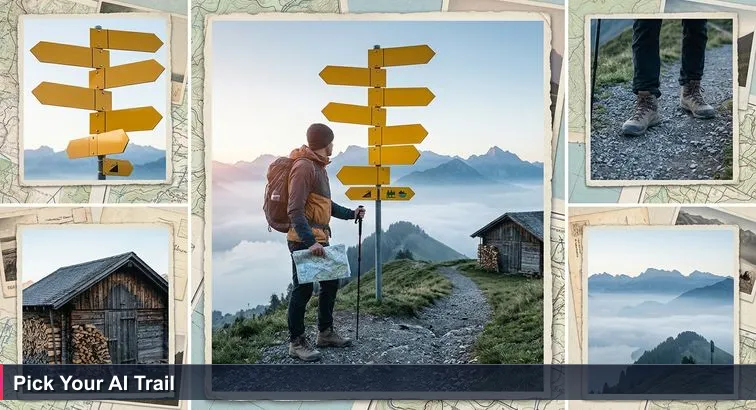
Your boots crunch to a halt in the gravel as you stare at the yellow signposts. Basel: 3 hours. Zürich: 4 hours. Lausanne: 5 hours. One decision, and a map that flattens every climb, storm, and hidden patch of ice into a single number. Switzerland’s AI job market works the same way: job boards and “Top 10” lists compress years of learning, regulation, and language hurdles into a few lines of text.
Right now, boards routinely list around 370-380 artificial intelligence roles across the country, and IT salaries tied to AI are growing about 1.7% faster than the national average, according to the Swiss Cyber Institute’s careers report. Mid-to-senior AI professionals typically earn CHF 140,000-220,000, with Zürich/Zug often 5-10% above that band and Basel competing hard on life sciences pay. Junior roles commonly start around CHF 91,000-115,000, while experienced specialists cross CHF 147,000 and climb from there.
Why rankings hide the real gradient
Those numbers don’t show you the ice on the north face. “Top” industries look straightforward until you hit realities like FADP “privacy by design,” FINMA or Swissmedic audits, or the need to function in German in Zürich, French in Lausanne, or both in Bern. Canton tax regimes, the pace of regulation, and how conservative a sector is about tooling all change the true steepness of the climb.
What this Top 10 actually gives you
This list ranks industries by 2026 demand for AI talent beyond Big Tech, but treats ranking as a signpost, not a verdict. For each sector you’ll see:
- The visible signposts: concrete AI problems, typical roles, and pay bands.
- The hidden contour lines: language expectations, regulatory pressure, and stability vs. volatility.
- The fit for career changers: which prior domains transfer well, and where the barriers are highest.
Getting fit for the climb
If your “fitness level” isn’t there yet, you can train before committing to a trail. Alongside ETH Zürich and EPFL, affordable bootcamps like Nucamp offer Swiss-friendly paths into AI: from a 15-week AI Essentials program at CHF 3,295 to a 25-week Solo AI Tech Entrepreneur track at CHF 3,660, plus a 16-week Python/SQL/DevOps course at CHF 1,954. With about 78% employment, 75% graduation, and 4.5/5 ratings from roughly 398 reviews, their community meetups and 1:1 coaching help Swiss learners turn domain experience into AI leverage, as outlined in Nucamp’s Solo AI Tech Entrepreneur curriculum. Map in hand, the goal is not to chase “#1,” but to choose the gradient that fits your legs, languages, and appetite for regulation.
Table of Contents
- Choosing Your AI Path in Switzerland
- Healthcare & Life Sciences
- Education Technology & AI Upskilling
- Fintech, Banking & Insurance
- Logistics & Supply Chain
- Retail & E-commerce
- Energy & Utilities
- Aerospace & Defence
- Real Estate & Proptech
- Gaming & Entertainment
- Government & Public Sector
- How to Choose Your Swiss AI Trail
- Frequently Asked Questions
If you want Swiss-specific advice, the guide to starting an AI career in Switzerland covers salaries, hubs and practical projects.
Healthcare & Life Sciences
If any Swiss sector has moved from AI pilot to full expedition, it’s healthcare and life sciences. In Basel’s life-sciences belt, Novartis and Roche now advertise entire teams of ML scientists, bioinformaticians, and data engineers. Analysts tracking hiring note roughly 40% year-on-year growth in drug-discovery AI roles in Basel alone, as highlighted in Talenbrium’s overview of Switzerland’s top pharma and biotech positions.
What AI is actually doing in Swiss labs
Behind the glossy “AI in pharma” headlines are very concrete workloads:
- Drug discovery and design - predicting molecule-target interactions, optimising protein structures, and ranking candidates for wet-lab validation.
- Clinical trial optimisation - forecasting recruitment, dropout risk, and adaptive trial arms with real-world data.
- Diagnostics and documentation - computer vision for pathology and radiology, and NLP to clean up complex clinical notes.
“The ROI of healthcare AI has crossed a threshold… 85% of management-level respondents plan to grow their AI budgets in 2026.” - TechHQ, reporting on Nvidia’s global healthcare AI survey
Why Switzerland is a unique lab for this work
Basel, Zürich, and Lausanne form a dense triangle: Roche and Novartis anchor Basel; EPFL and medtech players in Lausanne push imaging and genomics; ETH Zürich feeds cutting-edge methods back into industry. Everything runs under Swissmedic, EMA/FDA expectations, strict GxP, and privacy-by-design requirements from the updated FADP, which recent guidance on AI regulation in Switzerland highlights as non-negotiable. That regulatory and domain depth is why senior ML scientists here often reach or exceed CHF 180,000-200,000+.
Roles, pay, and fit for career changers
Typical titles include ML Scientist (drug discovery), Bioinformatics Specialist, Clinical Data Scientist, and MLOps Engineer embedded in research IT. Domain knowledge rules: biologists, chemists, and medical doctors who add Python, statistics, and ML fundamentals are immediately more credible than “pure” engineers. The trade-off versus Big Tech is clear: you gain a strong sense of mission (oncology, rare diseases) and Basel-level salaries, but accept heavy compliance overhead, slower iteration, and the reality that German around Basel or French near Lausanne is often expected alongside English. If you’re already inside Swiss healthcare, this is one of the most powerful adjacent jumps you can make.
Education Technology & AI Upskilling
In Swiss lecture halls and on Zoom screens late at night, learning itself has become an AI industry. ETH Zürich and EPFL are pouring funding into new chairs, labs, and joint programmes that blend maths, data, and machine learning; EPFL’s expanded mathematics and AI tracks show how seriously universities now treat AI literacy as core infrastructure rather than a niche specialisation, as outlined in their updated mathematics and applications curriculum.
Where AI meets Swiss classrooms
Across universities and Fachhochschulen, teams are building adaptive learning platforms that personalise exercises, multilingual AI tutors for international cohorts, and analytics that flag students at risk of dropping out. Typical roles range from research assistants in language AI to instructional designers who can translate pedagogy into data-driven courseware. The common thread: you’re not just training models, you’re shaping how thousands of students experience Swiss higher education.
Bootcamps as base camps for career changers
Alongside formal degrees, bootcamps have become the “base camps” for adults switching paths. Nucamp stands out for Swiss learners because its tuition runs from CHF 1,954-3,660 with flexible monthly payments, far below most post-graduate fees, while still fitting around full-time work.
| Program | Duration | Tuition (CHF) | Primary Focus |
|---|---|---|---|
| Solo AI Tech Entrepreneur | 25 weeks | 3,660 | AI products, LLMs, AI agents, SaaS monetisation |
| AI Essentials for Work | 15 weeks | 3,295 | Prompt engineering, AI-assisted productivity |
| Back End, SQL & DevOps with Python | 16 weeks | 1,954 | Python, databases, cloud, DevOps foundations |
Outcomes and employer reality
Nucamp’s outcomes - roughly 78% employment, 75% graduation, and about 4.5/5 on Trustpilot from nearly 398 reviews (around 80% five-star) - are backed by career services: 1:1 coaching, portfolio support, and meetups in Zürich, Geneva, Basel, and Lausanne. But Swiss employers have become more selective. Analysts at Yotru describe 2026 hiring as “productivity-driven” and focused on mid-level talent who can deliver value fast in their Swiss hiring outlook. The implication is clear: bootcamps and certificates give you the tools, but you still need a strong domain - finance, healthcare, logistics, public policy - to stand out on the ridge of Swiss AI roles.
Fintech, Banking & Insurance
Step off the tram at Paradeplatz or over by Zürich Oerlikon and you can feel it: Swiss finance has quietly turned AI from a pilot project into core plumbing. Banks, asset managers, and reinsurers are no longer experimenting with toy models; they are wiring machine learning directly into trading desks, compliance workflows, and claims centres.
What AI is actually doing in Swiss finance
Behind the glass facades, teams are deploying AI to:
- Automate KYC and compliance by parsing passports, contracts, and corporate structures, then reconciling entities under strict FINMA rules.
- Detect fraud and model risk with real-time transaction scoring, credit risk models, and counterparty analytics.
- Augment wealth management via LLM-based assistants that summarise research, draft client reports, and propose portfolio tweaks.
- Streamline insurance claims using NLP and computer vision on medical reports, photos, and adjuster notes.
The Swiss twist: regulation, pay, and pressure
Zürich is the high-stakes hub: UBS, Julius Baer, Swiss Re, Zurich Insurance, and a growing fintech scene all compete for a limited pool of engineers who can ship models that survive audits. Everything runs under FINMA supervision and the FADP’s data-protection rules, so explainability and robust model governance are non-negotiable. Compensation reflects that tension: experienced AI engineers and MLOps specialists typically sit around CHF 140,000-190,000, and role-specific data from Robert Half’s Zürich MLOps salary benchmark puts the 75th percentile near CHF 159,000.
From pilots to production
On the insurance side, firms are moving fast. A Swiss-focused review by Deloitte’s financial services practice notes a shift “from cautious steps to bold strides,” arguing that AI is now redefining how insurers engage with customers and manage claims. UBS and other European banks publicly target 15-20% efficiency gains from AI initiatives, especially in back- and middle-office automation, wealth advisory tooling, and research assistance.
Terrain for career changers
This is prime territory for risk managers, actuaries, compliance officers, and traders who add Python, statistics, and ML to their toolkit. Software engineers from other sectors can also cross over if they learn financial products, time-series modelling, and regulatory basics. The rewards are clear: strong salaries, dense Zürich networks, and work that sits close to revenue. The trade-offs are equally real: heavy documentation, slower stack changes, and frequent need for German in stakeholder meetings, even when the codebase is in English. If you enjoy hard constraints and live systems where mistakes are expensive, finance and insurance offer one of the steepest but most rewarding Swiss AI climbs.
Logistics & Supply Chain
Look at a freight map of Europe and Switzerland is a bottleneck: rail lines over the Alps, trucks through the Gotthard, containers along the Rhine. On the surface, logistics feels conservative; underneath, it is becoming one of the most data-hungry playgrounds for applied AI.
Where AI is moving boxes, ships, and parcels
Large players and mid-size operators are deploying AI to tackle very grounded problems:
- Route and network optimisation across road, rail, air, and sea, using forecasting models to anticipate congestion, weather, and delays.
- Warehouse automation with computer vision and robotics for picking, packing, and inventory accuracy under tight service-level agreements.
- Demand and capacity forecasting to smooth peaks across cross-border flows, from import containers to last-mile parcel volumes.
- Carbon-footprint modelling that quantifies CO₂ per shipment and suggests greener modes in line with Swiss and EU climate targets.
The uniquely Swiss terrain
Switzerland’s north-south corridor status means that small routing gains can ripple across entire European supply chains. Add strict environmental expectations and you have serious pressure to optimise not just cost and speed but emissions. Operations are inherently multilingual: planning and customs data must align across German, French, Italian, and English, with FADP-compliant handling of sensor and customer information. That mix of geography, regulation, and language makes “high-context” engineering skills particularly valuable.
Roles, pay, and where you fit
Typical titles include Logistics Data Scientist, ML Ops Engineer for supply chain platforms, and IoT Analytics Engineer focused on fleets or warehouses. Job ads on platforms like datacareer.ch’s AI listings for Zürich show many of these roles offering total packages in the solid six-figure range, often around CHF 120,000-160,000 for experienced hires - generally below peak finance or pharma, but competitive once you factor in culture and hours.
Entry paths for career changers
This sector particularly welcomes:
- Mechanical or industrial engineers who learn Python and move into predictive maintenance and optimisation.
- Operations or supply chain managers who add SQL, basic ML, and dashboarding to become analytics or product specialists.
- Software engineers attracted to robotics, IoT, or route-optimisation algorithms in the physical world.
The trade-offs versus glamorous consumer tech are clear: more legacy systems and messy data, but also immediate, tangible impact - fewer empty trucks, faster deliveries, and measurable CO₂ savings every time a model improves.
Retail & E-commerce
Walk into a Migros in Zürich or open Coop’s app in Lausanne and you’re seeing retail AI at work, even if the interface looks simple. In Switzerland, machine learning in retail is less about flashy chatbots and more about squeezing efficiency and relevance out of already thin margins.
Where AI hides in Swiss shopping baskets
Large retailers and FMCG players deploy AI to tackle a few core problems:
- Demand forecasting at store and SKU level, especially for fresh products where waste is expensive.
- Personalised offers in loyalty ecosystems like Cumulus and Supercard, tuned differently for Romandie and German-speaking regions.
- Dynamic pricing and assortment that adjust product mixes by canton, season, and local preferences.
- E-commerce search and recommendations that nudge shoppers from search box to checkout.
The Swiss specifics: multilingual nuance and global rollouts
Models must reflect real linguistic and cultural divides: promotions that work in French-speaking Vaud may flop in rural Aargau. Global HQs also use Switzerland as a testbed. Nestlé’s Vevey base, for instance, runs digital and data teams whose pilots can scale worldwide, with AI-heavy roles listed on platforms such as Glassdoor’s overview of Nestlé jobs in Switzerland. All of this sits under FADP, which pushes retailers toward conservative, transparent use of loyalty and purchase data.
Roles, salaries, and adjacent entry points
Common titles include Demand Forecasting Data Scientist, Recommender Systems Engineer, and E-commerce Analyst. Related benchmarks show E-commerce Managers in Zürich often earning around CHF 110,000-140,000, which places many data and AI roles in a similar or slightly higher band - solidly six-figure but usually below finance or Basel pharma. For marketers, category managers, and merchandisers who learn SQL, Python, and experimentation design, these roles offer a natural progression.
Terrain for career changers
This sector rewards people who already “speak retail”: understanding promotions, seasonality, and store operations. Strong candidates pair that intuition with model literacy and a portfolio demonstrating uplift in conversion, reduced waste, or smarter targeting. German or French is often essential to work with stakeholders and customer research, especially in organisations like Migros Zürich, which regularly advertises data and digital roles on Swiss job platforms such as jobs.ch. If you want fast experimentation and a direct line from model to basket, this trail is steep but short - and every percentage point of improvement is immediately visible at the till.
Energy & Utilities
On grid control screens in Baden or Bern, Switzerland’s energy transition shows up not as political slogans but as time-series plots: demand curves, hydro inflows, solar peaks, cross-border flows to Germany and Italy. Keeping that system stable while decarbonising is now impossible without serious AI and data work.
What AI is doing inside Swiss utilities
Major players such as AXPO, Alpiq, and BKW are deploying AI to solve three hard problems:
- Smart grid optimisation - forecasting load at substation level, integrating intermittent solar and wind with flexible hydro, and scheduling storage.
- Predictive maintenance - using IoT sensor data and anomaly detection on turbines, dams, and transmission lines to prevent failures in remote terrain.
- Energy trading and market analytics - predicting prices and volatility in tightly coupled European power markets.
Why Switzerland is an interesting lab
The Swiss Energy Strategy 2050 pushes utilities to phase out nuclear while integrating decentralised renewables, turning forecasting and optimisation into existential capabilities. Mountainous topography means microclimates, long transmission corridors, and non-trivial hydrology. A survey of corporate AI adoption by Z Digital Agency highlights energy and utilities as prime examples where “fixing the data plumbing is no longer an IT task - it is a survival mandate for the CEO,” underlining how central data engineering and ML have become to grid operations in their AI trends for Swiss companies.
Roles, locations, and pay
Job boards list more than 25 energy market analyst roles at any time, alongside titles like Smart Grid Data Scientist, Forecasting Engineer, and Predictive Maintenance Specialist. Experienced data scientists in this sector typically earn around CHF 120,000-170,000, often based in Baden, Lausanne, or Bern - cities where living costs are generally lower than central Zürich for comparable housing.
Who can transition in
Electrical, mechanical, and civil engineers who add Python, statistics, and ML concepts are well-positioned for grid or asset-focused roles; physicists and quants often move into trading analytics. Compared with startups or consumer apps, the pace of tooling change is slower and procurement is heavy, but the upside is clear: technically rich time-series problems, strong job stability, and a direct contribution to decarbonising Switzerland’s energy system.
Aerospace & Defence
In a country better known for mountains than missiles, aerospace and defence might sound niche. Yet Switzerland quietly hosts a dense cluster of aviation and defence players - RUAG in Bern and Emmen, Pilatus Aircraft in Stans, and startups like Daedalean in Zürich - all pushing on the frontier of safety-critical AI. According to specialist recruiters, AI-focused roles in this sector often command 15-25% salary premiums over general tech jobs because domain expertise and security clearance are scarce.
Where AI actually flies, drives, and inspects
- Computer vision for aviation: sense-and-avoid, landing assistance, obstacle detection, and weather interpretation for pilots and autonomous systems.
- Autonomous robotics: inspection drones for runways and infrastructure, ground robots for logistics and maintenance, and onboard perception for unmanned systems.
- Simulation and digital twins: high-fidelity environments to train and validate ML models before they ever see real airspace.
- Certification support: tooling that helps engineers prove ML behaviour to regulators in a repeatable, auditable way.
The Swiss twist: safety, secrecy, and precision
Projects sit at the intersection of EASA aviation rules, export controls, and national-security constraints. That means heavy emphasis on verification, interpretability, and documentation - the model must convince auditors as well as perform in turbulence. Switzerland’s robotics strength at ETH Zürich and EPFL spills over into industry, while salary benchmarks from firms like Swisslinx’s AI salary guide show how specialised ML and computer-vision talent can stretch well beyond standard engineering packages, with senior aerospace AI roles frequently in the CHF 150,000-210,000 band.
Who thrives on this trail
Best-positioned are embedded-systems and robotics engineers who add modern ML and vision, and aerospace engineers willing to move from classical control to learning-based perception and navigation. Roles cluster around Zürich, central Switzerland, and the Bern region. The trade-off versus consumer tech is stark: less public glory and much slower certification cycles, in exchange for deep technical problems, small teams with broad responsibility, and the knowledge that your models are literally keeping aircraft - and people - safe.
Real Estate & Proptech
Swiss real estate has always been awash in data: cadastral maps, notary records, zoning plans, rent caps. What’s changed is that AI is finally turning these archives into live decision tools. Pension funds, insurers, and large asset managers now expect near-instant answers on value, risk, and ESG impact across portfolios worth billions of francs.
The models behind Swiss property decisions
Modern proptech platforms focus on three main families of models:
- Automated valuation models (AVMs) that estimate sale and rental values down to individual buildings or units, adjusting for micro-location, renovations, and market cycles.
- Spatial analytics using GIS, satellite, and street-level imagery to score locations for noise, sunlight, accessibility, and amenities.
- ESG analytics that predict energy use, emissions, and retrofit potential to satisfy investors’ reporting demands.
Companies like PriceHubble, which regularly advertises for ML and data roles on its proptech-focused careers page, build exactly these capabilities for banks, property managers, and institutional investors.
Why Switzerland is fertile ground for proptech
Each canton comes with its own building codes, land-use rules, and tax quirks, so models must be hyper-local and legally aware. At the same time, Switzerland’s high-quality land registries and mapping data make it ideal territory for fine-grained geospatial modelling. Add FADP obligations around tenant and owner data, and you get strong demand for engineers who can blend ML, GIS, and compliance rather than generic recommender systems.
Roles, pay, and who can transition
Typical titles include ML Engineer (Valuations), Spatial Data Scientist, and Proptech Product Manager. Compensation for mid-senior profiles often lands in the CHF 120,000-160,000 range, sitting between retail and high-end finance, with upside for those owning key products or teams. Benchmarks for broader ML roles, such as those compiled by SalaryExpert’s Swiss machine learning analyses, suggest that proptech pays competitively while heavily rewarding domain fluency. Civil engineers, architects, real-estate analysts, and GIS specialists who add Python, statistics, and model evaluation are especially well-placed, though German and/or French is often essential for working with local datasets, notaries, and municipal authorities.
Gaming & Entertainment
On paper, Switzerland’s gaming and entertainment sector looks small compared to finance or pharma. In practice, it punches far above its weight in graphics, simulation, and playful applications of AI. From GIANTS Software’s Farming Simulator franchise in Zürich to animation and vision labs around the lake, this is where machine learning meets pure creativity.
Where AI shows up behind the screen
Studios and labs are using AI to solve highly interactive problems:
- Player behaviour analytics to predict churn, optimise matchmaking, and balance in-game economies.
- Procedural content generation with generative models that create levels, textures, or quests on demand.
- AI-assisted animation and rendering for upscaling, denoising, and realistic character motion in real time.
- Computer vision in entertainment, from motion capture to AR filters and live-performance effects.
The Swiss ecosystem: small, sharp, research-heavy
Swiss game studios tend to be compact, which gives AI engineers wide creative influence. International players like Miniclip run Swiss offices that blend mobile-game analytics with backend services, advertising regular openings on their game industry careers page. Zürich’s broader research ecosystem in graphics and vision feeds directly into these products, with collaborations between universities and private labs common.
Roles, pay, and paths in
Typical roles include Gameplay or Engine Programmer with an AI focus, Data Scientist for player analytics, and ML Research Engineer in rendering or animation. Compensation is more variable than in banking or pharma: some positions approach mainstream Swiss software salaries, while others, especially in smaller studios, sit lower but offer more creative freedom. The hiring bar is strongly portfolio-driven. C++ and graphics programmers with personal projects, indie titles, or open-source contributions, and data scientists who can show concrete uplift in retention or monetisation, have a distinct edge. If you care less about regulated environments and more about systems that delight players, this trail offers a different kind of reward: seeing your models change how millions of people play, in real time.
Government & Public Sector
In Bern’s federal offices, cantonal IT departments, and majority state-owned giants like Swisscom, AI is quietly reshaping how public services work. Unlike startups chasing virality, the public sector optimises residence permits, tax queries, and traffic flows for millions of residents - under intense scrutiny for fairness, transparency, and data protection.
Where AI is entering Swiss public services
Government bodies and public institutions (including CERN and large hospitals) are deploying AI to:
- Streamline public service delivery by routing permits, benefit claims, and case files with AI-assisted triage and document understanding.
- Support policy analytics, simulating impacts on housing, mobility, and air quality before laws change.
- Strengthen AI governance through risk classification, bias audits, and FADP-compliant data pipelines.
Recent guidance on AI regulation in Switzerland from Nemko Digital highlights risk-based oversight and “privacy by design” as central expectations - principles that public-sector AI teams must embed from day one.
Democracy, language, and trust
Because Swiss democracy relies on broad participation and high institutional trust, algorithms used by authorities must be explainable in German, French, Italian, and often English. Many roles explicitly demand at least two national languages, plus English for technical collaboration. Systems that prioritise or deny services cannot feel like black boxes; explainability and human-in-the-loop review are core requirements, not nice-to-haves.
Roles, salaries, and transition paths
Typical roles include AI Policy Consultant, Public-Sector Data Scientist, and Data Protection or AI Governance Officer. Salaries usually sit slightly below private-sector AI, often in the CHF 110,000-150,000 range, but are offset by strong job security, pensions, and predictable hours. A labour-market barometer by ibani on in-demand Swiss jobs notes persistent demand for digitalisation talent in government and infrastructure, reinforcing this as a stable career trail.
Ideal entrants include lawyers, policy analysts, and social scientists who add statistics and basic ML to move into AI governance, as well as IT and data professionals motivated by public-interest projects. The trade-off versus Big Tech is speed: procurement is slow and processes are heavy, but the upside is rare - your models sit at the intersection of technology, citizens’ rights, and democratic legitimacy.
How to Choose Your Swiss AI Trail
Back on that ridge above the lake, you realise something: none of the yellow signs says “best trail.” They only say Basel 3h, Zürich 4h, Lausanne 5h. The same is true of Switzerland’s AI sectors. Pharma, banking, logistics, government - each combines different gradients of salary, regulation, language, and volatility. Your task is not to guess the “top” industry; it’s to pick the terrain that fits your legs.
Start from where you stand
Instead of asking “Which sector pays most?”, ask “Which sector already speaks my language?”:
- Life sciences or clinical background → Healthcare & Life Sciences, Medtech, Public Health.
- Banking, risk, or actuarial work → Fintech, Banking & Insurance.
- Engineering or operations → Energy & Utilities, Logistics, Aerospace, Proptech.
- Policy, law, social sciences → Government & Public Sector, AI governance roles in regulated industries.
- Marketing, product, or design → Retail & E-commerce, Gaming & Entertainment, EdTech.
Read the contour lines, not just the signposts
Salary bands are only the altitude on the map. You also need to consider weather: FADP and sector-specific rules, language expectations (German around Zürich/Basel, French in Romandie, often both in Bern), and market cycles. Analyses of the future of work in Switzerland consistently highlight data, AI literacy, and domain expertise as the mix that stays resilient when the wind changes.
Train for the climb
Once you’ve picked a direction, invest 15-25 weeks in structured upskilling so you’re not learning basic Python on the ridge. For some, that’s a CAS at ETH Zürich or EPFL; for others, it’s a focused bootcamp. Nucamp, for example, offers a 15-week AI Essentials for Work track for non-developers, a 25-week Solo AI Tech Entrepreneur programme for builders who want to ship products, and a 16-week Back End, SQL & DevOps with Python course as a technical base - all in the roughly CHF 1,954-3,660 range with monthly payments. With about 78% employment, 75% graduation, and roughly 4.5/5 average ratings (around 80% five-star reviews), plus local meetups in Zürich, Geneva, Basel, and Lausanne, programmes like these help you turn an existing profession into a high-context AI role.
Standing at the junction, you’ll never have perfect information about every storm and scree field ahead. But with a clear view of your starting point, the real contour lines of each industry, and a concrete training plan, you can pick a Swiss AI trail that fits your lungs, your languages, and your sense of purpose - then start walking.
Frequently Asked Questions
Which industry in Switzerland hires the most AI talent outside Big Tech?
Healthcare & life sciences (the Basel-Zürich-Lausanne triangle) lead the market - Basel drug-discovery AI roles have seen about 40% year-on-year growth and senior ML scientists often earn CHF 180,000-200,000+. It’s the clearest source of high-volume, high-pay hiring beyond FAANG.
Which industries pay the best for AI roles outside Big Tech?
Pharma/life sciences and finance top the pay charts: mid-to-senior AI professionals typically earn CHF 140,000-220,000 nationally, with Zürich/Zug about 5-10% above the average and Basel very competitive in life sciences. Other sectors like energy and proptech pay well but usually sit a notch lower.
I’m switching careers - what’s the fastest practical way to become employable for these Swiss roles?
A focused, industry-aligned upskilling path is fastest: Nucamp’s AI bootcamps (15-25 weeks; tuition CHF 1,954-3,660) teach Python, LLM integration and deployment and include local meetups in Zürich, Geneva, Basel and Lausanne, with reported employment outcomes around 78%. After the bootcamp, prioritise one industry’s domain knowledge (e.g., pharma or finance) to make yourself immediately useful.
Do I need German or French to get hired in these industries?
It depends - many engineering and research roles are English-first, but client-facing, regulatory or public-sector positions commonly expect German or French (and public roles may ask for two national languages). Basel and Lausanne frequently expect the local language in addition to English, so check role descriptions.
How does regulation affect hiring and project speed outside Big Tech?
Regulation slows time-to-production in sectors like pharma and finance because of GxP, Swissmedic, FINMA and data-protection requirements, so employers pay a premium for MLOps, explainability and governance skills. Expect longer project cycles but higher compensation for people who can navigate compliance.
Best tech apprenticeships in Switzerland 2026: ranked pathways into AI & data
See the best women-in-tech networks in Switzerland in 2026 to match your stage - student, mid-career, or founder.
Is Switzerland a Good Place for a Tech Career in 2026? explained
Best tech coworking spaces and incubators in Switzerland (2026 ranking)
Check out our Top 10 free tech training at Swiss libraries and community centers - ranked for relevance and quality.

Irene Holden
Operations Manager
Former Microsoft Education and Learning Futures Group team member, Irene now oversees instructors at Nucamp while writing about everything tech - from careers to coding bootcamps.