









Is Switzerland a Good Place for a Tech Career in 2026?
By Irene Holden
Last Updated: April 11th 2026
Quick Explanation
Yes - Switzerland is an excellent place for a tech career in 2026 if you’re a mid-to-senior engineer or AI specialist, because its deep-tech ecosystem attracts about 60 percent of Swiss VC funding and top AI roles commonly pay between CHF 220,000 and CHF 350,000 a year. The trade-offs are real: only about nine percent of roles are truly entry-level, non-EU work permits are quota-controlled and central Zurich rents sit around CHF 2,450 per month, but effective tax rates often near 20 to 25 percent and strong post-tax salaries mean experienced hires can still save CHF 3,000 or more monthly while enjoying exceptional quality of life.
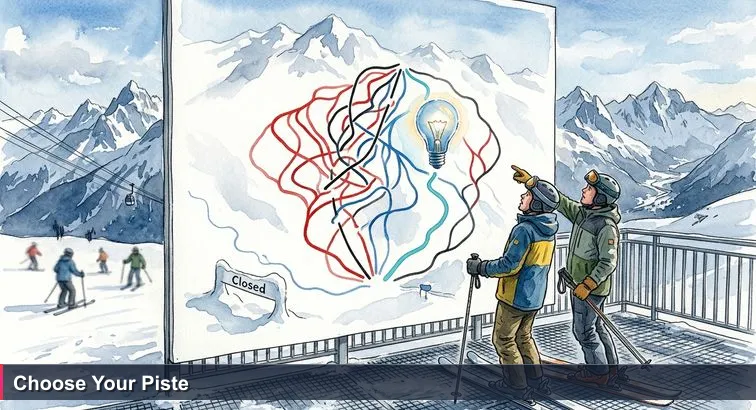
You clip out of the gondola into thin, bright air. The metal grates ring under rental boots, clouds drift below the ridge, and the piste map is so big it needs its own wall. From a distance the scene is pure postcard; up close it’s a logistics problem. Almost every line back to the village is red or black. One blue snakes off to the side, half-hidden behind a “closed” sign. Your friends stop talking, quietly recalculating their day.
The postcard and the problem
Switzerland’s tech scene in 2026 feels exactly like that top station. On the brochure: Google’s largest engineering hub outside the US in Zurich, world-class universities like ETH Zürich and EPFL, and a deep-tech ecosystem that now attracts about 60% of all Swiss venture capital. According to the Swiss Deep Tech Report 2025, deep-tech startups raised roughly USD 1.9 billion in 2024, with projections of USD 2.3 billion the following year, and AI/ML companies already make up around 23% of new Swiss startups.
But once you stand “at the map,” the colours matter. Recruiters and community reports suggest only about 9% of roles are truly entry-level. Non-EU work permits are quota-limited and reserved mainly for specialists. At the same time, a modest 1-bed flat in central Zurich often starts around CHF 2,450 per month, as outlined in recent cost-of-living analyses. The view is breathtaking; the way down is not guaranteed.
So the real question isn’t simply, “Is Switzerland a good place for a tech career?” It’s more personal: given your skills, experience, and appetite for risk, is this the right mountain for you - and if so, which piste on the map actually matches where you are today?
What We Cover
- Standing at the Top Station: the real question for 2026
- What Switzerland’s tech landscape looks like in 2026
- Why this market matters - who wins here and why
- How Switzerland’s tech machine actually works
- Which profile fits Switzerland? Practical scenarios and trade-offs
- How to get Swiss-tech ready: skills, portfolio, and Nucamp pathways
- A step-by-step plan for 2026 and the final verdict
- Common Questions
If you want Swiss-specific advice, the guide to starting an AI career in Switzerland covers salaries, hubs and practical projects.
What Switzerland’s tech landscape looks like in 2026
From a distance, Switzerland’s tech landscape can look like a single compact resort; zoom in and you realise it’s a cluster of linked “ski areas,” each with different terrain but all sitting on the same high, snowy plateau of deep tech and AI.
A deep-tech, AI-first ecosystem
Switzerland isn’t chasing consumer apps; it has quietly specialised in frontier tech. Independent analyses now describe the country as a global leader in deep-tech investment intensity, with one report noting that Switzerland “leads the world” on this metric thanks to the dominance of AI, robotics, biotech and cleantech ventures in its funding mix, as covered by The Next Web’s deep-tech overview. ETH Zürich and EPFL act like snow factories for this ecosystem, spinning out research-heavy startups and supplying talent to labs at Google, Microsoft, Roche, Novartis and UBS.
Four main hubs, four kinds of terrain
Instead of one giant metropolis, you get several high-density pockets:
- Zurich: Big Tech R&D (Google’s largest engineering hub outside the US, plus Microsoft, Meta, NVIDIA, AWS, IBM Research), fintech and cloud.
- Lausanne/Geneva: EPFL-driven robotics and AI, trading and international organisations, strong medtech and cleantech overlap.
- Basel: “BioValley” for pharma and biotech, where data science and ML support drug discovery and digital health.
- Zug: “Crypto Valley,” with chains, protocols and foundations attracted by comparatively low taxes.
High salaries, high prices
On the income side, tech roles sit at the top of the Swiss pay scale. Recent salary analyses put junior software engineers around CHF 100,000-130,000, mid-levels around CHF 130,000-160,000, and senior engineers at CHF 160,000-220,000+, with AI/ML specialists earning even more in many Zurich and Lausanne teams. At the same time, non-rent monthly costs for a single person typically run to about CHF 1,400 for food, transport and insurance, and cities like Zurich and Geneva consistently rank among the world’s leaders for net disposable income after tax and rent, as highlighted in recent cost-of-living comparisons. The result is a landscape where both the lift ticket and the reward are unusually high.
Why this market matters - who wins here and why
In a world where every city claims to be “the next big tech hub,” Switzerland actually changed how work is done. Analyses like PwC’s AI Jobs Barometer for Switzerland show more than half of workers already using generative AI tools in their daily jobs, and AI-related roles growing much faster than average. This is not a side experiment; AI and deep tech have become part of the country’s industrial backbone.
At the same time, recruiters forecast a shortage of over 40,000 IT specialists over the coming years, particularly in AI, cloud, and cybersecurity. Hiring outlooks describe a “gradual return of confidence” with fewer speculative hires and a sharper focus on people who can deliver measurable impact within a quarter. That combination - structural demand plus high selectivity - creates a market where some profiles thrive.
| Feature | Switzerland | London / Berlin / Amsterdam | Who it favours |
|---|---|---|---|
| Typical tech pay | Up to ~2× comparable EU roles | Lower base, more equity-heavy | Mid/senior engineers, AI specialists |
| Tax burden | Often ~20-25% effective | Frequently 35-45%+ | High earners, remote families |
| Market focus | Deep tech, AI, life sciences | Broader consumer and SaaS mix | Research-driven, niche experts |
| Stability | Low unemployment, fewer layoffs | More cyclical hiring | Risk-averse builders |
This is why experienced AI/ML engineers, data and backend specialists, and deep-tech founders “win” here: the system is tuned for people who can own complex problems in pharma, finance, robotics, or climate tech, not just ship another social feature. Rankings of the top European cities to build a tech career consistently place Zurich and Geneva near the top for earning power and quality of life - if you have the skills to handle the red and black runs.
How Switzerland’s tech machine actually works
Beneath the postcard surface, Switzerland’s tech scene runs on a few clear but unforgiving rules. Companies are not trying to grow at any cost; they are optimising for specialists who can slot into complex systems and start delivering value quickly.
Hiring dynamics: built for red and black runs
Market reports from recruiters such as Source Group International describe a shift away from rapid headcount expansion towards “strategic execution” and deep specialisation, with employers explicitly favouring candidates who can show impact in quarters, not years. Analyses of the Swiss IT labour market highlight slower overall growth, but strong demand in niches like cloud, AI, and cybersecurity, as discussed in the Swiss Tech Hiring Outlook 2026. In practice, that means:
- Relatively few roles are labelled as junior; most ads target mid- and senior-level engineers.
- Titles matter less than hands-on experience with production systems.
- Startups and scale-ups increasingly look for polyglot builders who can cover infra, data, and product.
Visas and permits: the thin air at altitude
EU/EFTA citizens ride a gentler chairlift: they can typically move first, then register locally. For non-EU professionals, the air gets thinner. Work permits are quota-based and tied to employers proving they couldn’t fill the role with Swiss or EU talent under so-called “labour market preference” rules, a reality spelled out in relocation guides such as US-to-Switzerland move handbooks. Most successful applications are for clearly specialised profiles in Big Tech, finance, or pharma, not undifferentiated generalists.
Tax micro-climates and workplace norms
Even within this small country, tax feels like changing weather on the mountain. Zurich offers strong salaries with moderate-but-not-minimal income tax; Zug and parts of Schwyz attract high earners and crypto projects with significantly lighter rates; many professionals around Geneva, Vaud, and Basel pick specific communes to balance proximity, schools, and tax burden. Inside offices, English dominates at Google, Microsoft, UBS, Roche, and similar employers, but German around Zurich/Basel or French around Lausanne/Geneva still makes daily life, promotions, and client work easier. Swiss norms prize punctuality, reliability, and low-ego competence; teams work hard, but there is genuine respect for weekends and holidays - more steady carving than frantic sprinting.
Which profile fits Switzerland? Practical scenarios and trade-offs
Not every skier should drop into a black couloir on day one, and not every tech profile is built for Switzerland’s altitude. Thinking in piste colours helps: black runs for senior specialists, red for solid mid-career engineers, blue for true beginners.
On the black runs are senior AI/ML engineers and researchers with 7-10+ years’ experience, shipped models or publications, and time in FAANG-style or top research labs. In Zurich, total compensation for these roles can realistically land between CHF 220,000-350,000+, especially at teams inside Google, Microsoft, Meta, NVIDIA or UBS. Switzerland is almost purpose-built for them: dense deep-tech clusters in Zurich and Lausanne, pharma and digital health in Basel, and robotics or cleantech plays that need serious ML systems thinking.
Red runs fit experienced software and data engineers with 3-7 years in backend, data engineering, or cloud. Typical packages in Zurich or Geneva fall around CHF 130,000-180,000. They win when they can prove end-to-end ownership: designing APIs for a trading platform, building resilient ETL for a pharma data lake, or stabilising CI/CD for a cloud migration. Competition from strong Swiss and EU talent is real, but so is demand across banks, insurers, telecoms and industrials.
Blue runs are crowded and short. With less than 3 years’ experience, or if you’re switching from a non-technical field, you’re pushing into a market where only about 9% of advertised roles are truly entry-level. For non-EU/EFTA juniors, strict quotas and “labour market preference” rules make hiring even tougher. In practice, most beginners need to treat Switzerland as a longer-term goal: building skills, portfolios and perhaps initial experience elsewhere before expecting a Swiss offer.
Founders and early employees sit slightly off-piste. Startup investment rebounded to around CHF 3.3 billion in 2025, with AI startups taking a much larger share according to EY’s Start-Up Barometer for Switzerland. That’s promising if you’re building deep tech, but there are fewer bets than in London or the US, and early-stage salaries often sit below Big Tech. You trade some cash now for equity and the chance to help carve entirely new lines on the mountain.
How to get Swiss-tech ready: skills, portfolio, and Nucamp pathways
On this mountain, “Swiss-tech ready” doesn’t mean knowing a bit of HTML. It means you can help a Zurich trading desk ship an ML feature, or a Basel pharma team move data safely into the cloud. Swiss employers keep repeating the same wish list: applied AI and data skills, solid backend and DevOps foundations, and enough security awareness to avoid becoming the weak link.
Think of your preparation in three pillars: understand how to use and build around modern AI; be comfortable with Python, SQL and cloud tooling; and have a portfolio that proves you can finish real projects. That’s where structured, affordable programs can compress years of self-study into months of focused practice.
| Pathway | Duration | Tuition (CHF) | Swiss-market focus |
|---|---|---|---|
| Solo AI Tech Entrepreneur | 25 weeks | 3,660 | Building AI-powered products, LLM integration, AI agents and SaaS around problems banks, insurers or labs care about |
| AI Essentials for Work | 15 weeks | 3,295 | Using AI tools and prompt engineering to automate analysis and documentation inside corporates like UBS or Swisscom |
| Back End, SQL & DevOps with Python | 16 weeks | 1,954 | Python, databases and deployment skills that sit under most AI and data teams in Zurich-Lausanne |
| Complete Software Engineering Path | 11 months | 5,190 | End-to-end engineering depth for those aiming at broad developer roles before specialising |
Nucamp positions these tracks deliberately for markets like Switzerland: tuition from CHF 1,954-3,660 with monthly payment options, live workshops and meetups across Zurich, Geneva, Basel and Lausanne, and career services that have helped drive an employment rate of about 78% with a graduation rate near 75%. You can explore the scope of the Solo AI Tech Entrepreneur bootcamp to see how projects align with AI-heavy Swiss roles.
The final piece is how you use this training. Treat every assignment as portfolio material: deploy APIs, document your design choices, and publish code that a hiring manager at Google Zurich or Roche could skim in five minutes. Combine that with even basic German or French and a few local meetups, and you move from “interested visitor” to someone who genuinely looks ready to ski the red runs here.
A step-by-step plan for 2026 and the final verdict
Standing at the top station is only scary until you have a route in mind. It’s the same with Swiss tech: once you translate “deep-tech hub, high salaries, tight permits” into concrete moves, the mountain becomes navigable instead of abstract.
A simple way to approach 2026 is to treat it as a deliberate ascent: first check your level, then pick your region and skills, then move when the conditions line up.
- Score your piste colour honestly. If you have under two years of production experience, you’re on blue runs; 3-7 years with real ownership puts you on red; 7+ years with architecture, mentoring or research impact is black.
- Choose a valley that matches your profile. Zurich for Big Tech, fintech and cloud; Lausanne/Geneva for robotics and AI research; Basel for digital health and biotech; Zug if you’re serious about blockchain.
- Map the skills gap. Compare job ads with your CV and prioritise what Swiss reports repeatedly flag as short: applied AI/ML, data engineering, cloud, and cybersecurity, as outlined in analyses like the Swiss careers and salaries overview.
- Invest in focused upskilling. Use targeted learning (for example, AI and backend bootcamps, or a structured software engineering path) to turn “some Python” into deployable APIs and working ML features you can demo.
- Build a Swiss-proof portfolio. Ship a handful of end-to-end projects, document them well, and make sure at least one lines up with your target sector: a risk model for finance, a data pipeline for health, an LLM tool for internal productivity.
- Stage your move. Apply first to employers known to sponsor international talent, and if you’re earlier in your career, consider a stint in an easier EU hub before aiming for Zurich or Geneva.
If you already sit comfortably on red or black runs in AI, backend, data or security, Switzerland can be one of the best places in Europe to turn skills into savings and long-term stability. For true beginners and non-EU juniors, it’s usually wiser to treat the country as a second or third mountain - something you prepare for with experience, language basics, and a stronger portfolio before buying the Swiss pass, perhaps using interim steps highlighted in relocation guides like the Geneva job-market outlook.
The mountain itself isn’t kind or cruel; it’s indifferent. The difference between a great run and a rescue helicopter is preparation. With the right skills, route, and timing, Switzerland in 2026 isn’t just a beautiful view from the top station - it’s a place you can actually ski, and keep skiing, for a long time.
Common Questions
Is Switzerland a good place for a tech career in 2026?
Yes - especially if you work in AI/deep tech, backend, cloud, or cybersecurity; roughly 60% of Swiss VC now goes into deep tech and about 23% of new startups are AI-focused. Salaries are strong (senior AI engineers commonly earn CHF 280k-350k+), but only about 9% of roles are true entry-level, so the market rewards specialised candidates.
I'm a junior or bootcamp graduate - should I move to Switzerland now?
Usually not immediately; only around 9% of openings are genuinely junior and recruiters prioritise people who can show measurable impact. A smarter route is to gain 1-3 years of production experience, build a focused portfolio (AI + backend or data pipelines), or start in another EU hub before targeting Switzerland.
How hard is it for non-EU citizens to get hired and obtain a work permit?
It’s more difficult: work permits for non-EU/EFTA citizens are quota-based and employers must demonstrate they couldn’t find a Swiss/EU candidate, so hires tend to be mid/senior specialists. Your best odds are sponsorship from large multinational labs or highly niche startups that can show unique expertise.
Which Swiss cities should I target for AI and deep-tech roles?
Target Zurich for big-tech R&D (Google’s largest engineering hub outside the US sits there) and fintech/cloud roles; Lausanne/Geneva (EPFL/innovation park) for robotics and deep-tech spinouts; and Basel for AI applied to pharma and digital health. Choose Zurich for higher salaries and broad AI teams, Lausanne for deep-tech research spinouts, and Basel for biotech-adjacent data work.
Can a Nucamp bootcamp realistically help me break into the Swiss tech market?
Yes, as a bridge - Nucamp’s affordable tracks (Back End, SQL & DevOps ~CHF 1,954; AI Essentials ~CHF 3,295; Solo AI Tech Entrepreneur ~CHF 3,660) can build practical skills and a portfolio that Swiss employers respect. However, bootcamps are most effective when paired with 6-18 months of real projects or internships, since Swiss hiring still favours proven production experience.
Before you accept an offer, consult our comprehensive cost of living vs tech salary guide with Zurich vs Zug comparisons.
If you want to learn where to network, see our guide to Switzerland AI meetups and events with regional strategies.
Top 10 Swiss industries hiring AI talent beyond Big Tech - 2026 career map
Explore the top AI employers in Switzerland 2026 to see which firms offer the strongest research and production roles.
What to expect for AI salaries in Switzerland in 2026 - roles and experience

Irene Holden
Operations Manager
Former Microsoft Education and Learning Futures Group team member, Irene now oversees instructors at Nucamp while writing about everything tech - from careers to coding bootcamps.