









Top 10 Tech Coworking Spaces and Incubators in Switzerland in 2026
By Irene Holden
Last Updated: April 11th 2026
Too Long; Didn't Read
Technopark Zurich’s AI Startup Center and the Switzerland Innovation Park Basel Area are the top picks for 2026 because Technopark plugs AI spin-outs into ETH and Zurich’s big tech scene while SIP Basel pairs AI with world-class pharma, GPU and wet-lab infrastructure. With Switzerland hosting over 150 accelerators and incubators, typical day passes near CHF 30-40 and programs offering meaningful funding like Venture Kick’s up to CHF 150,000 or MassChallenge’s CHF 1 million prize pool, these hubs deliver the strongest networks and corporate pilot opportunities for AI/ML professionals.
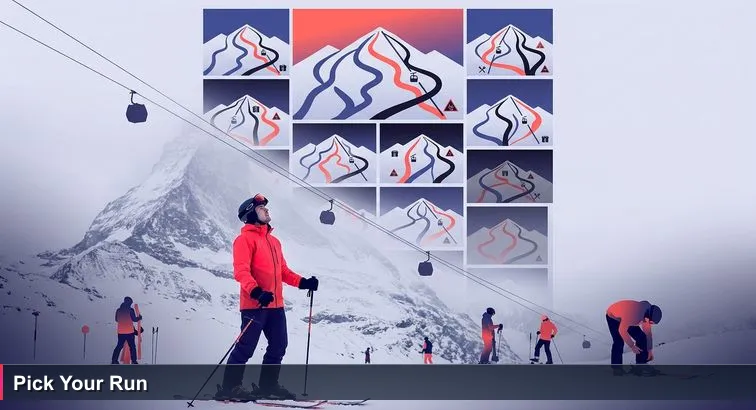
You’re standing at the bottom of a Swiss ski resort, squinting at the giant piste map. Gondolas hum overhead, there’s a murmur of Swiss-German and French at the ticket office, and the actual slopes vanish into a band of fog. On the board, though, the whole mountain has been flattened into a few coloured lines - as if a handful of neat rankings could tell you which run is “best” for your legs, today’s snow, and your appetite for risk.
Choosing a tech coworking space or incubator in Switzerland now feels the same. Platforms like Tracxn’s 2026 overview count around 150+ accelerators and incubators nationwide (Tracxn alone lists 151), plus hundreds of coworking options from Zurich West to Lausanne’s lakeside and Basel’s life-science belt. It’s a dense, high-altitude landscape for anyone working in AI, data, or deep tech.
Zoom out and you see why Switzerland is described by Forbes as a “deep-tech beacon in Europe”: clusters around ETH Zurich and EPFL, Google’s engineering hub in Zurich, and pharma giants like Roche and Novartis in Basel create an unusually rich mix of research, capital and corporate demand for AI. But compressing Zurich, Lausanne, Basel and Geneva into a single Top 10 inevitably hides how different each “run” feels once you’re on it.
This guide treats rankings as a piste map, not a verdict. It’s written for people who live or work in Switzerland and are seriously investing in an AI or data-driven career:
- AI/ML engineers and data scientists, whether employed or freelancing
- Early-stage or scaling deep-tech founders
- Remote workers who want more than a kitchen table and a VPN
Across ten hubs, you’ll see which slopes are blue, red or black for you: who focuses on core AI research versus healthtech, where flex desks cost CHF 30-40/day versus zero-equity accelerator spots, and how tax and language nuances shift from Zurich to Romandie. Use the map to pick two or three promising lines - then go test the “snow”, talk to people on the lift, and decide where your own Swiss AI journey should really start.
Table of Contents
- Introduction
- Technopark Zurich & ETH AI Startup Center
- Impact Hub Geneva & the Impact Hub Switzerland Network
- FONGIT
- Switzerland Innovation Park Basel Area (SIP Basel Area)
- MassChallenge Switzerland
- Venturelab & Venture Kick
- Kickstart Innovation @ Kraftwerk
- Axelra AG - Venture Builder
- Büro Züri by ZKB
- Home of Innovation
- How to Choose Your Run on the Swiss Tech Mountain
- Frequently Asked Questions
If you want Swiss-specific advice, the guide to starting an AI career in Switzerland covers salaries, hubs and practical projects.
Technopark Zurich & ETH AI Startup Center
Technopark Zurich feels less like a café-style coworking space and more like a compact campus: long corridors of labs and offices, founders in hoodies sharing lifts with corporate R&D managers. Its expanded ETH AI Startup Center, opened in 2025, turns that campus into one of Switzerland’s highest-density AI hubs, especially for teams coming out of ETH Zurich and the University of Zurich.
The mix here suits deep-tech and AI/ML startups that live close to the research frontier. You’re within a short tram ride of Google Zurich, Microsoft, UBS and Swiss Re, which makes it natural to run pilots or part-time roles alongside a spin-off. The AI Startup Center itself, as outlined on the official program description, is geared towards AI, data science and computational engineering, with structured access to GPU resources and academic mentors rather than generic “startup coaching.”
On the cost side, Technopark’s coworking options, bookable via platforms such as Deskimo’s Technopark listing, typically land in the CHF 30-40/day band. That’s in the same ballpark as Swiss operators like Westhive (around CHF 25/day) and Spaces (≈CHF 39/day) reported in 2026 market overviews, with longer-term offices quoted individually depending on size and fit.
Concrete signals matter when you’re choosing a “run”: Technopark holds a Google rating of around 4.3 / 5 (≈360 reviews), while the AI Startup Center is backed by ETH Zurich and offers shared GPU clusters, faculty mentors and connections into the broader ETH spin-off pipeline. For an AI engineer employed by a large tech or finance player, simply sharing hallways with early-stage AI ventures can surface advisory roles, co-founder matches, or your next job.
The day-to-day atmosphere is “engineering campus meets corporate R&D”: focused, technical, and lighter on lifestyle perks than boutique coworking, but far higher in deep-tech density. For Swiss freelancers, memberships are typically fully deductible as business expenses; once your revenue crosses about CHF 100,000, VAT registration lets you reclaim input VAT on those fees. If your project already feels like a red or black piste, Technopark is where you test it on real snow.
Impact Hub Geneva & the Impact Hub Switzerland Network
Walk into Impact Hub Geneva on a weekday morning and it feels like a small, multilingual village: founders discussing SDGs over espresso, NGO staff on calls with New York, a data scientist sketching model architecture next to a climate researcher. For AI and tech people, the Swiss Impact Hub network is often the easiest “blue piste” into the ecosystem - forgiving, community-first, but still connected to serious projects.
Impact Hub Switzerland spans hubs in Zurich, Geneva, Lausanne, Bern and Lugano, forming a national backbone for social entrepreneurship and “tech for good.” Geneva stands out because of its proximity to UN agencies and NGOs, making it ideal if your AI work touches sustainability, health, or civic tech. As the umbrella organisation explains on the Impact Hub Switzerland overview, members tap into a global network of 100+ hubs and thousands of entrepreneurs.
Pricing is intentionally accessible for early-stage founders and freelancers. Typical ranges are:
- Day pass: around CHF 35
- Part-time memberships: from about CHF 280/month
- Full-time desks: from roughly CHF 400+/month, varying by city
These memberships usually include access to the global Impact Hub Passport, so a Geneva member can work from Zurich, Berlin or Vienna when client meetings or conferences pull you away. Geneva itself holds a Google rating of roughly 4.5 / 5 (≈160 reviews), with recurring praise for its community and central location.
For AI/ML professionals, the value lies less in fancy interiors and more in collisions: climate hackathons, impact investor meetups, and brown-bag lunches where you meet domain experts who actually own the problems your models could solve. As coworking analyses of Impact Hub’s model note, the brand is built around “radical collaboration,” which in practice means you rarely leave without at least one new project lead or partnership idea - especially in Geneva’s NGO-heavy context.
FONGIT
In Geneva’s “Trust Valley”, where cybersecurity, fintech and advanced engineering meet international governance, FONGIT operates more like a long-term base camp than a short accelerator sprint. Often cited as Switzerland’s oldest tech incubator, it is built for founders who know their journey will take years, not months - exactly the time horizon most deep-tech and AI ventures actually need.
The incubator focuses on ICT, medtech and high-tech projects, with a strong pull for AI/ML teams working on security, finance, or medical applications. Overviews of Swiss programs such as SeedBlink’s guide to accelerators in Switzerland consistently highlight FONGIT among the country’s top initiatives for technology innovation, especially for founders spinning out of Geneva’s universities and research institutes.
Where it really differs from generic coworking is in its financial and operational support stack. According to Swiss startup coverage, FONGIT can provide:
- Grants up to CHF 50,000 for early validation
- Growth loans up to CHF 400,000 for scaling
- Coaching, legal/admin support and access to local and international investors
To date, the foundation has supported over 220 high-tech ventures, with a Google rating around 4.7 / 5 (≈30 reviews) reflecting its reputation among founders who have gone through that multi-year journey. The atmosphere is “incubator campus” rather than coffee-shop coworking: expect structured board-level discussions on IP, regulatory strategy and clinical or financial compliance, not open-mic nights.
For AI/ML PhDs in Geneva weighing a spin-off, FONGIT is a natural candidate for both a physical base and early runway. Its position inside a region that the Financial Times-backed ecosystem rankings describe as pivotal to Switzerland’s startup strength means your neighbours are as likely to be quantum cryptographers or medtech founders as app developers - ideal if your “run” requires specialist partners and patient capital.
Switzerland Innovation Park Basel Area (SIP Basel Area)
In Basel, the Switzerland Innovation Park Basel Area (SIP) sits where lab coats and laptops literally share corridors. The region has evolved into one of Europe’s densest life-science clusters, anchored by giants like Roche and Novartis, and SIP is where that wet-lab heritage meets AI-driven drug discovery, diagnostics and hospital workflow optimisation.
For AI founders, this is the piste to choose if your work lives at the intersection of biology, clinical data and regulation. SIP is geared towards:
- Biotech and pharma teams needing both wet labs and data infrastructure
- Digital health and medtech startups building clinical decision tools or imaging models
- AI ventures aiming for pilots with university hospitals or big pharma
According to the park’s own overview of workspaces in the region, innovation-park coworking options typically fall into the CHF 300-500/month band for flex desks, with day passes around CHF 30-40 - broadly in line with other Swiss providers - while dedicated labs and offices are quoted case by case. The Basel Area network also hosts specialised initiatives such as QAI Ventures for AI and quantum-tech, further deepening the talent pool around machine learning and simulation. You can see how SIP positions itself as the region’s nerve centre in its guide to Basel coworking spaces and prices.
The wider Basel ecosystem consistently ranks among Europe’s top life-science hubs in international assessments, and recent analyses of Swiss startup success stories, such as those on Scalemetrics’ review of Swiss deep-tech scaleups, regularly cite Basel-based biotech and digital-health firms as proof of concept. For AI freelancers and remote employees at pharma companies, a SIP flex desk can become both an office and a dealflow source, while the park’s locations are reachable by SBB trains, trams and bike routes from more tax-friendly cantons like Aargau or Solothurn.
MassChallenge Switzerland
Based in Renens on the edge of Lausanne’s EPFL campus, MassChallenge Switzerland feels more like a pressure-cooker than a coworking space: packed calendars, pitch workshops, corporates roaming the halls, and deep-tech founders comparing term sheets over late trains back along Lac Léman. It’s where AI teams go once the prototype already works and the question becomes how fast they can scale.
The program is deliberately zero equity and industry-agnostic, but in practice attracts strong cohorts in deep tech, climate, and food/agri. According to the official MassChallenge Switzerland program description, it is geared towards later-seed and Series A startups that are ready for intensive mentoring, investor exposure and corporate pilots rather than basic validation.
Economically, it’s one of the more generous Swiss accelerators: a prize pool of up to CHF 1 million in cash and in-kind support, a structured four-month curriculum, and access to large partners from industry and retail. Rather than taking a percentage of your cap table, MassChallenge trades on reputation and alumni outcomes, which is why platforms like Vestbee’s ranking of Swiss accelerators consistently list it among the country’s flagship programs.
“MassChallenge fundamentally helped us sharpen our business model… The mentors and founders we met there became a true community that challenged our assumptions and opened doors.” - Porelio Team, MassChallenge Switzerland alumni
For AI/ML founders already on a red piste - some revenue, clear metrics, and ambitions beyond Switzerland - this is a steep but well-groomed run: you come out with a refined go-to-market, stronger data rooms, and warm intros to Swiss and international VCs. Freelancers and remote engineers can’t hot-desk here, but volunteering as a mentor or technical coach is a smart way to plug into Vaud’s EPFL-centred ecosystem without leaving your current role.
Venturelab & Venture Kick
Ask almost any Swiss deep-tech founder where their journey really started, and you’ll hear the names Venturelab and Venture Kick. Together they form a kind of ski lift from university lab to funded company, designed for projects that are still closer to arXiv papers than to polished SaaS dashboards.
Both programmes are optimised for academic spin-offs and early tech ventures in ICT, cleantech and high-tech. They sit tightly inside the ETH/EPFL ecosystem but are equally relevant to Uni Zurich, Uni Geneva or FH graduates. Analyses such as Altar.io’s review of leading Swiss accelerators repeatedly place Venture Kick among the country’s top programmes for turning research into companies.
- PhD students and postdocs testing commercial angles for their research
- Professors exploring spin-offs while keeping their chair
- Founders with an early prototype who lack fundraising or go-to-market experience
The numbers explain the hype. Venture Kick offers up to CHF 150,000 in non-dilutive funding across three competitive stages, giving teams a clear progression path from idea to investable startup. More than 900 startups have come through the programme, and ecosystem reports cite an impressive survival rate of around 86%. Venturelab complements this with training and international exposure via its Venture Leaders roadshows to the US and Asia, regularly highlighted in startup overviews such as IncubatorList’s guide to Swiss accelerators and VCs.
These are programmes first and “spaces” only indirectly: you won’t hot-desk at Venturelab, but you will spend evenings refining pitch decks in university innovation centres and partner offices. The vibe is curriculum-driven and demanding - ideal if your AI idea is still a research project and you need a crash course in IP, sales and investor logic. For freelancers or remote engineers, attending public Venturelab workshops is a quiet hack for meeting founders before they raise, when part-time CTO roles and advisory shares are still on the table.
Kickstart Innovation @ Kraftwerk
Kickstart Innovation turns Zurich’s Kraftwerk building into a kind of test lab for scaleups: instead of pitching for prize money, you spend a focused period engineering paid pilots with Swiss corporates and cities. The programme is explicitly aimed at later-stage startups with market-ready products, not idea-stage experiments, which makes it particularly attractive for AI teams who already have production models and some revenue.
Structured as a zero-equity accelerator, Kickstart focuses on securing concrete collaboration deals with partners like Swisscom, Coop, AXA, and several Swiss cities, rather than taking a slice of your cap table. Reviews such as GrowthMentor’s overview of Zurich accelerators consistently list Kickstart among the city’s leading programmes, especially for fintech, smart-city, edtech and digital health ventures that need access to regulated industries. For AI scaleups, that often translates into POCs in banking, insurance, mobility or municipal data platforms.
The physical setting matters: Kraftwerk is a central Zurich coworking and event hub built in a converted power station, a few minutes from the main station by tram or bike along the Sihl. During the programme, teams effectively use it as their operational base, with meeting rooms, workshop areas and informal corners where founders and corporate innovation managers can hash out pilot scopes. Outside cohort periods, Kraftwerk appears in the Innovation Zurich hubs directory as a general coworking and event space, making it accessible for non-cohort founders too.
- For AI scaleups targeting banks, insurers or utilities, Kickstart is a black-piste option: demanding, but with clear commercial upside via pilots.
- Founders not (yet) selected can still plug in by attending public demo days and partner events hosted at Kraftwerk, which often double as informal job and consulting marketplaces.
- Freelancers and remote employees can use regular coworking days at Kraftwerk to position themselves near corporate innovation teams and startups without committing to a full accelerator cycle.
Axelra AG - Venture Builder
Axelra sits in a different category from classic accelerators: it is a venture builder that behaves like a technical co-founder for multiple startups at once. Instead of offering generic coaching and hot desks, Axelra brings a full product, design and engineering squad to the table, then shares in the upside. It has been recognised in European growth lists by the Financial Times and is regularly name-checked in Swiss ecosystem round-ups as one of the country’s most innovative hybrid models.
The core economics are based on sweat equity. Axelra contributes hands-on development in exchange for ownership stakes and success-based fees, which can be transformative if you’re a commercially strong founder with an AI idea but no in-house engineering team. In practice, that means you can go from Figma and notebooks to a deployed data platform without first raising a large pre-seed round just to hire senior engineers.
Signals of quality matter in a crowded Swiss market: Axelra holds a Google rating of around 5.0 / 5 (on a small but highly positive review base), and its portfolio spans fintech, SaaS and data-driven products that align with broader trends towards modular, API-first tech stacks. Analyses of flexible startup work models, such as Wezoo’s review of venture-friendly workspaces, underline how build studios like Axelra often double as both product engine and physical base for their ventures.
The day-to-day feel is closer to a war room than a coworking lounge: tight sprints, shared backlogs, and repeated playbooks for product-market fit. For senior AI engineers, joining a venture builder can be an alternative to a single big-tech employer, giving you exposure to several startups and cap tables at once. Meanwhile, directories mapping Switzerland’s 100+ coworking and innovation operators, such as Ensun’s national coworking snapshot, show how outfits like Axelra plug into a wider web of flexible spaces rather than being tied to one campus.
- Founders should model the long-term implications of equity-for-services with a Swiss tax advisor, especially if resident in lower-tax cantons like Zug while working mostly in Zurich.
- Clarify IP ownership and vesting schedules early; your future Series A investors will scrutinise these agreements.
- If you are a domain expert (e.g., ex-banker or clinician), treat Axelra as your de facto CTO and product team, and focus your own time on distribution and partnerships.
Büro Züri by ZKB
Among Zurich’s many coworking options, Büro Züri by Zürcher Kantonalbank is the rare one where the price tag reads “CHF 0.” Tucked into District 1, a short walk from the main station, it’s designed as a public-good workspace for early-stage founders, students and freelancers who are still validating ideas and can’t justify a full membership at a premium space.
The model is simple: ZKB sponsors the infrastructure, and you book a desk within defined usage limits. For solo founders or remote employees who only need a central base a few days per month, that subsidy can be worth hundreds of francs a year compared to typical Zurich day-pass rates, which guides like MagicHeidi’s overview of coworking cafés in Zurich place in the CHF 25-40/day range.
Despite being free, Büro Züri scores well with users: it holds a Google rating of about 4.5 / 5 (≈120 reviews). One local freelancer puts it succinctly: “The office itself is super clean, bright, and quiet… you are offered coffee, tea, and fresh fruit… Excellent spot to work in peace and quiet.” The vibe is more “modern library” than startup playground - ideal for deep work on an ML notebook or grant application, less so if you’re looking for ping-pong and after-work beers.
Beyond the desks, the hidden value is access. Because the space is bank-sponsored, you’ll regularly meet ZKB startup advisors and local SMEs, which is useful if you’re figuring out how to open a business account, form a GmbH or navigate Swiss tax and VAT rules. Directories like Coworker’s map of Zurich coworking spaces show just how crowded the city has become; Büro Züri stands out by lowering the financial barrier to simply showing up.
- For freelancers billing CHF 80-120/hour, even a single extra client secured here more than repays the commute.
- Remote employees can use it as a quiet alternative to home when visiting Zurich HQs.
- Thanks to its location near Zurich HB, it’s realistic to commute from cantons like Aargau or Schwyz and still keep your tax base outside the city.
Home of Innovation
Home of Innovation is built for people who want to stay in one place while their company shape-shifts. Spread over roughly 6,000 m², it combines hot desks, dedicated desks and private offices, so you can move from solo contracting to a small AI agency or product team without changing address or postal code every year.
Pricing usually tracks the broader Zurich market: flex desks start around CHF 300-400/month, with team offices scaling based on size and services. That’s comparable to local operators like Westhive, whose Zurich memberships begin at about CHF 400+/month according to the Westhive locations and pricing overview. For many small teams, the key isn’t shaving CHF 50 off the bill, but getting predictable costs as headcount grows.
The atmosphere is “startup campus” rather than slick corporate: modern interiors, meeting rooms, event areas, and often extras like podcast booths or phone cabins. You’ll sit next to B2B SaaS founders, hardware engineers and creative agencies; increasingly, many of them run data-heavy products even if they don’t badge themselves as pure AI. That diversity is useful if you’re, say, an ML engineer building tools for logistics or marketing and need access to non-tech clients down the hall.
- Remote employees of international firms can swap a traditional serviced office for a more entrepreneurial setting, while still accessing conventional providers like Regus’s Swiss coworking network when travelling.
- Swiss freelancers gain a stable registered business address, which simplifies dealing with AHV, potential VAT registration, and client contracts.
- For anyone commuting from around the Greater Zurich Area, being within roughly 15-20 minutes of the main station by S-Bahn or tram is the difference between using your desk weekly and “I’ll go in someday.”
If Technopark or Impact Hub feel too specialised, Home of Innovation is a solid mid-mountain choice: enough tech density to find collaborators, but broad enough that your neighbour might just be your next customer.
How to Choose Your Run on the Swiss Tech Mountain
Standing at the base of the Swiss tech mountain, the piste map is now crowded with logos instead of lifts. Zurich, Lausanne, Basel and Geneva each promise altitude in different ways: GPUs near ETH, pharma budgets in Basel, NGO access in Geneva, or corporate pilots along the Limmat. The risk is treating a neat Top 10 like a framed picture instead of what it really is - a simplified tool to help you choose your first run.
For an early-stage, budget-conscious phase - the blue pistes - prioritise low fixed costs and high surface area for conversations:
- Use Büro Züri or Impact Hub day passes (from around CHF 35) to test ideas and meet collaborators before you sign anything long term.
- Layer in open Venturelab workshops and meetups to stress-test your AI concept with founders and investors.
- Follow your curiosity: a single conversation at a hackathon can matter more than the fanciest office view.
Once your project looks more like a deep-tech spin-off - the red pistes - space choice becomes a strategic bet:
- Pick Technopark Zurich, FONGIT or SIP Basel Area based on domain (core AI, cybersecurity/medtech, or life sciences).
- Use programmes like Venture Kick (up to CHF 150,000 non-dilutive) to finance validation without giving up equity too early.
- Optimise for mentor quality and regulatory know-how, not interior design.
For scaleups and corporate pilots - the black pistes - traction beats everything:
- Target Kickstart Innovation and MassChallenge Switzerland when you’re ready to run pilots or raise a larger round.
- Consider venture builders like Axelra when execution capacity, not capital, is the bottleneck.
- If you’re freelancing or working remotely, treat coworking as both office and sales channel, echoing how spaces are described as “invisible infrastructure” in analyses like Spacebring’s review of inspiring coworking spaces.
Ultimately, Switzerland’s startup ecosystem, with its blend of high salaries, strong IP protection and deep-tech clusters, is full of opportunity and friction, as writers like Oleg Tsyura note in their analyses of Swiss opportunities and challenges. The map you’ve just read is there to narrow your options, not decide for you. Visit two or three hubs, feel the snow under your skis - community, mentors, tax and commute - and then commit to the slope where your AI or deep-tech journey feels both stretched and supported.
Frequently Asked Questions
Which coworking space or incubator is best for AI/ML engineers and deep-tech founders in Switzerland?
Technopark Zurich and the ETH AI Startup Center are the top pick for AI/ML - they sit next to ETH, Google Zurich and other R&D hubs, offer access to GPU clusters and faculty mentors, and have typical day rates of CHF 30-40. If your work ties into pharma or medtech, SIP Basel Area can be a better fit due to Roche/Novartis partnerships.
How did you choose and rank the Top 10 spaces in this guide?
Rankings used clear criteria: domain fit (AI, pharma, impact), funding signals (grants, accelerators), hard numbers (Google ratings, startups supported) and practical costs/commute; we also referenced ecosystem tallies like Tracxn’s ~150+ Swiss incubators and accelerators to ensure coverage of major clusters. The list favours places that combine tech density, corporate or university links, and measurable support for founders.
Which spaces are best if I’m a freelancer or remote worker wanting to plug into the Swiss tech scene?
Büro Züri is great for budget-conscious freelancers (often free with booking), Impact Hub offers flexible day passes from ~CHF 35 and community events, and Home of Innovation or Westhive provide stable flex desks (roughly CHF 300-400/month). Coworking also doubles as a sales channel - if you bill CHF 80-120/hour, a few day passes can pay for themselves quickly.
What’s the cheapest way to test the Swiss tech ecosystem before committing to a membership or accelerator?
Buy a day pass (Impact Hub ~CHF 35 or Technopark CHF 30-40), attend free or low-cost Venturelab and public demo events, or use Büro Züri’s free slots to network. Remember coworking fees are tax-deductible as business expenses in Switzerland, and you only need to worry about VAT registration once turnover exceeds CHF 100,000.
My startup needs pharma partners and wet labs - which hub should I choose?
Switzerland Innovation Park Basel Area (SIP Basel Area) is the obvious choice - it’s in Europe’s densest life-science cluster with direct links to Roche and Novartis, access to lab space and clinical partners, and flex desk pricing typically in the CHF 300-500/month range. Basel’s ecosystem is specifically geared to drug discovery, diagnostics and AI-for-health collaborations.
Top 10 highest-paying tech companies in Switzerland by total compensation
Bookmark our AI engineer Switzerland how to guide for salary expectations, specialisations, and Swiss programs.
Is Switzerland a good place for a tech career in 2026? a data-driven guide
Read our roundup of the best companies hiring AI engineers in Switzerland (2026) and compare salaries and locations.
Use our complete Swiss AI meetups guide to pick the right home station for your career switch.

Irene Holden
Operations Manager
Former Microsoft Education and Learning Futures Group team member, Irene now oversees instructors at Nucamp while writing about everything tech - from careers to coding bootcamps.