









Top 10 Tech Coworking Spaces and Incubators in Samoa in 2026
By Irene Holden
Last Updated: April 26th 2026
Too Long; Didn't Read
Onelook Studio remains Samoa's top coworking space in 2026 with proven reliability and a regional reciprocity network, while the Samoa Business Hub offers a game-changing SAT 3 million loan facility at 6% interest for startups. For remote workers earning NZD or AUD, Onelook's hot desks from WST 400/month deliver stable power and fast Wi-Fi. Ultimately, the best pick depends on your stage - founders should tap free incubators like Youth Co:Lab before committing to a premium membership.
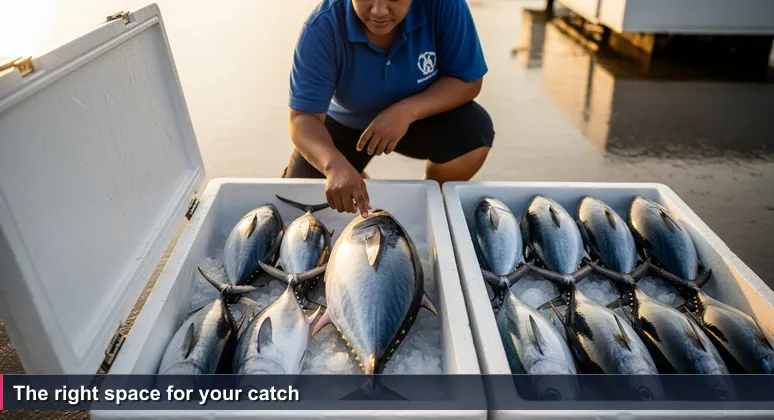
Dawn at the Apia fish market - the ice chests are open, the skipjack is gleaming, and every buyer knows their recipe before they haggle. No one asks for the “number one fish” because that question doesn’t make sense when you’re cooking for a family of six versus curing your own oka. The same discernment applies to Samoa’s coworking and incubator ecosystem in 2026, which has grown far beyond a single stall into a genuine marketplace of digital launchpads.
The National ICT Policy 2025-2030 has set a clear direction for the country, adopting its first science, technology, and innovation framework with UNESCO support. Submarine cables are bringing faster connectivity ashore, and dedicated spaces like Onelook Studio and the Samoa Business Hub have matured into genuine platforms for digital careers. But each hub trades in a different currency - raw internet speed versus community trust, government grants versus regional networks, AI bootcamps versus fintech accelerators.
This is why ranking these spaces by “best” misses the point entirely. The savvy buyer doesn’t scan a numbered list; she checks the gills, asks what came in last night, and negotiates for the catch that matches tonight’s recipe. The same principle applies here: the right space depends entirely on your stage, your budget, and the specific problem you’re trying to solve. That SAT 3 million loan facility from the Samoa Business Hub at 6% interest serves a founder differently than a hot desk at Onelook Studio with its historic regional reciprocity MOU with Fiji’s Greenhouse Coworking.
So next time you open a listicle, don’t ask “which is the best?” Ask “which is for me right now?” The real ranking happens inside your own project’s needs.
Table of Contents
- The Fish Market Approach
- TopTech Samoa
- UNESCO Tech Bootcamps
- Pacific Business Hub (Samoa)
- Samoa Business Hub (SBH)
- Youth Co:Lab Samoa
- National University of Samoa (NUS) Innovation Hub
- University of the South Pacific (USP) Samoa Campus
- Technology and Innovation Park (Vaivase-tai)
- Samoa Chamber of Commerce and Industry (SCCI)
- Onelook Studio
- Choosing the Right Space for Your Stage
- Frequently Asked Questions
Learn how to start an AI career from Samoa with this complete guide for 2026.
TopTech Samoa
For small business owners navigating e-government portal contracts or cloud procurement, TopTech Samoa has become the most dependable entry point in Apia - not because it offers a flashy coworking floor, but because it acts as a trusted local consultant with a 100% recommendation rate on local social platforms. Rather than competing with dedicated spaces like Onelook Studio, TopTech fills the gap for founders who need a reliable local partner to translate technical requirements into deliverable projects.
Engagements are project-based, typically ranging from WST 500 to 3,000 depending on scope, and the firm was a key exhibitor at the SITA x MCIT Mini Tech Expo 2026, showcasing its role in advancing local digital infrastructure. This isn't a space you rent by the month - it's a partner you hire for a specific outcome. Users consistently praise the firm's reliability and technical expertise, calling it the go-to resource for Samoa's emerging tech procurement ecosystem.
TopTech's strength lies in its deep understanding of Samoa's regulatory and business environment. Listed as a qualified service provider on the Business Link Pacific network, it connects non-technical founders with the right vendors, government portals, and implementation roadmaps. For a small business owner who doesn't speak Python but knows their community needs a better digital service, TopTech is the translator between vision and execution.
The verdict is clear: not a coworking space in the traditional sense, but the most dependable entry point for anyone needing local tech procurement expertise or a partner for e-government projects. It's the stall where you don't pick the fish - you ask the seller to recommend the catch that matches your recipe.
UNESCO Tech Bootcamps
These aren't a space you rent - they're a program you earn. The UNESCO Tech Bootcamps run regularly across the Pacific, including a 2025 session in Fiji that specifically targeted Samoan entrepreneurs under 35. For the price of one week's commitment and a successful application, participants receive intensive training in startup finance, intellectual property protection, and AI integration, then return home with a network of Pacific tech founders and mentors who didn't exist in their contact lists before.
The curriculum draws directly from UNESCO's regional expertise in science and technology policy, with participants reporting they walk away with "intensive startup finance and IP training" that would cost thousands elsewhere. According to UNESCO's official call for applications, the bootcamps are designed for "budding entrepreneurs in tech fields" who need a crash course in turning a prototype into a registered business with defensible intellectual property. Samoan founders have used these programs to refine everything from fintech apps to agritech platforms serving remote villages in Savai'i.
Best suited for early-stage founders under 35 who need a rapid, free ticket into a pan-Pacific tech network without leaving the region. The trade-off? It's not a permanent desk - it's a sprint, not a membership. But for a week of intense collaboration, you gain mentors, co-founders, and a credential that opens doors from Suva to Auckland. As one participant noted, "you come for the curriculum, you stay for the WhatsApp group."
The verdict is clear: the best free entry point into the region's startup ecosystem for anyone under 35 with a tech idea and the courage to pitch it.
Pacific Business Hub (Samoa)
Crowded around the conference table at WST 50 to 150 per month for basic membership, the Pacific Business Hub plays a role no other space in Samoa replicates: a trans-Tasman bridge for startups hungry for the Auckland market. This regional brand operates physical coworking in both New Zealand and Apia, offering tailored hot desks and, more importantly, a pathway to export. Its monthly cohort-based training reaches 14 geographic cohorts across Upolu and Savai'i, embedding digital skills directly into village economies rather than concentrating them solely in the capital.
The hub's real leverage, however, is the Business Link Pacific (BLP) Co-Investment Fund, which matches startup capital with reduced-risk co-investment dollars. For a Samoan founder building a fintech app who needs proof-of-concept funding before approaching Auckland angel investors, this fund de-risks the first institutional cheque. The Pacific Business Hub also connects members to BLP's network of affordable, quality advisors, matching founders with mentors who understand both Pacific cultural contexts and international market expectations.
Best suited for startups planning regional expansion into New Zealand or seeking co-investment capital to match their own runway. The vibe is professional, export-oriented, and network-heavy - this isn't a quiet corner for coding in isolation. It's a deal-making environment where introductions happen over coffee, and the goal is always the next market beyond Samoa's shores.
The verdict is clear: the essential bridge for any founder with Pacific ambitions who understands that the real value isn't in the desk, but in the flight path the desk unlocks.
Samoa Business Hub (SBH)
Three million tala at 6% interest is not a loan - it's a lifeline for founders who don't want to give away equity. The Samoa Business Hub (SBH), formerly SBEC, launched this government-backed facility in early 2026 specifically for startups and MSMEs, with individual loans of up to SAT 50,000 per venture. For comparison, commercial rates in Apia typically run 12-18%, making this the cheapest formal capital available for a Samoan tech founder who hasn't yet proven revenue. The Government of Samoa announced the facility as part of its broader push to formalize the startup ecosystem beyond informal family funding.
Beyond the loan book, SBH runs monthly training sessions across 14 geographic cohorts spanning both Upolu and Savai'i, ensuring that digital entrepreneurship isn't an Apia-only opportunity. The hub also operates the Samoa Greenpreneurs program in partnership with the Global Green Growth Institute, targeting sustainable ventures that align with the country's climate resilience goals. The training is free; the cohort participation requires only time and a viable pitch.
The vibe is structured and policy-driven - this is not a creative coworking lounge with beanbags. It's a grant-focused engine where the desk is secondary to the application form. Best suited for founders who need cheap capital and structured mentorship rather than high-speed Wi-Fi and networking mixers. If your startup addresses a green or social challenge, SBH offers seed funding without surrendering a single percentage point of ownership - a rare proposition in any ecosystem worldwide.
Youth Co:Lab Samoa
Over 115 young Samoans have already passed through this incubator's doors, and 54% of them are women - a stat that signals something deeper than performance metrics. Implemented by the Samoa Chamber of Commerce and Industry (SCCI) with UNDP backing, Youth Co:Lab Samoa is the country's primary incubator for tech-led social enterprises, offering free training in the Social Lean Canvas, structured mentoring, and pitching sessions for seed funding. The program doesn't just teach startup mechanics; it actively shapes ventures that solve Pacific problems - from climate adaptation tools to digital health platforms serving remote villages.
Participants don't pay a single sene. The program costs nothing because it's partially funded by the United Nations Development Programme and the SCCI, which views these young founders as long-term investments rather than revenue streams. The vibe is mission-driven and collaborative, a deliberate contrast to the corporate-consultant energy of other spaces. As one participant noted, "you don't come here for the Wi-Fi - you come because the person next to you is building the same kind of future you are."
Best suited for founders under 30 with a tech solution addressing a social or environmental problem specific to the Pacific region. The SCCI's programs and partners page lists Youth Co:Lab alongside other ecosystem initiatives, underscoring its role as the strongest community for impact-driven tech founders in Samoa. If your startup has a triple bottom line - profit, people, planet - this is the only stall in the market worth your application fee.
National University of Samoa (NUS) Innovation Hub
Tuition is free for enrolled students, and alumni can book meeting rooms at WST 20 per hour - but the real currency here is not desk space. The National University of Samoa Innovation Hub functions as the primary pipeline for junior AI and software talent in Apia, running hackathons and pre-incubation sprints in direct partnership with the Ministry of Communications and Information Technology. As a key stakeholder in the National STI Policy 2025-2029, NUS is developing STEM curricula and technical training programs that run through 2027, deliberately engineering the next generation of Samoan developers.
The vibe is academic and experimental - this is where a third-year computer science student tests their first machine learning model on local agricultural data, then pitches it at a weekend sprint. It's not the highest-speed workspace in Apia, and no one comes here for the coffee. But for a company trying to hire a junior developer who understands both Python and Samoan business culture, the Innovation Hub is the only recruiting ground that matters. Over 40 students participated in the most recent MCIT-partnered hackathon, producing prototypes for e-government and disaster response tools.
Best suited for NUS students building their first real product and for local tech firms - like Samoa's highest-paying tech companies - looking to hire junior talent without relocating to Auckland. The Innovation Hub doesn't try to compete with Onelook Studio on amenities; it competes on output. The question isn't whether the Wi-Fi is fast enough - it's whether the student beside you is about to become your first employee.
University of the South Pacific (USP) Samoa Campus
Library passes run WST 10 per day for alumni, and lab access costs WST 30 per day - a pricing structure that quietly announces its purpose. The University of the South Pacific's Samoa campus isn't competing for digital nomads or freelancers. It exists as a regional research node, where grant-funded AI projects take shape and data scientists gather to write the papers that inform Samoa's National ICT Policy 2025-2030 and its implementation roadmap. The vibe is scholarly and policy-oriented, deliberately quiet, with none of the creative buzz you'd find at Onelook Studio.
USP's real value doesn't sit in its innovation lab, though the lab itself is well-equipped for research computing. It sits in the grant-funded collaborations that flow through this campus - partnerships with regional Pacific researchers working on AI for climate modeling, disaster response, and agricultural optimization. Founders who need a research partner to validate a model or co-author a white paper find their people here, not on a coworking Slack channel. The campus also acts as a stakeholder in the new STI policy framework supported by UNESCO, anchoring Samoa's ambitions in academic rigor rather than hype cycles.
Best suited for graduates and researchers working on government-funded AI projects, and for founders who understand that some problems require a PhD collaborator before they require a product manager. The trade-off is clear: no espresso machine, no networking happy hours, and definitely no beanbags. But the silence is productive - this is where the equations get solved and the grants get written.
Technology and Innovation Park (Vaivase-tai)
Strategic Location at the Cable Landing
Not yet open for commercial use, but already the most strategically ambitious piece of real estate in Samoa's digital ecosystem. The Technology and Innovation Park sits in Vaivase-tai, deliberately sited near the submarine cable landing station to minimize the latency that cripples AI and cloud computing workloads. When Minister of MCIT Hon. Agaseata Valelio Tanuvasa Peto Tanuvasa called these hubs "the building blocks of Samoa's digital future" during Digital Week 2026, he was describing this park specifically - a government-led initiative designed to attract international tech firms through potential tax and duty incentives.
What It Promises
Local leaders describe the park as a "special place" because of its proximity to the primary internet backbone, making it the only location in Samoa purpose-built for latency-sensitive workloads like real-time AI inference or cloud rendering. The park remains in consultation and build-out phase as of 2026, but the Ministry of Communications and Information Technology has signaled that it will offer incentives designed to compete with similar parks in Suva and Auckland. The vision, according to MCIT, is that this park will become "the building blocks of Samoa's digital future" - a physical anchor for the country's National ICT Policy 2025-2030 ambitions.
Who Should Watch This Space
Foreign tech companies entering the Pacific market and local firms doing latency-sensitive work - AI model training, real-time data processing, cloud gaming - should track every consultation announcement. The park won't serve a freelancer needing a quiet desk; it's designed for the deployment of infrastructure that can support enterprise-scale computing. When it opens, this will be the highest-bandwidth, lowest-latency tech hub in the country. For now, it's a promise on the horizon - but it's the only promise in Samoa's ecosystem backed by a submarine cable and a government appropriation.
Samoa Chamber of Commerce and Industry (SCCI)
An annual membership costs WST 100 - roughly the price of two day passes at Onelook Studio - but what you're buying is not desk space. The Samoa Chamber of Commerce and Industry (SCCI) operates as the central nervous system of the entire tech ecosystem, administering the Youth Co:Lab incubator that has already supported over 115 young entrepreneurs, managing the BLP Co-Investment Fund, and running monthly networking events that connect founders with government officials and regional investors. Its physical office in Apia houses a modest drop-in workspace for members, but the true value sits in the introductions.
This is where second-time founders meet regulatory advisors who can explain the nuances of Samoa's ICT procurement framework. This is where startups pitch fund managers flying in from Auckland and Suva. The SCCI doesn't try to compete with Onelook Studio on Wi-Fi speed or with the Samoa Business Hub on loan size; it competes on relationships. The Chamber's programs and partners page lists over a dozen active initiatives spanning incubation, co-investment, and trade facilitation - each one a thread connecting a founder to a decision-maker.
The vibe is formal and influential, carrying the weight of an institution that predates Samoa's digital ambitions by decades. Best suited for founders at the Series A stage who need introductions to government or regional investors rather than a quiet corner to code. The desks are secondary to the Rolodex - and for founders who understand that the right introduction can save six months of cold outreach, WST 100 per year is the cheapest acceleration capital in Apia.
Onelook Studio
The Space That Proved It Could Be Done
Hot desks start at WST 400 per month on an annual plan, and day passes cost WST 30 to 50 - pricing that signals Onelook Studio's position as Samoa's first and most established dedicated coworking space. Located in a gated compound with free member-only parking, it offers unlimited high-speed Wi-Fi, private meeting rooms with video conferencing, air-conditioning, a kitchen, and bathroom and shower facilities. Members consistently describe it as a "quiet and inspiring space away from distractions" with modern interiors and a professional environment that doesn't feel overbearing. In a country where reliable power backup and consistent broadband are still being normalized, Onelook delivers what remote workers and developers need most: dependability.
The Pacific-First Network
In 2025, the studio signed a historic MOU with Fiji's Greenhouse Coworking Studio - the first cross-border coworking agreement in the Pacific - creating a regional reciprocity network that lets Samoan members walk into a Suva workspace with no additional fee. This single partnership transforms Onelook from a local desk provider into a regional hub, giving its members a soft landing in Fiji's more mature startup ecosystem. The move signals that Onelook isn't content to be Samoa's best; it's building the bridges that let Samoan tech professionals operate across the region.
Who Should Choose This Stall
Best suited for freelance developers, digital nomads, remote employees of overseas companies, and local tech startups who need a reliable day-to-day base. If you're earning in NZD or AUD - say, WST 3,500 to 6,000 per month as a remote developer - then WST 400 to 800 per month is a no-brainer investment in productivity. The studio's regional partnership with Greenhouse Coworking also means your membership travels with you. For proven reliability, strong community, and the only true regional coworking network in Samoa, Onelook remains the gold standard.
Choosing the Right Space for Your Stage
Most articles about coworking end with a ranked winner. This one ends with a question: what stage are you in? Because the best space in Samoa changes completely depending on whether you're a student debugging your first neural network, a founder chasing a SAT 50,000 loan, or a remote developer earning in AUD and needing reliable video call bandwidth.
- For students: Stick with free campus resources at NUS or USP. Only buy a day pass at Onelook Studio (WST 30-50) when you need high-speed internet for cloud-based AI training or a quiet zone away from dorm distractions.
- For early-stage founders: Don't pay for a monthly hot desk until you have a prototype. Cycle through Youth Co:Lab or the Samoa Business Hub's free incubator programs first. That SAT 3 million loan facility at 6% is more valuable than any premium desk. Once you have funding, upgrade to Onelook for the networking.
- For remote employees: This is the sweet spot. If you earn in NZD or AUD - a software developer earning WST 3,500-6,000/month - a WST 400-800 membership is a no-brainer. Stable power backup and fast Wi-Fi pay for themselves in one uninterrupted video call.
- For enterprise teams: If Digicel Samoa or SamoaTel is deploying a team to build an e-government portal, consider the Technology and Innovation Park once operational, or private meeting room blocks at Onelook. Embed junior devs into SBH's monthly cohort training for local market knowledge.
The Apia fish market teaches the same lesson every dawn: the best fish is the one that matches tonight's recipe. Onelook for speed and reliability. SBH for cheap capital. Youth Co:Lab for impact. NUS and USP for research partners. The Technology and Innovation Park for low-latency workloads. The water is warm, the tuna is running, and the next haul belongs to those who know what they're looking for before they reach the stall. Fa'afetai lava.
Frequently Asked Questions
Which coworking space in Apia has the fastest internet for AI work?
Onelook Studio offers unlimited high-speed Wi-Fi and has proven reliability for daily AI workloads. But if you need the absolute lowest latency for cloud computing, keep an eye on the Technology and Innovation Park near the cable landing station in Vaivase-tai - once it opens, it'll be Samoa's highest-bandwidth hub.
Is there a free incubator program for Samoan tech startups?
Yes - Youth Co:Lab and the Samoa Business Hub both run free incubator programs. Youth Co:Lab focuses on tech-led social enterprises and has supported over 115 young founders, while SBH offers free monthly training across 14 cohorts and access to a SAT 3 million loan facility at just 6% interest.
What coworking space is best for remote employees earning in NZD or AUD?
Onelook Studio is the sweet spot. A hot desk costs WST 400-800 per month, which is a no-brainer if you earn WST 3,500-6,000/month as a remote developer. The stable power, fast Wi-Fi, and video-conference-ready meeting rooms more than pay for themselves.
Can I get government funding for my startup through any of these spaces?
Yes - the Samoa Business Hub administers a SAT 3 million government loan facility for MSMEs at a reduced 6% interest rate, with loans up to SAT 50,000 per startup. It's ideal for green or social enterprises, and you don't have to give up equity.
Are there any coworking spaces in Samoa with a regional Pacific network?
Onelook Studio signed an historic MOU with Fiji's Greenhouse Coworking in 2025, creating the first regional reciprocity network for members. Additionally, the Pacific Business Hub connects Samoan startups to Auckland's market and the BLP Co-Investment Fund, making it a strong bridge to the wider Pacific.
Whether you are entry-level or senior, this guide to AI salaries in Samoa by experience level is essential.
Find the best AI bootcamps for Samoan government workers and professionals.
Before moving, check out this essential guide to Samoa's dual economy for tech workers.
Learn about the top women in tech resources in Samoa, including the Women in Cyber programme and Nofotane project.
Discover the best tech career paths in Samoa including Digicel and UNDP.

Irene Holden
Operations Manager
Former Microsoft Education and Learning Futures Group team member, Irene now oversees instructors at Nucamp while writing about everything tech - from careers to coding bootcamps.