









The Complete Guide to Starting an AI Career in Samoa in 2026
By Irene Holden
Last Updated: April 26th 2026
Key Takeaways
Starting an AI career from Samoa in 2026 is not only possible but strategically smart, as AI skills command a 56% salary premium and local employers like Digicel, MCIT, and SPC are actively hiring for data and machine learning roles. Affordable pathways like Nucamp's bootcamps starting at WST 5,735 or USP's new AI degree with Pacific context provide the training you need to enter this growing field.
Digital infrastructure reaches a tipping point
Samoa's connectivity is no longer a barrier for ambitious AI professionals. The completion of new undersea cable connections and expanding broadband access mean Apia-based practitioners can now collaborate in real-time with teams in Sydney, Suva, or San Francisco. According to the Ministry of Communication and Information Technology, the foundations for a digital economy are being laid with interconnected computing resources, strong data ecosystems, and policy frameworks designed for practical economic development.
Government and regional bodies are hiring now
The Hon. Minister of Communication, Information, and Technology has publicly stated that AI can strengthen traditional industries and create new productive capacities in areas like digital finance and intelligent logistics. This isn't future planning - it's active recruitment. Major employers currently seeking AI talent include:
- Digicel Samoa and Vodafone Samoa - hiring data analysts and ML engineers for network optimization and customer analytics
- SamoaTel - driving digital transformation in public telecommunications
- Secretariat of the Pacific Community (SPC) - funding climate resilience projects that rely on machine learning
- National University of Samoa (NUS) and USP Samoa Campus - expanding AI research and teaching roles
Regional organizations invest in Pacific-first AI
UNDP Resident Representative in Samoa, Aliona Niculita, has observed that AI is now central to global development policy, noting optimism among digital entrepreneurs who believe AI can address persistent regional challenges like climate risks and geographic isolation. This translates directly into funded projects, consultancy contracts, and full-time positions across the Pacific. The demand for AI talent in Samoa is not hypothetical - it is being driven by concrete government strategy, infrastructure investment, and regional development funding. The question is no longer whether Samoa needs AI professionals, but where they will come from.
In This Guide
- Why 2026 Is the Moment for AI Careers in Samoa
- Emerging AI Career Paths in Samoa
- Education and Training Pathways
- Building the Skills That Matter
- Getting Hired in Samoa's AI Market
- Career Progression and Salary Expectations
- Success Stories and Local Pioneers
- Reading the Water: Your Action Plan
- Frequently Asked Questions
Connections to regional employers and remote-work channels make Samoa an ideal springboard for bootcamp graduates seeking entry-level tech roles locally and across the Pacific.
Emerging AI Career Paths in Samoa
Five roles shaping Samoa's AI landscape
The era of generic "IT guy" roles is ending. Employers across the Pacific now seek specialists who can apply artificial intelligence to concrete local problems. According to PwC's Global AI Jobs Barometer 2025, professionals with AI skills earn a 56% salary premium compared to those without them. Samoa's emerging market demands focused expertise rather than broad competence.
- Data Scientist: Analyzes environmental, economic, and telecommunications data to inform government policy and business strategy. Typical tools include Python, R, and SQL. Key employers: ministries of agriculture and fisheries, SPC, and telecommunication companies.
- Machine Learning Engineer: Builds and deploys models for local sectors - crop yield prediction for agriculture, network optimization for Digicel Samoa and Vodafone Samoa, and cyclone path modeling for disaster agencies. Core frameworks: TensorFlow, PyTorch, scikit-learn.
- AI Product Manager: Bridges technical AI capabilities with business requirements, emerging in digital banking, mobile services, and government e-services in Apia. Requires stakeholder communication and product strategy skills rather than deep coding.
- MLOps Engineer: Manages infrastructure and deployment cycles for AI models in production. As climate monitoring and digital government platforms scale, demand grows for Docker, Kubernetes, and CI/CD expertise at regional bodies.
- Applied Researcher: Targets Pacific-specific challenges such as fisheries AI, coral reef monitoring, and climate modeling. This path connects directly with the University of the South Pacific's new Bachelor of AI, which emphasizes Pacific context in its curriculum.
Rather than aiming to be a generalist, choose one path where your existing skills intersect with local demand. A data analyst at a government ministry can pivot to data science; a network engineer at Digicel can transition into ML engineering. The opportunities are concrete, not theoretical.
Education and Training Pathways
University degrees
For those seeking the deepest theoretical grounding, 2026 marks a milestone with the launch of the University of the South Pacific's Bachelor of Science with a Major in Artificial Intelligence - the first undergraduate AI degree in the region designed with a Pacific-specific curriculum. Students at USP's Samoa Campus learn to build AI tools from the ground up in a context that reflects local challenges. The National University of Samoa offers shorter certificates in AI foundations, data science, and applied classroom AI, ideal for working professionals seeking foundational knowledge before committing to a full degree program.
Coding bootcamps
If entering the job market quickly is your priority, bootcamps provide the fastest return on investment. Nucamp offers the most affordable and practical pathway for Samoans, with programs starting at WST 5,735 for the Back End, SQL and DevOps with Python course. The 25-week Solo AI Tech Entrepreneur Bootcamp (WST 10,746) focuses on building AI-powered products, integrating LLMs, and monetizing SaaS. The 15-week AI Essentials for Work (WST 9,671) suits professionals who want to apply AI in existing roles immediately. Monthly payment plans remove the barrier of upfront costs, and career services include 1:1 coaching, portfolio development, and regional job board access.
Self-directed and online courses
Platforms like Coursera, edX, and Emeritus offer AI and machine learning specializations from top universities at low or no cost. Locally, CSL's Digital Training Centre in Apia provides hands-on training in prompt engineering and Microsoft Copilot, grounded in the philosophy that AI should support people, not replace them. The right pathway depends on your timeline and budget - university for research roles, bootcamps for rapid career transition, and self-directed learning for targeted skill-building while working.
Building the Skills That Matter
Technical skills
Start with Python - the undisputed lingua franca of AI - then add SQL for data manipulation and statistics for understanding distributions and hypothesis testing. Beyond the basics, employers in Samoa expect proficiency in at least one deep learning framework (TensorFlow or PyTorch), familiarity with cloud platforms like AWS or Azure for model deployment, and competence with Git for version control. According to the Syracuse University AI career guide, building AI-native habits early and mastering Python are critical steps for standing out in the 2026 market.
- Python - essential for every AI role
- SQL - data querying and manipulation
- Statistics and probability - foundational modeling knowledge
- TensorFlow or PyTorch - at least one deep learning framework
- Cloud platforms - AWS, Azure, or Google Cloud for deployment
- Git and version control - necessary for team collaboration
Soft skills that differentiate you
In a small market like Samoa, the ability to communicate across disciplines often outweighs raw technical depth. You will need to explain AI insights to village council members, government officials, and fisheries managers who may have no technical background. Ethical reasoning around data sovereignty and community consent is non-negotiable in the Pacific context, where AI models trained on Western data may fail or cause harm. Cultural competence - recognizing and mitigating bias in datasets and outputs - separates effective practitioners from those who merely execute code.
Portfolio and practical experience
Theory without application will not get you hired. Analyze public climate data from SPC and publish findings on GitHub. Build a classification model that identifies taro leaf diseases from images. Create a chatbot using LLM APIs that answers questions about Samoan government services. As Louise Epa, an AI Analyst who transitioned from building Samoa's health data infrastructure, put it: "Data quality is not a technical problem - it is a human problem." Her insight, documented by the RIVER Group, proves that local experts who understand their data's context are uniquely positioned to build effective AI systems.
Getting Hired in Samoa's AI Market
Local employers to target
| Employer | Sector | Typical Roles |
|---|---|---|
| Digicel Samoa | Telecommunications | Data Analyst, ML Engineer, Network Optimization |
| Vodafone Samoa | Telecommunications | Customer Analytics, AI Product Manager |
| SamoaTel | Telecommunications | Digital Transformation, IoT/Edge AI |
| MCIT | Government | Digital Government, Data Policy |
| SPC | Regional Body | Climate Data Scientist, Fisheries AI Researcher |
| NUS / USP | Academia | Research Assistant, Lecturer in AI |
| SkyEye Samoa | Startup | GIS/Drones, Environmental Data Science |
| Local Banks | Finance | Fraud Detection, Credit Scoring Models |
Remote work: the high-potential path
Samoa's time zone (UTC+13) and strong English proficiency make it viable for remote contracting with firms in Australia and New Zealand. According to regional job market data, remote AI roles for Pacific-based talent often pay AUD/NZD rates, translating to 150,000-300,000+ WST depending on experience - significantly higher than local salaries. This geographic arbitrage allows professionals in lower-cost locations to earn developed-market wages while remaining in Apia.
How to stand out as a candidate
Tailor your portfolio to Pacific problems rather than generic projects. A drone-based environmental monitoring system, like the one built by SkyEye Samoa, demonstrates understanding of local climate challenges. Network regionally by attending USP seminars, UNESCO bootcamps, and SPC digital transformation workshops. Build a visible GitHub profile with at least two live projects using Samoan datasets - climate data from the Meteorological Service or open data from SPC. Apply to local employers first; they value domain knowledge and cultural fit. After gaining 1-2 years of experience, transition to remote contracting with Australian or New Zealand firms to dramatically increase earning potential.
Career Progression and Salary Expectations
Salary ranges in Samoan tala
| Level | Local Employment (WST/year) | Remote/Contractor (WST/year) |
|---|---|---|
| Entry-Level (0-2 yrs) | 45,000 - 75,000 | 80,000 - 120,000 |
| Mid-Level (2-5 yrs) | 80,000 - 130,000 | 120,000 - 200,000 |
| Senior (5+ yrs) | 140,000 - 220,000+ | 150,000 - 300,000+ |
According to the IABAC analysis of AI job opportunities in 2026, global demand for specialized AI talent continues to outpace supply, driving premium compensation across all markets. These Pacific-adjusted baselines reflect the growing reality that Samoan professionals no longer need to relocate to earn competitive salaries - remote contracting with Australian and New Zealand firms offers the fastest route to top-tier earnings.
Career progression timeline
The journey from beginner to senior professional follows a predictable arc. In the first 0-6 months, focus on building foundational skills in Python, statistics, and basic machine learning while completing a bootcamp or certificate. Between 6-18 months, land a first role as a Data Analyst or Junior ML Engineer at a local employer like Digicel Samoa or MCIT, earning 45,000-75,000 WST. From 18-36 months, move into mid-level positions by gaining experience deploying models in production. By 3-5 years, transition to senior roles or remote contracting, specializing in a domain like climate, telecommunications, or finance. Beyond 5 years, lead teams, consult for regional organizations such as SPC, or start your own AI venture.
The fastest path to a six-figure salary in WST is not staying at a single local employer for five years - it is using local experience as a springboard to remote contracting or senior roles at regional bodies. Each step builds on the last, and the compounding effect of specialized Pacific-domain expertise can accelerate your timeline significantly.
Success Stories and Local Pioneers
These pioneers are already reading water that others ignore - proving that Samoans can build impactful AI careers without leaving the Pacific. Each started with a local problem and built the solution using tools and data already available in their communities.
- Louise Epa transitioned from building Samoa's health data infrastructure to prototyping AI agents, demonstrating that local data expertise is the foundation for effective AI systems. Her journey shows that the best AI builders understand the human context behind every dataset.
- SkyEye Samoa uses drones and GIS imagery to manage environmental risks, gaining recognition from UNESCO for agricultural mapping and disaster risk reduction. Their success proves that specialized Pacific-focused tech skills can create real impact and serve as a model for the entire region.
- Professor Ioana Chan Mow at NUS led a pioneering AI-powered Moodle help desk pilot, which achieved high user satisfaction and serves as a model for reducing administrative workloads across the Pacific, as highlighted by the Commonwealth of Learning.
- CSL launched a Digital Training Centre in Apia offering practical AI skills training, grounded in the philosophy that technology should augment human capability rather than replace it.
"AI should support people, not replace them." - CSL
These pioneers didn't wait for perfect opportunities. They built careers by solving problems directly in front of them - health data, environmental monitoring, education support. Start where you are, with the data you have, and you will find your own current to read.
Reading the Water: Your Action Plan
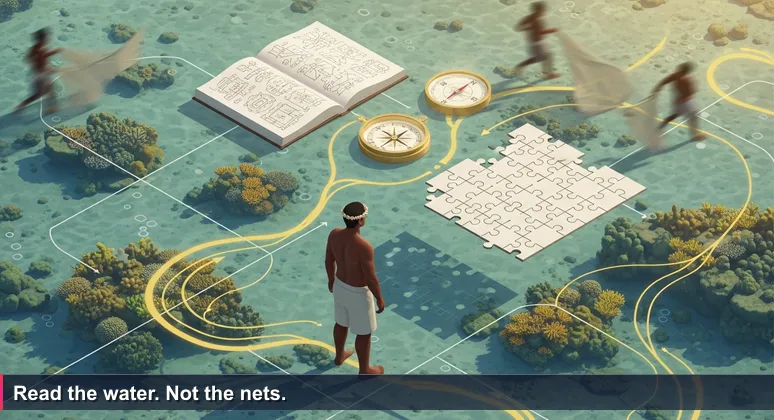
You began at the Apia fish market, watching the fisherman who reads the current instead of casting blindly. Now it is time to translate that patience into deliberate action. The path from where you stand to a thriving AI career follows a clear sequence of steps, each building on the last.
This week, choose your career path from the five outlined earlier - Data Scientist, ML Engineer, AI Product Manager, MLOps Engineer, or Applied Researcher - based on your existing skills and interests. Assess your current knowledge of Python, SQL, and statistics, then identify your gaps. If structured learning suits you, enroll in Nucamp's AI Essentials for Work bootcamp for 15 weeks at WST 9,671 or the Solo AI Tech Entrepreneur program for 25 weeks at WST 10,746 - both offer monthly payment plans that remove the barrier of upfront cost.
"It offered affordability, a structured learning path, and a supportive community of fellow learners." - Nucamp graduate
Within your first 90 days, complete a small project using a Samoan dataset - climate data from the Meteorological Service, open data from SPC, or telecommunications usage patterns - and publish your code and results on GitHub. Attend at least one regional tech event, whether a USP seminar, UNESCO bootcamp, or SPC digital transformation workshop. Join Nucamp's community-based learning sessions in Apia to connect with peers on the same journey.
By the end of your first year, apply for entry-level roles at Digicel Samoa, MCIT, or NUS. Your portfolio should include at least two live projects that demonstrate you can solve Pacific-specific problems, not generic academic exercises. Network with regional employers at SPC and UNDP Pacific. The employment rate for bootcamp graduates stands at approximately 78% (Course Report), with career services providing 1:1 coaching, portfolio development, mock interviews, and job board access to support your transition.
Your AI career built from Samoa in 2026 will not look like the ones your peers are building in New York or London. It will be grounded in Pacific realities - cyclone modeling, fisheries management, digital government for dispersed island populations. That is not a limitation. It is your competitive advantage. The fishermen who catch the most do not cast more lines. They read different water. Start reading yours.
Frequently Asked Questions
Do I need to study abroad to get a quality AI education?
No. USP's new Bachelor of AI (first in the region) and Nucamp's bootcamps like AI Essentials for Work at just over WST 9,671 offer world-class training locally. You can build competitive skills entirely from Samoa without leaving home.
What salary can I expect as an AI professional in Samoa?
Entry-level local roles pay 45,000-75,000 WST/year, while remote contracting with Australian or New Zealand firms can reach 150,000-300,000+ WST. Globally, AI jobs command a 56% salary premium over non-AI roles.
Which local employers are hiring for AI roles in 2026?
Digicel Samoa, Vodafone Samoa, SamoaTel, the Ministry of Communication and Information Technology (MCIT), the Secretariat of the Pacific Community (SPC), and universities like NUS and USP are all actively recruiting. Startups like SkyEye Samoa also provide opportunities.
How quickly can I transition into an AI career if I start now?
With intensive bootcamps like Nucamp's Solo AI Tech Entrepreneur (25 weeks, around WST 10,746), you can build a portfolio in 6 months. Many people land entry-level roles within a year by combining the program with project work on Pacific datasets.
Is there enough demand for AI in Samoa to build a long-term career?
Absolutely. The government has made AI a strategic priority, regional bodies like SPC fund climate and fisheries AI projects, and telecom companies are expanding their analytics teams. Plus, remote contracting with Australia and New Zealand offers a huge earning ceiling.
Learn how to make your tech salary work in Samoa with this in-depth resource on living costs and income.
Find out which AI startups are leading innovation in Samoa.
Looking for the top women in tech groups in Samoa? This guide covers the best resources.
Learn about scholarships and grants for tech training in Samoa in this comprehensive guide.
Discover which Samoa coworking spaces rank highest for freelancers.

Irene Holden
Operations Manager
Former Microsoft Education and Learning Futures Group team member, Irene now oversees instructors at Nucamp while writing about everything tech - from careers to coding bootcamps.