









Cost of Living vs Tech Salaries in Taiwan in 2026: Can You Actually Afford It?
By Irene Holden
Last Updated: April 25th 2026
Key Takeaways
Yes, you can afford Taiwan in 2026, but only if you align your salary tier with the right city. An entry-level developer earning NT$1.35M can live comfortably in Hsinchu with affordable rent, while the same salary in Taipei would require roommates. For senior engineers at TSMC or MediaTek earning NT$3.5M, Taiwan offers high savings potential, especially with the Gold Card's tax benefits.
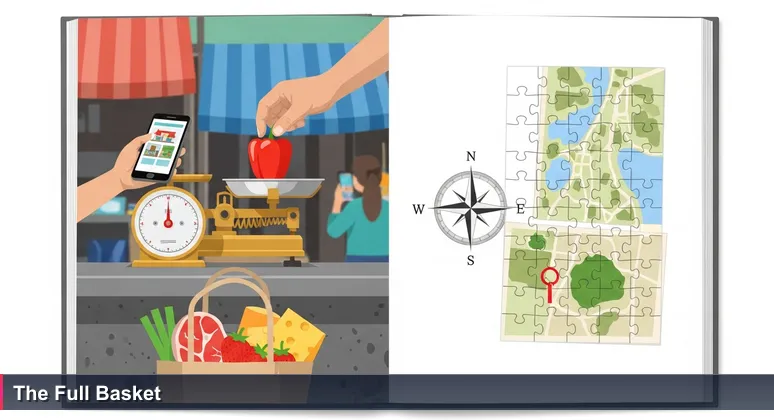
You watch the brass needle settle at NT$16 for that single red pepper, and for a moment, the story writes itself. Taiwan is the land of cheap street food, NT$30 MRT rides, and NT$100 lunch boxes. Every expat guide, every forum post, every well-meaning friend who has already moved here will tell you the same thing. The narrative is seductive, frictionless, and deeply incomplete.
The full shopping basket - imported beef, Australian cheddar, a six-pack of craft beer - sits on the concrete floor beneath the counter, unweighed. That single bell pepper is Taiwan’s favorite economic story, one that Taiwan Housing’s cost analysis identifies as dangerously misleading for anyone making a relocation decision. It’s not that the cheap stuff is fake. It’s that the scale only measures what you want to see.
By 2026, two economies run in parallel across Taiwan. One is the economy of the NT$16 pepper - accessible, humane, the kind of math that makes personal finance bloggers swoon. The other is the economy of the beef, the cheese, and the rent - items that have quietly doubled while no one was watching the needle. According to Expat Focus’s Taiwan cost guide, consumer goods and imported groceries now carry price tags comparable to Japan and Singapore, erasing the traditional cost advantage for anyone whose lifestyle extends beyond the night market.
The writer’s realization - that the single most important variable in your Taiwan budget isn't where you eat, but where you work - hits differently when you understand the scale is rigged from the start. For tech workers weighing a move, the question isn't whether Taiwan is cheap. It’s whether your salary tier matches the basket you’re actually carrying.
In This Guide
- The Incomplete Scale
- The 2026 Reality Check
- What Tech Workers Actually Earn in 2026
- The Housing Variable
- Monthly Budgets by Salary Tier
- The Gold Card Strategy
- Your First Step: A Bootcamp Bridge
- Where the Jobs Are
- Hidden Costs That Change the Math
- Yes, You Can Afford It - If You Choose Correctly
- Weighing the Full Basket
- Frequently Asked Questions
Taiwan's AI industry is booming in 2026 - this guide tells you everything you need to know to get started.
The 2026 Reality Check
In April 2026, a single statistic cracked the complacent narrative wide open. Wedbush’s 2026 Cost of Living Rankings confirmed what anyone hunting for a Taipei apartment had already suspected: the city’s cost of living had officially surpassed Tokyo’s for the first time on record. The news sent a quiet tremor through the expat community - not panic, but the unsettling feeling that the ground had shifted while everyone was still quoting last decade’s price tags.
The deeper wound, documented by Followin’s analysis of Taiwanese wages, was that purchasing power was falling behind both Japan and South Korea. Inflation in housing and imported goods had accelerated faster than local salary bands adjusted. For a mid-level software developer earning NT$1.2 million annually at a local hardware firm, Taipei’s rent-to-income ratio had started to look genuinely uncomfortable - not at the crisis point of London or San Francisco, but enough to cancel the annual trip to Hokkaido.
The divergence is stark when you zoom into actual paychecks. A senior data scientist at a multinational R&D center earning NT$3.5 million annually finds the math still works beautifully in Taipei. A mid-level developer at a local hardware firm earning NT$1.2 million faces a very different equation. The wedge is driven by the fact that global firms like Google, Microsoft, and TSMC’s AI labs pay 40% to 60% above local market averages, according to BRIGENAI’s guide to Taiwan living costs - creating a two-tiered workforce sharing the same city but living in different financial realities.
The headline is not that Taiwan is expensive. The headline is that Taiwan’s affordability is now conditional. It depends entirely on which currency you’re paid in, which company you work for, and which city you choose. The cheap scallion pancakes are still real. But they no longer tell the whole story.
What Tech Workers Actually Earn in 2026
The salary landscape in Taiwan's tech sector is more stratified than most realize, with a wide gulf between what local firms and global employers pay for the same title. According to SalaryExpert's 2026 software developer report, the spread between entry-level and senior positions spans nearly a million New Taiwan Dollars annually - a gap that determines whether you're living comfortably in Daan or stretching to afford a studio in Neihu.
| Role | Entry (1-3 yrs) | Average | Senior (8+ yrs) |
|---|---|---|---|
| Software Developer | NT$1.35M | NT$1.92M | NT$2.19M |
| Data Scientist | NT$1.04M | NT$1.22M | NT$2.13M+ |
| IT Professional | NT$835K | NT$1.15M | NT$1.31M |
These market averages, however, tell only part of the story. Levels.fyi's data scientist salary page for Taiwan reveals that compensation at global tech firms - Google, Microsoft, TSMC's AI labs, and MediaTek's R&D centers - can run 40% to 60% higher than local market rates. A senior engineer at TSMC's Hsinchu campus or MediaTek's headquarters can expect total compensation packages pushing toward NT$3 to 4 million, placing them in a completely different financial tier than peers at local hardware firms.
The single most important variable in your Taiwan budget isn't where you eat lunch or whether you take the MRT. It's which employer signs your offer letter. The difference between a local salary and a global firm salary in Taiwan is the difference between roommates in Banqiao and a 3BR in Daan - same country, same skills, entirely different financial reality.
The Housing Variable
Rent is where Taiwan's two-speed economy becomes visible on a street-by-street level. A senior developer earning NT$235K monthly can comfortably afford a NT$50K 3BR in Daan - roughly 21% of take-home pay, well within the recommended 30% housing cap. An entry-level developer earning NT$74K faces a very different equation: a NT$25K studio in Neihu consumes 34% of after-tax income, leaving tight margins for everything else.
| Location | Studio/1BR | 3BR Apartment |
|---|---|---|
| Taipei Central (Xinyi, Daan) | NT$20,000 - 35,000 | NT$50,000 - 85,000+ |
| Taipei Tech (Neihu, Nangang) | NT$18,000 - 30,000 | NT$45,000 - 65,000 |
| New Taipei (Banqiao, Zhonghe) | NT$14,000 - 22,000 | NT$30,000 - 50,000 |
| Hsinchu Science Park | NT$12,000 - 18,000 | NT$28,000 - 45,000 |
| Kaohsiung (Gushan, Zuoying) | NT$8,000 - 14,000 | NT$20,000 - 35,000 |
According to Asia Lifestyle Magazine's Taipei Expat Guide, the gap between Taipei's premium districts and the satellite tech hubs continues to widen. A studio in Daan costs more than a 3BR in Hsinchu's Zhubei district - yet both are within a 30-minute HSR ride of each other. The difference isn't lifestyle inflation; it's city selection, and it can save or cost you NT$200,000 annually before you've bought a single meal.
The Taipei Rental Guide 2026 notes that the most dramatic price jumps have occurred in Neihu and Nangang, where ASUS, Acer, and Microsoft's AI teams have expanded rapidly. Rents in these tech corridors rose 15% between 2024 and 2026, compressing budgets for mid-level developers who chose proximity to work over commuting from cheaper districts. The smarter play for many: live in New Taipei or Hsinchu, keep the 30-minute commute, and bank the difference.
Monthly Budgets by Salary Tier
The most useful question for any tech worker considering Taiwan isn't whether the country is cheap or expensive. It's whether your specific salary can support your specific lifestyle in your specific city. The answer shifts dramatically across three common salary tiers, with take-home numbers derived from Ramco's 2026 payroll updates, which account for Taiwan's progressive tax system, National Health Insurance, and labor insurance contributions.
- Entry-Level (NT$1M/year → ~NT$74K/month take-home): A studio in New Taipei or Hsinchu costs NT$14,000 - about 19% of income. Food and transport are manageable. Savings of NT$20,000/month are realistic. The catch: this lifestyle assumes a 20-30 minute commute and no central Taipei rent. Roommate is optional, not required.
- Mid-Level (NT$1.8M/year → ~NT$128K/month take-home): A comfortable 1BR in Neihu or Nangang costs NT$25,000 - roughly 20% of income. Regular restaurant dining, scooter ownership, and international travel 2-3 times per year are all achievable. This is the sweet spot for single-person comfort anywhere in Taiwan.
- Senior/Lead (NT$3.5M/year → ~NT$235K/month take-home): A 3BR in Daan or Xinyi costs NT$60,000 - about 26% of income. Fine dining, imported groceries, and a car are all feasible. Even with NT$30,000/month for childcare, the remaining NT$60,000 in savings and NT$40,000 in discretionary spending creates genuine wealth-building capacity.
According to Numbeo's cost of living data for Taiwan, a family of four excluding rent needs roughly NT$105,000 per month. That number becomes manageable only at the mid-level tier and comfortable at the senior tier, but it crushes entry-level budgets. The difference between these tiers isn't lifestyle inflation - it's the gap between surviving and thriving, and it hinges entirely on which employer writes your paycheck.
The Gold Card Strategy
Taiwan's Employment Gold Card has become the most discussed work permit among tech professionals for one reason: it enables the most lucrative salary arbitrage in Asia. The card requires a monthly salary of at least NT$160,000, but the real prize, as documented by Globevisa's 2026 Gold Card guide, is a 50% tax exemption on income exceeding NT$3 million annually. For a senior engineer earning NT$3.5 million, this effectively drops the tax rate from roughly 22% down to 12-15%, adding NT$200,000 to NT$300,000 to annual take-home pay.
The strategic play that experienced professionals discuss openly is keeping a remote US or EU salary while living in Taiwan on a Gold Card. A remote engineer earning US$120,000 per year - roughly NT$3.9 million - pays effectively 12-15% in Taiwan taxes while spending NT$60,000 monthly on a comfortable Taipei lifestyle. The remaining NT$2.5 million+ flows directly into savings and investments. As Shareuhack's Gold Card versus Digital Nomad Visa comparison notes, Taoyuan has become increasingly popular among remote workers who value quick access to Taipei and international flights without paying central Taipei rent premiums.
The Gold Card doesn't just optimize taxes - it also unlocks a path to permanent residency that bypasses the traditional employer-sponsored route. Experts at Talent Taiwan argue that 2026 represents a critical window, with relaxed talent laws and new fast-track permanent residency creating "a once-in-a-decade opportunity to enter Taiwan's tech ecosystem at favorable terms." The combination of low taxes, affordable living costs, and a clear path to residency makes the Gold Card the single most powerful financial instrument available to senior tech professionals moving to Taiwan.
Your First Step: A Bootcamp Bridge
Reading about NT$3.5 million salaries and Gold Card tax exemptions can feel like watching a feast from outside the restaurant window. If you're currently in a non-tech role or early in your career, that gap between where you are and where you need to be is real - but it's also bridgeable in 16 to 25 weeks for less than two months of Taipei rent.
Nucamp's Back End, SQL and DevOps with Python program runs 16 weeks at NT$70,092, covering the foundational skills Taiwanese employers consistently demand - from TSMC's data centers to MediaTek's software teams. For those targeting the AI boom directly, the Solo AI Tech Entrepreneur Bootcamp (25 weeks, NT$131,340) teaches LLM integration, prompt engineering, and building AI-powered products. Both programs offer monthly payment plans that don't require quitting your current job.
According to Course Report, Nucamp maintains a ~78% employment rate, with one student noting: "It offered affordability, a structured learning path, and a supportive community of fellow learners." The return on investment is striking: a NT$70,092 tuition investment can lead to an entry-level tech salary of NT$1-1.3 million annually - roughly a 15-20x return in your first year of employment. That's the kind of math that turns financial anxiety into a concrete action plan, particularly for professionals currently in unrelated fields who want to enter Taiwan's growing AI startup ecosystem in Taipei and Hsinchu.
The key advantage: these programs don't require relocation during study. You complete coursework remotely while living in your current city with your current rent, making the career shift while your expenses remain stable. Think of it as placing the missing ingredient on the scale - the one that finally makes the full basket's weight manageable.
Where the Jobs Are
Your budget depends not just on what you earn, but on where you work. Taiwan's tech sector clusters in specific cities, each with its own cost profile and employer mix. Choosing the right geography can be worth NT$200,000 annually in savings alone.
Hsinchu, the Silicon Valley of Taiwan, hosts TSMC's global headquarters, MediaTek's R&D center, and hundreds of semiconductor firms feeding talent from National Tsing Hua University and National Yang Ming Chiao Tung University. With studio rents running NT$12,000 to NT$18,000 - roughly 60% cheaper than central Taipei - mid-level engineers at TSMC or MediaTek enjoy the best savings-to-expense ratio in the country. The HSR makes Taipei a 30-minute commute for weekend social life while keeping weekday costs low.
Taipei's tech corridors offer higher salaries but steeper rent. Neihu Technology Park concentrates the R&D centers of Acer, ASUS, and a growing ecosystem of AI and SaaS startups. Nangang has emerged as the hub for Microsoft's Azure AI operations and Google's engineering teams. Xinyi holds the regional headquarters of most multinational tech firms. As Asia Lifestyle Magazine's Taipei Expat Guide notes, "transport and healthcare are genuinely affordable by any regional standard" - but housing consumes the difference.
"Transport and healthcare are genuinely affordable by any regional standard." - Taipei Expat Guide
Beyond the two main hubs, Taoyuan hosts Hon Hai (Foxconn) and Quanta Computer near the international airport, popular among remote workers valuing flight access. Taichung's Central Taiwan Science Park offers rent roughly half of Taipei's with growing AI and precision machinery startups. Kaohsiung, home to TSMC's newest fab, provides the cheapest entry point at NT$8,000 to NT$14,000 for a studio, trading Taipei's nightlife for a seaside lifestyle and significantly higher savings rates. As Nikkei Asia reports, Taiwan's red-hot tech economy creates stark geographic winners and losers - your job location determines your financial reality more than your job title.
Hidden Costs That Change the Math
Every budget guide mentions rent and food. Few discuss the costs that quietly reshape a tech worker's financial reality in Taiwan, turning a comfortable budget into a tight squeeze by year-end.
Summer electricity is the first surprise. Taiwan's air conditioning runs from June through September, and utility bills that average NT$2,000 to NT$3,000 per month in winter can double to NT$4,500 to NT$5,000. Budget for it in advance, or watch your savings line shrink every hot month. Scooter culture is equally sneaky - in Hsinchu and Kaohsiung, owning a scooter isn't optional, it's how you get to work. A used scooter costs NT$40,000 to NT$80,000 upfront, and insurance, parking, and maintenance add NT$1,500 to NT$2,500 monthly to your transport budget.
Imported goods carry a significant tax premium. Cheese, wine, electronics, and cars are hit with Taiwan's VAT and import duties, making them similar in price to Japan and Singapore, according to Expat Arrivals' cost of living guide. A block of imported cheddar that costs US$5 in the US runs NT$350 (US$11) in Taipei. These small differences compound into thousands per month for anyone who isn't eating exclusively at night markets.
The largest hidden cost, however, is international school tuition. If you have children, private international schools range from NT$400,000 to NT$1,000,000+ annually per child. Even senior engineers earning NT$3.5 million will feel that weight. The alternative - local bilingual schools at NT$8,000 to NT$15,000 per month - requires Chinese proficiency from both parent and child. This single variable can flip a comfortable senior-level budget into a break-even exercise, making it the most consequential hidden cost in the entire financial equation.
Yes, You Can Afford It - If You Choose Correctly
The honest answer is a conditional yes - and the condition is simpler than most expect. Align your city with your salary tier, and the math works beautifully. Mismatch them, and you'll wonder why everyone else seems to find Taiwan so affordable.
If you're an entry-level developer earning NT$74K per month in Taipei, you will need roommates or a long commute. That's not comfortable. But take that same salary to Hsinchu, Taoyuan, or Kaohsiung, and you buy a private studio, generous savings, and a genuinely pleasant lifestyle. If you're a mid-level engineer earning NT$128K per month, you're comfortable anywhere. Choose Taipei for career networking and urban energy, or Hsinchu for maximum savings. If you're a senior engineer earning NT$235K per month, you're rich by Taiwanese standards - the question isn't whether you can afford Taiwan, but whether you're maximizing the opportunity through the Gold Card's tax exemption or a remote US salary.
Talent Taiwan's strategic analysis argues that relaxed talent laws, including the Gold Card and fast-track permanent residency, make 2026 a critical window. The piece notes that "this is a once-in-a-decade opportunity to enter Taiwan's tech ecosystem at favorable terms." For senior engineers specifically, the Gold Card adds NT$200,000 to NT$300,000 annually in tax savings, while a remote US salary can multiply take-home pay by 3 to 4 times against local costs.
"This is a once-in-a-decade opportunity to enter Taiwan's tech ecosystem at favorable terms." - Talent Taiwan
The answer is almost certainly yes - but only for the right person, in the right city, at the right career stage. As BRIGENAI's 2026 living cost guide notes, Taiwan still offers high affordability compared to Singapore or Tokyo when you earn the right salary. The fear of unaffordable Taiwan disappears when you stop weighing only the cheap stuff and finally put the whole basket on the scale - housing, career path, tax strategy, and city selection all together.
Weighing the Full Basket
Back at the wet market, the vendor looks at you and asks if you want anything else. You hand up the full bag from the floor - the imported beef, the Japanese strawberries, the Australian cheese. Each item hits the scale. The needle swings higher than the bell pepper ever did. The total comes to NT$2,180. It's still a good deal by Tokyo or Singapore standards, but it's not the same story as the NT$16 pepper.
Taiwan's tech opportunity in 2026 works exactly the same way. The cheap scallion pancakes and NT$30 MRT rides are real. The National Health Insurance is genuinely excellent and affordable. But the complete financial equation - housing, career path, tax strategy, and city selection - requires seeing the whole basket. Pacific Prime's 2026 cost analysis confirms that a single expat living comfortably needs roughly NT$58,000 to NT$80,000 per month, while a family of four excluding rent requires NT$105,000 - numbers that shift dramatically depending on whether you're paid in local or global currency.
The question isn't whether Taiwan is cheap or expensive. It's whether your basket matches your scale. For a senior engineer at a global firm with a Gold Card in Hsinchu, the answer is a resounding yes. For an entry-level developer in a Taipei studio, the answer requires more careful math. Both are valid paths, but they lead to different destinations.
Put everything on the scale. Then decide. The answer is almost certainly yes - if you choose the right city, the right employer, and the right strategy. And if you're not there yet, there are affordable, proven paths from a 16-week bootcamp to a Taiwan tech salary that changes the weight of your entire basket.
Frequently Asked Questions
I keep hearing Taipei is getting expensive. Can a junior developer still afford to live there?
Yes, but you'll need to live outside central Taipei or with roommates. An entry-level software developer earning NT$74K/month take-home will find a studio in Neihu or Nangang consuming about 34% of income - tight but doable with budgeting.
How much should I earn to live comfortably in Taiwan's tech hubs?
It depends on the city. In Taipei, a take-home of NT$128K/month (mid-level) allows a comfortable 1BR and good savings. In Hsinchu or Taichung, the same salary goes further - rent is 30-50% cheaper, so you can save more.
I've heard about the Gold Card's tax break. How much does it actually save me?
The Gold Card offers a 50% tax exemption on income over NT$3 million. For a senior engineer earning NT$3.5M, it can add NT$200-300K to annual take-home - effectively cutting your tax rate from ~22% to 12-15%.
Is it better to work in Hsinchu or Taipei for maximizing savings?
If saving is your priority, Hsinchu wins. Salaries at TSMC or MediaTek are competitive, but rent is 30-40% lower than Taipei. For example, a mid-level engineer earning NT$128K/month can save over NT$40K/month in Hsinchu versus perhaps NT$35K in Taipei.
What are the hidden costs that catch expat tech workers off guard in Taiwan?
Summer air conditioning can double your electricity bill to NT$5,000/month. Scooter ownership (common in Hsinchu/Kaohsiung) adds NT$1,500-2,500/month. And imported goods like cheese or electronics carry a premium - so budget for lifestyle choices that differ from local standards.
Get the full scoop on Taiwan's AI meetups, networking tips, and cultural norms in this complete guide.
This guide to low-cost tech training in Taiwan includes ISA options and employer tuition reimbursement.
Check out Taiwan's top 10 AI startups in 2026 that are reshaping the industry.
For a comprehensive list, see the top 10 AI tech bootcamps in Taiwan for 2026.
Find out which sectors are hiring cybersecurity talent in Taiwan in 2026.

Irene Holden
Operations Manager
Former Microsoft Education and Learning Futures Group team member, Irene now oversees instructors at Nucamp while writing about everything tech - from careers to coding bootcamps.