









Is Taiwan a Good Place for a Tech Career in 2026?
By Irene Holden
Last Updated: April 25th 2026
Quick Explanation
Taiwan is an exceptional place for a tech career in 2026, but only if you're a deep-tech specialist - think semiconductor design, AI hardware, or embedded firmware. Top specialists at firms like Nvidia earn total compensation exceeding NT$7 million, and AI/ML researchers command NT$1.5 to NT$3.5 million. But for generalist software engineers outside multinationals, the market is thin and salaries mediocre, making specialization the only path to success.
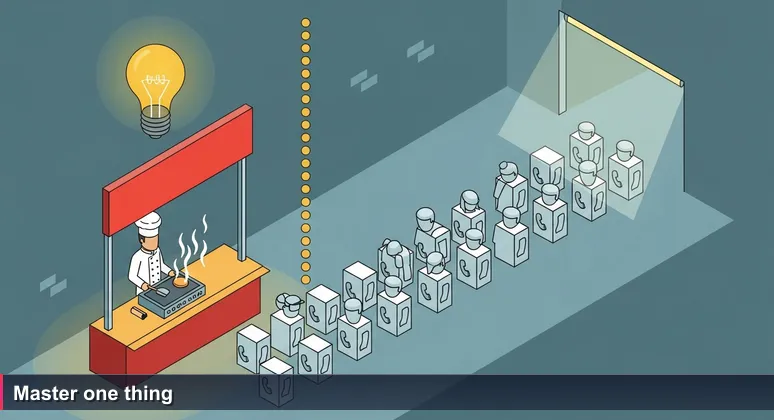
The line stretches 30 people deep into the fluorescent-lit alley. No one checks their watch. They know the chef behind that smoking griddle makes exactly one dish - and that's precisely why they're here.
Taiwan's 2026 tech job market works the same way. The generalists who polished a "tech professional" resume and hoped for the best are still waiting. The specialists who committed to one deep, precise skill are already inside, eating well. Robert Walters Taiwan confirms that hiring in 2026 is defined by "focus rather than scale," with companies prioritizing roles that convert expertise into measurable business outcomes.
Think of Taiwan's tech economy not as a buffet but as a night market. The stalls that thrive don't serve everything - they serve the single best version of one thing. With Taiwan anchoring over 90% of advanced semiconductor manufacturing globally, the job market isn't looking for well-rounded generalists. It's looking for the person who spent years perfecting one skillet. Since Taiwan's statistics office hiked its 2026 economic growth forecast to 7.71% - driven entirely by AI semiconductor demand - that singularity has only intensified.
Over 70% of organizations in Taiwan expect to formally integrate AI into operations by late 2026. This isn't a gentle transition. It's a structural transformation where generalist software roles face stagnant demand while deep-tech specialists command premiums. The question isn't whether to come to Taiwan - it's what will you be famous for?
What We Cover
- Taiwan's 2026 Tech Boom: A Market for Obsessive Specialists
- Why Specialists Win: The Great Divergence
- The Three Pillars: Clusters, Pay, and Visas
- Your Salary in Taiwan: From NT$1M to NT$7M
- Who Should Come? The Ideal Candidate Profile
- Taiwan vs. Other Asian Tech Hubs
- How to Land a Job: Visas, Credentials, Platforms
- The Real Tradeoffs: Language, Hours, Air Quality
- Common Questions
Taiwan's AI industry is booming in 2026 - this guide tells you everything you need to know to get started.
Why Specialists Win: The Great Divergence
Two tech professionals move to Taipei in early 2026. One is a full-stack web developer with three years of experience and a portfolio of fifteen projects. The other is an embedded firmware engineer who spent two years mastering advanced packaging protocols for AI accelerators.
The first professional finds a market of "mediocre" salaries, as Reddit communities in Taiwan describe it - unless they land at a tier-1 multinational like Google. The second receives multiple offers, including a 20-30% bump for moving into a critical leadership role. Levels.fyi data shows Nvidia hardware engineers in Taiwan earning between NT$1.69M and NT$7.13M+ in total compensation.
This divergence defines Taiwan in 2026. The island is not a general-purpose tech hub like Singapore or London. It is a deep-tech powerhouse where semiconductor, AI, and hardware specialists thrive while software generalists struggle to find their footing. Adding to the momentum, Aaron Freed, "The Recruiting Guy," highlights that US companies increasingly turn to Taiwan for remote talent because of a 46% cost savings compared to San Francisco salaries - without sacrificing technical quality.
The Three Pillars: Clusters, Pay, and Visas
Taiwan's tech clusters are not interchangeable. Each demands a different kind of expertise, offers distinct compensation brackets, and provides unique lifestyle tradeoffs. Understanding the map is half the battle.
| Cluster | Specialization | Annual Salary (NT$) | Housing Cost |
|---|---|---|---|
| Hsinchu Science Park | TSMC, MediaTek - chip architecture, advanced packaging | NT$1.2M-NT$2.8M | 30-40% cheaper than Taipei |
| Taipei (Neihu & Nangang) | Google's largest hardware engineering hub outside the US | NT$1.5M-NT$3.5M+ | NT$20K-NT$35K/month |
| Taichung | 840+ startups, precision optics, green energy | NT$1.0M-NT$2.0M | Moderate |
| Kaohsiung | Foundry expansions, Southern Taiwan Science Park | NT$1.0M-NT$1.8M | Lowest of the four |
The second pillar - compensation - rewards deep specialization. AI/ML researchers and senior hardware engineers at top firms clear NT$3.5M, while mid-tier software generalists outside multinationals face a stagnant market below NT$1.5M. Robert Walters Taiwan notes that skilled professionals moving into new hardware or AI roles can see increases of 10-20%, and up to 30% for critical leadership positions.
The third pillar - immigration - has been streamlined dramatically. The Employment Gold Card combines work permit, resident visa, and alien resident certificate into a single document. Over 12,000 have been issued, offering an open work permit not tied to an employer and a fast track to permanent residency after three years. Recent updates to the Foreign Professionals Act even allow graduates from the top 200 global universities to apply for work permits without a local sponsor - making Taiwan unusually accessible for specialized talent.
Your Salary in Taiwan: From NT$1M to NT$7M
The compensation hierarchy in Taiwan's 2026 tech market is brutal in its clarity. At the top, AI/ML researchers and senior hardware architects pull NT$3.5M to NT$7.13M+ in total compensation. At the bottom, software generalists outside tier-1 multinationals fight for roles under NT$1.5M. The spread isn't a gap - it's a canyon.
- AI/ML Researcher & Data Scientist: NT$1,500,000 - NT$3,500,000+
- Embedded / Firmware Engineer: NT$1,200,000 - NT$2,800,000
- Hardware Engineer (top-tier IC design): NT$1,300,000 - NT$2,200,000+
- Software Engineer (mid-tier): NT$1,000,000 - NT$2,500,000
The standout outlier: Levels.fyi reports Nvidia hardware engineers in Taiwan earning up to NT$7.13M+ in total compensation - a figure that rivals senior roles in Silicon Valley while living in a city where an unlimited monthly transit pass costs only NT$1,200.
Cost of living changes the math significantly depending on your city. A one-bedroom in central Taipei runs NT$20,000-NT$35,000/month, but Glassdoor's software engineer salary data for Taipei shows the median hovers near NT$1.3M - a tight squeeze. Move to Hsinchu or Kaohsiung, and equivalent housing costs 30-40% less, stretching that specialist's paycheck further. International school tuition adds another NT$700,000+ per year for families. The same specialist salary that feels comfortable in Taichung can feel tight in Taipei's premium rental market.
Who Should Come? The Ideal Candidate Profile
Taiwan's tech market is not a place for vague ambitions. The island's deep-tech ecosystem rewards precision with high compensation and career velocity, but punishes indecision with stagnant salaries. Knowing which side of the line you fall on is the first honest career decision you'll make.
| Dimension | Ideal Candidate | Reconsider Candidate |
|---|---|---|
| Career Stage | Early-career with bootcamp or degree in AI/ML, embedded systems, or semiconductor design | Early-career with vague "tech" interest, no demonstrated specialization |
| Skill Type | Deep, narrow expertise: advanced packaging, LLM implementation, firmware, high-speed circuit design | Generalist software engineering: web, mobile, general backend outside tier-1 companies |
| Language Commitment | Willing to learn Mandarin to conversational level for career mobility | Unwilling to learn Mandarin - career growth feels "paralyzed" in local firms |
| Compensation Goal | Values moderate base + high bonuses with lower cost of living | Expects Singapore-style base salaries; Taiwan's "mediocre" software pay may disappoint |
As discussions on r/taiwan consistently warn, software engineers without specialization face a thin market. But for the specialist who has chosen a dish before arriving - the firmware engineer dreaming in advanced packaging, the AI researcher who can implement models from scratch - Taiwan offers influence disproportionate to its size. The night market rewards the chef who knows exactly what they make, not the one serving everything.
Taiwan vs. Other Asian Tech Hubs
Taiwan occupies a unique position in Asia's tech hierarchy - not a general-purpose hub like Singapore, but the world's undisputed center for deep-tech hardware and semiconductor mastery. The choice of where to build your career depends entirely on what you want to build.
| Metric | Taiwan | Singapore | Shenzhen | Seoul |
|---|---|---|---|---|
| Manufacturing | World Leader | High-end only | Hyper-fast prototyping | High-end memory |
| Compensation | Moderate (high bonuses) | Highest in Asia | Moderate | High |
| Cost of Living | Lowest of the four | Extreme | Moderate | High |
| Innovation Focus | Deep Tech / Semiconductor | Fintech / Software | Commercial Hardware | Consumer Electronics |
The BBC's analysis of Taiwan and the next industrial revolution frames the island as a unique case: a place where hardware and deep-tech mastery create career trajectories unavailable elsewhere. If you want to be at the center of global semiconductor and AI infrastructure - the physical layer that powers every AI application - Taiwan is unmatched. If you want high base salaries in fintech or software-as-a-service, Singapore wins. If you want rapid prototyping at scale for consumer hardware, Shenzhen calls.
Regional comparisons confirm the tradeoffs. Singapore pays the highest compensation in Asia, but with extreme cost of living. Taiwan offers lower base salaries but dramatically lower housing costs - especially outside Taipei. For the engineer who wants to touch the silicon, the Taiwan pitch is uniquely compelling.
How to Land a Job: Visas, Credentials, Platforms
Landing a tech job in Taiwan requires the same precision the market rewards in its specialists. You don't stumble into a role at TSMC or MediaTek - you arrive with a plan as sharp as your skillet. Here is the five-step path that converts intent into offer.
- Choose your dish before you arrive. Target high-growth niches: high-speed circuit design, embedded firmware, LLM implementation, or AI infrastructure engineering. These command the highest premiums in 2026.
- Build the credential. Structured training in these specific areas is the most efficient path. Look for programs that produce demonstrable, applied skill portfolios - Taiwan's market rewards evidence of mastery over generic degrees.
- Use the right platform. While LinkedIn works for multinationals, the largest local job board remains 104.com.tw. Mandarin-language profiles on 104 are essential for accessing domestic hardware and semiconductor firms that rarely post on Western platforms.
- Leverage the Gold Card. Taiwan has issued over 12,000 Employment Gold Cards, combining a work permit, resident visa, and alien resident certificate into one document. Apply before you have a job offer - the open work permit lets you search while on the ground, accessing the hidden market that never posts online.
- Choose your city deliberately. Taipei for multinational R&D and AI research. Hsinchu for semiconductor mastery. Taichung for startup energy. Kaohsiung for growth-stage manufacturing. Each offers different cost structures, lifestyle tradeoffs, and career trajectories.
Recent updates to the Foreign Professionals Act make the path even clearer. Talent Taiwan's analysis calls 2026 "a strategic moment to move to Taiwan," citing visa reforms that allow graduates from the top 200 global universities to apply for work permits without a local sponsor. The door is open. The question is whether you've prepared the dish it's looking for.
The Real Tradeoffs: Language, Hours, Air Quality
Taiwan's quality of life is exceptional by almost any metric - consistently ranked among the safest countries globally, with world-class healthcare and ultra-reliable fiber internet. But the professional reality carries tradeoffs that every foreign tech worker must weigh before committing.
- Language barrier is real. Without Mandarin, career growth feels "paralyzed" in local firms. As expats on Reddit consistently warn about the Taiwan software market, English-only roles exist primarily at multinationals like Google, Microsoft, and Nvidia. Outside those, senior leadership and cross-functional collaboration require Chinese fluency.
- Work culture varies dramatically. A Facebook discussion among foreigners in Taiwan captures the spectrum: professionals praise safety and healthcare while warning of "terrible" environments in small family-owned companies with long hours and "yelling" cultures. Domestic hardware firms often carry a "996 lite" culture pushing 10-12 hour days. Company culture varies immensely between multinationals, large domestic firms, and local startups.
- Air quality dips seasonally. Central and Southern Taiwan experience winter air quality issues, particularly in Taichung and Kaohsiung. Taipei generally fares better, but the tradeoff is higher housing costs - a one-bedroom in central Taipei runs NT$20,000-NT$35,000/month versus 30-40% less in Hsinchu.
The night market analogy holds here too: every stall has a cost. The chef doesn't just perfect one dish - they accept that some customers won't like scallion oil. Know your tradeoffs before you join the queue.
Common Questions
What salary can I expect as a software engineer in Taiwan in 2026?
It depends heavily on specialization. Generalist software engineers outside multinationals often face stagnant salaries around NT$1M-NT$1.5M, while AI/ML researchers and hardware engineers at firms like Nvidia or TSMC can earn NT$1.5M-NT$3.5M+. The key is deep expertise in semiconductor, AI, or embedded systems.
Do I need to speak Mandarin to work in Taiwan’s tech industry?
For multinationals like Google or Nvidia, English is sufficient, but at local firms Mandarin is essential for career growth and collaboration. Without it, you hit a ceiling - expats consistently warn that career progression feels 'paralyzed' in domestic companies without Chinese fluency.
How does the Employment Gold Card work for tech professionals?
The Gold Card combines a work permit, resident visa, and alien resident certificate, allowing you to work for any employer in Taiwan. Over 12,000 have been issued, and it offers a fast track to permanent residency after three years. You can even apply before securing a job, letting you search while on the ground.
Is Taiwan’s tech market better than Singapore’s for AI careers?
Taiwan excels in deep tech - semiconductors and AI infrastructure - with lower cost of living (e.g., Taipei housing NT$20K-NT$35K/month vs. Singapore’s extreme costs). Singapore pays higher base salaries in fintech and software but lacks Taiwan’s manufacturing dominance and focus on hardware innovation.
What specialization should I focus on to get hired in Taiwan?
Target skills in high-speed circuit design, embedded firmware, LLM implementation, or AI infrastructure engineering. These niche areas command 10-30% salary bumps and strong demand. Generalist web development roles are thin, while specialists at TSMC or MediaTek see abundant opportunities.
Discover the hidden cybersecurity jobs in Taiwan that most applicants overlook.
Taiwan government grants for tech training can cover up to 100% of tuition - learn how to apply.
This article ranks the best free tech training programs in Taiwan for 2026.
For a deep dive into Taiwan's women in tech ecosystem in 2026, read this listicle.
For a list of the best startups for junior developers in Taiwan, check out this article on top 10 tech startups hiring junior developers in Taiwan in 2026.

Irene Holden
Operations Manager
Former Microsoft Education and Learning Futures Group team member, Irene now oversees instructors at Nucamp while writing about everything tech - from careers to coding bootcamps.