









Top 10 Women in Tech Groups and Resources in Taiwan in 2026
By Irene Holden
Last Updated: April 25th 2026
Too Long; Didn't Read
The top women-in-tech groups in Taiwan are Taipei Women in Tech (TWiT) and Girls in Tech Taiwan, with TWiT leading as the largest hub with over 4,000 members and events drawing 700+ attendees from companies like TSMC and MediaTek. Girls in Tech offers mentorship and bootcamps focused on AI and semiconductor careers, while specialized groups like Lean In Network Taipei's IoT circle and TWIST for academics provide targeted support. These communities address mid-career retention and help women negotiate promotions in Taiwan's hardware-driven tech sector.
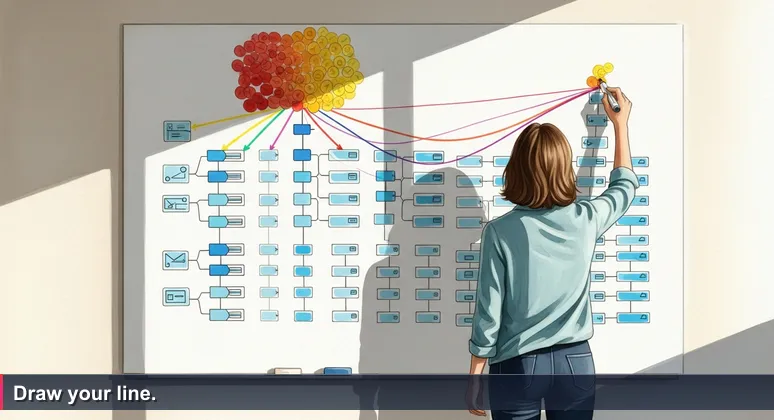
She drew a line between two dots on opposite sides of the whiteboard, and suddenly the entire system made sense. That's the moment most articles about "top lists" miss entirely. In a Taipei co-working space, this map represented nine distinct communities - from mentorship programs at TSMC to startup incubators in Hsinchu - but the real power wasn't in any single node. It was in the lines she drew between them.
Ranking inherently creates winners and losers, yet Taiwan's unique advantage isn't a single resource - it's the density of connections. The semiconductor pipelines of MediaTek and Hon Hai, the R&D intensity of Hsinchu Science Park, and the global talent pool converging in Taipei create overlapping networks that no straightforward leaderboard can capture. As Taiwan's tech industry actively taps its female talent pool amid a labour shortage, these connections become career infrastructure rather than just social events.
The ten resources that follow aren't isolated entries on a chart. They're nodes in an ecosystem stretching from ASUS and Acer's design studios to fully remote global mentorship programs accessible from any district in Taipei. The question isn't which one ranks highest. It's: which line will you draw?
Table of Contents
- Introduction
- Taiwan Experience Education Program (TEEP)
- Women Entrepreneurship Program (Taiwan)
- The Society of Taiwan Women in Science and Technology (TWIST)
- AnitaB.org Global Mentorship Program
- AIT TechGirls Exchange Program
- Ladies that UX Taipei
- Women Who Code Taipei Alumni
- Lean In Network Taipei
- Girls in Tech Taiwan
- Taipei Women in Tech (TWiT)
- Conclusion: Drawing Your Own Line
- Frequently Asked Questions
Taiwan's AI industry is booming in 2026 - this guide tells you everything you need to know to get started.
Taiwan Experience Education Program (TEEP)
For international women seeking a direct entry into Taiwan's semiconductor ecosystem, the Ministry of Education's TEEP program offers a structured bridge. It places students in professional internships at TSMC, MediaTek, and Hon Hai - companies that collectively drive the island's global hardware dominance. While not exclusive to women, the program actively recruits female candidates and provides structured mentorship during placement, addressing the critical gap of local industry exposure that often stalls mid-career retention for international talent.
Internships typically span 3-6 months with a monthly stipend between NT$15,000-25,000. Unlike many programs, English proficiency is sufficient for most positions, making the opportunity accessible to a broader global pool. Participants gain firsthand experience in Taiwan's hardware pipeline - from wafer fabrication to chip design - providing a foundation for long-term careers in the local tech landscape. Applications open twice yearly through the official TEEP portal.
The challenge TEEP addresses is specific: women often plateau when they lack deep relationships with Taiwan's major employers. By embedding participants directly into companies like MediaTek or inside TSMC's Hsinchu fabs, the program transforms abstract job prospects into real connections. For international talent considering a move to Taiwan's tech corridor stretching from Taipei to Hsinchu Science Park, TEEP provides both the foot in the door and the mentorship network to sustain momentum beyond the internship period.
Women Entrepreneurship Program (Taiwan)
This government-backed initiative has quietly become a launchpad for female founders building Taiwan's next generation of AI and hardware startups. Since 2020, it has supported over 200 women-led startups, with a growing emphasis on AI-driven solutions that align with the island's semiconductor and hardware strengths. The program provides three core assets:
- Mentorship and visibility through pitch events and one-on-one advisory sessions with experienced founders
- Seed funding connections via introductions to angel investors and corporate partners like MediaTek and Hon Hai
- Annual demo day in Taipei, attracting venture capital firms scouting for hardware-AI crossover talent
Eva Chen, CEO of Trend Micro, has noted that success in 2026 hinges on shifting toward AI-driven outcomes and subscription platforms rather than individual products. The Women Entrepreneurship Program aligns with this push by linking founders directly with corporate R&D pipelines in Hsinchu and Taipei. Participants gain exposure to the unique intersection of Taiwan's hardware ecosystem and software innovation, a combination difficult to replicate elsewhere in Asia.
The program tackles a deeper cultural challenge: risk-taking in entrepreneurship remains less normalized for women in Taiwan compared to peers in Singapore or Bangalore. By providing structured support and visible role models, it reshapes founder identities from outliers into expected career paths. Applications typically open in Q1 through the Small and Medium Enterprise Administration (SMEA), with English-language tracks increasingly available as Taiwan's startup scene globalizes.
The Society of Taiwan Women in Science and Technology (TWIST)
For women navigating academic and research tracks across Taiwan's university corridor from Taipei to Tainan, TWIST offers a rare cross-disciplinary network. The organization explicitly welcomes all genders while maintaining a sharp focus on career exchanges, forums, and scholarship opportunities that target the specific bottlenecks women face in STEM academia. Its annual TWIST Forum draws 300+ attendees and regularly features senior scientists from Academia Sinica and National Taiwan University, providing visibility into research pathways that often remain opaque to junior scholars.
The membership structure is deliberately accessible: NT$500 for students and NT$1,000 for professionals annually. Beyond networking, TWIST offers periodic financial awards for female technologists at critical junctures - funding conference travel, bridging gaps between fellowships, or supporting pilot research projects. These awards directly counter the financial friction that disproportionately derails women's academic momentum after PhD completion. Membership details and award cycles are available through TWIST's official site.
The challenge TWIST explicitly addresses is the "leaky pipeline" phenomenon in Taiwan's research ecosystem. Mid-career academic retention drops sharply after PhD completion, particularly for women balancing teaching loads, lab management, and family expectations. TWIST forums spotlight role models at every stage - from postdocs to distinguished professors at National Tsing Hua University in Hsinchu - normalizing persistence through the assistant-to-associate professor transition. For women in Hsinchu Science Park's research labs or Taipei's biotech startups, the society provides peer support that departmental structures alone cannot offer.
AnitaB.org Global Mentorship Program
The AnitaB.org Global Mentorship Program offers something rare for women in Taiwan's tech sector: a structured career-acceleration framework with demonstrated global outcomes. Data shows an 89% promotion rate for participants within two years, while 75% report increased confidence in navigating workplace dynamics. Unlike local networking events that provide broad exposure, this program pairs each participant with a senior tech leader for monthly check-ins covering negotiation, technical leadership, and AI strategy development.
The program's fully remote structure makes it uniquely accessible from Taiwan. Participants in Taipei or Hsinchu connect with mentors across time zones, gaining perspectives that benchmark against international standards rather than local norms alone. The curriculum includes modules on AI strategy that align with Taiwan's hardware and semiconductor focus, helping engineers at TSMC, MediaTek, and Hon Hai articulate their career trajectories in global terms. Applications open in early 2026 through AnitaB.org's resources portal.
What this program addresses that local groups cannot is the promotion pipeline gap between Taiwan and tech hubs like Silicon Valley or Singapore. Katherine Kao, an engineer at MediaTek, told the Taipei Times that women still need to "take the initiative to ask for challenging tasks" to counter management hesitations. AnitaB.org's explicit negotiation training builds this muscle memory through structured practice, not theory. For women in Taiwanese companies where promotion paths remain informal or relationship-dependent, having a mentor who has navigated those conversations globally provides an edge no local meetup can replicate.
AIT TechGirls Exchange Program
For girls aged 15-17, this fully funded program represents one of the most transformative entry points into Taiwan's tech pipeline. The AIT TechGirls Exchange Program provides a 23-day summer experience at Virginia Tech in the United States, combined with a seven-month mentorship period in Taiwan before and after the trip. It pairs each participant with a female engineer from TSMC, MediaTek, or a Taipei-based startup, creating early exposure to Taiwan's semiconductor and hardware ecosystem that few other programs offer at this age.
Eligibility requires three key attributes: demonstrated STEM interest through school projects or extracurriculars, English fluency sufficient for academic exchange, and Taiwanese residency. Applications open each January, and the program has built a strong track record of alumni pursuing engineering and computer science at Taiwan's top universities including National Taiwan University and National Tsing Hua University in Hsinchu. Full details are available through the American Institute in Taiwan's TechGirls page.
The challenge this program addresses is early pipeline leakage - the window during high school when social stereotypes often cause girls to drift away from technical fields. By intervening at exactly this developmental stage, TechGirls normalizes engineering identities before social pressures fully consolidate. The U.S.-Taiwan dual component also gives participants a rare perspective: they see how Taiwan's hardware dominance connects to global innovation, building confidence that translates directly into university applications and eventual careers at Hsinchu Science Park or Taipei's growing AI startup scene.
Ladies that UX Taipei
UX roles in Taiwan have experienced explosive growth as hardware giants like ASUS, Acer, and Hon Hai invest heavily in experience design to differentiate their products globally. Ladies that UX Taipei fills a specific niche within this shift: a community exclusively for women in user experience, product design, and service design. The group offers monthly portfolio reviews, hands-on workshops, and case study discussions that help members refine their work against industry standards in Taipei's design studios.
Members gain access to more than peer feedback. The group runs an annual community showcase that provides visibility to hiring managers, plus a mentorship circle pairing senior designers with junior practitioners. Job postings circulate through the network, typically from top Taipei design studios and in-house teams at companies like MediaTek and TSMC that are building UX capabilities. Events cost NT$100-200 or free, keeping the barrier to entry low for students and early-career designers. The Lean In Network Taipei's dedicated UI/UX Design Circle complements this community by offering structured peer support for similar sub-specialties.
The deeper challenge this group addresses is the undervaluation of design roles within hardware-heavy companies. In environments where engineering and fabrication dominate, UX professionals often struggle to articulate their strategic impact. Ladies that UX Taipei normalizes that conversation by providing language, case studies, and role models who have successfully elevated design's role in product decisions. For women building careers in Hsinchu's hardware ecosystem or Taipei's startup scene, this community transforms UX from a support function into a recognized driver of product strategy.
Women Who Code Taipei Alumni
When Women Who Code globally shuttered in April 2024 due to funding challenges, the Taipei chapter refused to disappear. It transformed into the Women Who Code Taipei Alumni community, an alumnus-led network that continues hosting book sharing sessions, career talks, and technical workshops across Taipei and Hsinchu. The group operates primarily through a Facebook community that remains active, sharing job leads at companies like Trend Micro, Appier, and CoolBitX while maintaining the technical rigour of its predecessor.
The alumni network retained focus on high-impact technical topics: Python, cloud architecture, and AI/ML pipelines remain staples of their workshop calendar. Members collaborate frequently with other local groups, creating a cross-community density that is uniquely Taipei. Engineers working at ASUS, Acer, and Hon Hai attend events to share deployment experiences, while startup employees from the AI corridor near Neihu Technology Park bring fresh perspectives on machine learning in production environments.
The challenge this community addresses is resilience in the face of infrastructure collapse. When a global organization vanishes, the local relationships built within it become the only durable asset. The Women Who Code Wikipedia entry documents the broader shutdown, but the Taipei story is different: it demonstrates that community bonds outlast any single brand. For software engineers who relied on WWCode's network for technical growth and career mobility, the alumni group proved that local connections are stronger than global structures - a lesson particularly relevant in Taiwan's relationship-driven tech culture.
Lean In Network Taipei
Lean In Network Taipei offers what most communities in Taiwan lack: granularity. Instead of broad networking events, it provides specialized "Circles" that drill into specific professional identities and challenges. The three most active Circles address distinct niches within Taipei's tech ecosystem:
- UI/UX Design Circle - portfolio reviews and design system discussions for women at ASUS, Acer, and Taipei's growing product studios
- Female Angel Investors Circle - deal flow analysis and investment thesis development for women building capital in Taiwan's startup scene
- Women in IoT Circle - hardware-software integration discussions leveraging Hsinchu Science Park's sensor and chip expertise from MediaTek and Hon Hai
Each Circle meets monthly in-person or hybrid, following a structured format: check-in, topic discussion, action items. Members report strong accountability for promoting the negotiation muscle memory that Taiwanese cultural norms often discourage. The Women in IoT Circle is especially relevant given Taiwan's hardware dominance - Lean In's Taipei Circle network shows how these sub-communities connect directly to the semiconductor pipeline.
The fundamental challenge this addresses is cultural hesitance around aggressive negotiation. While generic career advice falls flat in Taiwan's relationship-driven workplace culture, Lean In Circles provide a safe space to practice salary negotiations and promotion scripts repeatedly. For women at the 8-12 year career inflection point - where plateaus happen most frequently - this targeted practice transforms abstract advice into automatic responses when real opportunities arise in Hsinchu boardrooms or Taipei startup pitches.
Girls in Tech Taiwan
Led by Jane Shih, Girls in Tech Taiwan stands as one of the most active Asia-Pacific chapters of the global organization, drawing hundreds of women from Taipei, Hsinchu, and Kaohsiung. In 2026, the group has sharpened its focus on two areas where Taiwan holds a unique advantage: AI literacy and semiconductor career pathways. The chapter operates with a clear recognition that Taiwan's hardware dominance demands specialized programming that generic women-in-tech groups cannot provide. The team page details leadership and upcoming initiatives.
The group offers three core programs that build both technical skills and industry access:
- Mentorship pairings between mid-level engineers and senior leaders from MediaTek, TSMC, and Hon Hai
- Technical bootcamps covering cloud fundamentals through to machine learning deployment on production hardware
- Networking events featuring company tours of Hsinchu Science Park's fabrication facilities and R&D centers
Membership is free for the newsletter, while paid events range from NT$300-1,000, keeping barriers low for students and early-career professionals. The bootcamps are particularly valuable for women transitioning from software into hardware-adjacent roles, a move increasingly common as companies like ASUS and Acer integrate AI into their product lines.
Mindy Lin, an executive at United Microelectronics Corp (UMC), told the Taipei Times that "automation and new IT have made historically uncomfortable tech roles - like working in semiconductor fabs - more accessible and physically manageable for women." Girls in Tech Taiwan actively demystifies these environments through factory tours and Q&A sessions, transforming abstract clean-room fears into concrete career opportunities. For women in Kaohsiung's expanding semiconductor corridor or Taipei's startup ecosystem, this chapter provides the infrastructure to move beyond networking into genuine technical and leadership growth within Taiwan's hardware backbone.
Taipei Women in Tech (TWiT)
With over 4,000 members and regular events drawing 700+ attendees, Taipei Women in Tech is the largest and most active community of its kind in Taiwan. Its events create a rare density of professionals from TSMC, MediaTek, ASUS, Acer, and Hon Hai, transforming networking into a living directory of career paths across Taiwan's semiconductor and hardware ecosystems.
The community hosts monthly "Reading & Sharing" sessions, tech talks, and startup story panels. Honorees describe the experience as "awesome" for sharing professional journeys and inspiring others entering the field. Beyond inspiration, TWiT's active Meetup page lists events that consistently sell out, a testament to the hunger for structured peer connection in Taipei's tech scene. The community functions as an organic mentorship engine where finding a job or a mentor is often as simple as attending the right evening session.
The silent crisis TWiT addresses is mid-career retention. Women in Taiwan's tech sector often plateau around the 8-12 year mark, caught between deepening technical expertise and stepping into management. TWiT's programming explicitly targets this inflection point, providing concrete case studies and peer support for choosing between technical fellow tracks at companies like MediaTek or product leadership roles at startups. It also serves as a mobility directory within Hsinchu Science Park and Taipei's Neihu Technology Park, where informal referrals often determine trajectories. Follow the TWiT Facebook community for current discussions on navigating these choices.
Conclusion: Drawing Your Own Line
The whiteboard in that Taipei co-working space now has ten nodes, not nine. But the lesson remains unchanged: the value isn't in joining every community - it's in drawing your own line between the nodes that match your current chapter. Each of the ten resources explored here serves a distinct career stage, from a high school student eyeing her first internship at TSMC to a senior engineer navigating the 8-12 year plateau at MediaTek.
Taiwan's unique advantage - its density of connections spanning Hsinchu Science Park, Taipei's Neihu Technology Park, and the emerging startup corridors of Kaohsiung - means these communities overlap more than they compete. The same woman might attend a TWiT talk on Tuesday, join a Girls in Tech Taiwan bootcamp on Saturday, and practice negotiation scripts with her AnitaB.org mentor on Sunday evening. Each node strengthens the others. As Katherine Kao of MediaTek emphasized, women must "take the initiative to ask for challenging tasks" - and these communities provide both the practice space and the confidence to do so.
Taiwan's semiconductor alleyways and startup corridors are full of women already drawing these connections. The group that ranks first in this list is simply the one with the most nodes today. Taiwan's tech industry continues to tap its female talent pool amid structural labour shortages, making community participation more than career development - it's ecosystem participation. The whiteboard map stretches before you, markers in hand. The question is: where will you draw yours?
Frequently Asked Questions
Which of these groups is best for breaking into Taiwan's semiconductor industry?
TEEP offers internships at TSMC and MediaTek with a monthly stipend around NT$15,000-25,000, while Girls in Tech Taiwan's mentorship pairs you with senior leaders from those companies. Both provide direct pipeline access to Hsinchu Science Park.
Do I need to speak Chinese to participate in these communities?
Most groups operate primarily in English, especially TWiT and Lean In Network Taipei. However, some local events may include Mandarin; check individual descriptions. The AIT TechGirls program requires English fluency for the U.S. exchange.
Are there any free options for women in tech who are on a tight budget?
Yes, many groups are free or low-cost. TWiT events are usually free, TWIST student membership is NT$500, and the Women Who Code Taipei Alumni Facebook group is free to join. Lean In Network Taipei circles may have a small fee but often NT$200-300.
I'm a university student in Hsinchu - which group should I join first?
TWIST has strong university ties in Hsinchu with annual forums at National Tsing Hua University, and Girls in Tech Taiwan frequently hosts factory tours in Hsinchu Science Park. Also, the TEEP program places interns at local semiconductor firms.
How often do these groups meet, and can I attend remotely?
Most groups offer hybrid or remote options. AnitaB.org mentorship is fully remote, and TWiT and Lean In Network Taipei host hybrid meetups. In-person events are more common for networking, with TWiT drawing 700+ attendees monthly in Taipei.
This complete guide to AI salaries in Taiwan in 2026 covers everything.
Ranked by mentorship quality, these junior developer-friendly startups in Taiwan are worth applying to.
This list of top Taiwan incubators for AI compares pricing and community.
Read about the most accessible tech careers in Taiwan's 2026 job market.
Read about the 10 most promising AI startups in Taiwan for 2026, ranked by supply chain potential.

Irene Holden
Operations Manager
Former Microsoft Education and Learning Futures Group team member, Irene now oversees instructors at Nucamp while writing about everything tech - from careers to coding bootcamps.