









How to Pay for Tech Training in Taiwan in 2026: Scholarships, Grants & Government Programs
By Irene Holden
Last Updated: April 25th 2026
Key Takeaways
Taiwan's government and top tech employers have built a funding network that can cover your entire bootcamp tuition - the WDA pays 80-100% of costs, the Youth Grant adds up to NT$120,000, and corporate programs like TSMC's NTC and ASUS's scholarship give you a direct job pipeline. By stacking these sources, you can bring your out-of-pocket cost to zero, making Taiwan the most affordable place in Asia to launch an AI career.
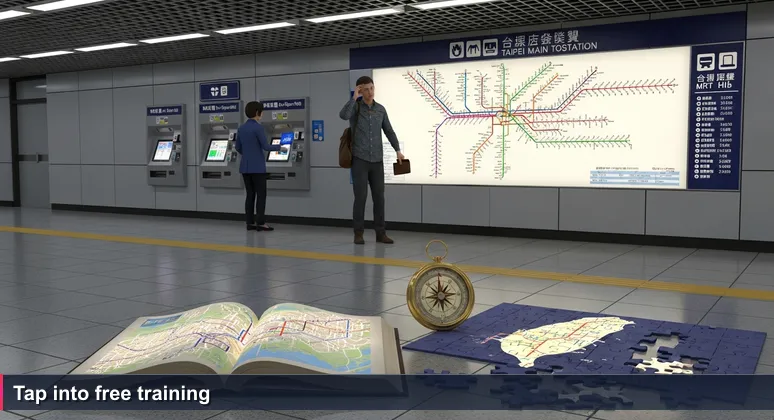
You're standing at Taipei Main Station, trying to calculate whether a single ticket to Nangang costs less than a day pass, when the person beside you just taps an EasyCard and walks through. That moment of realizing you've been overcomplicating it is exactly how most people approach paying for tech training in Taiwan. They see tuition numbers - NT$131,340 for a 25-week AI bootcamp, NT$118,206 for AI Essentials - and start calculating loans instead of looking at the map already laid out for them.
Taiwan's government and major employers have built a unified funding network that works like that EasyCard. The Workforce Development Agency vocational subsidies alone cover 80-100% of tuition for unemployed workers, plus a living allowance worth 60% of your insured salary for up to six months. The Youth Employment Subsidy adds another NT$120,000 in training grants for anyone aged 18-29. These aren't separate tickets - they're payment layers you load onto a single pass.
The system extends beyond government aid. Corporate programs like the ASUS Scholarship cover master's students with living stipends, internships, and a guaranteed two-year position at ASUS after graduation. TSMC's Newcomer Training Center offers free full-course semiconductor programs. The Ministry of Education's INTENSE program (launched 2024) provides tuition subsidies, monthly allowances, and guaranteed job placement at partner companies like TSMC.
In 2026, the real skill isn't grinding LeetCode alone - it's learning which card to tap first. Taiwan's funding ecosystem already exists. You just need to stop calculating every micro-fare and start looking at the color-coded map.
In This Guide
- Why Training is Affordable in Taiwan
- Government Subsidies: WDA, Youth, and Municipal
- MOE Scholarships and the INTENSE Program
- Corporate Scholarships: ASUS, TSMC & More
- Alternative Funding: ISAs, Loans & Employer Reimbursement
- Stacking Multiple Funding Sources
- Decision Tree: Find Your Best Route
- Key Deadlines and Documentation
- Regional Comparison: Taiwan vs. Asia
- Tax Implications of Training Funding
- Actionable Takeaways
- Frequently Asked Questions
Taiwan's AI industry is booming in 2026 - this guide tells you everything you need to know to get started.
Government Subsidies: WDA, Youth, and Municipal
The most direct route to funding your training starts with programs designed for exactly this purpose. Taiwan's government has built three layers of support that you can access starting today.
Workforce Development Agency (WDA) Subsidies
If you are unemployed and aged 15 or older, the WDA vocational training subsidies are your foundation. General applicants receive 80% tuition coverage on approved courses, while disadvantaged groups - low-income households, persons with disabilities, long-term unemployed, or new immigrants - qualify for 100% coverage. Beyond tuition, eligible participants can receive a monthly living allowance equal to 60% of their insured salary for up to six months. These subsidies are budget-limited and distributed on a first-come, first-served basis, so applying early through TaiwanJobs or a local employment service agency is critical.
Youth Employment Subsidy
For unemployed workers aged 18 to 29, the Ministry of Labor's Youth Employment Subsidy provides up to NT$120,000 in training and study grants over two years. This stacks directly with other funding. A 26-year-old in Taichong, for example, could use the grant to cover NT$60,000 per year of a NT$150,000 data science bootcamp, then apply the WDA subsidy to the remaining balance - effectively eliminating out-of-pocket costs.
Municipal Programs
Your city government often runs its own training cohorts with less competition. New Taipei City's Department of Labor organizes fully-funded local programs, while Taoyuan City provides temporary daycare allowances of up to NT$5,000 per child per month (max NT$15,000 per person) for residents in vocational training. Search for “[Your City] 勞工局 vocational training” to find these locally funded opportunities.
MOE Scholarships and the INTENSE Program
For those pursuing a full degree rather than a short-term bootcamp, the Ministry of Education Taiwan Scholarship covers tuition and miscellaneous fees up to NT$40,000 per semester, plus a monthly stipend of NT$15,000 for undergraduates or NT$20,000 for postgraduate students. This program targets both domestic and international students in approved degree tracks, making it especially viable for mid-career professionals looking to pivot into AI or semiconductor fields through a master's program at institutions like National Taiwan University or National Yang Ming Chiao Tung University.
The INTENSE Program
Launched in 2024, the INTENSE Program represents a paradigm shift for high-tech education in Taiwan. Focused exclusively on STEM, semiconductors, and finance, it provides tuition subsidies for up to two years, monthly living allowances, and a guaranteed job placement with partner companies such as TSMC. Unlike general scholarships that leave you to find employment on your own, INTENSE functions as a pipeline directly into Taiwan's most competitive industries.
Both programs are competitive, with applications typically opening in February-March for the MOE Scholarship and April-June for INTENSE. The key distinction: MOE scholarships support a broader range of academic disciplines, while INTENSE narrows its focus to the fields where Taiwan's talent shortage is most acute, offering a more direct return on your training investment.
Corporate Scholarships: ASUS, TSMC & More
Corporate-funded training programs offer a direct pathway from education to employment, often bypassing the job search entirely. The ASUS Scholarship Program targets master's students at National Taiwan University of Science and Technology in electronics, IT, or management. It includes a living stipend, internship and job training opportunities during the degree, and a guaranteed two-year position at ASUS after graduation. This isn't just funding - it's a career launchpad for professionals aiming to work in AI hardware or consumer electronics.
TSMC and Semiconductor Pathways
If semiconductors are your target, the TSMC Newcomer Training Center (NTC) offers free full-course training programs, including the "Semiconductor Virtual Program" for participating college students. TSMC absorbs the cost entirely, covering fundamentals of devices and equipment engineering. Completing this program positions you directly for roles at the world's largest dedicated independent semiconductor foundry.
MOFA and ICDF Scholarships
The Ministry of Foreign Affairs MOFA Scholarship provides a monthly stipend of NT$33,000 for Master's and PhD students plus one-way airfare. The Taiwan ICDF Scholarship offers fully funded programs in ICT and engineering, covering tuition, airfare, housing, and insurance. Both are competitive but worth the effort - they provide complete financial coverage for degree pathways that lead directly into Taiwan's booming tech sector.
Alternative Funding: ISAs, Loans & Employer Reimbursement
What happens when you don't qualify for government subsidies or corporate scholarships? There are still accessible routes that don't require draining your savings or maxing out credit cards. Each comes with its own trade-offs, but knowing the options prevents that deer-in-headlights feeling when you see bootcamp tuition.
Income Share Agreements (ISAs)
Some private tech bootcamps in Taiwan offer deferred tuition through Income Share Agreements. Under an ISA, you pay little or nothing upfront, agreeing instead to pay a fixed percentage of your future salary - typically once you exceed NT$40,000 per month - for a set period. Repayment ends once a cap is reached, usually 1.5x the original tuition. According to industry analysis of deferred tuition terms, always verify three protections: a minimum income threshold before repayment begins, a maximum repayment period, and a job guarantee clause that refunds tuition if you don't land employment within six months of graduation.
Government-Backed Education Loans
Taiwanese banks offer low-interest education loans for vocational training, with rates typically around 2-3%. Repayment begins six months after training ends, giving you time to find work. You'll need a guarantor or collateral, but for many, this is safer than high-interest personal loans or credit card debt.
Employer Tuition Reimbursement
If you're employed, ask your HR department whether they participate in Ministry of Economic Affairs R&D subsidies, which cover up to 50% of expenditures for foreign R&D centers - including talent cultivation. Companies like Google Taiwan, Microsoft Taiwan, and MediaTek use these subsidies to fund internal training. Additionally, up to NT$18,000 annually in employer tuition reimbursement is tax-exempt under the Professional Training Expenses clause. If your company has these programs, they can pay for your bootcamp as part of professional development.
Stacking Multiple Funding Sources
The real power of Taiwan's funding ecosystem emerges when you combine multiple sources for a single training program. Consider a 28-year-old New Taipei City resident enrolling in a 24-week AI engineering bootcamp costing NT$200,000: this precise sequence demonstrates how to achieve zero out-of-pocket cost through layering.
- Layer 1 - WDA Subsidy: As an unemployed worker, they qualify for an 80% subsidy on a WDA-approved bootcamp. This covers NT$160,000, leaving NT$40,000 remaining.
- Layer 2 - Youth Grant: They apply for the Youth Employment Subsidy, receiving NT$60,000 per year. They allocate NT$40,000 to erase the remaining tuition balance entirely.
- Layer 3 - Municipal Allowance: With one child, they apply to Taoyuan City's temporary daycare allowance of NT$5,000 per month for five months, adding NT$25,000 in additional income during training.
Total out-of-pocket cost: zero. Total additional income during training: NT$25,000 plus a living allowance of 60% of their insured salary. The critical rule: two government subsidies generally cannot be combined for the same course, but the WDA and Youth grants are separate programs that can be used sequentially. Private scholarships can also stack alongside government grants, as highlighted by the New Immigrant Development Network's incentive breakdown. The key is sequencing: apply for the WDA subsidy first, then use the Youth Grant to cover any gap, and finally add municipal benefits for living expenses.
Decision Tree: Find Your Best Route
Following five sequential questions will guide you to the right funding route. Answer each honestly, and the path becomes clear without guesswork.
- Are you employed? Yes means asking HR about tuition reimbursement, especially if your company uses MOEA R&D subsidies for talent cultivation. No means proceeding to step two.
- Are you a Taiwan national or permanent resident? Yes means applying for the WDA subsidy (80-100% tuition) plus the Youth Grant if you're under 30. No means moving to step three.
- Are you enrolled in a university program? Yes means applying for the MOE Taiwan Scholarship or the INTENSE Program. No means considering an ISA or employer-sponsored bootcamp.
- Are you targeting a specific employer? Yes means applying directly for their programs - the ASUS Scholarship for AI hardware careers, or TSMC's Newcomer Training Center for semiconductor roles. No means proceeding to step five.
- Can you wait 3-6 months? Yes means applying for municipal labor department training cohorts, which are less competitive and often fully funded. No means considering an ISA or deferred tuition from a reputable provider.
Most readers will qualify for at least two of these options. The WDA subsidy is the most accessible starting point, while corporate scholarships offer the fastest route to employment. Municipal programs are the hidden gem - fewer applicants mean higher approval rates.
Key Deadlines and Documentation
Once you have identified your route through the decision tree, the next step is executing on timing. Missing a filing window can delay your training plans by an entire year, especially for competitive programs. Start by marking the deadlines for your chosen path, then gather the required paperwork in parallel to avoid last-minute scrambling.
| Program | Application Window | Notes |
|---|---|---|
| WDA Vocational Subsidies | Rolling (first-come, first-served) | Apply 4-6 weeks before course start via TaiwanJobs |
| Youth Grant | Rolling | Must apply before training begins |
| MOE Taiwan Scholarship | February-March annually | Results announced by May |
| INTENSE Program | April-June annually | Placements confirmed by August |
| ASUS Scholarship | September-November | For programs starting the following fall |
| TSMC NTC Programs | Varies by cohort | Check TSMC website quarterly |
| Municipal Programs | Jan-Feb & Jul-Aug typically | Check your city's 勞工局 website |
Incomplete documentation is the fastest way to derail an application. WDA applications require proof of unemployment or income status, while university scholarships often demand transcripts and residency proof. Prepare the following checklist before you begin:
- National ID and household registration
- Household income proof
- Employment records (last 2 years)
- Academic transcripts
- Residency documentation
- Veteran discharge papers (if applicable for priority processing)
- Proof of enrollment in a WDA-approved course
- Bank account details for direct deposit of stipends
A practical strategy: apply for the WDA subsidy first, as it has the easiest requirements and a rolling window. While waiting for processing, collect documents for more competitive programs like the MOE Taiwan Scholarship guidelines. Sequential documentation prevents bottlenecks and ensures you are ready when each window opens.
Regional Comparison: Taiwan vs. Asia
A quick glance at the table below tells the story: Taiwan offers the best deal in Asia for high-quality tech training. The numbers reflect the aggressive government subsidies and corporate partnerships that have turned the island into an affordable launchpad for AI and semiconductor careers.
| City | Bootcamp Cost (Avg.) | Max Govt. Subsidy | Net Cost After Subsidies |
|---|---|---|---|
| Taiwan | NT$150,000 - 200,000 | Up to 100% | NT$0 - 40,000 |
| Shenzhen | NT$250,000+ | 60% max | NT$100,000+ |
| Seoul | NT$300,000+ | 50% max | NT$150,000+ |
| Singapore | NT$400,000+ | 70% max | NT$120,000+ |
| Tokyo | NT$350,000+ | 50% max | NT$175,000+ |
This data reveals a clear pattern: while Singapore offers the highest post-training salaries for AI and machine learning roles (NT$150,000-250,000 per month), the upfront cost barrier is steep even after the SkillsFuture credit subsidy. Taiwan's salaries range from NT$60,000-120,000 per month - lower than Singapore or Tokyo, but the net cost after subsidies is dramatically lower. A bootcamp that costs NT$400,000 in Singapore can be had for effectively zero out-of-pocket in Taiwan after layering the WDA vocational subsidies and Youth Grant. When you factor in Taiwan's lower cost of living - rent, food, and transit are substantially cheaper than Singapore or Tokyo - the effective return on investment becomes compelling. The subsidies for R&D expenditures from the MOEA also attract global tech employers to set up training centers in Taiwan, creating a virtuous cycle of affordable upskilling followed by high-demand job placement.
Tax Implications of Training Funding
Receiving a scholarship or subsidy is not the same as having tax-free money land in your account. Understanding how each funding source is classified can prevent a surprise bill from the tax authorities come filing season. The treatment varies depending on whether the funds come from a government agency, a university, or an employer.
Government Subsidies and Stipends
WDA subsidies and living allowances are considered taxable income in Taiwan. You will receive a tax form reporting the amount and must include it on your annual return. The same applies to the Youth Employment Grant. However, MOE and university scholarships are generally tax-exempt when used for tuition and fees, though stipends allocated to living expenses may be partially taxable. Keep clear records separating tuition payments from living allowance disbursements to support your filing position.
Employer and Corporate Funding
Employer tuition reimbursement is taxable as income but benefits from a NT$18,000 annual exemption under the Professional Training Expenses clause. That means if your company pays NT$18,000 or less toward your bootcamp, you owe no tax on that amount. Corporate scholarships from ASUS or TSMC are treated as income, but recipients can claim a deduction for any portion spent on tuition and educational materials. The key principle: keep all receipts documenting training costs paid, because you can deduct the amount spent on tuition from taxable scholarship income, reducing your liability dollar-for-dollar. According to the WDA's official eligibility guidelines, living allowances are specifically classified as taxable payments, so plan for a roughly 5-12% tax bite depending on your bracket. Consult with a local accountant familiar with the INTENSE Program's specific tax treatment if you are a recipient, as rules for public-private partnership funding can differ from standard academic scholarships.
Actionable Takeaways
You now have the full map of Taiwan's tech training funding ecosystem. The system works - but only if you take action. These five steps will move you from reading to tapping your EasyCard through the gate.
- Start with the WDA subsidy. It is the most accessible, covering 80-100% of tuition for vocational training. Even if employed, check whether your employer can classify training as a pre-employment event to qualify. Apply 4-6 weeks before your course starts via TaiwanJobs.
- Apply for the Youth Grant if under 30. The NT$120,000 over two years can erase whatever tuition the WDA subsidy does not cover. Apply before training begins - you cannot claim retroactively.
- Target corporate scholarships before choosing a program. If you want to work at TSMC, apply for their NTC program first rather than paying for a generic bootcamp. If building AI hardware is your goal, the ASUS Scholarship includes a direct job pipeline. Let your target employer fund your training.
- Stack municipal funding with national programs. Search for your city's 勞工局 website and look for locally funded cohorts. Many residents skip this step because they assume national programs are the only option. Taoyuan's daycare allowance alone can cover living expenses during training.
- Use ISAs only as a last resort and only from providers with clear repayment caps and job guarantee clauses. Verify the minimum income threshold and maximum repayment period before signing.
Taiwan's government has invested heavily to close the talent gap in semiconductors, AI, and ICT. In 2026, the funding infrastructure is already built - you just need to learn the map and tap in. Stop calculating every micro-fare and start treating the bootcamp tuition as a single ticket on a system designed to let you ride cheap.
Frequently Asked Questions
What is the easiest way to get funding for a tech bootcamp in Taiwan?
The easiest route is the Workforce Development Agency (WDA) vocational training subsidy, which covers 80% of tuition for the general public and 100% for disadvantaged groups. You apply through TaiwanJobs or your local employment service agency, and it's a grant - you don't need to pay it back.
Can I combine the WDA subsidy with the Youth Employment Grant?
Yes, you can stack government programs as long as they aren't both subsidizing the same expense. For example, use the WDA to cover 80% of tuition, then apply for the Youth Grant (up to NT$120,000 over two years) to cover the remaining 20% or living expenses. Many students combine them to achieve zero out-of-pocket tuition.
Am I eligible for these funding programs as a foreigner in Taiwan?
Most government programs require Taiwan nationality or permanent residency. However, some corporate scholarships (like ASUS or TSMC) are open to international students, and the MOFA/ICDF scholarships are designed specifically for foreign degree-seekers. For WDA subsidies, you typically need an ARC with employment rights.
How long does the WDA subsidy application process take?
The WDA subsidy is first-come, first-served, so processing can take 2-4 weeks. You must apply at least 4-6 weeks before your course starts, and ensure the bootcamp is on their approved list. Prepare your documents (ID, income proof, enrollment letter) in advance to avoid delays.
If I fail to find a job after bootcamp, will I have to repay any subsidies?
No - government grants like WDA and the Youth Grant do not require repayment regardless of employment outcome. However, if you use an Income Share Agreement (ISA) or employer tuition reimbursement, repayment terms apply. Always check the contract for job guarantee clauses and caps on total repayment.
Get the full scoop on Taiwan's AI meetups, networking tips, and cultural norms in this complete guide.
Check out the best AI tech bootcamps in Taiwan for 2026 for a detailed ranking.
Explore the top free tech training resources at Taiwanese libraries.
See our ranking of tech roles accessible without a university degree in Taiwan.
For a complete guide on AI salaries in Taiwan in 2026, read this article.

Irene Holden
Operations Manager
Former Microsoft Education and Learning Futures Group team member, Irene now oversees instructors at Nucamp while writing about everything tech - from careers to coding bootcamps.