









AI Meetups, Communities, and Networking Events in Taiwan in 2026
By Irene Holden
Last Updated: April 25th 2026
Key Takeaways
Taiwan's AI community in 2026 offers a rich ecosystem of free, bilingual meetups and major events, with 88% of local companies investing in generative AI. From weekly AI Engineers gatherings to COMPUTEX exhibitions, you can network directly with engineers from TSMC and MediaTek while the government trains 200,000 new AI professionals. The real payoff comes from showing up consistently and sharing your work in progress.
The Hardware-Software Convergence Advantage
Taiwan occupies a unique position in the global AI supply chain. Sit at any meetup in Taipei or Hsinchu, and you'll find yourself next to engineers from TSMC, MediaTek, Hon Hai (Foxconn), ASUS, and Acer - companies that design and manufacture the silicon powering AI from San Jose to Shenzhen. This proximity means Taiwan's AI community isn't just about software. It's about hardware-software convergence at scale, a rare combination that pure-software hubs like Singapore or Bengaluru simply cannot replicate.
In 2026, that convergence is accelerating fast. According to industry analysis from DIGITIMES, the focus is on "AI Convergence," where 88% of Taiwanese companies are actively investing in generative AI to solve real labor shortages and boost productivity. The same analysis predicts that edge AI and robotics will dominate the next wave - areas where Taiwan's semiconductor and hardware ecosystem gives it an undeniable global edge. Whether you're optimizing LLM inference for edge devices or building vision models for automated manufacturing, you're working on problems that TSMC and MediaTek are literally engineering chips for.
Government Backing and Career Optionality
The government has matched this momentum with concrete policy. Minister of Economic Affairs Kuo Jyh-huei has set an ambitious target of training 200,000 AI professionals within four years, while the Ministry of Digital Affairs (moda) and Taiwan AI Labs drive national AI governance frameworks. Initiatives like the NVIDIA GTC 2026 pitch stage have already produced real outcomes - Taiwan startups like Morale AI gained "tremendous traction" and direct VC connections after presenting there.
For AI and ML professionals in Taiwan, your career isn't limited to software engineering. You have access to cross-disciplinary roles in chip design, edge deployment, and hardware optimization that are rare anywhere else. The proximity of TSMC, MediaTek, and a vibrant startup scene in Taipei and Hsinchu gives you career optionality that rivals any global hub - and at a fraction of the cost of living in Silicon Valley or Singapore.
In This Guide
- Why Taiwan? The AI Island in 2026
- The Secret Menu: Regular Meetups That Matter
- Annual Blockbusters: Conferences That Can Launch Your Career
- Institutional Powerhouses: Where Academia Meets Industry
- Online Communities: The 24/7 Networking Engine
- Networking Like a Local: Cultural Norms and Practical Tips
- A Taiwan AI Community Calendar: Your Monthly Roadmap for 2026
- Success Stories: From Meetup to Million-Dollar Deal
- How Does Taiwan Stack Up? A Regional Comparison
- Getting Started: Your First 90 Days in Taiwan’s AI Community
- The Night Market Is Open
- Frequently Asked Questions
Taiwan's AI industry is booming in 2026 - this guide tells you everything you need to know to get started.
The Secret Menu: Regular Meetups That Matter
Your Weekly Calendar for Genuine Connection
While the big conferences grab headlines, the real day-to-day community building happens in smaller, recurring meetups across Taipei and Hsinchu. These are the vendor stalls worth lining up for - the ones where building owners share table space with junior engineers, and the barrier between "attendee" and "contributor" dissolves after your second visit. The table below captures the essential gatherings that form the backbone of Taiwan's AI community in 2026.
| Meetup Name | Frequency | Focus | Key Detail |
|---|---|---|---|
| Claude Code Taipei | Quarterly | Anthropic APIs & MCP | 150+ developers per session; bilingual Q&A with Anthropic engineers |
| AI Engineers in Taiwan | Weekly (Saturdays) | Lightning talks & open discussion | Designed for practitioners to "sharpen instincts" on shipping real products |
| AI Tinkerers Taipei | Monthly | Running code demos only | Strict "no slides" policy - bring broken prototypes |
| n8n Taipei | Monthly | Enterprise AI governance | Led by Morris Lu; connects local members with international ambassadors from Vienna and Bangkok |
| Taiwan Code Camp | Weekly (Tuesdays) | Self-taught coding | Perfect entry point for transitioning into tech from a non-CS background |
How to Show Up and Get Value
The common thread across these gatherings is a culture of reciprocal vulnerability. At AI Tinkerers, the strict no-slides rule forces you to show something real - even if it's crashing. "It is a critical space for 'builders' to get real feedback on unfinished work," one regular attendee noted. At AI Engineers in Taiwan, prepare a five-minute lightning talk about something you've shipped recently, no matter how messy. The post-event LINE groups are where the deal gets done - a founder in Taipei connecting with an engineer in Hsinchu over a shared frustration with a specific library.
All five meetups in the table above are free to attend and primarily bilingual (Mandarin and English). Don't sit in the back. Arrive early, bring a specific challenge you're solving, and be ready to offer help before asking for it. That's how you unlock the secret menu.
Annual Blockbusters: Conferences That Can Launch Your Career
The Crown Jewel: COMPUTEX 2026
If you can only attend one conference this year, make it COMPUTEX. With the theme "AI Together," the world's largest AI exhibition has shifted its focus from cloud to edge AI and robotics. The main tracks include AI & Computing, Robotics & Mobility, and Next-Gen Tech, drawing global media and tech leaders from NVIDIA, Google DeepMind, and Intel. Held at the Taipei Nangang Exhibition Center in late May, the event offers free pre-registration for professionals, with some forum tiers costing around NT$1,000-2,000. Sessions are bilingual or English-led, making it accessible for international attendees. Register through the official COMPUTEX Taipei site and prioritize the startup pitch stages and satellite parties - that's where genuine connections form, not just in the exhibition hall.
AI EXPO Taiwan and Meet Taipei
AI EXPO Taiwan 2026, held March 25-27 at TaiNEX 2, was described by attendees as "legendary" for moving beyond proof-of-concept into production-ready automation. The event featured the "AI⁵: The Power of Love" initiative, linking technical participation to social welfare donations - a move praised for ensuring "compassion never falls behind technology." General admission is free; premium workshops run NT$500-1,500. Focus on the startup alley and live demos, where you'll see innovations like the $350 PCB recycling system that caught Hon Hai's attention. Later in the year, Meet Taipei Startup Festival in November draws 55,000+ visitors and 460+ startup teams. With dedicated AI sessions and a "Young Sparks" student hub, it's a prime spot to meet top-tier VCs from the US and Japan. Volunteer as a guide for international delegations to build relationships that last well beyond the event.
Other Major Events Worth Your Time
For research collaboration, the academic-led TAAI 2025 conference at National Taiwan Normal University (NTNU) is a strong choice. The WITSA Global AI Summit, themed "AI with Purpose," covers ethical governance and sustainability. And don't overlook the Best AI Awards, which in 2026 offered a NT$300,000 grand prize and served as a gateway for international student teams to integrate into Taiwan's high-tech workforce. Each of these events provides a unique angle - from policy to pure research - complementing the commercial punch of COMPUTEX and AI EXPO. Mark your calendar and prepare your elevator pitch before you walk through the door.
Institutional Powerhouses: Where Academia Meets Industry
Taiwan AI Labs: The Research Anchor
As the leading AI research lab on the island, Taiwan AI Labs (AILabs) drives cross-sector projects in healthcare, finance, and education. Their annual Taiwan AI Day in January brings together researchers, startups, and government officials, with the 2025 edition focusing on generative AI applications across these verticals. AILabs also collaborates closely with the NVIDIA Inception Program and Garage+ incubator, creating a pipeline from pure research to commercial deployment. For anyone serious about Taiwan's AI ecosystem, attending their open seminars is a direct line into the country's strategic AI priorities.
University Seminars Open to the Public
National Taiwan University's Electrical Engineering and Computer Science departments host weekly seminars that are free and open to the public. Over in Hsinchu, National Tsing Hua University runs industry-speaker series leveraging its proximity to TSMC and MediaTek - a prime spot for students and early-career professionals. National Cheng Kung University in Tainan is emerging as a hub for AI in manufacturing and supply chain. The rules of engagement are straightforward: after a talk, wait until the crowd thins, introduce yourself with a specific question about their research, and exchange LINE instead of LinkedIn. Never ask for an internship immediately; build genuine curiosity first.
Incubators and Company Campus Events
Three incubators dominate Taipei's startup landscape: Garage+ for general AI startups, StarFab for hardware-backed AI, and the NVIDIA Inception Program for technical resources. These hubs host employer-sponsored mixers where you can meet hiring managers from ASUS, Acer, and MediaTek over free bao and beer. Meanwhile, companies like ASUS, MediaTek, and Hon Hai (Foxconn) open their doors for select tech talks - keep an eye on their LINE official accounts and career pages. As the TTA showcase at CES 2026 demonstrated, Taiwan's institutional ecosystem is designed to move startups from local labs to global stages, and the doors are open to anyone willing to step through.
Online Communities: The 24/7 Networking Engine
The real fire of Taiwan's AI community doesn't burn in auditoriums - it burns in the digital spaces where practitioners gather between meetups. Every major in-person event spawns a LINE group where members share job postings, debug model issues, and plan ad-hoc hackathons. The Claude Code Taipei group is a prime example: when an Anthropic engineer mentions a new MCP feature during a Saturday demo, the discussion continues for days afterward. Don't lurk - introduce yourself with a two-sentence bio and offer help before asking for it. That's the "bring a dish to share" principle applied to messaging apps.
- LINE Groups: The backbone of Taiwanese tech networking. Exchange LINE QR codes instead of LinkedIn business cards. Send a polite greeting followed by a clear request - avoid just saying "Hi."
- Telegram Channels: Popular channels like "Taiwan AI/ML" and "Edge AI Taiwan" provide instant technical help. Join after attending your first meetup to stay in the loop.
- PTT Tech Boards: Taiwan's oldest internet forum. The Tech_Job board offers candid salary discussions and insider news about hiring at TSMC and MediaTek. Mostly Mandarin, but invaluable for market intelligence.
- GitHub & Slack/Discord: Local open-source AI projects live on GitHub, while communities like AI Engineers in Taiwan use Slack for daily discussion. The n8n Taipei community uses Discord for workflow sharing and international collaboration.
These platforms keep the conversation alive 24/7. A quick search on Meetup's Taiwan AI groups page will lead you to the right LINE invite links. Lead with value - share a debug tip, offer code review, or send a relevant paper - and the ecosystem will return the favor tenfold.
Networking Like a Local: Cultural Norms and Practical Tips
Taiwan's networking culture is warmer than Tokyo but less direct than New York. The golden rule is bring something before you take something. Offer to help organize a meetup, give a lightning talk, or write meeting notes - the person who helps set up chairs makes more friends than the person who sits in the front row. This "bring a dish to share" principle applies even to your first conversation: start with a shared interest ("I also work on edge AI") before asking for advice or introductions.
- Use LINE over LinkedIn. In Taiwan, exchanging LINE QR codes is more common than swapping business cards. Get the LINE Official Account for any event you attend and follow up within 48 hours with a specific reference from your conversation.
- Layer your approach. Begin with a genuine question about someone's work before transitioning to your own goals. A typical opener: "I saw your demo at AI Tinkerers - how did you handle the quantization trade-offs?"
- For introverts, start small. Choose AI Tinkerers Taipei (intimate, demo-based) over COMPUTEX initially. Arrive early, sit near the front, and prepare one question in advance. The no-slides format forces genuine engagement without the pressure of polished presentations.
- Employer-sponsored mixers hosted by incubators like Garage+ are your best bet for meeting hiring managers outside formal interviews. Dress smart-casual and ask about their current pain points in AI deployment - technical sincerity beats practiced elevator pitches every time.
Cultural politeness matters deeply. On LINE, a greeting followed by a clear request works best. Avoid sending just "Hi" and waiting - lead with value: "您好,我在AI Tinkerers看到您的demo,我最近也在做類似的LLM應用,方便請教一個問題嗎?" (Hello, I saw your demo at AI Tinkerers. I'm working on a similar LLM application, may I ask a quick question?) The AI Engineers in Taiwan meetup is an excellent starting point for practicing these norms in a low-stakes environment. Show up consistently, ask genuine questions, and watch the secret menus unlock themselves.
A Taiwan AI Community Calendar: Your Monthly Roadmap for 2026
Planning your year in Taiwan's AI ecosystem saves you from the chaos of last-minute decisions. The community follows a predictable rhythm: Q1 and Q3 emphasize academic and policy events, while Q2 and Q4 bring the blockbuster trade shows. January kicks off with Taiwan AI Day hosted by Taiwan AI Labs, a free event that sets the research agenda for the year. February offers the intimate n8n Taipei meetup for enterprise governance enthusiasts. March delivers AI EXPO Taiwan at TaiNEX 2, where general admission is free and the startup alley showcases production-ready applications.
April and May build momentum toward the year's crown jewel: COMPUTEX 2026 in late May, with its "AI Together" theme and free professional registration. June through August shifts to recurring weekly gatherings like AI Engineers in Taiwan and the Hsinchu AI Meetup near NTHU's campus. August also brings MediaTek's public tech talk at their Hsinchu headquarters - a rare chance to hear directly from chip architects. September features the Taiwan Innotech Expo, while October's Taiwan Tech Summit bridges local startups with international investors.
The final quarter peaks with Meet Taipei Startup Festival in November at Taipei Expo Park, drawing over 55,000 visitors and 460 startup teams. December wraps up with year-end AI mixers sponsored by multiple communities - often free and the best opportunity for relaxed networking. For those outside Taipei, Kaohsiung's Asia New Bay Area and Taichung's precision machinery corridor host 1-2 events monthly, often simulcast from the capital.
Recurring events form the backbone of consistent networking. AI Engineers in Taiwan meets every Saturday in rotating Taipei venues for free. Taiwan Code Camp runs Tuesday evenings. AI Tinkerers Taipei gathers monthly. The Claude Code Taipei meetup appears quarterly with ad-hoc satellite sessions in Hsinchu and Kaohsiung. Print this roadmap, pin it above your desk, and mark your calendar for the events closest to your goals. Consistency beats intensity every time in Taiwan's night market of opportunities.
Success Stories: From Meetup to Million-Dollar Deal
The best evidence that these events work? The people who turned a demo into a career. The common thread across every story is simple: the founders didn't just attend events. They presented, they contributed, and they followed up within 48 hours.
- Phill Kau, founder of Morale AI, reported gaining "tremendous traction" after presenting at the NVIDIA GTC 2026 pitch stage. He walked away with direct connections to VCs and global partners - relationships that began in local Taipei meetups where he first refined his pitch in front of a forgiving crowd of peers.
- A low-cost, AI-powered PCB recycling system built for only US$350 - compared to commercial systems costing US$20,000+ - was first presented at a local meetup as a broken prototype. After iterative feedback at AI Tinkerers sessions, the project won a Best AI Award and attracted serious interest from Hon Hai's sustainability team. The demo that started as duct tape and hope became a viable industrial solution.
- The Best AI Awards 2026 offered a NT$300,000 grand prize and served as a gateway for international student teams to integrate into Taiwan's high-tech workforce. Winners didn't just leave with cash - they left with job offers from companies like MediaTek and ASUS, proving that a single competition can redirect an entire career trajectory.
These three examples represent a pattern, not isolated luck. Every week in Taipei, someone brings a half-finished project to a Saturday meetup and walks away with a collaborator who fills the missing piece. The COMPUTEX 2026 ecosystem amplifies this dynamic on a global stage. If you're in Taiwan's AI community, your million-dollar deal doesn't require a boardroom pitch - it starts with showing something broken to a room of fellow builders who actually want to help you fix it.
How Does Taiwan Stack Up? A Regional Comparison
A Quick Comparison of Asian AI Hubs
Taiwan's AI community operates differently from its regional peers. Understanding these differences helps you make smarter choices about where to invest your time and which ecosystem advantages to leverage. The table below captures the key distinctions for someone building a career in this space.
| Dimension | Taiwan | Singapore | Bengaluru |
|---|---|---|---|
| Language | Bilingual (Mandarin/English) | English-dominant | English-dominant |
| Hardware access | World-class (TSMC, MediaTek) | Limited | Very limited |
| Meetup cost | Usually free | Often paid (NT$500+) | Mostly free |
| Government AI target | 200,000 professionals in 4 years | Smart nation initiatives | NASSCOM-led skilling |
| Startup density | High in Taipei & Hsinchu | Very high | Massive |
| Unique advantage | Hardware-software convergence | Fintech & government contracts | Software talent pool |
Why Taiwan Wins for Hardware-Linked AI
Shenzhen moves faster with a "ship now, fix later" attitude, but English-language events are rare and the political environment limits foreign participation. Seoul's AI ecosystem is similar in its semiconductor focus (Samsung, SK Hynix), but language barriers are steeper - Taiwan's bilingual meetup culture is far more accessible for English speakers. Bengaluru has a massive software talent pool, but prototyping an edge AI solution on Monday and meeting a MediaTek engineer who designs the chip on Tuesday? That's only possible in Taiwan.
Singapore salaries are higher, but cost of living is 40% more expensive. Taiwan's meetups are more affordable (often free) and less corporate. The COMPUTEX 2026 ecosystem demonstrates this unique coupling: chip designers, cloud architects, and edge AI engineers all under one roof. For Taiwanese AI professionals, your biggest asset isn't just your skills - it's the proximity of world-class hardware companies and a startup scene that lets you touch the silicon you're coding for. That's a rare combination anywhere in the world.
Getting Started: Your First 90 Days in Taiwan’s AI Community
Your Week-by-Week Entry Plan
The gap between attending an event and belonging to a community is measured in weeks of consistent effort. Here is a concrete 90-day roadmap designed to move you from outsider to contributor in Taiwan's AI ecosystem.
- Weeks 1-2: Pick one small, recurring meetup. Start with AI Engineers in Taiwan on a Saturday. Arrive early, sit near the front, and prepare one technical question in advance. Your goal is not to network broadly - it's to have one meaningful conversation about something you're actually working on.
- Weeks 3-4: Attend AI Tinkerers Taipei. Bring a half-finished project or a technical challenge you're stuck on. The strict "no slides" policy forces real engagement. Show something broken - the feedback on a failed approach is worth more than a polished demo. Exchange LINE with at least two people who ask follow-up questions.
- Month 2: Register for a major event. Choose AI EXPO Taiwan or COMPUTEX. Set a goal of five meaningful conversations per day. Take notes on your phone after each chat, and send follow-up LINE messages within 48 hours referencing something specific from your discussion.
- Month 3: Transition from attendee to contributor. Volunteer to help organize a meetup, offer to write event notes, or sign up to give a five-minute lightning talk. This single shift from consumer to producer is the biggest networking multiplier in Taiwan's community. The person who helps set up chairs consistently makes more connections than the person in the front row.
Throughout these 90 days, join the relevant LINE groups and introduce yourself with a short bio - mention your current project and one thing you're happy to help others with. Set Google Alerts for "Taiwan AI meetup" and "Taipei AI event" to catch ad-hoc gatherings. Consistency beats intensity. The night market vendors start remembering your face after three visits; Taiwan's AI community works exactly the same way.
The Night Market Is Open
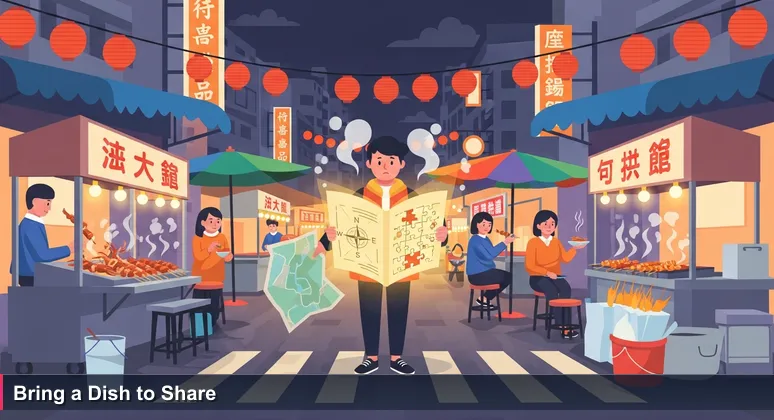
Taiwan's AI community in 2026 is a night market in full swing - loud, chaotic, and brimming with hidden treasures. A NT$300,000 prize for the best student project. A $350 PCB recycling system born from a local meetup. A startup founder who turned a GTC pitch into global partnerships. An Anthropic engineer who answers your question in a Taipei co-working space. The stalls are colorful, the crowds are thick, and the secret menus are real - but only if you stop looking at your map and start talking to the people around you.
The evidence is everywhere you look. 88% of Taiwanese companies are actively investing in generative AI, the government is training 200,000 professionals, and the events are free, bilingual, and open to everyone. The infrastructure is built. What's missing is your willingness to show up consistently, ask genuine questions, and bring something to share. The person who built that recycling system probably stands in the same queue as a MediaTek lead architect. The founder who closed a deal at COMPUTEX started exactly where you are now - at a Saturday meetup with a half-finished project and a willingness to be vulnerable.
The AI Tinkerers community captures the spirit perfectly: no slides, just running code and real feedback. That's the ethos that makes Taiwan's ecosystem unique. It's not about polished presentations or practiced elevator pitches. It's about bringing something authentic - even if it's broken - and letting the community help you fix it. The queue is forming all around you, every week, in co-working spaces and university auditoriums across Taipei and Hsinchu.
Bring your curiosity. Bring a demo. Bring your willingness to share something of yourself. The night market is open, the fluorescent lights are buzzing, and the vendors are waiting for new regulars. All you have to do is step in line and start talking to the person next to you.
Frequently Asked Questions
I'm new to Taiwan's AI scene. Which meetup should I attend first?
Start with AI Engineers in Taiwan, a free weekly Saturday meetup that welcomes newcomers. It's a low-pressure environment where you can sharpen your instincts through lightning talks and open discussions, and you'll quickly get a feel for the community's tone.
Are these events really free? What's the catch?
Yes, the vast majority of meetups like AI Tinkerers Taipei and Claude Code Taipei are completely free, often funded by sponsors or the community itself. The only cost is your willingness to engage - bring a question or a half-finished demo, and you'll get far more value than any paid conference.
I don't speak Mandarin well. Will I be able to participate?
Absolutely. Most major meetups are bilingual or English-led, especially those targeting the international developer community - Claude Code Taipei and AI Tinkerers Taipei run primarily in English. Even Mandarin-heavy events like AI EXPO Taiwan have English interpretation for key sessions.
How do I actually build connections at these events instead of just showing up?
The key is contributing - give a five-minute lightning talk, volunteer to help set up, or bring a broken prototype to AI Tinkerers for real feedback. Follow up within 48 hours via LINE (not LinkedIn, which is less common in Taiwan) and reference something specific from your conversation.
What's the best way to find out about AI events happening in Taiwan?
Join the LINE groups spawned by each meetup - they're the primary engine for last-minute announcements and ad-hoc hackathons. Also check platforms like Luma and Meetup.com, and follow Taiwan AI Labs and the Ministry of Digital Affairs for flagship events like Taiwan AI Day.
Check out the 2026 Taiwan tech salary rankings from Google to MediaTek with real numbers.
Our ranking of the best AI tech bootcamps in Taiwan includes tuition and job outcomes.
For 2026 AI salary data in Taiwan, this article is a must-read.
Discover the best AI employers in Taiwan in 2026 ranked by unique criteria.
Find out which sectors are hiring cybersecurity talent in Taiwan in 2026.

Irene Holden
Operations Manager
Former Microsoft Education and Learning Futures Group team member, Irene now oversees instructors at Nucamp while writing about everything tech - from careers to coding bootcamps.