









Top 10 Tech Apprenticeships, Internships and Entry-Level Jobs in Taiwan in 2026
By Irene Holden
Last Updated: April 25th 2026
Too Long; Didn't Read
Taiwan's 2026 tech entry-level market offers three clear pathways: apprenticeships for career changers, elite internships at TSMC and MediaTek for students, and entry-level roles at Foxconn and Appier. TSMC’s summer internship still boasts a 60-70% return offer rate, while MediaTek master’s grads can land total packages exceeding NT$2M. For immediate income, Appier offers median total comp around NT$1.24M, and Foxconn’s structured program provides stability with NT$45k-52k monthly starting pay.
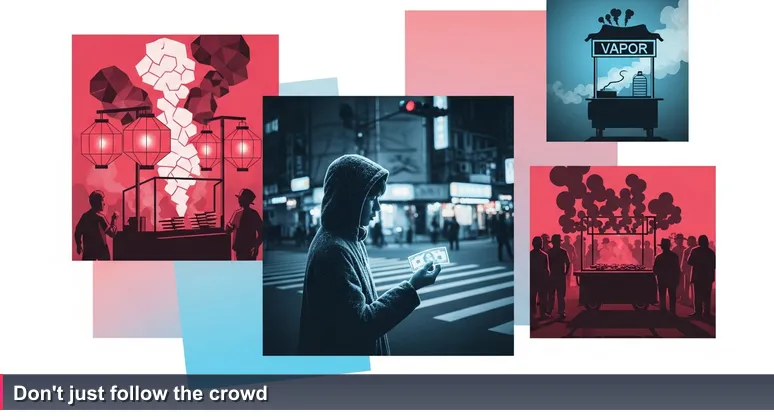
You've stood at a Taipei night market with NT$200 in your hand, hunger pulling you in six directions at once, while locals brush past you and order like it's instinct. That's exactly what Taiwan's 2026 tech entry-level market feels like right now. The sizzle comes from every direction: TSMC's fabs in Hsinchu, MediaTek's AI labs in Taipei, Foxconn's massive manufacturing campuses, and a growing cloud ecosystem anchored by AWS's recent NT$160 billion investment in a Taiwan region.
The crowd at each stall is different - students clutching engineering degrees, career changers fresh from government-funded bootcamps, international applicants navigating work permits. Everyone seems to know exactly where they're going. This frenzy of opportunity mirrors what Nucamp's analysis of Taiwan's booming tech sector confirms: demand for AI and semiconductor talent has never been higher, yet the sheer number of entry points creates a paralysis that makes decisive action feel impossible.
But here's the truth the crowd won't tell you: the best path isn't the one with the longest line or the flashiest sign. It's the one that matches how you learn best - structured mentorship versus hands-on fire, a government-subsidized safety net versus the high-risk, high-reward of a TSMC return offer. This ranking won't just list the top 10 opportunities. It will help you order with confidence, walking away from the chaos with exactly what you came for.
Table of Contents
- Introduction: Navigating Taiwan's Tech Entry-Level Market
- Foxconn (Hon Hai) 'Career 1.0' Graduate Program
- WDA ICT Vocational Training (Traineeships)
- MOL 'Hire First, Train Later' Youth Program
- AWS re/Start (Taiwan Chapter)
- Google Career Certificates + Taiwan Campus Hire Events
- Microsoft Taiwan Internship Program (MAA/RDSS)
- Appier Junior Software Engineering Pathway
- Google Career Launchpad & AI/ML Research Internships
- MediaTek Global Internship Program
- TSMC Summer Internship & Return-Offer Track
- Your Night Market Strategy: How to Choose
- Frequently Asked Questions
Taiwan's AI industry is booming in 2026 - this guide tells you everything you need to know to get started.
Foxconn (Hon Hai) 'Career 1.0' Graduate Program
Foxconn’s “3+3” strategy - Electric Vehicles, Digital Health, and Robotics - isn’t just corporate buzz. It’s the roadmap for where this program takes you. Participants enroll in Foxconn University, a systematic online and offline training platform covering both management and technical tracks. Think of it as a chain restaurant with a reliable menu: you know what you’re getting, and the scale means global mobility later. According to the Foxconn global recruitment portal, the program explicitly targets candidates interested in the convergence of hardware and AI.
For 2026, Foxconn is aggressively pivoting toward AI-driven manufacturing and EV components. A university graduate starting at NT$45,000/month might seem modest compared to Hsinchu semiconductor salaries, but the “Career 1.0” program includes rotation across business units, exposing you to supply chain, hardware integration, and software-defined manufacturing. Reports from Taiwan News confirm this salary benchmark remains competitive when factoring in the structured rotation and lack of shift work typical of foundry roles.
Competitiveness: Low to moderate. Foxconn hires in volume, and while technical interviews exist, the bar is lower than TSMC or MediaTek. Best for: Engineers who want scale, stability, and a clear path into manufacturing tech without the pressure of a startup or the cleanroom life of a fab.
WDA ICT Vocational Training (Traineeships)
If the night market has a "try before you buy" stall, this is it. Taiwan's Workforce Development Agency (WDA) runs intensive ICT training programs lasting 5 to 11 months, requiring over 100 hours of training per month. The curriculum is refreshingly practical: hands-on C# programming, Industrial IoT, and even 3D printing. For 2026, the government is doubling down on smart manufacturing and green energy training, according to Taiwan's New Immigrant Global News Network.
The kicker? These programs are often 80-100% subsidized for qualifying participants, including new immigrants and unemployed workers. You don't pay to learn - you invest time. Eligibility extends to specific demographic groups, and application cycles run multiple times per year, making this one of the most accessible entry points in Taiwan's tech ecosystem. Free vocational training initiatives specifically target new immigrant talent, reducing barriers for international residents seeking tech careers.
What this path demands:
- No immediate income during training - plan your finances accordingly
- Full-time commitment to the schedule (100+ hours monthly)
- Low competition barrier - the challenge is eligibility, not beating other applicants
Best for: Career changers without a tech background who need a structured, low-risk entry point and can survive several months without a paycheck.
MOL 'Hire First, Train Later' Youth Program
This program flips the traditional model: you're hired before you're fully trained. The Ministry of Labor (MOL) subsidizes companies up to NT$54,000 per trainee, making it nearly risk-free for employers to take a chance on inexperienced candidates. Fields targeted for 2026 include smart manufacturing and green energy - both areas where Taiwan is aggressively building talent pipelines. The structure focuses on immediate workplace integration: you're on the factory floor or in the office from day one, with a supervisor assigned to guide you through 3 to 6 months of on-the-job training.According to the MOL's youth employment policy page, the program's goal is to reduce the experience paradox - you can't get a job without experience, and you can't get experience without a job. The government's subsidy structure, detailed in the Ministry of Labor's employment program launch, removes the financial risk that typically makes employers hesitant to train raw talent.
Competitiveness: Moderate. The subsidy makes companies eager to participate, but you still need to pass their interview. Best for: Fresh graduates who want a paycheck and real-world experience simultaneously, without the two-year commitment of a master's program or the unpaid training period of vocational alternatives.
AWS re/Start (Taiwan Chapter)
AWS launched its Taiwan cloud region in 2024 with a $5 billion investment pledge, and the cloud talent pipeline has been scrambling to catch up ever since. The AWS re/Start program is a 12-week, full-time training bootcamp covering Linux, Python, networking, security, and AWS Cloud foundations. It's free for participants - AWS covers the cost - and includes placement assistance with AWS partner companies.
In Taiwan, placement partners include Nextlink Technology and Chunghwa Telecom, two major players in the local cloud ecosystem. One 2025 graduate reported landing a role at a Taipei-based MSP within three weeks of completing the program. The AWS region launch has dramatically accelerated local demand for cloud-certified engineers, making re/Start graduates particularly valuable to employers scrambling to fill roles.
Competitiveness: Very high. Limited slots, behavioral interviews, and tech assessments are required. Best for: Those who can commit to full-time, unpaid training for 12 weeks and want a direct entry into cloud computing without a degree requirement. Pro tip: Prepare by learning basic Linux commands and Python fundamentals before applying - the tech assessment is no joke.
Google Career Certificates + Taiwan Campus Hire Events
Google's Career Certificates - covering IT Support, Data Analytics, UX Design, Project Management, and Cybersecurity - are a unique entry point because they don't require a degree. Even more compelling for Taiwan: Google holds dedicated Taiwan campus hire events for certificate holders and students, with the next major cycle opening in March 2026.
Globally, 75% of certificate graduates report a positive career impact within six months. In Taiwan, where Google's engineering office in Taipei focuses on Android, Chrome, and AI/ML, certificate holders who also demonstrate project work in Python or SQL have a distinct advantage. The certificates themselves are available year-round through Grow with Google, allowing self-paced learning while you build your portfolio.
Entry-level roles at Google Taiwan start around NT$1.2M-1.5M annually, making the effort worthwhile. But the certificate alone won't land you the job. Pair it with a portfolio project and networking at Google Taiwan meetups to convert that credential into an interview invitation. Competitiveness: Low for the certificate itself (open enrollment); extremely high for the campus hire events, which require multiple technical rounds.
Microsoft Taiwan Internship Program (MAA/RDSS)
Microsoft Taiwan's internship is notoriously competitive, requiring multiple technical rounds covering algorithmic coding, system design questions, and behavioral interviews. The program is particularly notable for its participation in the Research & Development Alternative Bonded Service (RDSS) for male citizens, offering a unique pathway that combines military service obligation fulfillment with R&D experience. According to Robert Walters' 2026 Taiwan hiring guide, competition for top-tier internships at global tech firms has intensified, with Microsoft consistently ranking among the most selective programs.
Interns at Microsoft Taiwan work on real products - Azure services, AI tools, and enterprise software - with mentorship from senior engineers. The Hsinchu and Taipei offices are hubs for cloud and AI development, and return-offer rates for high-performing interns are strong, though Microsoft doesn't publish exact figures. The competitive stipend typically ranges from NT$30,000-40,000/month, with applications opening in March for summer intake. Nucamp's analysis of Taiwan's most in-demand tech roles confirms that cloud and AI skills cultivated in this program align directly with market needs.
Key details at a glance:
- Competitiveness: Extreme - expect algorithmic coding interviews, system design questions, and behavioral rounds
- Best for: Top-tier university students (NTU, NTHU, NYCU) who want a globally recognized brand on their resume
- Pro tip: Network at Microsoft Taiwan's university recruiting events in the fall before applications open
Appier Junior Software Engineering Pathway
Appier is Taiwan's AI SaaS success story, and its junior engineering pathway is perhaps the best-kept secret in the local tech scene. According to Levels.fyi's Appier salary data, median entry-level total compensation reaches NT$1,237,251 - competitive with semiconductor giants, but without the shift work or fab-life tradeoffs. High-end offers can climb to NT$1.87M, making this the hidden gem stall where the pricing surprises everyone who bothers to check.
The program focuses on API development, distributed systems, and campaign analytics. Junior engineers are paired with senior L3+ engineers in a structured "learn-while-you-earn" model. What sets Appier apart: you're writing production code from month two, not shadowing or running errands. The culture prizes autonomy and rapid iteration. NodeFlair's salary tracking confirms that Appier's compensation consistently outpaces other Taiwanese SaaS companies for junior roles.
Competitiveness: High. Appier looks for candidates who can demonstrate project work - ideally in Python, Go, or JavaScript - and who understand basic ML concepts. Best for: Software engineers who want startup autonomy with established-company compensation. Watch out for: The interview includes a take-home coding assignment and a system design discussion - prepare accordingly.
Google Career Launchpad & AI/ML Research Internships
Google Taiwan's AI/ML research internships are the domain of the elite. Candidates are expected to have publications in top venues (NeurIPS, ICML, CVPR) and deep expertise in Python/C++, distributed systems, and machine learning frameworks. The Google Career Launchpad Program provides additional cloud-focused training for those who make it through, bridging research skills with production-grade cloud infrastructure.
What makes this opportunity unique for Taiwan: Google's Taipei office focuses on Android, Chrome, and AI research - areas where Taiwan's hardware ecosystem gives engineers a natural edge. If you've worked on ML optimization for edge devices or power-constrained systems, you're a perfect fit. The competitive stipend of NT$50,000-70,000/month reflects the program's selectivity, with applications typically opening in March for summer placements.
One 2025 participant described their experience as "invaluable", noting that beyond technical skills, the role taught them independence and provided exposure to Taiwan's unique semiconductor-powered AI landscape. The Taiwan Experience Education Program (TEEP) offers a structured entry point for international students interested in eventually reaching this level.
Pro tip: Cold email Google engineers at conferences like COMPUTEX or NeurIPS workshops. Warm introductions matter more than cold applications. Best for: Researchers who want to push the state of the art while embedded in Taiwan's semiconductor-powered AI ecosystem.
MediaTek Global Internship Program
MediaTek isn't just a chip company - it's an AI research powerhouse. The MediaTek Global Internship Program places interns in AI research, wireless protocol development (5G/6G), and embedded systems. The mentorship structure is unusually strong: Principal Engineers and AI Research Leads co-supervise each intern, and projects often feed directly into product roadmaps. For 2026, MediaTek is expanding its AI inference and edge computing teams. Interns who deliver results have a clear path to full-time offers with total compensation that can exceed NT$2M annually for new master's graduates - a figure that rivals or surpasses TSMC for knowledge workers. MediaTek received over 10,000 applications for its 2025 Taiwan internship cohort, underscoring the program's fierce selectivity. The application window runs February 1 to May 31 for July-August placements. NTU's Overseas Internship Program provides a structured application pathway for students from partner universities.Best for: Engineers who want to work at the intersection of hardware and AI, with strong mentorship and a clear path to a high-paying full-time role. Pro tip: Emphasize any experience with RISC-V architecture, embedded systems, or wireless protocol optimization in your application - these are the skills MediaTek's 2026 hiring managers are prioritizing.
TSMC Summer Internship & Return-Offer Track
TSMC isn't just the most valuable company in Taiwan - it's the world's most critical semiconductor manufacturer. And its internship program is the golden ticket. Historical return-offer rates were as high as 90%, though recent cycles have seen that drop to 60-70% due to headcount limits, according to discussions on the TSMC subreddit. That's still exceptionally high compared to other top-tier programs, but the volatility means you can't coast. Interns work on real fabrication and testing problems - not busywork. Master's students are preferred, but undergraduate roles exist in production and testing. The experience is intense: 12-hour shifts in cleanroom environments, exposure to cutting-edge process nodes (3nm and below), and presentations to senior leadership. The ~NT$30,360/month compensation reflects the demanding nature of the work. For 2026, TSMC's ongoing global expansion in Arizona, Japan, and Germany means interns with strong performance may have international mobility options. The TSMC campus recruitment and internship page provides the most current application details. Competitiveness: Extremely high. Behavioral interviews assess resilience and teamwork as much as technical knowledge. Best for: Engineers who want to be at the absolute center of the global semiconductor industry. Watch out for: The return-offer rate drop means you need to stand out. Ask for stretch assignments, network with your mentor, and deliver your final presentation like it's a job interview - because it is.Your Night Market Strategy: How to Choose
The night market pro doesn't judge stalls by crowd size or price alone - they know their own appetite. Likewise, the best entry path isn't the highest salary or the most famous name. It's the one that matches how you learn best: structured mentorship versus hands-on fire, safety net versus high-risk, high-reward. According to Robert Walters' 2026 Taiwan hiring guide, this self-awareness matters more than any single program's prestige when mapping your long-term trajectory.
| Pathway | Examples | Best For | Key Tradeoff |
|---|---|---|---|
| Apprenticeships/Traineeships | WDA, MOL, AWS re/Start | Career changers starting from zero | No immediate income; low entry barrier |
| Internships | TSMC, MediaTek, Microsoft, Google | Current students with solid fundamentals | High rejection risk; elite mentorship and return offers |
| Entry-Level Jobs | Foxconn, Appier | Those needing immediate income | Structured growth; less brand prestige than internships |
For non-Taiwanese applicants, most programs require Mandarin proficiency (HSK 4 or above) and a valid work permit. The Taiwan Experience Education Program (TEEP) provides a structured entry point for international students, offering monthly stipends and language training. Your application timeline: October-January for TSMC winter/spring roles, February-May for most summer internships, and rolling deadlines for government vocational programs. Trust your appetite, not the crowd's noise.
Frequently Asked Questions
Which program is best for career changers with no tech background?
Government-subsidized traineeships like WDA ICT Vocational Training and the MOL "Hire First, Train Later" program are ideal. They offer structured training with 80-100% tuition subsidies and on-the-job learning, with no prior tech experience required.
How competitive are these opportunities, and what are my chances?
Competitiveness varies widely. Foxconn's program has low to moderate competition, while TSMC and Microsoft internships are extremely competitive, receiving thousands of applicants. Programs like AWS re/Start have limited slots, so early preparation is key.
Do I need to speak Mandarin to apply for these positions?
Most programs require at least HSK 4 proficiency for non-English-only roles. However, global companies like Google and Microsoft may have English-speaking teams, and the Taiwan Experience Education Program (TEEP) offers language training for international applicants.
What is the application timeline for 2026 internships?
Apply for TSMC winter/spring internships from October 2025 to January 2026. MediaTek, Microsoft, and Google open summer applications around February-March 2026, while rolling programs like Foxconn and Appier accept applications year-round.
How do compensation packages compare across these options?
Entry-level roles at TSMC and MediaTek offer total compensation exceeding NT$2M annually for master’s graduates. Appier median entry-level pay is NT$1.24M, while Foxconn starts at NT$45,000/month. Internships typically provide stipends of NT$30,000-70,000/month.
Get the full scoop on Taiwan's AI meetups, networking tips, and cultural norms in this complete guide.
This list of top Taiwan incubators for AI compares pricing and community.
Taiwan's AI job market is booming; read our 2026 ranking of the 10 best AI bootcamps.
Uncover the ten best Taiwanese AI startups for 2026 and their roles in the AI boom.
A comprehensive look at AI salaries in Taiwan's 2026 market.

Irene Holden
Operations Manager
Former Microsoft Education and Learning Futures Group team member, Irene now oversees instructors at Nucamp while writing about everything tech - from careers to coding bootcamps.