









AI Meetups, Communities, and Networking Events in Belgium in 2026
By Irene Holden
Last Updated: April 9th 2026
Key Takeaways
Belgium’s AI meetup scene in 2026 is the quickest way to connect with policy, research and product teams - Brussels’ EU hub, Leuven’s imec-led research and active communities tie together policymakers, academics and builders, and Generative AI Belgium alone has over 4,200 members with events drawing 250 to 450 people. This guide is for career changers, ML engineers and policy-minded professionals in Belgium and gives a hands-on plan: block two evenings per month, join key groups like Generative AI Belgium and AI Tinkerers, and aim to demo a small project within 90 days to convert those connections into real job or collaboration opportunities.
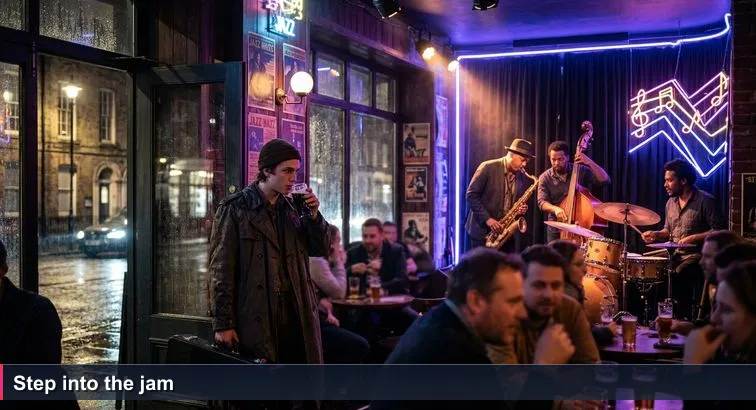
The first time you duck into a jazz bar near Saint-Géry on a wet Thursday, it feels like you’ve walked into a secret. Horns and brushes cut through the room, the stage is barely bigger than a kitchen table, and yet everyone seems to know exactly when to lean in, when to lay back, when to take a solo. You stand there with your coat still on, trumpet case in one hand and beer in the other, wondering how they learned the rules.
For a lot of aspiring AI practitioners in Belgium, walking into their first meetup in Brussels, Leuven or Ghent feels eerily similar. You hover at the back of a crowded room at a generative AI talk, notebook in hand, nametag on your chest. Other people ask sharp questions, demo side projects, greet each other like bandmates. Your own “instrument” stays closed: no code shown, no questions asked, no one who’d recognise you next time.
Belgium as one big jam session
Yet outside that room, the country is humming. The Brussels-Leuven-Ghent corridor is often described as the “Silicon Valley of Belgium”, with a strategic location, international talent and dense R&D making it a natural hub for AI research and deployment across sectors, as outlined in overviews of Belgium’s AI ecosystem.
On top of that, experiment is turning into reality: in March, Belgium even saw the launch of “Is This Real?”, billed as the first fully AI-run business in the country, a live stress test of what automation can actually handle in practice, reported in detail by The Brussels Times. When a small, multilingual country is hosting EU AI summits by day and AI-native companies by night, simply watching from the doorway is a choice with real career consequences.
From listener to player
This guide treats Belgium’s AI ecosystem as that multi-room jam session: policy summits as concert halls, university seminars as conservatories, grassroots meetups as late-night clubs. Understanding it means more than knowing venues and dates. It means learning how to walk into each room with a small riff of your own - a question, a demo, a problem from your job - and playing it often enough that others start to improvise with you.
You’re standing at the door now, trumpet case still closed. The next pages are about opening it, stepping into the circle, and turning this remarkably dense Belgian AI scene into something that actually moves your life forward.
In This Guide
- Standing at the Door of the AI Jam Session
- Why Belgium Is a High-Signal AI Networking Hub
- Mapping the Rooms of Belgium’s AI Scene
- Generative AI Belgium: The Big Builder Stage
- AI Tinkerers Brussels & Ghent: The Rehearsal Basement
- Data Science Leuven: The Research-Industry Bridge
- Artificial Intelligence Brussels: Inclusive, Topic-Diverse Meetups
- Social Meetups and Community Drinks: Building the Social Graph
- Major Conferences and Flagship Events to Attend
- University and Research-Driven Events
- Corporate-Hosted and Cross-Domain Communities
- Nucamp: Your Rehearsal Band Between Meetups
- Networking in Belgian AI Circles (Especially for Introverts)
- Practical Calendar and a 90-Day Plan to Get on Stage
- Stepping Onto the Stage: From Demo to Belonging
- Frequently Asked Questions
Why Belgium Is a High-Signal AI Networking Hub
From the outside, Belgium looks small. From the inside, especially if you work in AI, it feels like a dense crossroads where policy, research and product collide within a train ride of each other. Brussels concentrates EU institutions and lobbying power; Leuven and Ghent host world-class research centres; the ring between them is crowded with telcos, banks, media groups and startups quietly putting models into production.
Where Brussels sets the tempo
In the capital, EU lawmakers, regulators and industry leaders meet constantly around AI governance and sovereignty. Events like EU AI Week 2026 bring public administrations, open-source developers and civil society into the same rooms, culminating in a three-day hackathon restricted to open models and sovereign hardware. Alongside this, the International AI Summit in Brussels and AI governance tracks at privacy conferences give practitioners direct exposure to how the AI Act and related rules are being interpreted in practice.
Leuven, Ghent and the research-industry bridge
Just up the line, Leuven’s imec labs and KU Leuven’s Leuven.AI institute feed a steady stream of machine learning, vision and ethics research into meetups and seminars, many of them public via the university’s AI events calendar. Ghent’s iGent tower and UGent AI Seminars play a similar role on the coastward side, intersecting with product teams from scaleups like Collibra, Odoo, Showpad and other influential Belgian AI startups. For a country of under 12 million people, the density of English-language, research-driven events is unusually high.
From experiments to careers
This isn’t just noise. At the EBU’s AI Forum in Brussels, Deputy Director General Jean Philip De Tender noted that organisations have moved from “early exploration to structured approaches”, with clear governance and investment frameworks. The Start AI programme has already provided practical roadmaps to 500+ Belgian companies, earning an NPS of 8/10 and spreading across all three regions. In such a mature environment, community visibility matters: mid-level AI and data roles in Brussels, Leuven and Ghent increasingly favour candidates who show up at meetups, speak at conferences, and can point to real projects - often built in bootcamps or on the side - that plug straight into this ecosystem.
Mapping the Rooms of Belgium’s AI Scene
If Belgium’s AI ecosystem feels overwhelming, it helps to stop thinking of it as “the scene” and start seeing it as a venue with several distinct rooms. Each one has its own unwritten rules, crowd, and value for your career. The trick is to visit the right rooms at the right time instead of wandering randomly between them.
The main stage: conferences and policy halls
On the big stage you’ll find high-production events where EU policy, corporate strategy and ethics debates play out in public: AI Summit Brussels, EU AI Week, and community-driven conferences like AICD Brussels. These are where you watch keynotes, hear how the AI Act will actually be enforced, and meet C-level leaders across telecom, finance and media. The European AI events maps now consistently place Brussels among the continent’s top policy-and-governance hubs.
The club stage and the conservatory
Step down a level and you hit the “clubs”: technical meetups such as Generative AI Belgium, now over 4,200 members strong with single events drawing 250-450+ people, and code-only builder groups like AI Tinkerers Brussels and Ghent. Go another door over and you’re in the conservatories: Data Science Leuven, Leuven.AI lectures and UGent AI Seminars, where PhD students and engineers dissect methods in depth, often using Belgian datasets and case studies.
The bar and the backchannel
Then there’s the bar: Data Drinks in Brussels, Women in AI Belgium, and AI Community Belgium socials where the content is light but the introductions are serious. Finally, everything is stitched together by the online backchannel:
- Meetup groups announcing sessions in Brussels, Ghent, Leuven and Antwerp
- LinkedIn posts from organisers and speakers sharing slides, recordings and job leads
- Eventbrite listings for one-off hackathons and niche workshops
Once you understand which room you’re in - and which one you actually need next - you can move through Belgium’s AI venue with purpose instead of just standing by the door.
Generative AI Belgium: The Big Builder Stage
In the Belgian AI “venue”, Generative AI Belgium is the packed main stage: lights up, crowd buzzing, speakers switching like soloists. It’s the group you hear about first when you tell someone in Brussels or Ghent you’re into LLMs. Events routinely fill large office spaces and innovation hubs like Ghent’s Wintercircus, with hundreds of people queuing for badges and slices of pizza before the talks even start.
What actually happens on this stage
The format is deceptively simple: two or three talks, each from a practitioner who has shipped something real with language models, followed by open networking. Topics span LLM performance tuning, retrieval-augmented generation, multi-agent workflows, and AI-native product design. Because speakers come from startups, consultancies and in-house teams, you see what is actually running in Belgian production stacks, not just what’s trending on X.
On the ground it sits alongside other AI meetups listed in city roundups such as Brussels AI meetups on dev.events, but its focus on generative models and product building gives it a distinct identity. It’s where you’re most likely to bump into someone from a Collibra data team, a Proximus innovation unit or a new Benelux SaaS startup validating an idea.
Turning attendance into momentum
To make this room work for you, showing up isn’t enough. Arrive with a tiny “riff” prepared: a Streamlit prototype, a Colab notebook, or screenshots of a RAG demo on your laptop. During Q&A, ask one pointed question about evaluation, latency or deployment; afterwards, use that as your opening line to speak with the presenter. Over a few events, you shift from anonymous attendee to recognisable regular, the person people expect to bring something interesting when the next call for speakers goes out.
For Belgian career changers balancing work and study, this is also the ideal stage to quietly pressure-test bootcamp projects or side gigs before you pitch them to employers.
AI Tinkerers Brussels & Ghent: The Rehearsal Basement
If Generative AI Belgium is the bright main stage, AI Tinkerers Brussels and Ghent are the rehearsal basements downstairs: tighter room, harsher lighting, and absolutely nowhere to hide. You don’t come here to watch slides; you come to see what actually runs, breaks and gets patched live at 21:30 on a weeknight.
Inside the no-slides jam
Each meetup gathers roughly 50-100 builders around a strict format: 5-minute demos, no slides, only running code or a live product. Sessions typically stretch to around three hours of back-to-back lightning demos and questions. According to the official AI Tinkerers Brussels events page, the bar is simple but demanding: bring something you’ve actually built, no matter how ugly, or come ready to learn quietly from those who did.
The Ghent chapter mirrors this energy in its own venues, drawing a mix of startup CTOs, R&D engineers, researchers and serious hobbyists who are already pushing agents, RAG stacks and vision models into production. You’ll often see people who by day work at Belgian scaleups highlighted in mappings of the most influential AI startups in Belgium, and by night are here stress-testing experiments in front of peers.
Getting ready for your first set
The fastest way to stop feeling like an imposter is to commit to demoing, not just listening. Work towards:
- Shipping a tiny but real tool: a bash script, a Colab prototype, or a small LLM agent that solves one concrete problem.
- Instrumenting your demo so you can show latency, cost or accuracy numbers instead of hand-waving.
- Rehearsing a tight 5-minute story: problem, approach, stack, what broke, what you’d try next.
In a country where the AI job market is still small enough that people recognise faces, one or two solid AI Tinkerers demos can do more for your credibility with Belgian employers than a dozen quietly completed online courses.
Data Science Leuven: The Research-Industry Bridge
Just 25 minutes by train from Brussels, Leuven offers a different kind of AI room: fewer pizza boxes, more equations on slides. Data Science Leuven sits right at this crossroads, turning KU Leuven’s academic firepower into practical evenings where researchers and industry engineers share the same stage.
How the meetup is structured
Each event typically runs as a mini-conference: around three talks per night, mixing PhD work, imec-style research, and case studies from Belgian companies deploying models in production. The group is deliberately community-driven and non-commercial, with an open call for speakers on Sessionize so practitioners and academics can propose talks side by side.
Why Leuven is such a strong bridge
KU Leuven consistently ranks among the top universities for machine learning in Belgium and Europe. Meta-rankings of ML programmes on platforms like Mastersportal highlight the city’s depth in AI research, from theory and optimisation to ethics and law. Data Science Leuven taps directly into that pipeline: it’s common to see a PhD student presenting a new method followed immediately by an engineer explaining how similar ideas behave under production load.
Using it to level up your practice
For Belgian professionals who have done online courses or bootcamps and now want to “think like an ML engineer”, this meetup is a natural next step. You’re exposed to:
- Real-world model evaluation and error analysis on messy, local datasets
- Talks on data engineering, causality and statistics that go beyond tutorials
- Discussions of AI ethics and governance grounded in EU and Belgian regulation
Show up regularly, ask careful questions, and introduce yourself to at least one speaker per event; over time you become part of Leuven’s informal bridge between lecture hall and office, where collaborations and job offers often start with a post-talk conversation in the hallway.
Artificial Intelligence Brussels: Inclusive, Topic-Diverse Meetups
Where some Belgian AI meetups feel like specialist clubs, Artificial Intelligence Brussels is more like a well-lit front room: open door, mixed crowd, and topics wide enough that you don’t need a PhD or production cluster to follow along. It’s often the first stop for people who live or work around the EU quarter and want to see what “this AI thing” looks like up close.
What the evenings look like
Most sessions draw around 40-60 attendees after work, meeting in central Brussels so people can walk over from offices in the city centre or European institutions. According to the group’s description on its Meetup page, the aim is to be “an all-inclusive hub” for experts and beginners alike. Talks range from cognitive architectures and multimodal models to text-to-image systems and making large language models more efficient, with speakers alternating between industry and academia.
Why it’s a great first room
Because the topics are broad and the tone is welcoming, AI Brussels works well if you’re still testing where you fit in the AI world. You might share a table with a policy officer from an EU agency, a KU Leuven student, and a senior engineer from a Brussels fintech. The variety gives you a fast sense of how AI cuts across sectors in Belgium - public services, media, finance, telecom - without forcing you into a narrow niche from day one.
Making the most of the mix
To turn one evening here into something more concrete, go in with a light plan:
- Prepare a 30-second intro about your background and what you’re curious about.
- Ask at least one person “How does AI show up in your day job in Brussels?” and really listen.
- Connect afterwards on LinkedIn, referencing a specific point from your conversation.
Over a handful of visits, you shift from anonymous face in the audience to part of the informal network that quietly underpins AI hiring and collaboration across the capital.
Social Meetups and Community Drinks: Building the Social Graph
Not every important AI conversation in Belgium happens under a projector. A lot of the real compounding happens later in the evening, around small tables in downtown Brussels or Ghent, when the slides are done and people finally relax into telling the truth about their projects, their teams and their hiring plans. These are the “bar” rooms of the jam session: social meetups, community drinks and informal gatherings where your social graph quietly fills in.
In Brussels, Data Drinks has become a recurring “no PowerPoint” ritual: a simple invite to data and AI folks to meet for beers, swap war stories and make introductions. Similar open-invite gatherings appear regularly in curated overviews like the Data Events in Belgium list on LinkedIn, which tracks Belgium-wide meetups from casual drinks to bigger conferences. Nobody expects you to have a polished demo here; turning up, asking good questions and following up afterwards is enough.
Alongside these, umbrella groups such as AI Community Belgium and Women in AI Belgium organise socials that deliberately foreground inclusion and cross-pollination. Women in AI Belgium’s major launch event in March 2026 pulled together researchers, policy-makers and practitioners to “shape the future of society through AI”, creating space for people who might not feel at home in heavily technical rooms. Community-driven gatherings around cybersecurity and AI, like those listed on the Cyber3Lab events calendar, add another layer where disciplines mix.
To make these nights work for you, treat them as low-pressure but high-intent:
- Arrive with one specific topic you’d love to discuss (career switch, MLOps tools, AI in your sector).
- Have a simple 30-second intro and ask others how AI shows up in their day-to-day work.
- Before leaving, connect with at least three people on LinkedIn while their names and faces are fresh.
Over a few months, these quiet conversations stitch you into Belgium’s AI fabric in a way no single keynote ever can, turning familiar faces at Data Drinks or community socials into collaborators, mentors and, eventually, colleagues.
Major Conferences and Flagship Events to Attend
Every healthy music scene has a few festivals that set the tone for the year. In Belgian AI, those are the flagship events where policymakers, researchers and builders step out of their niche rooms and share the same hallway tracks. Planning around even one or two of these can shift your visibility far more than a dozen anonymous meetup visits.
At the top of the list sits AI Summit Brussels, marketed as “Europe’s premier AI conference” and designed explicitly to unite EU decision-makers with enterprise AI leaders. The programme dives into governance, competitiveness and large-scale deployment, reflecting concerns highlighted in comparative studies of how the EU stacks up against the US and China on AI competitiveness. As one senior delegate from the Danish foreign ministry noted, the Brussels summit “facilitated meaningful dialogue and engagement on critical issues,” making it a rare place where engineers, regulators and diplomats trade notes instead of talking past each other. You’ll find full agendas and speaker line-ups on the official AI Summit Brussels site.
Further along the spectrum are the research-heavy gatherings. The European Symposium on Artificial Neural Networks (ESANN) in Bruges brings together specialists in neural networks and computational intelligence for several days of paper presentations and poster sessions, and by its mid-thirties edition had become a fixture on technical conference calendars. Leuven.AI’s 600-year KU Leuven celebrations, including AI conferences and summer schools, foreground law, ethics and the societal impact of machine learning.
On the community side, volunteer-run events like AICD Brussels (AI Community Days) emphasise ethical and inclusive AI, blending keynotes with hands-on workshops. These conferences are easier to speak or volunteer at, which makes them powerful stepping stones if you want to move from attendee to contributor in Belgium’s AI story.
University and Research-Driven Events
Belgium’s universities don’t just publish papers and retreat back into their labs; they actively invite practitioners into the room. KU Leuven, UGent and others run a steady rhythm of open seminars, PhD defences and public lectures where you can sit a few metres from the people pushing the state of the art in machine learning, law and ethics. For a small country, that access is unusually direct.
Leuven.AI: from theory to public lectures
At KU Leuven, the Leuven.AI institute coordinates research across faculties, then surfaces it through workshops, seminars and an annual AI summer school hosted by the law faculty. Many of these sessions are explicitly open to non-students and streamed online, reflecting a wider European push - documented in Eurostat’s analysis of AI use - to connect academic AI work with real economic and regulatory challenges.
UGent AI Seminars: research with a Ghent accent
On the other side of the linguistic and geographic triangle, UGent AI Seminars bring computer vision, NLP and labour-market research into the iGent tower. Talks frequently feature joint projects between Ghent’s research groups and local companies, giving you a front-row view of how Belgian datasets, regulations and business problems shape the models that get built.
Bruges and specialist symposia
Further north, Bruges regularly hosts ESANN, the European Symposium on Artificial Neural Networks. Listed among key technical events on sites such as AI Superior’s machine learning conference calendar, ESANN gathers researchers focused on neural networks and computational intelligence for several days of dense, paper-driven discussion.
For practitioners, these university and research events are where you sharpen your mental models: you see which ideas are moving from arXiv into real systems, meet PhD students hunting for industry collaborators, and learn to speak both “product” and “paper” when you describe your own work.
Corporate-Hosted and Cross-Domain Communities
Some of the most useful AI events in Belgium don’t look like conferences at all; they look like a normal evening in a company office. Telcos, consultancies and fast-growing scaleups in Brussels, Leuven, Ghent and Antwerp regularly host meetups in their own spaces, often co-branded with groups like Generative AI Belgium, Data Science Leuven or AI Community Belgium. You sign in at reception, grab a badge and a drink, and suddenly you’re standing inside the hallway where real product decisions get made.
Inside company offices
Firms such as Dataroots, Dataminded or TechWolf open their Leuven or Ghent offices for evening talks on cloud MLOps, data platforms, or agentic workflows. Food and drinks are usually sponsored, and the presenters are the same engineers who maintain production systems the next morning. These meetups give you a direct look at toolchains, from Python and SQL through CI/CD pipelines to monitoring dashboards, and make it easy to ask “What does your stack look like in production?” without a formal interview.
Cross-domain and integration-focused events
Beyond pure AI, cross-domain gatherings explore how models plug into larger architectures. The Integration Platform Conference 2026 in Brussels, for example, focuses on API-led integration and increasingly on how AI services and agents fit into those patterns; details and schedules are published via the IBM Community events calendar. The AI & Agentic Integration Forum 2026, organised by API Community Belgium, zooms in further on how Belgian enterprises orchestrate AI agents inside existing backend systems, as outlined on the forum’s information page.
Turning offices into opportunities
To turn these evenings into career capital:
- Arrive 15-20 minutes early to chat with staff before the room fills.
- Ask one or two people which tools and platforms they rely on day to day, then note gaps in your own skills.
- After the event, connect with speakers and organisers, mentioning something specific you learned about their stack or domain.
Over time, you stop being “someone from outside” visiting a company and start becoming a familiar face within the wider Belgian AI and integration community.
Nucamp: Your Rehearsal Band Between Meetups
Meetups are where you step on stage; Nucamp is the rehearsal band that gets you ready. As an international online bootcamp with strong communities in Brussels, Antwerp, Ghent and Leuven, Nucamp gives Belgian career changers structure, feedback and deadlines so those “one day” AI projects become demos you can actually ship.
Programmes that fit the Belgian market
Nucamp’s AI-focused tracks map cleanly onto the roles you see at employers like Collibra, Odoo, Proximus, imec partners or EU institutions: from product-minded builders to technically solid backend and MLOps profiles.
| Programme | Duration | Tuition (€) | Best for |
|---|---|---|---|
| Solo AI Tech Entrepreneur | 25 weeks | 3,700 | Launching AI-powered products, LLM apps and SaaS for Benelux markets |
| AI Essentials for Work | 15 weeks | 3,300 | Using AI and prompt engineering inside existing roles in finance, healthcare, public sector |
| Back End, SQL & DevOps with Python | 16 weeks | 1,950 | Building the Python/SQL/DevOps foundation for ML engineer or backend positions |
These programmes sit in the €1,950-€3,700 range, significantly below many bootcamps charging €9,000+ for comparable content, and can be paid in monthly instalments. That matters when you’re reskilling from a Belgian salary and commuting between Brussels, Leuven or Ghent.
Outcomes, community and how to use them
Nucamp reports an employment rate around 78%, a graduation rate near 75%, and a Trustpilot score of 4.5/5 from roughly 398 reviews, with about 80% five-star ratings. Live workshops, peer channels and local meetups mean you’re never learning in isolation, even though the courses run online via platforms like the Solo AI Tech Entrepreneur bootcamp.
The real power comes when you bring these projects into the Belgian AI jam: a Solo AI capstone becomes your AI Tinkerers demo, a Python/SQL deployment turns into a hallway conversation with a data team in Leuven, and AI Essentials experiments at your current job become stories you tell over Data Drinks in Brussels.
Networking in Belgian AI Circles (Especially for Introverts)
Walking into a Brussels AI meetup as an introvert can feel like stepping onto a packed tram at rush hour: loud, multilingual, everyone seemingly knowing where to stand except you. Belgian tech culture is also more reserved than Silicon Valley’s; people don’t usually “work the room”, they talk quietly in clusters. That’s good news if you’re not naturally loud - you just need a small, repeatable way to join those circles without draining yourself.
Reading the room in a Belgian way
Most technical events in Brussels, Leuven and Ghent default to English, but small talk can slip into French or Dutch. A simple “Is English okay?” is perfectly normal and usually welcomed. The crowd often includes EU officials, academics and engineers; as the European Central Bank has noted in its analysis of AI and the euro area economy, AI is blurring lines between roles, so don’t be surprised if the person next to you is a lawyer learning about transformers or a policy officer dabbling in Python.
A simple playbook for quieter people
Instead of trying to “network”, treat each event as practice in three small skills:
- Prepare a 30-second intro: who you are now, what you’re learning, and one AI topic you’re curious about.
- Use openers like “What brings you to this event?” or “How does AI show up in your work?” - then let the other person talk.
- Ask one question in public if you can; it’s enough to say “I’m new to this, but…” and focus on something concrete from the talk.
Professional “lanes” are already shifting; AI governance experts, for example, are becoming “toolmakers” who build and test systems alongside engineers, as discussed in the IAPP’s piece on AI opportunities for compliance professionals. Your goal isn’t to impress everyone; it’s to have two or three real conversations, send a few thoughtful follow-up messages the same evening, and keep a simple log of who you met. Over a handful of meetups, those small, consistent moves turn you from anonymous attendee into a familiar, trusted presence.
Practical Calendar and a 90-Day Plan to Get on Stage
Once you see Belgium’s AI ecosystem as a venue with different rooms, the next step is to put actual dates in your calendar. A simple, repeatable rhythm across Brussels, Leuven, Ghent and Antwerp keeps you close enough to the “stage” that opportunities can find you, without burning you out.
A realistic monthly rhythm
The table below sketches a typical month for someone based in or near Brussels, combining big meetups, research talks and social events into a pattern you can sustain alongside work or study.
| Week | City / Mode | Typical Event | Why It Matters |
|---|---|---|---|
| 1 | Brussels | Large meetup (Generative AI Belgium or AI Brussels) | High-density networking with builders and hiring managers |
| 1-2 | Leuven | Leuven.AI lecture or Data Science Leuven | Deepen theory; meet KU Leuven and imec researchers |
| 2 | Ghent | AI Tinkerers or UGent AI Seminar | Show running code; get blunt feedback on your project |
| 3 | Antwerp / Online | Eventbrite-listed AI meetup or hybrid seminar | Expand beyond the Brussels-Leuven-Ghent triangle |
| 4 | Brussels | Data/AI drinks or community conference (e.g. AICD Brussels) | Low-pressure relationship building; discover side projects |
A 90-day progression: from listener to player
Month one is about orientation: attend at least two events from different rooms (a big meetup and a research talk), take notes, and observe how people present their work. In month two, you begin to open your “instrument case”: start a small project, talk about it informally at drinks, and ask one speaker per event a concrete follow-up question. By month three, aim to be on some kind of programme - a lightning talk, a short demo, or volunteering at a community conference like those listed on AI Community Days Brussels. Ninety days of this rhythm is usually enough for organisers, regulars and even recruiters to start recognising your face and your work.
Stepping Onto the Stage: From Demo to Belonging
There is a moment in every jam session when listening is no longer enough. Someone in the circle leans back, leaves a little space in the groove, and without anybody saying a word, it’s clear: this solo is yours if you want it. In Belgium’s AI rooms - from Saint-Géry basements to lecture halls in Leuven and conference halls around Schuman - the same moment arrives. Organisers ask for lightning talks, hackathon teams look for one more builder, a speaker invites people to share use cases. The invitation is rarely explicit, but it’s there.
By now you’ve seen the full venue: the policy “symphony halls”, the builder stages, the conservatories and the bars. You’ve watched how people introduce themselves, how they talk about failures as well as wins, how a rough demo can matter more than a polished CV. Across Europe, surveys like Ipsos’ study on making AI work for Europe underline the same thing: skills and technology matter, but so does the human fabric that lets ideas move between research, business and public institutions. In Belgium that fabric is unusually tight, because everything and everyone is so close.
Stepping onto the stage doesn’t require being the loudest, the smartest, or the most senior person in the room. It means bringing one concrete contribution into the circle: a five-minute demo at AI Tinkerers, a short case study at AI Brussels, a question that helps a KU Leuven speaker clarify their work, a small automation you tried in your day job and shared over Data Drinks. Each of those is a riff others can pick up and build on.
If you combine that with steady practice - structured learning through a bootcamp, evening experiments at your kitchen table, regular notes and follow-ups after events - you move from “somebody at the back with a closed case” to someone the community expects to hear from. In a country where a train ride connects Brussels policy-makers, Leuven researchers, Ghent startups and Antwerp meetups, that shift is powerful. Pick your next event, decide what tiny riff you’ll bring, and step into the circle. The band is already playing; now it’s your turn to add a line of your own.
Frequently Asked Questions
How can I use AI meetups in Belgium to actually advance my AI career?
Treat meetups as a recruiting and collaboration channel: Belgian events put you one handshake from employers like Collibra, Proximus or imec partners and from EU policy teams in Brussels. Block at least two evenings per month to attend, bring a tiny demo or project to show, and you’ll turn casual conversations into concrete opportunities (many local roles explicitly prefer candidates active in the community).
Which meetups are best if I’m a beginner or switching careers?
Start with inclusive, lower-pressure groups: AI Brussels (40-60 people) and Data Drinks are ideal for meeting others, while Data Science Leuven bridges academia and industry for deeper learning. Women in AI Belgium and community mixers let career-changers practice introductions and find sector-specific peers without heavy technical prerequisites.
How often should I attend events and how much will it cost me each month?
Aim for two in-person meetups per month plus one online seminar; budget roughly €30-€60 monthly for transport and drinks if you travel between cities. Conferences and flagship events can range from €50 up to €500, while many hackathons and grassroots meetups are free or low-cost.
I’m nervous about presenting - what’s a realistic first step to start sharing my work?
Begin with a tiny, runnable demo (a Colab or short GitHub repo) and attend a builder event as a listener first, then as a presenter - AI Tinkerers explicit 5-minute, no-slides format (events of 50-100 people) is perfect for rough, live code demos. Commit to showing something within six months and use the feedback to iterate; unfinished experiments are expected and valued.
Which events will connect me to EU policy makers and top research in Belgium?
For policy and governance, prioritise AI Summit Brussels and EU AI Week (Brussels is the EU hub and these events draw regulators and public-sector teams); for research, follow Leuven.AI and imec events at KU Leuven and UGent seminars. These flagship gatherings are where policy, research and industry overlap, so attending them is the fastest way to meet cross-sector decision-makers.
Want to work in Ghent, Leuven or Brussels? Check the best Belgian startups hiring junior developers in 2026 by region and role type.
Looking for the Top 10 women in tech groups and resources in Belgium in 2026? This guide breaks down meetups, bootcamps and mentorship programmes across Brussels, Leuven and Ghent.
Learn the true cost: Belgium tech salaries, taxes, benefits and living expenses (2026)
We linked a detailed complete guide to Belgium cybersecurity jobs in 2026 covering NATO, banks, telcos and hospitals.
Top 10 industries hiring AI talent in Belgium beyond Big Tech in 2026

Irene Holden
Operations Manager
Former Microsoft Education and Learning Futures Group team member, Irene now oversees instructors at Nucamp while writing about everything tech - from careers to coding bootcamps.