









Top 10 Free Tech Training at Libraries and Community Centers in Belgium in 2026
By Irene Holden
Last Updated: April 9th 2026
Too Long; Didn't Read
Digibanks in Flanders and the nationwide Digipunt/EPN library network are the top free tech training options in Belgium for 2026, because Digibanks act as one-stop hubs that loan devices, offer 1:1 coaching and signpost learners to bootcamps while Digipunten/EPN provide dense, drop-in help across libraries and community centres in Brussels, Wallonia and Flanders. All of these offers are completely free and built to tackle Belgium’s digital-skills gap - only about 61% of Belgians have basic digital skills and nearly half of people in Wallonia still struggle - while giving hands-on access to makerspaces, KU Leuven MOOCs, EuroCC HPC intros and local employer networks to help you move toward a bootcamp or job.
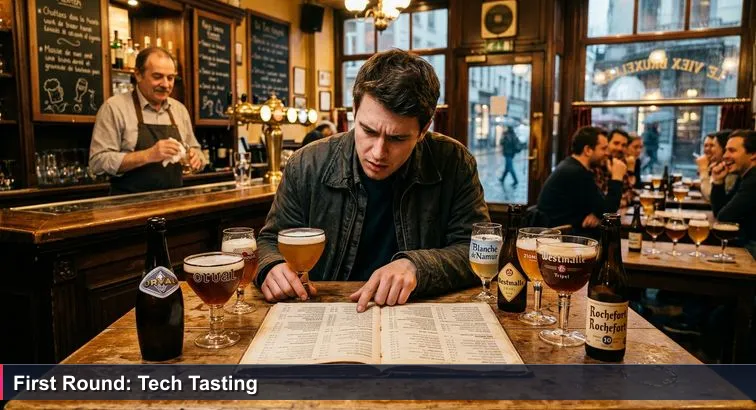
You’re at the bar, rain sliding down the windows, beer menu thicker than your laptop. A hundred options in tiny fonts; you just want someone to narrow it down. Belgium’s free tech-training scene feels exactly the same: Digipunten, Digibanks, library makerspaces, university MOOCs, EU campaigns like All Digital Weeks - all “on tap”, all promising, none obviously comparable.
The stakes go way beyond choosing a saison or a tripel. According to Statbel’s digital skills survey, only about 61% of Belgians have at least basic digital skills, and other analyses warn that half of Belgians still lack essential online abilities for everyday life and work. If you can’t confidently use Itsme, e-gov portals or cloud tools, breaking into AI or data roles in Brussels or Liège feels distant.
“AI literacy is not a luxury, but Brussels is failing to see the danger… Building society-wide AI literacy should be central.” - European Policy Centre, European Policy Centre
That’s why this “Top 10” isn’t the ten “best” courses in some abstract ranking. It’s a curated tasting flight across very different flavours of learning: drop-in help desks versus structured MOOCs, Walloon EPNs versus Flemish Digibanks, hands-on makerspaces versus theory-heavy AI ethics talks. What matters is not a score out of five, but how each option fits your evening: beginner vs advanced, French vs Dutch vs English, online vs in-person, exploration vs career focus.
If you’re in Brussels, Ghent, Charleroi or Namur and dreaming of working with AI at a Collibra-style scale-up, an Odoo-like product company, or a cloud team in the EU quarter, these programmes are your first tasting tray. Every option in the list that follows is public, accessible and costs 0 €. Use them the way a good bartender uses a flight: not to find the one perfect beer, but to discover what you actually like - and what to order next.
Table of Contents
- Standing at the bar: why Brussels’ free tech menu matters
- Digibanks
- Digipunt and Espace Public Numérique
- All Digital Weeks
- KBR Royal Library of Belgium
- Public Libraries 2030 and Local Makerspaces
- Digital Library Platforms
- Brussels Digital Minds and Regional Coalitions
- EuroCC NCC Belgium Training
- Wallonia Digital Literacy Programmes
- edX Audit Courses from Belgian Universities
- How far can free library training take you?
- Frequently Asked Questions
Digibanks
Across Flemish cities and small towns, Digibanks function as the quiet, practical backbone of digital inclusion. Set up inside existing spaces like libraries, OCMW/CPAS buildings and neighbourhood houses, these hubs are funded by the Flemish government and the EU as part of a major investment in digital education infrastructure highlighted by Eurydice. The goal is simple but ambitious: make sure that lack of a laptop, Wi-Fi or basic skills does not block anyone in Flanders from participating in an increasingly AI-driven economy.
Walk into a Digibank and the “menu” is intentionally basic. Coaches help you with:
- Essential tasks like email, online banking, Itsme and e-government portals
- Workplace skills such as word processing, CV writing and job-site navigation
- First steps into tech: safe browsing, cloud storage and basic app use
Many hubs also act as a bridge to more advanced learning, pointing you toward VDAB digital courses, coding bootcamps, or university MOOCs once you’re ready. This staged pathway reflects the broader Belgian strategy described on the Digital Skills and Jobs Platform, where Digibanks sit alongside national coalitions and university initiatives.
Access remains deliberately low-threshold. There is no selection process and no intake form; you show up, borrow a device if you need one, and get 1:1 support at your own pace. For people in smaller Flemish towns without a big tech campus, Digibanks are often the only place to experiment with cloud tools or video calls on a decent connection.
If your long-term dream is to work with data or AI in Leuven, Ghent or Brussels, these hubs are your realistic starting line. They will not teach you machine learning, but they will give you the everyday fluency and confidence you need before you even consider a bootcamp or a KU Leuven MOOC - all at a cost of 0 €, within cycling distance of home.
Digipunt and Espace Public Numérique
In almost every Belgian city, there is a corner of the library or a room in the maison de quartier where people queue with phones and laptops instead of pint glasses. Under names like Digipunt (Flanders/Brussels) and Espace Public Numérique (Wallonia), these are the ultra-local counters where you ask the “stupid questions” that never make it into a formal course.
The concept is straightforward: short, free, usually weekly sessions where you sit next to a coach and solve whatever is blocking you. Typical topics include:
- Smartphone and PC basics: installing apps, backups, Wi-Fi issues
- Online safety: recognising scams, managing privacy, safer social media use
- Administrative essentials: Itsme, Tax-on-Web, mutualité portals, school platforms
- First exposure to online learning platforms and digital job-search tools
In Brussels, the regional government explicitly frames these spaces as pillars of its digital inclusion strategy, alongside targeted projects for seniors, jobseekers and newcomers to the city, as outlined on the Brussels-Capital Region digital inclusion pages. The idea is to make sure every commune has a physical, walkable entry point into the digital world, not just an online helpdesk.
Muntpunt’s Digipunt in central Brussels is a concrete example: several afternoons per week, you can simply walk in with your device and get one-to-one help, no appointment or paperwork. The current timetable and practical details are kept up to date on the Digipunt page of Muntpunt, but the principle is the same across Flemish Digipunten and Walloon EPNs.
If you are supporting parents with their first Itsme login, helping a neighbour understand their health insurer portal, or you have just arrived in Belgium and need digital survival skills in French or Dutch before you even think about Python, these corners are your natural first stop - free, human and right around the corner from where you already borrow books.
All Digital Weeks
Each spring, just as the terraces start to fill again in Brussels and Ghent, another kind of festival quietly appears on library and community-centre calendars: All Digital Weeks. For a few weeks in March, Belgium plugs into a pan-European campaign that turns libraries, schools and maisons de quartier into pop-up classrooms, offering hundreds of free workshops on digital life.
The official programme, coordinated at EU level by the network All Digital, frames the 2026 edition around digital inclusion, employability and well-being. As the campaign site explains, the focus is on how digital skills underpin everything from job search to mental health and democratic participation across Europe’s regions, including Belgium’s.[ All Digital Weeks 2026 campaign ]
On the ground, the Belgian offer feels like a tasting tray of short, low-commitment sessions. Depending on the host library or centre, you might find:
- AI-curious events explaining how tools like ChatGPT work and how to write basic prompts
- Digital employability clinics on online CVs, LinkedIn and video interviews
- Workshops on misinformation, deepfakes and digital well-being for families
- Tailored sessions for seniors, migrants, jobseekers or youth workers
The 2026 launch event, covered by civic network ALDA, explicitly linked digital inclusion to “true digital well-being” and to Europe’s long-term competitiveness, positioning these local workshops as part of a broader skills agenda that stretches from neighbourhood libraries to EU policy debates in Brussels.[ Digital well-being for competitive Europe ]
Everything is priced at 0 €, and registration is usually a simple online form. If you are AI-curious but not yet ready for a full bootcamp or degree, All Digital Weeks are a smart way to compress a lot of experimentation into a few evenings: taste AI literacy, employability skills and digital ethics, then decide what deserves a second round.
KBR Royal Library of Belgium
Climbing Mont des Arts from Brussels-Central, KBR looks like another monumental building in the city’s skyline. Inside, though, Belgium’s Royal Library is less dusty archive and more quiet data centre: millions of pages, maps and newspapers are being converted into searchable, machine-readable collections that anyone can explore.
From heritage to datasets
KBR’s exhibitions, including the long-running Librarium, mix original manuscripts with touchscreens and projection, showing how large-scale digitisation actually works: high-resolution scanning, OCR, metadata and long-term storage. Visitors on Tripadvisor’s KBR page regularly highlight the “modern”, “interactive” approach and “top notch technology” used to bring the collections to life.
“A beautiful building… with top notch technology that makes the exhibits very accessible.” - Visitor review, KBR on Tripadvisor
- See how analogue material becomes structured digital data
- Learn the basics of catalogues, controlled vocabularies and metadata
- Spot real-world challenges in text recognition, multilingual data and preservation
Using KBR as an AI learner
For anyone interested in data science, NLP or cultural AI, KBR doubles as a live case study. Reading rooms and many digital terminals are accessible for 0 € or a very small fee, and the catalogue lets you experiment with queries across languages, time periods and document types. It is one of the easiest places in Brussels to think concretely about data pipelines: messy inputs, curation, structured outputs.
Because KBR sits between the historic city centre and the EU quarter, it also attracts students from KU Leuven, ULB and VUB who use it as a tech-enabled study base. Regular public talks on digitisation and digital heritage mean you can hear directly from the teams building these systems. If you ever want to work on AI for culture, open data or multilingual search in Belgium, spending a few afternoons here will give you vocabulary, examples and inspiration that YouTube tutorials can’t match.
Public Libraries 2030 and Local Makerspaces
Once your basic skills are in place, the next step is often to stop just reading about tech and actually touch it. That is where Belgium’s new generation of library-based makerspaces comes in: places where 3D printers and soldering irons sit next to poetry shelves, and where workshops feel more like informal meetups than school.
Libraries as digital innovation hubs
From Brussels, the organisation Public Libraries 2030 has been pushing this shift through EU-funded projects such as BIBLIO and DigLib, which train librarians in advanced digital skills and fund equipment for “inspiration sites” across Europe. The idea is to turn local branches into digital innovation hubs where experimentation with hardware, coding and media production is as normal as borrowing a novel.
De Krook and Muntpunt: concrete examples
In Ghent, that vision is embodied by De Krook, a striking library and media centre whose makerspace regularly runs open workshops on creative digital techniques. According to local coverage on TheSquare.Gent, De Krook offers 3D printing, laser cutting, Arduino and basic electronics, with public sessions typically at least twice a month and a Google rating of 4.4/5 from 677 reviews.
- Design and print small objects on 3D printers
- Prototype enclosures with laser cutters
- Flash simple Arduino or microcontroller projects
- Experiment with podcasting or video editing setups
In Brussels, Muntpunt follows a similar model with a digital lab, laptop loans and experimentation spaces that the Flemish government describes as part of its resilience strategy for “digital learning and experimentation at Muntpunt”.[ Flanders.be on Muntpunt ] It carries a solid 4.2/5 rating from around 446 Google reviews, reflecting its role as a central, multilingual hub.
For aspiring AI and data professionals, these spaces are especially valuable if you see yourself in robotics, IoT or edge AI roles with employers in the Benelux ecosystem. Understanding sensors, microcontrollers and basic electronics now will make later work with imec-style hardware research, smart-city pilots in Brussels, or industrial data projects around Ghent feel much more concrete.
Digital Library Platforms
Long after the library closes and the trams stop rattling down Boulevard Anspach, one part of the system stays open: the digital platforms tied to your card. Through portals like Mijn Bibliotheek or regional equivalents, Belgian library members increasingly get access to e-learning catalogues where software tutorials, coding basics and digital-skills courses sit alongside ebooks. Many of these platforms now use AI-assisted recommendation tools - similar to Libby’s “Inspire Me” feature - to surface titles and courses that match your interests and level.
The offer is usually broader than people expect. With a single login, you can move between:
- Beginner coding in Python, JavaScript or HTML/CSS
- Office and productivity suites (Word, Excel, Google Workspace)
- Introductory statistics, data literacy and basic analytics tools
- Soft skills for hybrid work: collaboration tools, presentations, remote teamwork
In practice, this means dozens to hundreds of structured video courses, available 24/7 at 0 € once you have a public library card. Even where access to LinkedIn Learning has changed, libraries have responded by procuring alternative platforms, as seen in the broader trend documented in a 2025 update on library services and LinkedIn Learning access. The underlying principle remains: patrons should have free, self-paced routes into digital upskilling.
Tech commentators like Nick Tanzi argue that this shift turns libraries into “always-on learning hubs”, where collections blend ebooks, videos and interactive courses rather than staying locked in physical shelves, a direction explored in his piece on library tech trends for 2026. For someone in Brussels or Antwerp aiming at an AI or data career, these portals are a low-pressure way to test whether you enjoy writing code, handling datasets or working through technical English - all before you commit to a bootcamp or a university programme.
Used well, your digital library login becomes the quiet backbone of your learning routine: 30 minutes of Python after work, a short Excel course at the weekend, a crash course in collaboration tools before your next internship. No commute, no tuition fees, just a card, a connection, and a growing personal playlist of skills.
Brussels Digital Minds and Regional Coalitions
In between the EU quarter’s glass offices and the Grand-Place’s tourists, a quieter circuit of evening events has emerged in Brussels’ libraries and civic spaces. Under umbrellas like Brussels Digital Minds and the National Coalition for Digital Skills, policymakers, researchers and practitioners regularly sit down with citizens to unpack what AI, data and “digital transition” really mean for jobs and daily life here.
From policy slides to library talks
These initiatives translate big strategies into accessible workshops. One month you might find a panel at Muntpunt on algorithmic bias in public services; another month, a commune library hosts an introduction to open data in mobility or energy. National conversations about AI sovereignty, like those surfacing during EU AI Week 2026 at BOSA, filter down into 90-minute sessions where you can actually ask questions in French, Dutch or English.
Typical formats include:
- AI literacy evenings explaining how recommendation systems and chatbots work
- Cybersecurity basics for citizens, freelancers and small Brussels SMEs
- Career panels bringing together local startups and corporates from the Benelux ecosystem
- Discussions on smart-city tools, sensors and data ethics in urban planning
Why it matters for an AI or data career
For someone aiming at roles in data science, ML engineering or digital policy, these events are where you see how your future work intersects with regulation, ethics and social impact. Journalists and analysts have repeatedly warned that digital exclusion is already shaping inequality in Belgium; outlets like The Brussels Times’ coverage of the digital divide underline why regional coalitions focus so heavily on broad-based skills, not just elite talent.
Access remains deliberately open: most sessions are free, bookable via simple event pages, and scheduled after working hours. If you are comparing Brussels with Amsterdam, Berlin or Paris, spending a few evenings in these library-based talks will give you a very local perspective on how AI, data and regulation are evolving right where EU directives are drafted - and where employers like Proximus, Collibra or Odoo actually hire.
EuroCC NCC Belgium Training
By the time you are comfortable with Python and Linux, a new question appears: what happens when your laptop is no longer enough? In Belgium, the most accessible doorway into that next layer - clusters, GPUs, supercomputers - runs through the EuroCC National Competence Centre Belgium, better known as EuroCC NCC Belgium.
HPC as the missing layer
EuroCC is part of a Europe-wide network of National Competence Centres for High-Performance Computing (HPC). In the Belgian node, universities and research centres collaborate to offer short, practical trainings that demystify large-scale computing. For anyone eyeing ML engineering or data science roles at research-heavy employers or scale-ups, this is where you learn how real AI workloads are actually run.
What you learn in practice
Entry-level sessions typically cover:
- Fundamentals of HPC: clusters, job schedulers and parallel computing concepts
- Working on Linux-based systems via SSH, modules and batch scripts
- Hands-on labs with scientific Python, containers or workflow tools
- First steps with GPU computing and performance profiling
The official EuroCC Belgium trainings page lists formats ranging from two-hour webinars to multi-day schools, many of them explicitly beginner-friendly as long as you already know basic programming.
Access and where it fits in your path
Most courses are organised by academic partners and offered at 0 € for students, researchers and non-profit participants, with some seats often open to motivated individuals from SMEs. Events are frequently hybrid, so you can join from a library computer in Charleroi as easily as from a KU Leuven lab in Heverlee.
If your endgame is training models at scale for an imec-adjacent research group, a pharma player around Antwerp, or a Brussels-based cloud team, these sessions are your bridge between “I can write a model” and “I can run that model efficiently on real infrastructure”. They will not replace a full master’s, but they will give you vocabulary, mental models and practical experience that immediately stand out in Benelux job interviews.
Wallonia Digital Literacy Programmes
South of the linguistic border, Wallonia has quietly become one of the most important testing grounds for digital-inclusion policy in Europe. EU monitoring shows that around 49% of people in Wallonia are classified as having low digital skills, a significantly higher share than in Flanders or Brussels, according to the Belgian snapshot on the Digital Skills and Jobs Platform. Closing that gap is essential if residents in cities like Liège, Charleroi, Namur and Mons are to access the same AI and data opportunities as their northern neighbours.
The backbone of this effort is the network of Espaces Publics Numériques (EPN), often hosted inside libraries, maisons de quartier or local NGOs. These centres specialise in taking people from “I’m scared to touch this screen” to “I can manage my admin and start an online course”. Typical activities include:
- Core digital skills: email, web browsing, file management, installing apps
- Administrative tools: Itsme, e-government sites, mutualité and unemployment portals
- Job-oriented training: CV creation, job boards, basic office software
- Onboarding to online learning platforms and MOOCs for further study
Many EPNs run structured short courses of 6-8 sessions targeted at jobseekers, seniors, young parents or community caretakers, alongside more informal “digital cafés” where you simply turn up with your device and your questions. The model is explicitly social: learn in French, in small groups, with a coach who understands local realities rather than a generic online helpdesk.
Access remains straightforward and free. To find an EPN, you usually search for “espace public numérique” on your commune or library website, then register by phone or online. Every workshop is priced at 0 €, with equipment provided on site. For someone in Liège dreaming of later working with industrial data, or in Charleroi eyeing a move into Brussels’ AI ecosystem, these centres are not a detour - they are the first, essential rung on the ladder.
edX Audit Courses from Belgian Universities
Once you are comfortable with basic digital tools, one of the most powerful free upgrades you can give yourself comes from Belgian universities’ MOOCs on platforms like edX. Institutions such as KU Leuven publish full online courses where, by choosing the “Audit Track”, you unlock all videos, readings and quizzes for 0 € - you only pay if you want a verified certificate.
What Belgian MOOCs actually look like
On the KU LeuvenX page on edX, you’ll find offerings that map directly onto AI and software careers: “UML Class Diagrams for Software Engineering”, “AI in Healthcare”, data-related introductions and more. KU Leuven’s own overview of its MOOC strategy underlines how these courses are designed as serious academic content, sometimes even counting for credit in specific programmes.
Independent aggregators back this up: Class Central lists 40+ KU Leuven MOOCs across topics from computer science to digital ethics, many of them explicitly marked as audit-friendly and typically running over 6-10 weeks if followed linearly, according to its KU Leuven courses catalogue.
How this fits your Belgian learning path
For someone in Brussels, Leuven or Liège aiming at AI or data work, these courses give you:
- Exposure to university-level explanations of algorithms, modelling and ethics
- Practice with English technical vocabulary used by employers across the Benelux
- A way to test whether you actually enjoy the theory before committing to a degree
The smartest way to use them is often hybrid: enrol on edX at home, then do the harder modules in a quiet library space or join an informal “computer club” at your local community centre. Combined with hands-on makerspaces and HPC workshops, audited MOOCs help you build the theoretical spine of an eventual AI/ML profile - still without paying tuition fees or passing an admissions process.
How far can free library training take you?
Free library and community-centre programmes are your on-ramp, not your final destination. They get you from “I’m not sure where the power button is” to “I can follow an online Python tutorial” and “I understand what people mean by algorithms and bias.” That jump alone can be life-changing, and participant stories from initiatives like Future in Tech’s free ICT training show how accessible programmes can still be “deep enough to challenge” and build confidence in new fields.
What these programmes really give you
Across Digipunten, makerspaces, digital library platforms and MOOCs, you can realistically gain:
- Device fluency and online administration skills
- Office, collaboration and basic coding experience
- Initial AI and data literacy, plus small personal projects
That is enough to apply for entry-level support roles, internships or structured training - and, crucially, to decide whether you actually enjoy working with code and data before spending serious money.
Where the ceiling sits
Senior roles - data scientist at a Brussels scale-up, ML engineer in a Benelux cloud team, researcher at imec or KU Leuven - usually demand a stronger foundation: mathematics and statistics, robust programming, substantial projects and often a bachelor’s or master’s degree. Free programmes rarely provide the sustained depth or assessment employers use as a signal.
How paths compare after your “free” phase
| Path | Cost | What you gain in 6-12 months | Best if you want… |
|---|---|---|---|
| Free library & community training | 0 € | Digital confidence, basic tools, first AI/data awareness, small personal projects | To explore options safely and fix foundations |
| Industry-oriented bootcamp | €€ | Structured curriculum, portfolio projects, job-search support | A faster transition into junior developer or data roles |
| Bachelor/Master in CS, data or AI | €€-€€€ | Deep theory, rigorous assessment, research exposure and recognised credentials | Long-term careers in advanced engineering or research |
Belgium’s advantage is that all three layers sit close together: EU institutions, imec in Leuven, KU Leuven and ULB, and employers like Proximus or Collibra are a short train ride from your local library. Scalable digital-learning platforms - the kind companies like uQualio report cutting training costs for by orders of magnitude - are already seeping into public services here. Use the free layer to get ready, then deliberately choose when and how to invest in the next one.
Frequently Asked Questions
Which of these free library or community-centre options is best to start learning AI or data in Belgium?
If you’re a complete beginner, start at a Digipunt/Digibank for basics (device use, Itsme, file management) then move to makerspaces (De Krook, Muntpunt) and KU Leuven edX audit courses for theory; all are free (0 €) and designed as a pre-bootcamp path. These layers let you bridge the gap that matters - Statbel shows only about 61% of Belgians have basic digital skills - so begin with fundamentals before pursuing specialised AI roles.
Do I need to register or bring anything to join these free programmes?
It depends: many Digipunten and drop-in EPN sessions are walk-in (30-60 minute support), while makerspace workshops and All Digital Weeks events usually require simple online registration. For digital-library platforms you’ll need a free library card (e.g. Muntpunt/Mein Bibliotheek) to access the 24/7 e-learning catalogues.
Can these free trainings get me a tech job in Brussels or at companies like Collibra, Proximus or an imec partner?
They’re excellent for building confidence and basic skills, but rarely sufficient alone for a data-science or ML engineer role; employers typically expect solid programming, maths and project experience. Treat them as your pre-bootcamp phase - use makerspaces, EuroCC webinars and KU Leuven MOOCs to decide whether to invest in a bootcamp, bachelor/master or paid upskilling.
Are these trainings available in English and the other local languages across Belgium?
Yes - language depends on region: Brussels Digipunten and major libraries often offer Dutch/French/English support, Ghent makerspaces commonly run Dutch and English sessions, while Wallonia’s EPNs are usually in French. Digital platforms and KU Leuven edX courses are mostly English-friendly, so you can mix local-language drop-ins with English online learning.
How regularly do workshops run and what’s the best way to plan a short learning sprint?
Frequency varies: makerspaces typically run 1-2 open workshops per month, Digipunt drop-ins are weekly, and All Digital Weeks clusters hundreds of events each March. For a 30-day sprint, book a library card and a Digipunt slot in week 1, a makerspace workshop in week 2, an edX course and EuroCC webinar in weeks 3-4, and document everything as a simple portfolio.
Comprehensive Belgium 2026 guide: How far do tech salaries go against living costs?
This Belgium tech career 2026 explained piece helps AI engineers choose between Brussels, Leuven, Ghent, and Antwerp.
Complete guide: scholarships, grants and ISAs for coding bootcamps in Belgium
Bookmark the best-ranked women-in-tech groups in Belgium (2026) for upcoming conferences, scholarships and volunteer opportunities.
Our long-tail guide to Belgium tech apprenticeships and internships breaks down costs, conversion rates and Belgian employer links.

Irene Holden
Operations Manager
Former Microsoft Education and Learning Futures Group team member, Irene now oversees instructors at Nucamp while writing about everything tech - from careers to coding bootcamps.