









Top 10 Tech Coworking Spaces and Incubators in Ukraine in 2026
By Irene Holden
Last Updated: April 26th 2026
Too Long; Didn't Read
UNIT.City leads as Ukraine's top tech coworking hub, combining hot desks from ₴5,000 per month with TIER III certified shelters and direct access to EPAM and SoftServe R&D centers. Creative States offers luxury backup power and networking for senior engineers, while LIFT99 provides a high-touch founder community for scale-ups - all at 30-50% lower costs than similar spaces in Warsaw or Bucharest.
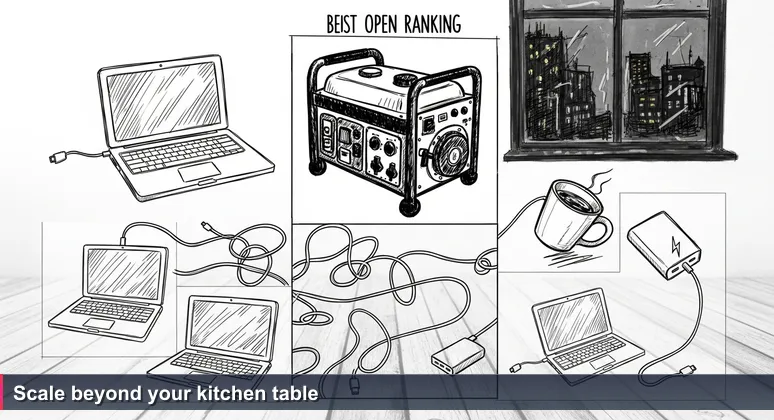
In the winter of 2022, the most important tech hub in Ukraine wasn't UNIT.City - it was your kitchen table. That slab of wood became your desk, your server room, and your bomb shelter. You balanced a laptop on one knee, a power bank on the other, and scheduled Zoom calls between air raid sirens. Hundreds of Ukrainian tech startups were born on surfaces never meant for scale. But a kitchen table can't scale. Isolation creeps in. Power cuts kill productivity. You need a whiteboard, a mentor, a community - not just a generator.
The best coworking spaces today don't just rent desks. They restore the conditions for creation. As Deskmag's analysis of Ukraine's coworking recovery notes, the role of the community manager "shifted titanically. It became about human-centricity." These spaces combine high-speed internet with shelter, backup generators with deal flow, and networking with the "terror of isolation" - a phrase Deskmag uses to describe the psychological toll of building alone in wartime. Ukrainian operators responded with the "30-Day Contract of Trust," offering stability without long-term risk.
This ranking measures more than ergonomic chairs and Wi-Fi speeds. It tracks which spaces understand that their real product is human connection under pressure. From Kyiv's innovation parks to Lviv's academic incubators, the hubs below protect your ability to build - and connect you directly to major employers like EPAM, SoftServe, GlobalLogic, Ciklum, and Grammarly. Your kitchen table launched your idea. The right hub will launch your company. Ukraine's startups keep building - choose the space that matches your stage.
Table of Contents
- Introduction
- Coworking Platforma
- FRACTAL HUB
- 1991 Open Data Incubator
- YEP! Accelerator
- Lviv IT Cluster and Tech StartUp School
- iHUB
- D3 Defense Accelerator
- LIFT99 Kyiv Hub
- Creative States
- UNIT.City
- The Bottom Line
- Frequently Asked Questions
- If you want to launch an AI career in Ukraine's tech hubs, this complete guide is essential reading.
Coworking Platforma
If your startup needs to scale from five to twenty engineers overnight, Platforma is the obvious choice. Spanning three floors of the Art-Zavod complex near Lukyanivska metro, it's officially the biggest coworking space in Ukraine - a massive creative-industrial loft where EPAM and SoftServe park entire satellite teams. The vibe is loud, productive, and built for growth: floor-to-ceiling whiteboards, 100 Mbps dedicated lines, and hot desks starting at ₴4,500 per month. Dedicated desks run roughly ₴6,500.
The network here is less about curated startup community and more about raw talent density. Ciklum and Intellias recruiters hold regular meetups on-site, and the space sits in the heart of Kyiv's engineering talent pool - you're never more than a conversation away from a senior DevOps engineer or a React Native lead. This is where outsourcing companies put teams when they need to recruit fast from the local market. As the Deskmag analysis highlighted, modern Ukrainian hubs "deeply integrate critical functions of physical security" - Platforma's Art-Zavod location has dedicated shelter space and backup power for its main floors.
The trade-off? Early-stage founders craving quiet focus should look elsewhere. Platforma is a workspace, not an accelerator - you won't find structured mentorship or pitch sessions. But for growth-stage teams hiring from the Kyiv talent market - especially those with existing clients to serve - the value is unbeatable. At roughly ₴4,500 per person per month for a hot desk, you're paying less than Kyiv's average co-living rent for a fully equipped, enterprise-grade environment with direct lines into the city's biggest tech employers.
FRACTAL HUB
FRACTAL HUB occupies a deliberately small footprint near Palats Ukrayina, but its ambition is outsized. Launched by Artem Borodatiuk in 2025, the space describes itself as "an environment for work, events, and new ideas" rather than a classic coworking operation. Professional acoustics, a rotating gallery wall, and a café that doubles as pitch practice define the floorplan. Hot desks run about ₴5,000 per month - a deliberate midpoint between accessible and curated. The programming is intentionally light: mostly evening talks and founder dinners, not structured accelerator curricula.
The network here rewards quality over quantity. You will meet indie founders building reconstruction-tech MVPs, freelancers cycling between GlobalLogic and Ciklum contracts, and the occasional Grammarly or Kyivstar engineer hosting a workshop. Several startups that passed through FRACTAL's early cohort went on to win grants from the Impact Business Accelerator in 2025 - a testament to the high-trust environment, not formal mentorship. This is a space for the founder who values signal over noise.
The reality check? No dedicated backup generator yet - the hub relies on building power, so keep your power bank charged. Ask about shelter access before committing. But if you are an early-stage founder who finds Platforma too loud, iHUB too crowded, and your kitchen table too isolating, FRACTAL HUB offers something rare: a quiet, curated room where the person next to you might become your first angel investor. At ₴5,000 per month, you're buying community, not just a desk.
1991 Open Data Incubator
This incubator occupies a space that no other Ukrainian hub can claim: literally inside the same building as the Ministry of Digital Transformation. That proximity is not symbolic. On any given day, you can walk into a Diia.Business consultation, cross paths with Deputy Minister Alex Bornyakov, or apply for "Fast Track" defense-tech grants through Brave1 without leaving the corridor. Established as a pioneer in open-data acceleration, 1991 Open Data offers a free membership for selected startups in its accelerator programme, with day passes available at roughly ₴500. The vibe is mission-driven civic tech: governance tools, reconstruction platforms, and transparency software.
The network extends far beyond Kyiv. Teams here access the UK-Ukraine TechBridge programme, which selected 20 high-potential startups for investor connections culminating at London Tech Week 2026. International donors, the Ukrainian Startup Fund, and representatives from EPAM's public-sector division all maintain relationships with the incubator. For a founder building a platform for post-war reconstruction or municipal transparency, the deal-flow density is unmatched - you are literally steps away from the people writing procurement policy.
The reality check is honest: this is not a full-time coworking space. The open-plan area holds just 30 seats, so you come for the structured three-month accelerator sprint, not for a permanent desk. If you need a stable, daily workspace, look at Platforma or iHUB. But if your startup targets open data, governance, or reconstruction tech, 1991 offers something priceless: direct access to decision-makers who can turn your pilot into a state-level contract. Free membership and ₴500 day passes make it the lowest-cost entry point on this list for the right founder.
YEP! Accelerator
YEP! operates as a distributed network of business incubators embedded directly inside Ukrainian technical universities. The model is elegant: student founders never leave campus to build companies. At Lviv Polytechnic, the Tech LabInno facility enables rapid prototyping and has produced 10+ Horizon Europe projects, making it one of the most research-active incubators in the country. At Igor Sikorsky Kyiv Polytechnic Institute (KPI), the Sikorsky Challenge acceleration programme focuses specifically on defense-tech and AI commercialization. Membership is free for accepted teams; coworking access varies by the university partner, but typically costs nothing beyond your student status.
The network advantage is direct and practical. EPAM and SoftServe maintain labs on these campuses, so you can walk from your prototype bench to a conversation with a senior engineer who has shipped production AI systems. The KPI Department of Artificial Intelligence, led by researcher Vira Huskova, provides mentorship on forecasting models and complex socio-economic systems. As she noted after completing a collaboration with the Ukrainian-French Centre, AI must remain "a tool for progress and contribute to sustainable development." For pre-revenue teams building in AI or defense-tech, this academic-to-commercial pipeline is unmatched in speed and cost.
The reality check is straightforward: these spaces feel like university classrooms, not luxury lounges. You won't find marble lobbies or pour-over coffee. But for a founder with zero budget and a strong technical idea, YEP! eliminates the biggest barrier to entry: rent. At ₴0 for accepted teams, plus direct talent pipelines to the companies that hire Ukraine's best engineers, it is the most capital-efficient starting point in the entire ecosystem. Your kitchen table got you focused. A university incubator can get you funded.
Lviv IT Cluster and Tech StartUp School
Lviv IT Cluster isn't a single building - it's an entire regional ecosystem compressed into a single point of entry. Operating out of the Tech StartUp School at Lviv Polytechnic, the cluster functions as the commercial and community backbone of Ukraine's western tech capital. The coworking zone hosts over 200 seats, with hot desks starting at an accessible ₴3,000 per month and dedicated desks around ₴5,500 - significantly cheaper than comparable spaces in Kyiv. For a freelancer or early-stage team, this is the most cost-effective entry point into a city with deep engineering roots.
The network here is specifically tuned to the largest outsourcing employers in the region. GlobalLogic, Intellias, and SoftServe maintain major engineering centers in Lviv, and their recruiters regularly hold office hours at the Cluster. The Lviv IT Cluster ecosystem also hosts the annual IT Arena conference, which drew over 10,000 attendees in 2026, and generates steady deal flow through the UK-Ukraine TechBridge programme. Lviv Polytechnic itself leads Ukraine in Horizon Europe projects, with over 10 active in 2024 - giving resident startups direct access to academic R&D pipelines for rapid prototyping.
The reality check is geographic. Lviv is safer from physical attack than Kyiv or Kharkiv, but it is a smaller market for late-stage venture capital. If you are building an AI or ML product and want proximity to a deep talent pool trained by SoftServe and GlobalLogic, Lviv offers the best cost-to-network ratio in the country. The city has invested heavily in deep shelters, and the community here is tight-knit - you will cross paths with the same engineers and investors repeatedly. For a founder who values density over scale, Lviv IT Cluster delivers a world-class ecosystem at roughly half the price of Kyiv's premium hubs.
iHUB
iHUB has been a fixture of Kyiv's tech scene since 2012, and its longevity speaks to a simple truth: community outlasts furniture. The two-level space near Lva Tolstoho Square in Kyiv, plus a secondary location in Lviv, runs a lean, founder-first operation. Hot desks cost ₴4,000-₴5,000 per month, while a private office for four to six people runs roughly ₴12,000. The programming is relentless: weekly pitching sessions, Diia.Business consultations, and meetups with EPAM and Ciklum alumni who have built and sold their own startups. Over 200 resident startups have passed through iHUB, several now employing 50+ engineers in the Kyiv market.
The network advantage here is velocity. iHUB operates a formal partnership with the Ukrainian Startup Fund to assist residents with grant applications, and the USF's pre-seed grants of up to $50,000 are a frequent topic at their pitch nights. Grammarly's engineering team holds occasional office hours, and the space's central location means you can walk from a Ciklum recruiter meetup to a SoftServe tech talk in the same afternoon. For early-stage founders who need to build a network from scratch, iHUB compresses months of networking into weeks.
The reality check is physical: the space feels cramped when full, and there is no dedicated power backup - bring your battery bank and a portable generator strategy. The onsite shelter is small, around 30 square meters. But for ₴4,000 per month, you are paying for density of opportunity, not square footage. If your priority is deal flow, mentorship, and a calendar packed with relevant events, iHUB punches far above its weight. It is the best place in Kyiv to launch a startup when you have a prototype but no connections - and at this price, the ROI on networking alone is undeniable.
D3 Defense Accelerator
D3 Defense Accelerator exists for a single purpose: move battlefield AI, drone swarm software, and cryptographic communications from prototype to deployment as rapidly as possible. Located near UNIT.City in Kyiv, it operates on a fundamentally different axis than conventional coworking spaces. Membership is free for selected defense-tech startups, and the accelerator provides private office space, full energy autonomy, and a TIER III certified shelter integrated into the building's design. Monthly cohorts of 10 to 12 teams work through a structured programme targeting dual-use technology with clear military applications.
The capital pathway here is unusually direct. Teams accepted into D3 gain access to equity-free pre-seed funding of up to $50,000 from the Ukrainian Startup Fund, combined with a direct pipeline to the Brave1 defense-tech initiative and international defense investors. Graduates from the 2025 cohort successfully closed contracts with NATO innovation units. The accelerator is described as a "specialized powerhouse for defense tech startups" that provides tailored monthly programmes and equity investment - a rare combination in Ukraine's startup support ecosystem.
The reality check is unflinching. This is not a space for casual founders or lifestyle businesses. Security vetting is strict, the working environment is intense, and the stakes carry national significance. But if your startup is building AI for drone autonomy, cryptographic communications for secure battlefield networks, or any technology with clear defense applications, D3 is the single most supportive environment in Ukraine. At zero cost for accepted teams - with shelter, power, and capital included - it represents a national investment in the startups shaping Ukraine's defense capabilities for the next decade.
LIFT99 Kyiv Hub
LIFT99 Kyiv Hub near Zoloti Vorota operates on a fundamentally different premise than most Ukrainian coworking spaces: membership is by application only, requiring a referral. This deliberate selectivity creates a high-calibre community where you might find yourself sharing a soundproof Zoom room with a CTO from Preply - which hit unicorn status in early 2026 and hired 100 engineers in Kyiv during wartime. The space spans two floors designed for deep work: a library-style quiet zone, standing desks, and professional-grade acoustics. Pricing reflects the curation: hot desks run ₴6,500-₴8,500 per month, dedicated desks reach ₴10,500.
The network velocity at LIFT99 is tangible. SoftServe and Grammarly executives hold regular "Ask Me Anything" sessions, and the hub runs a venture partner programme connecting residents to syndicate deals. As described by one ecosystem overview of Ukraine's top coworking spaces in 2026, LIFT99 is "by entrepreneurs for entrepreneurs" - not a real estate play but a founder-first ecosystem. For a startup raising a Series A, the density of repeat founders and institutional capital in this single building can compress months of investor introductions into weeks.
The reality check is honest: these prices are steep for freelancers surviving on project income. A hot desk at LIFT99 costs nearly twice what you would pay at Platforma or iHUB. But backup power and shelter are integrated into the building's design, and the quality of your neighbours justifies the premium. If your employer covers the cost - common for remote-first international companies - or your startup has raised seed funding, the ROI on network access alone is clear. LIFT99 is not a space for isolation; it is an investment in proximity to the people who can write your next term sheet.
Creative States
Creative States redefines what a coworking space can be in wartime Ukraine. With locations in Kyiv, Dnipro, and Odesa, it positions itself as a luxury lifestyle hub where mature startups and remote engineers from companies like Grammarly and Kyivstar choose to base themselves. The Kyiv flagship in the Senator building features marble lobbies, a café serving pour-over coffee, and heavy-duty backup power that keeps operations running even during rolling blackouts. Pricing reflects the premium: hot desks run ₴10,000-₴12,000 per month, while dedicated desks climb to ₴14,000-₴16,000. For well-funded startups or remote workers with corporate budgets, this is a productivity investment, not a cost.
The network composition here is distinctive: the membership base skews toward senior talent. You will find lead engineers and product managers from GlobalLogic, Ciklum, and EPAM working alongside founders of post-revenue startups. The event programme includes quarterly investor dinners, and the community is described as one of the "biggest communities of founders" in Ukraine by ecosystem analysts in 2026. The Odesa location offers a more affordable entry point at roughly ₴8,000 per month, with a strong maritime-tech community that reflects the city's port economy. For a founder seeking to recruit senior engineering talent, Creative States provides the concentrated density you need.
The reality check is straightforward. At ₴10,000-₴12,000 for a hot desk, this is more than double the cost of Platforma or iHUB. A freelancer earning ₴30,000 per month would spend a third of their income on desk rent alone. But if your employer covers the cost or your startup is funded, the trade-off works: luxury amenities, reliable backup power, and a membership base that can solve your hardest technical problems over a single coffee. Creative States doesn't compete on price - it competes on the quality of the person in the chair next to you.
UNIT.City
Ukraine's first innovation park remains the definitive benchmark for tech workspaces nationwide, functioning as a complete ecosystem rather than a simple desk rental. The campus hosts over 100 companies and includes the FabLab Fabricator for 3D printing and CNC prototyping, soundproof Zoom rooms, and 24/7 security. Hot desks range from ₴5,000 to ₴7,500 per month, dedicated desks run ₴9,500, and a private office for ten people costs approximately ₴35,000 per month - a per-person rate of just ₴3,500 that undercuts most central Kyiv apartment rentals while delivering enterprise-grade infrastructure.
The critical advantage for international firms is infrastructure readiness. The 300 sqm UNIT.Shelter features TIER III certification, making it a decisive factor for companies like EPAM, SoftServe, and Ciklum, all of which maintain dedicated R&D centers on campus. The park also hosts the regional qualifier for the Startup World Cup 2026 and provides direct access to Diia.Business consultants and Ukrainian Startup Fund grant managers - compressing the distance between your prototype and your first institutional check.The location in the Dorohozhychi area requires a 15-minute taxi ride from Kyiv's centre, but the trade-off justifies the commute. At ₴5,000 for a hot desk - roughly what you would spend on monthly coffee at a decent café - the price-to-value ratio is unmatched in Ukraine's tech ecosystem. For teams growing from 5 to 30 engineers, the private office options scale efficiently without sacrificing reliability. This is the space where the kitchen table phase definitively ends and the institutional phase of your company begins - with shelter, power, and deal flow built into the lease.
The Bottom Line
Your kitchen table got you started. That slab of wood gave you focus when nothing else did - a laptop, a power bank, a Zoom call scheduled between air raid sirens. But to scale past isolation, you need more than a generator and a VPN. You need a space that protects your ability to build. Whether it is UNIT.City's TIER III shelter or Creative States' marble-backed lounges, the right hub replaces momentum-sapping uncertainty with reliable infrastructure and community density. The numbers confirm Ukraine's competitive advantage. Compare local pricing to regional alternatives: a hot desk in Warsaw averages ₴12,000-₴15,000 per month; in Bucharest, it runs ₴8,000-₴10,000. Ukraine's tier-1 spaces offer similar quality at 30-50% lower cost, with the added advantage of a talent pool trained by EPAM, SoftServe, and GlobalLogic. The Ukrainian Startup Fund continues deploying pre-seed grants up to $50,000 for founders working from these hubs, and programmes like the Startup World Cup 2026 qualifier at UNIT.City prove that global capital now flows through Kyiv's innovation park. Choose by stage, not by price list. A pre-revenue AI team belongs at YEP! or 1991 Open Data - free or near-free, with academic pipelines to SoftServe and KPI researchers. A funded startup raising its Series A needs LIFT99's curated network or Creative States' executive density. A growth-stage team hiring 20 engineers should park at Platforma's Art-Zavod for the raw talent access. As Deskmag's analysis of Ukraine's coworking recovery noted, modern hubs "deeply integrate critical functions of physical security, full energy autonomy, and continuous support" - the conditions your kitchen table could never provide at scale. Pick the space that matches your stage. Then go build.Frequently Asked Questions
Which coworking space in Ukraine is best for a startup that needs reliable power and shelter?
UNIT.City in Kyiv is the top choice for reliability. It offers a TIER III certified 300 sqm shelter, enterprise-grade generators, and 100% uptime - critical during blackouts. Hot desks start at ₴5,000/month, and the innovation park houses EPAM, SoftServe, and Ciklum R&D centres.
How much does a decent coworking desk cost in Kyiv in 2026?
Prices range from ₴3,000/month at Lviv IT Cluster to ₴12,000/month at Creative States. In Kyiv, a hot desk at UNIT.City costs ₴5,000-₴7,500, while LIFT99 is pricier at ₴6,500-₴8,500. For context, Warsaw hot desks average ₴12,000-₴15,000.
Which incubator is best for defense-tech startups in Ukraine?
D3 Defense Accelerator in Kyiv is the go-to. Supported by the Ministry of Digital Transformation, it offers equity-free pre-seed funding up to $50,000, a TIER III shelter, and full energy autonomy. Monthly cohorts focus on battlefield AI, drone software, and cybersecurity.
Are there free coworking or accelerator options for student founders?
Yes, YEP! Accelerator runs free incubators inside Ukrainian technical universities like Igor Sikorsky KPI and Lviv Polytechnic. Accepted teams get zero-cost coworking and mentorship from EPAM and SoftServe labs. The Sikorsky Challenge programme emphasizes defense-tech and AI.
What's the main advantage of UNIT.City over cheaper alternatives like Platforma?
UNIT.City is a full innovation park, not just a desk - it houses 100+ companies, FabLab Fabricator, and 24/7 security. Despite a higher hot desk price (₴5,000-₷7,500 vs. Platforma's ₴4,500), you get enterprise-grade internet, TIER III shelter, and direct access to Diia.Business consultants and USF grant managers.
We've crunched the numbers on rent, taxes, and daily expenses to help you decide: can you afford a tech life in Ukraine in 2026? Find out in this detailed report.
See which companies made our list of the best-paying tech companies for AI/ML engineers in Ukraine in 2026.
Decide which programming bootcamp for AI in Ukraine matches your learning style.
This complete resource on coding bootcamp financing in Ukraine lists all scholarship programs.
Read the 2026 guide to AI careers in Ukraine beyond big tech, ranked by real-world impact.

Irene Holden
Operations Manager
Former Microsoft Education and Learning Futures Group team member, Irene now oversees instructors at Nucamp while writing about everything tech - from careers to coding bootcamps.